

The Debate Club Would Be Proud
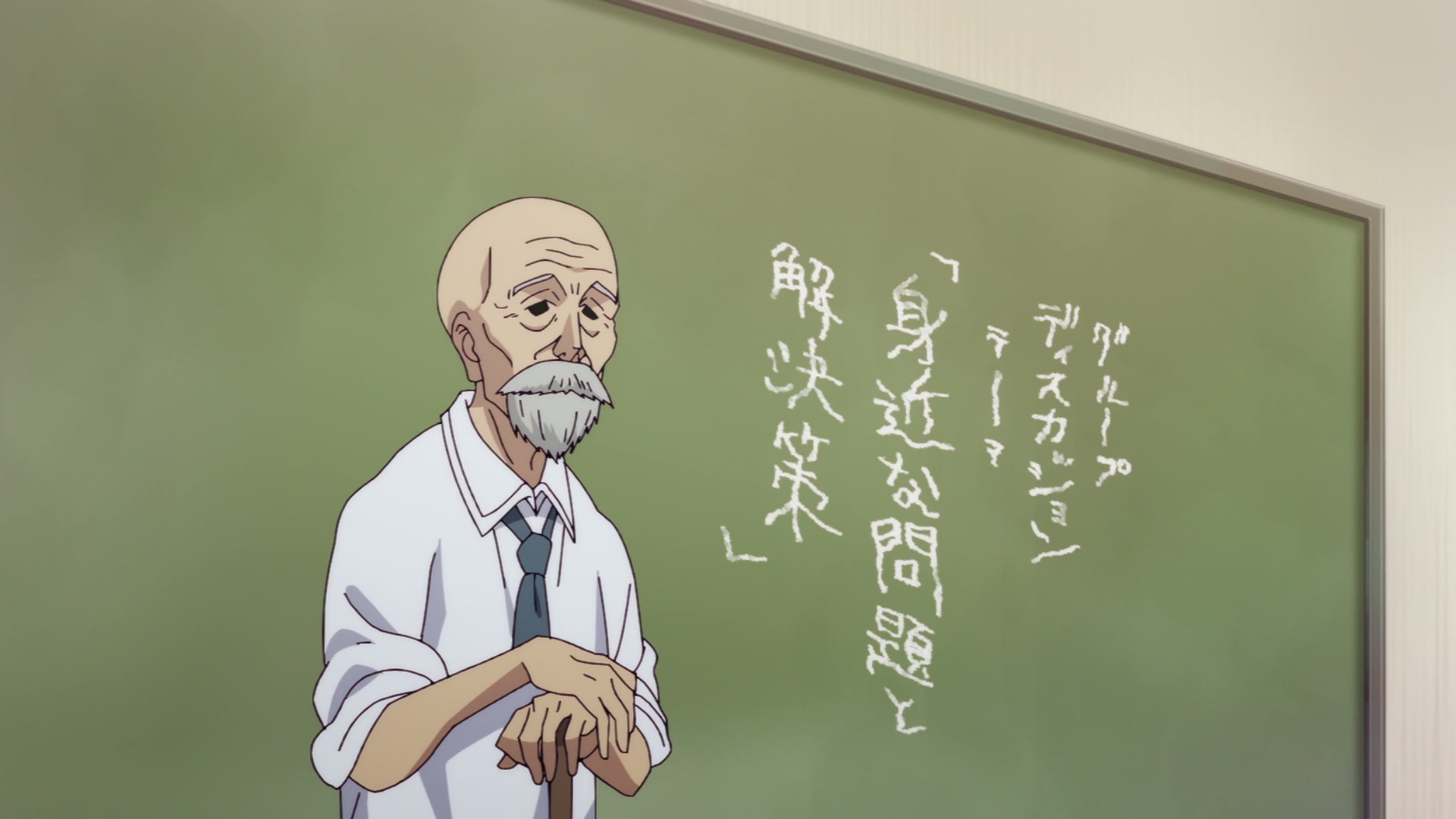
Grand Blue Season 3 opens exactly the way you would expect a Grand Blue episode to open: with a group of university students treating a friend’s romantic inexperience as a formal academic problem requiring structured debate. Yamamoto Shinichirou’s virginity becomes the subject of a twenty-minute classroom exercise, and the show wastes no time reminding you what kind of comedy you signed up for.
The cold open lands because the group approaches the topic with complete sincerity. Iori frames it as “The Pressing Issue of Yamamoto Shinichirou’s Virginity,” and the others treat it like a policy proposal. Mitarai calls it “a very complicated issue.” Nojima questions whether they “have the means to resolve it.” The gap between the gravity of their tone and the absurdity of the subject is the engine that drives every Grand Blue debate scene, and this one fires on all cylinders.
What makes the bit work beyond the premise is how quickly the solutions spiral. The group narrows Yamamoto’s options to three paths, and the third one comes with what Iori calls “a needless precondition.” When Mitarai objects to “presenting crimes as solutions,” Nojima suddenly discovers he has morals, prompting Yamamoto to ask, with genuine bewilderment, “You have morals? Since when?” The show knows its characters well enough by now that a single line can land as both a joke and a character beat.
The Gorilla Argument Is Genuinely Reasoned
The debate takes its sharpest turn when Iori introduces what he calls an “effective problem-solving method.” His analogy about a broken bike and running the rest of the way is the kind of pseudo-logic that sounds reasonable for exactly half a second before your brain catches up. Kouhei, playing the Watson to Iori’s Holmes, immediately applies the principle: “Is there actually a need for his first sexual partner to be human?”
What follows is not just a throwaway gag. Nojima constructs an actual argument using reading error margins from analog measuring devices, then connects it to the fact that human and gorilla DNA differs by roughly one percent. The punchline, Yamamoto screaming “You want me to do a gorilla?!” is inevitable, but the buildup matters. The show commits to the bit by having the characters reason their way into absurdity rather than just shouting nonsense. That commitment is what separates Grand Blue from lesser comedies that would settle for the surface-level joke.
Yamamoto’s counterattack, demanding to know if any of them actually have experience, backfires immediately. Iori pivots to the next topic. Mitarai claims having a girlfriend puts him “ahead of the pack,” and Yamamoto fires back that he “never actually sealed the deal.” The whole exchange has the rhythm of friends who have had this exact argument a hundred times and will have it a hundred more.
The Trial Format Gives the Second Debate Real Structure
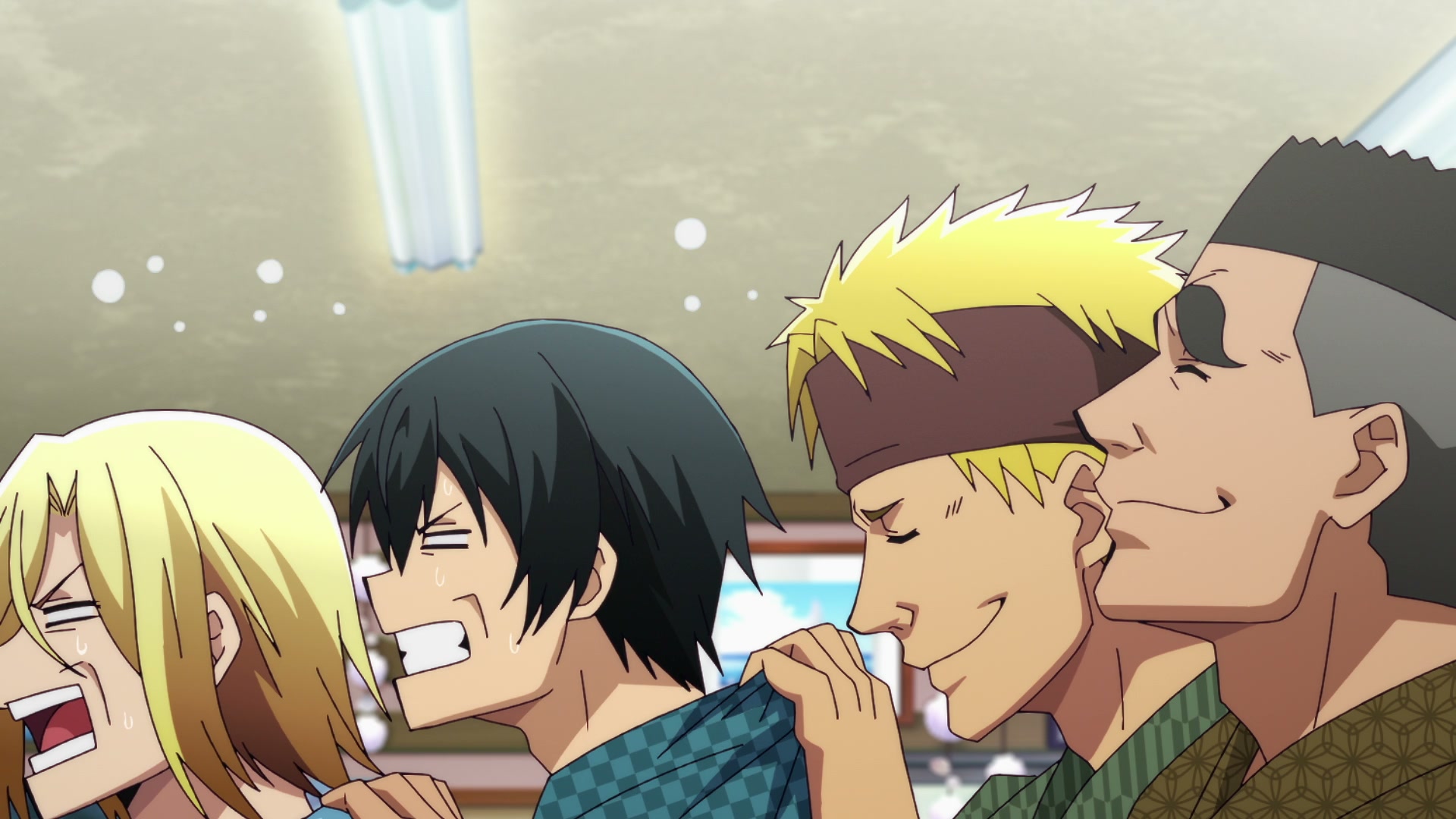
When the group turns on Iori and Mitarai for being in relationships, the episode shifts into something closer to a courtroom drama. Yamamoto establishes rules: any conclusion must follow the format “After X, we kill them,” and speakers must raise their hands and receive permission. “Because this is both a debate and a trial,” he explains, and Fujiwara adds, with complete seriousness, “It is a life-or-death matter.”
The formality makes everything funnier. Nojima raises his hand, addresses Yamamoto as “Your Honor,” and asks, “May I kill them once I finish speaking?” Yamamoto grants permission without hesitation. Iori and Mitarai begging for their lives while the others debate their execution with procedural precision is the kind of controlled chaos that Grand Blue excels at.
Iori’s defense strategy is genuinely clever. He points out that singling out the two known relationship-havers ignores the possibility of hidden traitors. Fujiwara immediately cracks: “It makes no sense for a guy like me to be single! I should have a girlfriend, as a matter of fact!” Nojima admits “the suspicion could easily fall on me.” The self-owns come faster than the accusations, and Yamamoto’s deadpan “They’re clean. No doubt about it” is the perfect button.
Kouhei’s defense might be the best single line of the sequence. When Mitarai points out that Kouhei has the looks to potentially have a girlfriend, Kouhei responds, “Think again, you sewer rat. My girlfriend is in another dimension!” Yamamoto declares him not guilty, and Iori’s defeated “Curses” says everything about where he stands in this kangaroo court.
The scene ends with the professor asking for their debate findings, and Iori scrambling to “fix up the topic real quick” before Yamamoto announces to the entire class that Kitahara Iori is a virgin. The cut to Chisa muttering “That moron! He’s gonna pay for this!” sets up consequences that the episode wisely lets breathe rather than resolving immediately.
The Summer Party Flips the Dynamic
The second half shifts to the diving club’s end-of-summer gathering, and the tone changes without losing any of the show’s identity. Iori’s suggestion that they do everything anyone wanted to do but hasn’t yet is genuinely sweet, the kind of gesture that reminds you these characters like each other beneath all the drinking and humiliation.
The seniors’ response is perfectly in character. Tokita and Kotobuki reveal they had their own lists ready, and the “kind and thoughtful juniors” line drips with the affectionate menace that defines the upperclassmen in this show. Iori and Kouhei realizing they have walked into a trap, complete with Kouhei comparing it to “some scam contract,” is the moment the party stops being a wholesome checklist activity and becomes a Grand Blue event.
Azusa’s request to see the guys in yukatas “for real” meaning without underwear is the kind of escalation that would feel gratuitous in a lesser show. Here, it lands because Azusa has always been exactly this forward, and the show has never pretended otherwise. Nanaka immediately getting on board and dragging Chisa into it adds a layer of sisterly chaos that the episode mines for both comedy and a little bit of genuine embarrassment.
The visual of Iori in just a borrowed sash, complaining that “this is more embarrassing than naked,” is the rare fanservice moment that works as a character beat. Tokita and Kotobuki noting that if he were buck-naked it would be “same old, same old” is a callback to three seasons of Iori losing his clothes at every opportunity. The show has built up enough history that a joke about Iori’s nudity being unremarkable actually lands.
The PaB-Style Cooking Segment Is a Disaster in the Best Way
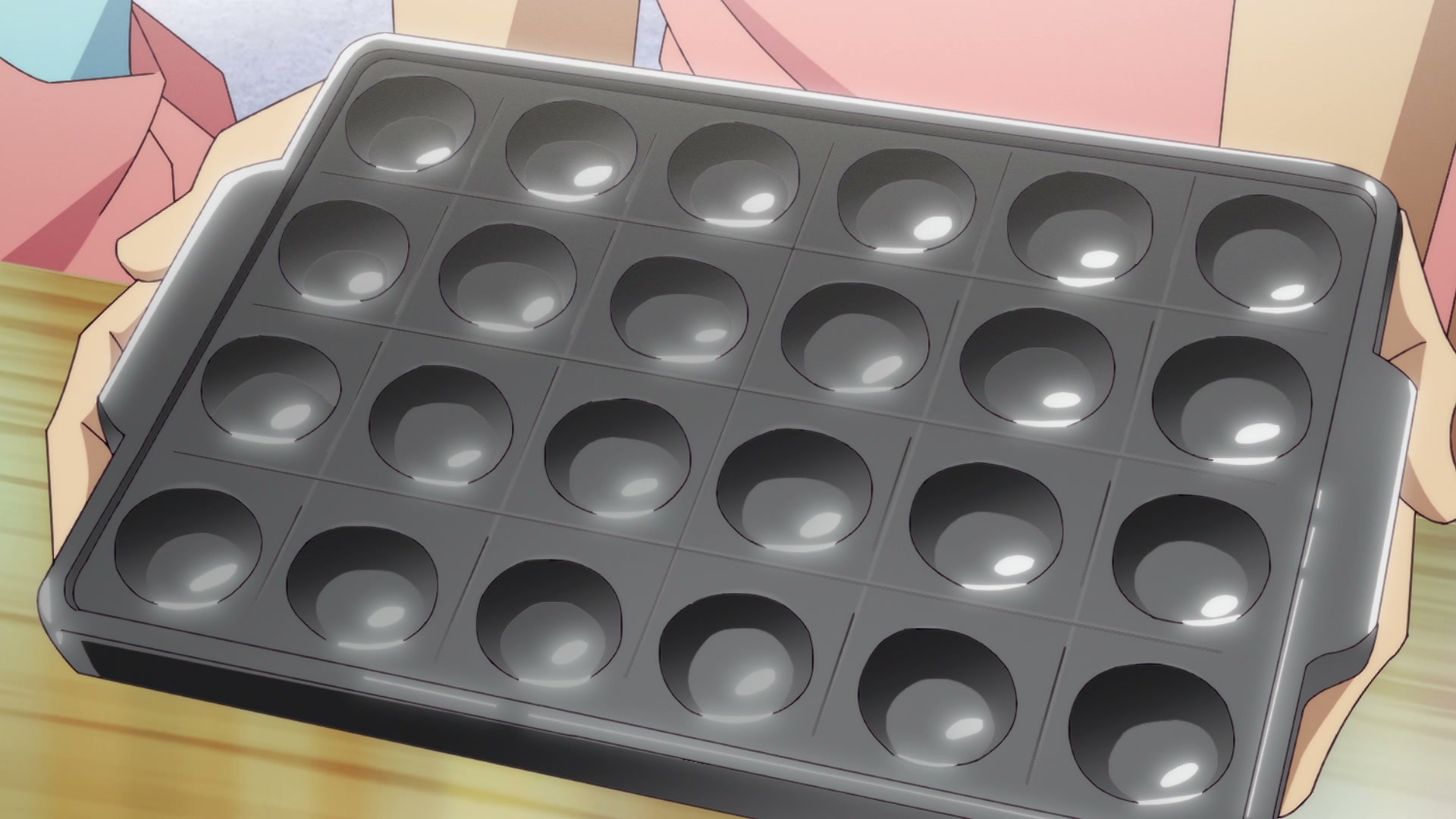
The takoyaki sequence is where the episode’s visual comedy peaks. Iori and Kouhei doing a cooking show parody while making takoyaki with alcohol instead of water is the kind of committed bit that makes you wonder how the voice actors kept straight faces. The “PaB-Style Cooking” segment, complete with Iori narrating steps and Kouhei playing the suffering assistant, has the energy of a YouTube cooking channel hosted by people actively poisoning themselves.
“Chef, the vaporized alcohol is making me cry.” “Just imagine you’re cutting onions and deal with it.” The back-and-forth is rapid-fire and stupid in exactly the right proportions. The finished product looking “all flaky due to the lack of water” and the seniors casually eating it anyway because “of course the alcohol would evaporate with some heat” is a nice reminder that the upperclassmen have iron stomachs and questionable judgment.
The uncle who wanders in, tries the takoyaki, and collapses with a pained “What do you have against me?” is the episode’s best visual gag. Iori and Kouhei’s panicked “It’s not what you think. This was just an accident” followed by the quiet admission that “it did taste awful” is the kind of layered reaction that makes Grand Blue’s comedy feel lived-in rather than scripted.
Chisa Gets a Small but Real Moment
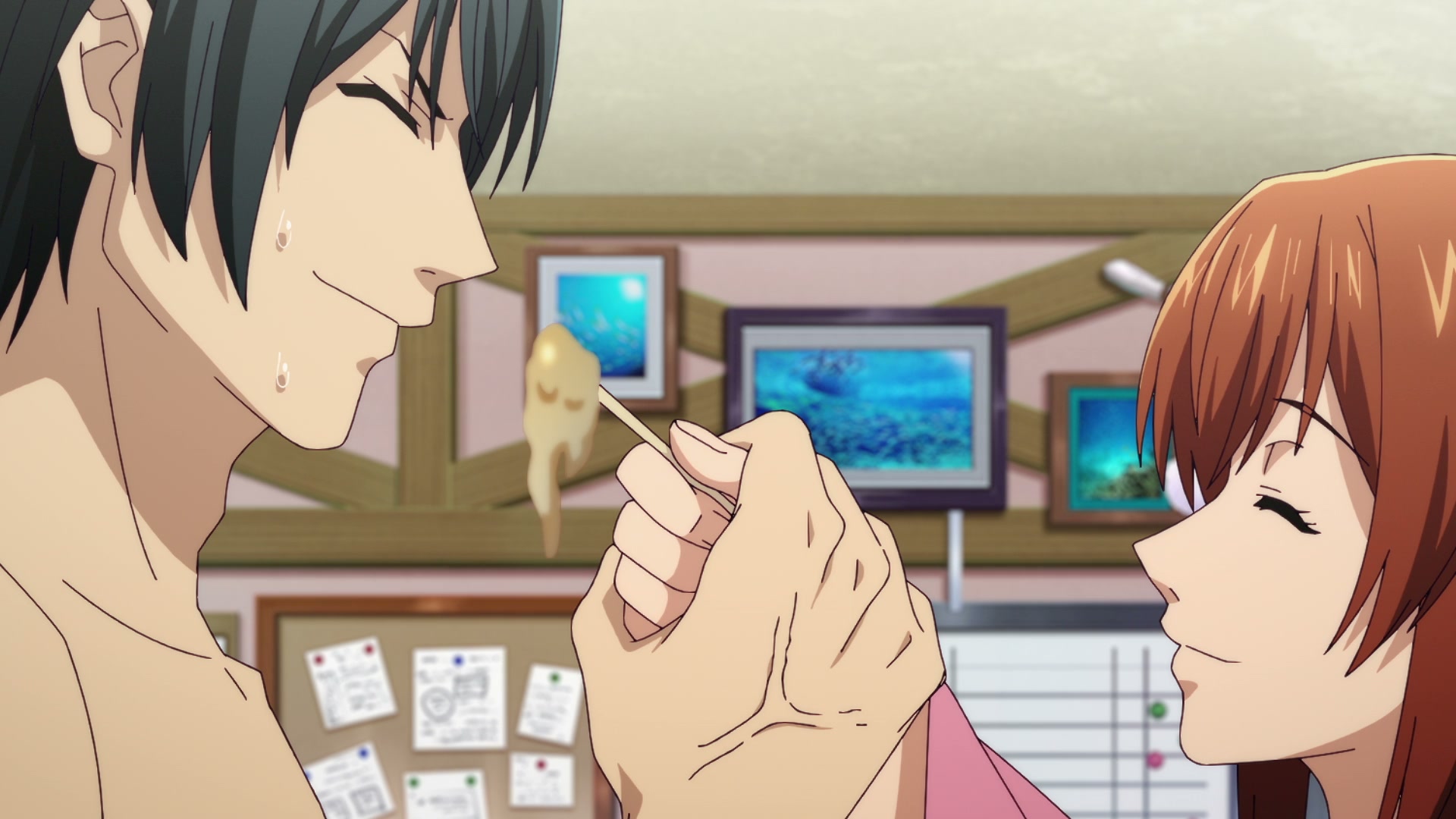
Amid the chaos, Chisa forcing Iori to eat her takoyaki lands differently than the surrounding comedy. Her reasoning, “I am your girlfriend, if just in name. I have to do girlfriend-like things,” is delivered without the usual tsundere edge. She is not embarrassed or angry. She is just stating a fact and acting on it.
Iori’s resistance is genuine discomfort rather than comic overreaction, and the moment where Kouhei photographs the forced feeding “to blackmail you if I ever need to” pulls the scene back from sincerity before it can get too soft. But the beat itself matters. Chisa and Iori’s fake relationship has been a running gag since season one, and seeing Chisa treat it with something approaching genuine intent, even for a moment, suggests the show has not forgotten that the premise has emotional weight beneath the comedy.
The drinking game that follows, where all the cups turn out to be alcohol, is the show’s way of saying “okay, enough sincerity.” The seniors watching the three of them pass out and reflecting on how the juniors “can be cute at times” is the closest the episode gets to sentimentality, and it earns it by keeping the moment brief and understated.
The Overseas Trip Setup Feels Natural
The final stretch sets up what looks like the season’s first arc: a two-week diving gig in Palau. Nanaka’s casual mention of the opportunity, Iori’s immediate enthusiasm, and Kouhei’s resistance based entirely on not wanting to miss his anime’s live TV broadcast is a perfect encapsulation of their dynamic. Iori tricking Kouhei into agreeing before revealing the international destination is mean in the way only close friends can be, and Kouhei’s anguished “Not my live TV experience!” is the right note to end the setup on.
Shiori’s brief phone call adds a small but intriguing wrinkle. Her refusal to send Iori’s passport, forcing him to come home for the first time since starting university, suggests some unresolved tension that the season will likely explore. The episode does not dwell on it, but the “nasty aura” Iori senses at the very end hints that going home might be more complicated than a simple errand.
Where This Leaves the Season
As a season premiere, this episode does exactly what it needs to do. It reminds you why these characters are fun to spend time with, delivers several extended comedy setpieces that showcase the show’s particular rhythm, and sets up a trip that promises new scenery and new opportunities for disaster. The debate scenes are sharp, the party scenes are chaotic, and the small character moments, Chisa’s takoyaki feeding, the seniors’ quiet reflection, land without overstaying their welcome.
Grand Blue has always been a show about people who express affection through mutual destruction, and this episode understands that balance. The jokes are mean, but the meanness is distributed evenly. Everyone gets humiliated. Everyone gets revenge. And underneath all of it, there is a group of friends who genuinely want to spend their last summer together making memories, even if those memories involve alcohol-based takoyaki and courtroom debates about execution methods.
If the rest of the season maintains this energy, we are in for a good time. Palau awaits, and so does whatever is waiting for Iori at home.
Screenshots