Robot, Android, or Cyborg? Breaking Down the Terms with Gundam, Rayearth, and Cyborg 009
From 1728 to 2026 anime, we dissect the origins and meanings of robot, android, cyborg, and more, using classic and upcoming shows as examples.
2026-08-14OkabeRintarou7 min read
How do you use the terms “robot,” “android,” and “cyborg”? There are also similar words like “artificial human,” “powered suit,” and “humanoid,” which many people understand by nuance. In this summer vacation special, we’ll dissect each term one by one, using past robot anime and films as examples.
The Origins of Each Word
Among the terms “robot,” “android,” “cyborg,” “artificial human,” “powered suit,” and “humanoid,” the oldest is probably “android.” The word first appeared in 1728 in Ephraim Chambers’s “Cyclopaedia, or an Universal Dictionary of Arts and Sciences,” in a passage related to alchemy. At the time, it was used in a sense similar to the alchemical artificial life form “homunculus,” not quite the same as today’s meaning of an artificial human.
Later, in 1886, Villiers de l’Isle-Adam’s novel “The Future Eve” featured the French word “Andréide” for an artificial human, helping to spread the modern image of androids. The term’s root means “human-like,” referring to an idol with a form close to a human.
The next oldest is “robot.” It first appeared in Karel Čapek’s 1920 play “R.U.R.” (Rossum’s Universal Robots). The robots in the play were not mechanical machines as we imagine today, but artificially manufactured, near-biological beings. The word comes from the Czech “robota,” meaning forced labor or drudgery, and was used to describe machines that work in place of humans. Interestingly, the play’s robots are actually bio-based artificial life forms, or “bionoids,” making them similar to androids. When the play was translated into Japanese, the term “人造人間” (artificial human) was used for the first time.
In recent years, many people distinguish between “android” for human-like beings and “robot” for tool-like machines, but in a broad sense, both are robots. Within the robot category, androids are the ones that resemble humans.
Cyborgs, Powered Suits, and Humanoids
“Cyborg” is short for “cybernetic organism,” referring to a human with artificial organs or parts inside the body. Some say that once metal is implanted through surgery, the person can be called a cyborg. This classification is easy to understand with examples from Shotaro Ishinomori’s transforming heroes.
Kikaider from “Android Kikaider” is an android, built as a complete machine. His rival Hakaider has an android body with a human brain transplanted into it. Meanwhile, the 00 cyborgs from “Cyborg 009” and the Kamen Riders from “Kamen Rider” are cyborgs, as they are living beings mechanically modified.
A “powered suit” is a mechanical armor worn by a human, such as Iron Man’s armor or the power loader in “Aliens.” “Humanoid” simply means “human-type,” so it’s used in phrases like “humanoid android” or “humanoid robot.”
What About the 2026 Fall Anime?
Now, how do the new fall 2026 anime “Mahou Kishi Rayearth,” “Vertex Force,” and “Juou Bushin DanDevine” fit in?
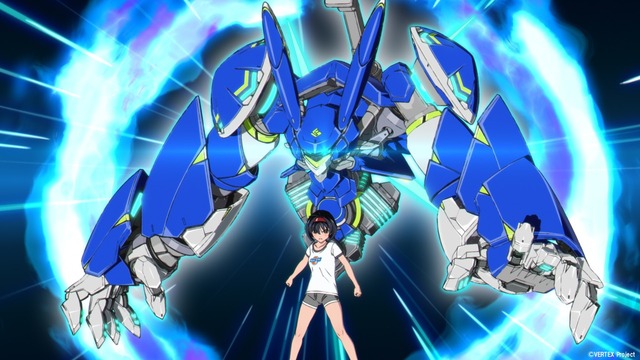
First, “Vertex Force” hasn’t revealed much information yet, but based on the PV, it appears to feature a powered suit, as there are wearers. That’s all we know for now, but the heroines are cute, so we’re interested! The original TV anime is set to premiere on October 3, 2026, at 23:30 on various stations.
“Juou Bushin DanDevine” is a combining robot work that inherits the tradition of Japanese robot anime. In robot anime classification, it falls under the super robot category. During the 1970s and 1980s, the robot anime genre had two major popular categories: super robot anime, featuring special moves, transformation, and combining—like “Mazinger Z” and “Getter Robo”—and real robot anime, characterized by realistic worlds and combat, such as “Mobile Suit Gundam” and “Armored Trooper Votoms.”
Each series also has its own unique names for its machines: “Mobile Suits” in the Gundam series, “Heavy Metal” in “Heavy Metal L-Gaim,” and “Aura Battlers” in “Aura Battler Dunbine.” Interestingly, Mobile Suits can be seen as a kind of powered suit, as they are like “mobile suits” in contrast to the “normal suits” worn as spacewear, though that interpretation is a bit forced.
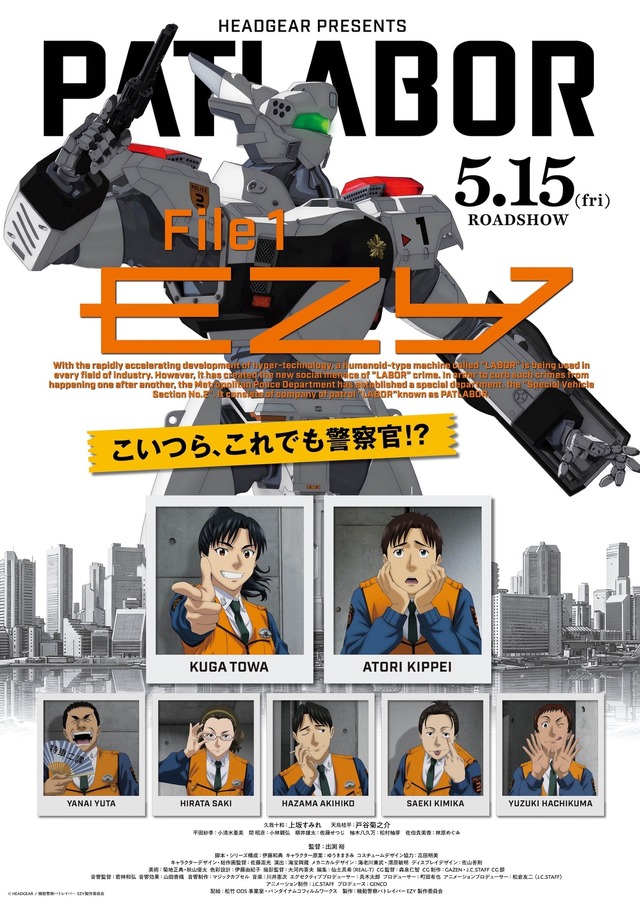
In “Patlabor,” the machines are called “Labors” and are treated as industrial machinery or special vehicles, which is a fascinating way to express the series’ realistic world. The second chapter of “Patlabor EZY” is set to be released in theaters on August 14.
The Mashin (gods) that appear in “Mahou Kishi Rayearth” are a kind of robot, but they possess souls, making it difficult to distinguish them from living beings. The same goes for Ryujinmaru from “Mashin Hero Wataru” and the Transformers series, which was also adapted into live-action films.
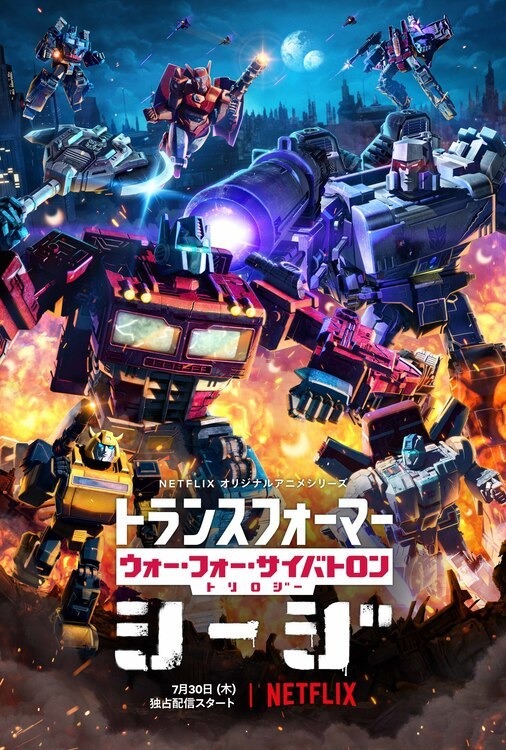
What’s interesting about the Transformers series is that when they first appeared in the 1980s, they were depicted as alien metal life forms. According to the G1 (Generation 1) setting, Transformers were originally created by the Quintessons as labor and gladiators. The workers became the Autobots (Cybertron), and the gladiators, forced to fight for entertainment, became the Decepticons (Destron). Their manufacturing process involved building a body and then instilling a “Spark” as the soul. While settings vary by series, the presence of a Spark gives them finite lives and makes them life forms. Because of this, it’s hard to simply call them “robots,” and the Japanese title “Fight! Super Robot Lifeform Transformers” fits well, as does the term “metal life form” used in the live-action films. The Mashin in “Mahou Kishi Rayearth” might be better described as spirits.
As for “RoboCop,” despite the “robo” in the name, he has both human biological parts and a mechanical body, so he is classified as a cyborg. However, as the name “RoboCop” suggests, the in-universe name and structural classification don’t always match.
Summary: Classification Table
For beings with multiple elements, we place them in the closest category.
Android / Artificial Human
Artificially created beings with a human-like appearance.
Hadaly from “The Future Eve”
Kikaider from “Android Kikaider”
The robots from “R.U.R.” (Note: They are not machines but artificial life forms, closer to modern artificial life.)
Cyborg / Modified Human
Beings that combine a living body with mechanical or artificial parts.
The 00 cyborgs from “Cyborg 009”
Kamen Rider from “Kamen Rider” (mainly the “modified humans” in early works)
RoboCop from “RoboCop”
Hakaider from “Android Kikaider” (a complex being with an android body and a human brain, differing from typical cyborgs)
Powered Suit / Wearable Machine
Mechanical equipment worn by a human to enhance physical or work abilities.
Loading...
Iron Man’s armor
The power loader from “Aliens” (strictly speaking, it’s more of a boarding/operating machine than a worn suit)
The equipment in “Vertex Force” (tentative classification based on released footage)
Super Robot
Piloted giant robots featuring special moves, transformation, or combining.
Mazinger Z from “Mazinger Z”
Getter Robo from “Getter Robo”
The main robot from “Juou Bushin DanDevine”
Real Robot / Manned Mobile Weapon
Piloted humanoid machines with strong aspects as weapons or industrial machinery.
Mobile Suits from the “Mobile Suit Gundam” series
Armored Troopers from “Armored Trooper Votoms”
Heavy Metals from “Heavy Metal L-Gaim”
Aura Battlers from “Aura Battler Dunbine”
Labors from the “Patlabor” series (Note: Mobile Suits and similar are piloted from inside, so they are usually classified as manned mobile weapons, not powered suits.)
Beings with Will or Soul
Beings with a mechanical or humanoid body that possess will or a soul.
The Mashin from “Mahou Kishi Rayearth”
Ryujinmaru from “Mashin Hero Wataru”
Transformers from the “Transformers” series (They are not mere machines or tools but are treated as life forms or spirits in the story, making it difficult to classify them as either “robot” or “life form.”)
Humanoid
“Humanoid” indicates a human-like form, not an origin or structure. It is used in combination with other categories. Examples include:
Kikaider
Hakaider
RoboCop
Mobile Suits
Transformers
The Mashin from “Mahou Kishi Rayearth”
Ryujinmaru
For instance, Kikaider can be described as a “humanoid android,” and Mobile Suits as “humanoid manned mobile weapons.”
Classification Notes
“Android,” “cyborg,” and “powered suit” are primarily classifications based on structure or origin. On the other hand, “super robot” and “real robot” are based on genre or narrative style. “Humanoid” refers to appearance or form. Therefore, these are not parallel categories; a single character or mecha can fit multiple terms.











![“So Cool Despite Only Wearing Briefs!” Jiji Possessed by Jashi is a Hot Topic! Dandadan [Episode 14 Spoiler Reactions Summary]](https://animeworld.info/wp-content/uploads/2025/07/781558.jpg)
![“Tears Won’t Stop,” “Held My Breath at the Final Moment”: Sobbing at Louraan’s “End”… Her Kindness That Carried Through Her Villainous Role – Kusuriya no Hitorigoto [Episode 47 Spoiler Reactions Summary]](https://animeworld.info/wp-content/uploads/2025/06/779002.jpg)