







“Could a love story like this actually happen in real life?” That’s the question you might ask yourself while reading Marmalade Boy, the classic shoujo manga by Yoshizumi Wataru. And yet, you can’t stop turning the pages.
What Is Marmalade Boy?
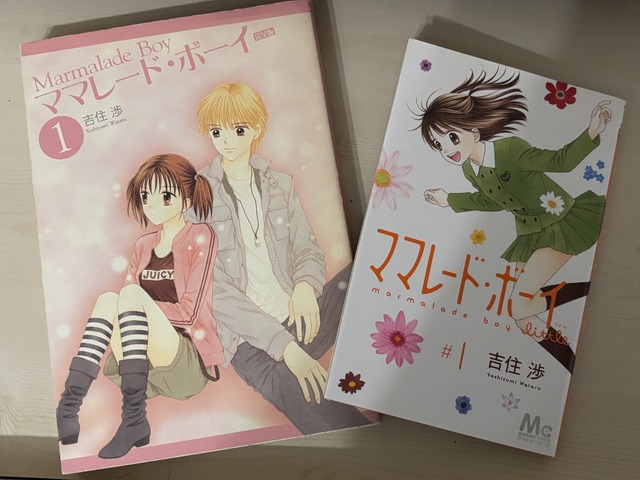
Serialized in the shoujo magazine Ribon from 1992, adapted into a TV anime in 1994, and even turned into a live-action film starring Sakurai Hinako and Yoshizawa Ryo (plus a Taiwanese drama adaptation), this beloved series follows the love story between Koishikawa Miki and Matsuura Yuu, who suddenly become step-siblings. It’s packed with the heart-thumping moments that defined 90s shoujo manga.
But looking back from the Reiwa era, the setup is absolutely wild.
A Premise Full of Tsukkomi Points—Yet Somehow Heartwarming
The story begins with a shock: Miki’s parents announce they’re getting divorced. That alone is surprising, but the reason? They hit it off with another couple during a trip to Hawaii and decided to swap partners and remarry. Wait, what? That can’t happen, right?
To make things even more intense, the two families decide to live together. So Miki ends up sharing a home with the other couple’s son, Yuu. Suddenly, there’s a handsome, same-age boy in her new family. For a shoujo manga, that’s perfect. In real life, it’s information overload!
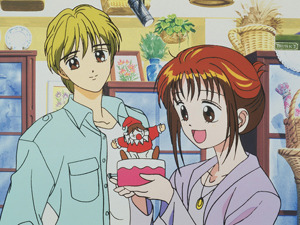
Yuu is academically gifted, athletic, and good-looking. He’s also a bit elusive—teasing Miki one moment, then saying something that makes her heart skip the next. Yes, she’s falling for him. That’s a given. But Miki is no pushover: she’s cute, energetic, and not afraid to speak her mind. Their bickering and gradual closeness is classic shoujo romance.
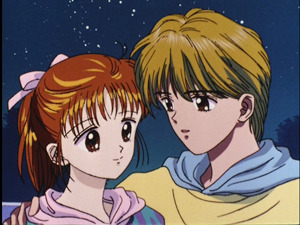
What makes it even more interesting is the proximity. They live together, go to the same school, and come home to each other. In real life, that would be awkward. In shoujo manga, it accelerates the romance. Yuu also gets involved in Miki’s love life, making the distance between them feel even smaller. Readers can’t help but think, “If I lived with a guy like that, I’d definitely be conscious of him too!”
You Think They’ll Get Together? Wait, There Are More Handsome Guys
The story also introduces Ginta and Hotaru, characters who shake up Miki and Yuu’s relationship. Ginta is Miki’s middle school crush—a tennis ace she was mutual with but somehow missed. Hotaru is a slightly melancholic-looking handsome guy she meets at her part-time job. He also ends up rejected, which seems unfair—especially since in the anime, he’s voiced by Ishida Akira. How could anyone say no to that?
The 90s shoujo manga power is on full display: “I like you but can’t be honest,” “I can’t forget someone I used to like,” “Misunderstandings lead to distance,” “Someone else confesses to you.” These classic love tropes come one after another.
Compared to modern romance stories, the emotional expressions are incredibly direct. Without smartphones or social media, every action—meeting in person, calling, waiting, writing letters—becomes a major event. It’s not “read receipts left on read,” but “the phone won’t connect!” And yet, that analog charm is something we now find endearing.

The biggest appeal of Marmalade Boy is that despite all the absurdity, the romance itself is surprisingly straightforward. Miki and Yuu fight, get jealous, misunderstand each other, and still fall in love. Even when you want to shout, “Before all this, the four parents should sit down and talk!” you end up cheering for the couple. That’s the magic of shoujo manga.
Looking at it now, you might laugh and say, “That would never happen!” But at the same time, it makes you think, “That kind of love sounds nice.” The absurdity is what makes it fun. The impossible setup is what makes it so easy to get lost in.
And above all, the feeling of loving someone you love doesn’t change with the times. Marmalade Boy is a work that lets you fully enjoy the romance of shoujo manga, no matter when you read it.
One last thing: if someone in real life told you, “My parents are divorcing, remarrying another couple, and we’re all going to live together,”—please, before any romance, call a family meeting!