



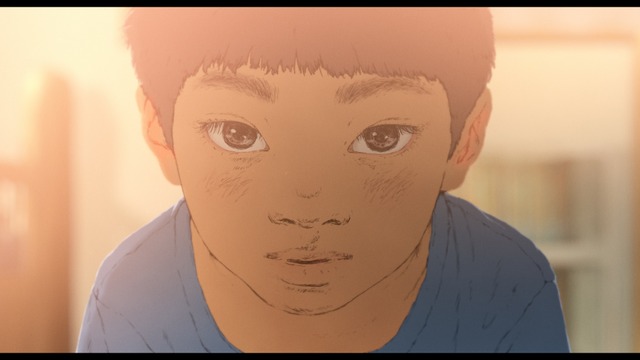
Kadowaki Kohei’s debut feature-length anime We are Aliens (我々は宇宙人) has been selected for the 79th Cannes International Film Festival’s Directors’ Fortnight and the Annecy International Animation Film Festival 2026 long feature competition. The film opens in Japanese theaters on September 25.
Set in a rural town during the Heisei era, it follows Tsubasa, a shy boy who struggles with being “ordinary,” and Akitaro, a popular classmate who seems “special.” Their friendship over 30 years forms the core of this nostalgic youth animation. Despite having no prior TV anime directing experience, Kadowaki has earned international attention with his first feature.
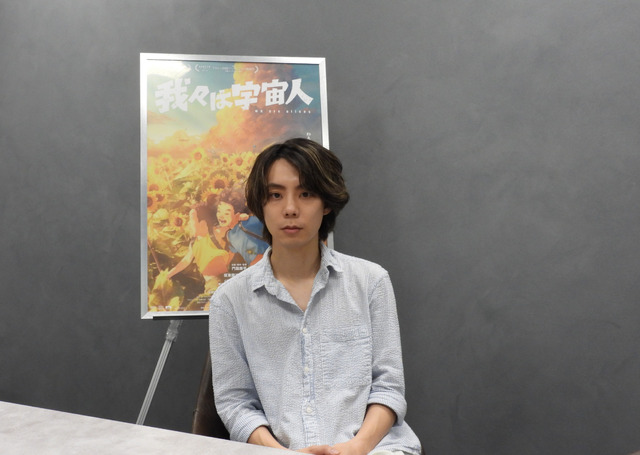
Born in 1996, Kadowaki graduated from the Tokyo University of the Arts design department and worked at an animation production company before going independent. After working on stage visuals and commercials, he became an animation artist focused on music videos. For We are Aliens, he handled planning, direction, and script, and the film has been highlighted at Cannes and Annecy.
Emotional Rhythm Over Nonstop Cuts
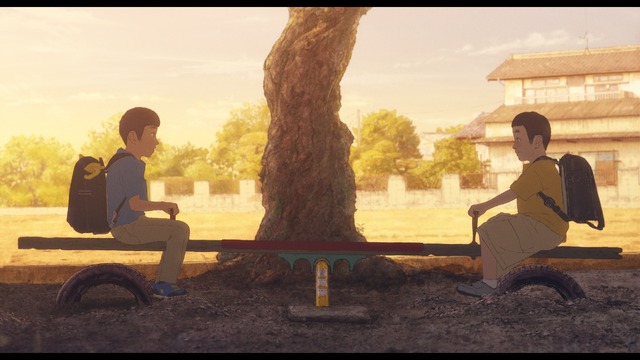
The director says the idea had been in his mind since his early 20s. “I wanted to preserve my childhood in some form, and since I’m an artist, animation was the natural way.” It started as fragmentary images. Four years ago, after meeting producer Hayashi, the project turned into a feature. “To turn those images into a movie, I needed a story that follows emotional flow, so I built it from the big mid-film turn,” he explains.
Kadowaki says writing the script was about creating “waves of emotion.” He compares it to a roller coaster: “If it’s fast the entire time, you get bored. There needs to be a pause at the top before a sudden drop.” He studied films including Spirited Away, specifically the scene where Chihiro misses a step on the stairs, to understand how to shape that rhythm. He repeatedly revised the script until producer Hayashi gave it a passing grade.
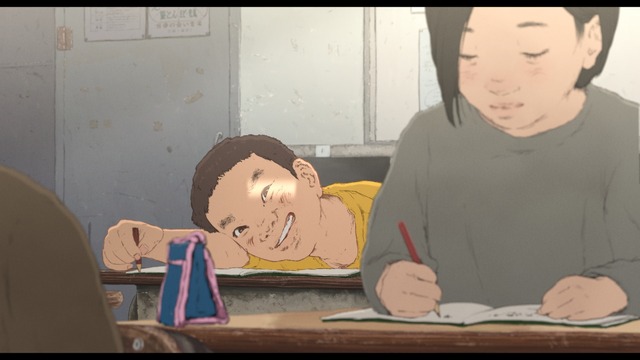
When asked how much of the childhood episodes came from his own experience, Kadowaki estimates about 20 to 30 percent. “The first-love episode is from my own experience,” he says.
Designing Nostalgia Through Detail
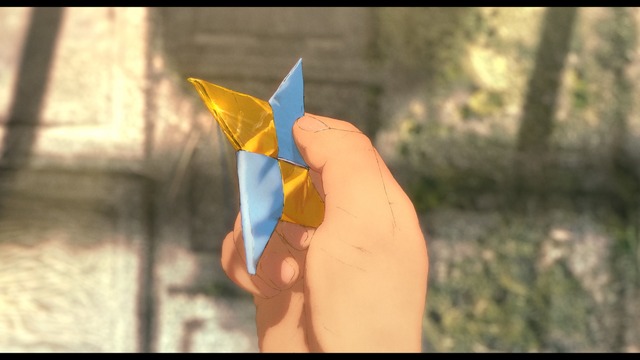
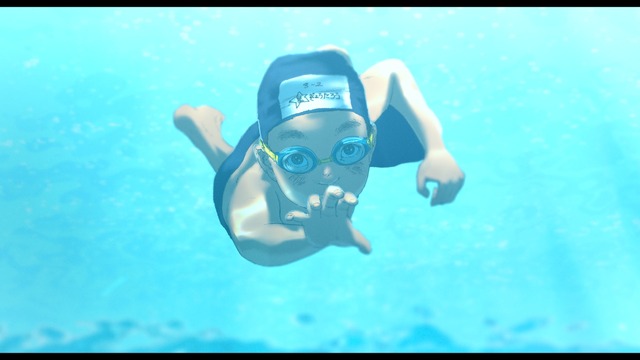
The film’s realistic visual style comes from a need for authenticity. “I wanted audiences to feel nostalgia for childhood,” Kadowaki says. “Things like how a randoseru gets damaged, or how a school desk gets worn at the corners—these small pieces of information are triggers for memory.” By filling the frame with such details, he hoped each viewer would find something that takes them back to their own past.
That meant increasing the amount of information in backgrounds, props, and characters. Kadowaki also worked as animation director and art director, and performed color grading on every cut. “I wanted the characters to feel like they belong in the backgrounds,” he says. He even had background staff use the same brushes used for the characters.
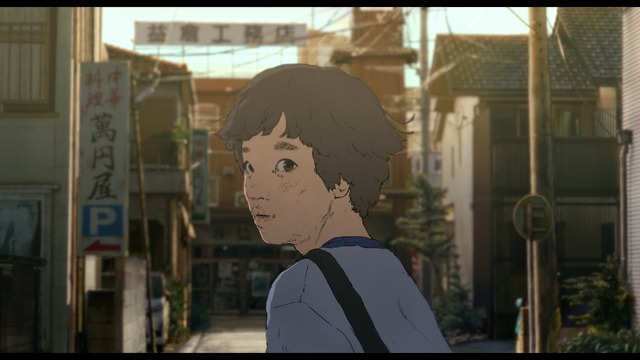
He emphasizes consistency across all visual elements. “I also handled editing and was involved in post-production from the beginning, so I was able to keep the tone from becoming inconsistent.” The layout work is notable for its lens awareness—something international press at Cannes praised. “I didn’t consciously think of it as my signature, but I realized during interviews at Cannes that using telephoto and wide-angle lenses according to directorial intent was my originality,” he says.
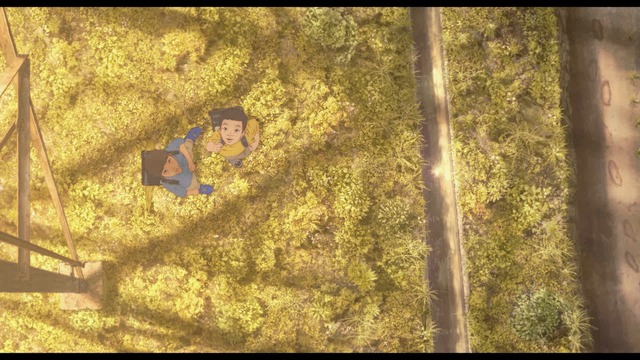
Kadowaki says he learned lens choices from watching live-action films—about 80% of what he watches. “When I sketch a layout, I first decide how big I want the subject to appear. If I want a sunflower at this size, the character should be this proportion, and that leads to which lens to use.”
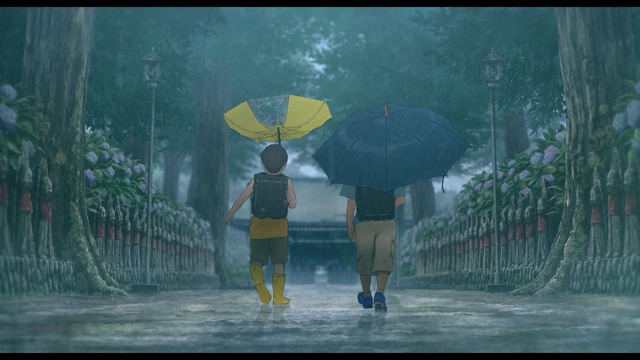
The film also features realistic movement. Reference footage was shot for nearly every scene, with child actors auditioned for the childhood sequences. “The core body movements were rotoscoped, but I adjusted them because tracing directly doesn’t always work—children can look not-childlike, or shoulders can look too broad,” he explains. He combined rotoscope with drawn animation for hair and clothing, creating a hybrid that captures the accidental, fidgety movements of children while keeping the smoothness of animation.
For the live-action shoots, Kadowaki directed the actors but gave child actors freedom. “If you over-direct the meaningless movements, it works against you. Those irregular movements are hard to draw from scratch, so rotoscope gave us an advantage,” he says.
Roots in Mainstream Hits
When asked about influences, Kadowaki cites Doraemon films, Studio Ghibli, and 80s movies, as well as NARUTO in manga. He also mentions impressionist painting and 17th-century realism. His taste is largely mainstream: Terminator, Back to the Future, Jackie Chan, Bruce Lee, Parasite, and Kore-eda Hirokazu’s films. “I watch whatever is getting talked about around the world,” he says. He also says he avoids making things difficult to follow. “Many people say some films are incomprehensible, and I usually can’t follow them either, so I wanted to make sure this one wasn’t like that.”
Before closing, Kadowaki points out that the film is full of nostalgic items and details that staff worked hard to include with permission. “You probably won’t find them all in one viewing. I hope you’ll talk with friends afterward about how many you spotted—and that you’ll discover new ones each time you watch,” he says.
Film Details
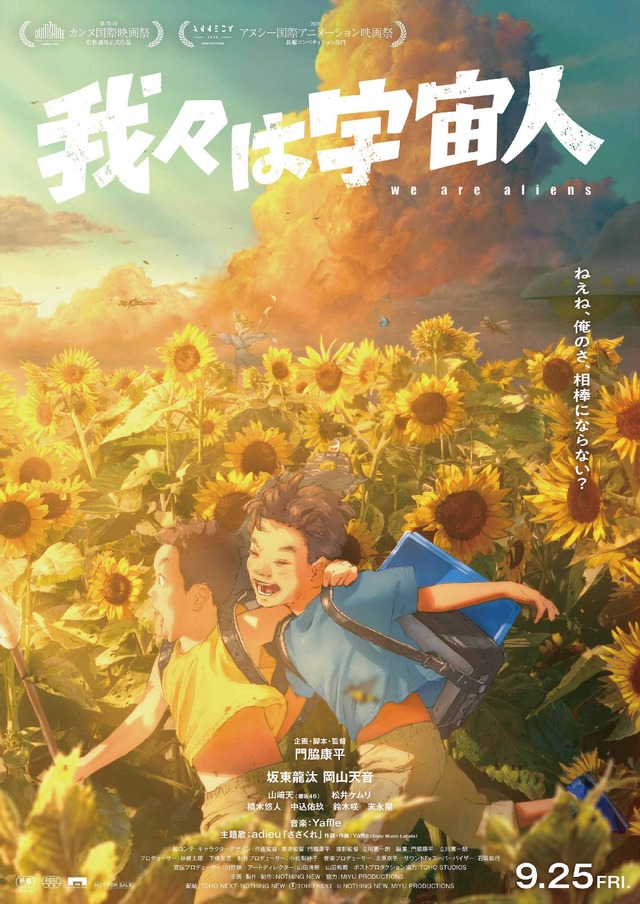
We are Aliens (Japanese title: 我々は宇宙人)
Release date: September 25 (Fri) nationwide
Distributors: TOHO NEXT・NOTHING NEW
Plan/Director/Script: Kadowaki Kohei
Cast: Bando Ryota, Okayama Amane, Yamazaki Ten (Sakurazaka46), Matsui Kemuri, Makiki Yuto, Nakazome Yuki, Suzuki Saki, Suenaga Yo
Music: Yaffle
Theme song: adieu “Sasakure” (words/music: Yaffle, Sony Music Labels)
Planning/Production: NOTHING NEW
Cooperation: MIYU PRODUCTIONS
(C) NOTHING NEW, MIYU PRODUCTIONS