



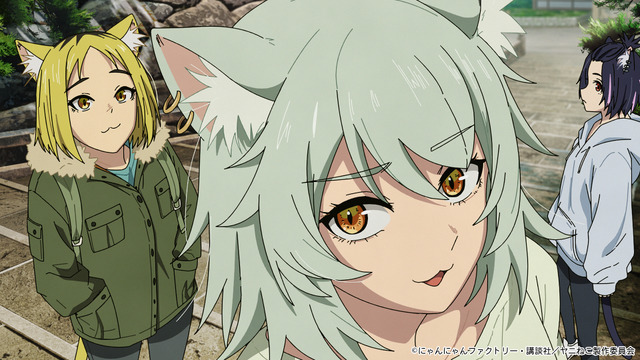
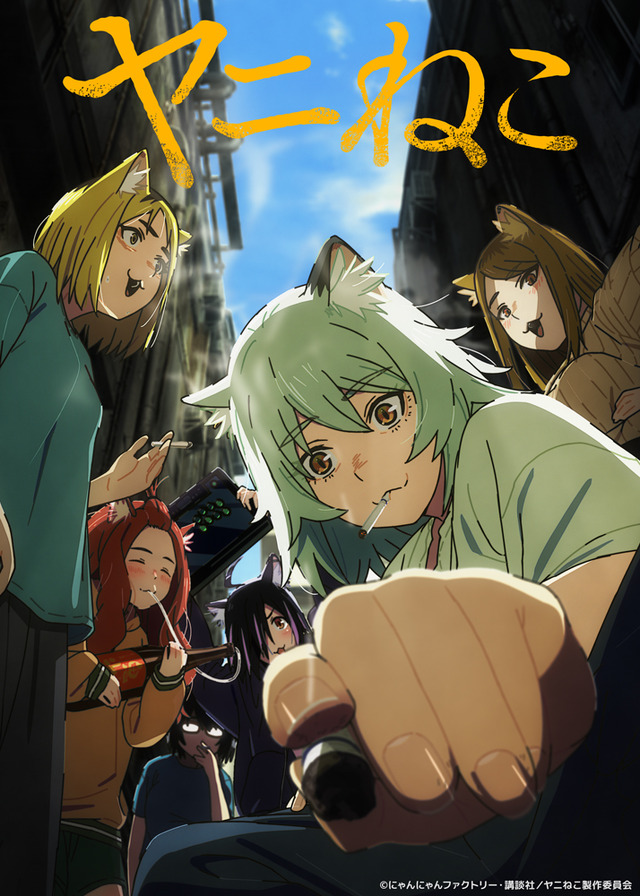
TV anime Yani Neko has finished its full 12-episode broadcast. Since the series began airing in July, viewers have followed the impossibly free daily lives of Yani Neko and friends, with many likely enjoying the feeling that “every week, we’re being shown something amazing.” Episode 10 featured an appearance by Kago Ai. In Episode 11, the opening and ending theme singers swapped. The final episode went even further, using the opening theme “Nan mo Nee ~Jyuunin Daigasshou ver.~” performed by Yani Neko All Stars. From start to finish, the anime kept surprising its audience.
Now is a good time to look back at Yani Neko—not at its characters or story, but at the music that colored the work.
Who Is Suzuki Keiichi?
The music for Yani Neko is handled by Suzuki Keiichi. On the series, he not only created the background score, but also composed the Episode 2 insert song “Nicotine Juyoutai Taisou,” and composed and sang the insert song “Boku wa Darling,” which was used in Episodes 6 and 10. In Episode 8, he even provided the voice for an eye-catch.
So what kind of musician is Suzuki Keiichi?
His career is difficult to summarize in one place. He has a resume and body of work substantial enough to fill several books, and he is an essential figure in Japan’s music scene. Born in Tokyo in 1951, he began music activities in the 1960s, gaining experience supporting artists such as Agata Morio and Happy End, and taking part in numerous recording sessions. In the 1970s, he formed Hachimitsu Pai, which carried out pioneering work in Japanese-language rock. After Hachimitsu Pai disbanded, he formed Moonriders. The band debuted in 1976 with the album Hi no Tama Boy and remains active today. Moonriders is one of the longest-running rock bands in Japan to have continued since its major debut.
Alongside Moonriders, Suzuki has released solo and unit works. He has created music with a wide range of musicians, including Takahashi Yukihiro of YMO in THE BEATNIKS, as well as Agata Morio, PANTA (Zunou Keisatsu), and Keralino Sandorovich. He has also written songs for and produced other artists. Beyond rock and pop, his work has extended into kayoukyoku, enka, and commercial music, covering a broad range of genres.
Following his discography, one may be surprised to realize just how many different places he has made music for, saying, “That song too, and this song too?!”
A key word in Suzuki Keiichi’s long music career is “Tokyo.” Born in Tokyo in 1951, he has continued activities including Hachimitsu Pai and Moonriders while the city and music scene changed greatly. His music is not merely sophisticated; it is also miscellaneous, funny, and at times lonely. For many years, Suzuki has turned that complex face of daily life into music. In Yani Neko, too, rather than overblowing the sloppy everyday lives of the characters in the city, he draws out their humor and strange melancholy through sound.
The sound of Suzuki Keiichi, born and raised in Tokyo, overlaps with the world of Yani Neko.
From MOTHER to Kitano Films and Anime
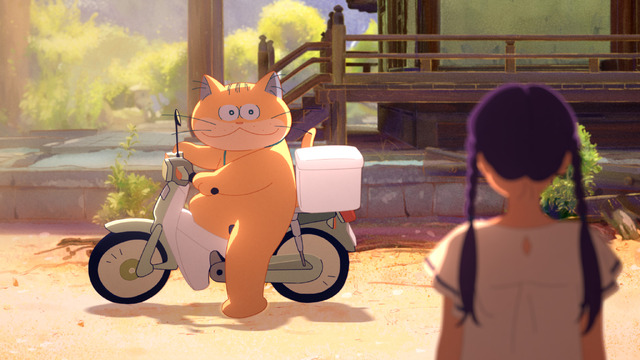
In parallel with his own band activities, Suzuki has handled music for many visual works and games.
One representative example is Nintendo’s games MOTHER and MOTHER2. He showed a major presence in game music as well, and these works still have fans around the world. The music of MOTHER is listened to beyond the boundaries of games.
In film music, he handled Kitano Takeshi’s Zatoichi. For that work, he won the 27th Japan Academy Prize for Best Music and the 36th Sitges – Catalonian International Film Festival Original Music Award. He has also handled music for Kitano’s works such as Outrage Saishuushou.
Suzuki’s involvement with animation is also long. In 2003, he handled the music for Kon Satoshi’s Tokyo Godfathers. He has also worked on the anime films Saint☆Oniisan and Waka Okami wa Shougakusei!, among others. In recent years, he handled the music for the film Bakeneko Anzu-chan and also appeared in it as Oshou-san, continuing his involvement with visual works.
He has also worked as an actor in films and dramas, including appearances in Love Letter and Swallowtail, continuing a wide range of activities that cannot be contained by the title of musician alone.
And in 2026, Suzuki Keiichi is handling the music for the TV anime Yani Neko.
The Sound Suzuki Keiichi Made for Yani Neko
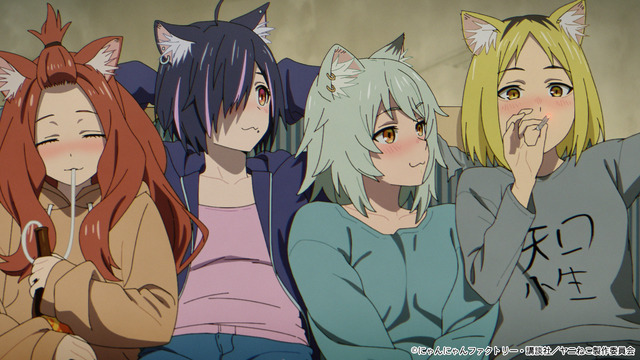
On the official website, Suzuki spoke about the music as follows:
“There’s something indescribably appealing about a sloppy yet dignified daily life, isn’t there? As for the music production, the director’s instructions were outstanding, and I was able to enjoy making it. As a bonus, until Hosono Haruomi quits smoking, I will continue smoking.”
This comment conveys a unique distance from Yani Neko. In the anime itself, the music does not so much hype up the story as slip naturally into the characters’ loose, somehow odd daily lives. It also makes one notice that the music playing behind casual exchanges changes the atmosphere of a scene just a little.
In Yani Neko, Suzuki was responsible not only for the background score but also for memorable songs.
“Nicotine Juyoutai Taisou,” sung by the tobacco fairy in Episode 2, is one song he composed. “Boku wa Darling,” which appears in Episodes 6 and 10, was composed and sung by Suzuki himself. In the show, it is credited to Suzuki Nyan’ichi.
In Episode 8, he also handled the eye-catch voice. Suzuki Keiichi himself appears not only through the music but in various parts of the production.
Looking back this way, Yani Neko uses music—background score, insert songs, and even the eye-catch—as a major element that shapes the world of the work. Suzuki also said in his official comment, “Yani Neko is a very interesting anime for me, as I am still a smoker.” Perhaps it is because Suzuki Keiichi is that kind of person that the music for Yani Neko came to sit so closely with the series.
Listen to Yani Neko’s Music Again
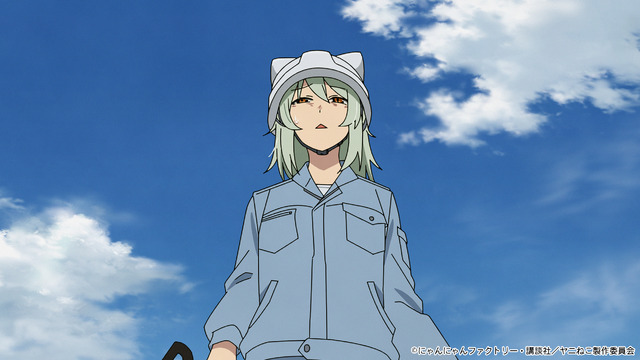
The sloppy daily lives of Yani Neko and friends become even funnier, and sometimes strangely sorrowful, with Suzuki Keiichi’s sound added. It is not too noisy, not too emotional, yet it stays in the ear. That exquisite sense of distance is unique to Suzuki, who has added music to numerous works ranging from rock to games, film, and anime.
Of course, songs like “Nicotine Juyoutai Taisou” and “Boku wa Darling” are unforgettable once heard, but paying attention to the background music that casually played may make the world of Yani Neko feel different again.
While looking back on past episodes, why not listen not only to the characters and story but also to the “music” that was sounding behind them? The soundtrack will be released on music streaming services from September 30, 2026 (Wednesday) at 12:00 a.m. With an ear on the music handled by Suzuki Keiichi, it is worth enjoying Yani Neko on screen once more.
![AnSuta Sutafoni Day 2: ALKALOID, Eden, UNDEAD, Switch, MaM, TearS and MELLOW DEAR US Captivate! [X Post Summary]](https://animeworld.info/wp-content/uploads/2025/11/31mEyCaV9L._SL160_.jpg)