





After everything Rudeus Greyrat has been through—the teleportation disaster, the Demon Continent, the labyrinth, losing his father and his hand—watching him settle back into a quiet morning routine feels almost surreal. The episode opens with his inner voice narrating over a sleepy, domestic scene: Roxy in bed, the morning light, the gentle awkwardness of newlywed life. It is the kind of normalcy that the series has spent two seasons making feel earned, and Episode 3 leans into that warmth without turning it into a victory lap.
The opening stretch is a series of small, affectionate check-ins. Rudeus wakes up next to Roxy, still a little flustered that he cannot admire her properly in the dim light. Downstairs, Sylphiette is already up with baby Lucie, and the two wives exchange a brief, slightly embarrassed conversation about how Rudeus treated Roxy the night before. It is the kind of married-people small talk that could feel forced, but here it lands because Sylphie is genuinely curious and Roxy is genuinely flustered. Neither of them treats the arrangement as a competition, and the show does not milk it for drama. It just is.
Norn is writing more of Ruijerd’s story, Aisha is being Aisha, and Zenith sits quietly, still unresponsive. The episode does not linger on the sadness of Zenith’s condition. It simply shows Rudeus greeting her, Norn gently prompting her, and then the family moving on to breakfast. That restraint is what makes the moment stick. Rudeus’s inner voice admits that all he can do is wait and see, and the show trusts the audience to understand how heavy that waiting must be.
The Return to School and the Second Wife Problem
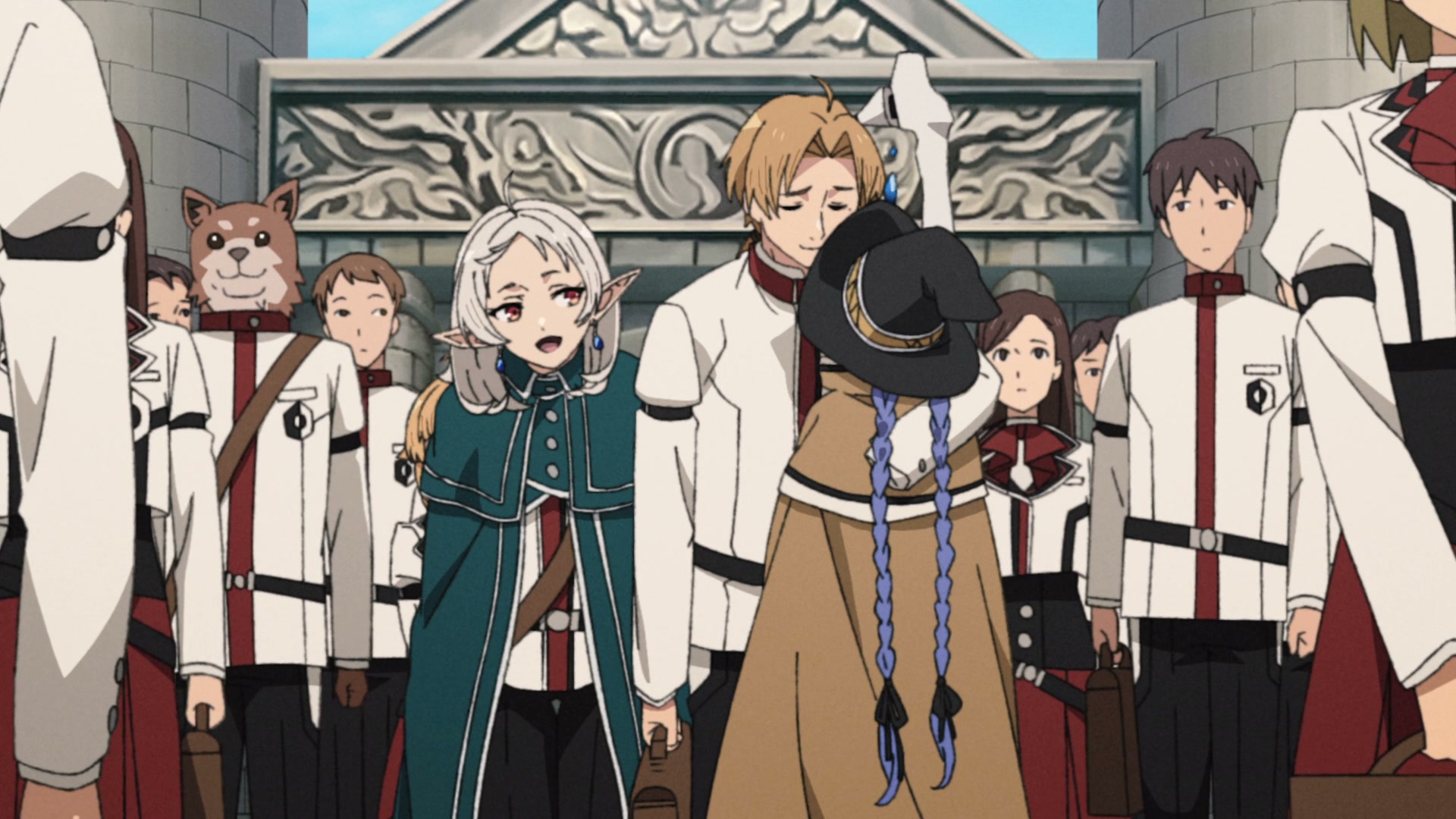
The walk to the university is where the episode’s comedic and social tensions start to surface. Rudeus walks with both Sylphie and Roxy, and the reactions from passersby are exactly what you would expect from a campus that already knows him as “Quagmire.” He leans into it, loudly declaring his love for both of them in the middle of the street, and the crowd cheers. It is a very Rudeus way of handling embarrassment: double down until everyone else is more embarrassed than you are.
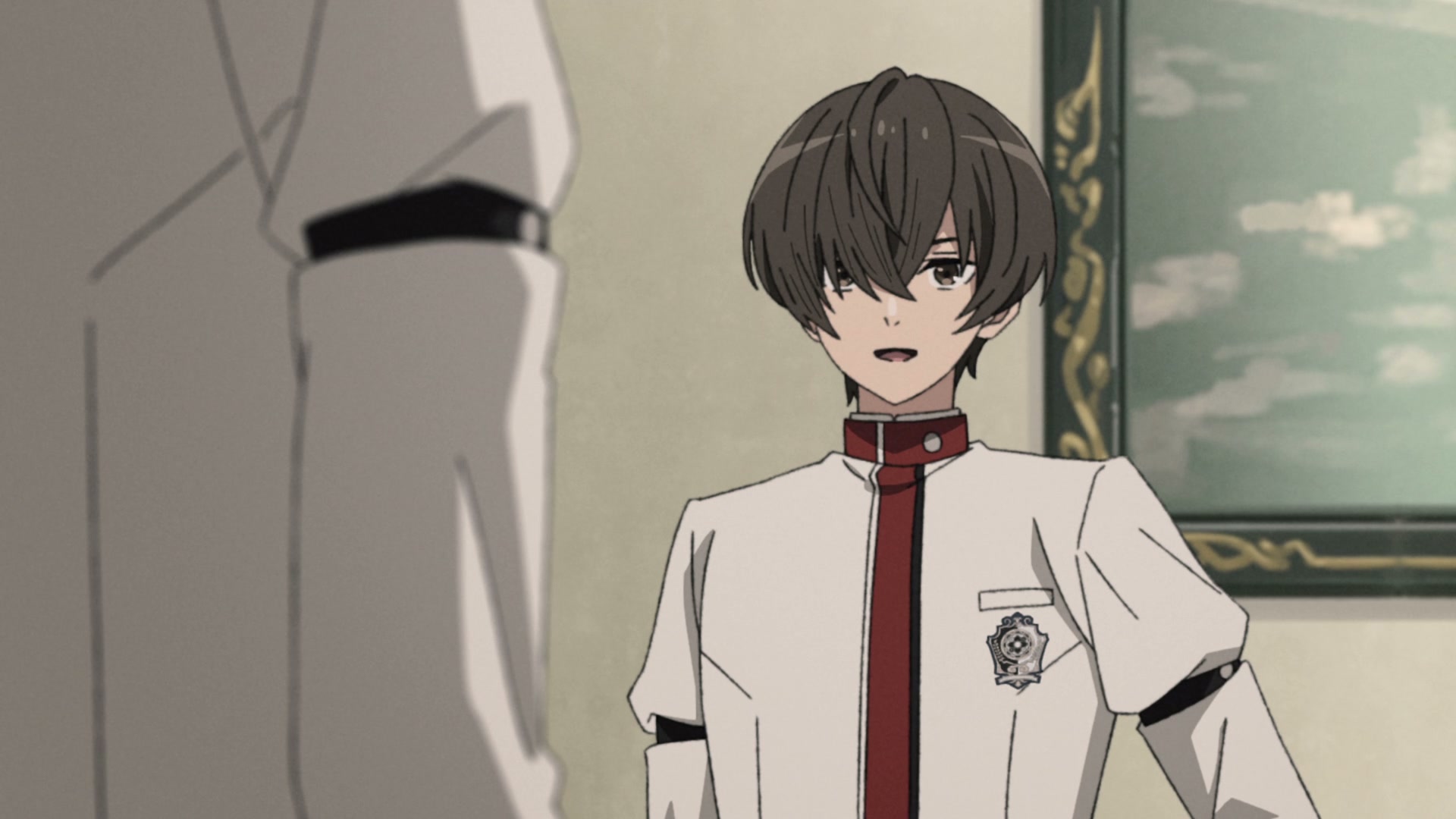
But the real test comes in the classroom. Roxy is introduced as the new instructor, and she immediately clarifies that she is Rudeus’s second wife. The room goes quiet. Cliff, who blessed Rudeus’s marriage to Sylphie under the assumption of monogamy, looks like he swallowed a lemon. The scene that follows is one of the episode’s best character beats. Cliff does not explode. He does not condemn Rudeus as a heretic. Instead, he pulls him aside and delivers a lecture that is equal parts theological disappointment and genuine concern for Norn. He points out that Norn prayed for Rudeus’s safe return every day, that she lost her father, and that Rudeus is now all she has left. The scolding is not about doctrine. It is about family.
Rudeus takes it. He does not make excuses. He admits he could have handled things better, and Cliff, seeing genuine remorse, forgives him with a grudging “Great Millis is magnanimous.” The whole exchange is a reminder that Cliff, for all his pomp, is a good friend. He has been looking out for Norn at church, and his anger comes from a place of care. It is a small, grounded conflict that resolves without melodrama, and it gives the episode a bit of necessary friction before the second half’s more sentimental turn.
Zanoba and Cliff’s Gift
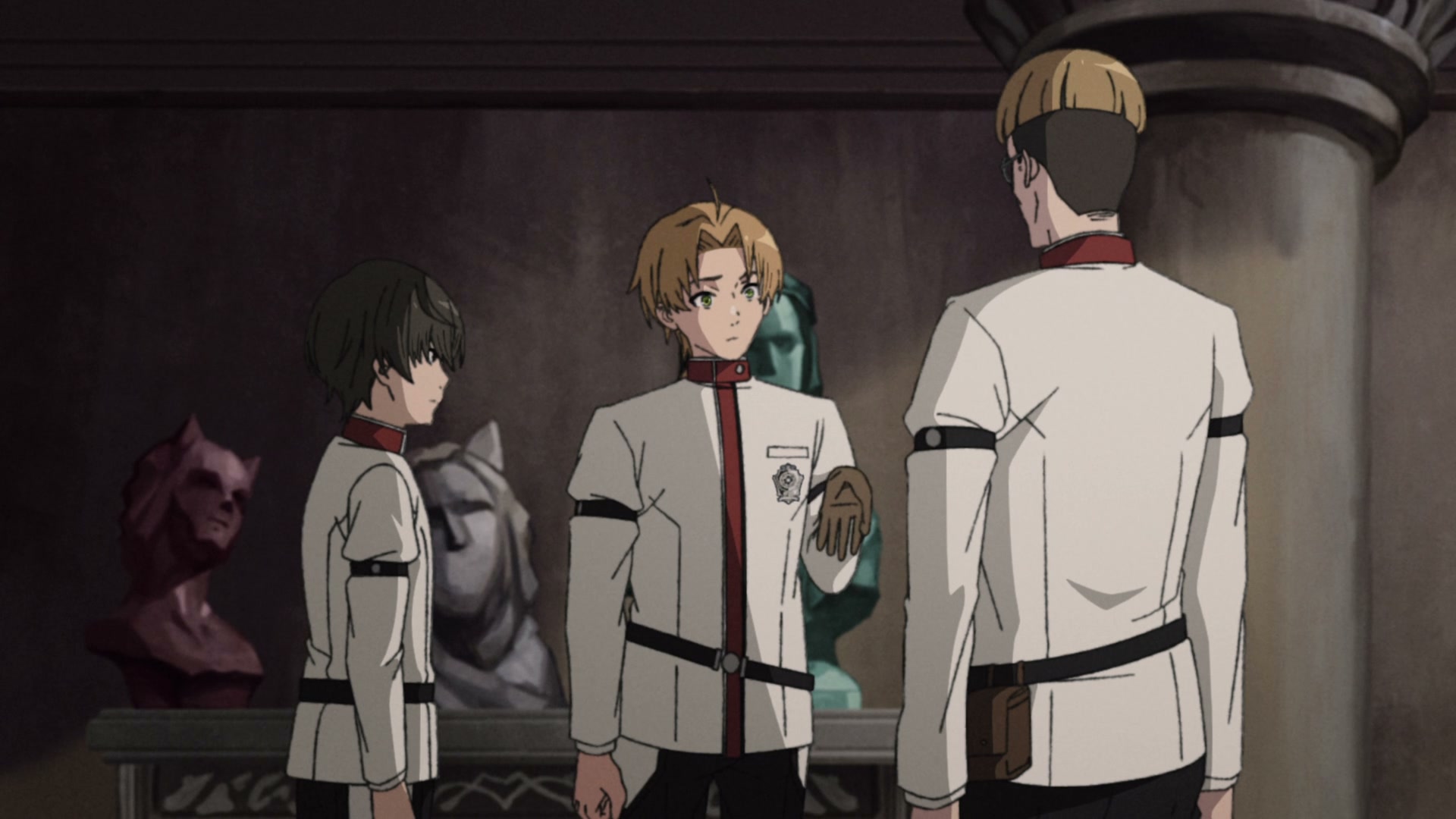
If the first half of the episode is about settling back into relationships, the second half is about a physical reminder of what Rudeus lost. Zanoba and Cliff have been busy. They present Rudeus with a magical prosthetic hand, a prototype they call the “Hand of Zaliff” after Rudeus names it on the spot. The scene where Rudeus first puts it on is pure, unfiltered joy. The hand moves. He can feel the fingertips. He immediately tests its strength by gripping Cliff’s arm, and the poor guy yelps.
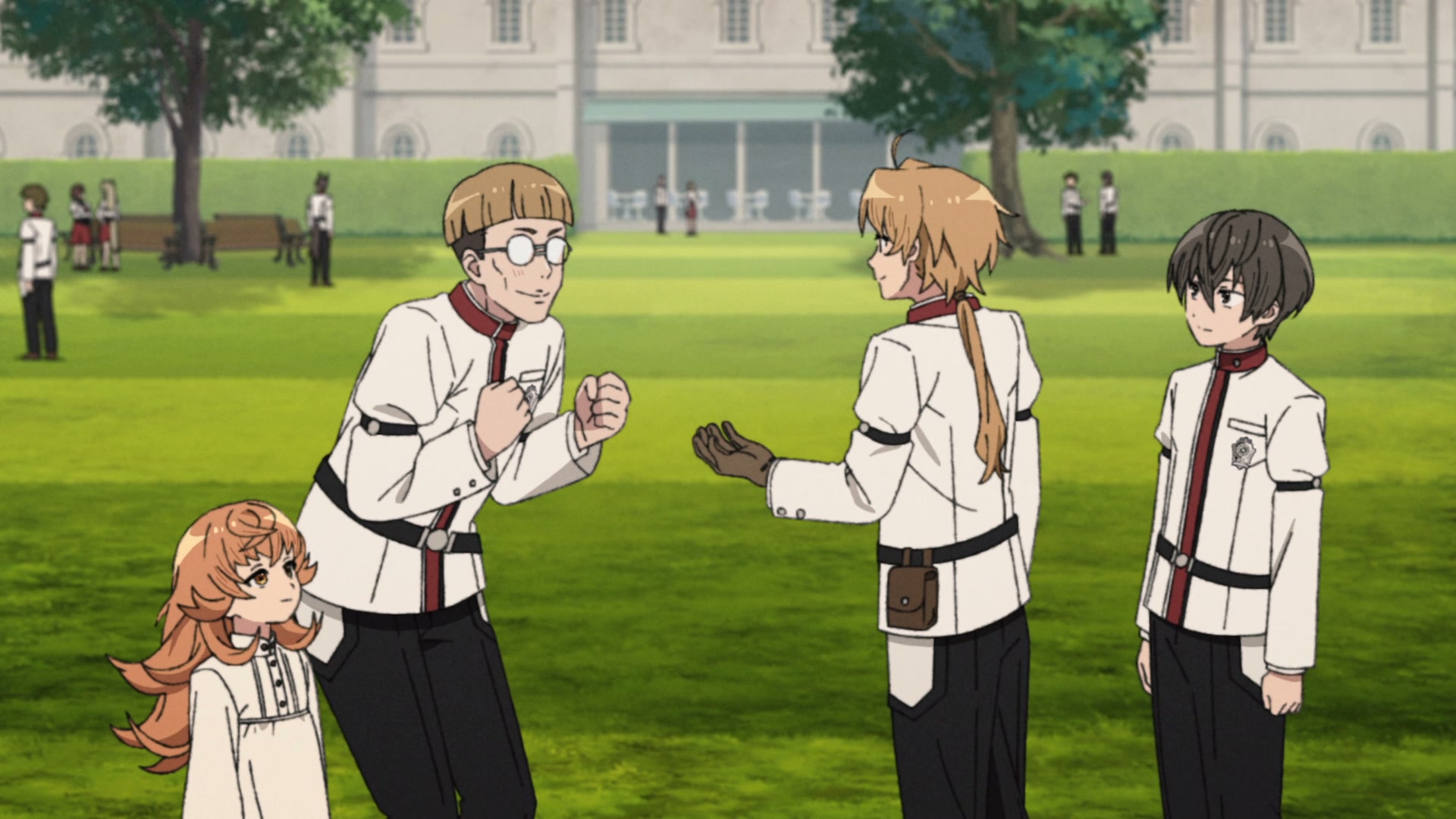
The prosthetic is not just a cool magical gadget. It is a gift from two friends who spent six months working on something to make Rudeus’s life easier. Zanoba, who struggles with his own monstrous strength, understands what it means to lack fine control. Cliff, despite his earlier scolding, poured his knowledge into the project. When Rudeus asks if he can cast magic through the hand, the answer is yes, and the demonstration—a powerful spell that sends a shockwave across the practice field—is the kind of moment that makes you grin. The hand is not a replacement for what he lost, but it is a tangible sign that he is not alone.
The naming moment is small but telling. Rudeus combines Zanoba and Cliff’s names into “Zaliff,” deliberately leaving himself out. He did not help make it. Zanoba protests, but Rudeus insists. It is a quiet acknowledgment that he has people in his life who will build things for him, not because he asked, but because they wanted to. After everything, that feels significant.
The Little Moments That Make This Work
What holds the episode together is not any single big event. It is the accumulation of tiny, lived-in details. Aisha’s “Would you like dinner? A bath? Or maybe… little old me?” routine is a perfect callback to her playful, slightly unhinged devotion, and Rudeus’s response—tickling her until she breaks character—is the right way to defuse it. Lilia scolding Aisha for being difficult about announcing the menu is a blink-and-you-miss-it reminder that these two have their own rhythm now.
Norn’s popularity at school gets a brief, funny moment. Rudeus watches her walk off with friends and immediately starts mentally threatening any boy who might try anything. His inner voice even drags Paul into it: “Right, Dad?” It is a protective-older-brother instinct that feels completely natural, and the show does not overplay it. Norn is growing into her own person, and Rudeus is learning to let her.
The dinner scene at the end brings everyone together. Rudeus shows off the prosthetic, Sylphie and Roxy are impressed, and then he immediately uses both hands to grope them. The wives scold him, Norn is mortified, and Aisha announces dinner with her usual flair. It is the same chaotic, affectionate household that the series has been building toward, and the episode lets it breathe.
Where This Leaves Things
This is not an episode that advances the plot in a dramatic way. No new threats appear. No training arcs begin. Instead, it does something harder: it makes the peaceful life feel real. Rudeus’s inner voice says it plainly near the end. He has lost things along the way, but he has gotten back to regular old life, and he intends to treasure that normalcy. The final shot of him praying silently, the camera pulling back from the house, is a quiet promise that this peace is fragile and worth protecting.
For a series that has put its protagonist through so much, an episode like this is a necessary exhale. It reminds you why the struggles mattered. The people around the dinner table are not just party members or love interests. They are a family, messy and loud and still healing. The Hand of Zaliff is not just a cool prosthetic. It is proof that Rudeus’s friends see his missing hand and want to help him hold things again. That is the kind of storytelling that works best when it is understated, and Episode 3 mostly trusts the audience to feel it without being told.
If there is a weakness, it is that the episode is so committed to its gentle pace that some moments feel a little too tidy. Cliff’s forgiveness comes quickly, and the classroom introduction of Roxy as both teacher and wife is resolved with minimal fallout. But that is also the point. This is not a season about interpersonal catastrophe. It is about learning to live with the consequences of past choices and finding joy in the everyday. On that front, the episode succeeds.
Closing Thoughts
Episode 3 is a warm, character-driven breather that earns its sentimentality by never forcing it. The prosthetic hand scene is a highlight, not because of the magic, but because of the friendship behind it. Cliff’s scolding adds a necessary edge, and the family dynamics feel lived-in rather than performed. It is the kind of episode that could easily be dismissed as filler, but for anyone who has followed Rudeus from the beginning, it is a quiet reward. The normal life he fought for is finally here, and for now, that is enough.
Screenshots