





Kuroe spent the entire first episode terrified that her feelings would literally turn her into a monster, and the second episode opens with the fallout: she did turn into a monster, the boy she likes saw it, and now she has to figure out how to exist in the same school as him while a tail stubbornly refuses to go away. Otome Kaijuu Carameliser does not let its heroine off the hook, and that is what makes this episode so much more than a monster-of-the-week follow-up. It is a messy, emotionally raw half-hour about shame, self-loathing, and the terrifying possibility that someone might actually like you back.
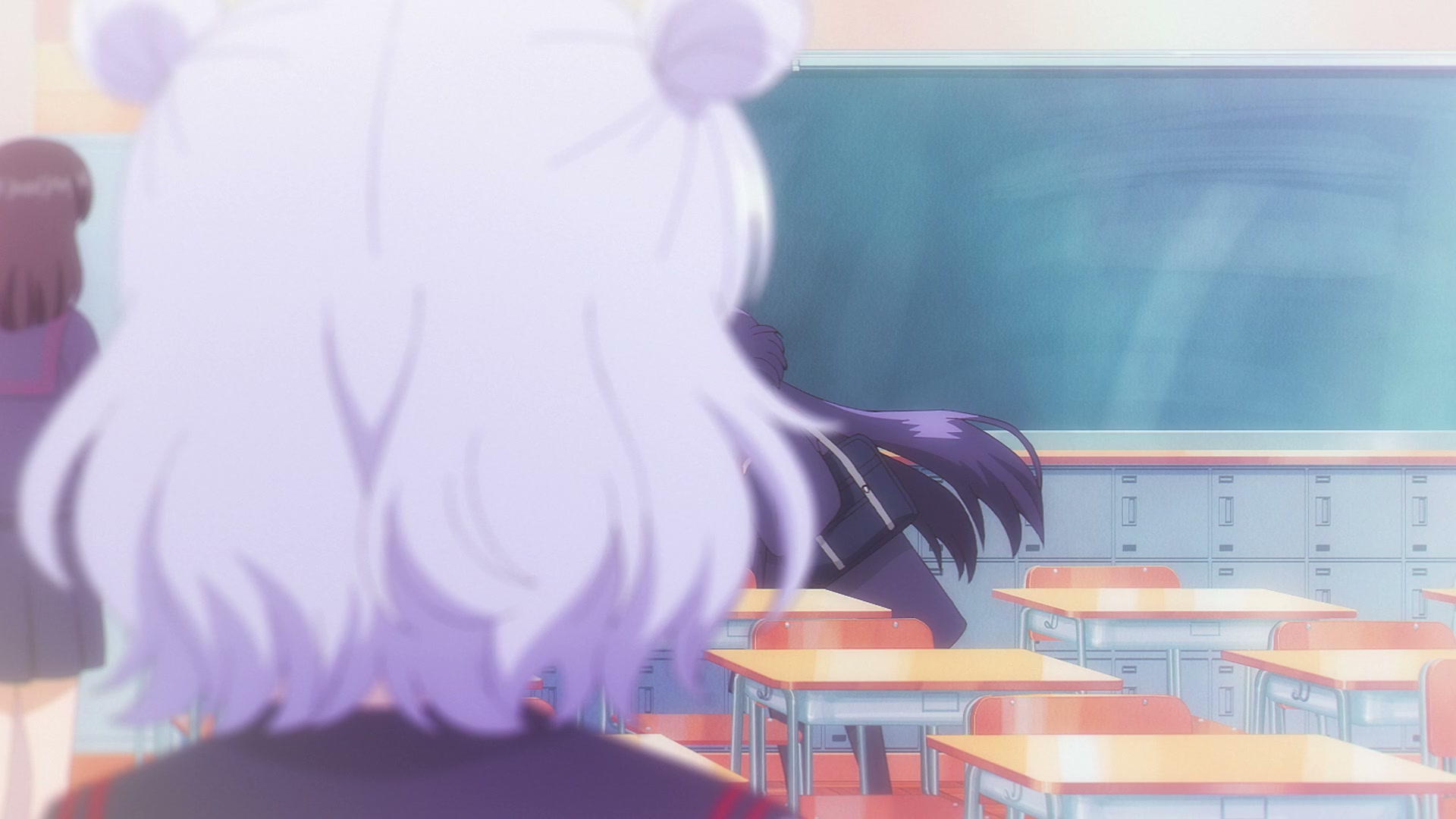
The episode picks up right where the premiere left off, with Kuroe reeling from the realization that her kaiju rampage was not a dream. She hears classmates gossiping about Minami Arata getting hurt near the river, and the guilt hits immediately. The way the show handles her panic feels painfully real: she does not know his email or phone number, she has no way to check on him, and the only thing she can do is spiral. When she finally spots him at school, looking perfectly fine, the relief is so overwhelming that she almost cries, right up until she sees him talking to a girl she assumes is his girlfriend.
That girl is Manatsu, and she is the episode’s wildcard. At first glance, she seems like the classic rival: pretty, forward, and already on a first-name basis with Arata. Kuroe’s immediate reaction is to shut down completely, telling Arata to stay away from her and never come near her again. It is the kind of defensive cruelty that makes perfect sense for someone who has been called a freak her whole life. If she pushes him away first, she cannot be rejected later.
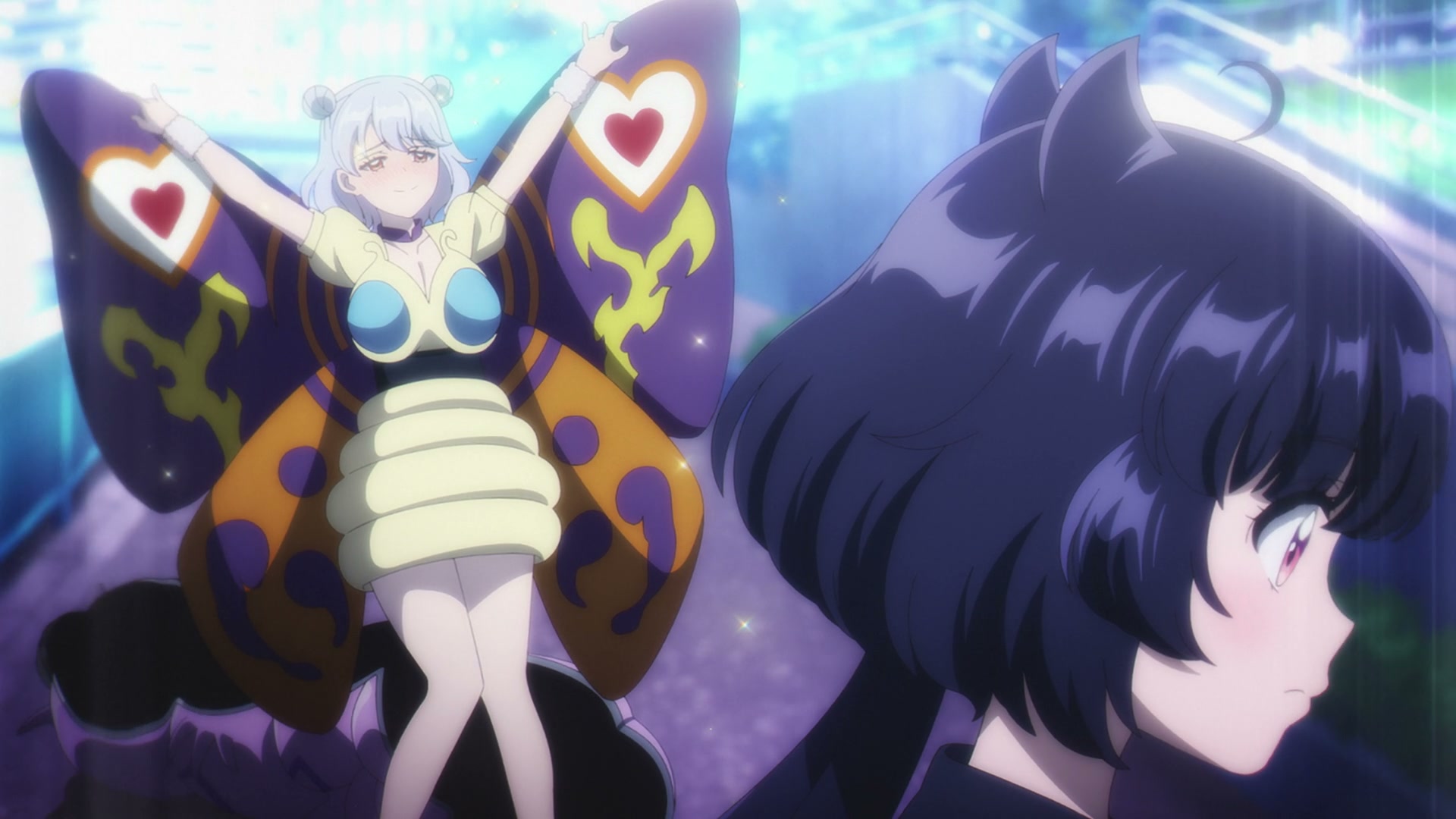
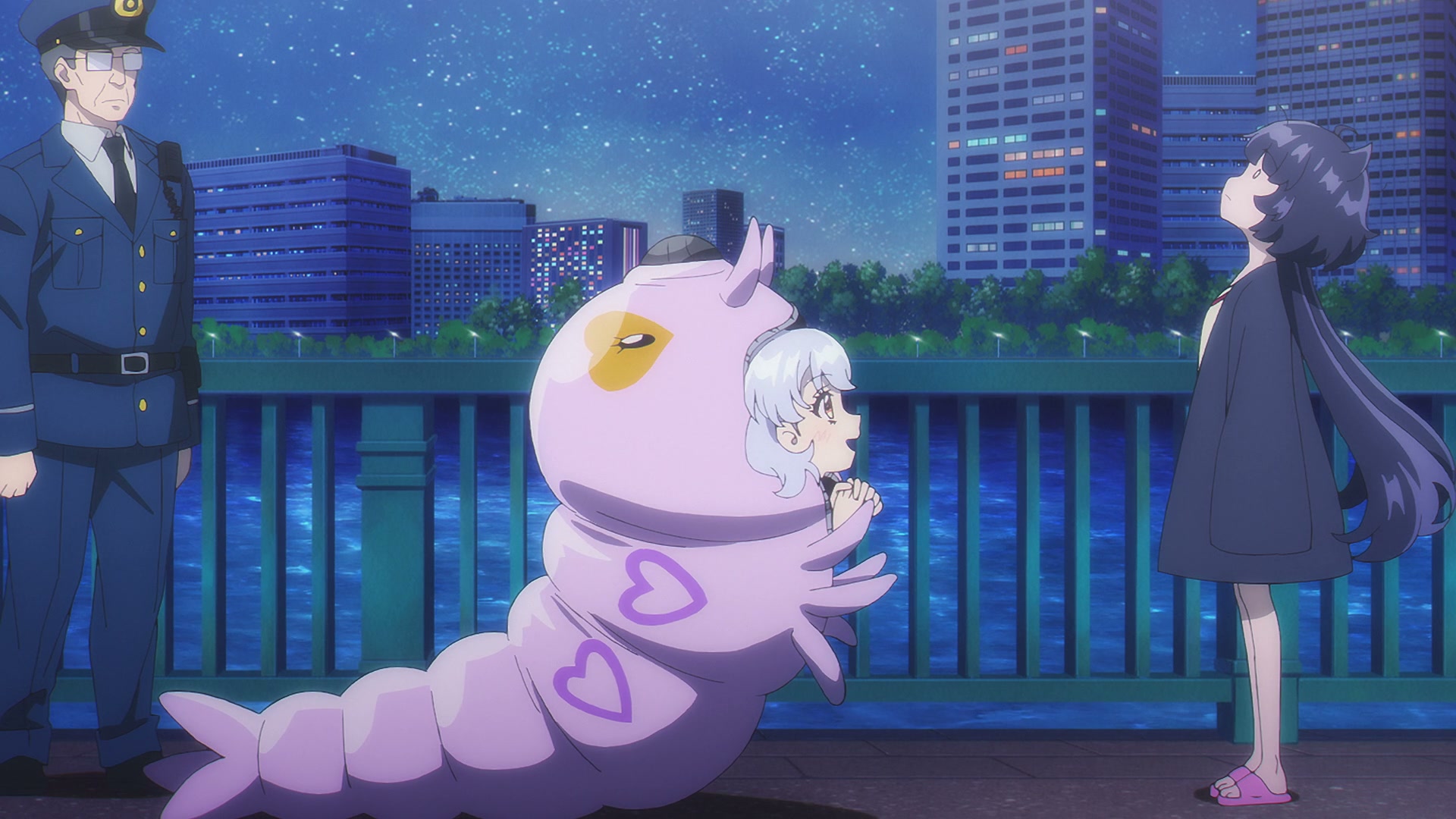
Then the episode pulls the rug out. That same night, Kuroe sneaks out to the riverbank, still wrestling with her tail, and runs into Manatsu camped out in a homemade sleeping bag, waiting for the kaiju she has named Harugon. Manatsu is not Arata’s girlfriend. She is a full-blown kaiju otaku whose father’s work immersed her in monster culture from childhood, and she is absolutely smitten with the giant creature that appeared the day before. Her dialogue is a delight: she rhapsodizes about Harugon’s “noble visage,” “burning red eyes,” and “iron skin, black as the rocks of hell,” then casually drops that she wants him to step on her. Kuroe’s deadpan “Scary…” is the perfect reaction.
Manatsu’s introduction does more than just clear up a misunderstanding. She becomes the first person outside Kuroe’s family to treat the kaiju not as a threat but as something wondrous. When she learns that Kuroe might have a connection to Harugon, she immediately dubs her the “Priestess of Harugon” and pledges to help her with her own romantic pursuits. It is absurd and sweet in equal measure, and it gives Kuroe a strange new ally who is completely unbothered by weirdness. Manatsu’s philosophy, “Let’s pursue romance that lets us treasure ourselves,” is surprisingly mature for someone who also wants to be set on fire by a monster. She is ridiculous, but she is also exactly the kind of friend Kuroe needs: someone who sees the monstrous as beautiful.
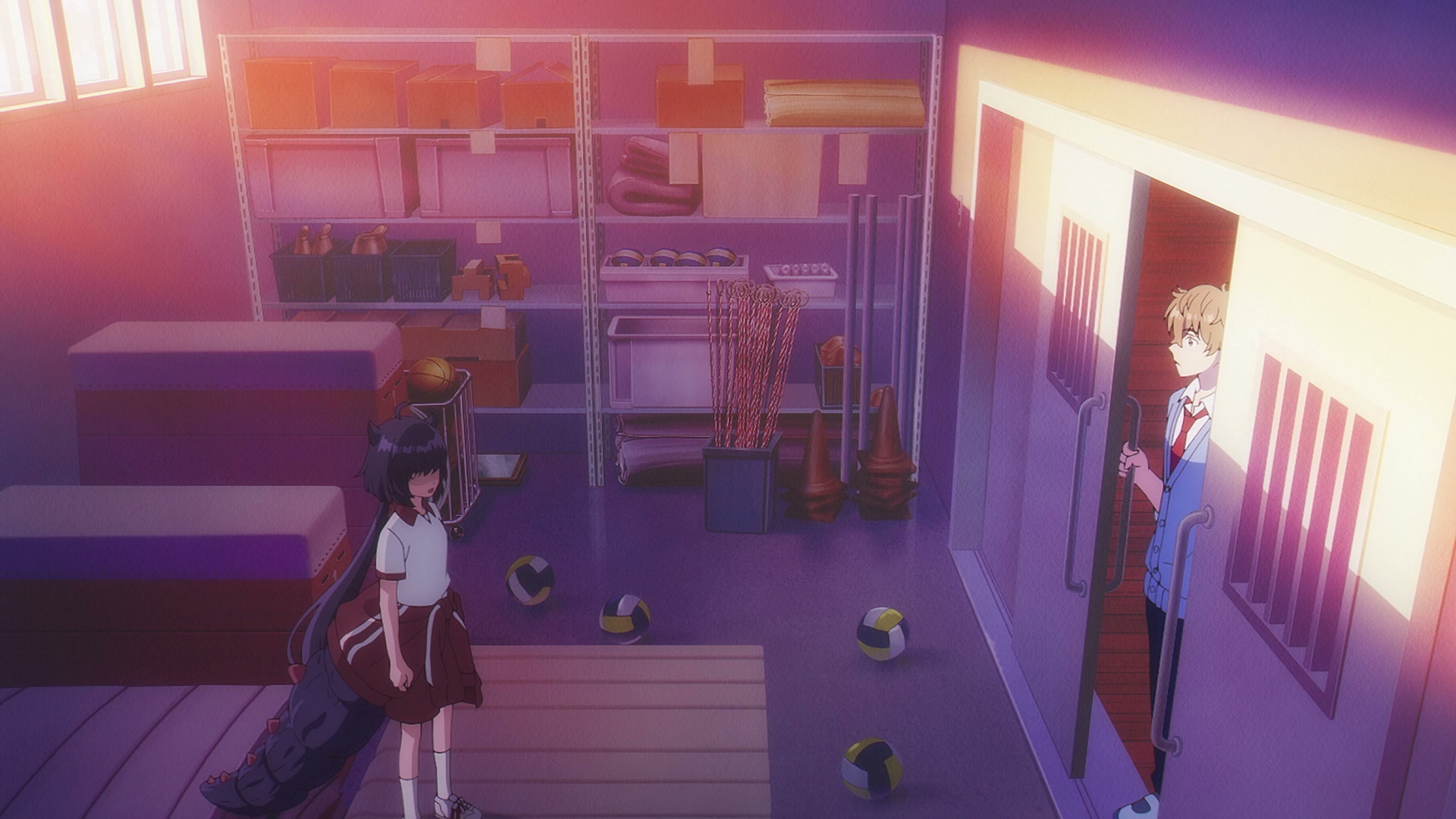
The emotional core of the episode, though, is the gym storeroom. The mean girls from class, Nagiko and Miyu, lock Kuroe inside after school as punishment for supposedly bothering Arata. It is a cruel, petty act, and the show does not soften it. Kuroe sits alone in the dark, tail still out, convinced that she deserves this. Her internal monologue is heartbreaking: “I wish I were just a normal, ugly nerd.” She has spent so long believing she is unworthy of affection that being locked in a closet feels like a natural consequence of daring to hope.
Then Arata shows up. He has been looking for her, and when he finds out what the girls did, he does not just let it slide. He tells them, bluntly, that he is done being the nice guy who smiles at everyone to avoid being disliked. “Now that there’s someone I care about most,” he says, and the line lands like a punch. It is the first time we see Arata drop his people-pleasing mask, and it is because protecting Kuroe matters more to him than maintaining his image. Manatsu’s follow-up, “All of Tokyo is counting on you, Minami-kun!” is a perfectly timed comedic beat that keeps the scene from tipping into melodrama.
The confession that follows in the dark storeroom is the kind of scene that could easily feel overwrought, but the episode handles it with restraint. Arata admits he lied about the pancake invitation: he wanted to go with her from the start, he got two tickets just to have an excuse, and he has been trying to work up the courage to get closer to her. Kuroe, still hiding her tail, tries to push him away one last time by telling him she looks gross, that if he knew the real her he would hate her. And then, in a moment of raw vulnerability, she tells him she was happy when he talked to her, when he took her hand, when he came to find her. She says all of this while convinced he will reject her.
The tail is the episode’s most potent visual metaphor. It appears when Kuroe is stressed or ashamed, a physical manifestation of everything she hates about herself. When she finally works up the courage to show it to Arata, the tail vanishes. The timing is almost cruel: she bares her secret, and her body immediately makes her look like a liar. But Arata’s response is not confusion or disbelief. He simply says, “Thanks for telling me how you feel,” and promises that if she hates herself, he will find more things to love about her and tell her what they are. It is a disarmingly earnest promise, and the fact that he says it while she is sitting in the dark, tail-less and terrified, makes it land with genuine warmth.
The episode does not let this moment resolve everything. As soon as Kuroe steps outside, the tail returns, and she transforms into Harugon again, right in front of the school. The mean girls scream and apologize, and Kuroe, as the kaiju, looks down at Arata and says she is sorry. “I don’t think I can have a normal romance,” she thinks, “but I do treasure it. I’ll make sure not to trample on the feelings you gave me.” It is a bittersweet note to end on. She has not been cured. The monster is still a part of her. But she has decided to protect the connection she made, even if it means keeping her distance.
The post-credits stinger with Manatsu announcing next week’s sweet treat, churros, is a small reminder that this series knows how to balance its heavier moments with pure silliness. Manatsu’s enthusiasm is infectious, and her presence promises that Kuroe will not have to navigate this alone.
What makes this episode work so well is that it takes Kuroe’s self-hatred seriously without wallowing in it. The tail is not just a gag; it is a constant, humiliating reminder that her body betrays her emotions. The show understands that for someone like Kuroe, the scariest thing is not turning into a giant monster. It is letting someone see the parts of you that you find unlovable. Arata’s quiet persistence, and Manatsu’s unhinged acceptance, offer two different kinds of hope: one romantic, one platonic, both equally necessary.
The animation continues to be expressive where it counts. The way Kuroe’s tail droops or perks up depending on her mood adds a layer of physical comedy that never undercuts the emotional stakes. The kaiju design for Harugon remains charmingly goofy, all spikes and glowing eyes, which makes Manatsu’s swooning even funnier. The nighttime riverbank scene has a lovely, lonely atmosphere, with the city lights reflecting off the water while Kuroe tries to will her tail away.
If the first episode was about the terror of feeling something for the first time, this one is about the terror of being seen. Kuroe spends most of the runtime trying to hide, and the people who matter keep finding her anyway. That is a quietly radical message for a rom-com with a kaiju twist: you do not have to be normal to be loved. You just have to stop running long enough to let someone try.
Screenshots