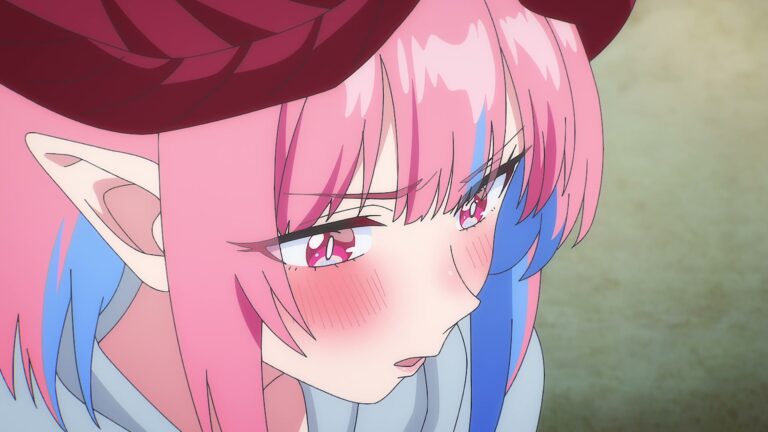






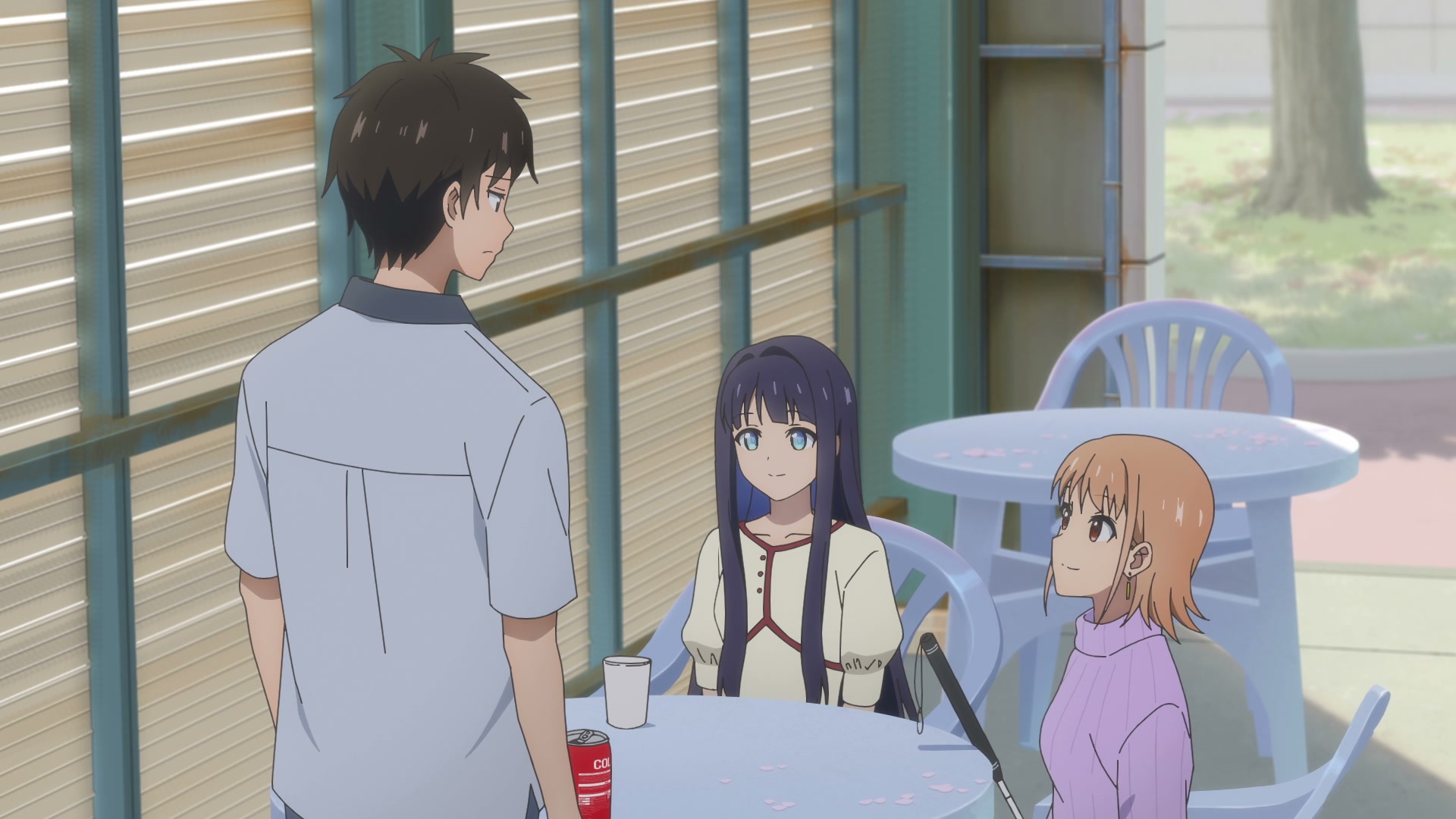
The second episode of Toumei na Yoru ni Kakeru Kimi to, Me ni Mienai Koi wo Shita doesn’t try to be loud. It just lets two people spend more time together, and in the process, Sorano’s carefully maintained distance starts to feel less like a wall and more like a door he forgot he could open. The episode is full of small, specific moments: a piano check, a historical ship, a walk in the rain. None of them are dramatic on their own, but strung together they quietly shift the weight of the relationship.
The Piano Scene Lands Because Sorano Is Bad at This
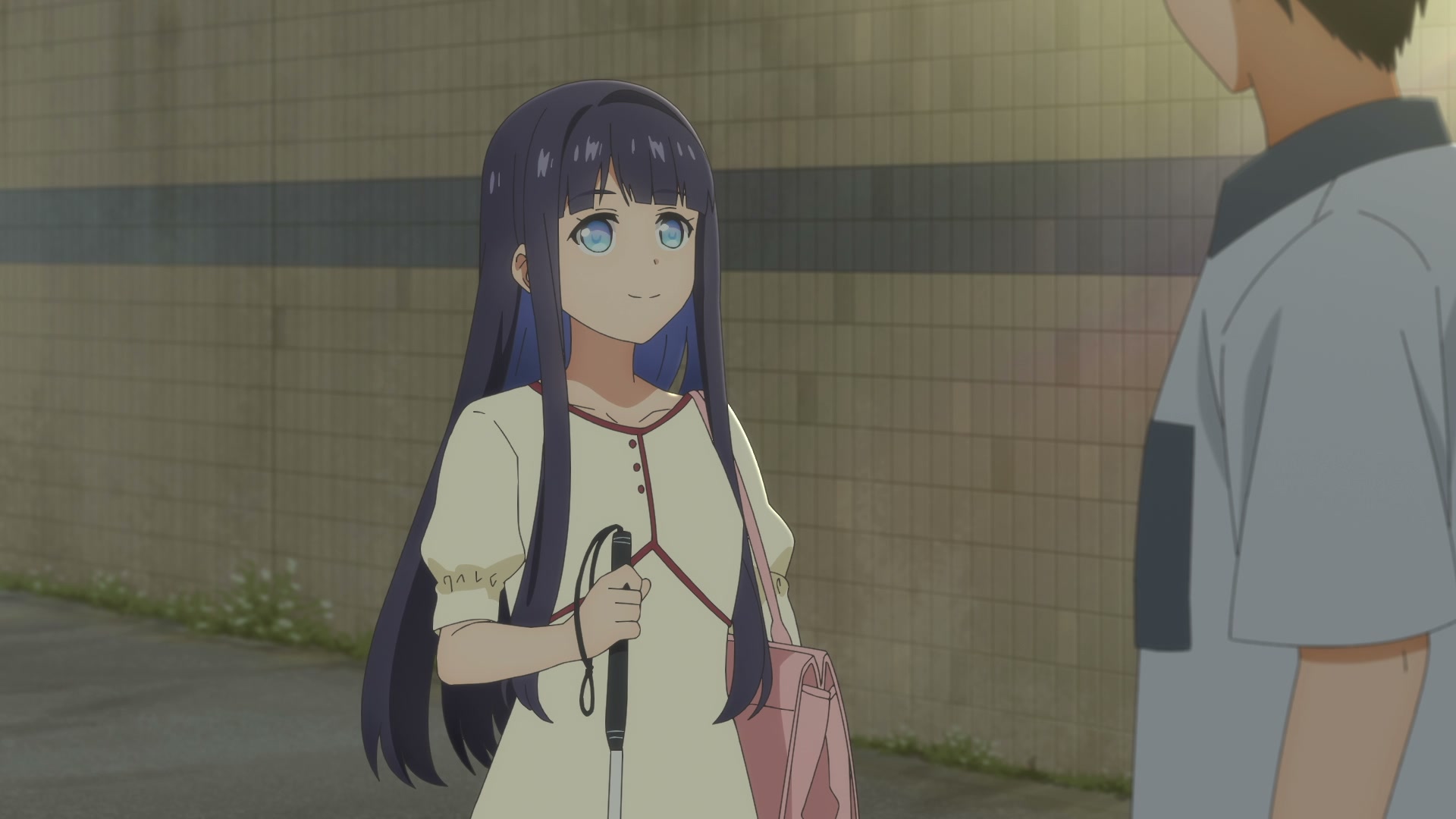
Hayase drags Sorano into escorting Fuyutsuki to the Memorial Hall to test a grand piano for the upcoming festival jazz concert, then immediately bails when a committee meeting calls her away. Sorano’s panic is palpable. He’s not Fuyutsuki’s official student guide yet, and being left alone with her still makes him overthink every interaction. The show gets a lot of mileage out of his internal monologue, and here it’s especially good: he worries about how to react when she talks about her blindness, whether a casual “that’s neat” would sound rude, and whether he’s even allowed to be curious.
Fuyutsuki, meanwhile, is completely at ease. She sits at the piano, notes that the keys feel different from an upright, and launches into a piece with obvious skill. Sorano’s reaction is genuine awe, but his attempt to identify the composer is the episode’s best running joke. He guesses Bach. Wrong. Mozart? “So close! Actually, not at all.” Chopin? Also wrong. The piece is “The Arabian Sea” by Fuuki Harumi, a recital staple she learned in fifth grade. Fuyutsuki laughs and calls him funny, and the moment lands because Sorano isn’t trying to be funny. He’s just that clueless about classical music, and his dead-serious guesses make the exchange feel like a real conversation between two people who are still figuring each other out.
The piano itself becomes a small window into how Fuyutsuki experiences the world. She explains that she can only play pieces she memorized back when she could see, and that she still has habits left over from her sighted days: turning toward a voice, looking up at fireworks, glancing at sheet music that isn’t there. She says she’s glad she used to be able to see, and the line lands without self-pity. Sorano doesn’t know how to respond, and the show doesn’t force a tidy resolution. It just lets the moment sit there, a little awkward, a little honest.
The Meiji Maru and the Suspension Bridge Effect
The psychology lecture that opens the episode’s second half is a gift. The professor explains the mere exposure effect (liking someone you see regularly) and the suspension bridge effect (mistaking fear-induced heart racing for romantic attraction). Sorano immediately starts applying both to himself, and the show uses this as a running internal gag for the rest of the episode. When Fuyutsuki messages him on Lime to visit the Meiji Maru, a preserved sailing ship on campus that’s rarely open to the public, he agrees, and his heart starts pounding. He tells himself it’s just the suspension bridge effect. He’s taking psychology, so he’s too smart to misinterpret it. Sure, buddy.
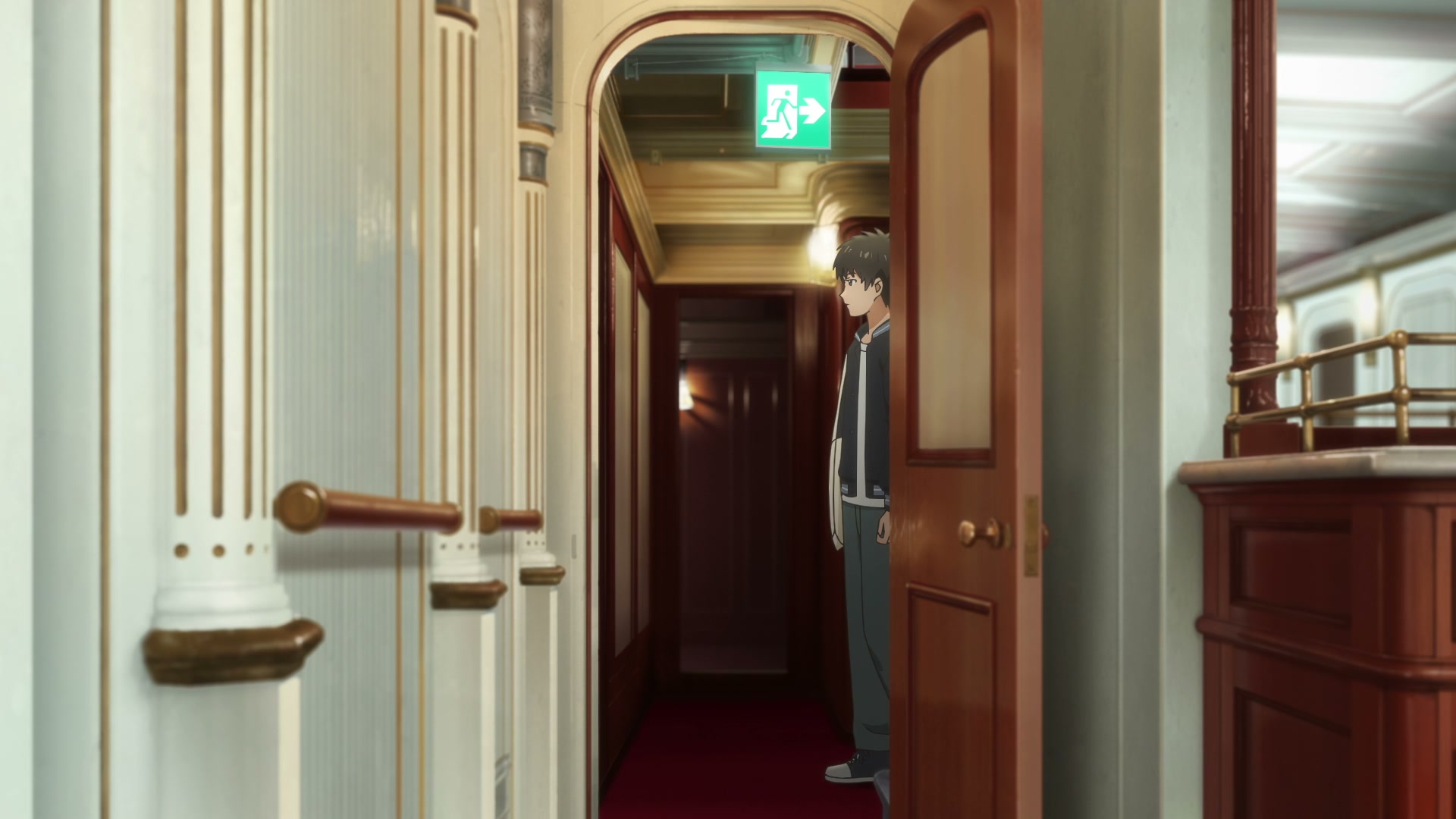
The ship itself is a lovely setting. Sorano describes the royal quarters, the red sofa, the bowsprit, the view of the ocean on one side and campus trees on the other. He narrates everything for Fuyutsuki in detail, and the effort feels natural rather than performative. She’s genuinely curious, and he’s starting to enjoy being the one who can show her something. When she asks to go to the bow, she says it almost feels like they’re really sailing. The moment is quiet and a little magical, the kind of small adventure that college campuses sometimes hide in plain sight.
Then Fuyutsuki wants to recreate the Titanic scene. Not on the bow, because the staff warned her not to lean over the railing, but right there on the deck. She can’t see the view anyway, she says, so she can imagine it anywhere. Sorano tries to deflect by joking that he should play Rose and she should play Jack, but she just rolls with it and offers to sing the theme song. He chickens out, claiming they might sink. She laughs, he catches her when she stumbles, and the whole thing is so earnestly dorky that it’s impossible not to smile. Sorano’s internal monologue immediately blames the suspension bridge effect again, and at this point the joke is practically a character trait.
A Rainy Walk and a Name
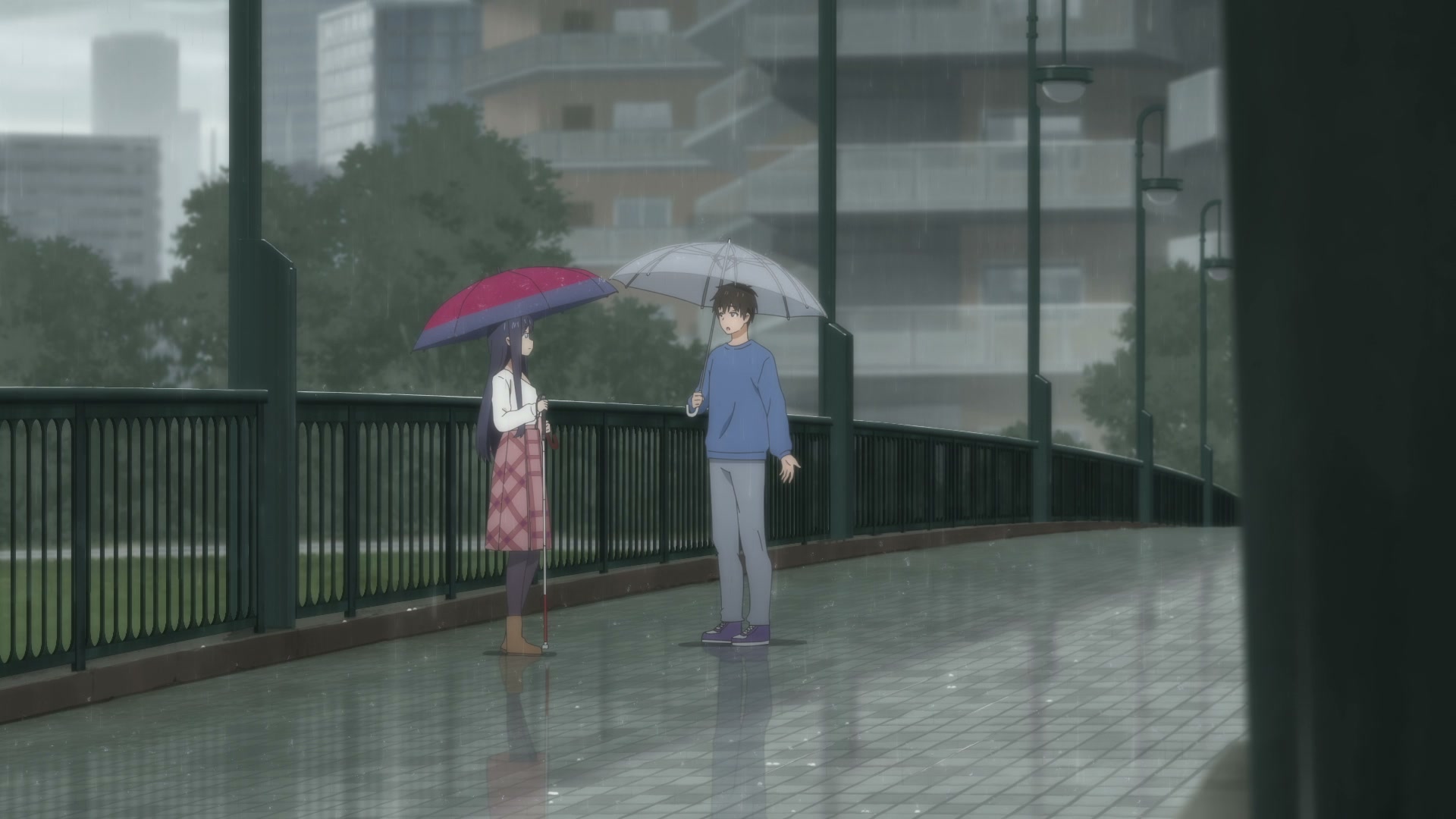
The episode’s final stretch is its most tender. Sorano spots Fuyutsuki walking alone in heavy rain, struggling with her umbrella and cane. He calls out to her, and when she doesn’t stop, he has to physically catch up. She’s determined to do everything by herself, and the rain makes that visibly harder. He offers to carry the umbrella, and they walk together under it, shoulders close.
This is where the name change happens, and it’s handled with the same low-key sincerity as everything else. Fuyutsuki points out that they’ve known each other for a month and he’s always kind to her, so can they use given names? Sorano panics and suggests nicknames instead. She offers “Koharun,” and he immediately backpedals, saying he can only manage her family name. She’s not offended. She just asks if she can call him “Kakeru-kun.” He agrees, and the way she says “Thank you very much” afterward makes it clear this matters to her.
What makes the scene work is that Sorano doesn’t suddenly become smooth. He’s still awkward, still overthinking, still keeping a little distance by refusing to use her given name. But he lets her use his, and that’s a crack in the wall he’s been talking about since episode one. The rain, the shared umbrella, the soft voice acting: it all adds up to a moment that feels earned without being overplayed.
Sorano’s Internal Monologue Is the Real Star
One of the show’s smartest choices is how much time it spends inside Sorano’s head. His narration isn’t just exposition; it’s a running commentary on his own emotional incompetence, and it’s often funnier than the actual dialogue. When Fuyutsuki says she was hoping they’d meet again and have tea on the terrace, he thinks, “We’re friends on Lime, so why not just message me?” and then says it out loud, and she’s surprised he wouldn’t mind. He doesn’t realize that his willingness to be contacted is news to her. He’s so used to keeping people at arm’s length that he forgets other people might be doing the same.
The psychology lecture gives him a framework to rationalize every flutter, and the show uses that to keep his emotional growth from feeling too sudden. He’s not falling for her, he tells himself. It’s just the suspension bridge effect. It’s just mere exposure. He’s analytical to a fault, and the show lets that be both a defense mechanism and a source of comedy. By the end of the episode, when she calls him Kakeru-kun and he just says “Yeah, I guess,” the gap between his internal panic and his external calm is the whole point.
Where This Leaves Things
The episode doesn’t advance any major plot threads. The mysterious opening line from the first episode (“I want to go on living even after my death!”) remains completely unaddressed. Hayase’s request for Sorano to become Fuyutsuki’s official student guide is still hanging. But the episode doesn’t need to resolve those things yet. It’s content to build the relationship one small shared experience at a time, and that patience is what makes the show feel like it has room to breathe.
By the end, Sorano is still calling her Fuyutsuki, still blaming psychology for his racing heart, still convinced he’s just being polite. But he walked her through a ship, held an umbrella over her in the rain, and let her call him by his given name. For someone who built an invisible wall to keep people out, that’s a lot. The cracks are getting wider, and the show is smart enough to let them spread at their own pace.
Screenshots
← Episode 1 | All Toumei na Yoru ni Kakeru Kimi to, Me ni Mienai Koi wo Shita Season 1 posts →