





The episode opens with the troupe in a familiar bind: they’re broke. Maria’s deadpan announcement that creditors confiscated the last show’s earnings lands with the same cheerful cruelty she always brings. The solution? A beach hut part-time job. It’s a classic circus-girls-do-odd-jobs setup, and the show leans into the chaos without overplaying it.
The Beach Hut Is a Disaster in the Best Way
Watching Imari fumble orders while Isuzu barks at her is the kind of low-stakes comedy that works because the characters sell it. Imari’s nervous energy and Isuzu’s sharp tongue have been a background tension since the first episode, but here it’s front and center. Isuzu isn’t just strict; she’s vicious. The moment she smacks Imari on the head for eating unpaid stir-fried noodles, and Mizuka deadpans that she just killed five hundred brain cells, tells you everything about their dynamic. It’s funny, but there’s an edge that makes you wonder what’s really going on.
Mizuka, predictably, cannot leave well enough alone. She tries to help by offering to work for free, then immediately gets everyone fired by pointing out cheaper food stalls and “cockroaches” that turn out to be sea slaters. The boss’s exasperation is entirely justified. Mizuka’s complete lack of common sense in normal jobs is a running gag that still has legs, and her genuine confusion about why they were fired is the perfect punchline.
Imari’s Fear of the Audience Hits Hard
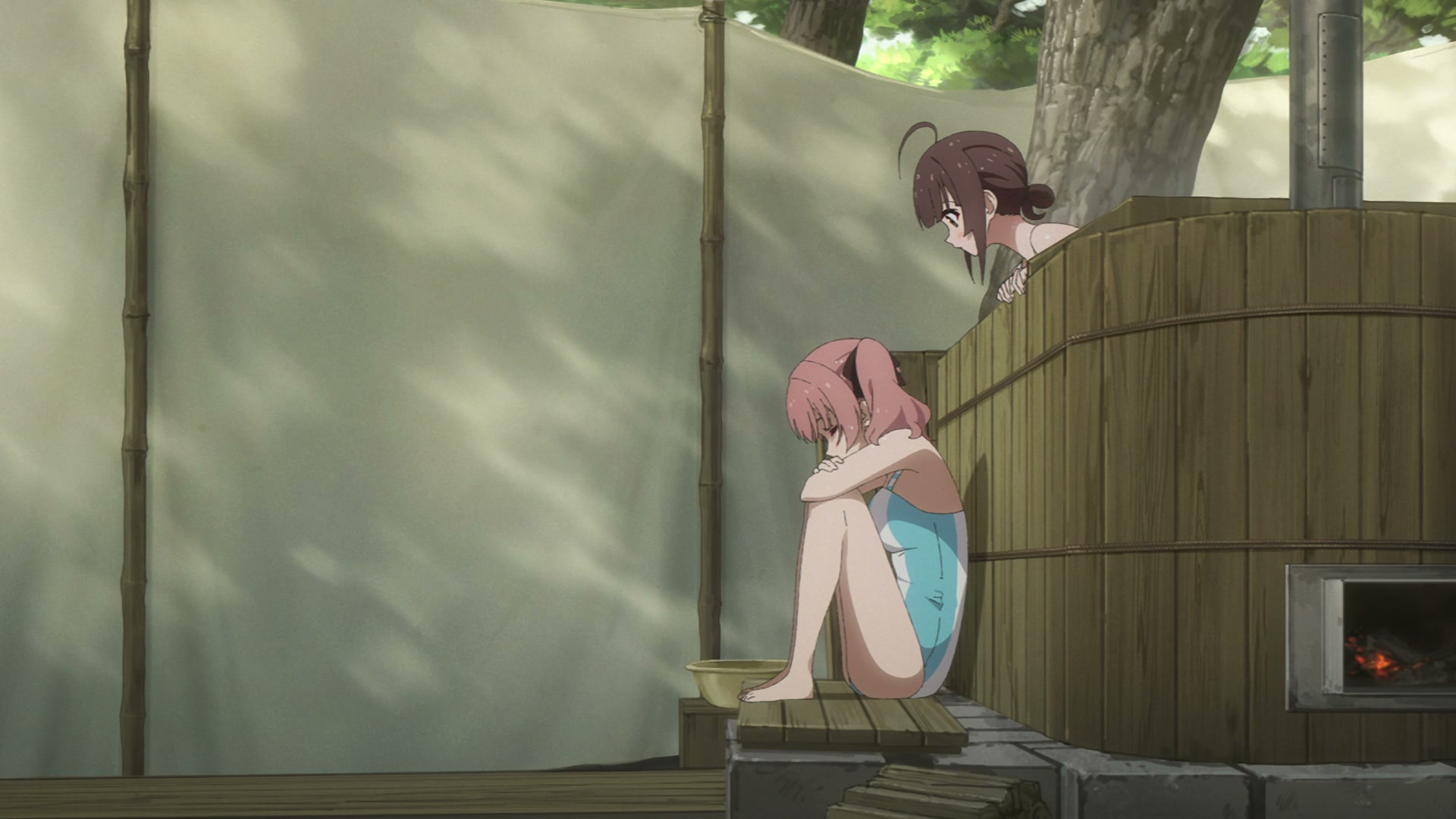
The episode pivots when Mizuka corners Imari in the outdoor bath. This is where the comedy gives way to something heavier. Mizuka wants to know why Isuzu hates Imari so much, but Imari deflects. Instead, she reveals the real reason she can’t perform a magic show on the beach: she’s terrified of crowds. For someone in a circus, that’s a crippling secret.
Imari’s backstory unfolds with a quiet sadness. Her father was a famous magician, and she adored him. She helped him onstage, and those were her happiest memories. Then one catastrophic performance injured many people, the public turned on him, and her family fell apart. Maria took her in, but the trauma stuck. Magic tricks are the only connection she has left to her father, but performing in front of an audience brings back the horror of that day. The line “I’m scared to have all those eyes on me. Because it reminds me…” trails off, and the show lets the silence do the work.
This is the first time we’ve seen a character’s circus-related trauma that isn’t Mizuka’s. Imari’s fear isn’t about the act itself; it’s about the weight of a parent’s failure and the public’s cruelty. It adds a layer to the Himawari Circus as a collection of broken people, not just misfits. Mizuka, who knows a thing or two about fathers who ruin everything, listens without joking. That’s a small but significant character beat for her.
Isuzu’s Tough Love Finally Makes Sense
The other half of the bath conversation is the answer Mizuka originally wanted. Imari and Isuzu were childhood friends. Isuzu’s family were live-in performers in Imari’s father’s troupe. When the accident scattered Imari’s family and Maria came to take her in, Isuzu insisted on coming along. She said, “I worry about you, Imari.” But Imari, raw and overwhelmed, pushed her away with a cruel “Just leave me alone!”
Imari has carried that guilt ever since. She assumes Isuzu hates her, and that she deserves it. The reveal reframes every sharp word Isuzu has thrown at her. It’s not hatred; it’s frustration and hurt from someone who gave up her own family to follow a friend, only to be rejected. Isuzu’s harshness at the beach hut suddenly reads as a twisted form of care. She’s still there, still watching over Imari, even if she can’t say it directly.
The Magic Show That Shouldn’t Work
Mizuka’s “ingenious scheme” is a beach magic show with a pay-what-you-want model. Imari panics, but Mizuka has already roped Ouka into being the assistant. The setup is pure Mizuka: half-baked, overly ambitious, and held together by sheer audacity. She even writes a grandiose introduction calling Ouka “the flying princess” and “a flower blooming in the great sky, ruling over the galaxy.” Ouka’s bewildered “What are you talking about?” is the correct response.
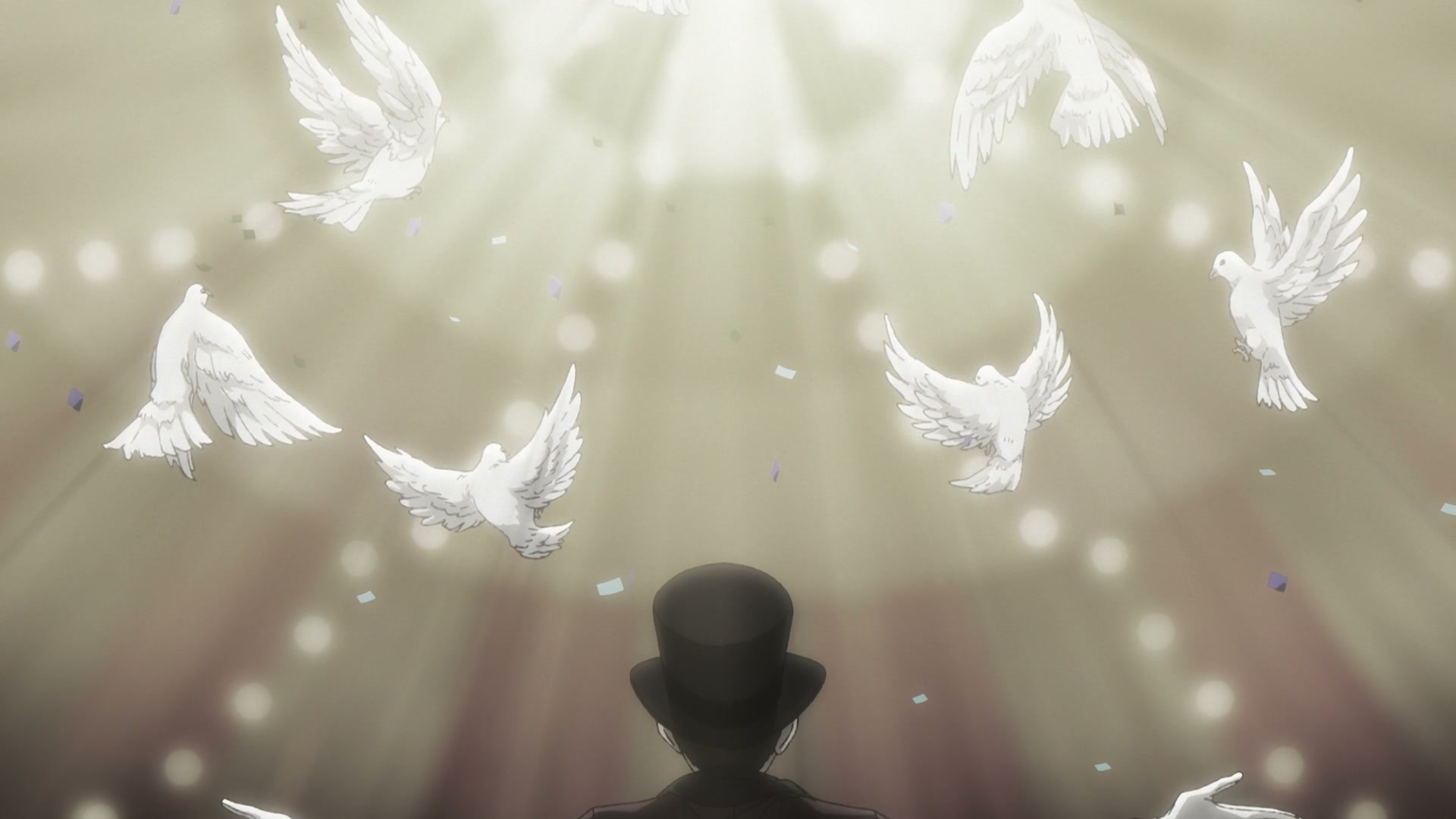
The show itself is a glorious mess. Imari freezes, Ouka gets locked in a box, Mizuka joins her inside for no reason, and the promised explosion is genuinely dangerous. Isuzu’s intervention is the turning point. She doesn’t coddle Imari. She tells her to remember how confident her father looked on stage, and then adds, with perfect deadpan, “Even if you do mess up, you’ll only blow up Ouka and Mizuka, anyway.” It’s the exact right thing to say. Imari laughs, the tension breaks, and the trick goes off. The box explodes, Ouka and Mizuka emerge in swimsuits (a detail that makes Ouka’s later fury even funnier), and the crowd loves it.
The finale, with Ouka doing an impromptu rope trick while still processing her swimsuit humiliation, is the kind of chaotic energy that defines Himawari Circus at its best. The show doesn’t need to be polished; it needs to feel alive. And it does.
A Small Step for the Troupe’s Finances (Not Really)
The aftermath is pure Maria. She returns from the police station, having been chewed out for unauthorized sales and unpermitted explosives. The troupe nearly lost their promotion rights. Mizuka’s invoice for the box and explosives gets added to her debt, which she had been paying down. Maria’s cheerful “Now you have even more debt” is the episode’s cruelest joke, and Mizuka’s string of microbiology insults (closterium, volvox, vorticella) is a perfect callback to her “paramecium” habit.
But the real resolution is between Imari and Isuzu. Imari asks Isuzu to practice with her tomorrow, and Isuzu admits she knew the trick was meant for them. It’s the same trick they did together as kids. The reconciliation is understated. No dramatic hug, no tearful apology. Just a quiet “All this time… I’m so sorry” and Isuzu’s gruff acceptance. The clattering dishes in the background as they talk is a nice touch; life goes on, noisy and ordinary.
Closing Thoughts
This episode does something I didn’t expect: it makes Imari and Isuzu’s relationship the emotional core, and it works because the show has been seeding their tension since the beginning. Imari’s backstory adds depth to the troupe’s collective baggage, and Isuzu’s tough love is revealed as loyalty twisted by old wounds. Mizuka’s role as a catalyst continues to evolve. She’s still reckless and socially clueless, but she’s also the one who pushes people toward each other, even if she nearly blows them up in the process.
The comedy lands, the emotional beats feel earned, and the episode ends with Mizuka stretching alone, muttering about not understanding how the magic trick worked. It’s a small, human moment that reminds you these characters are still figuring things out, one disaster at a time.
Screenshots
← Episode 3 | All Grow Up Show – Himawari no Circus-dan Season 1 posts →