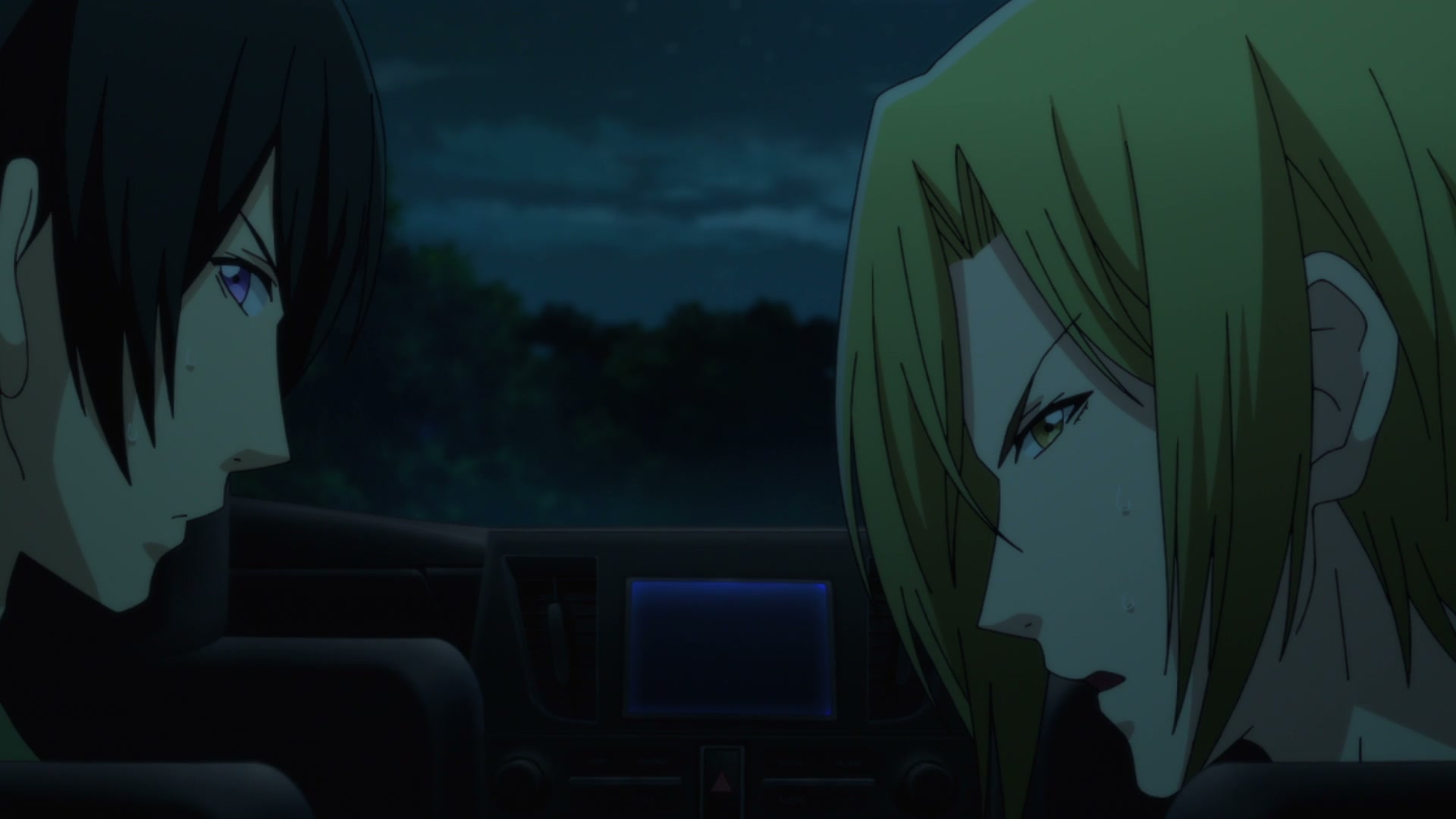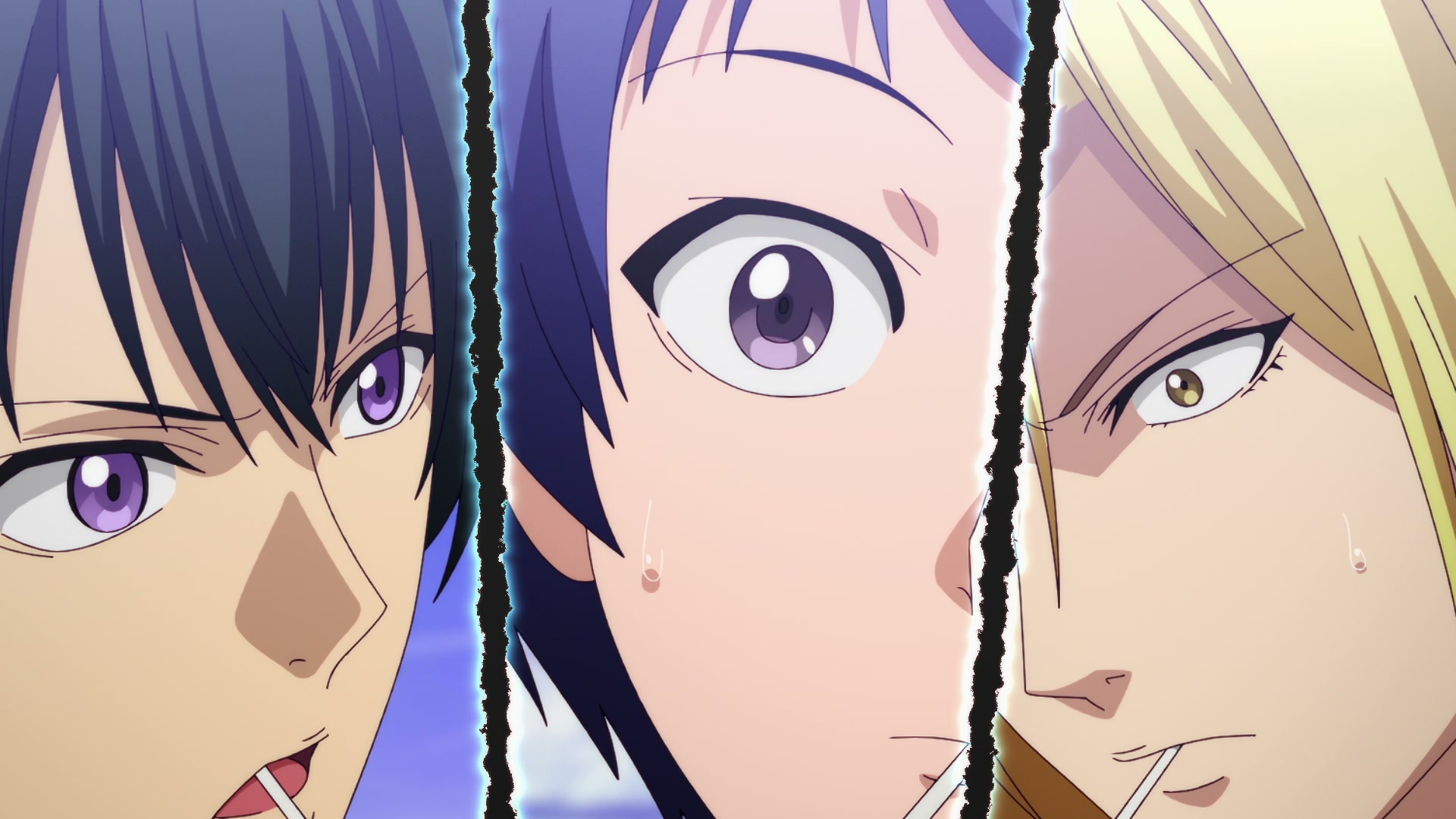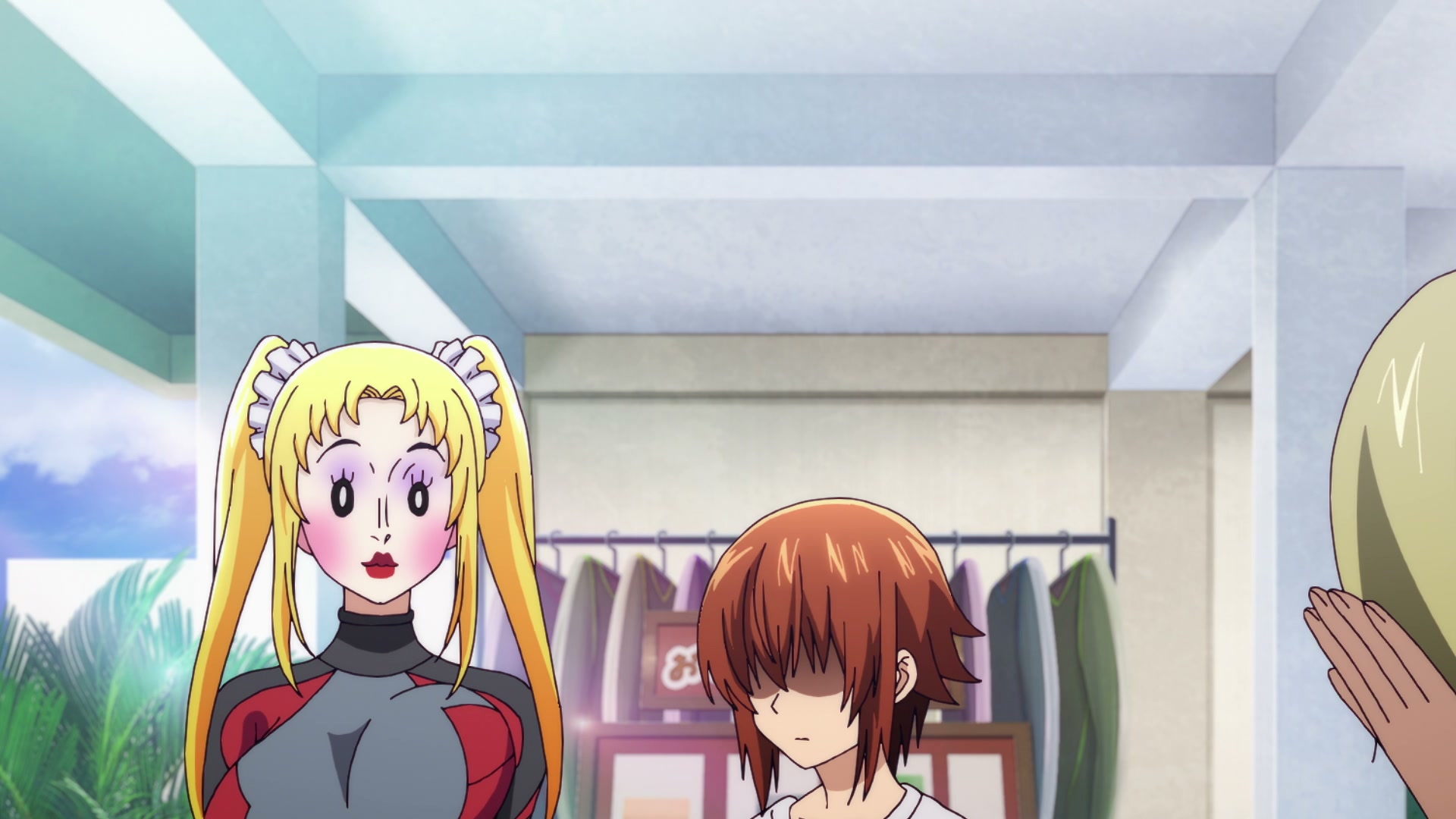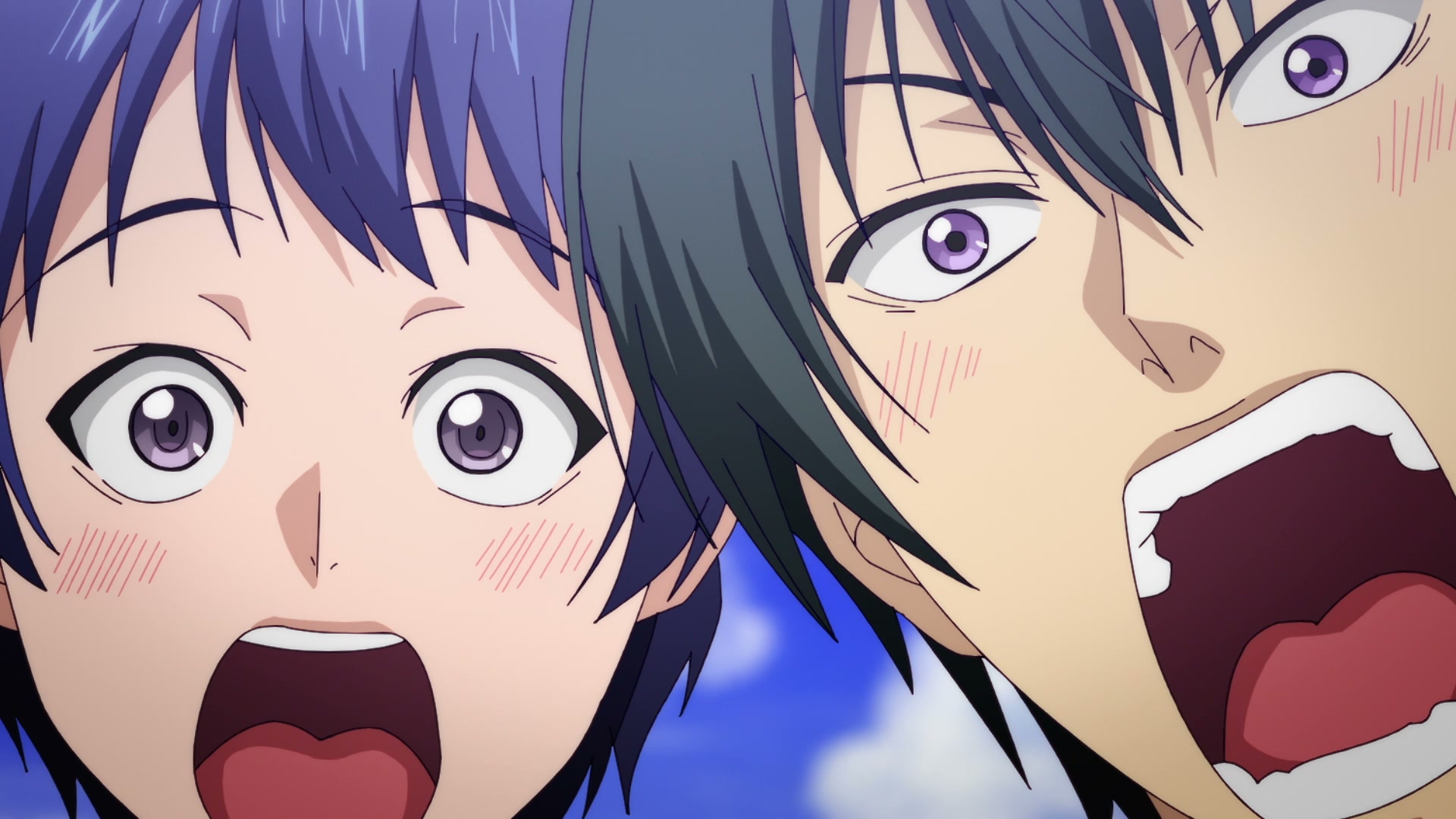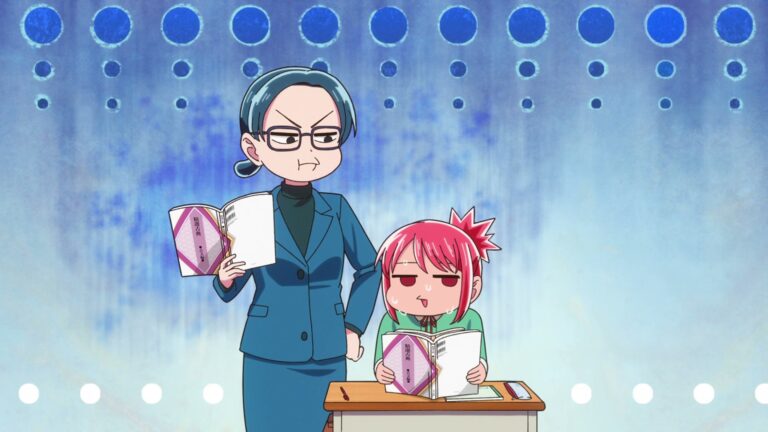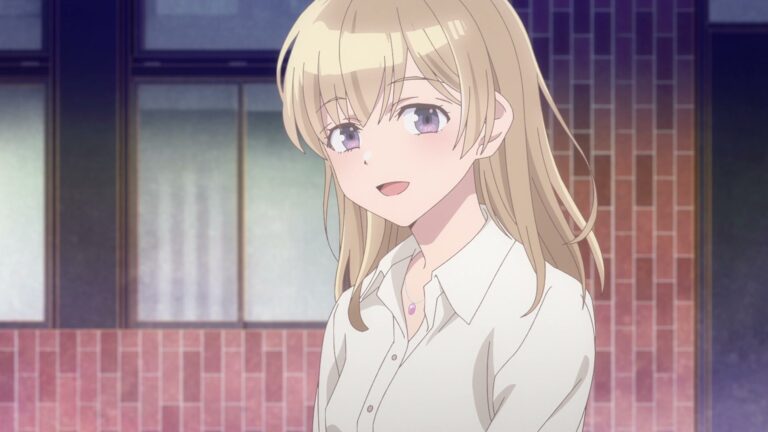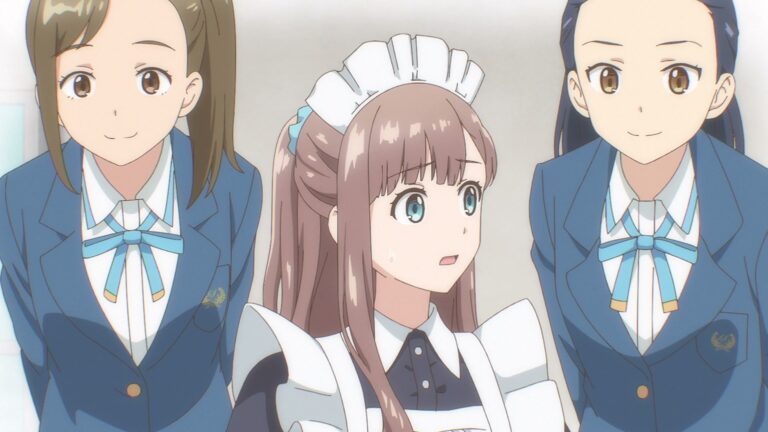

The Palau arc kicks off with the kind of energy that makes Grand Blue feel like a vacation you actually want to be on, even when the characters are stuck doing manual labor. Episode 4 wastes no time reuniting the group with Aina, dropping them into a new workplace, and immediately reminding everyone that this show’s sense of humor has not mellowed one bit after the family drama of the Kitahara ryokan.
Cakey’s Return and the Padding That Won’t Stay Put
Aina’s reappearance is the episode’s first big comedic setpiece, and it works because the show lets the awkwardness breathe. She’s been in Palau for two days already, having flown via Taipei after what she describes as pure farm labor hell. Her grandfather confiscated her phone, so she missed the takoyaki party, the trip to Iori’s family home, and basically every fun memory the others made without her. The frustration is real, but the way she delivers it, half pouty and half genuinely exhausted, keeps it from feeling like a retread of her usual tsundere outbursts.
Then the padding gag hits. Iori and Kouhei notice immediately, and their whispered debate about whether to say anything is classic Grand Blue: they know bringing it up will just make her smug, but ignoring it feels impossible when the pads are visibly falling out. The moment they both shout “They’re falling out!” is timed perfectly, and Chisa’s smooth pivot into a conversation about Palauan Japanese loanwords, casually mentioning that bras are called “chichi bands,” is the kind of deadpan assist only she can pull off. Aina brushes it off with nerves of steel, but the episode keeps the gag alive throughout the day, from the wetsuit fitting to the post-dive cleanup. It’s not just a one-off joke; it becomes a running thread that eventually leads to the episode’s quietest, most interesting moment.
What makes the padding bit work beyond the physical comedy is that the show never treats it as mean-spirited. The guys are idiots about it, but Chisa’s subtle handling and even Sayaka’s later lecture to Maki about putting herself in the guest’s shoes, where she matter-of-factly states that a girl pads her chest because she’s going after a boy, reframes the whole thing as something almost sweet. Aina is trying, in her own disastrous way, and the episode lets that sit alongside the laughter.
The Kotegawa Family Reunion, or Lack Thereof
The reveal that the dive shop owner is Chisa’s mother, Sayaka, lands with the same understated dryness that defines the Kotegawa family. Iori already knew, of course, and casually mentions it as if he forgot to tell everyone. Kouhei and Aina’s double-take is perfect, but the real surprise is how little fanfare the reunion gets. Chisa and her mom exchange a simple “long time no see” and move on. No tears, no dramatic backstory dump, just a lollipop offered to Iori and a brisk “I hate dilly-dalliers.”
This is such a refreshing choice after the Kitahara family arc, which was built on emotional manipulation and drunken confessions. Sayaka is all business, and Chisa seems completely comfortable with that distance. It tells you everything about their relationship without a single expository line. Later, when Sayaka gently corrects Maki’s handling of Aina’s padding situation, you see the maternal instinct come through in a practical, no-nonsense way. She’s not cold; she just expresses care through competence. Chisa clearly inherited that.
Professional Weirdos: The Best Job Description
The group’s actual job turns out to be playing difficult customers to train the new branch’s staff, and the meta-humor here is delightful. Maki, the instructor, has been told by “Boss Kotegawa” (presumably Nanaka) that Iori and Kouhei completely lack common sense, and the shop even received a photo of them beforehand that convinced everyone they’d be perfect weirdos. The photo in question, judging by the characters’ reactions, is probably something absurd from a previous adventure, and the fact that the staff saw it and thought “yes, these are our guys” is exactly the kind of reputation this group has earned.
The training scenes are a showcase for the cast’s chemistry. Aina fakes motion sickness, Kouhei claims his chest tightens up whenever he sees “Lalako-tan” (a callback to his 2D obsession), and Iori, in the episode’s most unhinged moment, announces he’s pregnant. Maki’s barely contained laughter and the chief’s deadpan corrections make the whole sequence feel like a live comedy sketch. The show knows these characters are disasters, and it loves them for it.
What’s clever is that the “problem customer” role isn’t just a gag. It gives the episode a structure that lets the group be themselves while also showing the dive shop staff’s professionalism. The chief and Maki have to handle real curveballs, and their reactions, from the chief’s smooth handling of Aina’s pads to Maki’s utter failure to keep a straight face, flesh out the new supporting cast quickly and efficiently.
The Ocean That Changes Lives
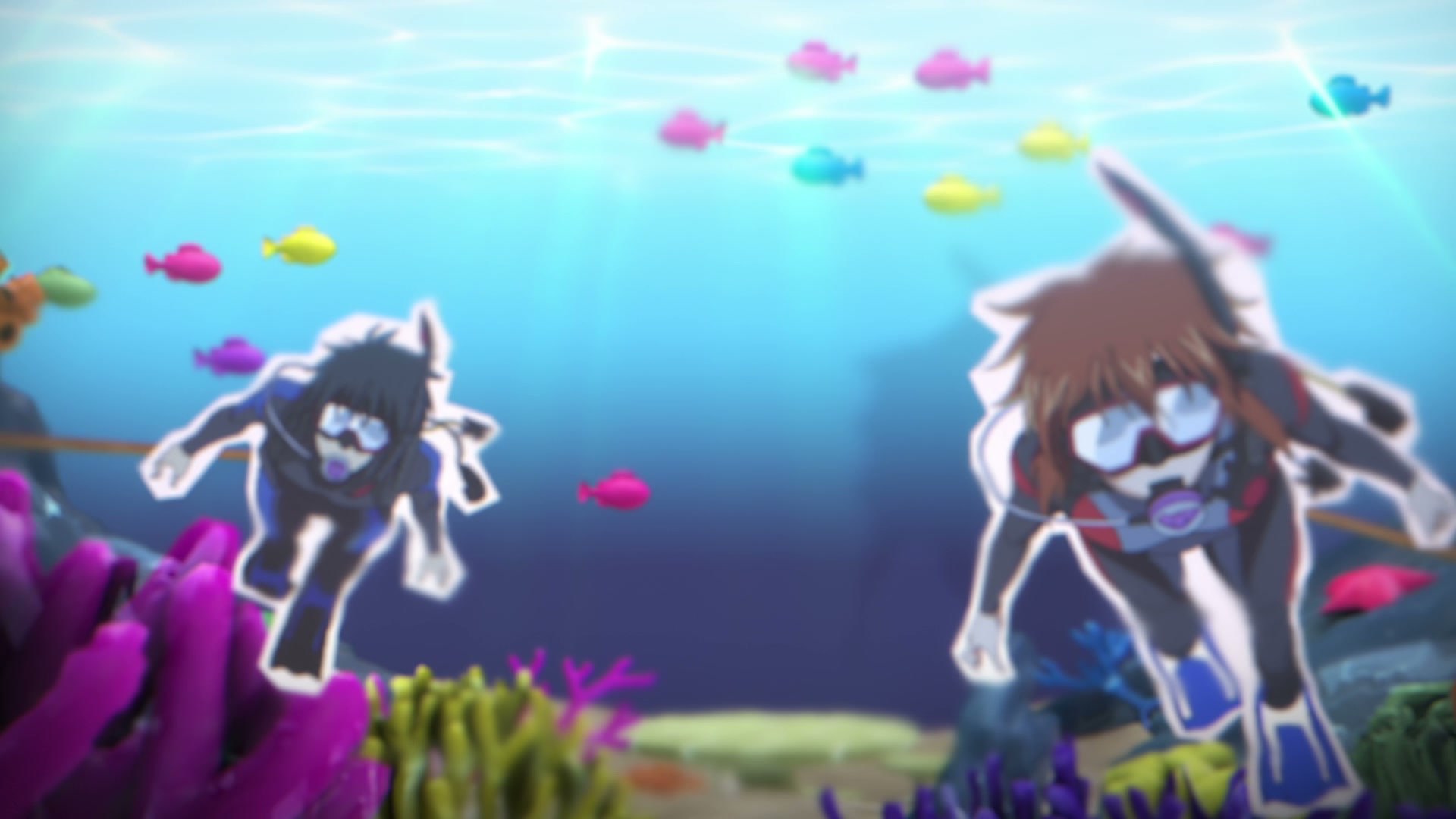
After the training, the group gets to actually dive, and the episode shifts gears beautifully. The speedboat ride, the wild dolphins, and the arrival at Blue Corner, Palau’s biggest diving point, are all rendered with a genuine sense of wonder. Iori’s reaction underwater, remembering Naomi’s words about how diving here blew her mind as a kid, is a small but meaningful callback. He finally gets it. The sheer density of fish, the clarity of the water, the scale of it all, it’s the kind of experience that makes the earlier absurdity feel earned.
The episode doesn’t overplay the emotional weight. Iori just thinks to himself that he can see how this could be life-changing, and that’s enough. The show trusts the visuals and the characters’ quiet awe to carry the moment. It’s a reminder that beneath all the nudity and alcohol, Grand Blue is still a story about people who genuinely love the ocean.
That Final Question
The episode winds down with the group exhausted from three dives and a full day of cleaning and prep work. The dorm scene is low-key, with Kouhei lamenting the lack of anime on the TV and Aina still struggling with her pads. Then, out of nowhere, Kouhei asks if she has a thing for Kitahara.
It’s a question the episode has been quietly building toward. The padding, the way Aina reacted to missing out on the summer memories, the little glances during the diving, it all points to something she’s been trying to hide behind her usual prickly exterior. Kouhei’s delivery is casual, almost gentle, and the episode cuts before we get an answer. It’s a small cliffhanger, but it feels significant because it’s the first time someone has directly addressed the possibility. The show has always played Aina’s feelings as subtext buried under comedy, and now it’s finally poking at that thread.
One Last Thought
This episode does exactly what a good arc-opener should. It establishes the new setting, introduces the supporting cast, and balances the show’s signature chaos with quieter character moments. The Palau backdrop gives everything a fresh energy, and the diving sequences are genuinely gorgeous. But what sticks with me is how the episode handles Aina. The padding gag could have been a one-note joke, but the show uses it to nudge her character forward in a way that feels organic. By the time Kouhei asks that final question, you realize the episode has been laying groundwork the whole time. It’s not a dramatic shift, just a small crack in the armor, and that’s exactly right for Grand Blue.
Screenshots