




The second episode of Saijo no Osewa wastes no time proving that the first episode’s chaos was not a fluke. If anything, the show doubles down on the absurdity of Itsuki’s new life, and the result is a comedy that feels looser, funnier, and more confident. The premise is still gloriously stupid: a broke high schooler gets hired to babysit a heiress who is a perfect lady in public and a demanding gremlin in private. But now the world expands to the elite Kiou Gakuin, where every classmate is a secret prince or princess, and Itsuki’s cover story is held together with dental floss and prayer.
The School Is a Gilded Cage of Lies
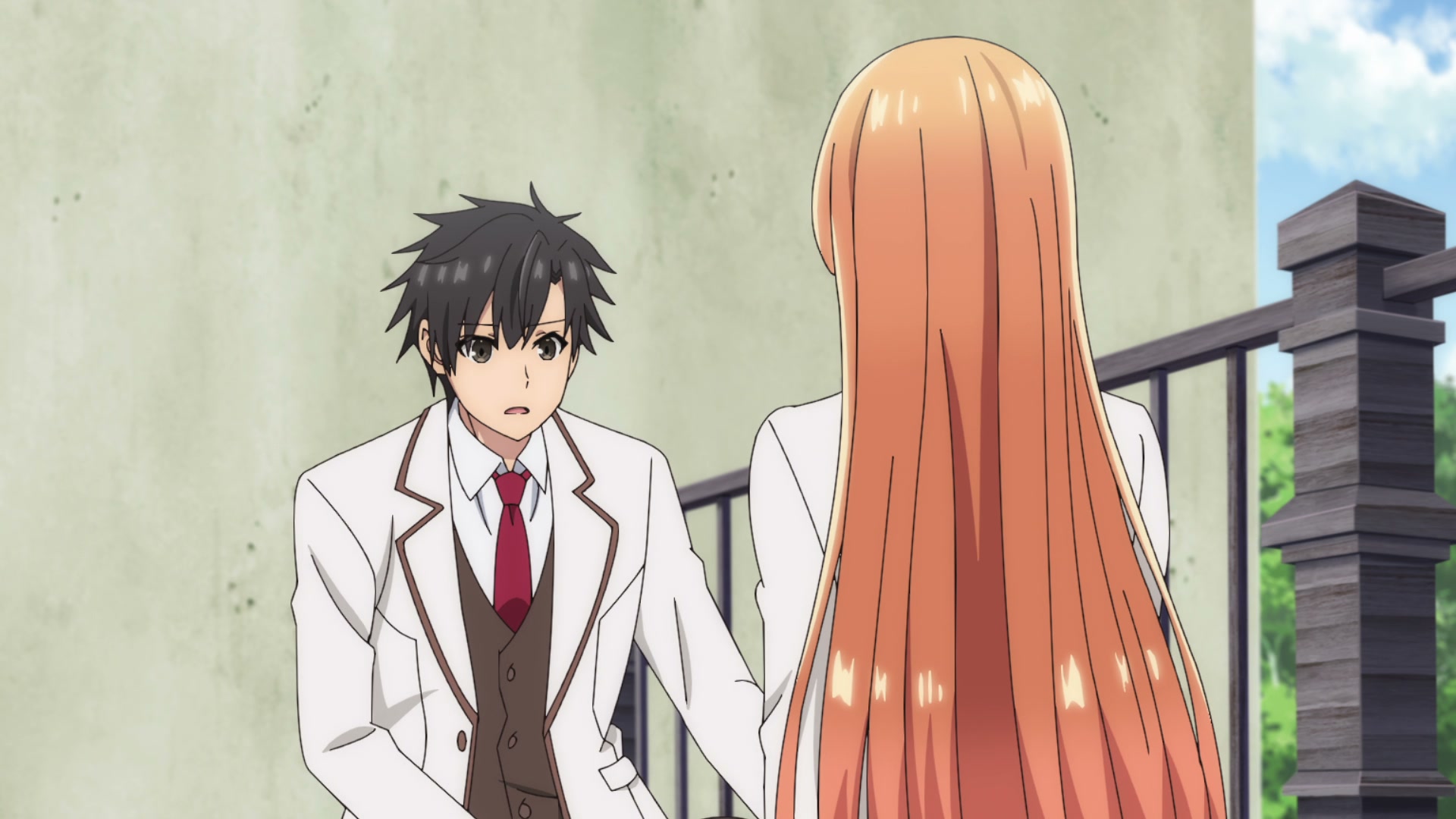
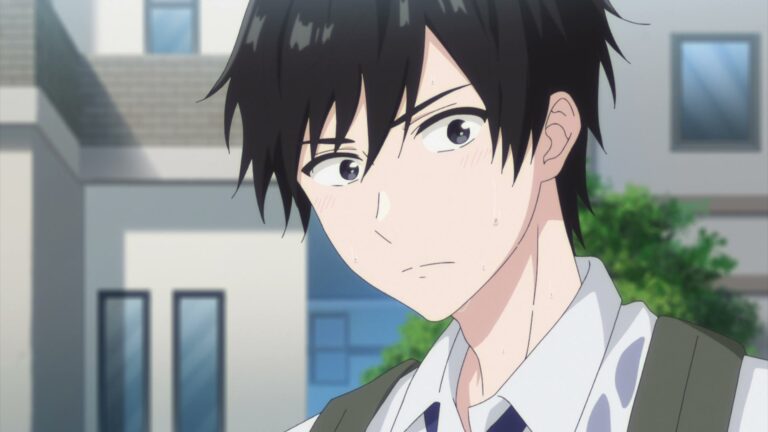
Itsuki’s first day at school is a masterclass in comedic tension. Shizune briefs him in the car: he must maintain the facade that he is just a regular student, an “ascended commoner” whose family runs a minor IT company. Nobody can know he lives with Hinako or serves as her caretaker. The moment they step out of the car, Hinako transforms into the graceful, soft-spoken heiress everyone adores, and Itsuki is left to navigate a classroom where the curriculum is already on second-year integration by substitution. The show nails the quiet horror of being the new kid in a room full of people who are effortlessly, terrifyingly competent.
Then Taisho and Asahi show up. They introduce themselves as fellow “ascended commoners” who run a support group for transfer students struggling with the elite workload. Itsuki is genuinely grateful, and the show lets that warmth land before pulling the rug. Shizune later informs him that Asahi’s family runs J’s Electronics, one of the top five electronics retailers in the country, and Taisho’s family owns a massive carrier company. These two are not commoners at all; they are heirs to empires who just happen to be friendly. Itsuki’s internal scream of “Traitors!” is the exact reaction of a man who realizes he is the only actual peasant in the room. The comedy here is sharp because it does not mock Itsuki for being out of his depth. It just lets the absurdity of the situation sit there, and his exasperation feels earned.
Hinako’s Private Lunch Is a Whole Different Animal
The episode’s strongest stretch is the lunch break, where Hinako drops the act completely. She leads Itsuki to a secluded spot, complains about vegetables, and demands he feed her when she drops a piece of food. The dynamic is weirdly domestic in a way that the show does not overexplain. Hinako is picky, lazy, and completely unguarded, and Itsuki just rolls with it because that is the job. When she feeds him a piece of her rolled omelette and he reacts with genuine shock at how good it is, the moment lands not as fanservice but as a small, honest beat. She says she has to feed him right so he does not get sick of her, and there is a flicker of vulnerability underneath the childishness. Itsuki asks why her previous caretakers quit so quickly, and she just says “Dunno.” The show trusts the audience to read between the lines: this girl has been surrounded by people who treated her as a task, and she is clinging to the first person who just accepts her weirdness without judgment.
The potato chip bribe later in the episode is the perfect encapsulation of their relationship. Hinako refuses to leave school, and Itsuki pulls out a bag of chips that Shizune gave him for exactly this kind of emergency. Hinako’s immediate “Chippies! Give!” is so purely childish that it circles back to being endearing. The show knows that a heiress who is denied junk food her entire life will have the self-control of a golden retriever puppy, and it milks that for every laugh.
The Bath Scene and Shizune’s Deadpan Genius
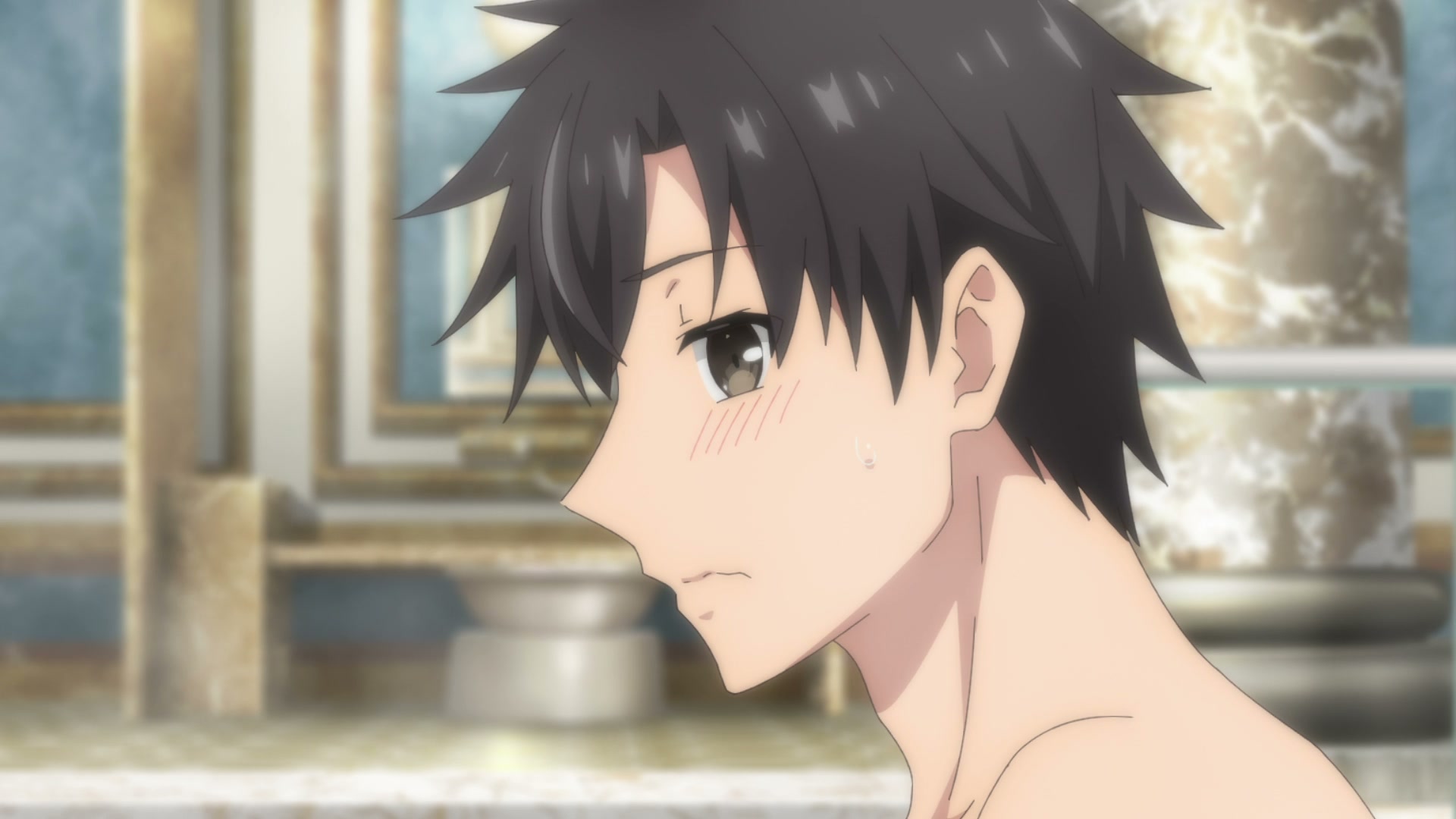
No discussion of this episode can skip the bath sequence, which is simultaneously the most fanservice-heavy and the funniest part of the whole thing. Hinako invites Itsuki to bathe with her, and the show commits to the bit by having them both wear swimsuits because Shizune insisted. Itsuki’s internal monologue as he tries to distract himself from the situation is pure panic, and the show cuts between his flustered face and Hinako’s blissful relaxation. Then she asks him to wash her hair, and the scene becomes oddly tender until she casually tries to remove her swimsuit because it is “in the way.” The comedic timing of Itsuki’s freakout is perfect.
But the real star of the bath scene is Shizune, who appears afterward with a change of clothes and a bottle of pills she describes as “a medicine to cause ED.” She explains, with complete seriousness, that he should take one in advance whenever he might lust after her ladyship. Then she adds, with the same deadpan delivery, “They’re really just vitamins.” The joke works on multiple levels: it is a callback to Kagen’s death threat from the first episode, it reinforces Shizune’s terrifying competence, and it is just a beautifully timed punchline. Shizune remains the show’s secret weapon, a character who can deliver the most absurd lines without ever cracking a smile.
Mirei Tennoji: The Rival Who Dyes Her Hair (But Don’t Say That)
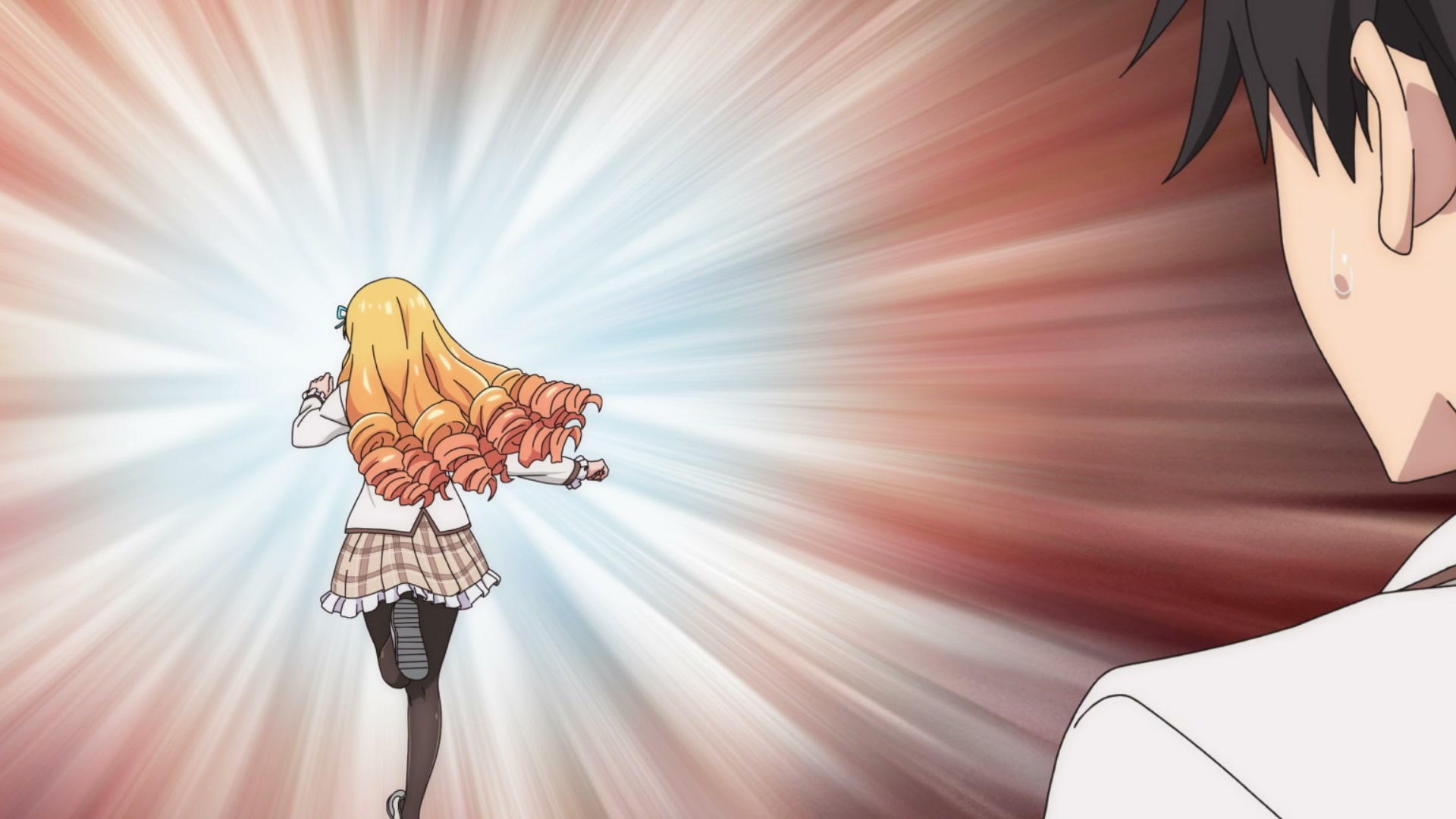
The episode also introduces Mirei Tennoji, the daughter of a rival conglomerate president, who corners Itsuki in the hallway while he is trying to retrieve Hinako’s wallet from the women’s bathroom. Her introduction is a full theatrical performance: she announces her family’s mining and chemical empire, expects him to be awed, and is utterly offended when he responds with a flat “Yeah?” The comedy here is all in the contrast between her grandiose self-image and Itsuki’s exhausted indifference. He is just trying to do his job, and she interprets his lack of reaction as a personal insult.
The highlight is the hair dye exchange. Itsuki, with genuine curiosity, asks if her golden locks are dyed, and Mirei’s composure shatters. She insists, with increasing desperation, that her hair is natural. Itsuki’s internal thought, “She clearly dyes it, though,” is the perfect deadpan button. Mirei is a great addition to the cast because she is not a villain; she is just another rich kid with a fragile ego, and her rivalry with Hinako is entirely one-sided. The show is building a world where everyone is performing some version of perfection, and the only person who seems remotely comfortable in her own skin is Hinako, precisely because she has abandoned all pretense in private.
A Ghost from Itsuki’s Past
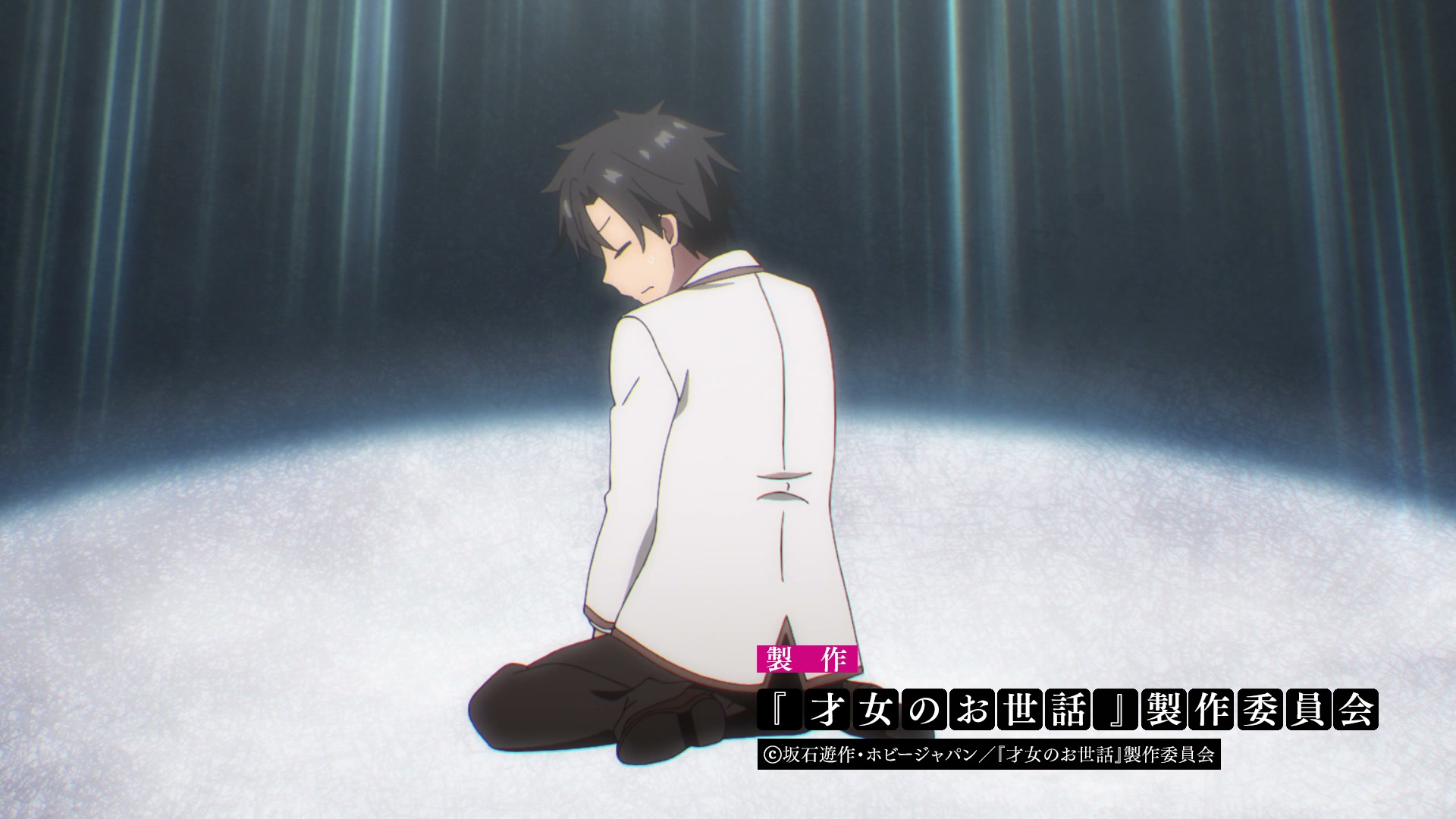
The episode ends on a cliffhanger that shifts the tone slightly. The next day, Itsuki rushes back to the classroom to grab something he forgot and collides with a girl in the hallway. She recognizes him immediately, calling him “Itsuki-kun” with overwhelming familiarity, and the final line is her tearful “I’ve missed you so much!” The girl is named Narika, and she is not the childhood friend Yuri who was frantically messaging him in the first episode. This is someone new, or perhaps someone from an even earlier chapter of his life. The show has been so focused on the comedy of Itsuki’s new circumstances that this sudden intrusion of his past feels like a genuine jolt. Who is Narika, and what does her appearance mean for his carefully constructed cover story? The episode smartly leaves that question hanging, adding a layer of intrigue to a series that could easily coast on its premise alone.
Closing Thoughts
Saijo no Osewa is shaping up to be one of those rare comedies that understands exactly how far to push its absurdity before grounding it in small character moments. The second episode expands the world, introduces new foils, and deepens the central dynamic between Itsuki and Hinako without losing the chaotic energy that made the premiere so fun. The bath scene and the potato chip bribe are the kind of gags that will stick with me, but it is the quiet lunch conversation and Hinako’s unguarded “Don’t quit, okay?” that give the comedy its heart. If the show can keep balancing the ridiculous and the sincere this well, I am all in.
Screenshots

[…] to content Flash News Saijo no Osewa Episode 3: A Caretaker Custody Battle EruptsSaijo no Osewa Episode 2: A Gilded Cage of Lies and Potato ChipsCheat Fuyo Anime Reveals Additional Staff and Second Teaser VideoHell Mode Season 2 Reveals […]