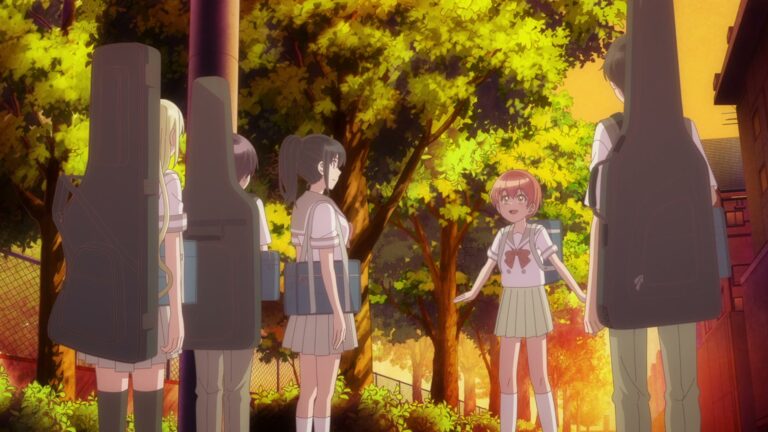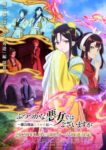
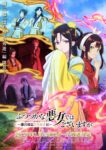




The ferry ride home from Comitia opens with the club shouting their love for Tokyo across the water, and it is such a small, perfect beat. These kids just survived their first real event as a circle. Ai’s solo book sold nothing to strangers. Teshima-sensei ran into her old editor. Hikaru bought a copy out of love, not pity. And now they are all on a boat at night, looking at the skyline, yelling into the dark. The episode could have stayed there, in that warm aftermath. Instead, it pivots into the past and gives us the longest, most painful look yet at who Teshima Rei used to be.
This is the Hebichika episode. The one the series has been building toward since Rei first muttered “bloodlust” under her breath. And it does not soften anything.
The Idol Worship Is the Point
Rei arrives at Hebichika-sensei’s house as a new assistant, and the episode immediately frames her as a fan first, a worker second. She calls Sweet Snake Strawberries “the bible of my life.” She narrates her own history with the series in the kind of breathless detail only a true obsessive would use. When Hebichika opens the door, Rei can barely speak. When Hebichika reads her manga and calls it “not even the least bit good,” Rei’s internal monologue is pure joy. God herself is reading my manga. God herself is teaching me to taper lines. God made curry.
The comedy of Rei treating every mundane interaction as a religious experience works because the episode never mocks her for it. It just lets the gap between her worship and reality sit there. Hebichika is not cruel. She is direct, self-absorbed, and completely uninterested in managing anyone’s feelings. She tells Rei her lines lack appeal. She scraps five pages of finished work on a whim. She calls Rei “newbie” for an entire year. And Rei keeps framing all of it as divine revelation.
That is the setup. The rest of the episode is the slow, grinding process of that worship curdling into something else.
The Mundane Details Do the Heavy Lifting
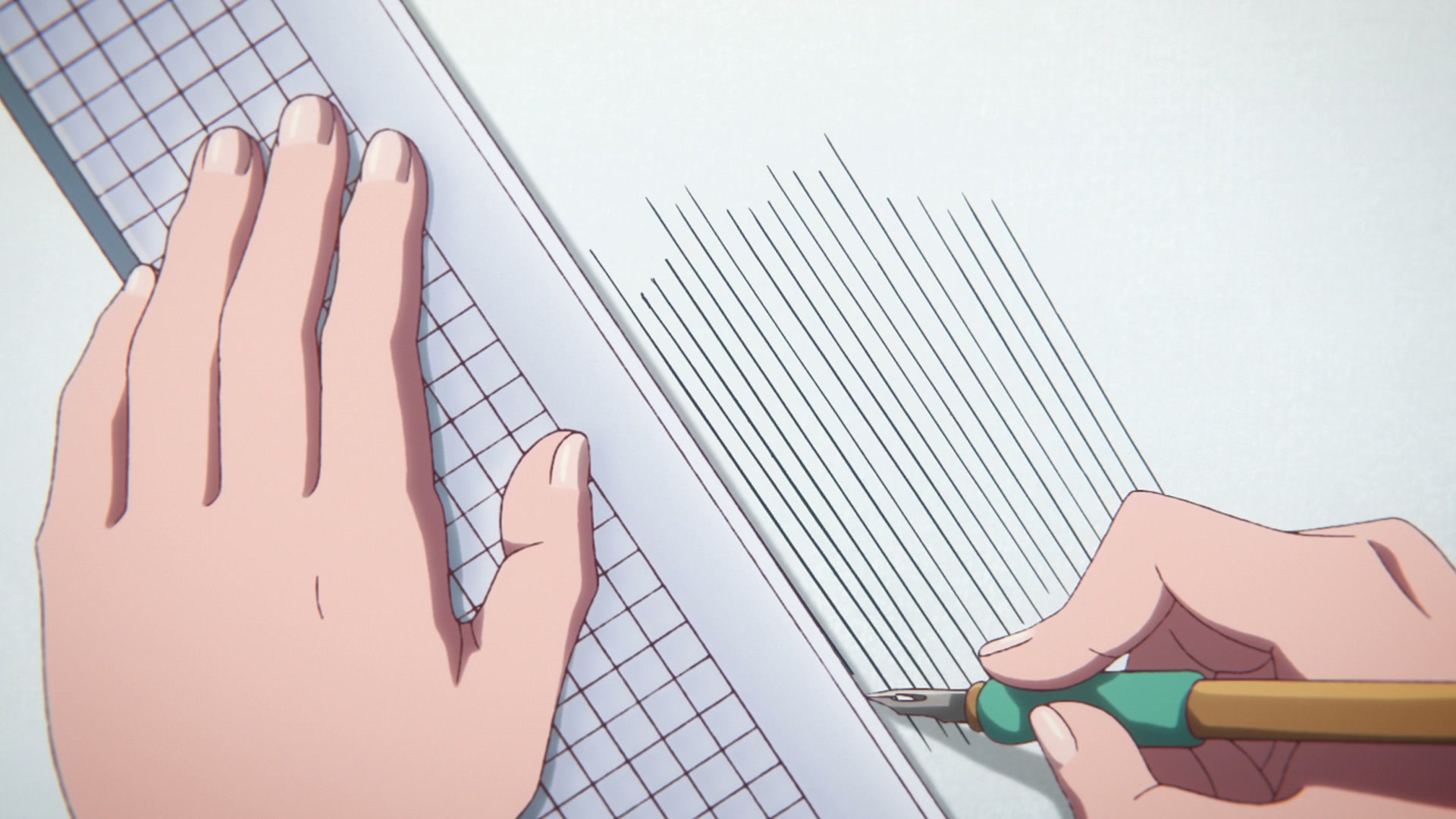
What makes this flashback work is how much time it spends on the actual labor of being an assistant. Rei practices tapering lines. She draws tens of thousands of practice strokes. She gets glasses because Hebichika points out her eyesight is too poor to see the world accurately. She learns about foreshortening, vanishing points, tone numbers, white ink, mapping nibs. The episode is practically a mini-lecture on manga craft, but it never feels like a tutorial because every technical detail is tied to Rei’s emotional state.
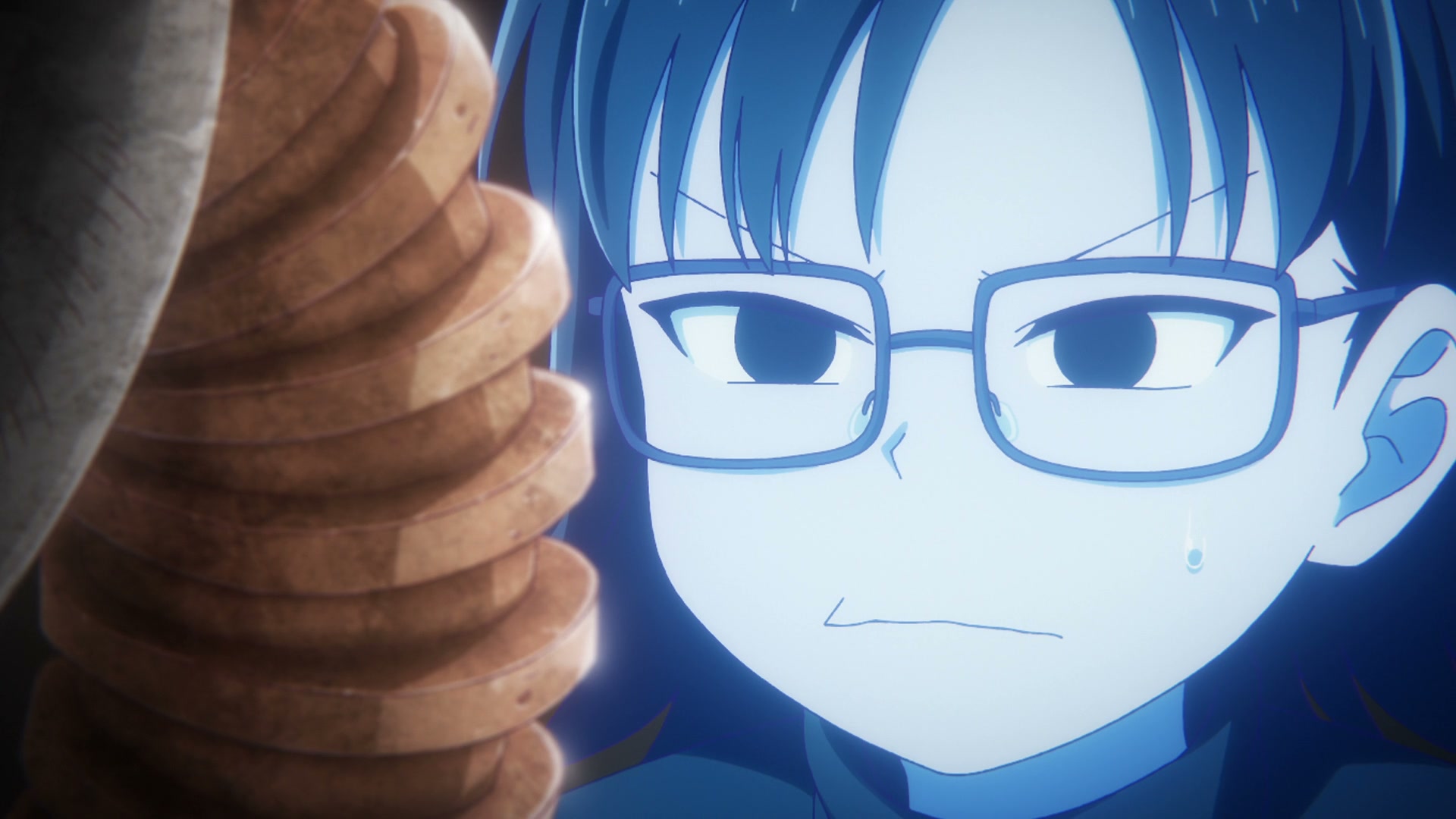
The glasses moment is the clearest example. Hebichika asks about her eyesight, Rei says 0.4, and Hebichika says she needs to see the world as it really is. So Rei gets glasses. And suddenly the world looks different. She notices the orientations of houses, the way vertical perspective makes buildings taper, the way light reflects on a river. She starts seeing everything as potential manga panels. The episode shows this through a montage of ordinary scenes, a curry plate, a Shiba in a park, a row of rooftops, each one annotated with tone numbers and inking techniques. It is the most visually distinctive stretch of the episode, and it quietly makes the point that Rei is not just learning a skill. She is rewiring her perception.
But the same clarity that makes her useful as an assistant also makes her see Hebichika more clearly. And that is where the episode turns.
The Revelation That Breaks the Spell
Rei spends a year working on her own serialization storyboards. She keeps adding notes from her editor and from Hebichika. The storyboards become, in her words, “a misshapen thing.” She cannot give up on them because that would mean the year was wasted. So she keeps going, even as the work gets worse.
Then Hebichika scraps the last five pages of Sweet Snake’s final chapter. Not because Rei’s art was bad. Just because she had a sudden revelation and wanted to redraw it from scratch. The deadline is already tight. The assistants are exhausted. Harue, the other assistant, has been threatening to kill Hebichika for episodes now, and the episode lets that threat hang in the air without resolving it. Hebichika just smiles and says, “Good luck killing me, Harue-chan.”
Rei’s reaction is not anger. Not at first. She is frustrated, sure. But what really gets her is that the redrawn chapter is incredible. Hebichika is selfish, inconsiderate, and completely indifferent to the people around her. And she still produces something beautiful. Rei cannot reconcile those two facts. She says Hebichika is “just a regular person who’d die if I stabbed her with a knife.” Then she says, “I should kill her.”
The episode has been building to this line for six episodes. The “bloodlust” advice from Comitia finally clicks into place. Rei is not talking about literal violence. She is talking about the only kind of murder she can actually commit: making a manga that kills Hebichika’s hold on her. A manga so good it proves she does not need to worship anyone.
The Final Confrontation Lands Quietly
Rei redraws her storyboards from scratch. She brings them to Hebichika and says, “I drew it with the intent of killing you.” Hebichika looks at her, refuses to help, and says, “After all, you and I are already…” Then she trails off. Then she says, “Good luck killing me, Rei-chan.”
That is the first time Hebichika uses Rei’s name. Not “newbie.” Rei notices it immediately. The episode does not explain what Hebichika was about to say. It does not need to. The point is that Rei has finally become someone Hebichika sees as a peer, or at least as a rival. The worship is over. The relationship is now something else.
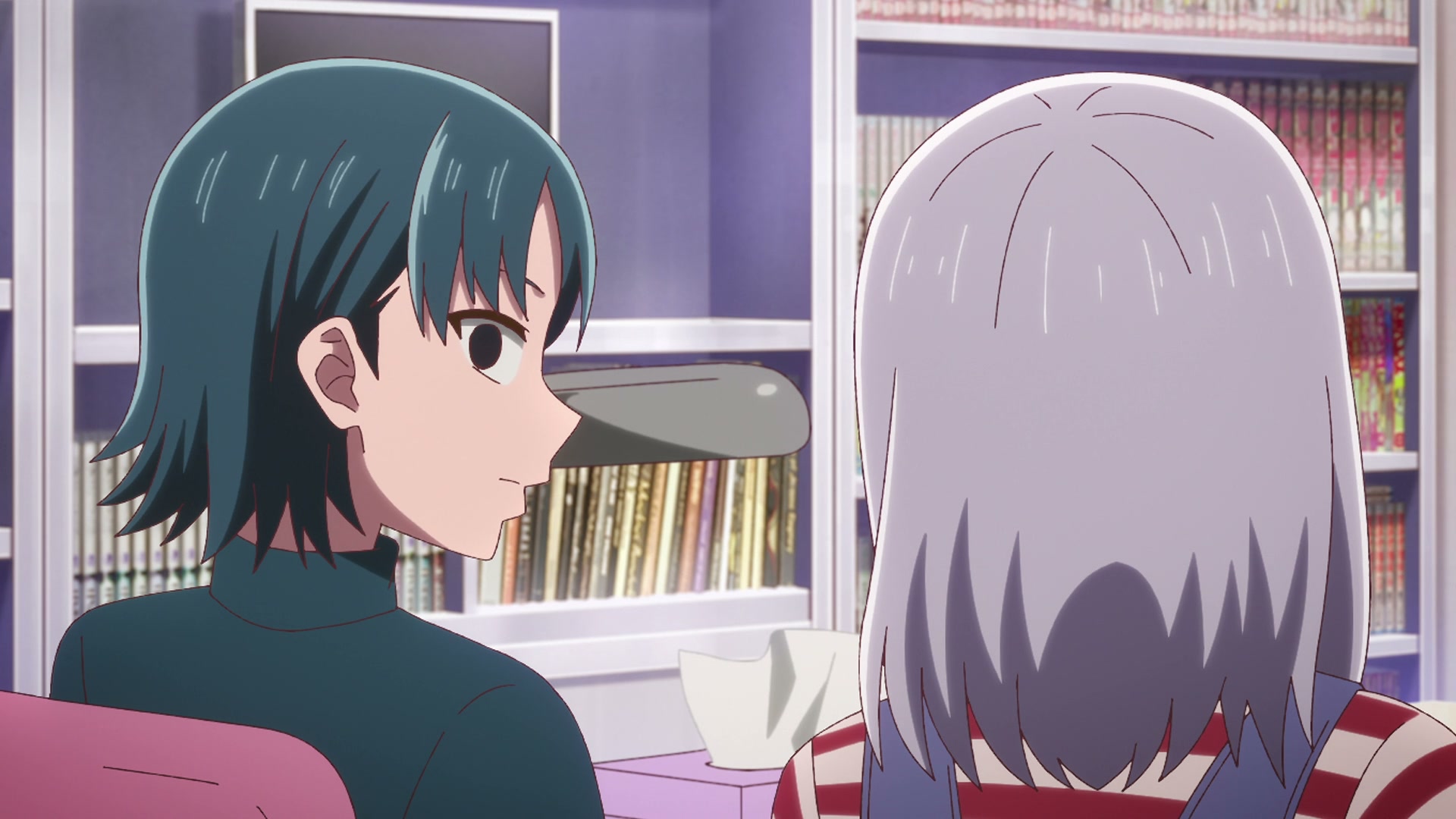
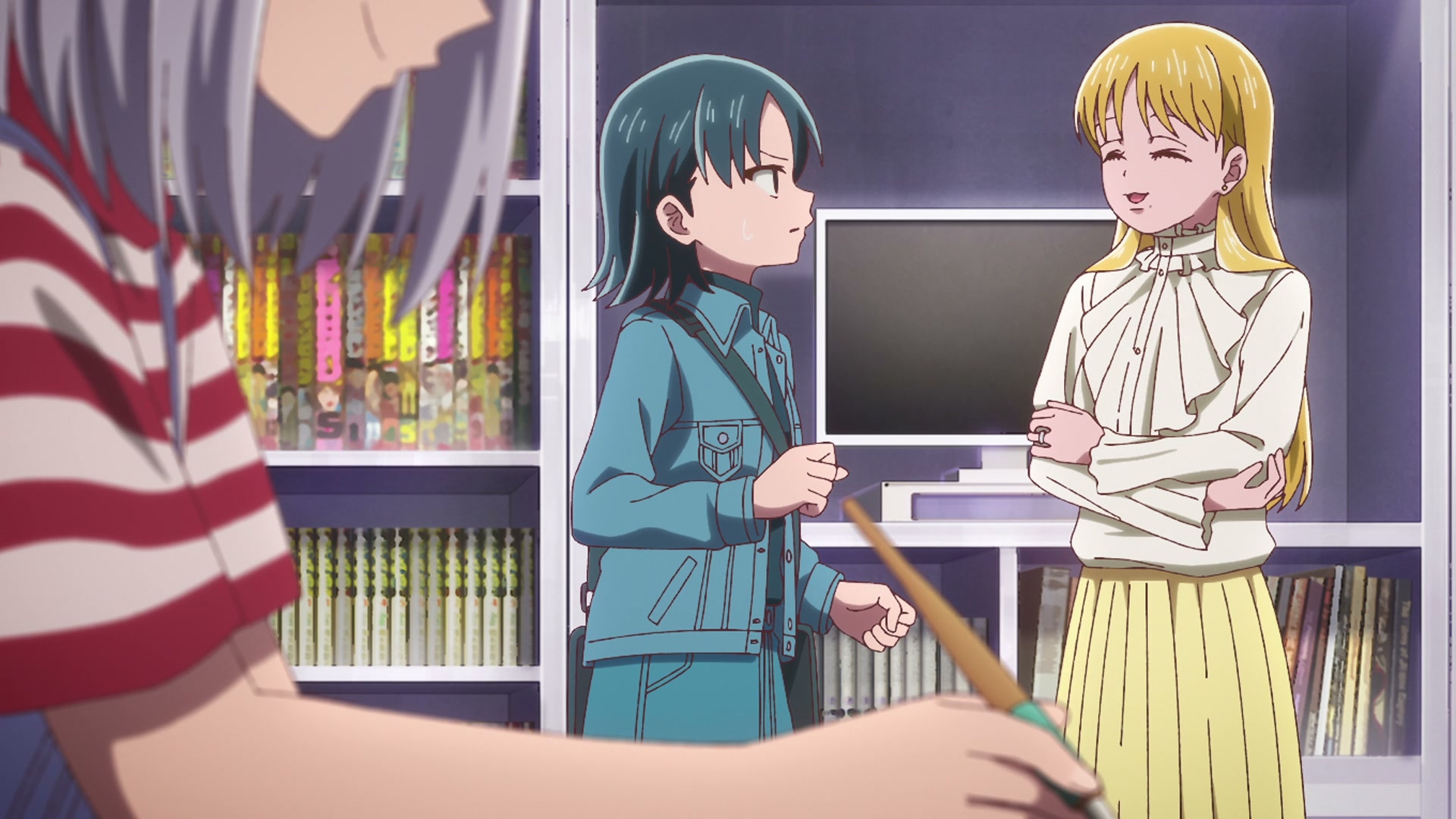
The episode ends with Rei and Nana on the ferry to Oshima, screaming into the wind. Rei yells, “I’ll kill everyone!” Nana yells, “Rei-chan, I love you!” It is funny and a little sad and completely in character for both of them. Then the present-day scene returns, and Nana is telling the club members about Rei’s assistant days while Rei tries to shut the conversation down. The kids want to know who they assisted. Nana teases. Rei deflects. The episode ends on that note, with the past still hovering over the present.
What This Adds to the Bigger Picture
This episode recontextualizes everything about Teshima-sensei. Her refusal to teach Ai directly. Her insistence that the club treat manga as a hobby. Her fear of students staking their lives on this. She is not just a burned-out artist. She is someone who spent a year of her life trying to kill her idol with a misshapen manga and failed. She knows exactly how much damage that kind of obsession can do.
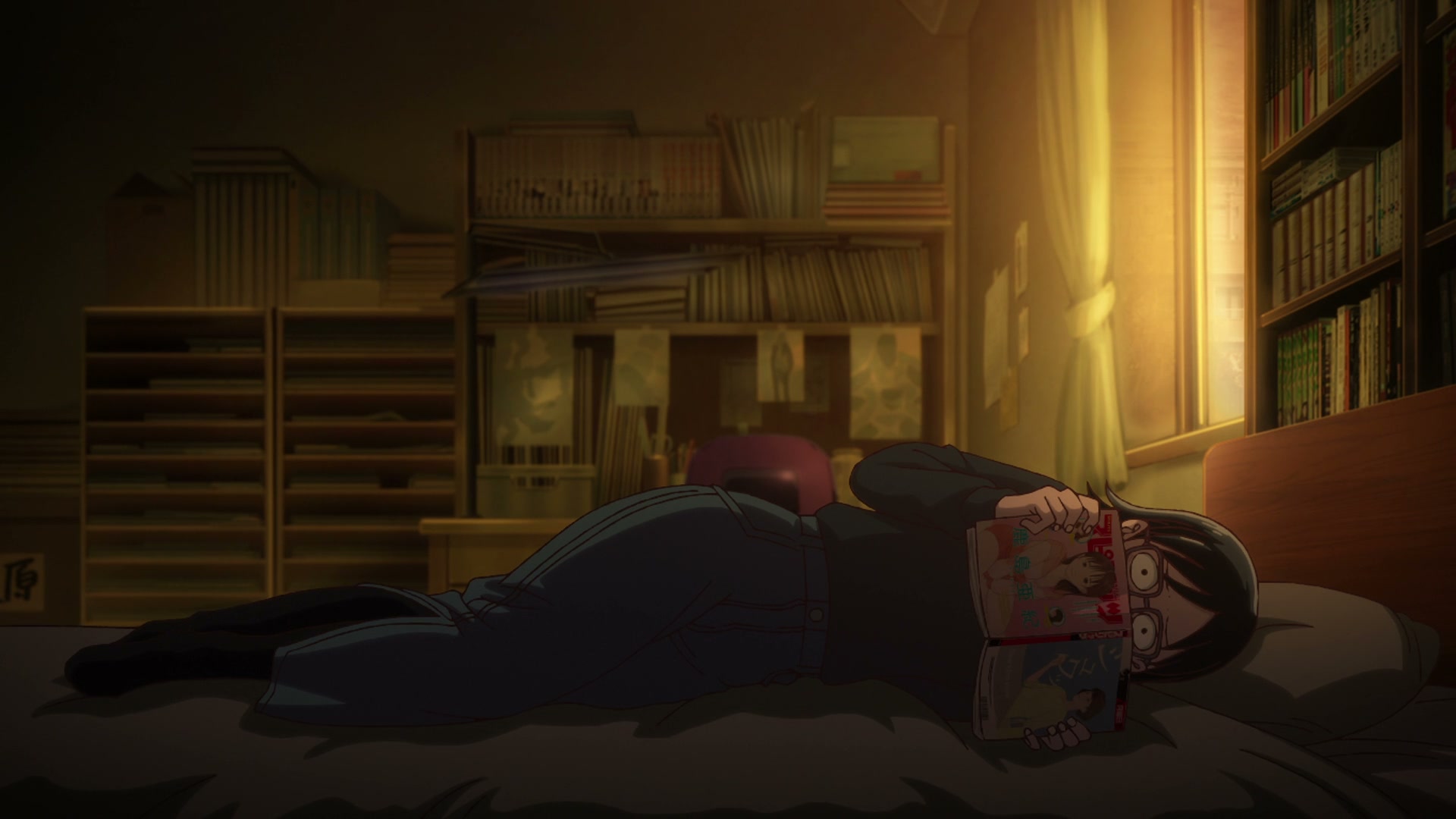
But the episode also shows why she still carries the lighter. Why she still draws. Why she cannot fully walk away. The assistant job was not just suffering. It was also the place where she learned to see the world as a manga artist. The glasses, the tone numbers, the late nights, the curry. That part of her is still alive, even if she keeps it buried.
The club members do not know any of this yet. They just know their teacher used to be an assistant and that she is being weird about it. But the audience knows. And that gap between what the kids see and what we know is where the series is heading.
Closing Thoughts
This is the best episode of the season so far. It takes a character we have been circling for six episodes and finally lets her past breathe. The Hebichika flashback is funny, painful, and specific in a way that feels earned. The craft details are not window dressing. They are the emotional core. And the final line, “Good luck killing me, Rei-chan,” is going to stick with me for a long time.
I do not know if Rei ever did kill Hebichika. The episode does not say. But the fact that she is still drawing, still teaching, still carrying that lighter, suggests the fight never really ended. It just changed shape.
Screenshots