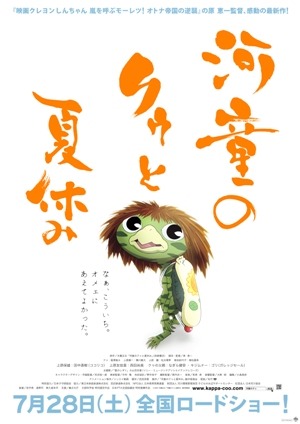






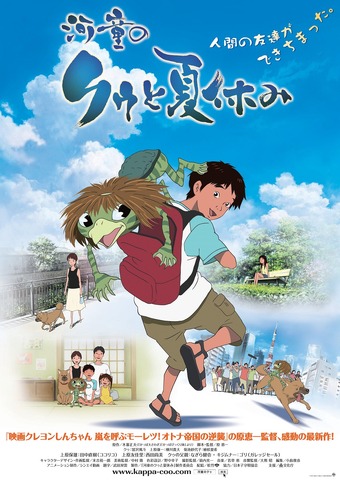
For me, the anime most strongly tied to summer vacation is undoubtedly Kappa no Kuu to Natsuyasumi. As a grade-schooler with endless free time, I spent hours watching Animax, but surprisingly few shows have stayed with me into adulthood. This one, however, aired every summer and carved itself deep into my memory.
I can still recall Kuu’s young voice, the kappa swimming in a clear stream, the crowds chasing after him, and the scene of Kuu climbing Tokyo Tower. The summer days spent with Kuu remain vivid in my mind. Yet, as a child, I never clearly remembered the story itself.
The Selfishness of Humans I Didn’t See as a Child
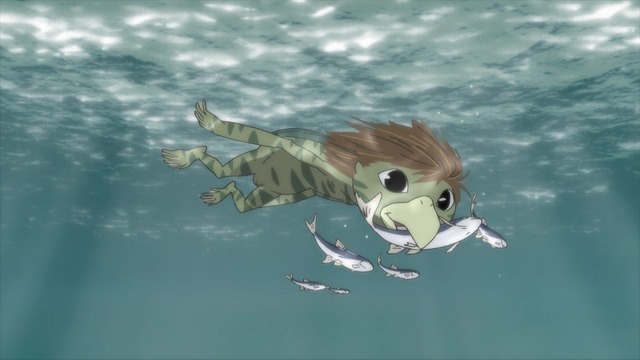
Watching it again as an adult, I realized the film doesn’t shy away from the darker side of humanity. It opens with Kuu’s father being cut down by a selfish samurai, and later shows the media hounding Kuu. Koichi, who hides Kuu, is ostracized by his friends, while he himself silently tolerates—and sometimes joins in—the bullying of his classmate Kikuchi. This is not simply a peaceful summer tale.
I was surprised to discover what kind of film it really is. In my memory, it was a simple story: a boy meets a kappa, they have fun, and then the kappa returns to his kind. (I also had no idea it was over two hours long until I rewatched it.)
What was I thinking when I watched it as a child? Recently, reactions from children who saw Movie Chiikawa: Secret of the Mermaid Island have been making headlines, but as an adult, it’s hard to clearly recall what I felt about a film I watched in my youth.
The World Kuu Showed Me as a Child
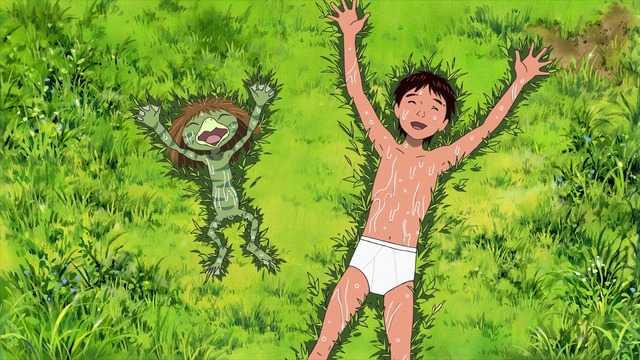
What did this film mean to me back then? I probably didn’t understand the subtle shifts in Koichi’s slightly cynical attitude as he approached adolescence, or how his heart changed through meeting Kuu. I likely just saw it as a story where a strange little visitor makes a boring summer fun—perhaps because the scenes repeated in commercials left a strong impression.
As a kid who loved Keroro Gunso, I probably saw Kuu as a similar kind of houseguest—a small, mysterious being who arrives at a boy’s home, different from siblings or school friends. But unlike Keroro, Kuu is young and troubled by loneliness, and that hit me hard. I mourned the parting with a presence I had assumed would always be there.
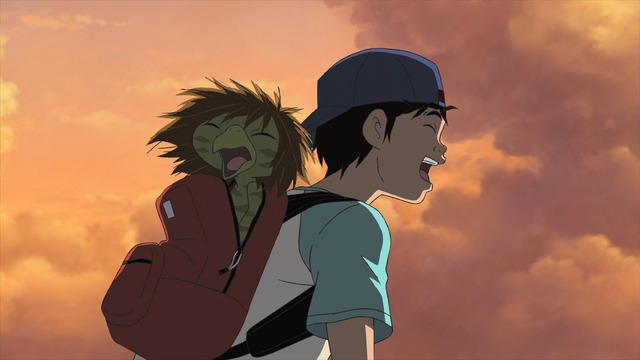
I also remember the scene where Koichi and Kuu ride a bicycle through the countryside to Tono, the kappa’s home. It was a place where nature and human life blended together, unlike the suburban housing development where Koichi’s nuclear family lived. The fresh, shared image of “a rural summer” that many people carry was, for me, largely shaped by this film.
Looking back, this work vividly depicts a summer memory with a strange friend, doesn’t overlook the nuances of a child’s heart, weaves in human selfishness and fear, yet never denies kindness. It’s a masterpiece that expands a child’s world.