



In the summer 2026 Chinese box office, the indie 3D anime film Niu Lai has become an unexpected sensation, driven by viral social media buzz. The film was created by a mother and her son over roughly five years using a home PC, with no professional production team or financial backing.
Niu Lai is an 86-minute animal fable set in a dream world. The story follows a newborn calf named Niu Lai who struggles to stand. A lark from the desert visits him, and together they enter a long dream. In this dream, the timid Niu Lai experiences pain and fear, befriends a hungry leopard cub named Bao La, and forms a strong cross-species friendship. However, the cattle herd is wary of the leopard, and when wolves threaten, the herd is forced to migrate, separating Niu Lai from his friend. The journey is dangerous, and Bao La risks everything to help, but Niu Lai’s mother sacrifices her life to protect him. Through loss and trials, Niu Lai grows brave and responsible, and when he wakes from the long dream, he finally stands on his own. The film explores themes of life, parting, courage, and responsibility through its animal adventure.
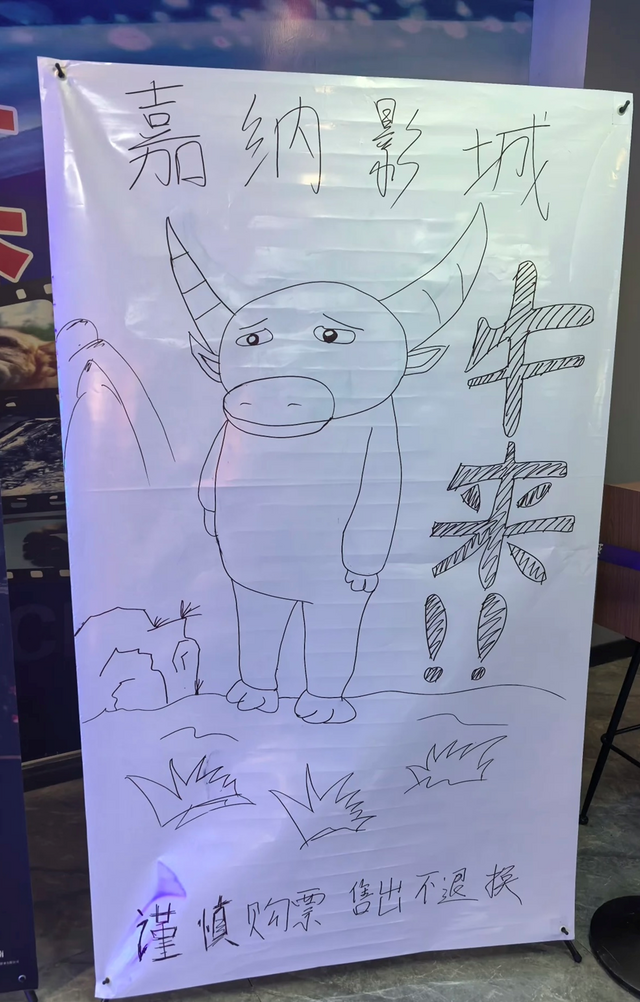
The film was released in China on August 5 with almost no promotion and very limited screenings. In its first few days, it earned only a few thousand yuan and seemed destined for a quiet exit. But then audiences began posting clips from the film on social media, and they spread rapidly. The reason for the attention was the film’s deliberately crude 3D visuals and unnatural character movements—a “too low quality” finish that contrasted sharply with its elegant ink-wash style official poster. This gap sparked widespread mockery and curiosity.
As related topics climbed search rankings, theaters across the country added more screenings, and box office revenue surged. By mid-August, the film had earned approximately 39.4 million yuan (about 928 million yen), making it a black swan hit of the summer season.
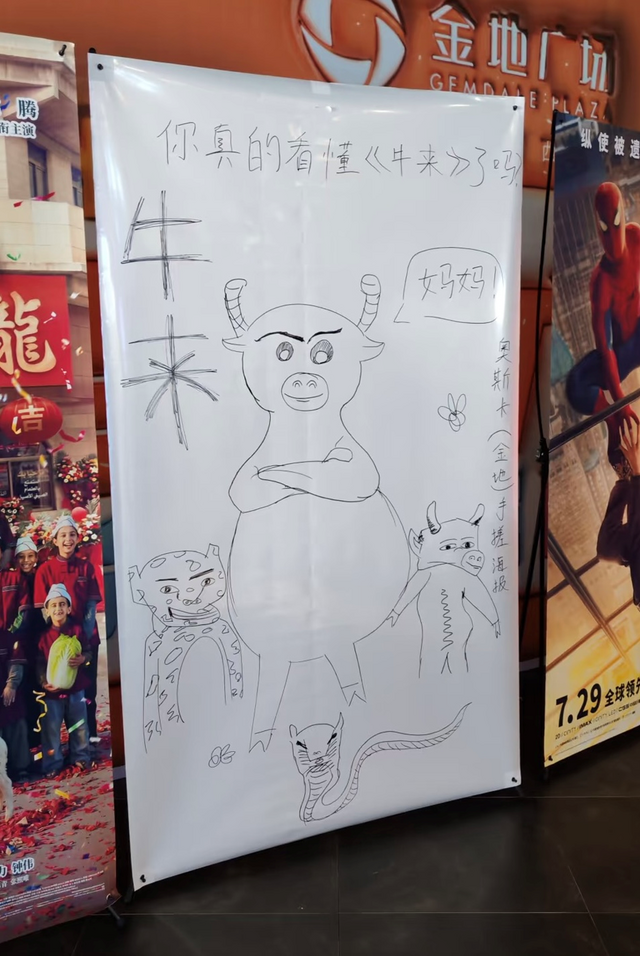
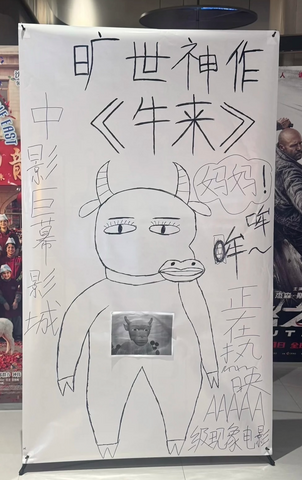
Adding to the film’s charm are the hand-drawn promotional posters displayed in theaters. Because the production team did no promotion at all, theaters had no official posters to put up. In response, theater staff spontaneously created hand-drawn posters, which perfectly matched the film’s humorous and rough aesthetic.
Audience reactions have been sharply divided. Many viewers go to see the film for its meme value, enjoying the free-spirited atmosphere and sharing their experiences online. Some even watch it as a good-luck charm, interpreting the title “Niu Lai” (which sounds like “bull market is coming”) as a wish for economic prosperity. On the other hand, many critics point to the rough animation, awkward character movements, confusing story, and poor dialogue and subtitles, arguing it fails to meet standard theatrical animation quality. The gap between the poster and the actual film has also drawn criticism.
Yet a significant number of viewers appreciate the effort behind the film. They praise the mother and son for spending five years teaching themselves animation and completing a feature-length work without professional staff, funding, or industry connections. Many argue that beyond commercial quality, the dream and determination of amateur creators deserve respect.
The phenomenon has sparked broader discussions in China’s online community about how to distinguish viral hype from artistic value, how to accept amateur expression, and what the standards for commercial filmmaking should be. Industry insiders note that Niu Lai‘s success is a special case born from a combination of viral social media spread and social psychology, and it does not represent the overall level of the Chinese animation industry.
As the buzz continues, Niu Lai has become more than just a film—it is now a case study in internet-era aesthetics, the potential of individual creation, and the power of media dissemination.



![“So Sad…”, “I Can’t Stop Crying” Viewers React to Kousui’s Sad Past & Her Interactions with Maomao in Yakusya no Hitorigoto Episode 45 [Spoiler Reactions Summary]](https://animeworld.info/wp-content/uploads/2025/06/775624.jpg)