





Introduction
There is a particular kind of comfort anime that sneaks up on you. It presents itself as one thing, a lighthearted harem comedy with supernatural trimmings, and then slowly reveals a deeper emotional core that you did not expect to find. Yuragi-sou no Yuuna-san is exactly this kind of series. It understands the conventions of its genre well enough to deliver on every expectation, the awkward bath encounters, the accidental pervert moments, the increasingly absurd romantic entanglements, but it also knows how to use those conventions as a vehicle for something more meaningful.
The premise is straightforward. Fuyuzora Kogarashi is a spirit medium with a unique approach to exorcism. He punches ghosts. After a lifetime of being possessed by spirits, passed between guardians, and eventually becoming homeless, he moves into Yuragi Inn, a former hot springs inn that now serves as a boarding house. The rent is absurdly cheap because the place is famously haunted. Kogarashi assumes he will need to exorcise whatever spirit lurks there, but instead he discovers Yunohana Yuuna, a kind-hearted ghost girl who has lost all memories of her past life. Rather than banishing her, he makes a promise to help her resolve her lingering regret so she can ascend to Heaven peacefully.
This is a series for people who appreciate the harem comedy genre but want something with genuine emotional stakes. It is for viewers who understand that fanservice and heartfelt storytelling are not mutually exclusive. It is for anyone who has ever felt like an outsider and dreamed of finding a place to belong.
Story and Themes
Narrative Structure and Pacing
The twelve-episode season follows a loose episodic structure that gradually builds toward more significant arcs. Early episodes establish the setting and introduce the residents of Yuragi Inn, each with their own supernatural nature and personal struggles. The middle portion of the season explores individual character stories, from Sagiri’s insecurities about femininity to Chitose’s secret life as a middle school student. The final stretch introduces the season’s major conflict, the abduction of Yuuna by the Black Dragon God Ryuuga Genshirou, which forces the residents to come together as a found family.
The pacing is generally well-managed. The series knows when to linger on quiet character moments and when to accelerate into action. The Dragon God arc in episodes seven and eight serves as an effective climax, bringing together threads that had been developing throughout the season. The final episode introduces the revelation of Yuuna’s amnesia, a significant development that reframes the entire series and sets up future storylines.
There are moments where the transition between comedy and drama feels abrupt. A scene that begins as lighthearted fanservice can suddenly shift into genuine emotional territory, and the tonal whiplash can be jarring. However, this is also part of the series’ charm. It reflects the reality of life at Yuragi Inn, where the absurd and the heartfelt coexist in constant tension.
The Nature of Happiness and Regret
The central question of the series is deceptively simple. What makes a life complete? What constitutes an unresolved regret? For most ghosts, the answer is clear. They are bound to the mortal world by unfinished business, by love unexpressed, by promises unkept. But Yuuna cannot remember her past. She does not know how she died or what she left behind. Her lingering regret is a mystery even to herself.
This amnesia creates a fascinating paradox. Yuuna is happy. She has friends, a home, and a sense of belonging that she never experienced in life. She tells Kogarashi in the final episode that she is “just so happy” surrounded by the people she loves. So what keeps her bound to this world? If she has already found happiness, what more could she possibly need?
The series suggests that happiness is not a destination but a process. It is found in connection, in the small moments of joy that accumulate over time. Yuuna’s happiness is real, but it is also fragile. She is a ghost, and her existence is inherently temporary. The fear of losing what she has found may be her true lingering regret, a fear that cannot be resolved through any simple act of closure.
The Ethics of Exorcism
Kogarashi’s approach to spirits is fundamentally different from traditional exorcists. He does not automatically condemn ghosts to Hell or force them to ascend. Instead, he listens to their stories and tries to help them find peace. This philosophy is contrasted with characters like the Gudon Clan monks, who view all spirits as threats to be eliminated.
The forced ascension attempt in the first episode establishes this thematic conflict early. The monk Tsujishouten Sekkan believes he is helping Yuuna by sending her to Heaven, but he does not bother to ask what she wants. Kogarashi, by contrast, respects her autonomy. He understands that ascension must be a choice, not an imposition.
This ethical framework extends throughout the series. The various ghost encounters, from the mujina in the first episode to Ami and Yasuhisa in the finale, all reinforce the idea that spirits are people with their own stories, deserving of compassion rather than automatic exorcism. The series argues for understanding over force, for connection over condemnation.
Found Family and Belonging
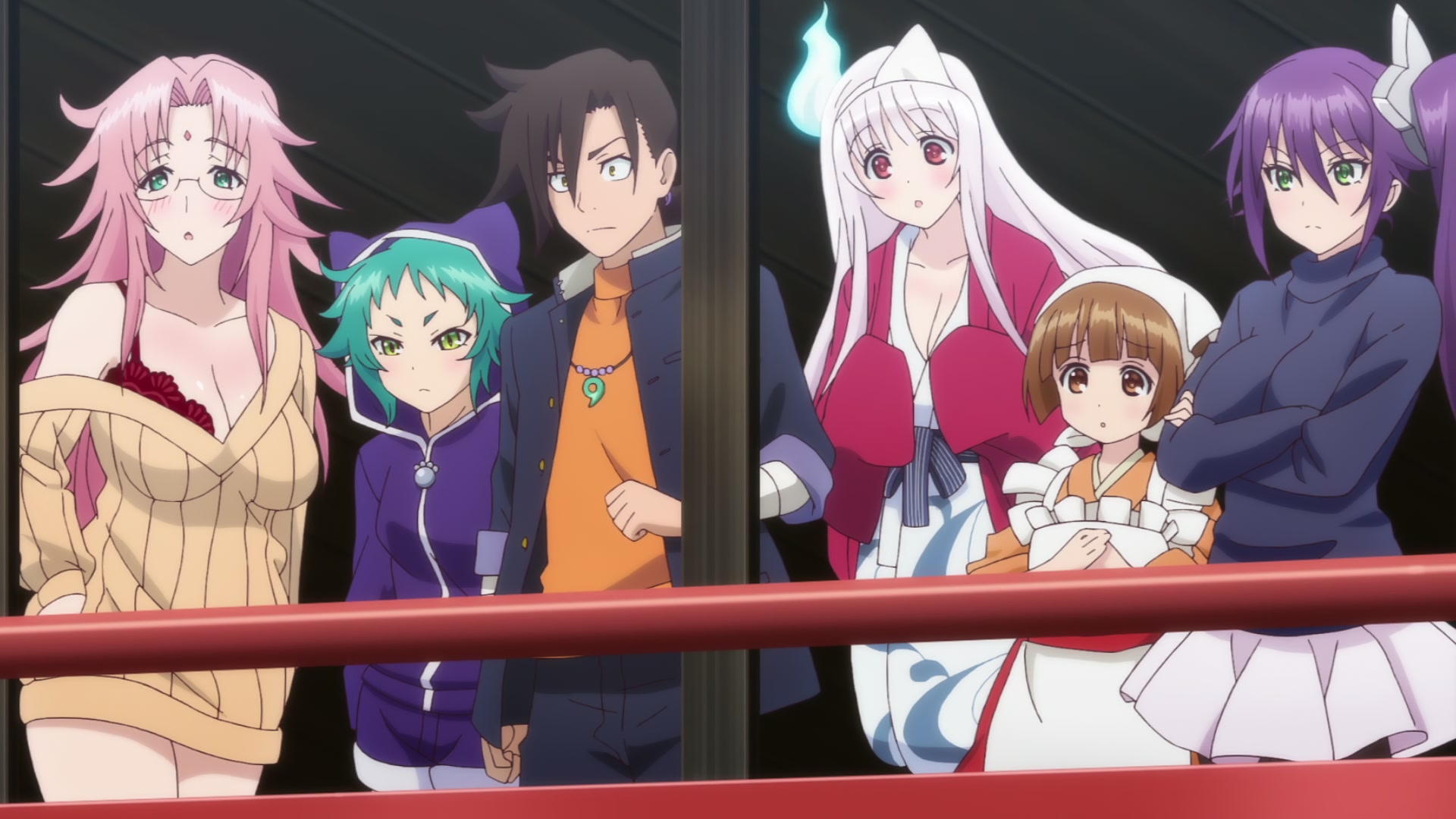
Yuragi Inn functions as a sanctuary for outsiders. Kogarashi is a homeless psychic who has never had a stable home. Yuuna is a ghost isolated by her inability to be seen by normal people. Sagiri is a demon-slaying ninja who struggles to reconcile her duty with her personal desires. Nonko is a demon descendant who abandoned her predetermined path. Yaya is a girl possessed by a cat god, existing in a symbiotic relationship that sets her apart from ordinary humans. Koyuzu is a tanuki who cannot transform properly, a child alone in the world. Chitose is a household deity who has spent decades caring for others while hiding her own desires.
Each of these characters is an outsider in some fundamental way. The inn provides not just shelter but acceptance, allowing each resident to be their authentic self without judgment. This theme resonates throughout the series, particularly in episodes where the residents come together to protect one another. The rescue mission to save Yuuna from the Dragon God is not just an action sequence. It is a declaration that this found family will not abandon its members, no matter the cost.
Memory and Identity
Yuuna’s amnesia raises profound questions about identity and selfhood. If she does not remember her past, is she still the same person? The series suggests that identity is formed through present relationships as much as past experiences. Yuuna’s current happiness matters, even if she cannot remember what came before.
The photograph scene in episode five is particularly significant. When Yuuna appears as a blurry figure in the picture, Miyazaki’s reaction is not fear but delight. She finds the image cute, a validation of Yuuna’s existence regardless of clarity. This moment encapsulates the series’ philosophy. What matters is not the sharpness of the image but the reality of the connection.
Cultural Elements and Context
The series is deeply rooted in Japanese supernatural traditions. The various residents of Yuragi Inn represent different aspects of Japanese folklore. Nonko’s ancestry as a descendant of Shuten-douji connects her to the oni, the demonic figures of Japanese mythology. Koyuzu is a Bakedanuki, a shapeshifting tanuki with specific cultural associations. Chitose is a protective household deity, similar to the Zashiki-warashi of Japanese folklore. The Dragon God Ryuuga Genshirou reflects Shinto concepts of kami, the spirits that inhabit the natural world.
The onsen setting is also culturally significant. Hot springs have long been associated with purification and healing in Japanese culture. The communal bathing scenes, while often played for fanservice, also serve a thematic purpose. The characters are literally and figuratively exposed, their vulnerabilities laid bare in the warm water.
The series also engages with the manga industry through Nonko’s character. Her deadline crunch struggles, her complicated relationship with her editor, and her frustration with writing romance all reflect real aspects of the manga creation process. This self-awareness adds depth to the series, acknowledging the medium in which it exists.
Adaptation Considerations
The anime is based on the manga by Miura Tadahiro, serialized in Weekly Shonen Jump. As an anime-only viewer, I cannot judge whether the adaptation skipped or altered source material. What I can say is that the anime works on its own terms. The twelve-episode format requires efficient storytelling, and the series generally manages this well. The emotional core is well-developed, the character introductions are memorable, and the thematic consistency is maintained throughout.
There are moments where the pacing feels rushed, particularly in the transition between comedic and dramatic scenes. Some supporting characters receive less development than they might in a longer adaptation. However, these are minor concerns in the context of a season that accomplishes its goals effectively.
Characters
Fuyuzora Kogarashi
Kogarashi is an unusually compelling harem protagonist. He is not oblivious to the feelings of the women around him. He is simply focused on his promise to Yuuna. This focus is not a rejection of the other characters but a prioritization that reflects his values.
His backstory is genuinely tragic. Possessed by spirits his entire life, passed between guardians who treated him as a burden, eventually becoming homeless and debt-ridden, he has every reason to be bitter. Instead, he is kind, patient, and remarkably resilient. His defining principle, refusing to punch women, is introduced as a comedic limitation but evolves into a genuine character statement. In a world where his only exorcism technique is physical violence, this self-imposed restriction creates real tactical challenges, most notably in his confrontation with Oboro.
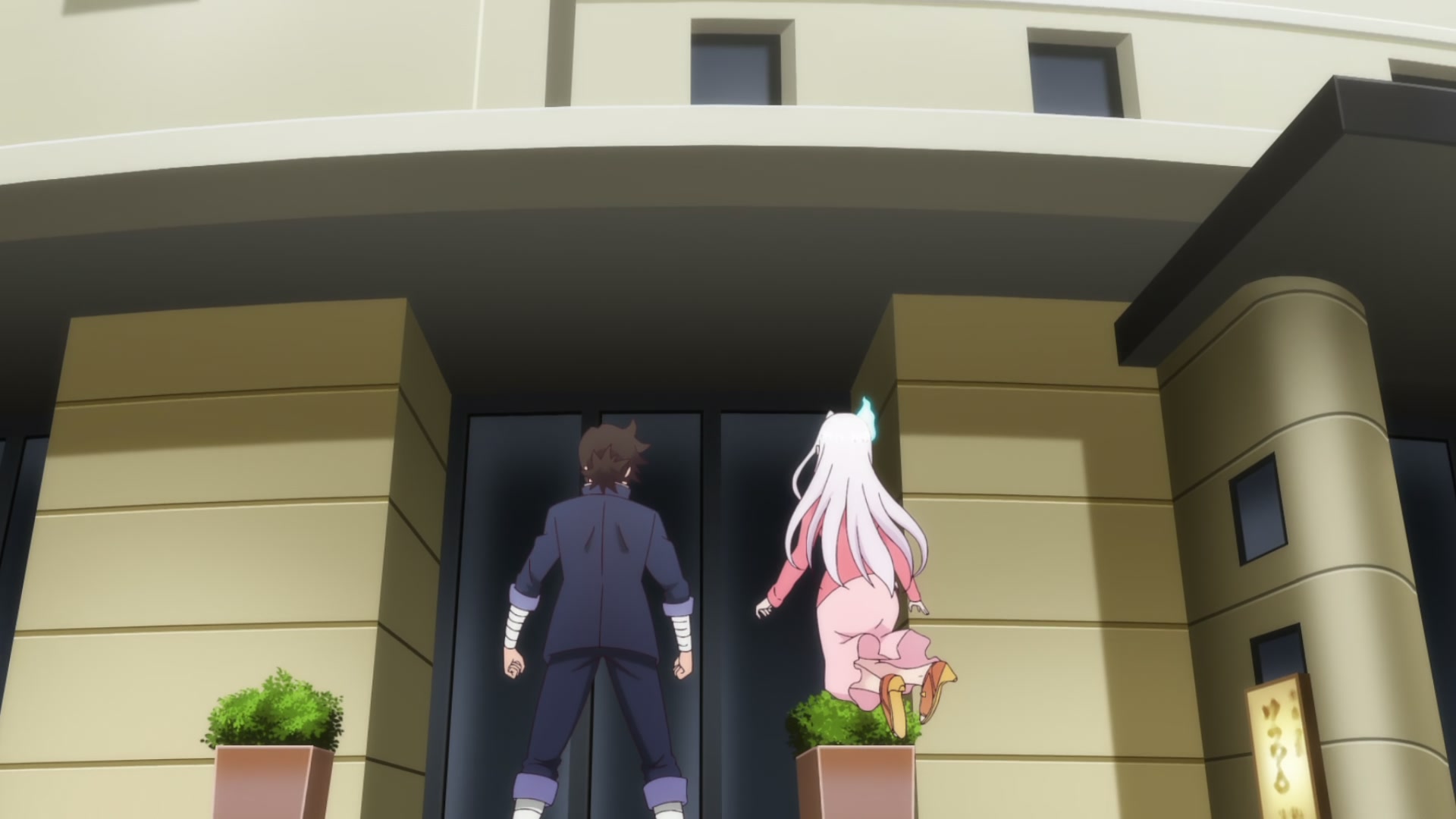
Kogarashi’s emotional restraint is notable. He rarely articulates his feelings directly, instead demonstrating them through actions. He cooks elaborate meals, dives three hundred meters to defeat a youkai, climbs the outside of a building to visit friends. This reticence makes the moments when he does express himself all the more impactful. His compliment to Sagiri in episode four, his declaration that he will not let Yuuna become an evil spirit in episode twelve, these moments carry weight because they are rare.
The central tension of his character is the paradox of his promise. By committing to help Yuuna ascend, he is committing to his own eventual loss. He will succeed in his mission, and when he does, Yuuna will leave. This creates a dramatic irony that colors all their interactions. Every happy moment is shadowed by the knowledge that it is temporary.
Yunohana Yuuna
Yuuna is the emotional heart of the series, and her character is defined by her amnesia. She remembers nothing of her past life or death, only waking up in the inn with no knowledge of who she was. This memory loss is not a plot convenience but a fundamental aspect of her character, shaping her perspective on existence and her relationships with others.
Her personality is genuinely kind and optimistic, with a tendency toward clumsiness that manifests both physically and emotionally. She is not naive. She understands the implications of her situation, including the eventual need to ascend or risk becoming an evil spirit. But she chooses to focus on the present rather than dwell on the uncertainty of her past or future.
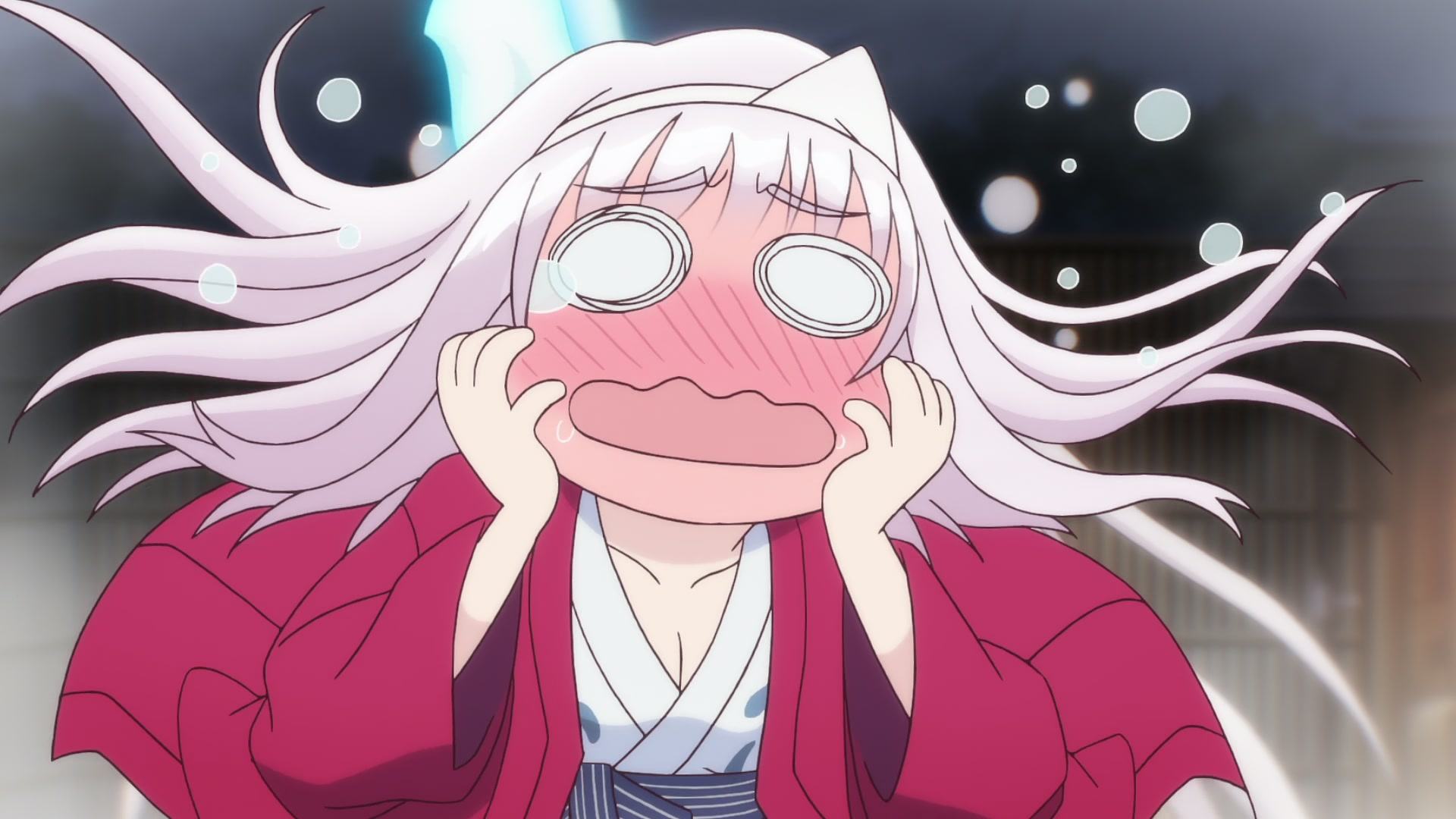
Her poltergeist abilities, which activate involuntarily when she becomes flustered or embarrassed, serve as both a comedic device and a metaphor for her emotional state. She cannot control these outbursts, often launching Kogarashi into rivers or through walls. This reflects her struggle to manage feelings that are new and overwhelming. She has been alone for so long that the experience of having friends, of being seen and heard, is emotionally destabilizing in the best possible way.
Yuuna’s emotional arc is one of gradual opening. At the series’ beginning, she is isolated despite living in a building full of people. Kogarashi’s arrival changes this. His ability to see her clearly, not as a white shadow but as a person, is a revelation. For the first time, someone can look at her and see her, not just a ghost.
The revelation of her amnesia in the final episode reframes her entire character. Her happiness, which seemed simple, becomes complex. How can she resolve a lingering regret she does not remember having? Her statement that she is “just so happy” now, surrounded by friends, is both beautiful and tragic. It suggests that her lingering regret might not be about her past at all, but about her present, the fear of losing what she has found.
Ameno Sagiri
Sagiri is a demon-slaying ninja from the Chuuma Ninja Clan, initially hostile to Kogarashi but gradually warming to him. Her personality is defined by discipline and duty. She takes her responsibilities seriously, approaching every mission with professionalism and precision. This extends to her personal life. She is neat, organized, and punctual, with little tolerance for the chaos that surrounds her at Yuragi Inn.
Beneath this rigid exterior lies a deep insecurity about her femininity. Raised in an all-girls environment focused on combat training, she has never learned how to be girly. She is uncomfortable with her own body, unsure how to dress attractively, and terrified of being perceived as unfeminine. This insecurity is exploited for comedy, her anguish over swimsuit selection, her awkward attempts to be cute, but it is also genuinely poignant. She wants to be seen as a woman, not just a warrior.
Her growing feelings for Kogarashi are a source of confusion and frustration. She does not understand why she cares about his opinion, why his compliments make her blush, or why she feels jealous when other women flirt with him. The love potion incident in episode eleven forces these feelings to the surface, revealing that she does have affection for him, even if she is not ready to admit it.
Her decision to help rescue Yuuna from the Dragon God is a significant moment. The Chuuma Ninja Clan has a policy of non-intervention when it comes to gods, beings too powerful to confront. By choosing to go anyway, Sagiri is prioritizing her personal relationships over her professional obligations. This is a significant step for someone who has always defined herself by her duty.
Nakai Chitose
Chitose is the innkeeper of Yuragi Inn and a protective household deity with the power to manipulate luck. Despite appearing to be a young girl, she is actually the oldest resident, having served as the inn’s caretaker for decades. Her role is multifaceted. She is a maternal figure, a disciplinarian, and a guardian, all while maintaining the appearance of a cheerful, somewhat mischievous child.
Her luck manipulation ability is both a blessing and a curse. She can bring good fortune to her targets, but this is always followed by an equal measure of bad luck, and vice versa. This power requires careful judgment. When is it appropriate to intervene, and when is it better to let events unfold naturally?
Her secret life as a middle school student reveals a desire for normalcy that she has never been able to experience. As a household deity, she has always been set apart from ordinary humans. Going to school, making friends her own age, and experiencing the simple pleasures of adolescence are things she has long been denied. This subplot adds depth to her character, showing that even a deity can yearn for the ordinary.
Arahabaki Nonko
Nonko is a manga artist and descendant of Shuten-douji, a legendary oni. She is an alcoholic whose strength increases with her alcohol consumption, making her a formidable fighter when properly motivated. Her personality is characterized by a deliberate hedonism that masks a complex history.
Her backstory is revealed gradually. She was once a youkai hunter, following the destiny expected of a demon’s descendant. After being badly injured in a fight, she realized that she had never done anything she actually wanted to do. This revelation led her to abandon her predetermined path and pursue her own interests, eventually settling on manga as a career.
Her conversation with Kogarashi in episode five, where she wonders if she is “just running away from the battle,” is one of the few moments where she allows herself to be vulnerable. She is not just a comic figure but a person who has made difficult choices and lives with the consequences.
Yaya
Yaya is a quiet, cat-like girl possessed by Nekogami-sama, a cat god. She speaks in short, simple sentences, sleeps constantly, and generally prefers to observe rather than participate. Her relationship with Kogarashi is notably different from the other female characters. There is no romantic tension, no jealousy, no competition. Instead, there is a simple, comfortable companionship based on mutual respect and shared meals.
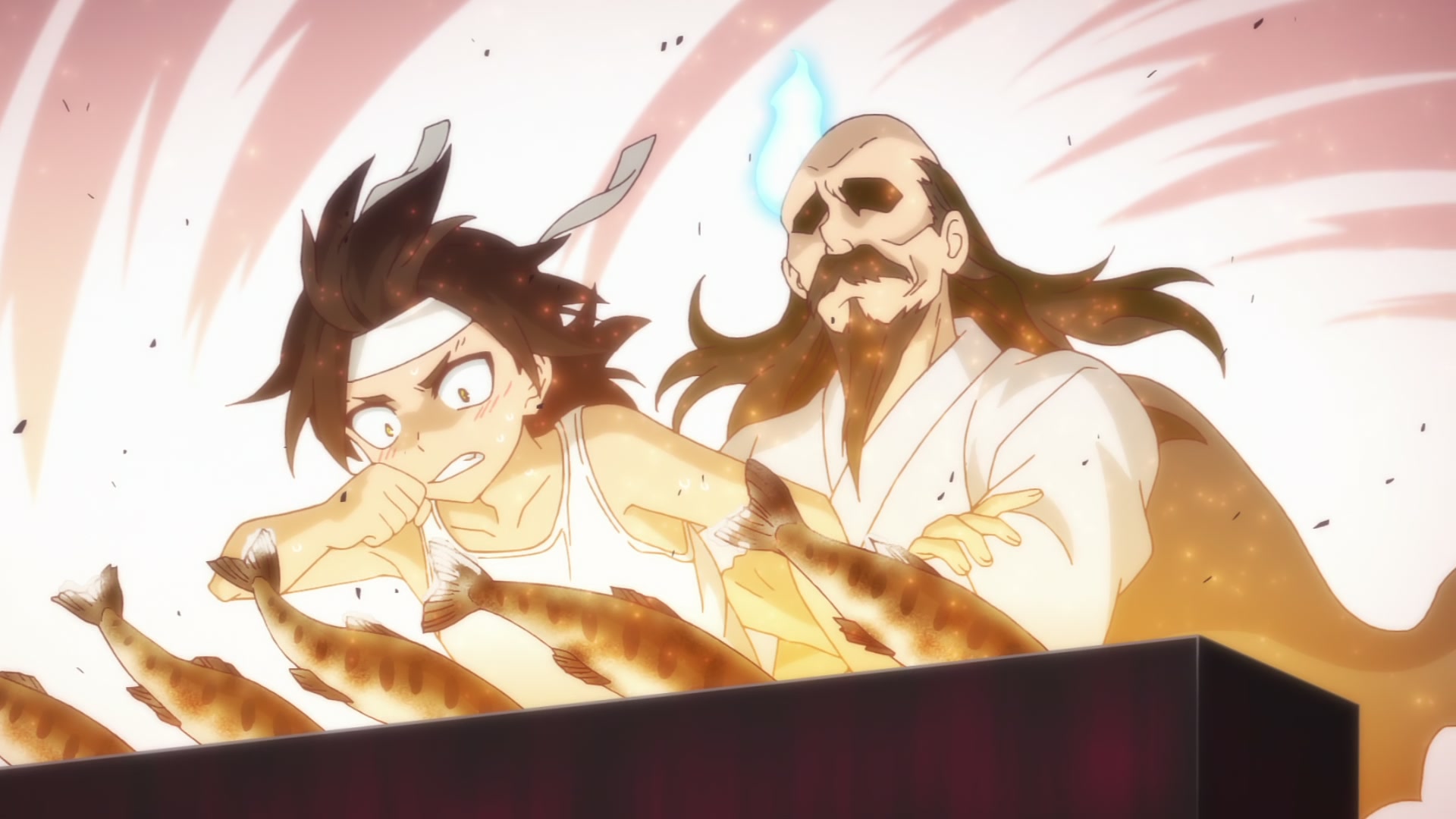
Her development is subtle but significant. At the series’ beginning, she is almost entirely passive. Kogarashi’s cooking, particularly his grilled fish, becomes a catalyst for change. Her desire to share the fish with Nekogami-sama demonstrates her capacity for care, and her request for Kogarashi to cook for her again shows her willingness to ask for what she wants.
Shigaraki Koyuzu
Koyuzu is a young Bakedanuki who becomes a resident of Yuragi Inn after her initial antagonistic encounter with Kogarashi and Miyazaki. She is energetic, enthusiastic, and deeply insecure about her lack of a mature figure. Her personality is characterized by a desperate desire to be seen as an adult.
Despite her comedic presentation, Koyuzu’s situation is genuinely sympathetic. She is a child alone in the world, trying to live up to expectations she does not fully understand. Her time at Yuragi Inn teaches her that there are many ways to be an adult, and that her worth is not determined by her physical appearance.
Miyazaki Chisaki
Miyazaki is Kogarashi’s classmate and the first normal human to become involved with the supernatural residents of Yuragi Inn. She is beautiful, popular, and kind, serving as a grounding presence in a series full of extraordinary beings. Her role is to provide an outsider’s perspective on the supernatural world, asking the questions that the other characters take for granted.
Her relationship with Yuuna is particularly significant. Despite being unable to see the ghost, Miyazaki makes a genuine effort to communicate with her, using writing and touch to bridge the gap. This willingness to believe in what she cannot see demonstrates her open-mindedness and her capacity for friendship.
Oboro
Oboro is a blade spirit born from the tail of the previous Black Dragon God, serving as the retainer and protector of Ryuuga Genshirou. After Kogarashi defeats her master, she becomes obsessed with bearing his child to strengthen the Ryuuga clan. Her personality is characterized by absolute dedication to her mission. She will stop at nothing to achieve her goals.
Her understanding of human relationships is severely limited. She has spent her entire existence serving the Ryuuga clan, with no experience of romance, friendship, or casual social interaction. Her attempts to seduce Kogarashi are based on information gleaned from Nonko’s manga, leading to absurd misunderstandings and inappropriate behavior.
Visuals and Animation
Art Style and Visual Direction
The series employs a bright, saturated aesthetic typical of modern character-driven productions. The art direction prioritizes character clarity and expressiveness over atmospheric realism, utilizing a clean, digital animation style that feels polished and accessible. The visual language is inherently flexible, willing to shift from soft, inviting moe sensibilities to exaggerated comedic deformations depending on the tonal needs of the scene.
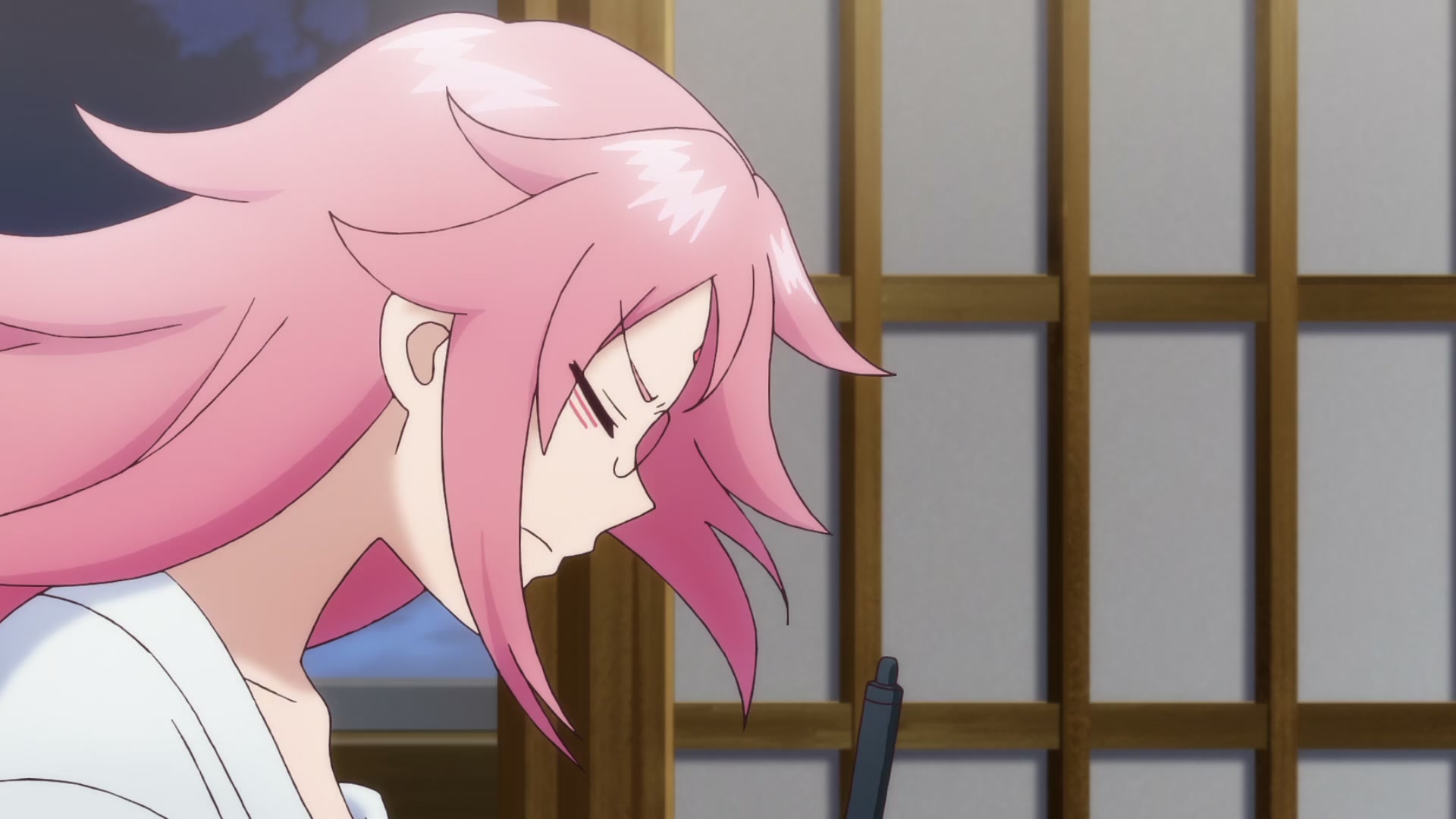
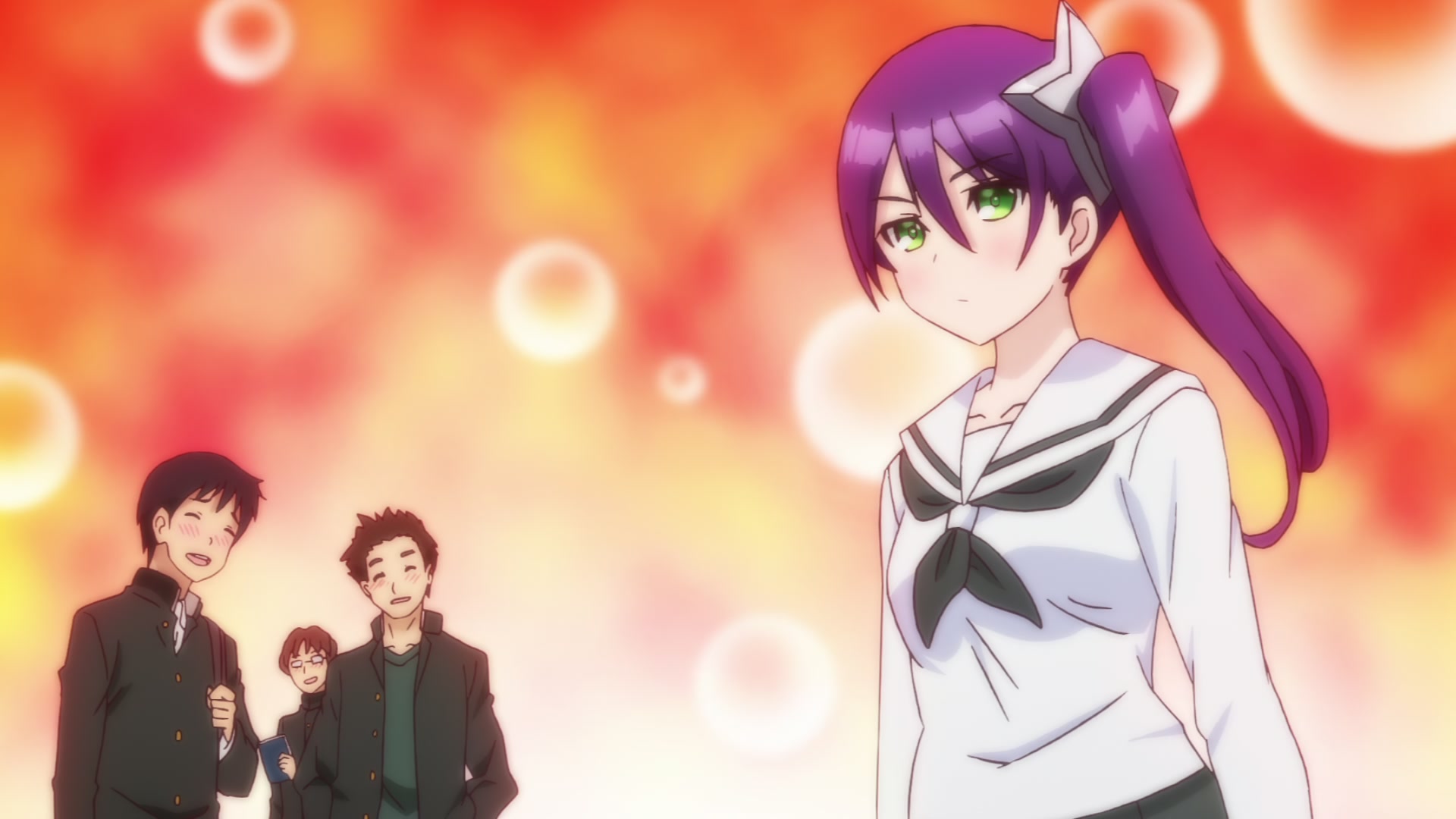
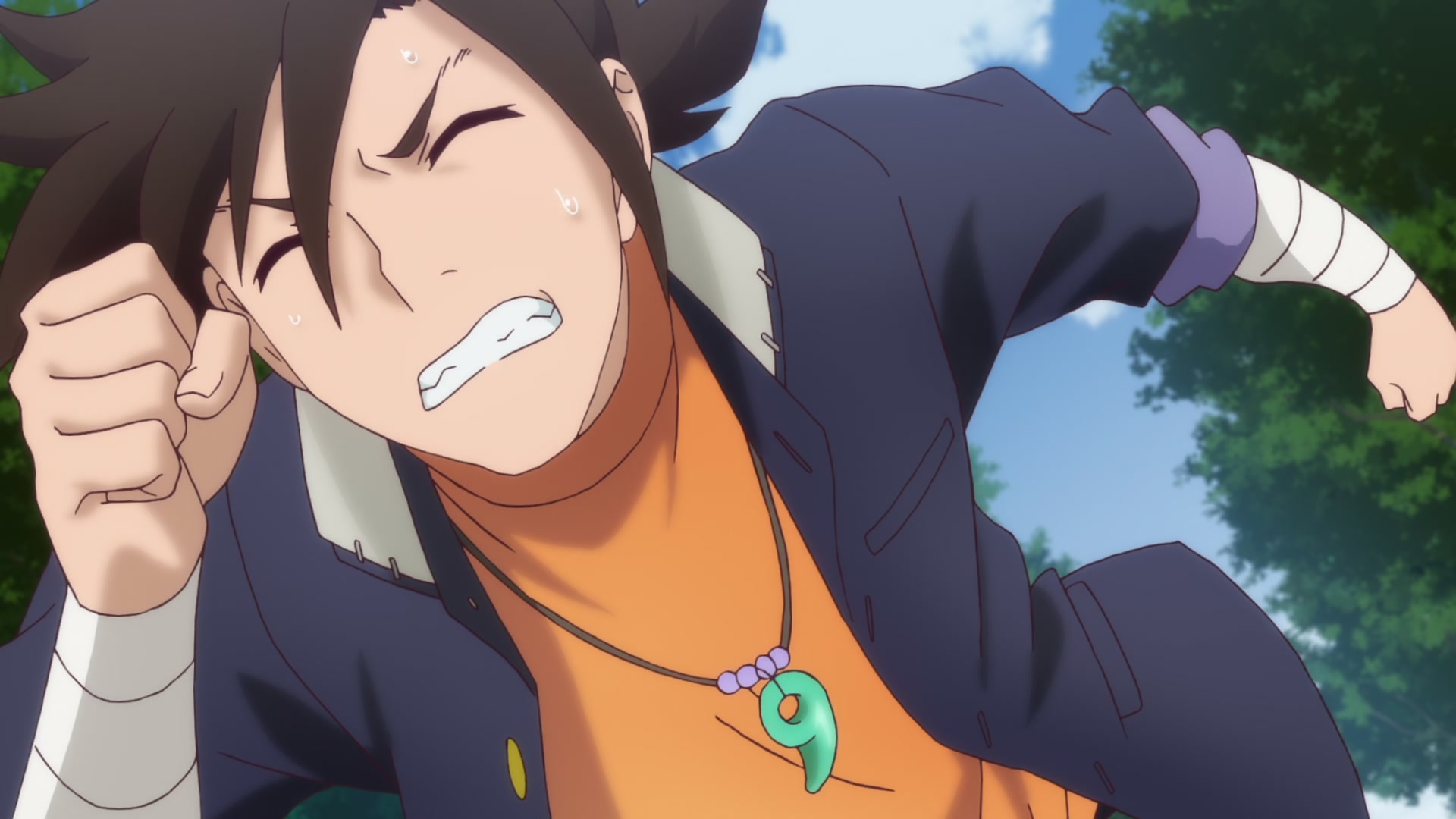
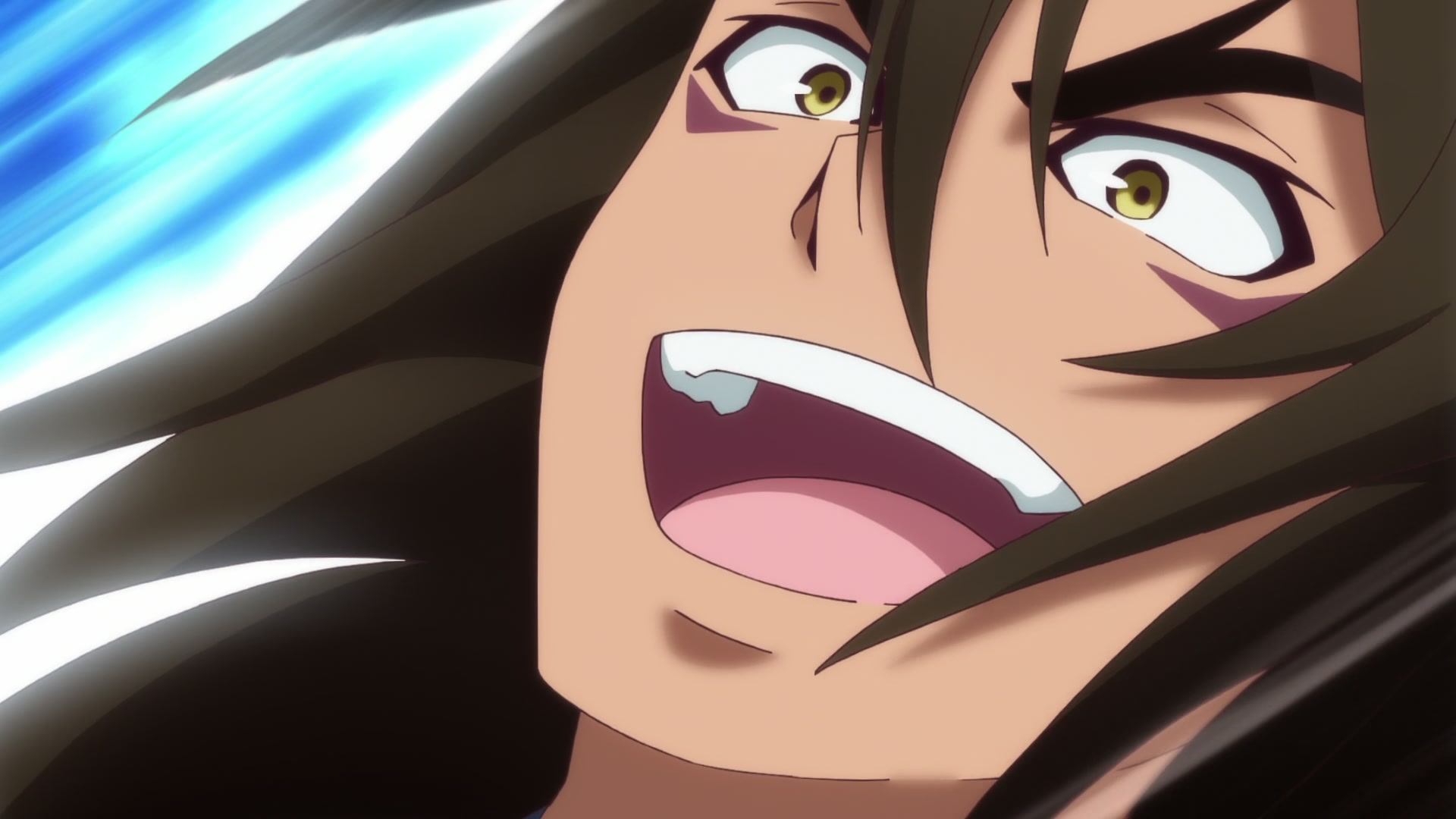
Character designs rely heavily on distinct, vibrant hair colors to ensure instant recognition within the ensemble cast. The female characters feature soft facial features, large expressive eyes, and delicate proportions, while male characters are rendered with slightly sharper, more angular lines, particularly during intense moments. The designs are genuinely appealing, contributing to the series’ charm.
Facial Expressions and Character Acting
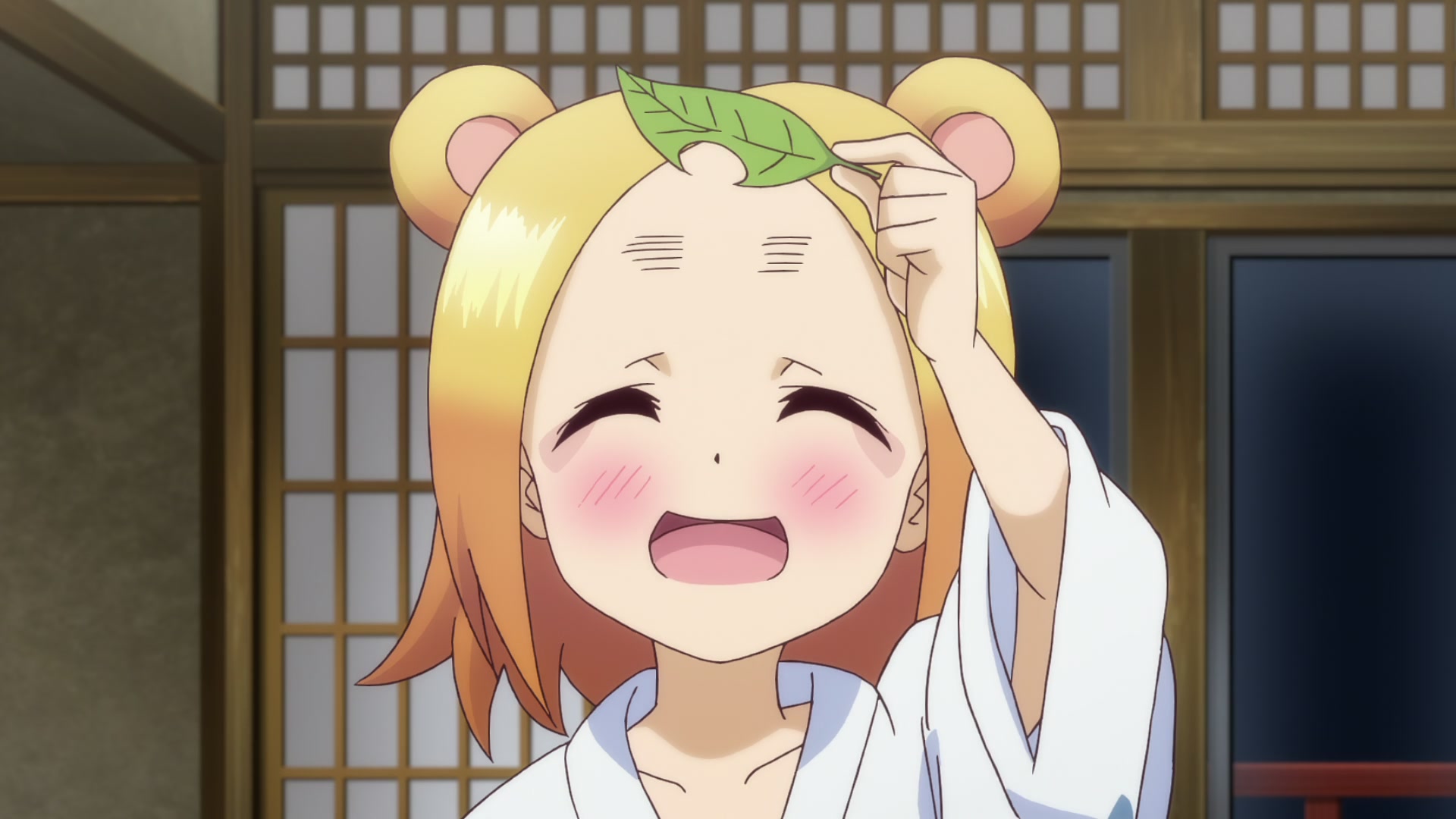
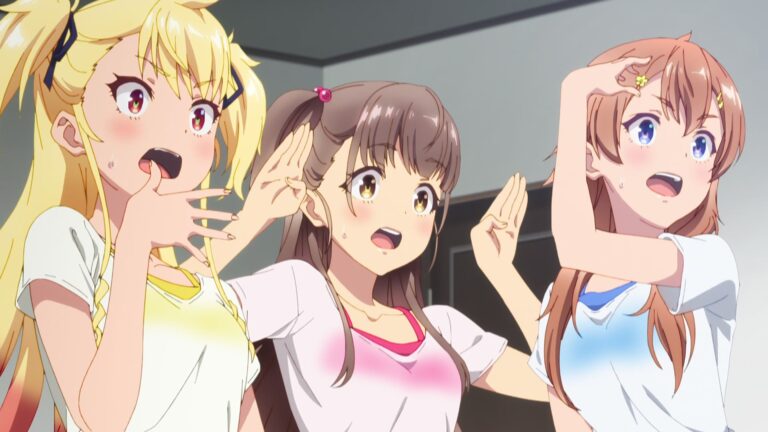
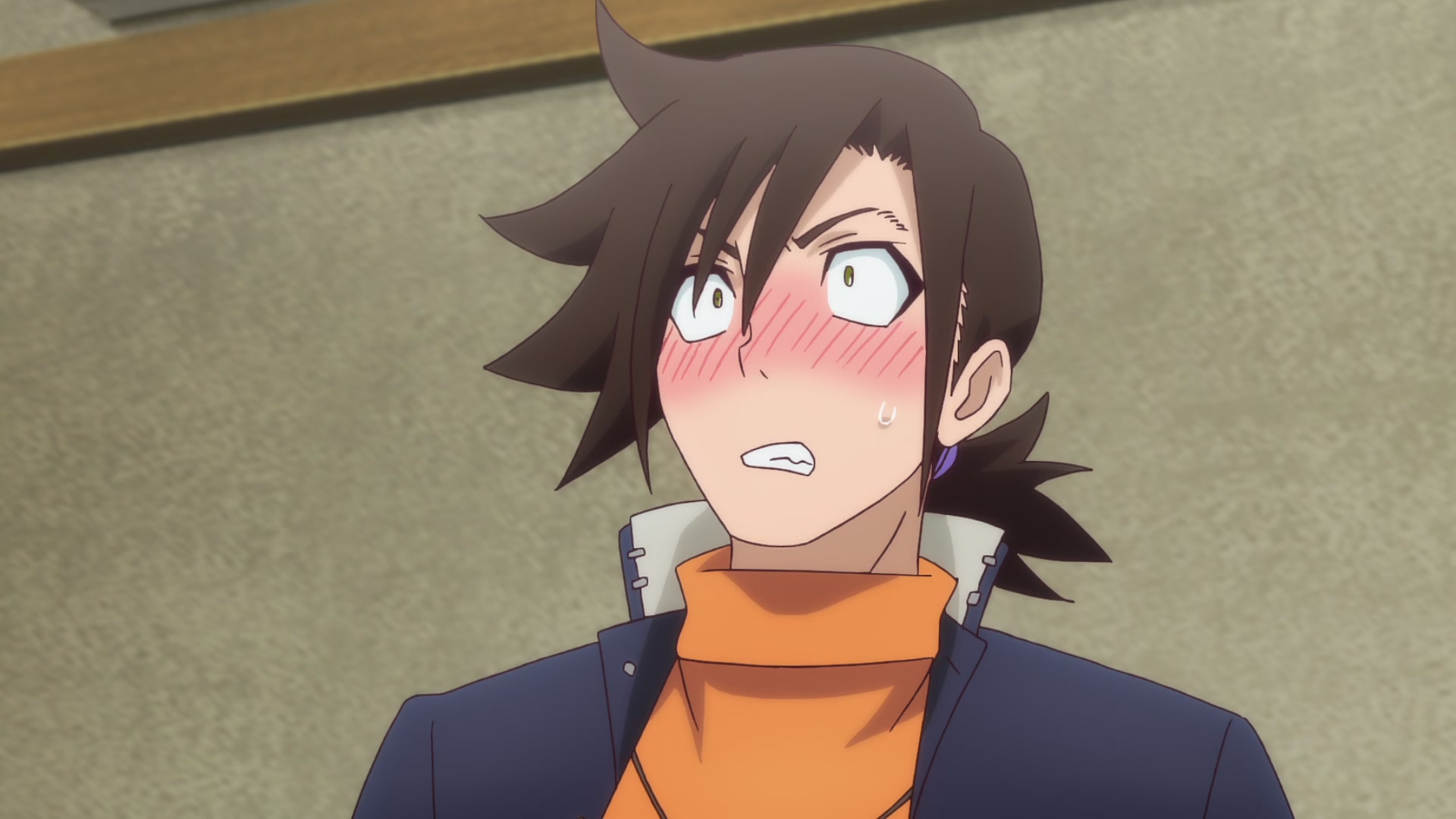
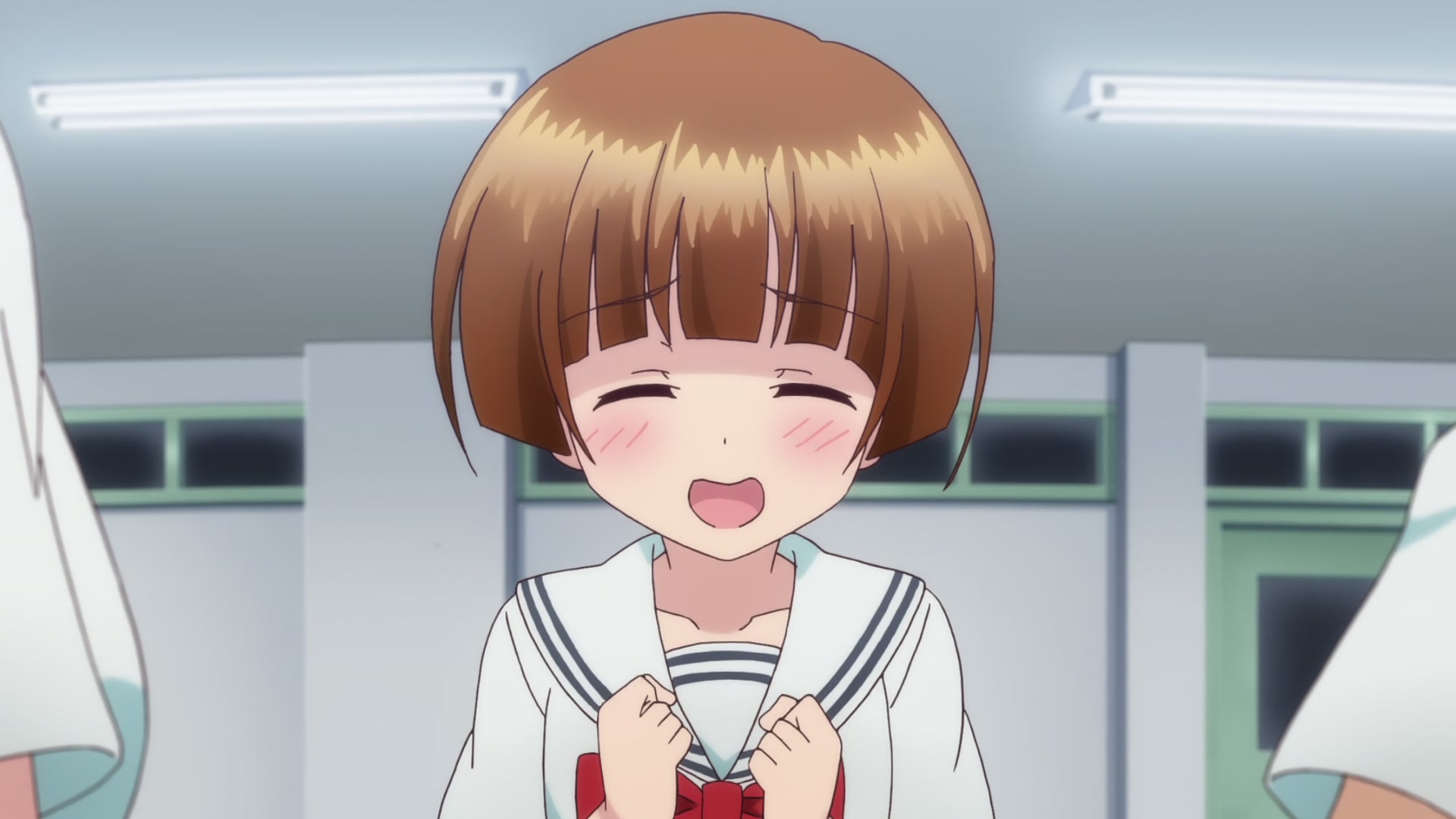
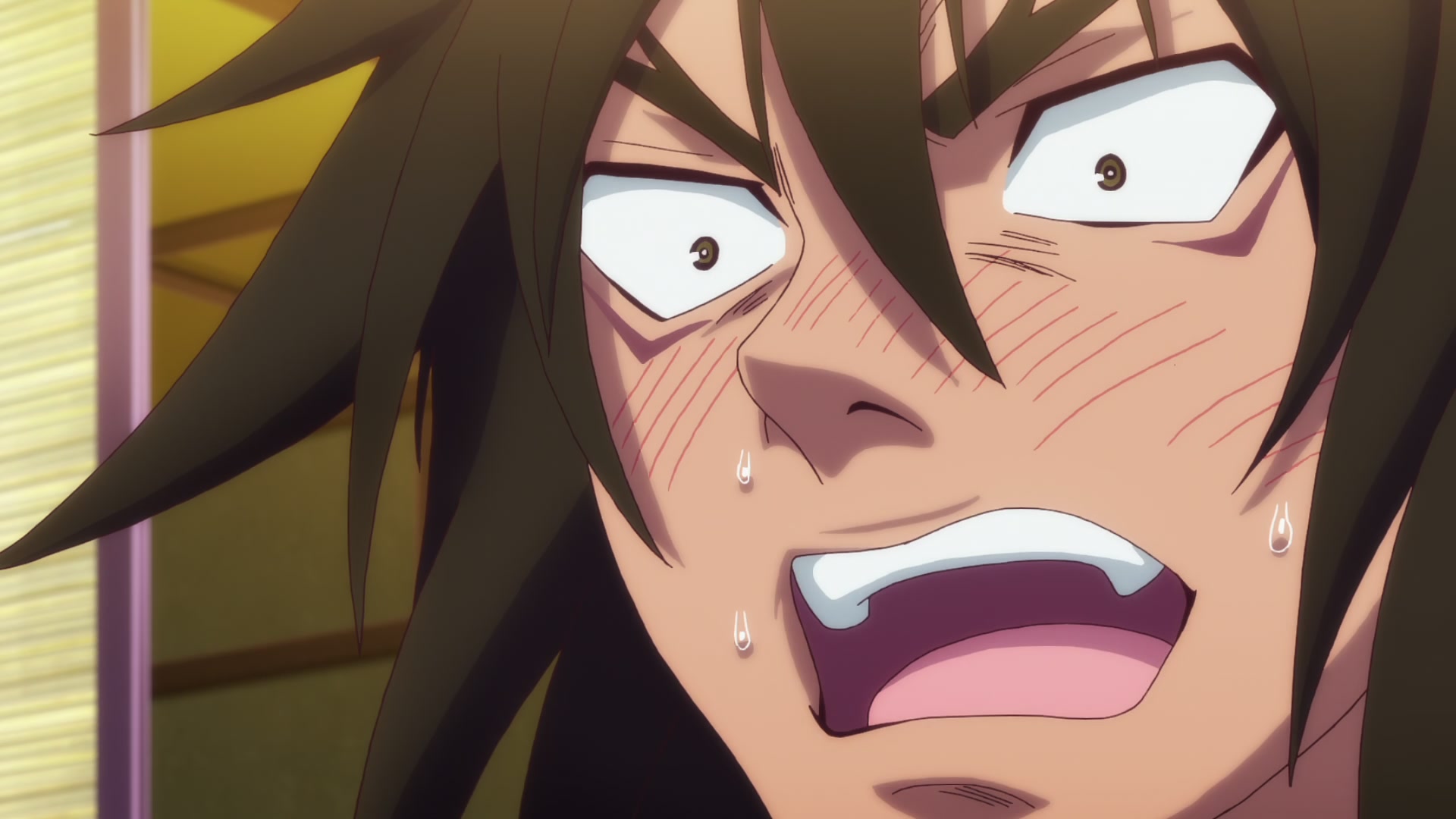
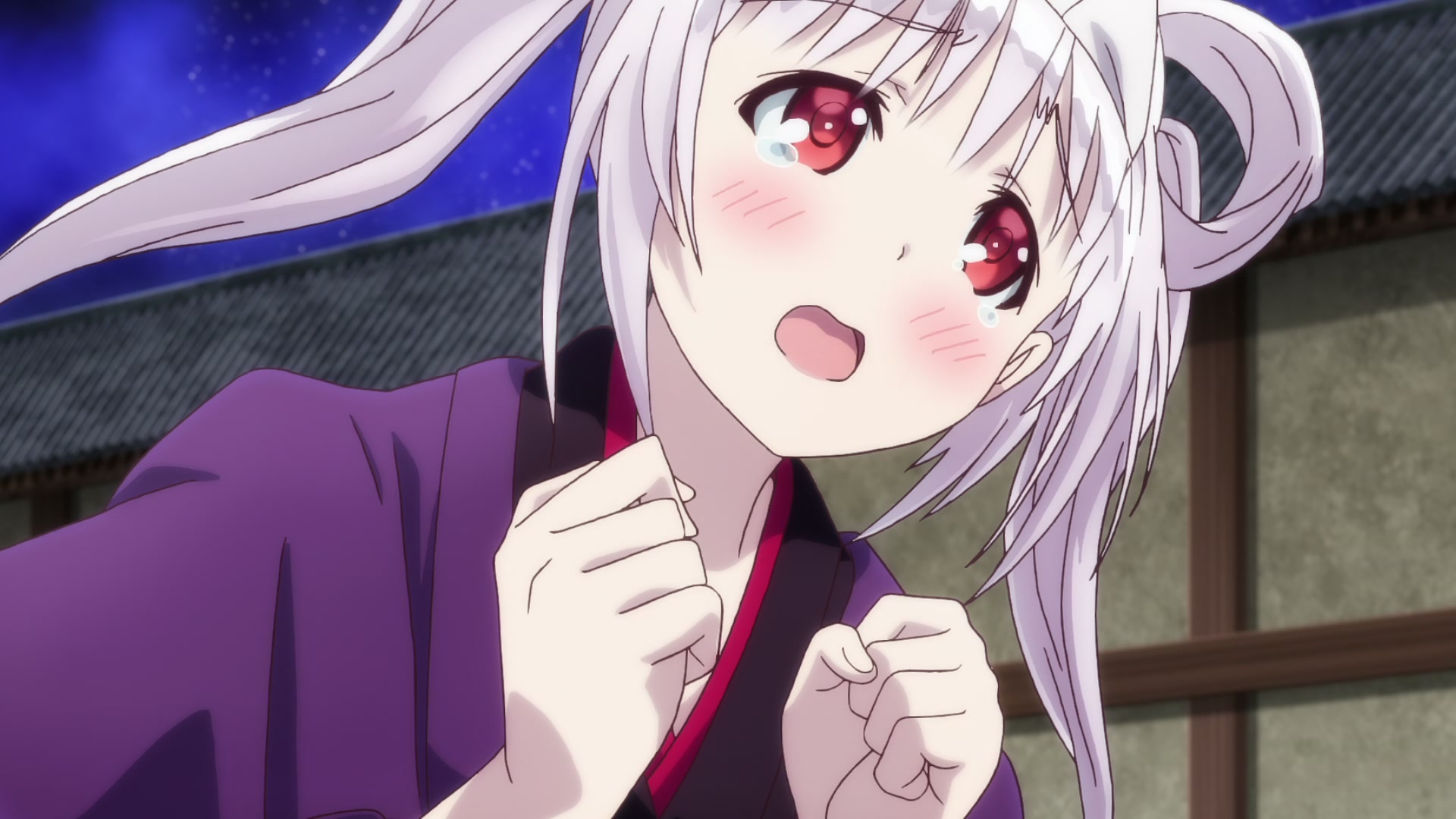
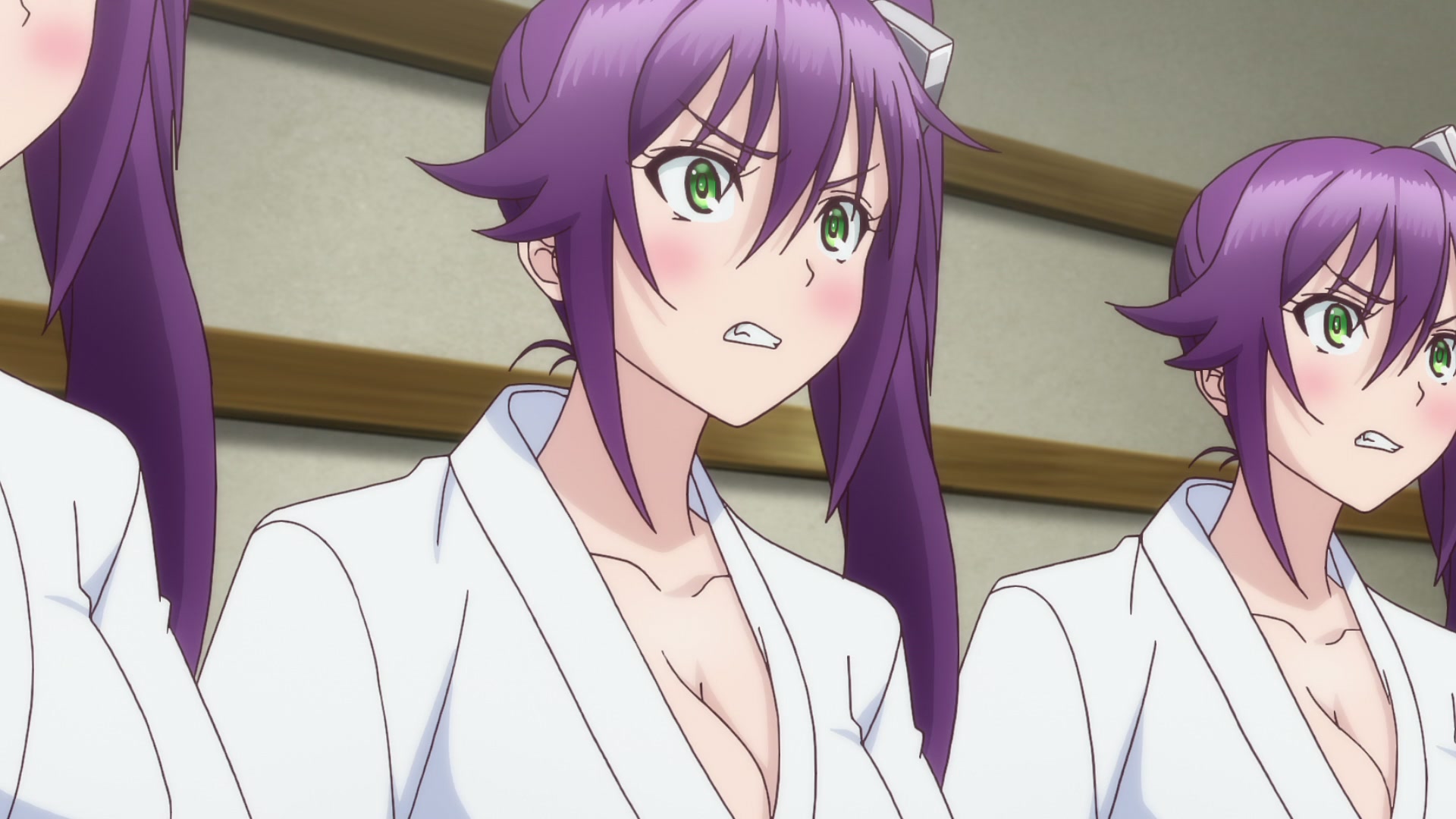
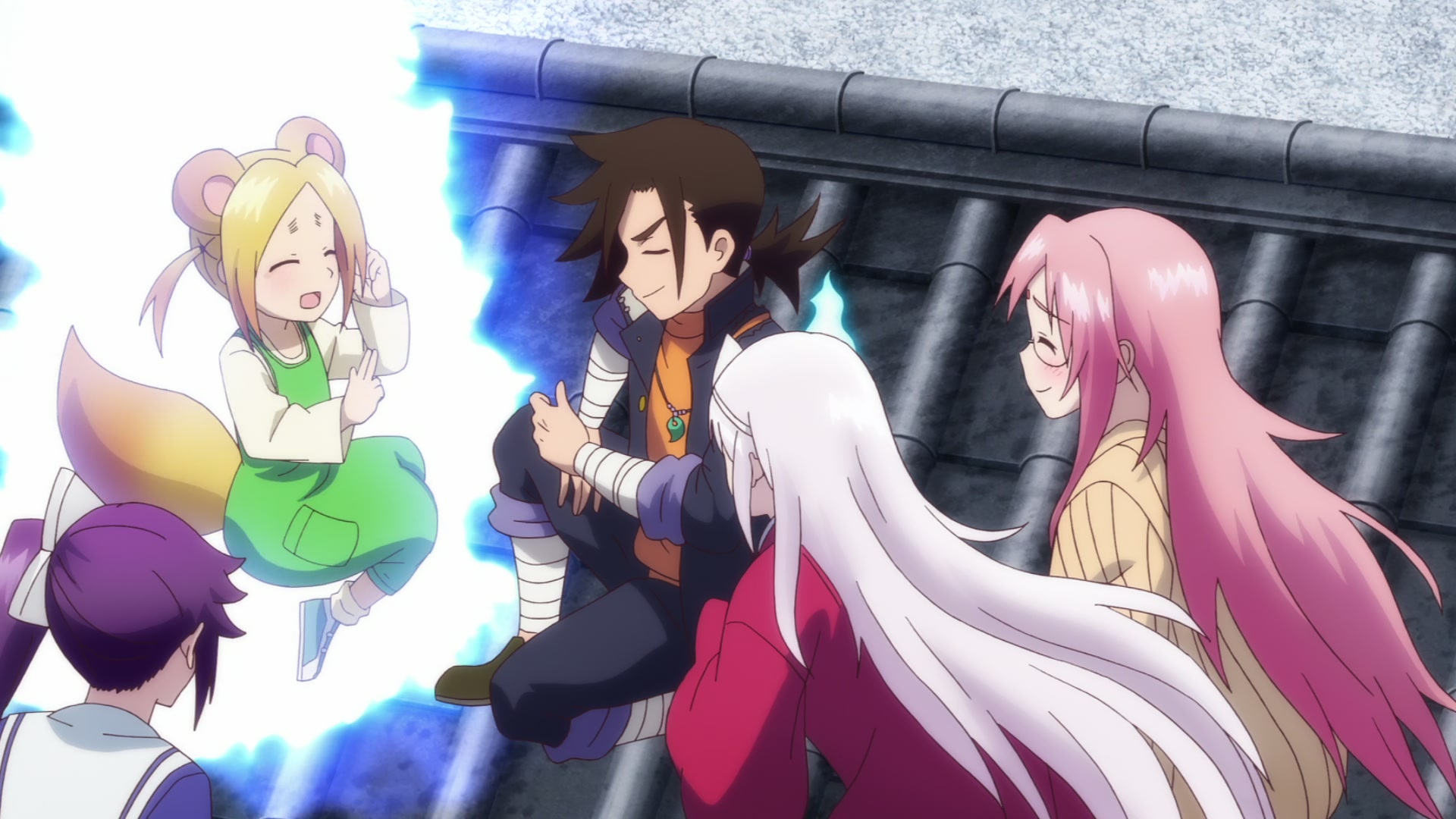
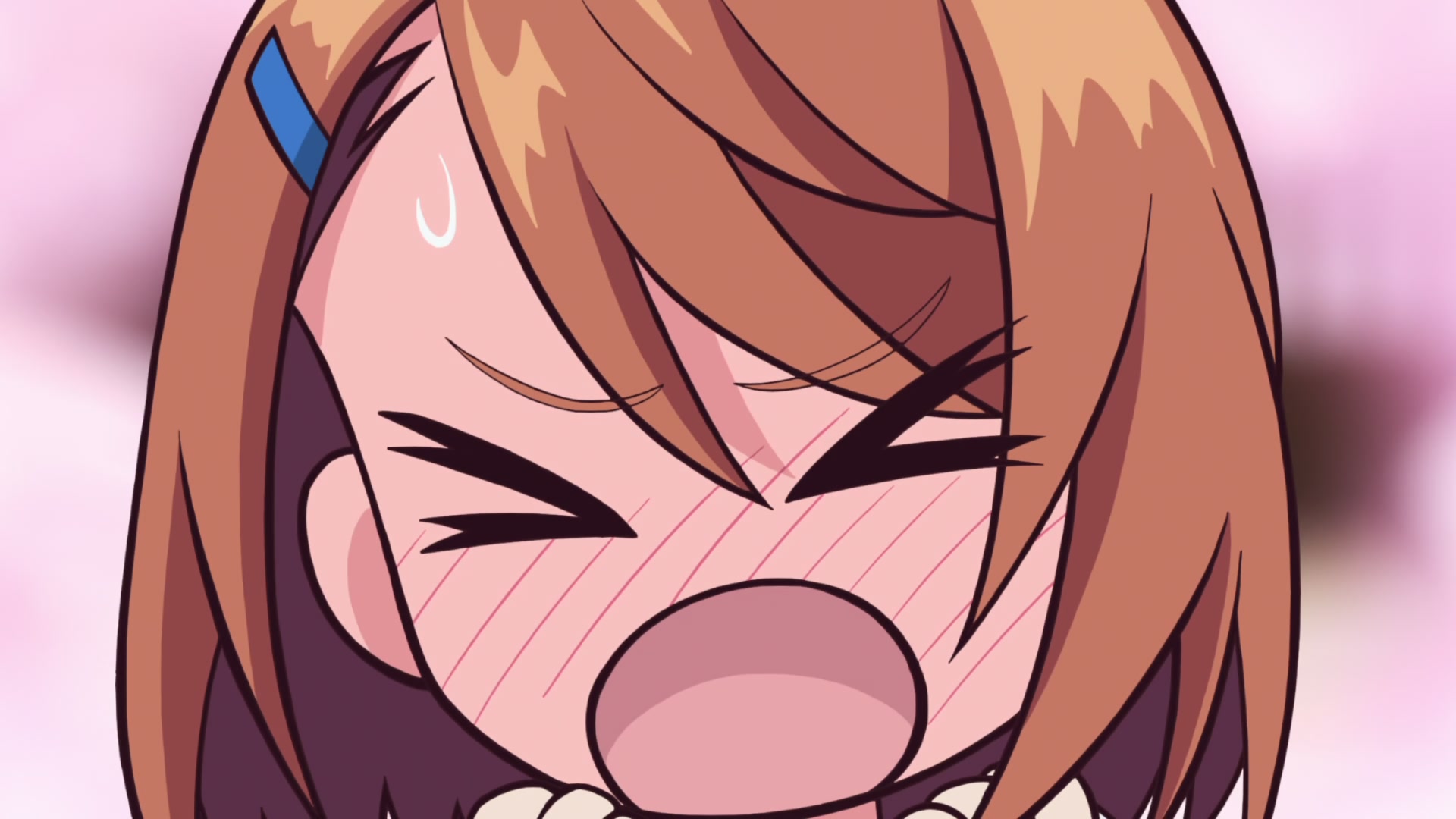
The visual storytelling leans heavily on facial elasticity and exaggerated expressions to convey tone. The production demonstrates a wide emotional range. Comedic acting utilizes visual shorthand for humor, such as heavy blush lines, sweat drops, and super-deformed or chibi-style distortions with thickened outlines. These moments break the visual realism to emphasize panic, embarrassment, or shock.
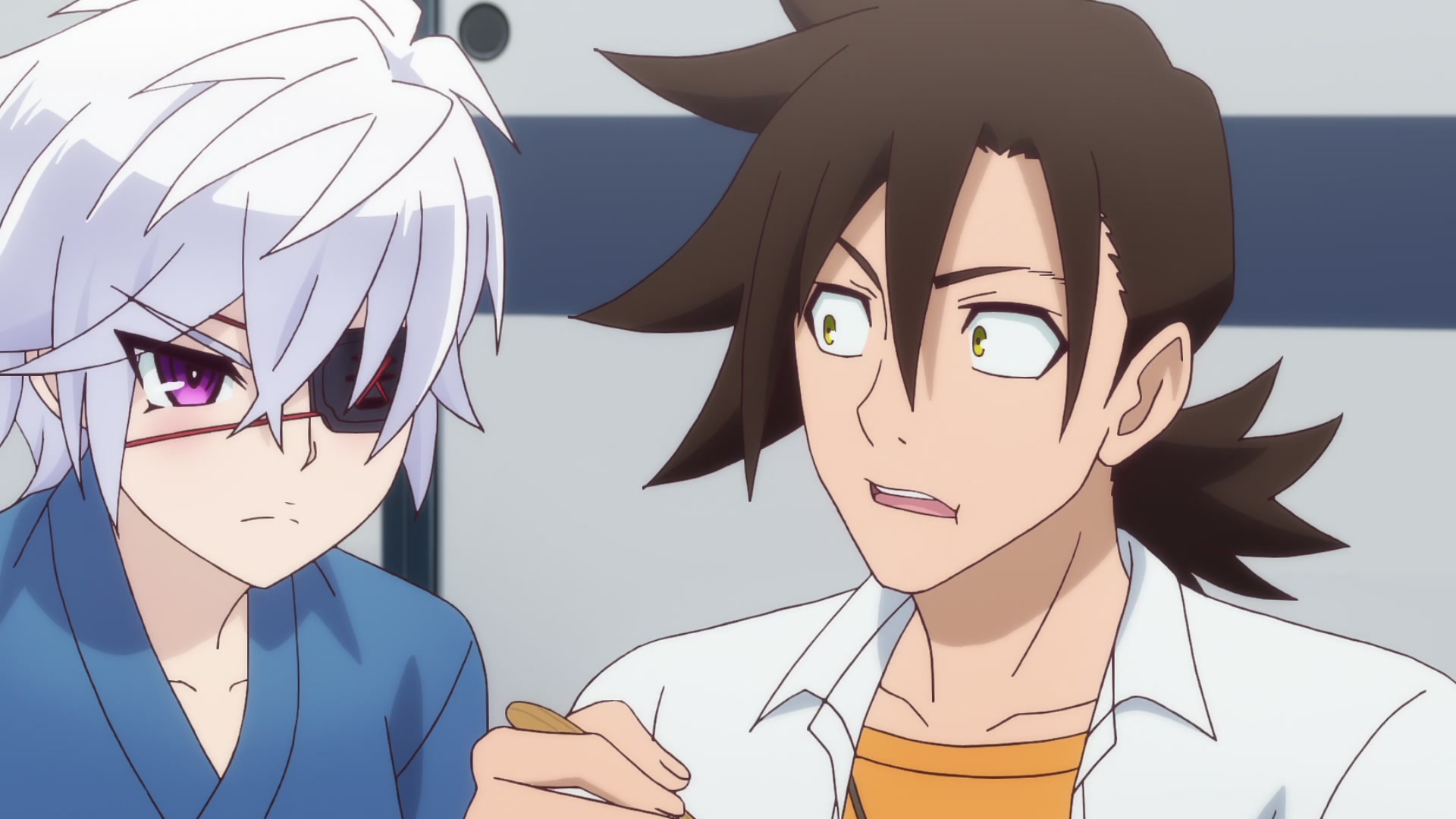
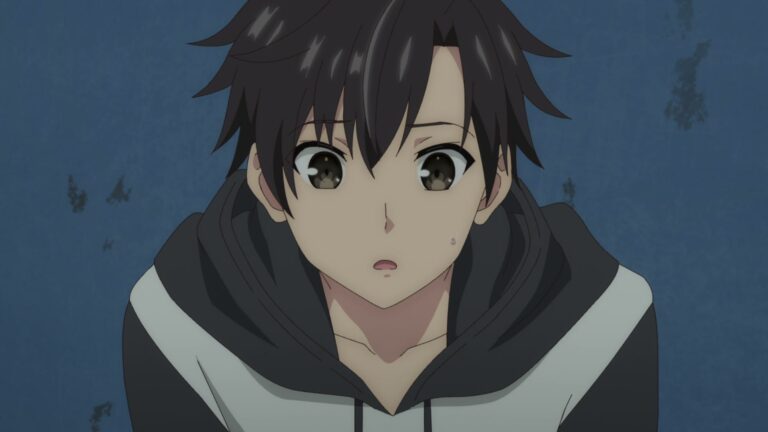
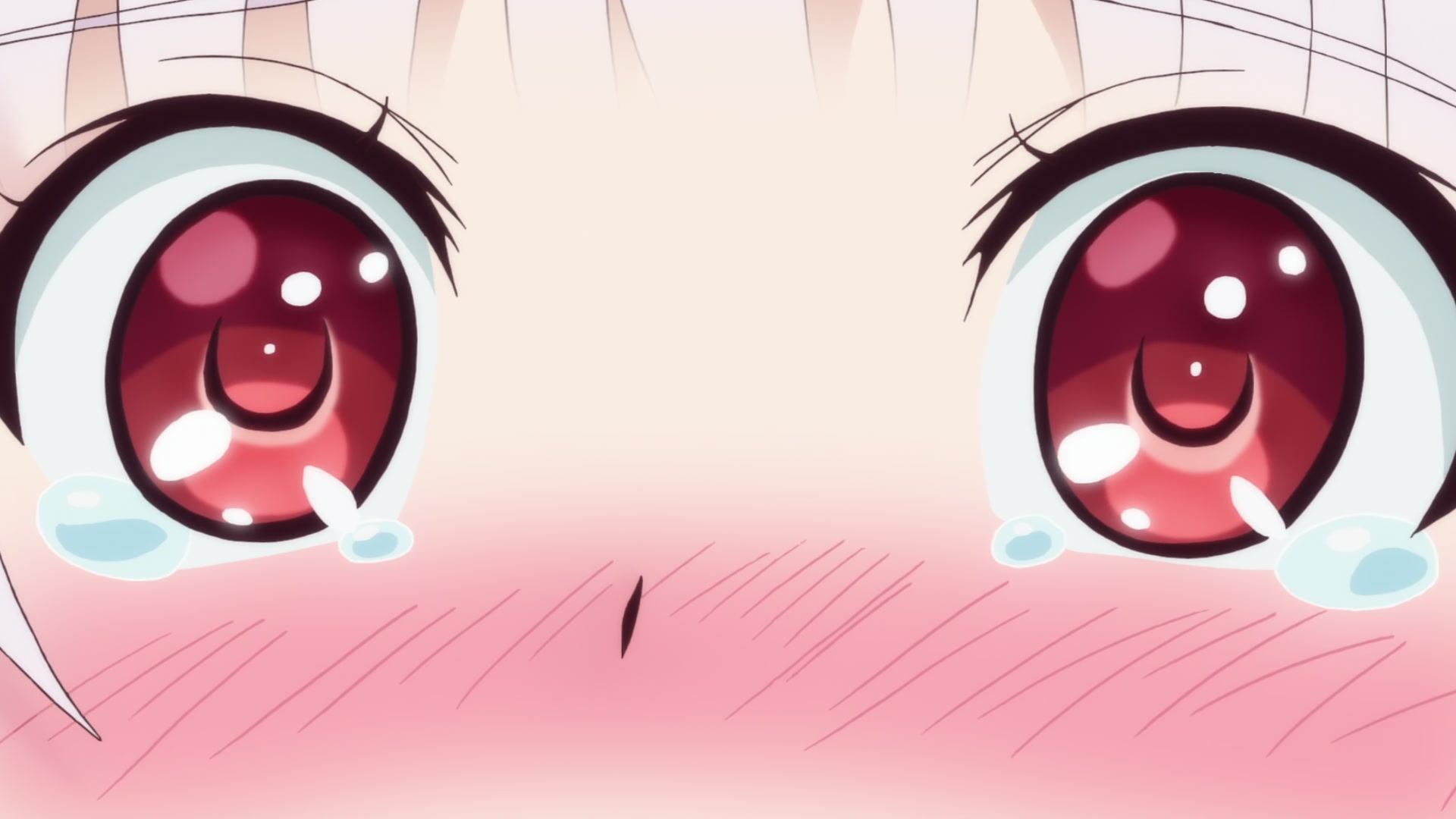
Dramatic acting, conversely, is capable of aesthetically pleasing close-ups with detailed eye reflections and soft shading during quieter or more intense sequences. The protagonist, in particular, swings between gritted-teeth action poses accompanied by speed lines and flustered, grimacing reaction shots. This range is impressive and contributes significantly to the series’ emotional impact.
Color Palette and Lighting
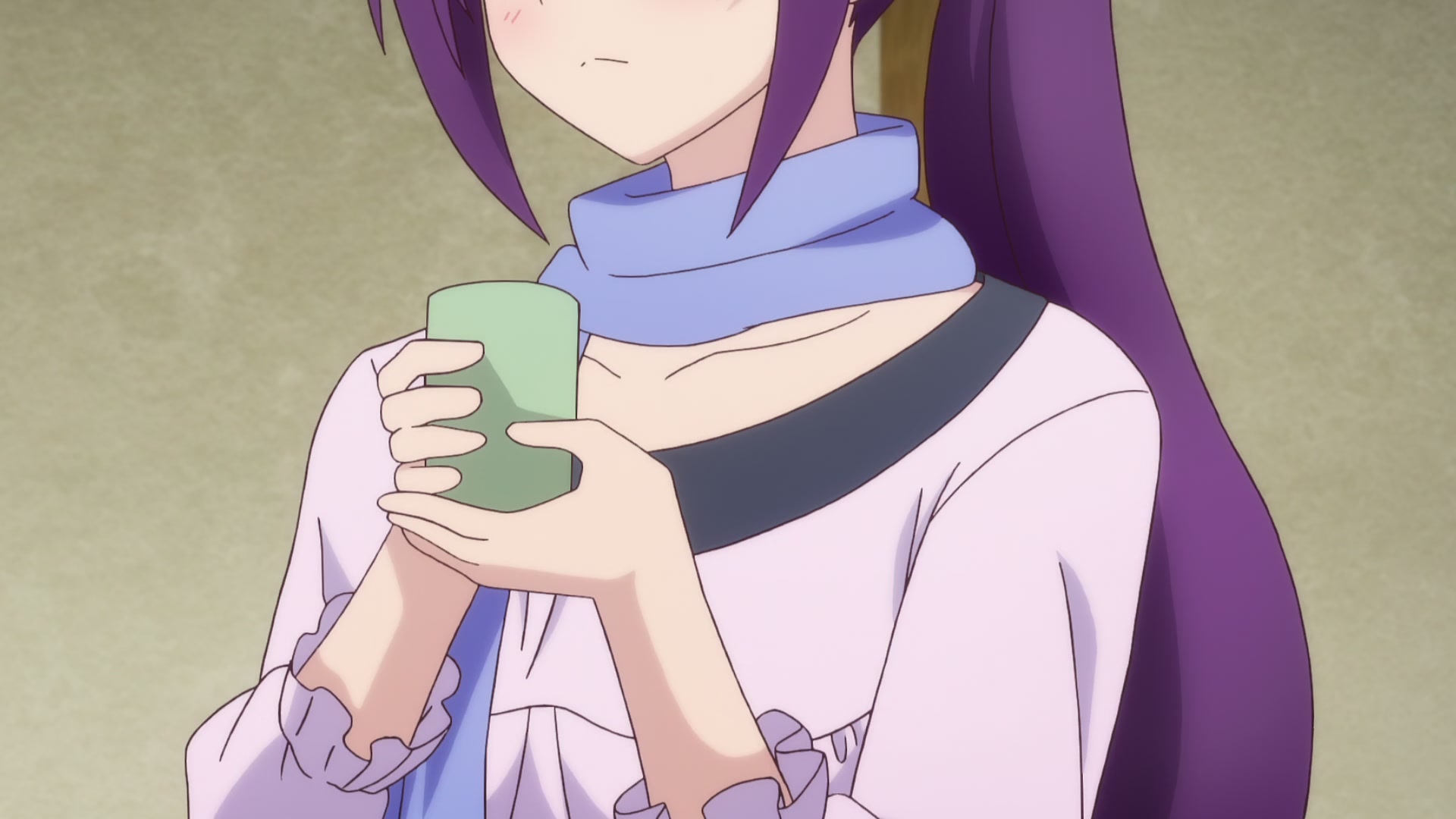
Color design is a standout strength, used effectively to dictate the emotional temperature of each scene. The palette is generally vibrant but desaturated enough to remain easy on the eyes, often favoring soft, pastel-adjacent tones for character designs.
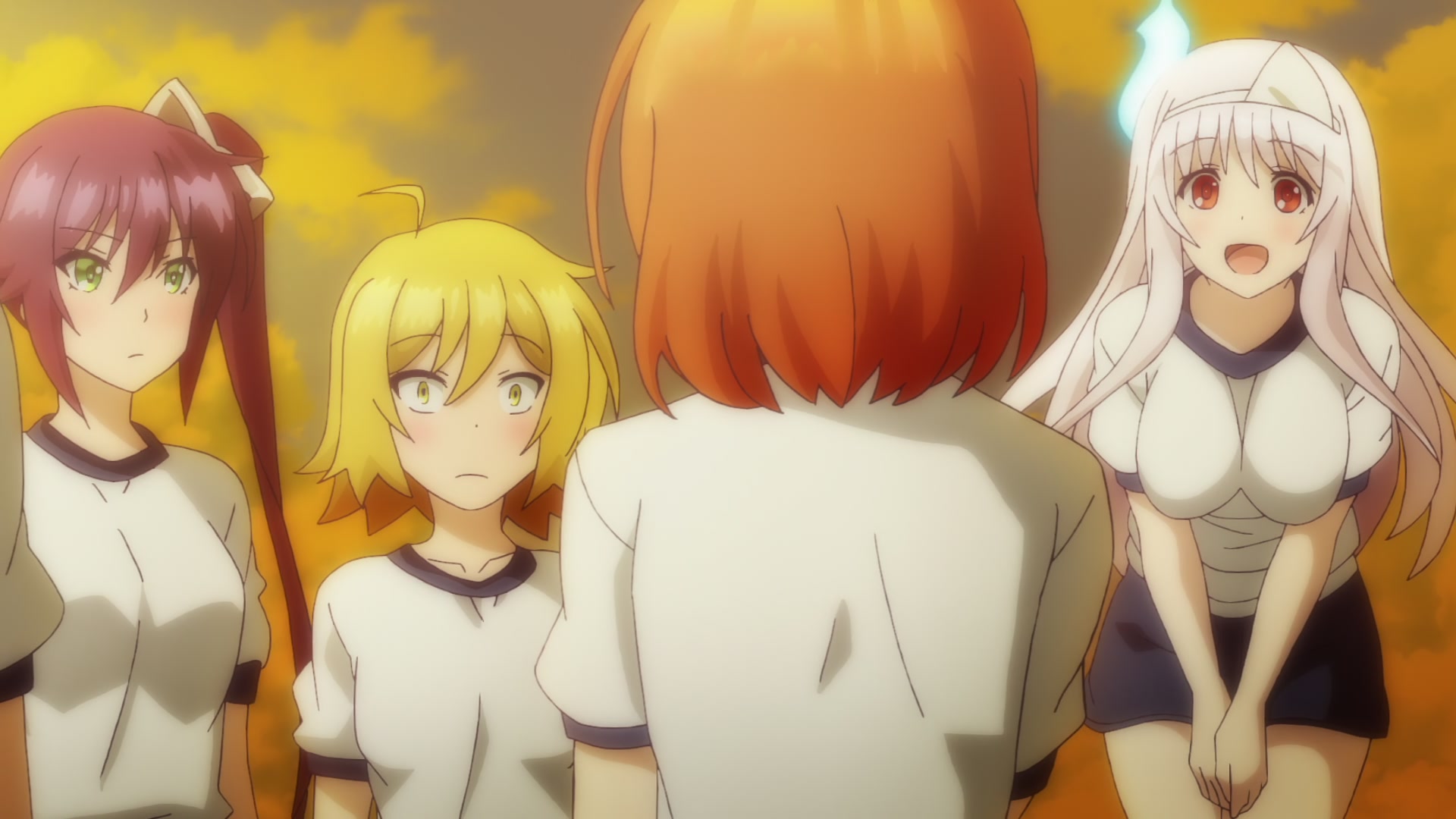
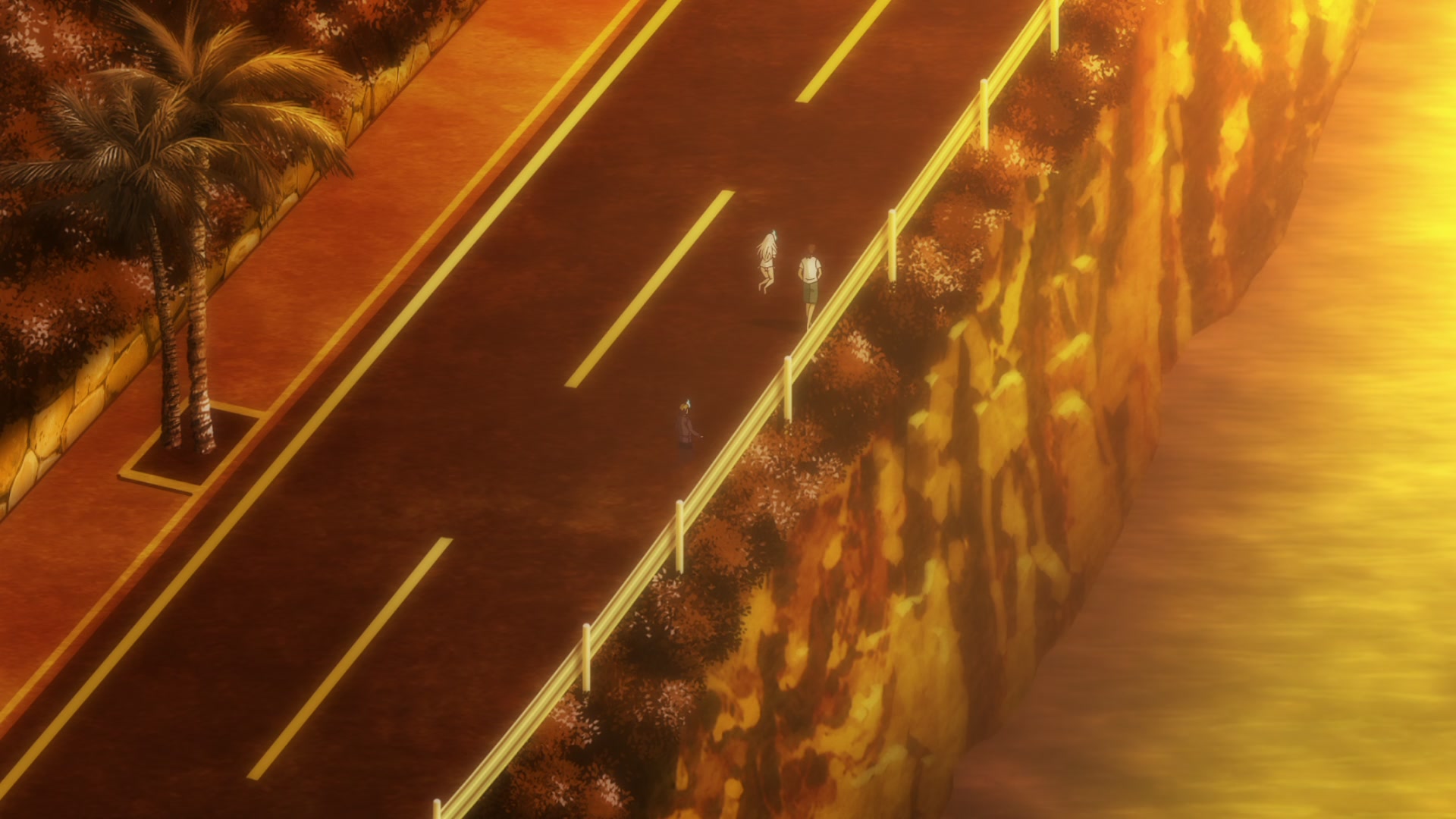
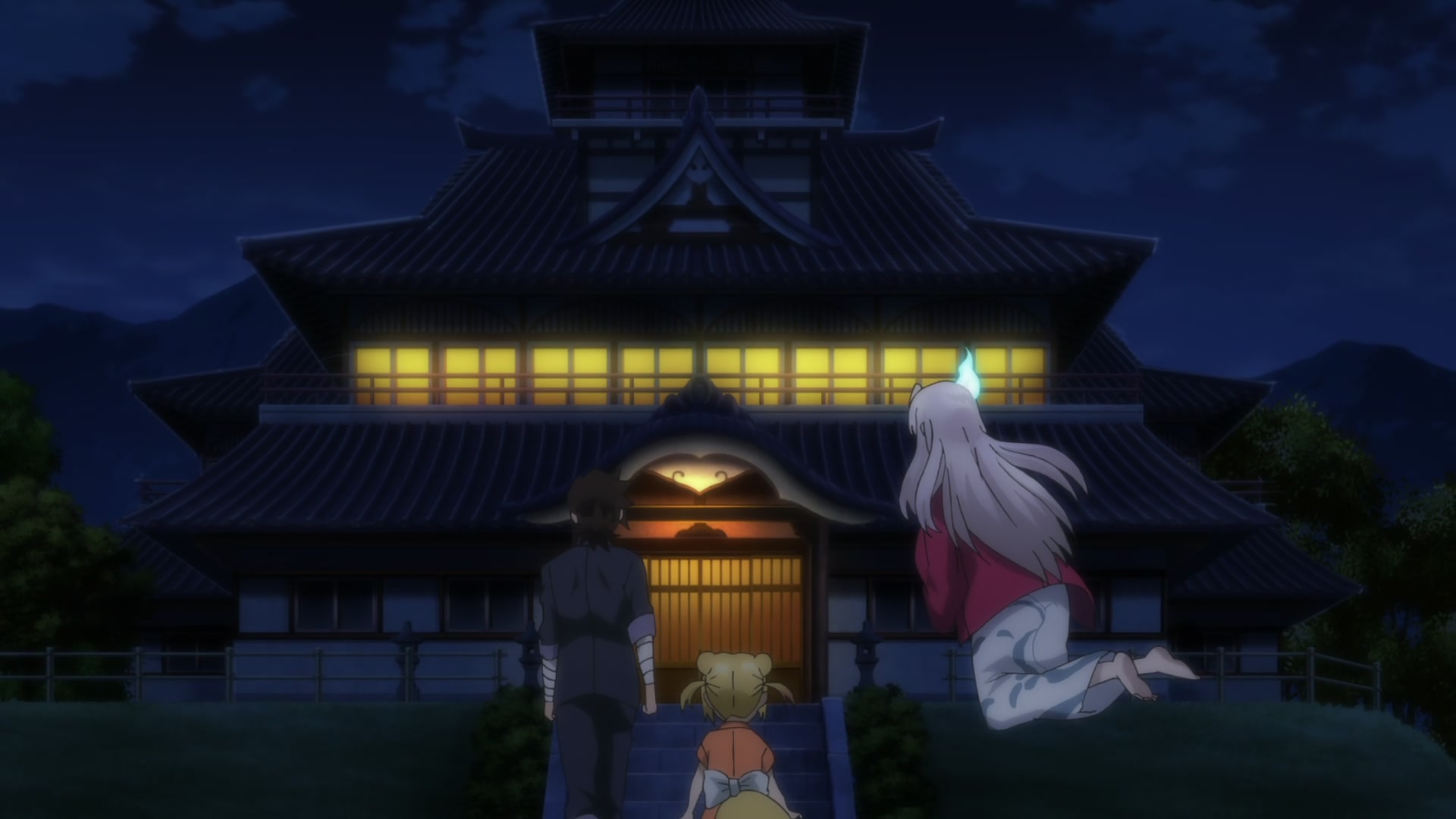
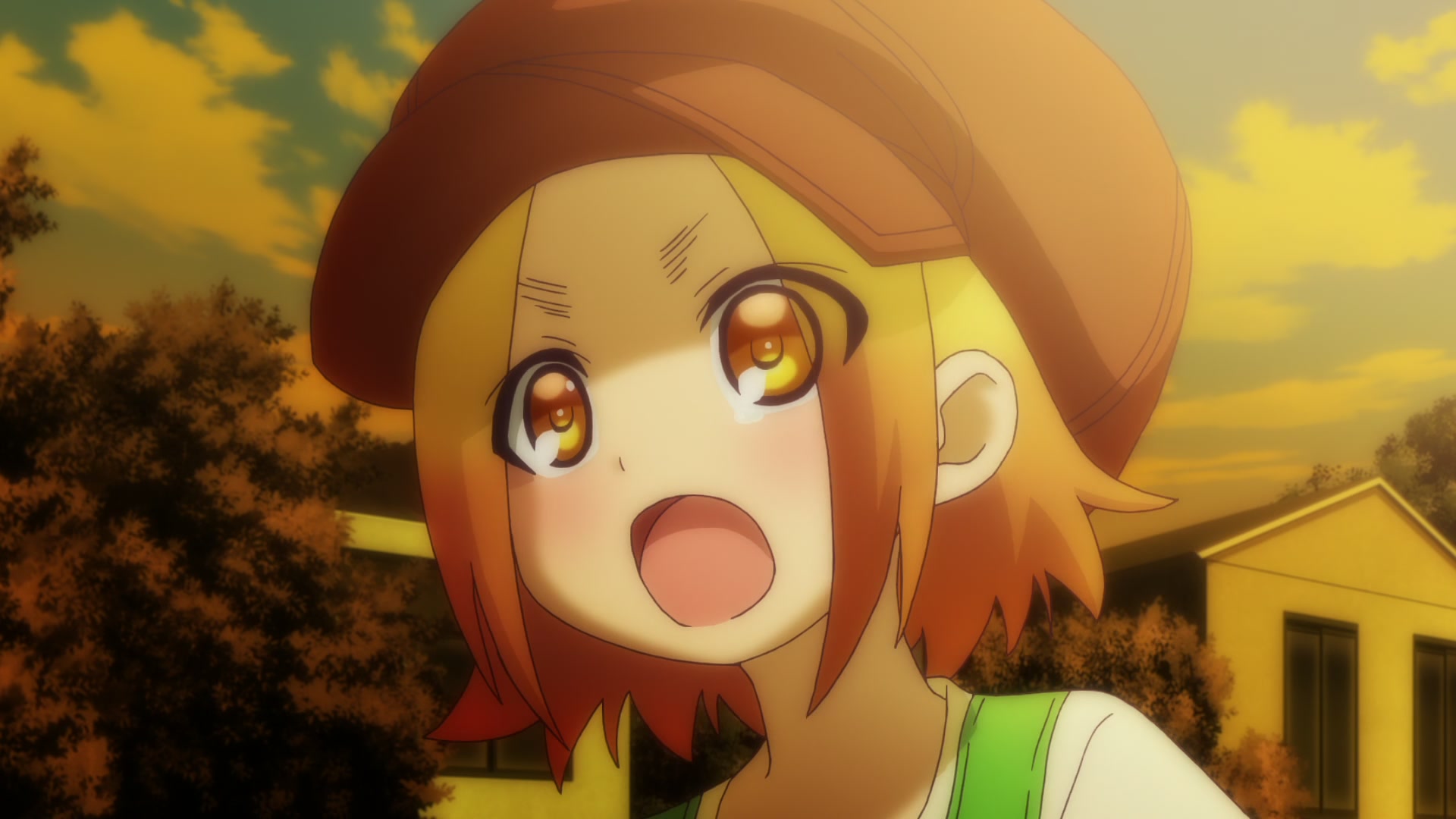
Lighting techniques vary to establish mood. The series excels during golden hour sequences, bathing characters in hazy orange glows that create strong rim lighting and a nostalgic atmosphere. These scenes often employ aggressive color grading to simulate sunset. Standard dialogue scenes typically utilize even, flat lighting typical of TV anime budgets. Supernatural or action elements are highlighted through glowing, translucent effects, particularly bright electric blue energy, that stand out sharply against the solid colors of the characters and the deep blues of nocturnal palettes.
Background Art and Environmental Design
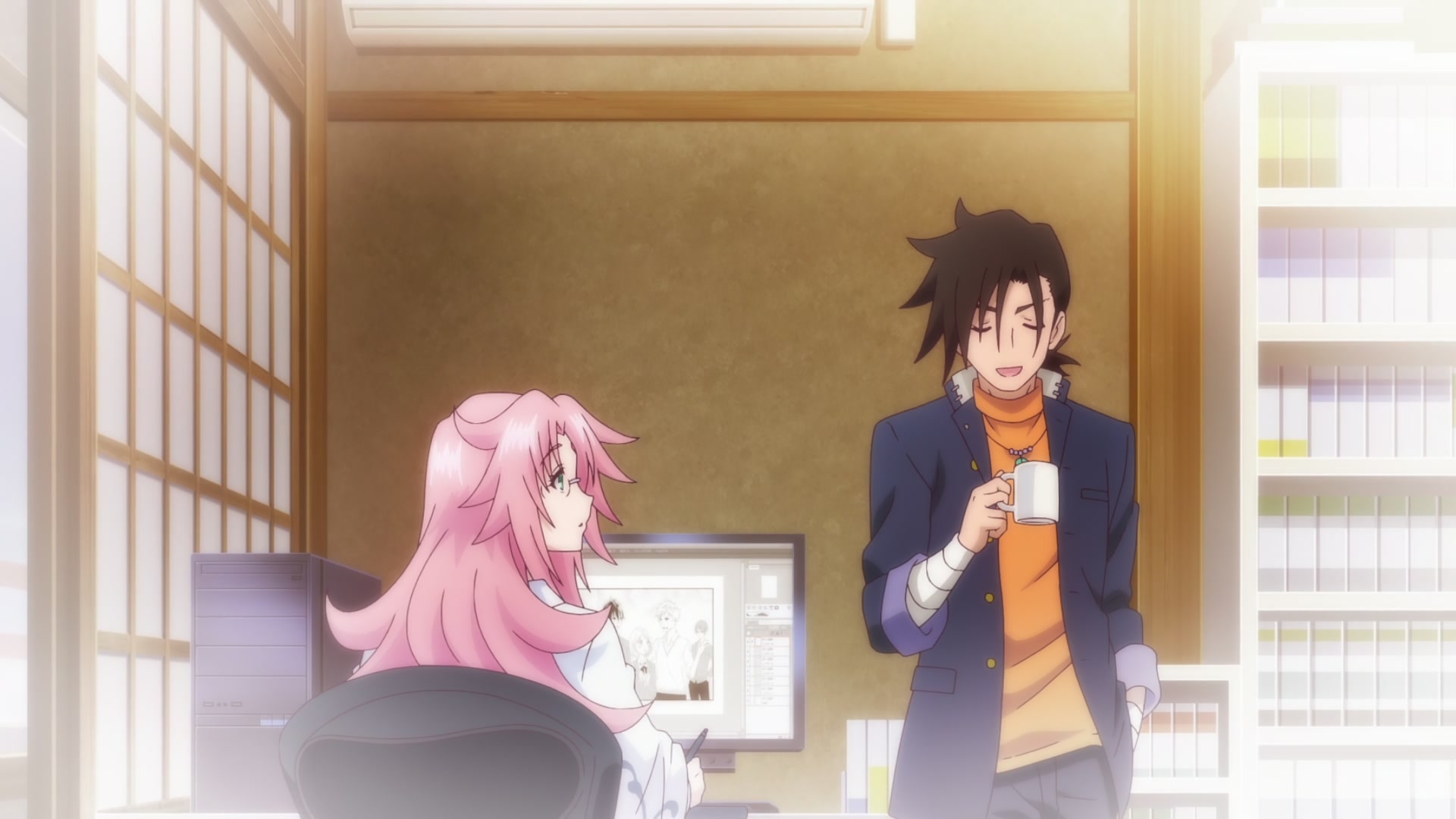
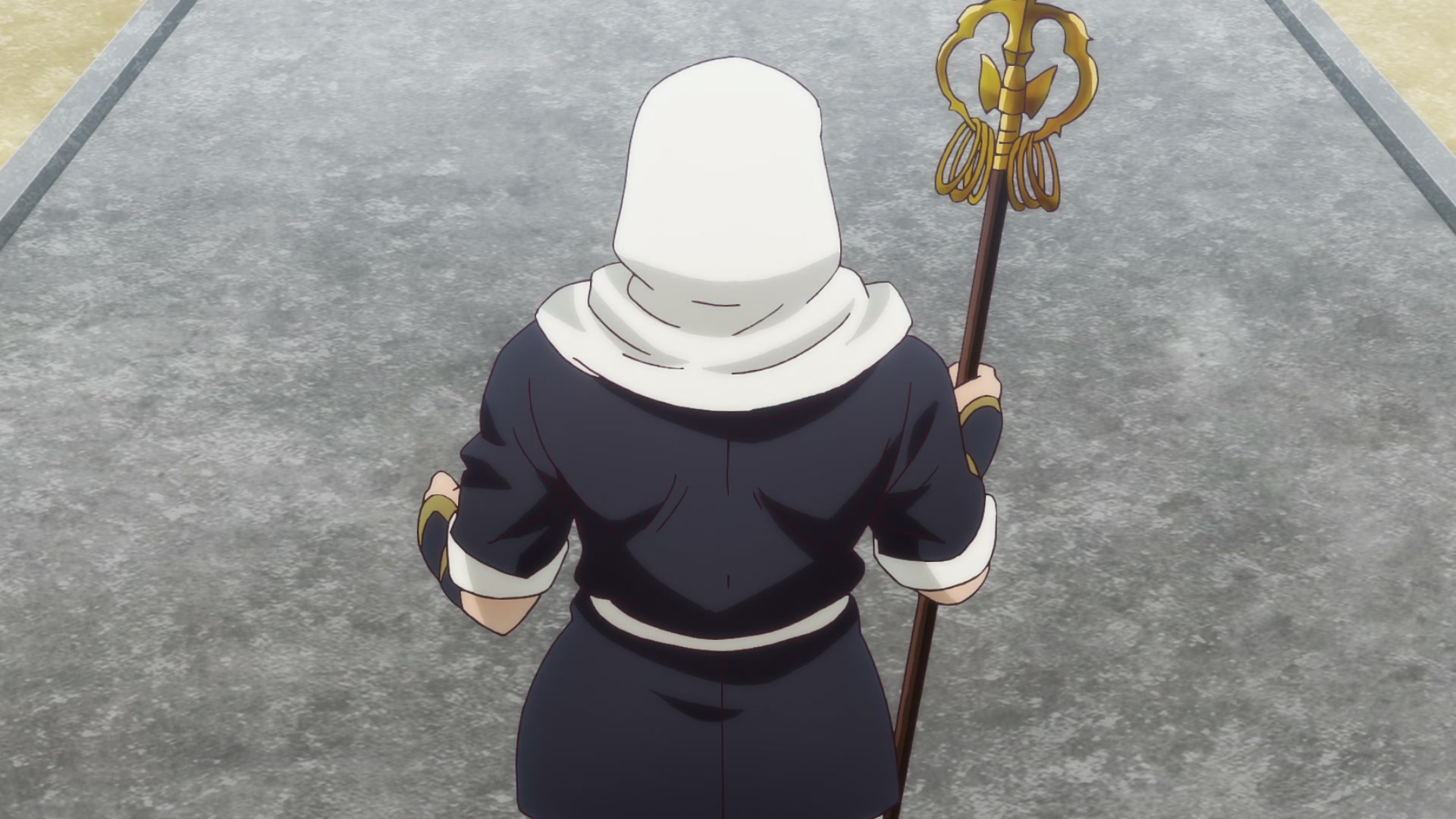
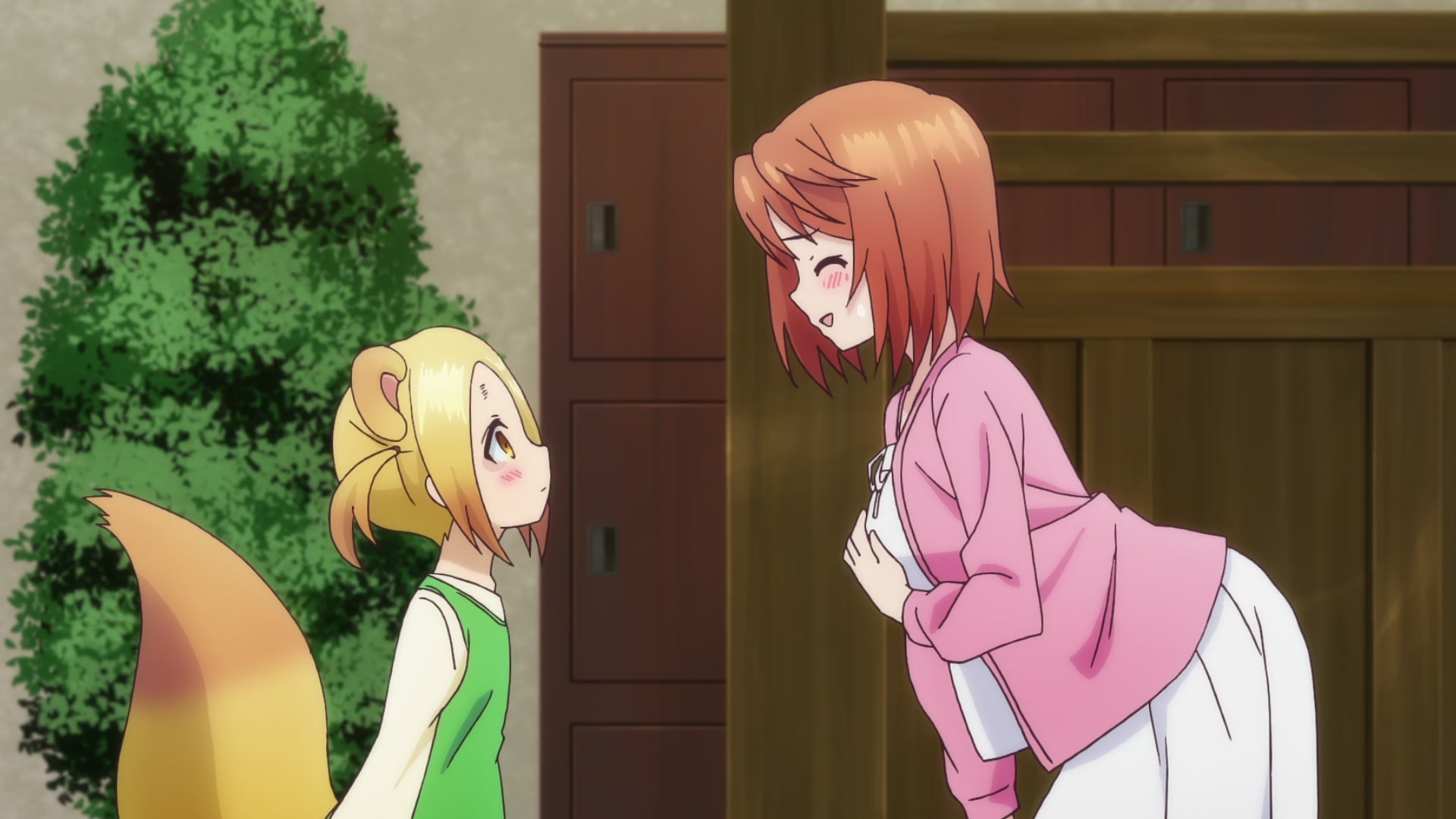
The background art presents a functional blend of traditional and modern Japanese architecture. Scenes frequently juxtapose traditional elements like shoji screens, wooden shrine gates, and tiled roofs with modern fixtures such as desktop computers, air conditioning units, and school hallways.
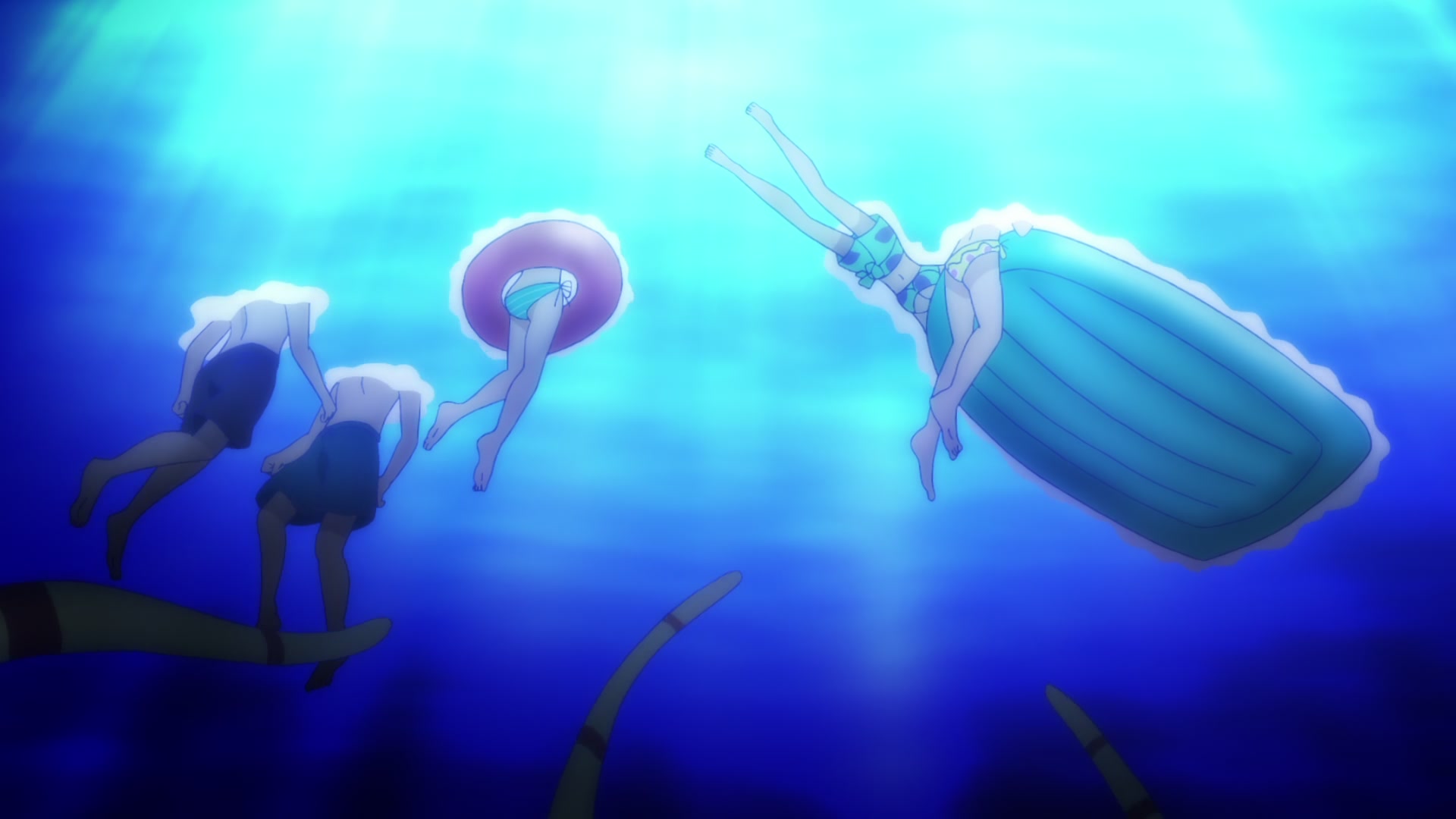
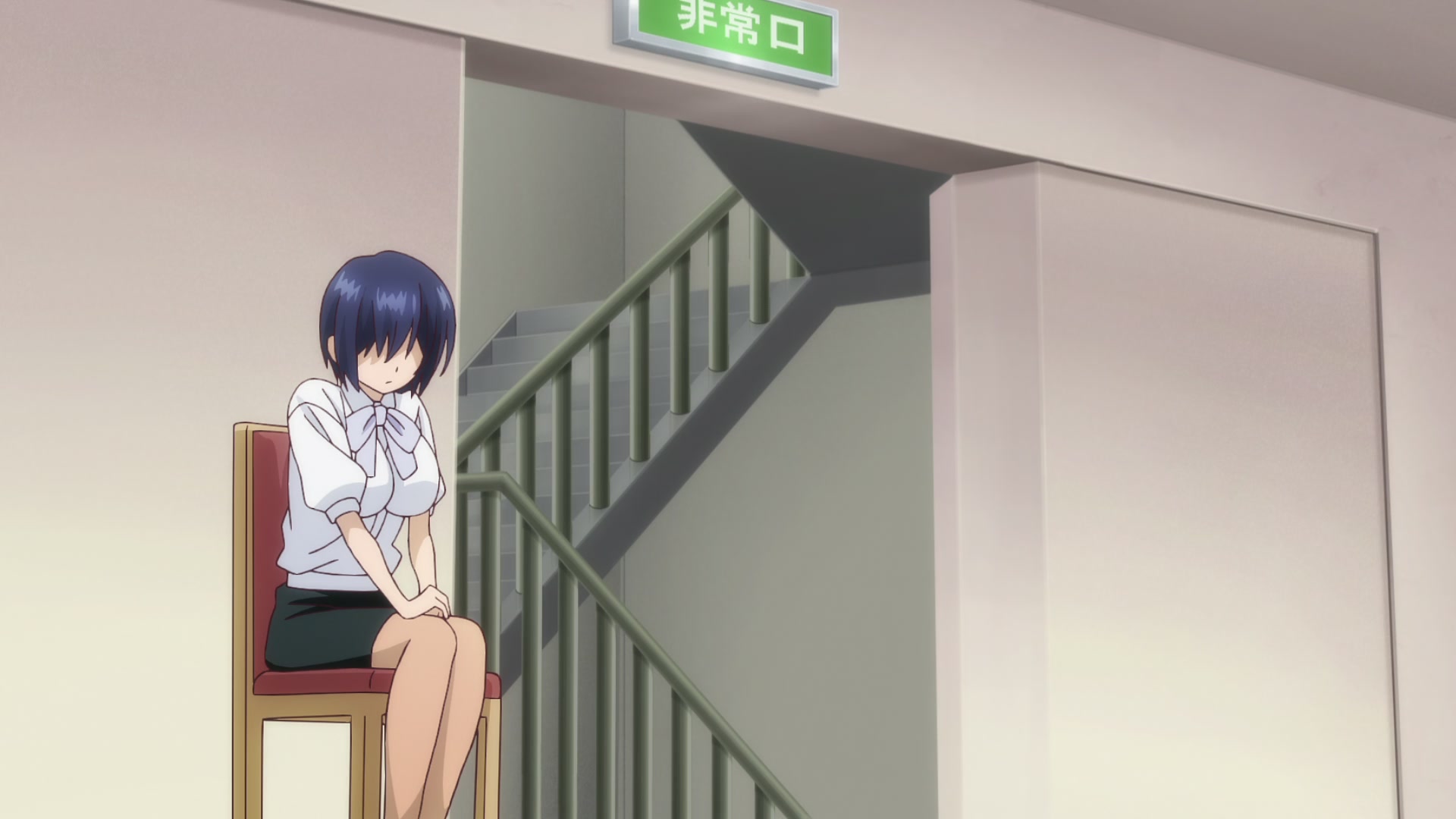
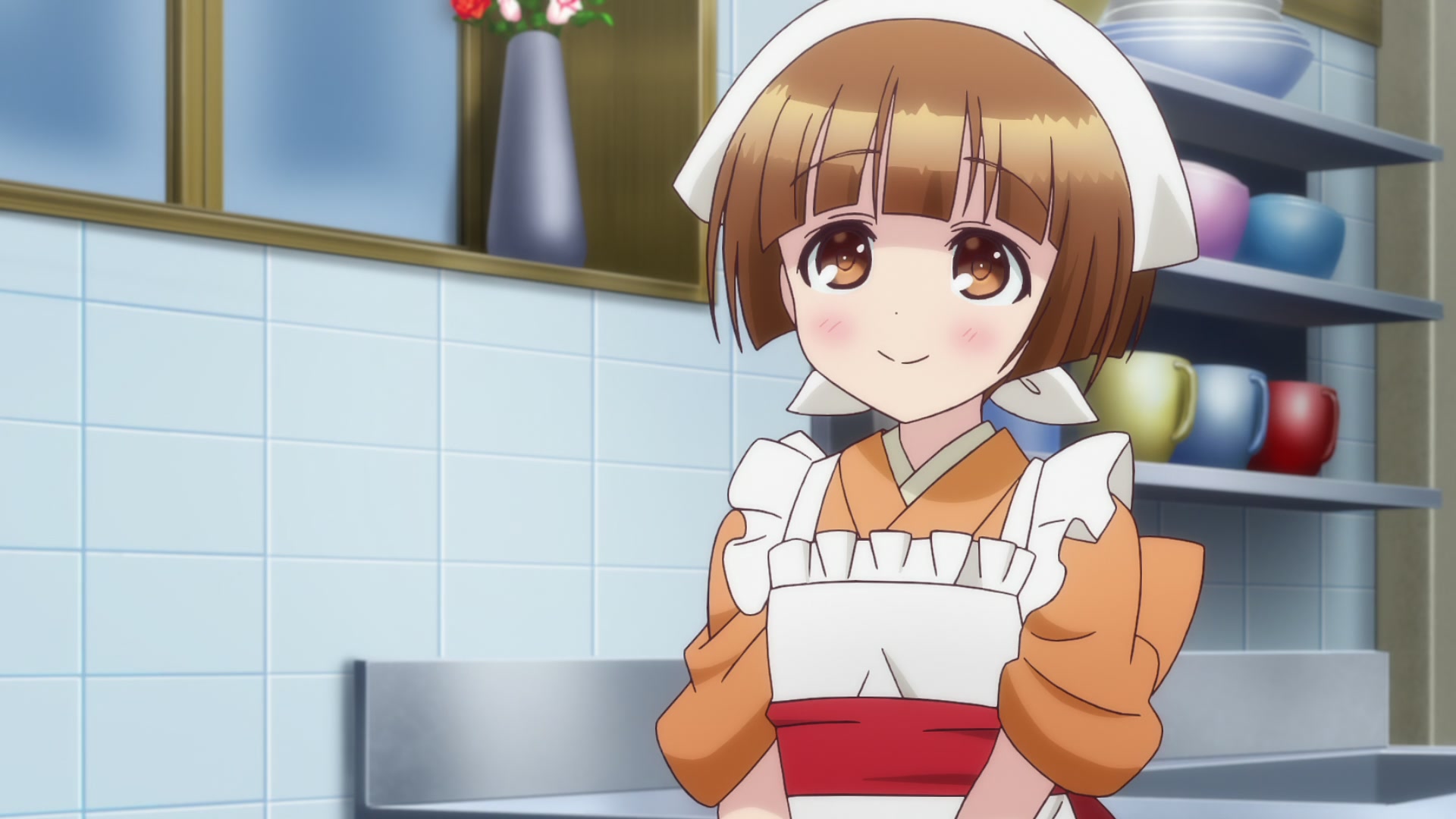
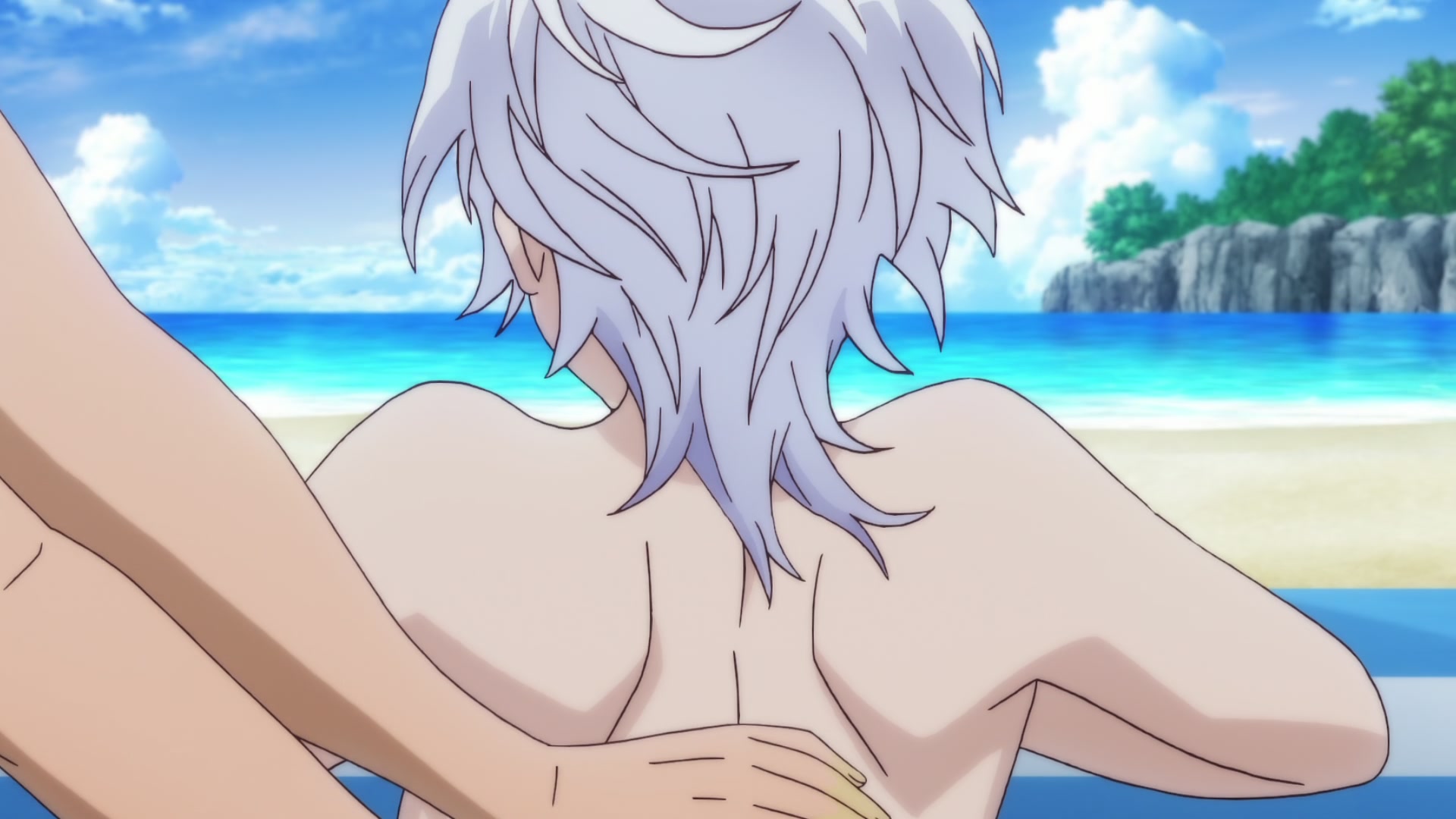
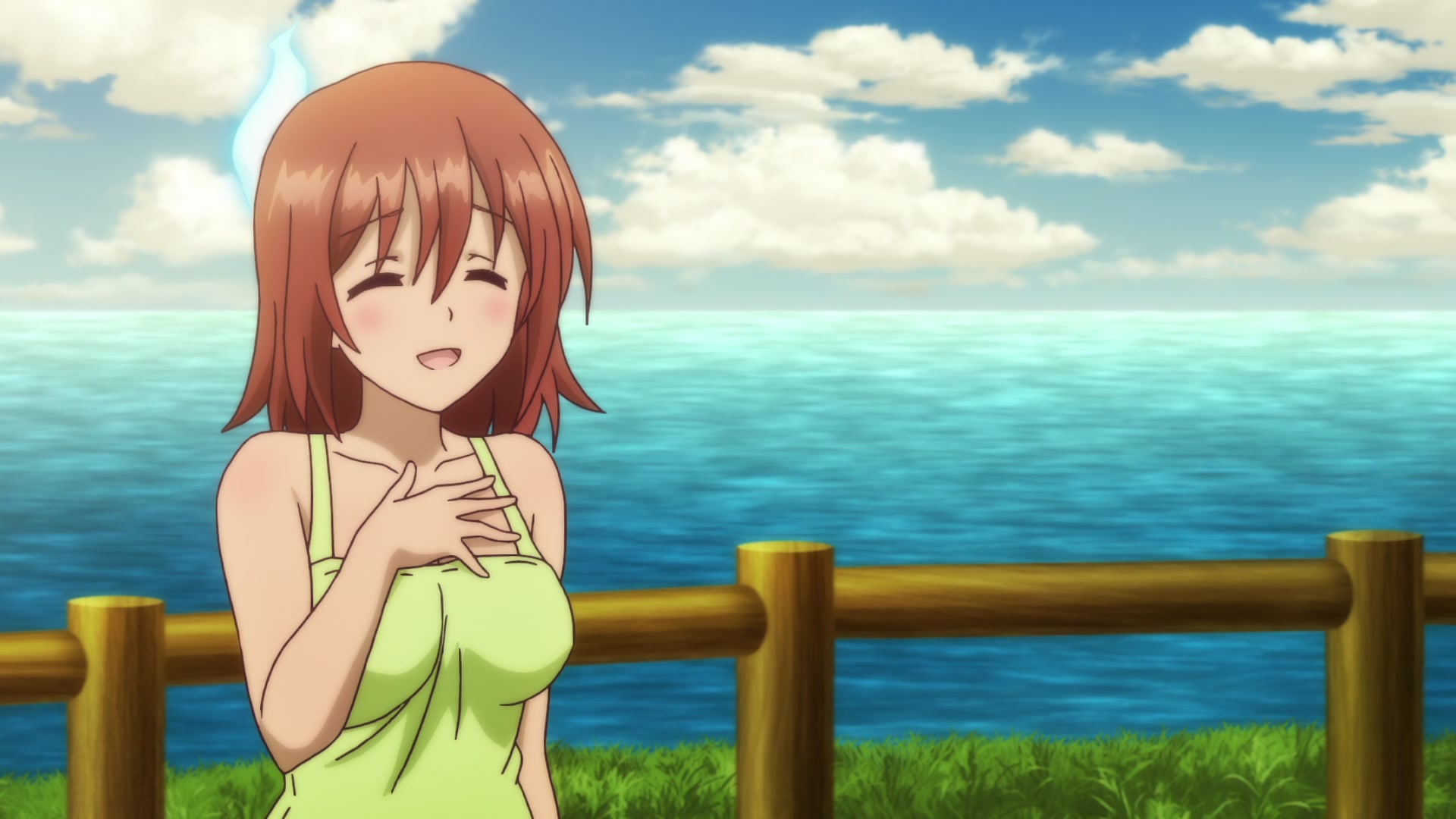
The detail level varies significantly based on the setting. Interior environments often feel stage-like, utilizing flat colors and simple textures to keep the focus strictly on character interaction. Some indoor shots suffer from generic assets, such as sterile kitchen tiles or standard school corridors. Outdoor scenes receive more artistic attention. Beach settings feature vivid, saturated blues and painterly horizons, while rooftop scenes include textured tiles that add a sense of place. The production occasionally uses depth-of-field effects or bloom to soften background details, ensuring they do not distract from the foreground action.
Animation Quality and Consistency
Linework is adaptive rather than static. It shifts from delicate, thin lines during soft, romantic, or quiet moments to bold, heavy outlines during comedic outbursts. This variance helps punctuate the tone but can result in abrupt visual shifts.
The transition between standard proportions and comedic deformations is abrupt, which may jar viewers preferring visual continuity. Some stills reveal stiffness in hand anatomy or flat compositing during complex shots, such as clones or overlapping characters. This suggests a focus on resource allocation toward key character moments rather than environmental immersion.
It is important to distinguish between intentionally static scenes that fit the tone and genuinely weak animation. Effective static scenes use framing, color, and expression to maintain engagement. Quiet character moments benefit from stillness, allowing expressions to carry the weight. Weak animation, by contrast, occurs in dialogue-heavy scenes with minimal movement and flat composition, where the stillness is merely economical rather than deliberate.
Sound and Music
Opening and Ending Themes
The opening theme captures the series’ dual nature effectively. It balances upbeat energy with moments of genuine warmth, reflecting the blend of comedy and emotional depth that defines the show. The visuals accompanying the opening introduce the main cast efficiently, establishing each character’s personality through brief, memorable moments.
The ending theme takes a softer approach, emphasizing the quieter, more contemplative aspects of the series. It provides a gentle wind-down after each episode, allowing the emotional weight of the story to settle before the credits finish rolling.
Voice Acting Performance
The seiyuu work is excellent across the board. The voice actors bring genuine personality to their roles, elevating the material through their performances. The protagonist’s voice actor, in particular, demonstrates impressive range, shifting between deadpan humor, genuine warmth, and intense determination as the scene requires.
The female cast members each bring distinct vocal qualities to their characters. Yuuna’s voice is warm and gentle, with a slight hesitancy that reflects her uncertainty about her place in the world. Sagiri’s voice is sharp and disciplined, but softens noticeably in moments of vulnerability. Nonko’s voice carries a lazy, teasing quality that masks her deeper complexities. These performances contribute significantly to the series’ emotional impact.
Sound Direction and Atmospheric Audio
The sound direction effectively supports both the comedic and dramatic moments. The use of silence during quiet character scenes allows the emotional weight to build, while the sudden intrusion of comedic sound effects punctuates the humor. The supernatural elements are given appropriate audio signatures, from the ethereal quality of Yuuna’s poltergeist activity to the thunderous impact of Kogarashi’s punches.
The atmospheric audio helps establish the setting. The sounds of the hot springs, the creaking of the old inn, the ambient noise of the town, all contribute to a sense of place that grounds the supernatural elements in a tangible reality.

Overall Verdict
Yuragi-sou no Yuuna-san is a series that rewards patience. What begins as a simple harem comedy gradually reveals itself to be a story about what it means to be happy, to belong, and to find meaning in connection with others. The central relationship between Kogarashi and Yuuna is genuinely touching, built on mutual respect and a shared commitment to each other’s wellbeing.
The series’ greatest achievement is its ability to make viewers care about a ghost’s happiness. Yuuna’s journey from isolated spirit to beloved friend is genuinely moving, and Kogarashi’s determination to help her, even at the cost of his own happiness, is admirable. The found family dynamic at Yuragi Inn is heartwarming, providing a sense of warmth that permeates the entire series.
The visual presentation is strong, with appealing character designs, expressive facial acting, and effective color direction. The animation quality varies, with some scenes receiving more attention than others, but the overall package is polished and engaging. The voice acting is excellent, and the sound direction effectively supports the emotional tone.
This series is for viewers who appreciate supernatural comedy with emotional depth. It is for people who understand that fanservice and heartfelt storytelling are not mutually exclusive. It is for anyone who has ever felt like an outsider and dreamed of finding a place to belong.
Those who are uncomfortable with ecchi elements may find the fanservice distracting, and those who prefer their anime with more consistent visual polish may be frustrated by the animation quality variance. However, for viewers who can embrace the series on its own terms, there is genuine emotional resonance to be found here.
The season ends with several mysteries unresolved. Yuuna’s past remains unknown. Oboro’s presence at the inn creates ongoing complications. The nightmare that Kogarashi experiences in the final episode hints at darker developments to come. These unresolved threads are not weaknesses but promises, suggestions that the story is not yet finished.
In a world full of ghosts and monsters, the most extraordinary thing is people finding each other and choosing to stay together. That is the heart of Yuragi-sou no Yuuna-san, and it is a heart worth experiencing.
Gallery