






Introduction
Some anime are defined by their ambition, their visual spectacle, or their deconstruction of tired tropes. Others simply want to tell a story about two people falling in love and discovering that, together, they can face anything the world throws at them. Mamoru-kun ni Megami no Shukufuku wo! belongs firmly to that second camp. It is a mid-2000s supernatural romance that blends high school comedy, science fiction, and a dash of apocalyptic action, all built around a relationship so earnest and emotionally transparent that it feels like a warm blanket on a cold day.
The series follows Yoshimura Mamoru, a transfer student at Beatrice University High School who, on his very first day, is accosted by the school’s most feared student, Takasu Ayako. Known throughout the world as the Witch Beatrice, Ayako possesses immense beatrice power, a sort of ambient energy that can be controlled through will and emotion. She demands that Mamoru become her boyfriend, then flees in embarrassment before he can respond. What begins as an absurd, lopsided confession quickly becomes the foundation for a 24-episode journey in which two people, wounded in very different ways, learn to trust each other and to draw strength from their bond.
From a longtime fan’s perspective, Mamoru-kun ni Megami no Shukufuku wo! occupies a comfortable, nostalgic space. It embraces familiar tropes—the transfer student, the school festival play, Valentine’s chocolate battles, the hot springs episode—with an unironic warmth. It does not try to subvert or mock these elements; it simply executes them with enough emotional sincerity that they land. The production is modest, the animation often static, and the action sequences hardly the stuff of sakuga highlight reels. Yet the show more than compensates with its character writing, its thematic cohesion, and its refusal to undercut its central love story with cynicism. For anyone who has ever felt a pang of recognition watching an “ice queen” character melt around the person she trusts, Mamoru-kun ni Megami no Shukufuku wo! is a rewarding, heartfelt watch.



Story and Themes
At its core, Mamoru-kun ni Megami no Shukufuku wo! is a love story, but it is also a story about what it means to be alone and what it takes to let someone in. The premise sets up a supernatural framework: beatrice particles exist everywhere, and certain gifted individuals can manipulate them. Ayako is one of the three strongest beatrice users on the planet, a fact that has left her isolated since childhood. Her own parents called her a monster and abandoned her. The emotional walls she built are so high that even her closest associates in the Student Council have never seen her smile.
Mamoru enters this frozen world with no special abilities to speak of. He is simply kind, unassuming, and in possession of a smile that the series repeatedly calls “unfair” because it disarms anger and resentment almost instantly. The plot unfolds in arcs that range from low-stakes school comedy (a hide-and-seek game through Ayako’s mansion, a bizarre shampoo-delivery mission at a hot spring) to genuinely dangerous confrontations with other beatrice users. Across all of these, the narrative keeps its focus on the evolving dynamic between Mamoru and Ayako.
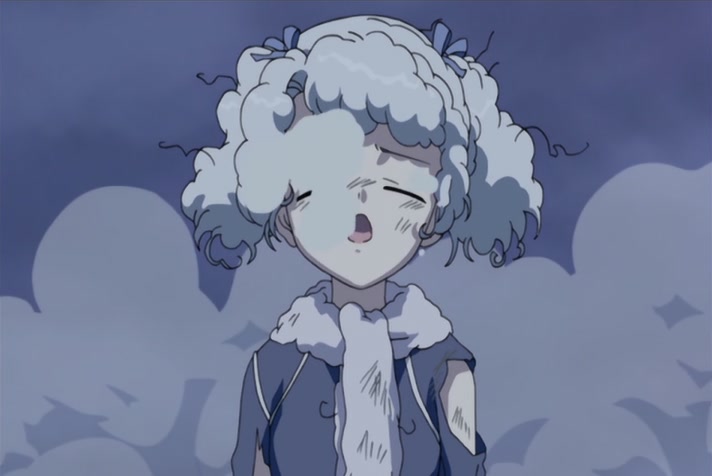
The series’ central theme is that love, when fully embraced, is an invincible force. This is not a throwaway line. In the final arc, Ayako literally becomes unstoppable when she and Mamoru are emotionally synchronized. Their combined beatrice can deflect an international missile strike. But the show earns this payoff by spending its runtime exploring the fears that make such connection so difficult. Ayako’s beatrice instinctively seeks out Johan, a rival of immense power, even though she consciously despises him. She is terrified that her very nature might betray the love she has chosen. Mamoru, for his part, spends much of the series convinced that he is unworthy, that his presence only endangers Ayako. When these two fears collide and are worked through—culminating in a scene where Mamoru enters a malevolent beatrice entity to find a child version of Ayako weeping alone, and refuses to leave her—the series delivers its theme with devastating clarity.
The beatrice power system works beautifully as a metaphor. These particles respond to will and emotion, and they can be sealed by devices called Horacles, just as trauma can seal off a person’s capacity for vulnerability. The “Return to the Beginning” project, an attempt to unite all beatrice into a single conscious entity, represents the terrifying possibility of power without empathy. When the beatrice itself, speaking through Ayako, confesses that it feared unification and chose her to destroy it, the metaphor completes itself: true connection cannot be forced or engineered; it must be chosen, and it requires the courage to be seen.
Culturally, the series is steeped in Japanese high school rituals. The School Fair episode, in which Ayako and Mamoru perform in a hilariously rewritten Sleeping Beauty, becomes a turning point for their relationship. The Valentine’s Day arc, where girls give chocolate to confess love, is played for both comedy and surprising tenderness. Emelenzia, the German transfer student and rival, earnestly asks Ayako for chocolate-making tips, then uses that knowledge to craft her own confession to Mamoru. The show treats these customs not as exotic window dressing but as the natural language of its characters’ emotional lives. Even the appearance of Ayako’s grandfather, the former prime minister, acts as a nod to traditional family approval structures, updated with a comic “wild old man” persona.
I cannot speak to how faithfully Mamoru-kun ni Megami no Shukufuku wo! adapts its source material, as I have only experienced the anime. The 24-episode run feels narratively complete, though the pacing does accelerate in the final arc. A few subplots, particularly Abiko’s connection to the Silver Maria, feel introduced somewhat late and resolved quickly, which might indicate compression. But taken as a standalone work, the anime tells a satisfying, self-contained story that does not leave major threads dangling.




Characters
Yoshimura Mamoru is a rare breed of male lead: gentle without being passive, vulnerable without being weak. His defining trait is an almost preternatural empathy. When Ayako is hurting, he does not try to fix it with logic or bravado; he simply stays with her, shares the pain, and refuses to leave. His arc moves from self-doubt—constantly fretting that he is not good enough for someone as powerful as Ayako—to a quiet, steadfast protectiveness. The moment he declares, “I’m Ayako’s boyfriend!” before unleashing a combined attack against a runaway beatrice entity is the culmination of his growth, but it lands because of the dozens of smaller moments that built him up: his decision to secretly train with Emelenzia to improve his beatrice control, his insistence on going to Germany with Ayako rather than letting her face her illness alone, and his simple, repeated acts of listening.
Takasu Ayako is the heart of the series, and her dual nature provides both comedy and tension. To the world, she is the Witch Beatrice, a cold, devastatingly powerful figure who could supposedly take down a spy satellite or a military division by herself. In private, she is a girl who blushes crimson when Mamoru looks at her, who wakes up early to make him elaborate lunches, and who knits him a sweater in secret over several sleep-deprived weeks. The gap between these two selves is not just a gag; it is the central conflict of her character. She has been taught that power means isolation, and so she has frozen her heart. Mamoru’s presence thaws that ice, but the process is painful. She admits, with genuine fear, that her beatrice instinctively seeks out Johan’s power, and that losing Mamoru would destroy her self-confidence completely. Ayako’s journey is about learning that she does not need to be invincible alone—that being loved is a form of strength, not weakness.
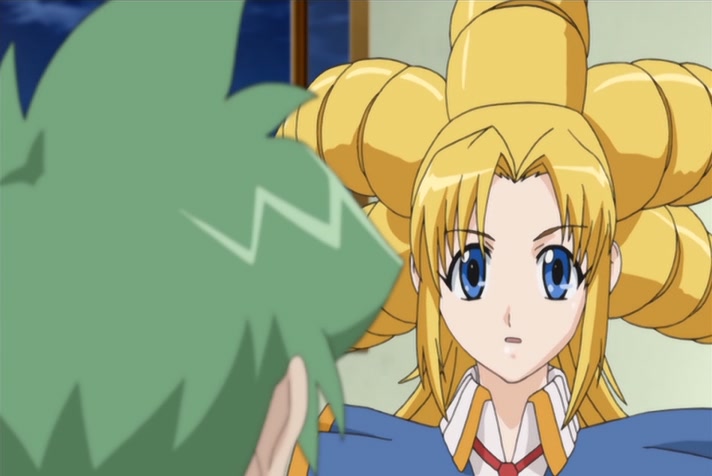
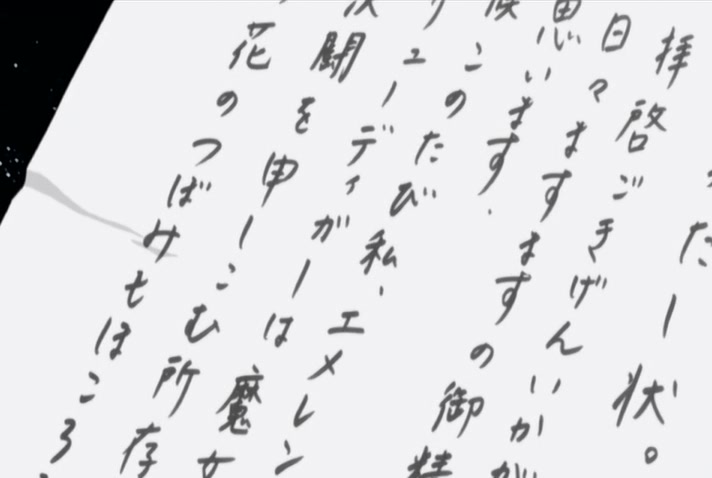
Emelenzia Beatrix Rudiger is the series’ most complex supporting player. She arrives as Johan’s devoted sister, sent to test Ayako and deliver a marriage ultimatum. She views love as a contaminant, something that has “ruined” the noble solitude she admired in Ayako. Over the course of the series, she becomes a friend, a rival in love, and eventually someone who can admit her feelings openly without demanding reciprocation. Her confession to Mamoru and her subsequent duel with Ayako are handled with a grace rarely seen in love-triangle stories. Emelenzia challenges Ayako not to take Mamoru, but to force Ayako to destroy her utterly so she can move on. Ayako’s response—acknowledging the rivalry while declaring her own love inviolable—respects Emelenzia’s feelings without diminishing her own. Emelenzia’s final joke about becoming Mamoru’s “l’amant” is a playful sign that she has made peace with her unrequited love and found a place in the family these characters have built.
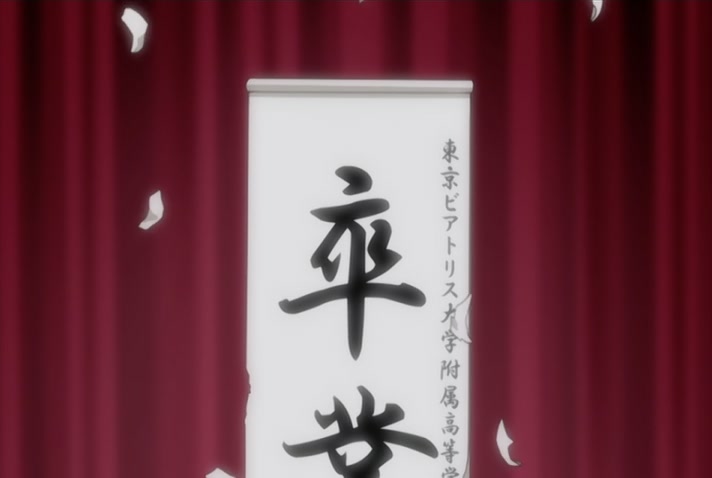
The Student Council serves as the found family Ayako desperately needed. President Sudou Maya is the wry, manipulative big-brother figure whose schemes—like the hot-spring shampoo game or the rewritten school play—always push Ayako toward emotional honesty. His graduation scene, where he confesses with tears that he never called Ayako a friend because he was afraid she would vanish, is one of the series’ quiet gut-punches. Vice-President Sudou Shione provides manic energy and comic relief with her impossible hairstyles and self-designed avant-garde clothing, but her loyalty is fierce, and her episode-long mystery of why she straightened her hair reveals a touching vulnerability. The other members—photographer Mitsuki, timid Yuuka, muscle-bound Yagi, and the rest—round out a group that genuinely cares for one another.
As for the antagonists, Johan Dieter Rudiger is a compelling rival whose obsession with Ayako stems from a genuine belief that only he can match her power. The series wisely does not redeem him; he remains arrogant to the end, but he is forced to witness the power of a love he does not understand. The Silver Maria, a whimsical, age-shifting trickster, remains somewhat enigmatic, serving more as a catalyst for crisis than a fully explored character. The series’ comedy relief, Abiko Tsuneo, is a delusional stalker whose antics occasionally grate, but his role as Maria’s unwitting pawn ties him into the larger plot effectively.


Visuals and Animation
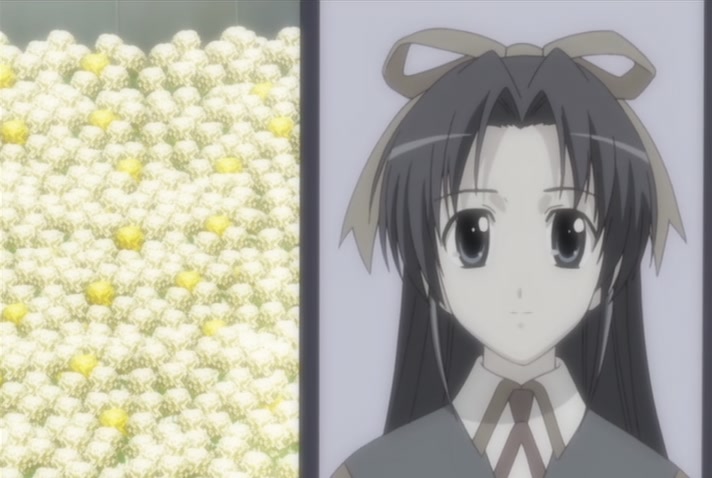
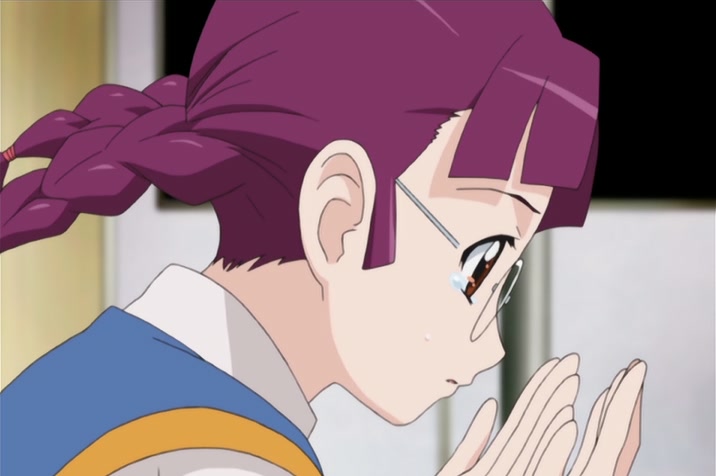
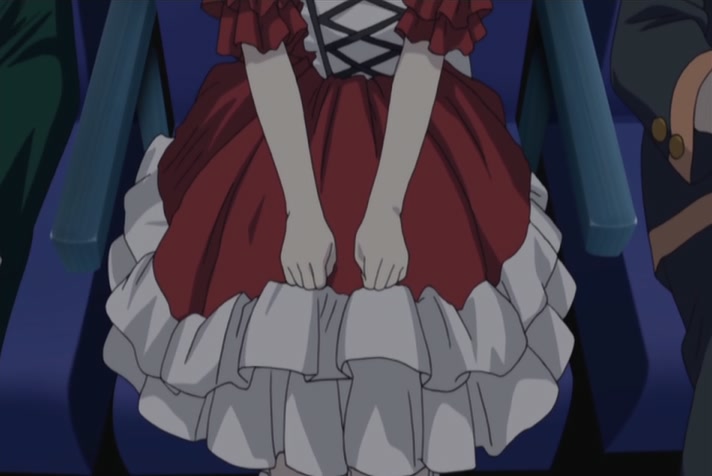
Visually, Mamoru-kun ni Megami no Shukufuku wo! is a product of its era. The mid-2000s digital aesthetic is on full display: soft, blooming light, highly saturated colors, and character designs built around enormous, multi-layered eyes. The art team knew where to invest its resources. Character faces, especially the eyes, are rendered with a level of detail that allows for remarkable expressive range. A slight downward tilt of Ayako’s eyebrows, a widening of her pupils, the way her cheeks flush in gradients of pink—these are the building blocks of the show’s emotional language. When the series wants to sell a tender moment, it lingers on a close-up of Ayako’s face, and the result is often genuinely moving.
The color design supports the storytelling effectively. Flashbacks and memory sequences employ sepia tints and hazy, desaturated filters that feel like flipping through an old photo album. The warm golden-hour lighting that suffuses many of the couple’s private moments creates a dreamy, nostalgic atmosphere. Winter episodes shift to icy blues and crisp whites, while crisis sequences are drenched in harsh reds and magentas. The use of digital bloom—that soft, overexposed glow around light sources—is frequent and sometimes heavy-handed, but it contributes to the series’ sentimental tone.
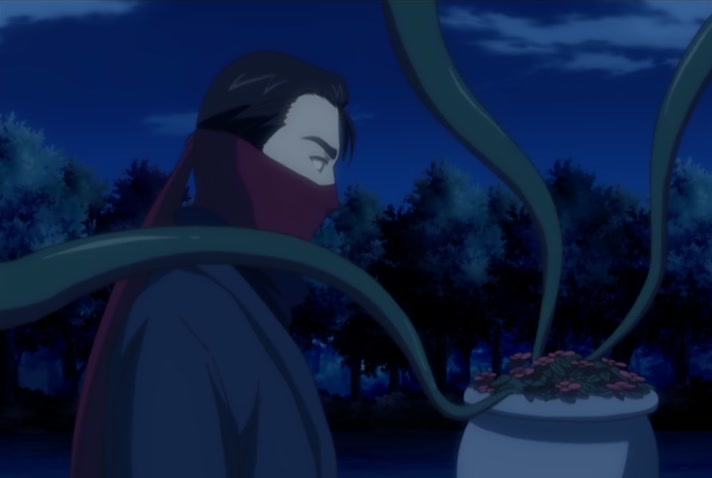
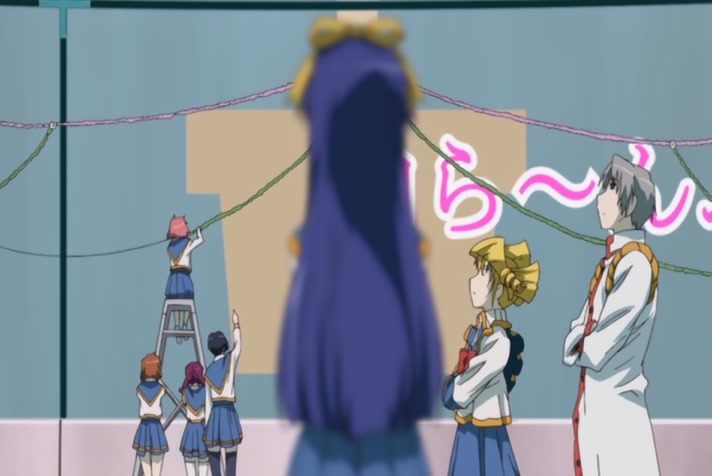
Cinematography is another area where the production compensates for limited animation. The framing often emphasizes symbolism over motion: tight shots of clenched hands, feet planted on the ground, or a character’s back turned while speaking. Blurred foreground elements, like lace curtains or chandeliers, create a sense of depth in otherwise flat compositions. Dramatic silhouettes against sunbursts or glowing beatrice lights are deployed during key emotional revelations. These techniques are not flashy, but they demonstrate a director who understands how to convey meaning without relying on complex movement.
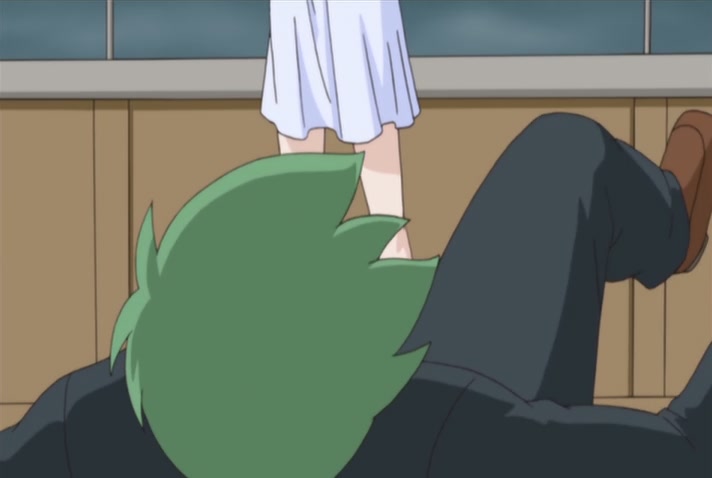
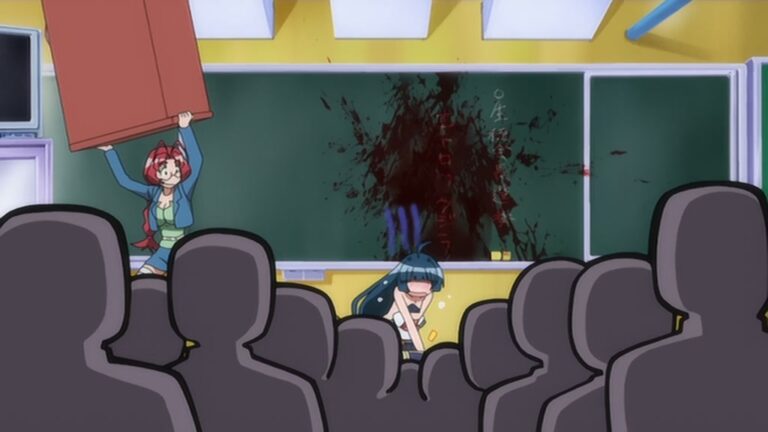
The animation itself is modest. Many scenes consist of talking heads with minimal body movement beyond lip-flaps and occasional hair animation. Crowd scenes often freeze background students entirely. Beatrices clashes, despite being the show’s ostensible action centerpiece, are frequently resolved with still frames of energy bursts or off-screen impacts. There are few fluid fight sequences. However, the series largely avoids feeling lazy because it distinguishes between intentional stillness and weak animation. The long, wordless holds on Ayako and Mamoru during their emotional confessions are clearly deliberate choices that let the voice acting and music carry the scene. By contrast, moments where characters run or fall awkwardly, or where vehicles float unconvincingly against the background, reveal genuine budget constraints.
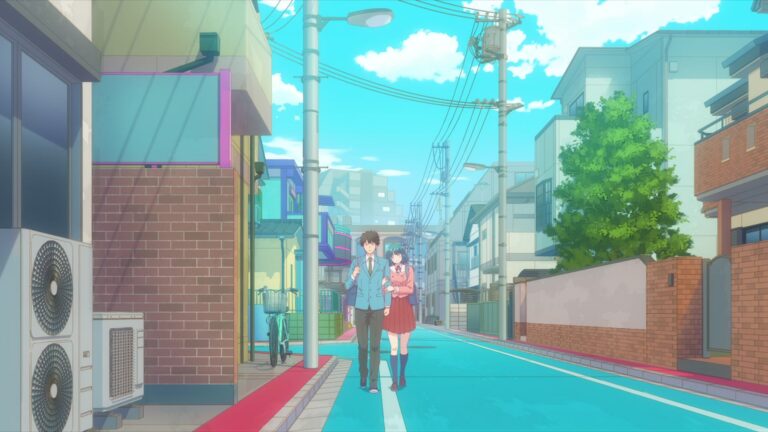
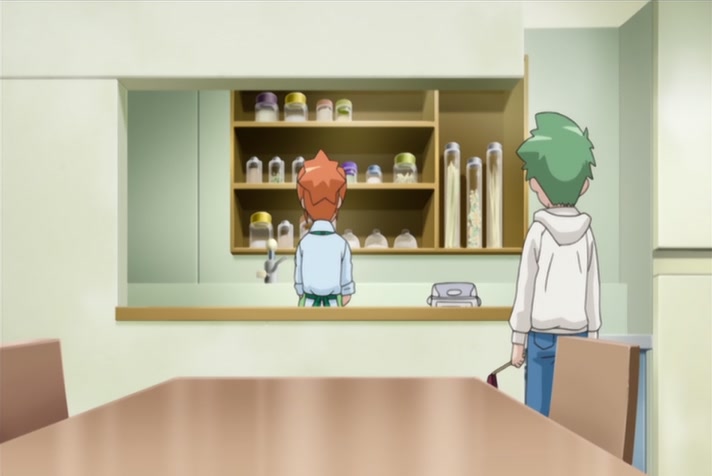
Background art is similarly split. School interiors and domestic spaces are often clean to the point of sterility, with flat planes of color and simple geometric lines serving as a functional stage. Outdoor environments, especially forests, oceans, and sunset skies, receive more painterly attention, with softer brushwork and richer textures. The compositing sometimes struggles to integrate characters with these backgrounds; on occasion, the cel-shaded figures seem pasted onto the scene, lacking the environmental light that would unify the shot. Still, the overall visual package is cohesive and pleasing, if never groundbreaking. It is a series that knows its strengths—expression, atmosphere, emotional close-ups—and leans into them.



Sound and Music
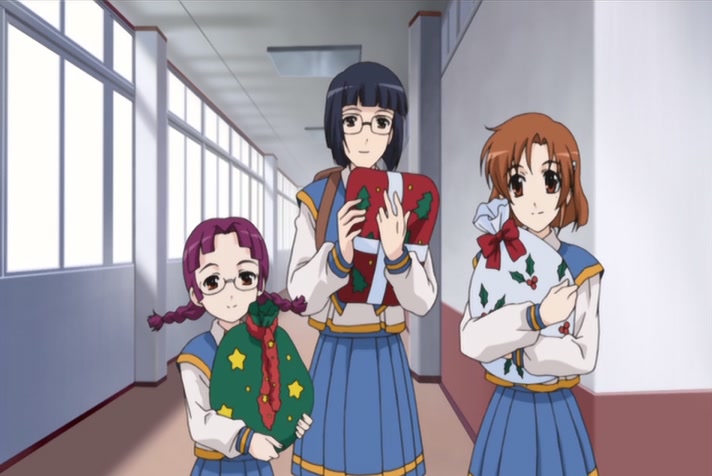
While I cannot give a track-by-track breakdown of the soundtrack, the music in Mamoru-kun ni Megami no Shukufuku wo! plays an important role in establishing the show’s sentimental and dramatic tones. The score leans heavily on gentle piano melodies and swelling string arrangements during romantic and emotional scenes. Quiet moments often carry a soft, almost lullaby-like quality that mirrors Mamoru’s calming presence. When tension rises, the music shifts into driving, percussive territory without overwhelming the dialogue.
The opening and ending themes fit the series’ tone well. The OP is an upbeat, slightly wistful pop track that highlights the couple’s bond against a backdrop of school life and cherry blossoms. The ED, slower and more reflective, provides a gentle wind-down after each episode’s events. Both have the kind of mid-2000s anime sound that will feel warmly familiar to longtime fans.
Voice acting is a highlight. Ayako’s seiyuu navigates the character’s two registers with precision: cold and commanding when she is being the Witch, then breathlessly flustered and soft when Mamoru catches her off guard. Her stammering “M-Mamoru” has become something of a running motif, each iteration reflecting a slightly different mixture of embarrassment and affection. Mamoru’s performer captures his earnestness without making him sound naïve, delivering lines of devotion with a sincerity that never tips into saccharine territory. Emelenzia’s formal, slightly stilted Japanese beautifully conveys both her foreignness and her knightly pride, while Maya’s smooth, knowing drawl fits his role as the puppeteer. The supporting cast all deliver solid performances, with Abiko’s manic shrieking providing reliable comic punctuation.
Sound design is functional but not particularly ambitious. Beatrice effects are rendered as crystalline chimes or deep rumbles depending on the scale. Environmental audio, like wind, footsteps, and crowd murmur, is present but understated. The audio mix generally favors the dialogue and music, which suits the series’ character-driven focus.

Overall Verdict
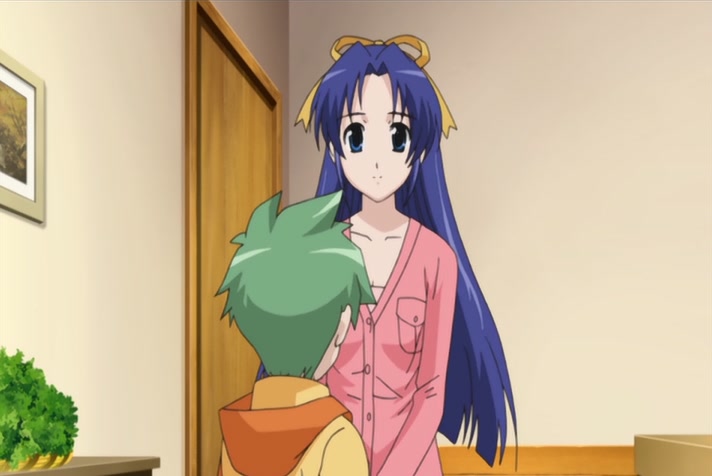
Mamoru-kun ni Megami no Shukufuku wo! is not a show that will wow anyone with its action choreography or its production values. The animation is limited, the pacing can be uneven, and some side plots feel like they needed more room to breathe. Yet none of that mattered to me by the time the credits rolled on the final episode. I was too busy smiling as the entire Student Council ran toward the sea together, Ayako and Mamoru’s relationship now an unshakable fact of their shared world.
What makes Mamoru-kun ni Megami no Shukufuku wo! work is its unwavering commitment to emotional sincerity. It believes, with its whole chest, that love can make you stronger, that found families can heal old wounds, and that the quiet power of a gentle smile can shatter walls built over a lifetime. It does not wink at these ideas or undercut them with irony. It presents them with such earnest conviction that even a jaded, long-time fan like me found himself genuinely moved.
I would recommend this series to anyone who enjoys supernatural romance, “ice queen melts” dynamics, and ensemble casts that grow into something resembling a real family. It will especially appeal to viewers with nostalgia for the mid-2000s digital aesthetic, when soft bloom lighting and enormous shimmering eyes were standard tools of the trade. If you need high-octane action or relentless plot momentum, you may find parts of it slow. But if you have ever wanted to watch two people slowly, awkwardly, beautifully learn to trust each other while the fate of the world occasionally hangs in the balance, Mamoru-kun ni Megami no Shukufuku wo! is well worth your time.
At its best, the series is a reminder that the most invincible force in any story is not a superpower but the simple, stubborn refusal to let someone face the darkness alone. That is a message that never gets old.



Gallery