





Introduction
Some anime scream for attention with explosive sakuga and high-concept hooks. Others hum quietly in a corner, building a world so specific and emotionally resonant that you barely notice when you have fallen completely under its spell. Mashiro no Oto belongs firmly in the second category. It is a series about the Tsugaru shamisen, a folk instrument with roots in poverty and survival, and about a teenage prodigy who has lost the sound that gave his life meaning. If that premise sounds too niche to sustain twelve episodes, the series makes a persuasive case otherwise.
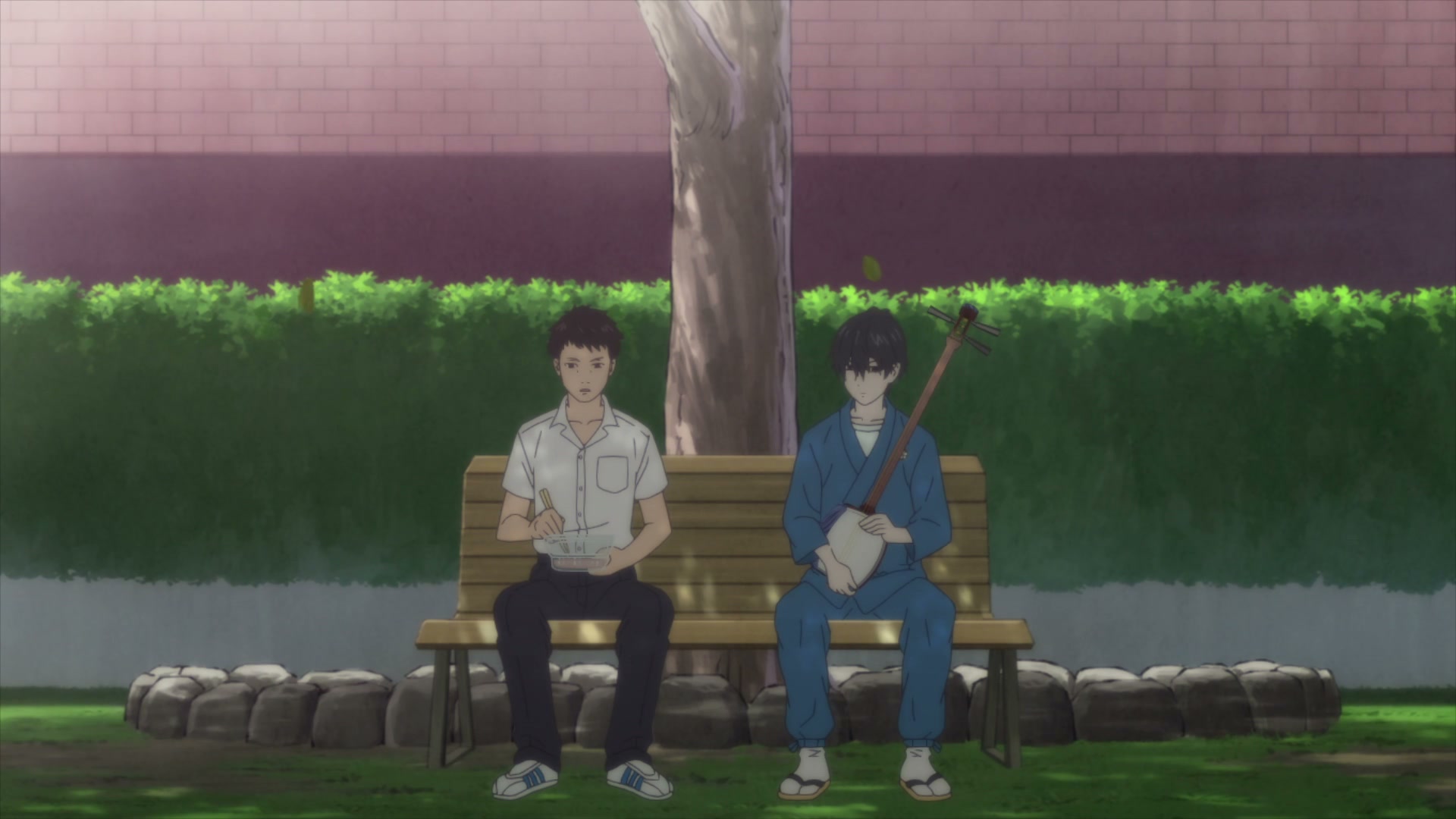
Sawamura Setsu leaves his rural Aomori home after the death of his grandfather Matsugorou, a master shamisen player whose music was Setsu’s entire world. Disconnected and hollow, Setsu drifts to Tokyo with no plan beyond “somewhere loud.” What follows is a slow, deliberate reconstruction of an artistic identity. Setsu stumbles into a high school shamisen club, becomes an unwilling teacher to a group of earnest beginners, and gets dragged into the competitive circuit by his domineering mother, who has organized a national tournament specifically to force his talent into the spotlight.
My overall impression is that Mashiro no Oto is a genuinely thoughtful music drama that respects both its cultural subject matter and the emotional complexity of artistic growth. It is not flashy, it is not always uplifting, and its twelve-episode run ends at what feels like the midpoint of a larger story. But its best moments (the duet between Setsu and professional player Kamiki Seiryuu, the quiet revelation of the grandfather’s wartime past, the raw breakthrough of Setsu’s competition performance) carry an emotional authenticity that stays with you. This is a series for viewers who enjoy slow-burn character work, traditional Japanese arts, and stories about finding your own voice when the voice you loved has gone silent.
Story and Themes
The narrative structure of Mashiro no Oto follows the familiar contours of a high school competition anime. We get the club formation, the training camp, the rival introductions, the tournament arc with group and individual divisions. Anyone who has watched Chihayafuru, Hibike! Euphonium, or any sports anime will recognize the skeleton. What distinguishes the series is the flesh it puts on those bones. The competition is not an end in itself but a forcing mechanism for Setsu’s internal conflict. The club is not a found-family fantasy but a collection of people with genuinely separate motivations who happen to converge around the shamisen for a season.
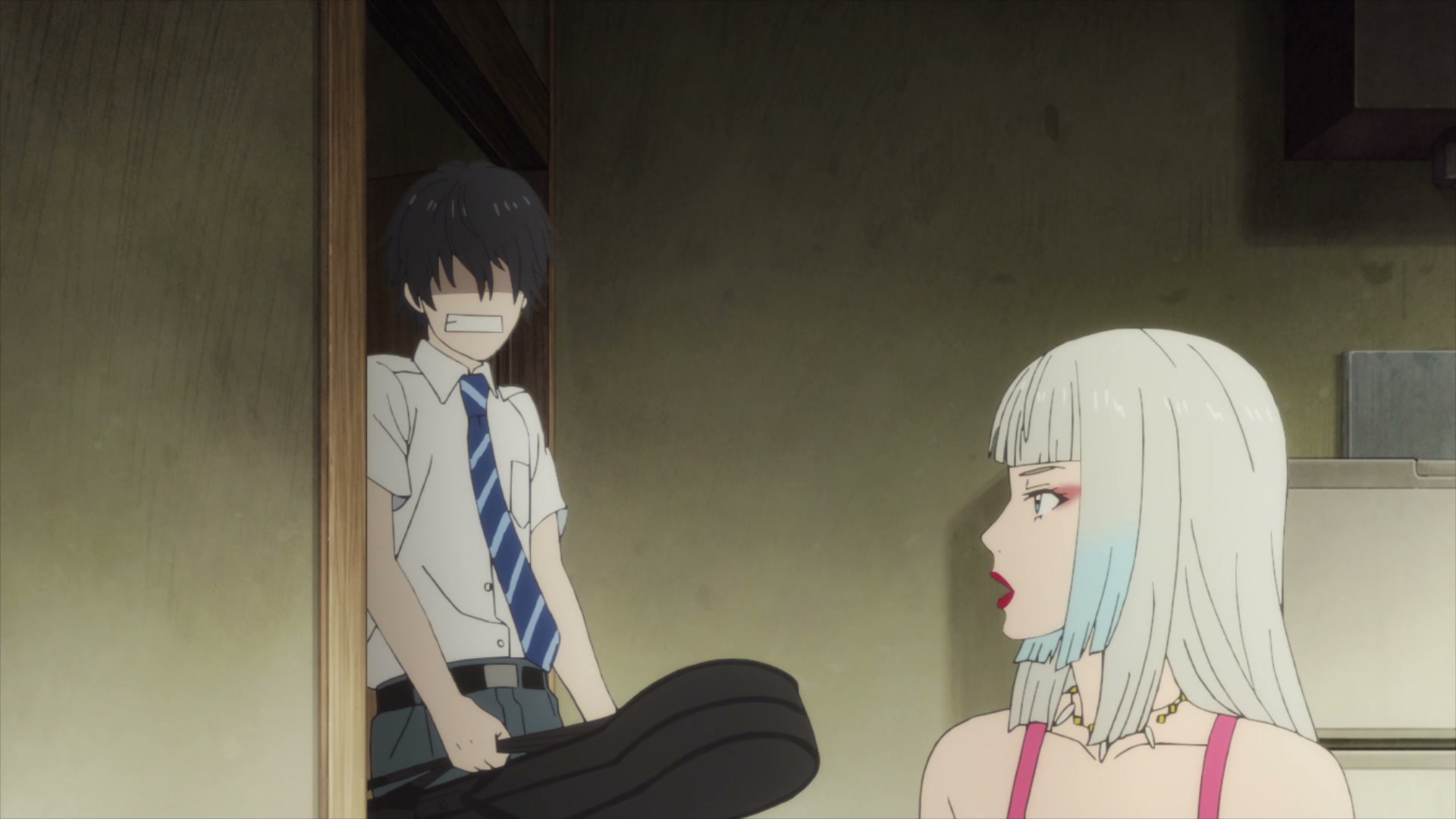
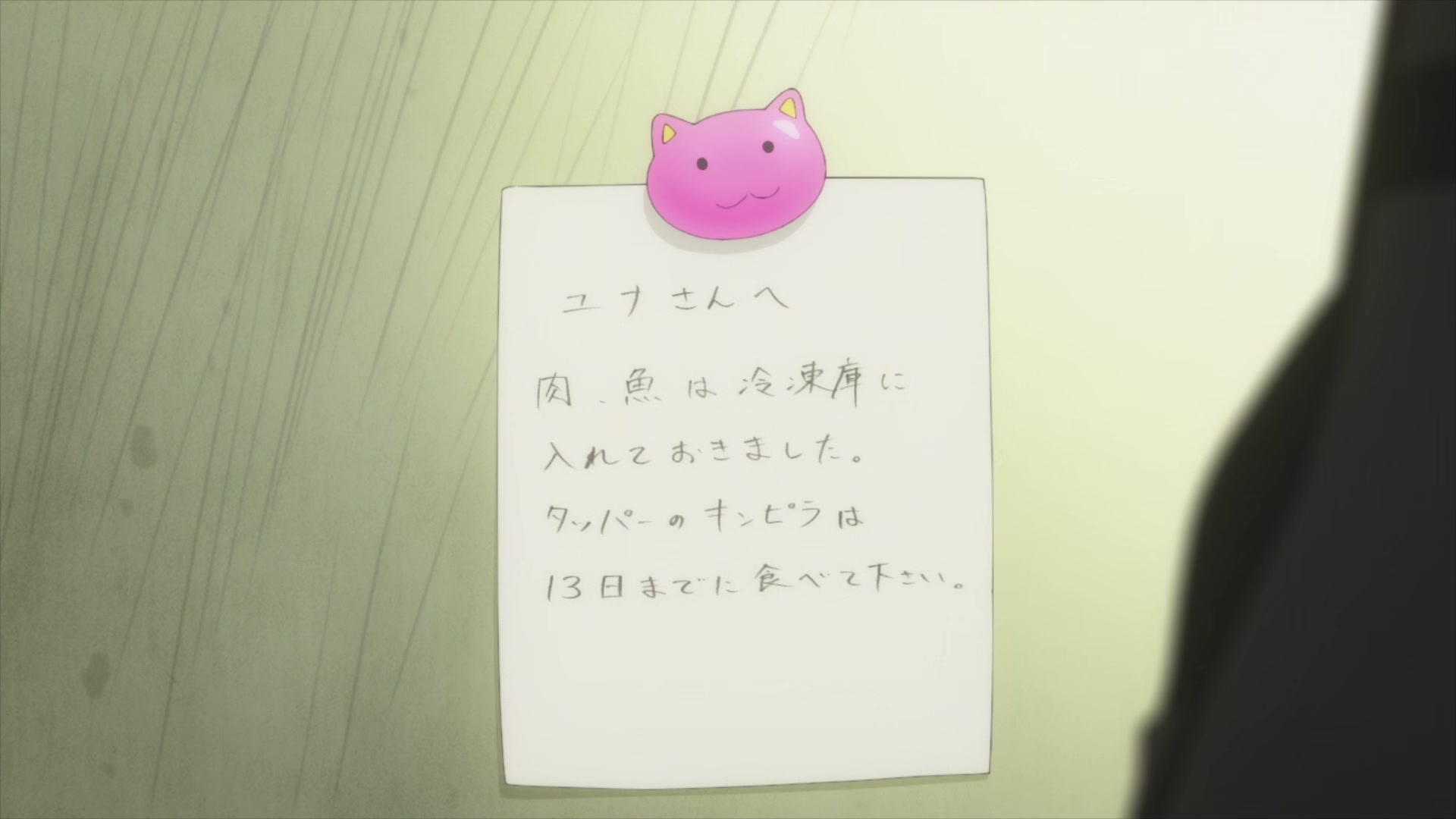
The pacing reflects this focus. The series moves quickly through setup. Yuna, the aspiring actress who takes Setsu in during the first episode, departs by the end of that same episode, her arc complete. Setsu’s mother Umeko arrives, smashes her way into his life, and within an episode he is enrolled in school and reluctantly coaching beginners. Some viewers may find this compression jarring (and I suspect manga readers felt the loss of breathing room more acutely), but the trade-off is narrative momentum. By episode four, Setsu has already confronted his grandfather’s wartime past and begun deconstructing the piece he has spent his life trying to imitate.
The thematic architecture is where the series really excels. The central metaphor is elegant and consistent: your “sound” is your self. When Setsu says his sound disappeared after Matsugorou’s death, he is describing an emotional and spiritual amputation. The grandfather’s sound was warm, weathered, suffused with decades of lived experience. It was, as the elderly Toshiko describes it, a “humble sound” that gave a starving girl the courage to keep living during wartime. Setsu has spent his life trying to reproduce that sound, and he can. Technically, he can play Matsugorou’s Shungyou (Spring Dawn) with uncanny fidelity. But it is not his sound. It is a recording, not a performance.
Matsugorou’s instruction before his death (“Use your own sound to steal it”) functions as the series thesis. True inheritance is not imitation but creative appropriation. You absorb the master so completely that his voice becomes part of your vocabulary, and then you speak with it in your own voice. This is what Setsu begins to grasp only in the final episodes, when his individual competition performance fractures in two: a first half that is a perfect Matsugorou impersonation, and a second half that is finally, unmistakably his own. The judges penalize him for the inconsistency. His mother drops his trophy and calls him pathetic. But his friends, his brother, and the audience recognize that something real has happened. He has begun to steal the sound.
The related theme is the necessity of the listener. Matsugorou taught that “it’s the reactions of the people listening that are the most important lessons,” but Setsu has always played for himself, chasing a ghost. The series systematically shows him why this is insufficient. His street performance with Umeko reaches the local shopkeepers. His playing for Toshiko connects past to present and brings sound to decades of silent memories. His group competition performance, where he suppresses his own virtuosity to support three beginners, creates something none of them could achieve alone. Professional player Kamiki Seiryuu diagnoses the problem with surgical precision after the individual competition: “Everyone in this world hungers for a place to express their sounds. Do you have that hunger? I don’t feel it from you.” The hunger Seiryuu describes is not just competitive drive. It is the need to be heard, to connect, to have your sound matter to someone besides yourself.
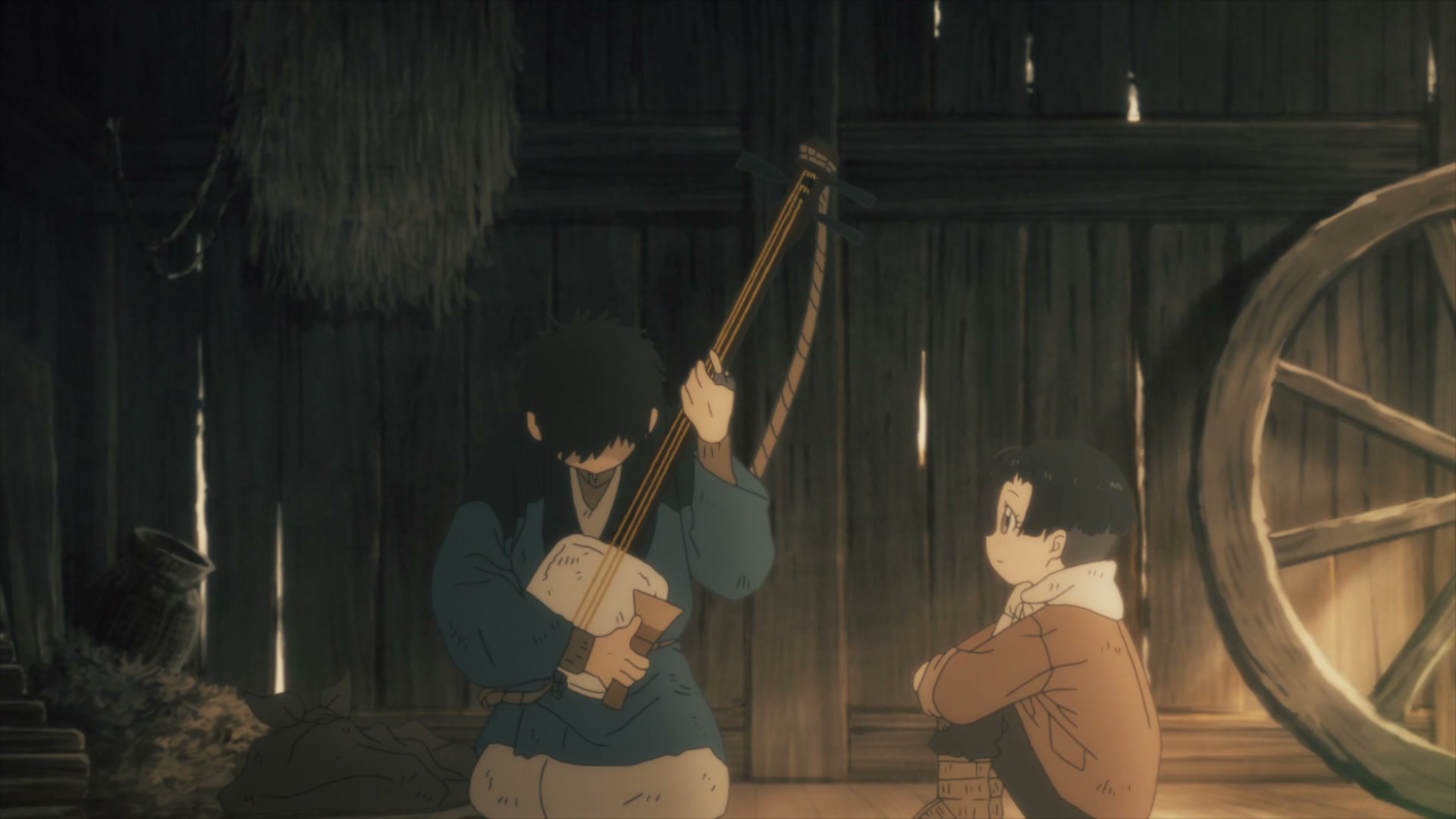
A third thematic strand concerns tradition as a living practice rather than a museum piece. The instrument repairman Oodawara delivers a lecture at Cape Tappi that serves as the series’ mission statement on cultural preservation. He traces the Tsugaru shamisen from its origins among blind, impoverished street performers (men for whom the clink of coins in the cloth around their necks meant survival) to the modern high school competition. His point is that the style has always changed, absorbing new techniques, pushing boundaries, evolving through contact with new audiences. “Tsugaru shamisen has surpassed Tsugaru itself,” he says. This positions the series firmly on the side of innovation within tradition. Mai’s aggressive modern arrangement is not sacrilege. Setsu’s mercurial, emotionally volatile style is not undisciplined. They are the next iteration of a living art form.
Regarding adaptation, I should note that I have not read Marimo Ragawa’s manga source material and cannot speak to what was compressed, rearranged, or omitted. My assessment is based entirely on the anime as a standalone work. From that perspective, the narrative holds together well, though the ending clearly marks a midpoint rather than a conclusion. Setsu’s collapse and his question (“I want to get better. How do I do it?”) set up a journey the anime will not show us. This is the familiar frustration of incomplete adaptations, but within its twelve episodes, the series reaches a genuine emotional climax. The hunger has been born. The question has been asked. The sound has begun to change.
Characters
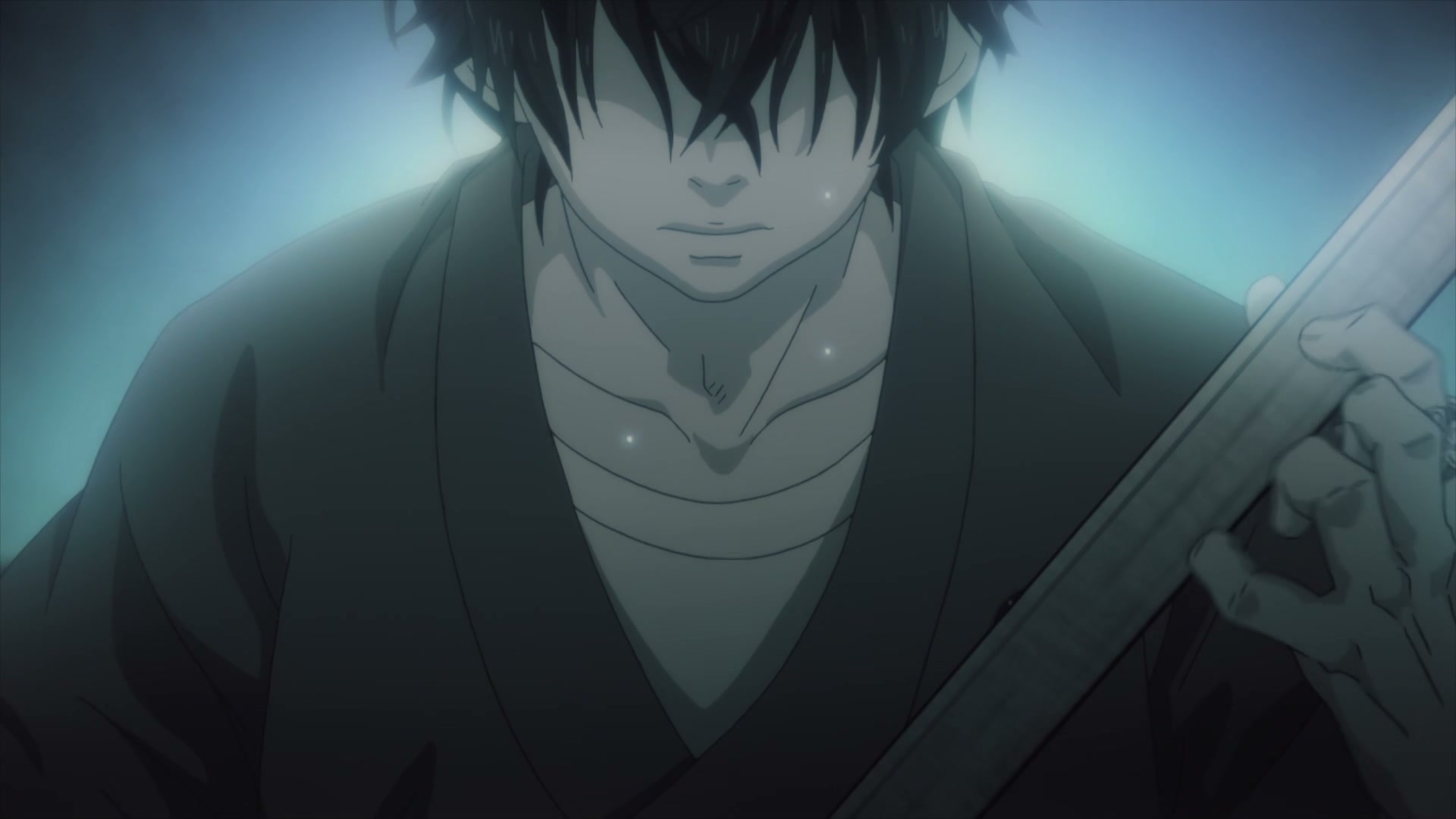
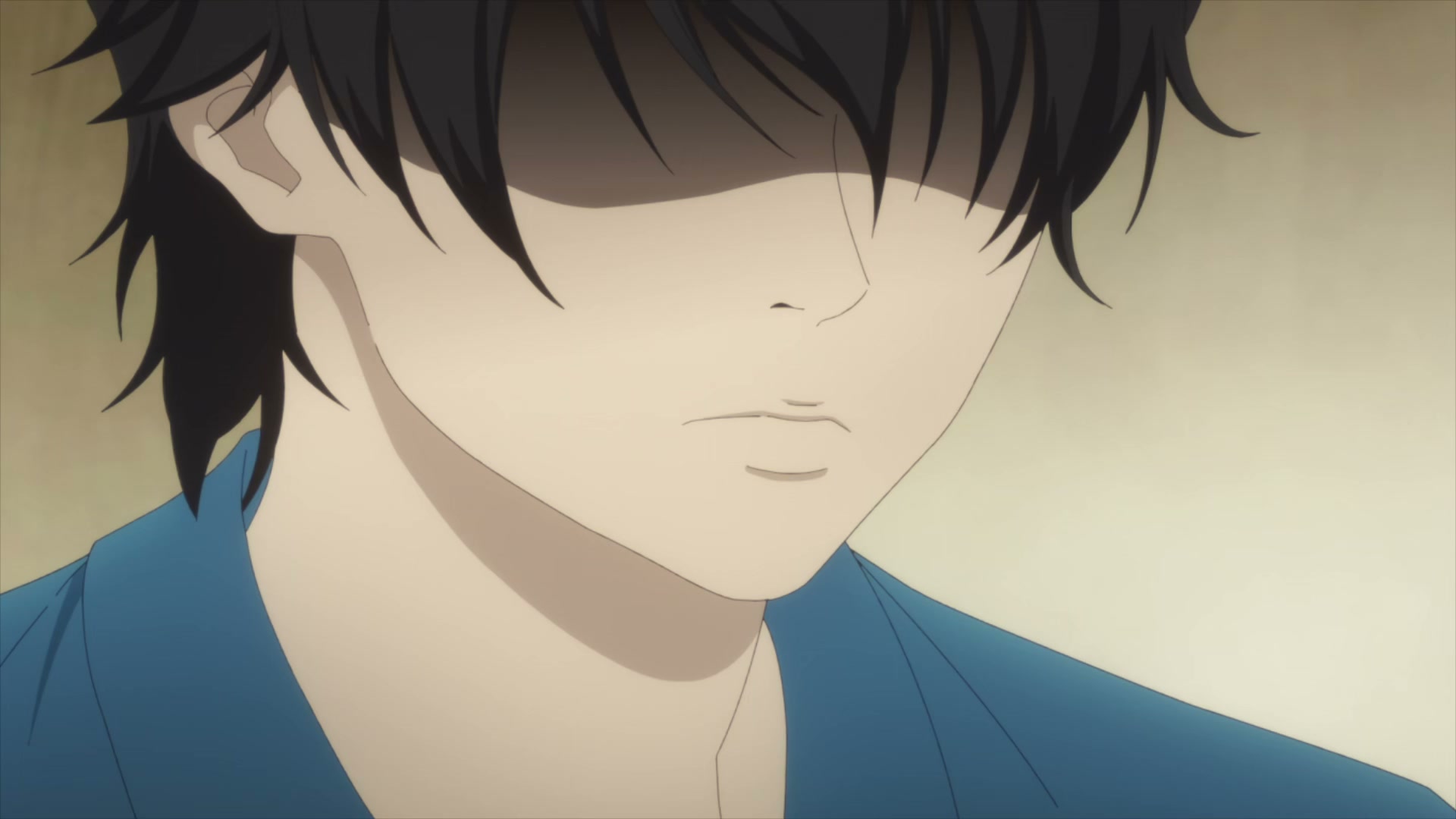
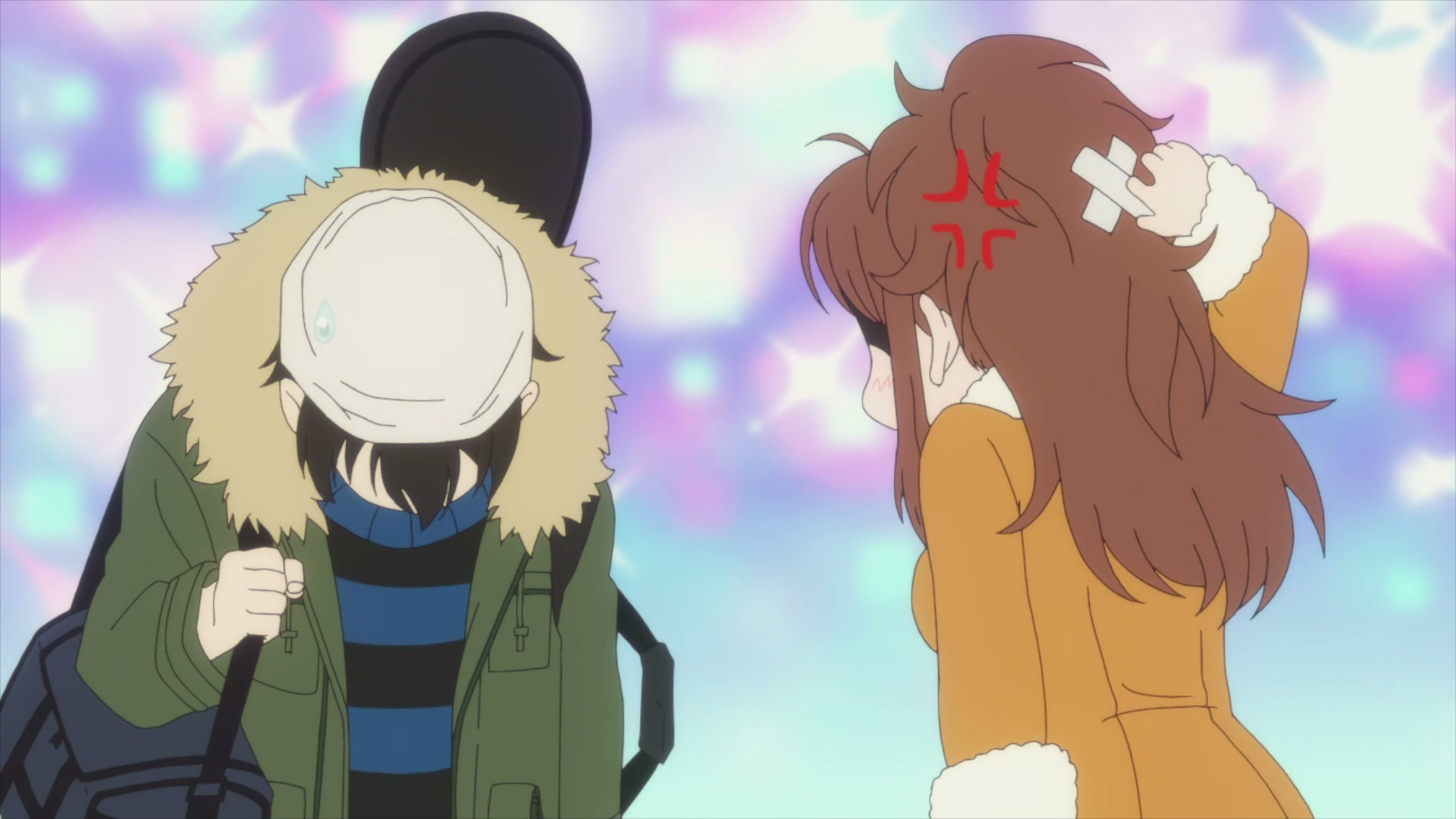
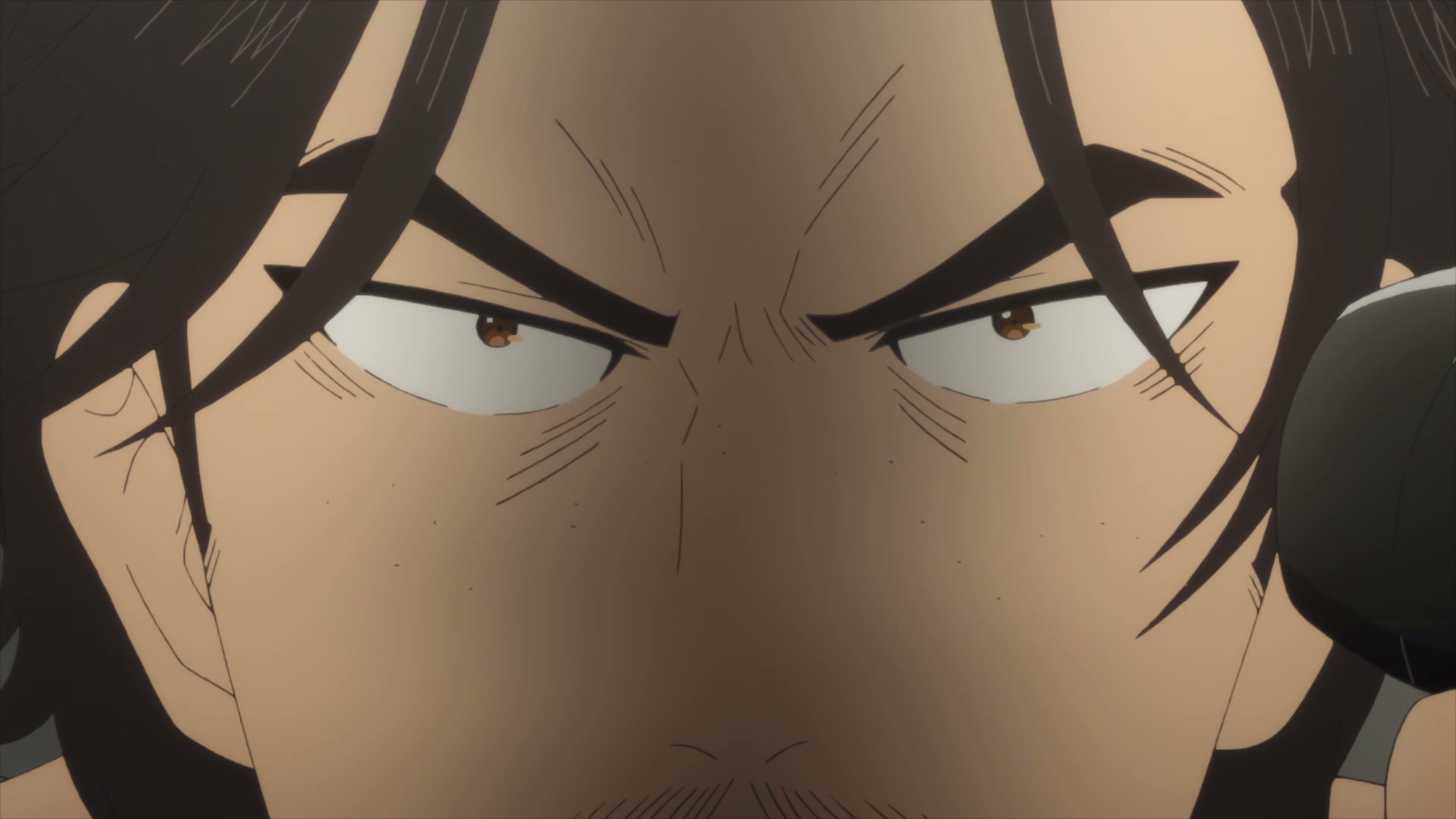
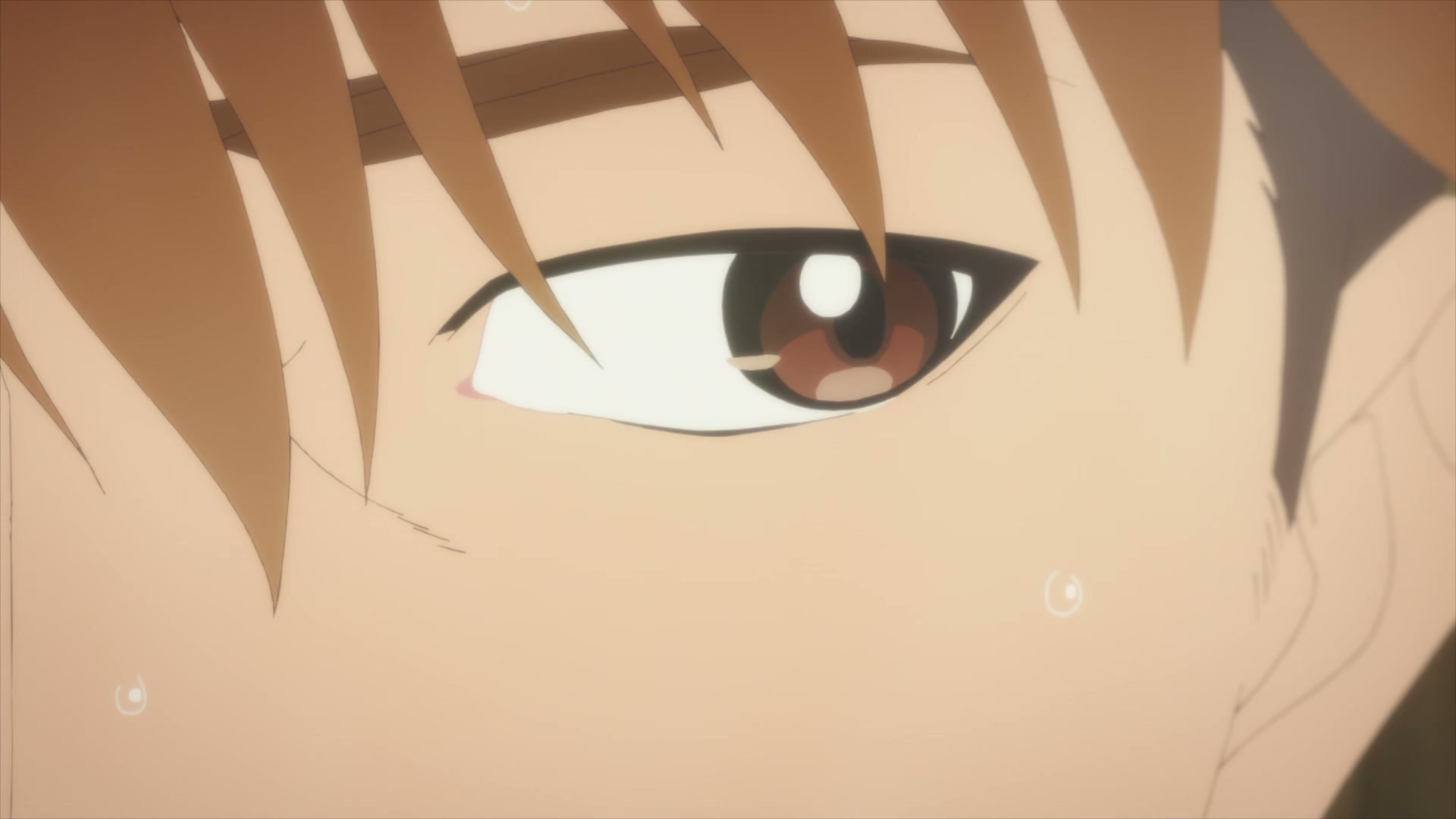
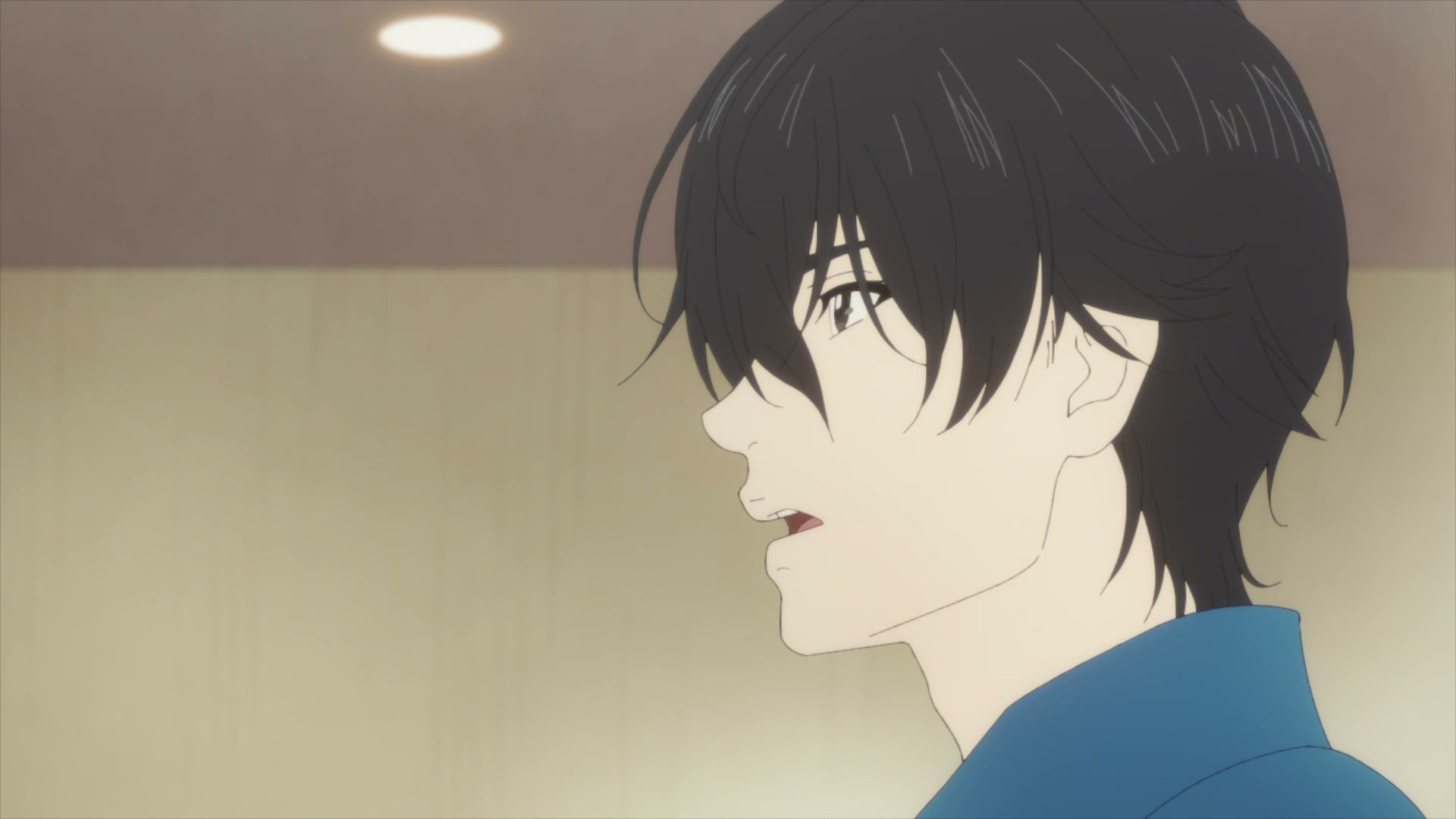
Sawamura Setsu is an unusual protagonist. He is not hot-blooded, not sarcastic, not a misunderstood softie beneath a gruff exterior. He is genuinely detached, genuinely indifferent to most social interaction, and genuinely absorbed in an internal world of sound that few people can access. His half-lidded eyes (described by teammate Kaito as “angry eyes”) and economy of expression make him hard to read, and the series wisely does not over-explain him. We learn what he feels through his playing, through the rare moments when his guard drops, and through the observations of people who know him well.
His arc is not about becoming a better person in some generic sense. It is about developing an external life to match his internal richness. He has always had sound inside him. What he has lacked is the desire to share it, the understanding that sharing it matters, and the competitive fire to push himself beyond his comfort zone. The series does not soften him. He remains blunt and socially awkward to the end. But it does expand him, letting us see the memories and feelings his blank exterior conceals, and it brings him to a point where he can finally ask for help.
His older brother Wakana is the series’ quiet anchor. Unlike Setsu, Wakana is sociable, responsible, and emotionally articulate. He is also a good shamisen player who has accepted that he will never be a great one. His third-place finish at a national tournament, where he was crushed by Tanuma Souichi’s performance, has shown him his ceiling, and he has made peace with it. His role is to observe, support, and occasionally explain Setsu to others. “He hasn’t realized it yet, but he’s got grit,” Wakana tells the club. “His words and actions come across as self-centered, so he’s easily misunderstood, but once he decides on something, he goes at it earnestly.” The wordless duet the brothers play together at a Tokyo shrine (a piece they made up as children) is the series’ most direct expression of their bond, a conversation in sound that needs no dialogue.
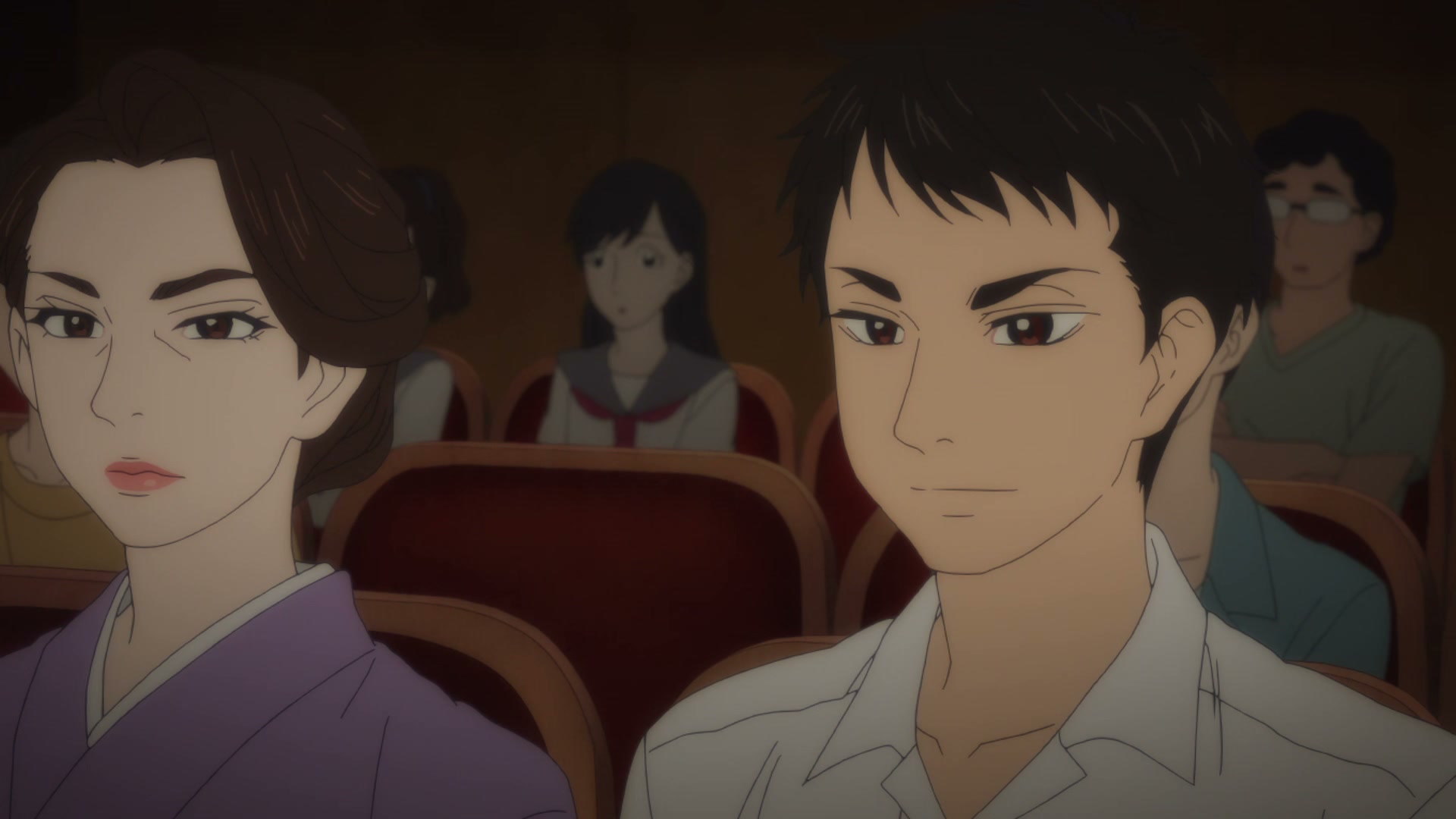
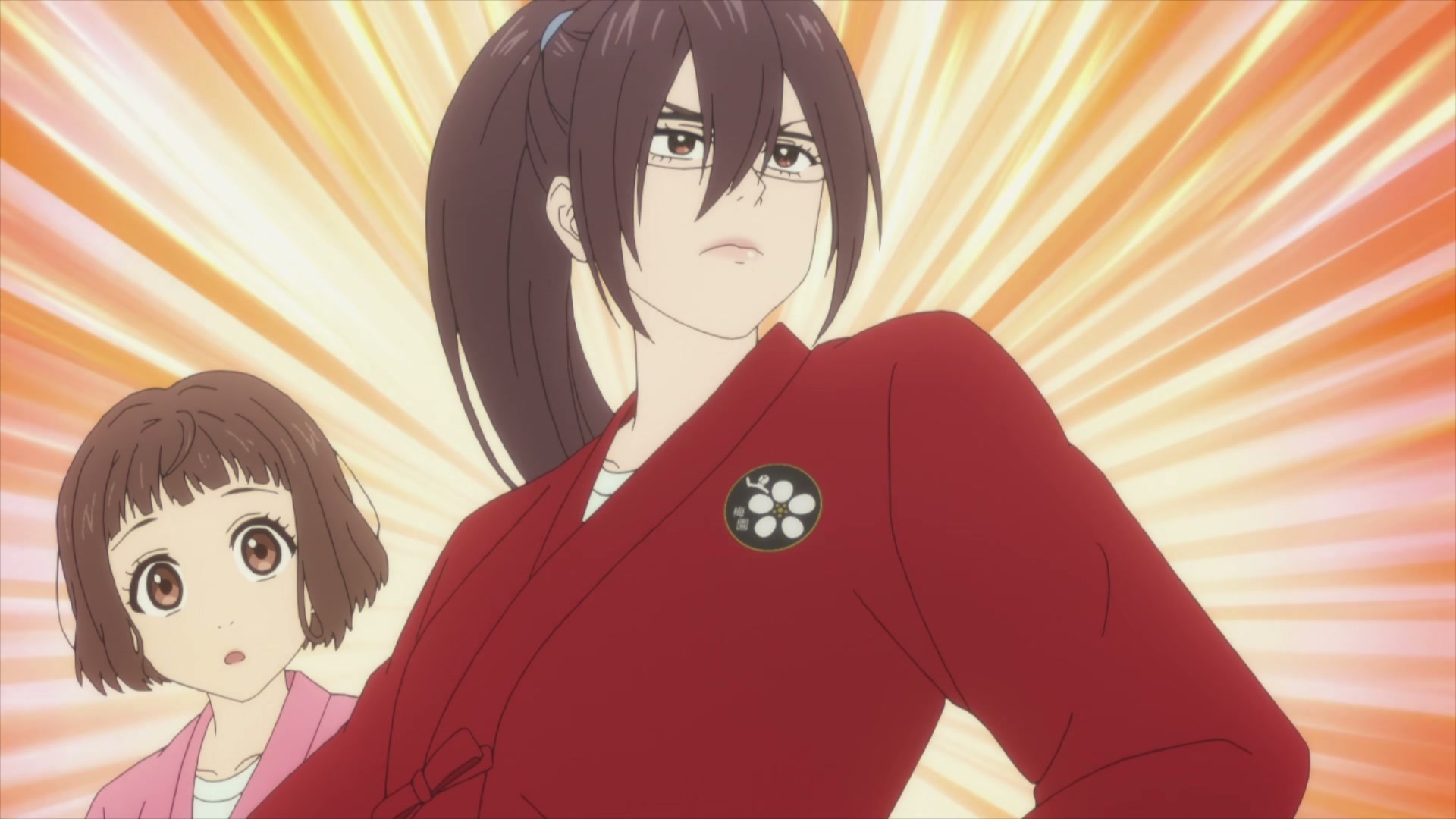
Sawamura Umeko is the character most likely to divide viewers. She is manipulative, self-serving, and casually cruel. She abandoned her children to be raised by Matsugorou while she built a cosmetics empire. She organized the Matsugorou Cup tournament solely to force Setsu into the spotlight as the successor to his grandfather’s genius. When Setsu places third in the individual competition, she drops his trophy and calls him “pathetic” to his face. Yet the series refuses to make her a simple villain. Her love for her father is real. Her desire to see his genius recognized after he spent his life in obscurity is understandable. She is, in her own twisted way, fighting for something she genuinely values. Wakana calls her a “demon,” and she is, but she is a demon born of grief and pride, not malice.
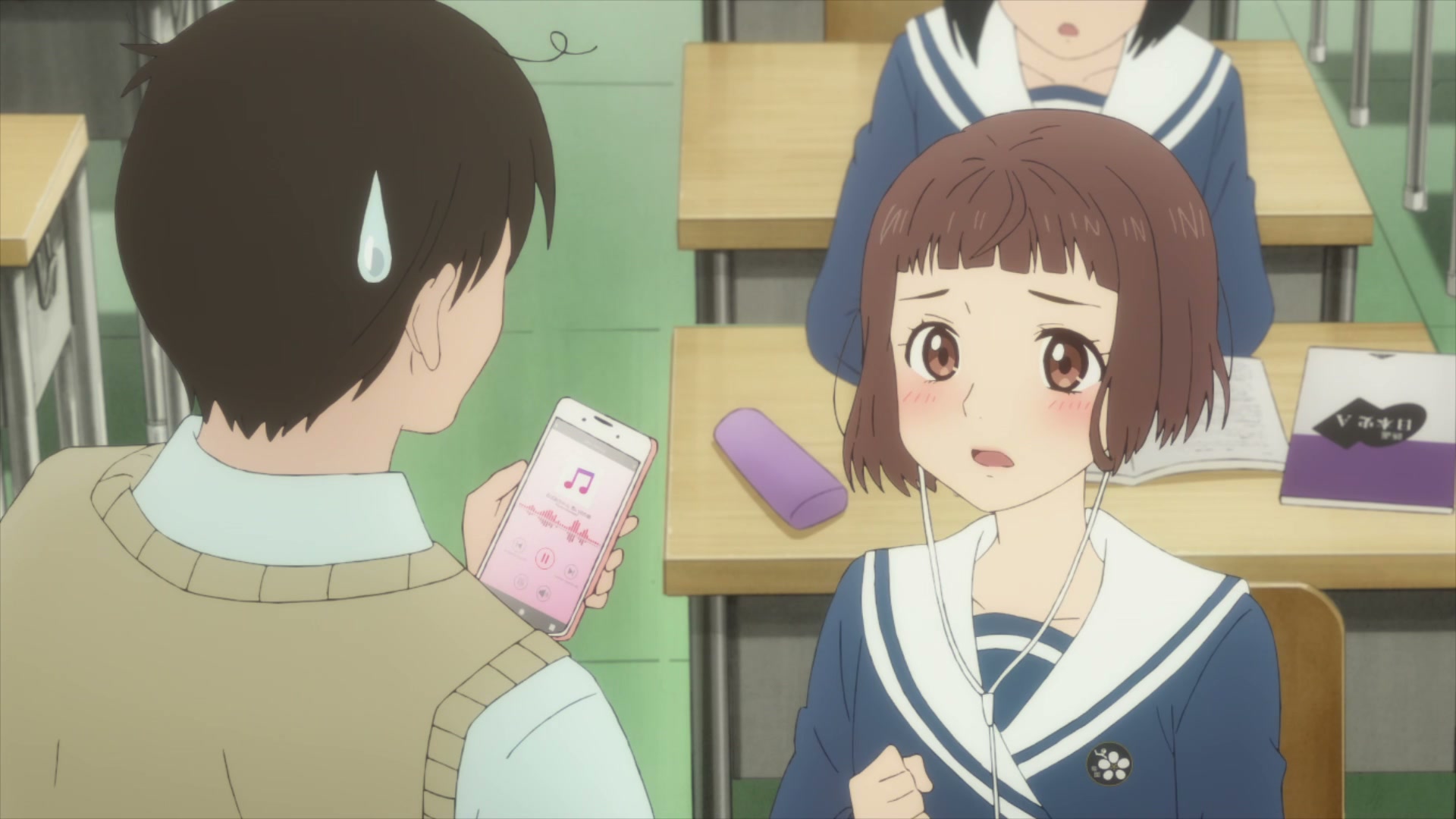
The Shamisen Appreciation Club provides Setsu with a community he never wanted but desperately needed. Maeda Shuri is the earnest heart of the group, a shy girl whose grandmother’s silent memories of wartime gave her a reason to seek out the shamisen. Her vulnerability draws out Setsu’s gentleness. When she breaks through her performance slump by instinctively shouting “Wa!” at the right moment, it is because she has stopped chasing the sound and started riding it, an insight Setsu himself has not yet achieved consciously.
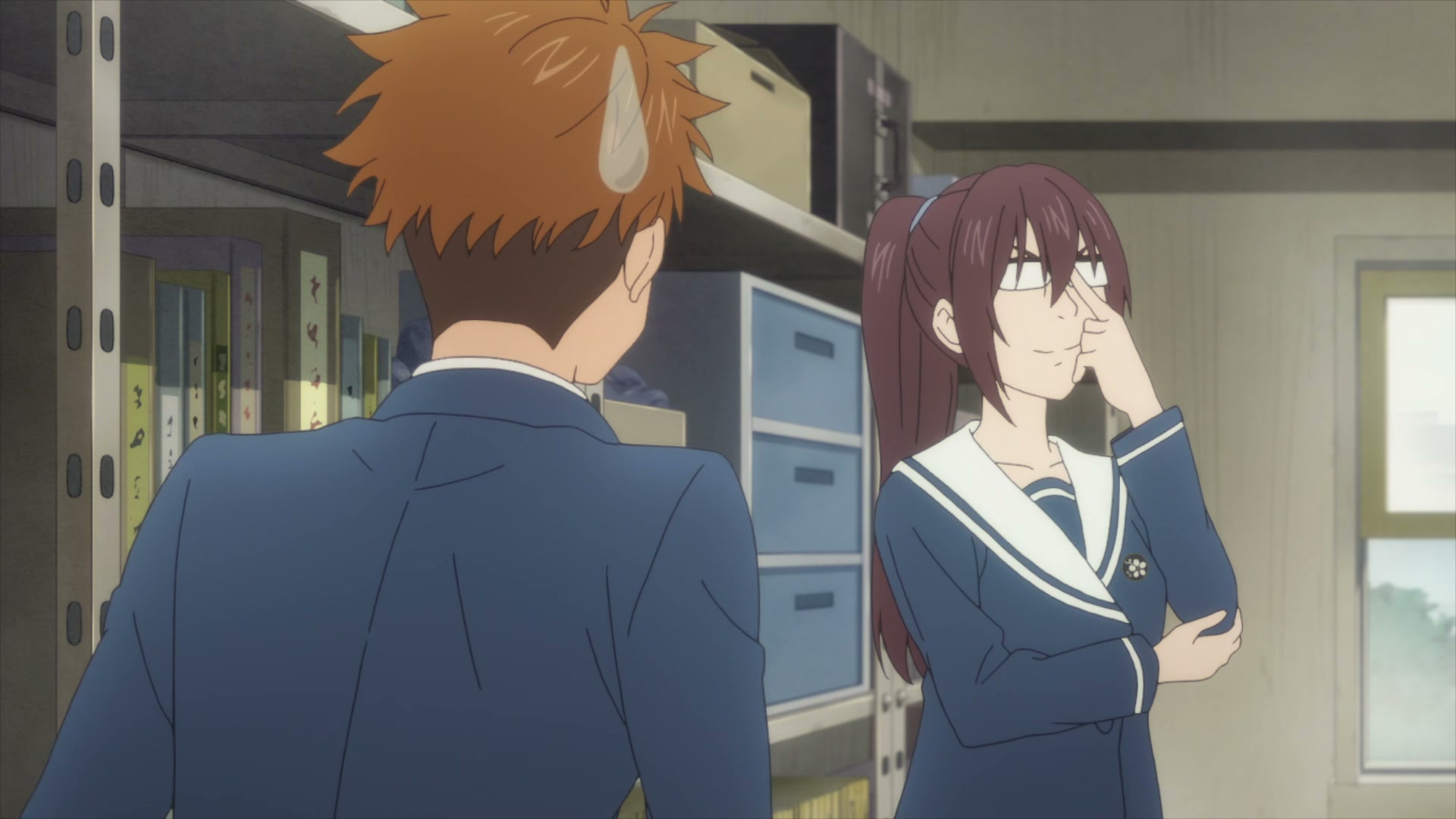
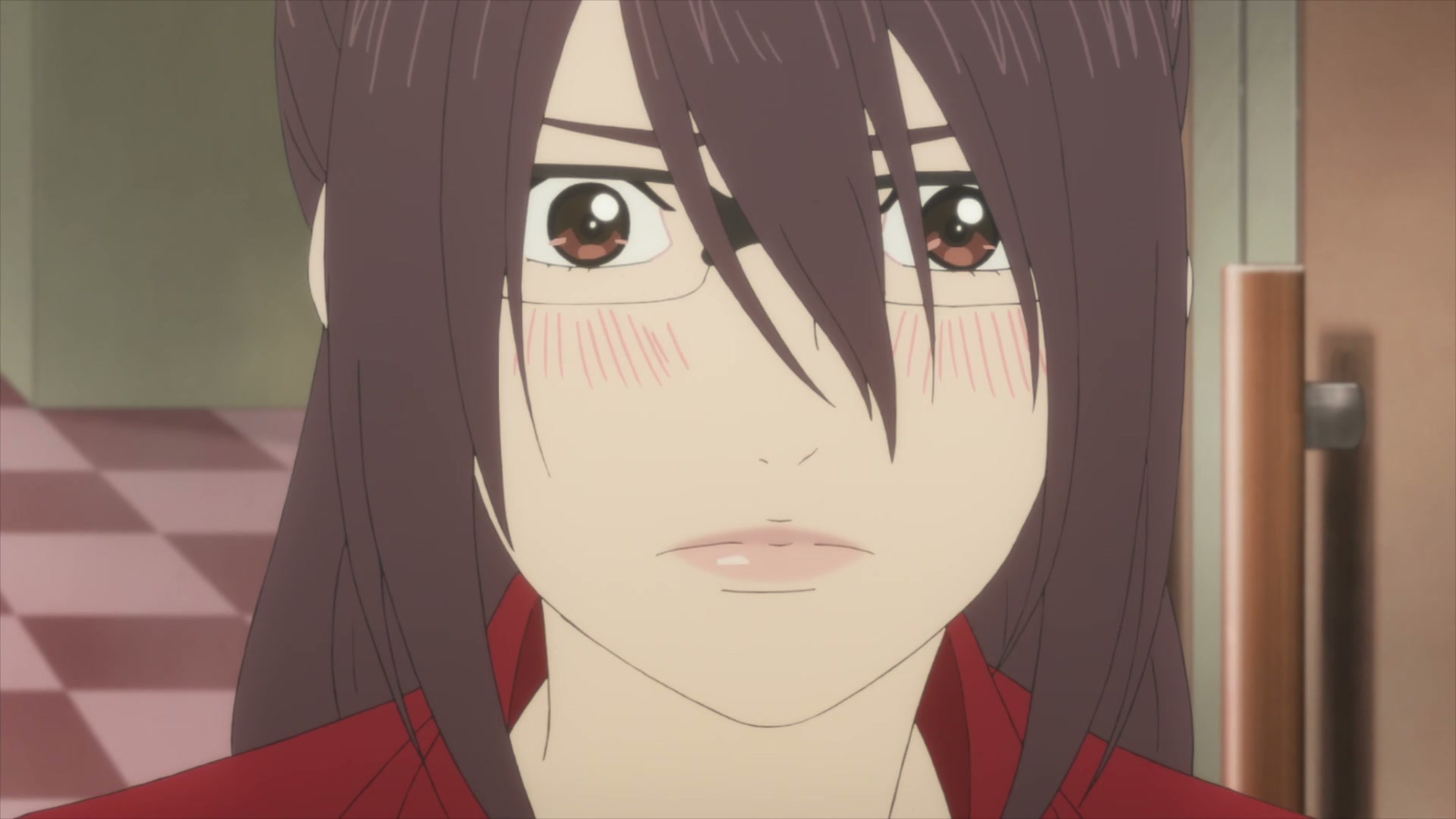
Yamazato Yui is the club’s sharp edge, a self-described “mean-spirited, ugly woman” whose sarcasm masks intense performance anxiety and a deep fear of failure. Her breakdown before the group competition, where she admits she is terrified of making a mistake and being blamed by the team she pushed so hard, is one of the series’ best character moments. It is also the moment where the club stops being a collection of individuals and becomes something like a unit.
Kaito is the confrontational one, a former soccer player whose athletic dreams were ended by injury and a dismissive father. His fury at Setsu’s waste of talent is really fury at his own lost potential, and their physical fight before the group competition is the catalyst for Setsu’s explosive admission: “I want to win!” This is the first time Setsu articulates a competitive desire, and it changes the emotional calculus of the club.
Nagamori Rai rounds out the group as the only member with genuine shamisen experience, a third-year whose hosozao background lets him function as a bridge between Setsu’s genius and the beginners’ struggles. His pre-competition collaboration with Setsu to add nagauta-style cherry blossom imagery to their piece is the closest Setsu comes to treating a clubmate as an artistic equal.
The rivals are drawn with care. Tanuma Souichi is a genuine eccentric who assigns snack foods as evaluations of other people’s music (“Tamago boro egg biscuits” for Osaka, “Yocchan squid jerky” for Fukuoka) and instantly declares Setsu his friend after a two-minute conversation. Beneath the oddness is a musician of terrifying ability whose near-perfect 598 score in the individual competition sets a concrete standard for Setsu to aim at. Souichi is what Setsu could become with discipline and hunger.
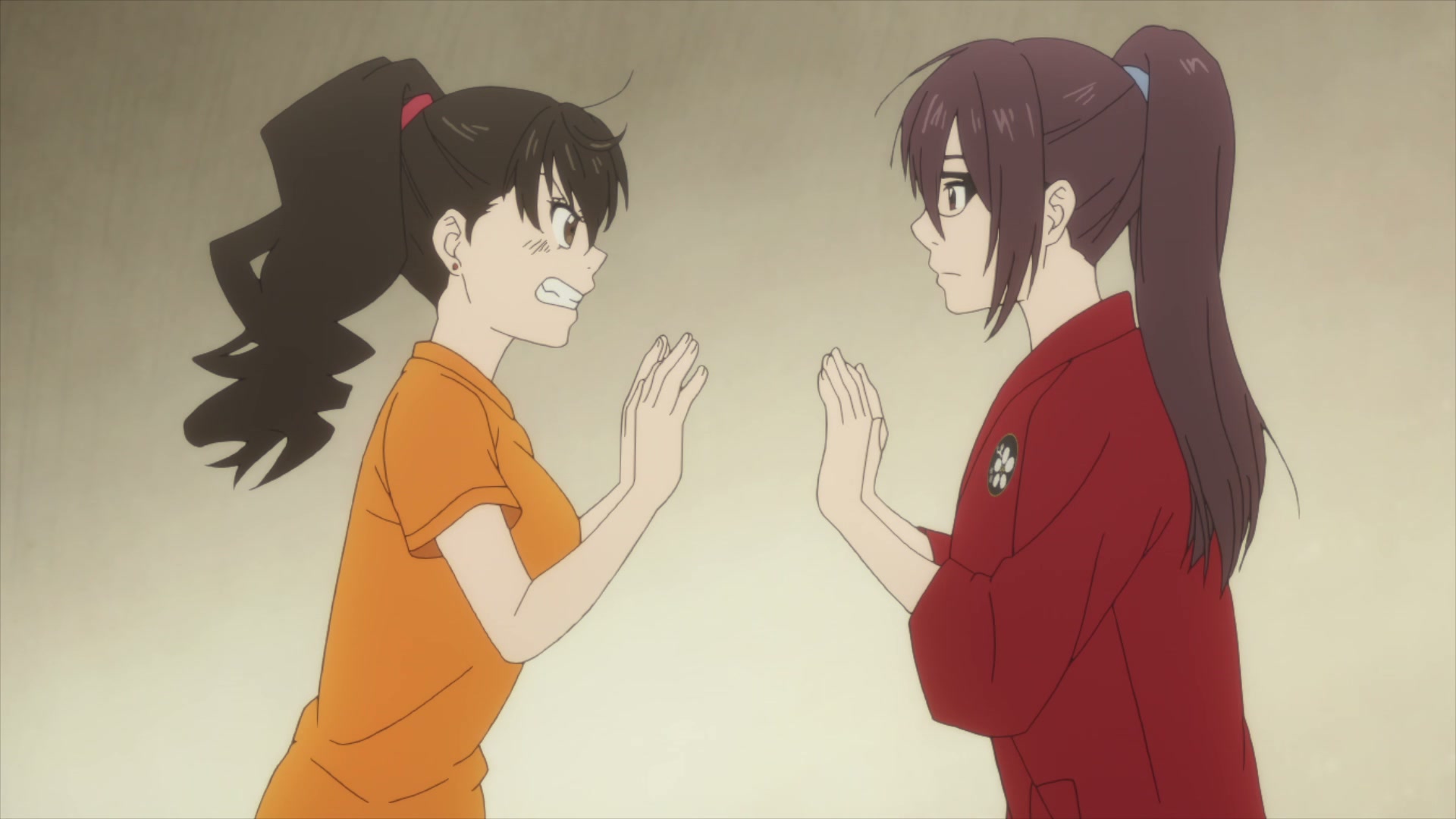
His younger sister Mai is more tragic. Her obsession with beating Setsu is really about winning her father Ryuugen’s approval, and her devastation at placing second in the group competition (behind a team she did not even watch perform) is a bitter lesson in the limits of raw talent. She wants Setsu to suffer the way she suffers, to care about winning the way she cares, and his indifference wounds her more than any defeat could.
Kamiki Seiryuu, the professional player and school alumnus, functions as a provocateur rather than a mentor. He does not offer guidance or encouragement. He offers challenges and critiques, humiliating Setsu with a basic accompaniment pattern, then later delivering the devastating analysis that Setsu lacks “hunger.” His interest in Setsu borders on obsession, and his admission that he “couldn’t hold back” his curiosity about the boy suggests he sees something of his younger, less disciplined self in Setsu’s mercurial sound.
Visuals and Animation
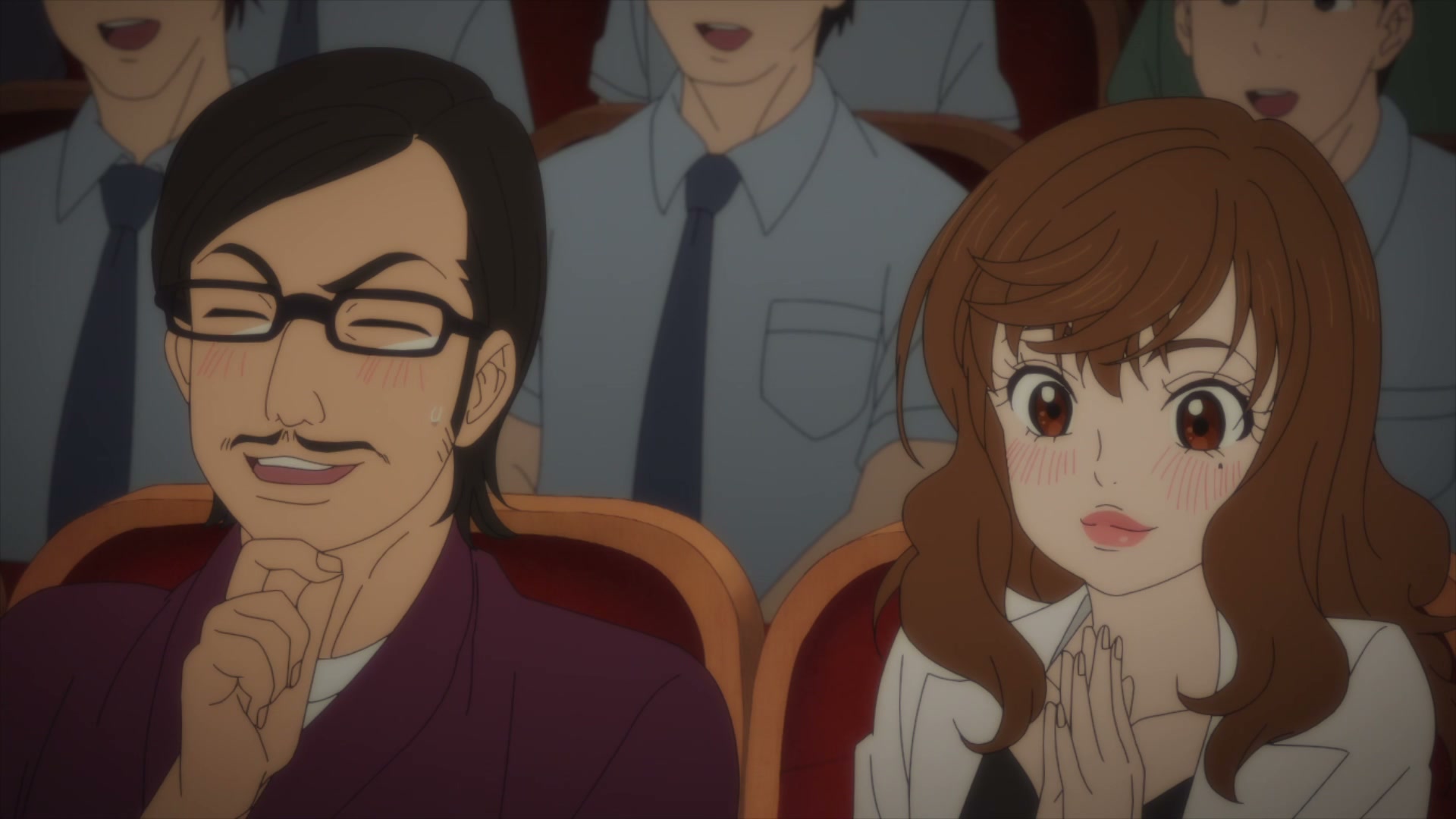
The visual identity of Mashiro no Oto rests on a productive tension between grounded slice-of-life realism and stylized, almost painterly abstraction during performance sequences. Character designs by Jiro Suzuki are clean and distinctive, with a range of facial structures that make the cast easy to read at a glance. Setsu’s sharp, perpetually narrowed eyes. Shuri’s soft, anxious features. Yui’s expressive glares. Rai’s androgynous elegance. Kaji’s round, puppy-like face. Kaito’s blocky, athletic build. The variety keeps group scenes visually interesting and helps sell the personality differences that drive so much of the drama.
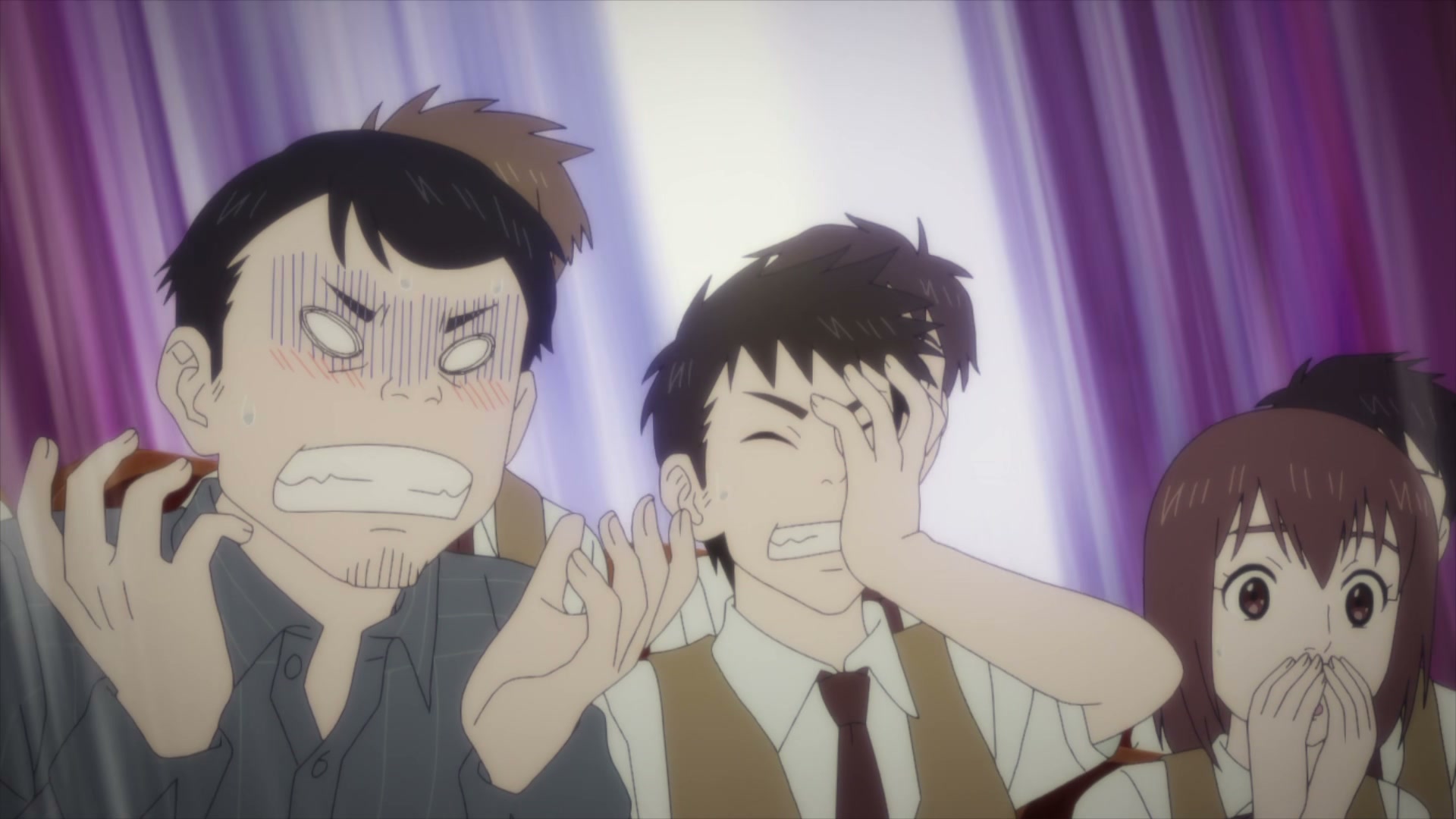
The acting is largely internal and subdued. The animators invest significant care in micro-expressions: the slight tightening around Setsu’s eyes when something moves him, the way Shuri’s gaze drops when she is unsure, the subtle shifts in Yui’s mouth that signal her sarcasm is about to crack. These are not characters who emote theatrically. They think, they hesitate, they struggle to articulate. The faces carry that burden with a consistency that rewards attentive viewing.
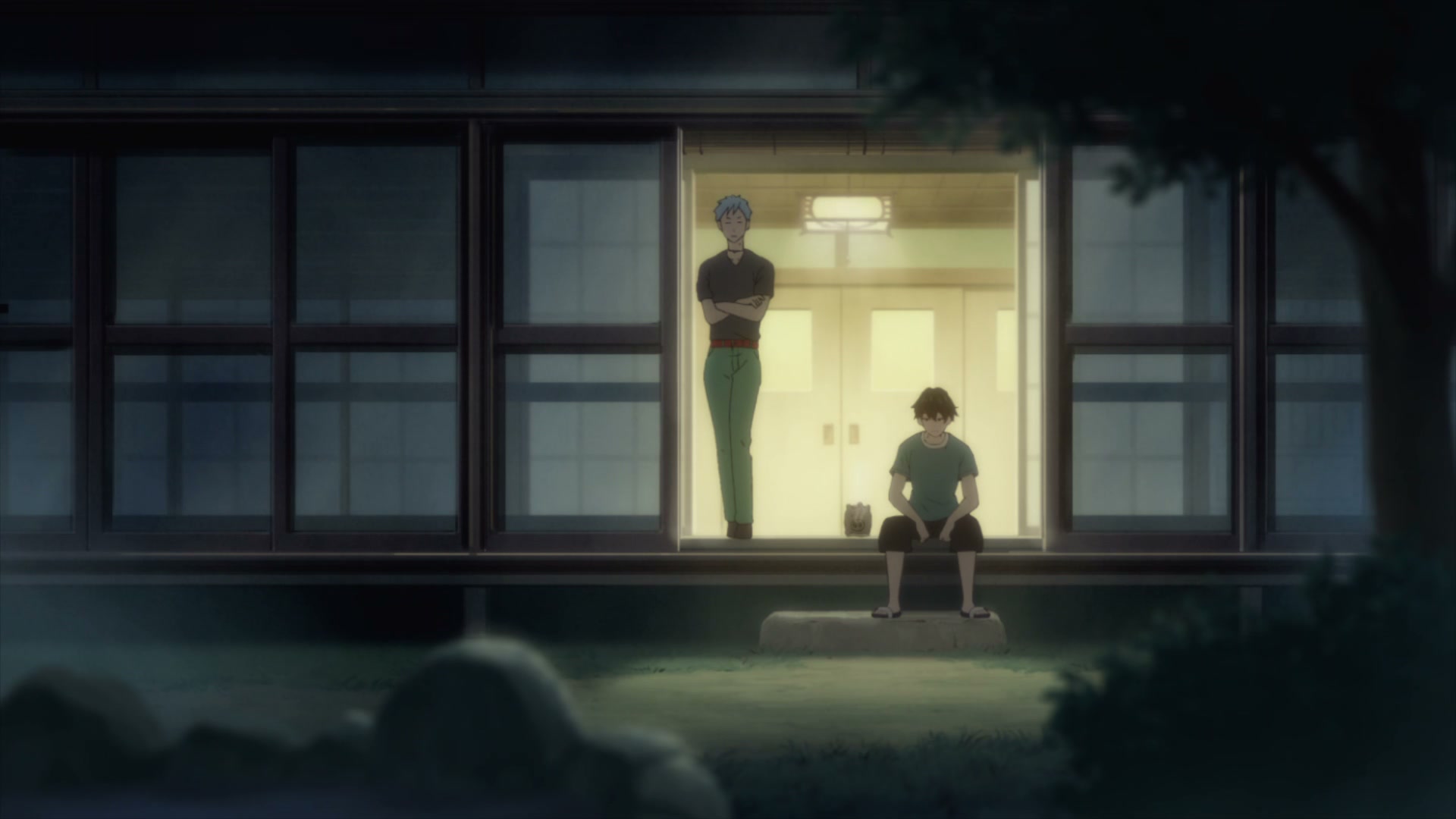
Lighting is the series’ standout visual element. Daytime scenes are suffused with a soft-focus bloom that gives ordinary moments a slight dreaminess, a quality that suits a story about memory and sound. Performance spaces use deeper, cooler tones (teals, blues, purples) with performers spotlit in warmer pools of light, creating a sense of isolated focus. The symbolic use of pure black backgrounds with rim lighting during internal monologue moments externalizes the interiority of musical thought. Specific times of day are captured with obvious care: amber-soaked golden hour at the shrine, the cold gray of a Tokyo winter, the dappled sunlight filtering through trees at the training camp.
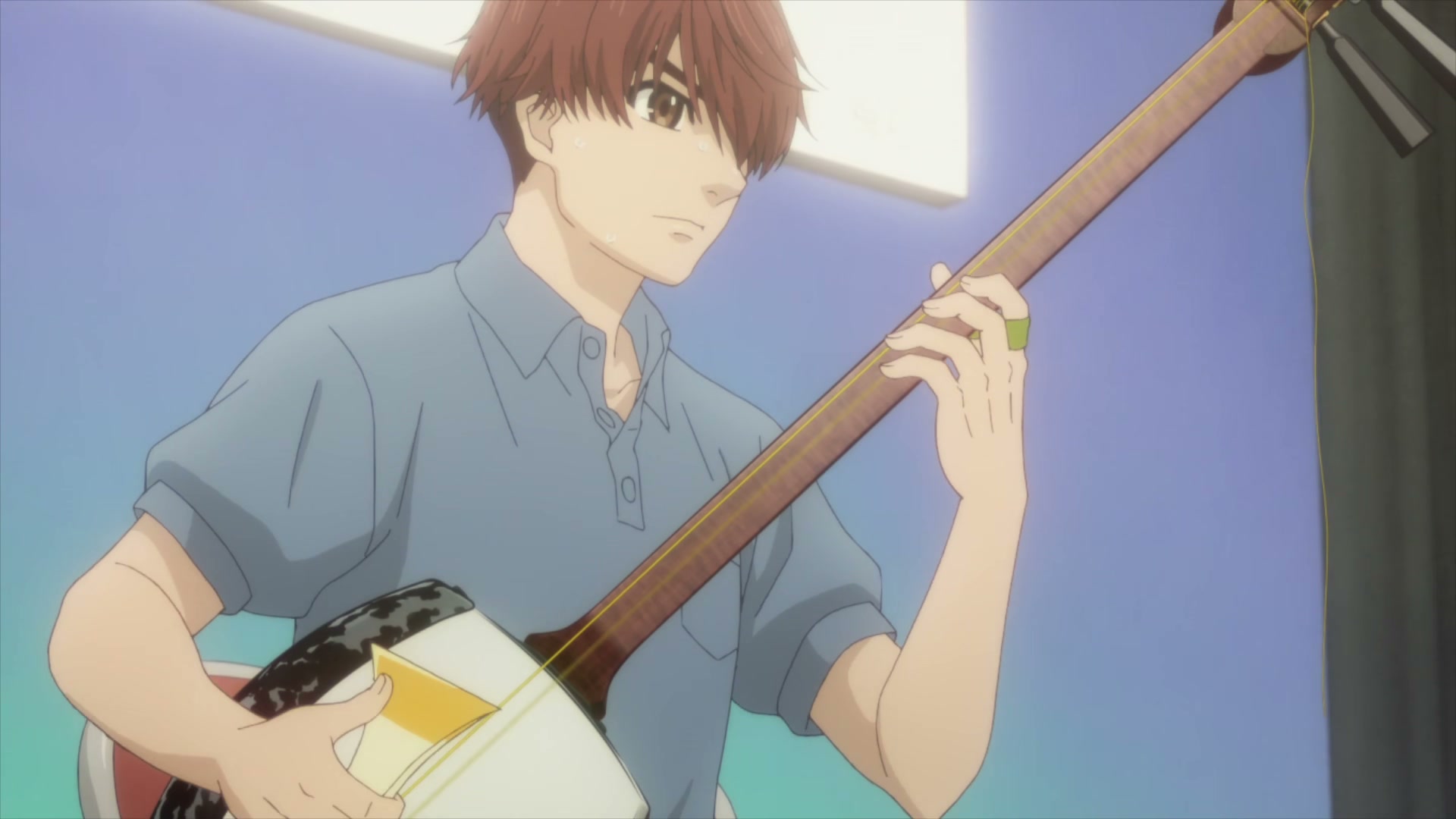
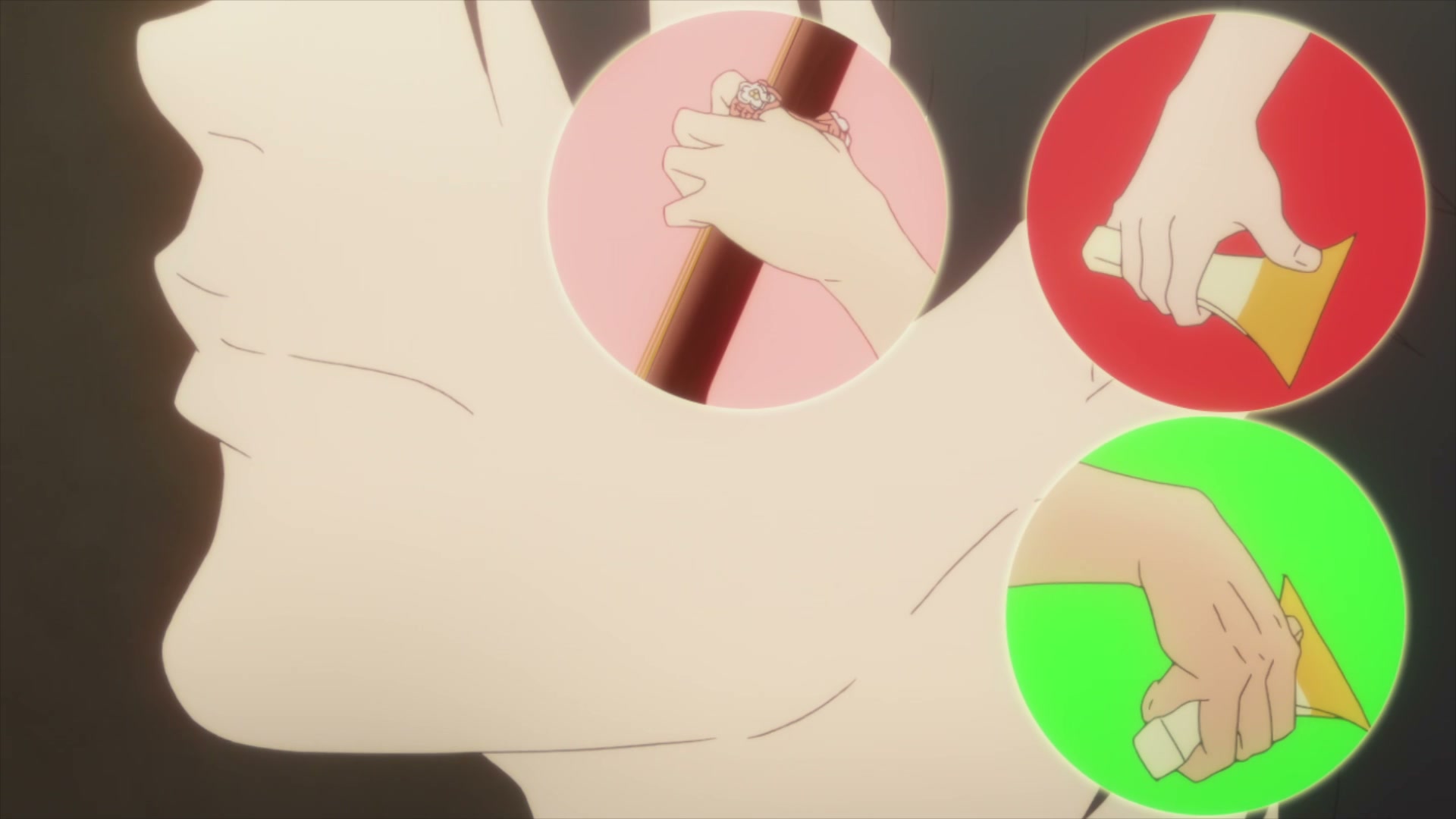
The shamisen itself is rendered with meticulous attention. Close-ups show wood grain, string tension, the precise angle of the bachi against the skin. Detail insets during performance sequences focus on finger placement and the physicality of striking the strings. This tactile accuracy grounds the musical sequences in a reality that makes the more abstract visualizations feel earned rather than compensatory.
Those abstract visualizations are where the series takes its biggest swings. When Setsu’s playing intensifies, the imagery shifts to metaphor: falling cherry blossoms during Rai’s nagauta technique, rushing wind during Kaji’s fierce mountain-gale performance, snow dissolving into light as Setsu moves from Matsugorou’s sound to his own. These sequences are not used indiscriminately but reserved for moments of genuine emotional crescendo, and they work because the technical foundation has been so carefully laid.
Animation quality is the area where the series most clearly shows its budget constraints. Some of this is intentional (the quiet, static compositions during dialogue scenes suit the contemplative tone) and some is clearly compromise. Less important competition performances use still frames, speed lines, and audio-only segments to convey what ideally would be more fully animated. Walking cycles can feel stiff. Lip sync quality varies noticeably between episodes.
The central challenge of animating a music series is that the most important moments (the performances) are also the most expensive to produce at full fluidity. A completely hand-drawn shamisen performance at 24 frames per second would be an extraordinary undertaking, and Mashiro no Oto cannot consistently meet that bar. What it does instead is prioritize. The most critical sequences (the Seiryuu duet, the second half of Setsu’s individual performance) receive fuller animation. Less critical ones are conveyed through reaction shots of the audience, strategic use of still frames and audio, and the abstract visualizations mentioned above. It is a sensible allocation of limited resources, and the direction is strong enough that the seams rarely show in a distracting way.
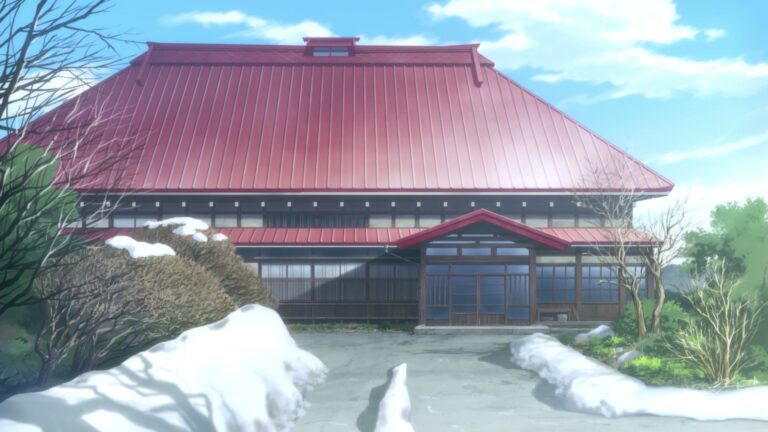
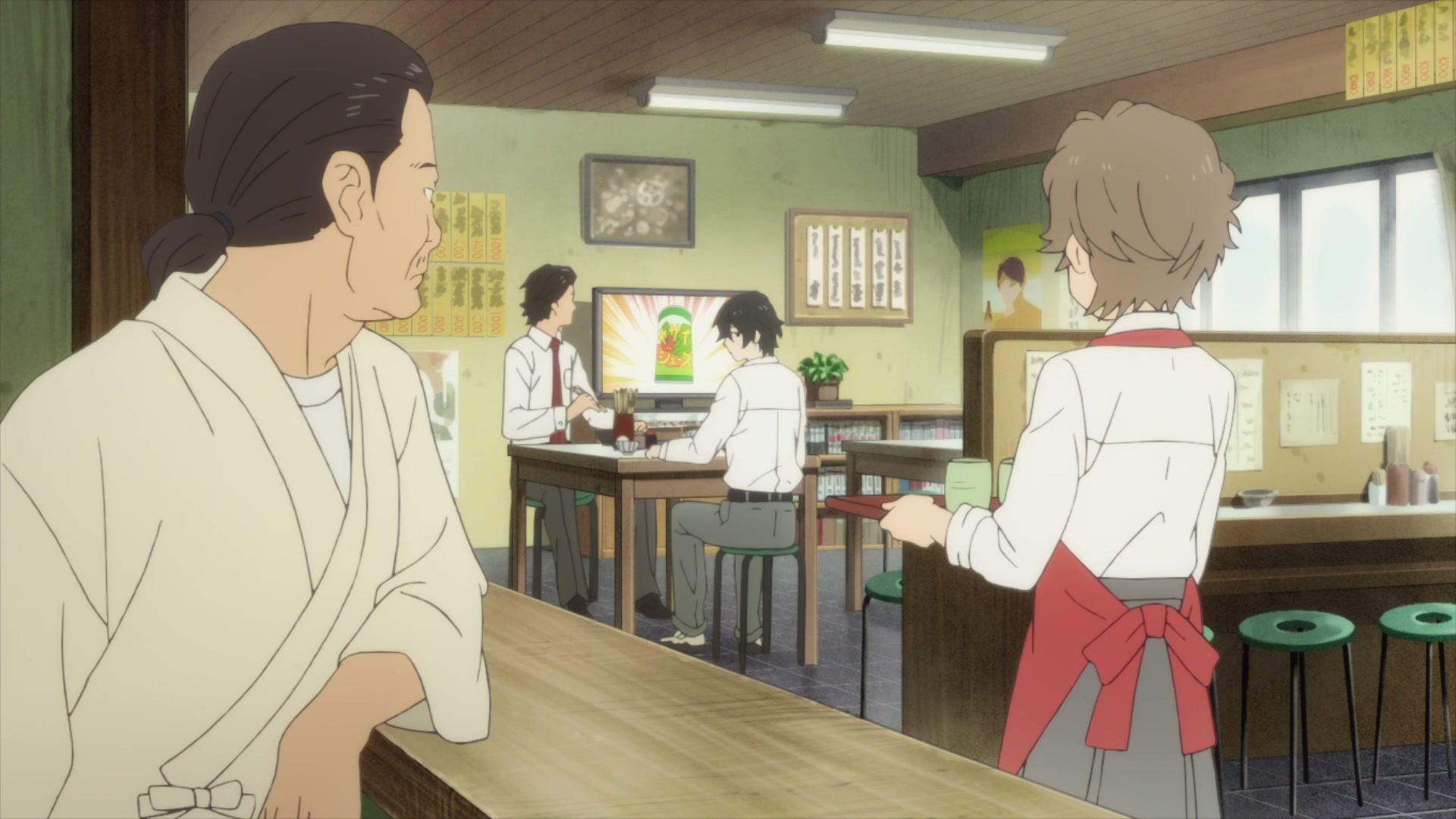
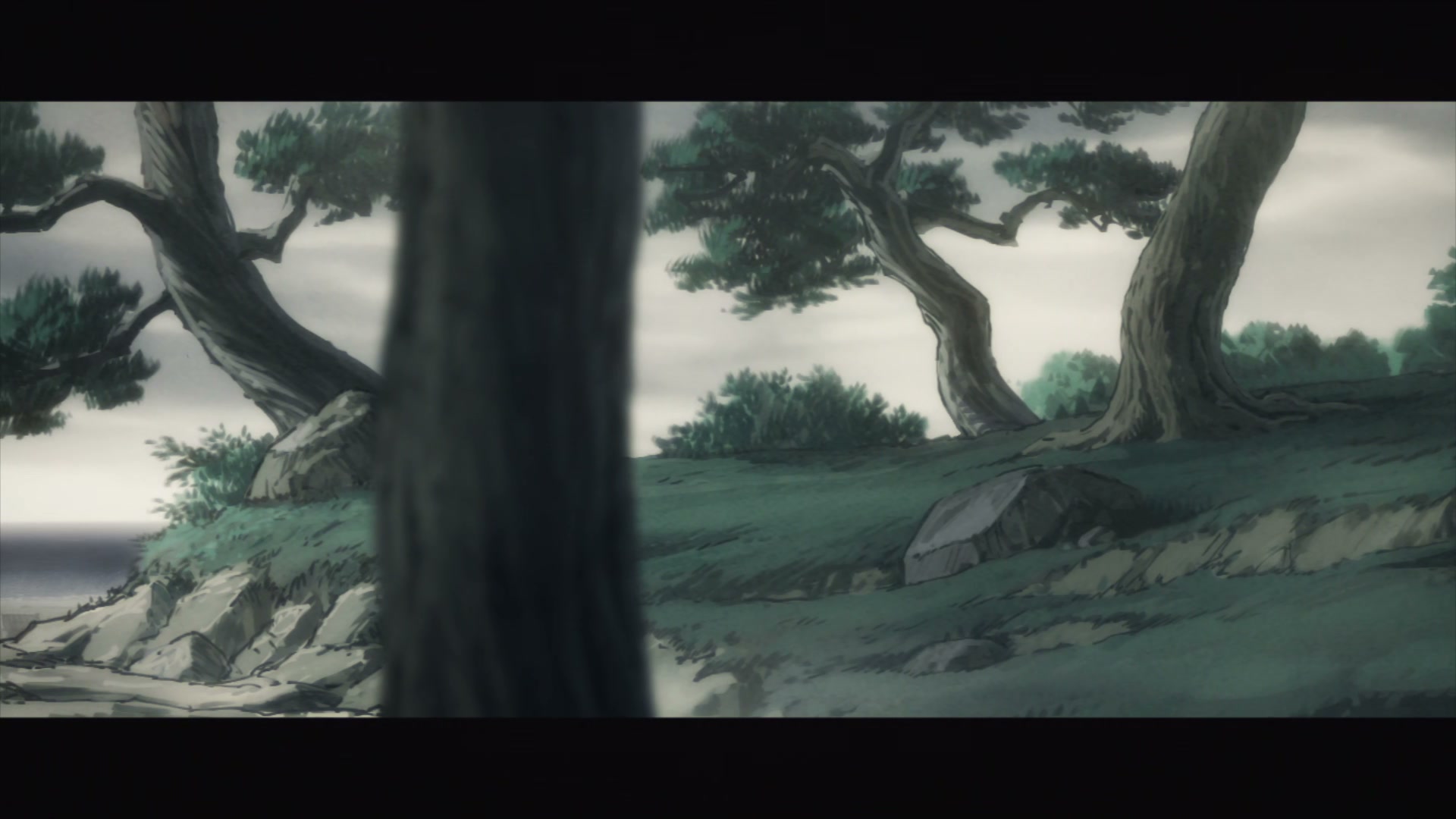
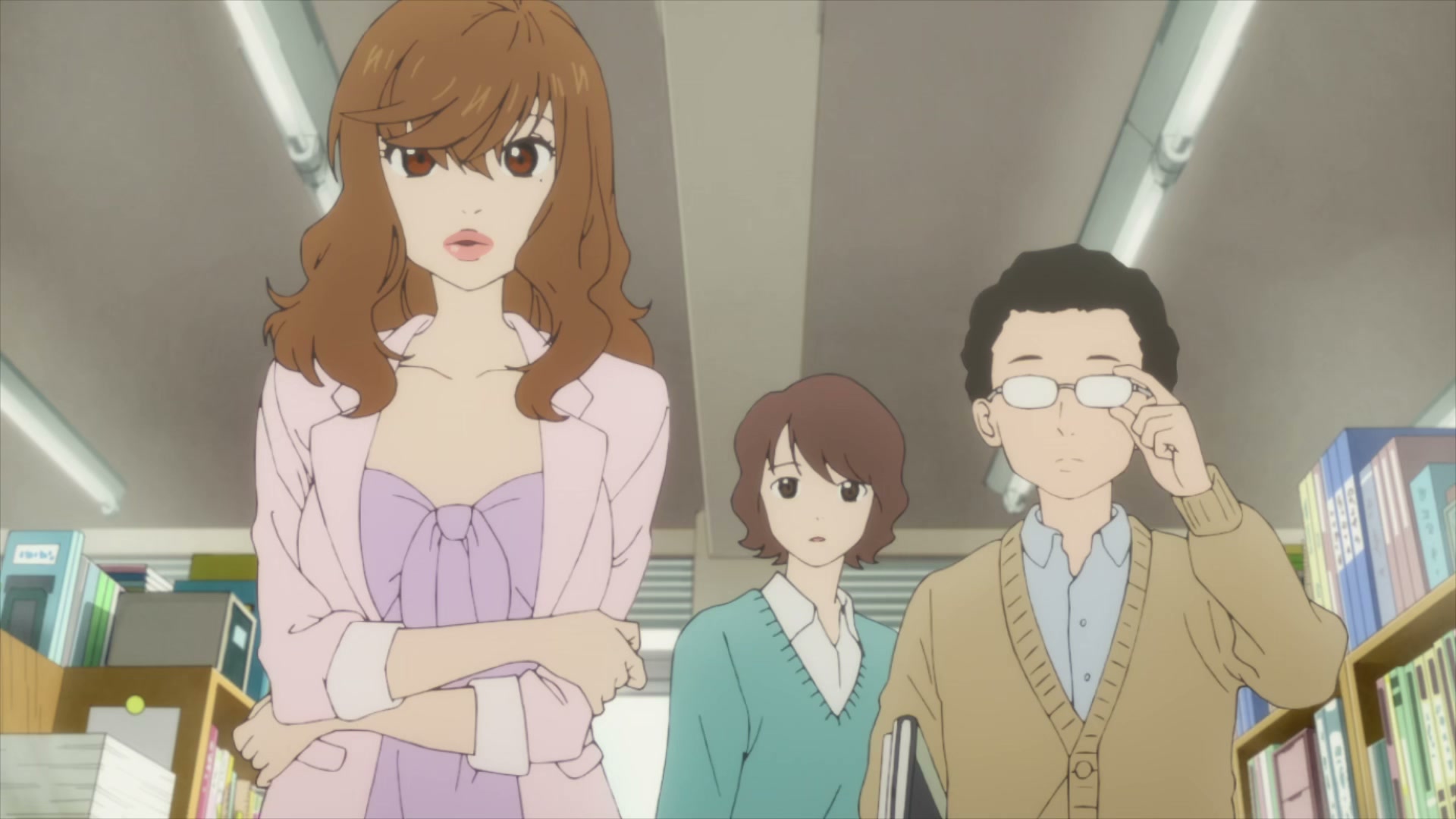
Background art oscillates between functional and genuinely lovely. The Tsugaru landscapes during the training camp stand out: seaside cliffs, the strait, the Nebuta festival with its massive illuminated floats. The boarding house and surrounding shopping district feel lived-in and textured. Some Tokyo establishing shots feel generically anonymous, and the school interiors are unremarkable, but the locations that matter emotionally receive the attention they deserve. The nursing home where Toshiko lives is rendered with an institutional sterility that makes the warmth of her memories, when they finally gain sound and color through Setsu’s playing, feel like a genuine release.
Sound and Music
The shamisen performances in this series were recorded by actual Tsugaru shamisen players, and the authenticity shows. The variations in tone, attack, and resonance between different performers are distinct enough that you can hear the difference between Setsu’s lighter, more emotionally volatile touch and Souichi’s powerful, controlled strikes and Seiryuu’s crystalline precision. The sound mixing during performance sequences balances the instrument against ambient room sound effectively. You feel the physicality of the bachi hitting the skin. When a string snaps during Kaji’s performance, the sudden change in his sound (and his rapid, instinctive adjustment to compensate on two strings) is both audible and emotionally affecting.
Outside of the performances, the orchestral score is used sparingly but well. Many of the quieter character scenes play without music, letting dialogue and ambient sound carry the emotion. When the score does enter (typically at moments of revelation or emotional breakthrough), it feels purposeful rather than obligatory.
The opening theme, BURNOUT SYNDROMES’ “BLIZZARD,” is a solid modern rock track with enough energy to launch each episode without feeling tonally disconnected from the series’ generally contemplative mood. The ending theme, Miliyah Kato’s “Kono Yume ga Sameru made” (Until This Dream Ends), is a gentler, more melancholic piece that works well as a comedown from the episode’s emotional arc.
Voice acting across the cast is strong. Shimba Tsuchiya as Setsu carries the difficult task of making a deliberately opaque character feel present rather than absent. The Aomori accent, which the script notes as being hard for Tokyo characters to understand, is handled naturally and adds a layer of regional specificity that grounds the character. Reina Kondo gives Shuri a tremulous quality that conveys anxiety without becoming irritating. Yume Miyamoto’s Yui shifts cleanly between sharp-tongued dismissiveness and genuine vulnerability. Tatsuhisa Suzuki’s Seiryuu manages to sound both warm and clinically analytical, a difficult balance that suits the character’s role as provocateur and critic.
Sound direction during competition sequences deserves specific mention. The way the speakers in the venue are positioned (angled behind the performers, creating a slight delay that can throw off timing) is discussed by the characters as a practical concern, and the audio design reflects this spatial awareness. The difference between hearing a shamisen live in a hall and hearing it through speakers is a plot point, and the mixing honors that distinction.
Overall Verdict
Mashiro no Oto is a series for a specific audience, and within that audience, it does its work well. If you have ever struggled to find your own voice in the shadow of a mentor, a tradition, or a loved one whose talent seemed to define your world, there is something here for you. If you are interested in traditional Japanese arts treated with genuine cultural knowledge rather than exotic window dressing, the series rewards your attention. If you enjoy character drama that trusts its audience to read subtle facial expressions and silences rather than spelling everything out, the writing meets you at that level.
What the series is not: a high-energy competition spectacle, a complete narrative arc, or a crowd-pleaser in the conventional sense. The ending is a clear midpoint. Setsu’s journey has just begun when the credits roll on episode twelve, and if that incompleteness bothers you (a perfectly reasonable reaction), it is worth knowing going in. The pacing of the early episodes may feel rushed to those who prefer slower, more immersive character introductions.
The strengths are genuine. The thematic coherence (the search for authentic artistic voice, expressed through the metaphor of sound) is maintained across every plot thread and character interaction. The cultural grounding is substantive without being pedantic. Oodawara’s lecture on the history of blind shamisen players is genuinely informative, and it resonates through the rest of the series as a reminder of what the instrument has meant to the people who played it to survive. The family dynamics (particularly between Setsu, Umeko, and the absent Matsugorou) are messier and more interesting than most anime family melodrama. The friendships within the club develop along lines of genuine complementarity rather than forced bonding.
Visually, the series punches above its apparent budget through smart direction, strong lighting design, and a clear understanding of where to invest its animation resources. The shamisen looks and sounds real because the production clearly cared about getting it right. The character acting rewards rewatching. Moments that seem simple on first viewing (a glance, a pause, a slight shift in posture) turn out to be carrying significant emotional information.
I would recommend Mashiro no Oto to fans of Showa Genroku Rakugo Shinju, Kids on the Slope, Nodame Cantabile, or Chihayafuru. It shares with those series a respect for its central art form, a willingness to let character drama unfold at a contemplative pace, and an understanding that the real stakes in a performance are internal, not external. It is not quite at the top tier of that company (the incomplete arc and occasional animation shortcuts hold it back), but it belongs in the conversation.
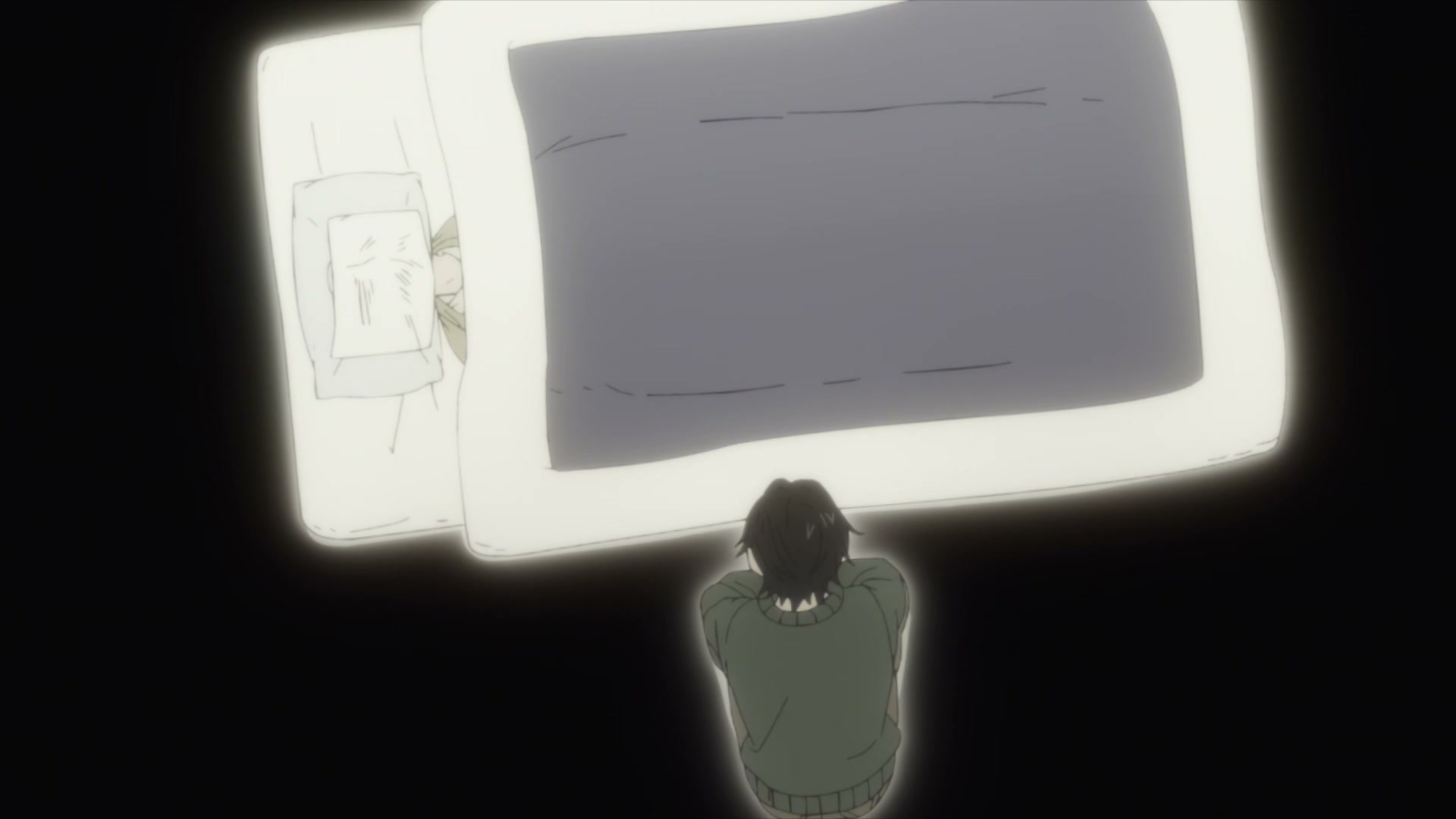
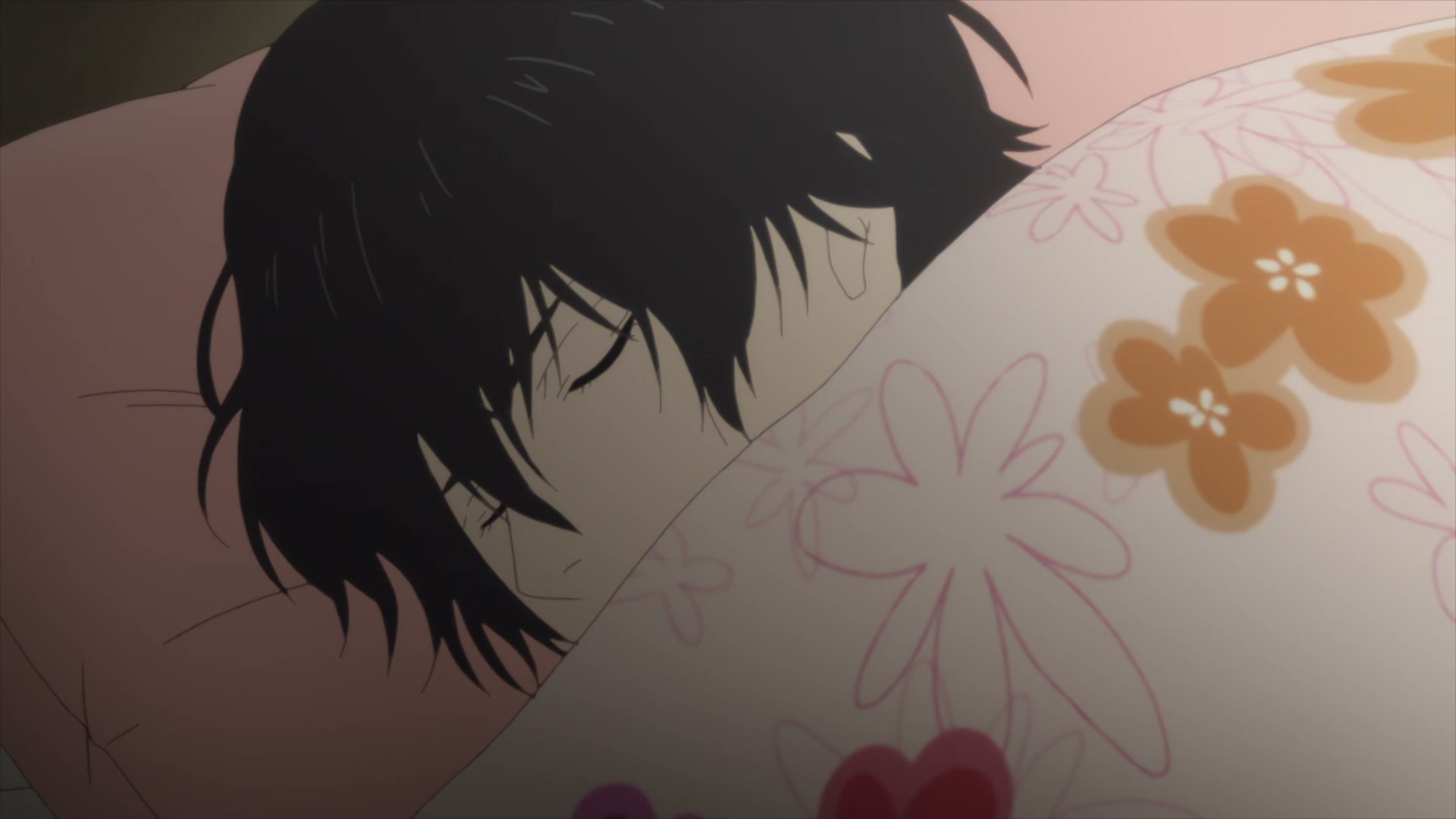
The final image of the series is Setsu, feverish and collapsed, having finally asked his brother the question he has needed to ask since his grandfather died. “I want to get better. How do I do it?” It is a vulnerable question from a character who has resisted vulnerability for twelve episodes, and it lands with real weight. He has stopped running. He has stopped imitating. He has started wanting. The sound is not yet fully his, but you can hear it taking shape.
Gallery