






Introduction
Some anime announce their intentions with dramatic opening salvos, with world-ending stakes or conceptual fireworks designed to hook the curious browser scanning seasonal charts. Konohana Kitan does none of this. It opens with a small fox-girl named Yuzu stepping into a bustling spirit-town, overwhelmed by the crowd, nearly trampled, and immediately scolded by her stern new senpai for not paying attention. The stakes could not be lower. A clumsy new hire at a hot spring inn tries not to mess up her first day. That is the premise, and for twelve episodes, that modest scope never really expands, even when the guests turn out to be primordial goddesses or grieving spirits or gods who have outlived their worshippers.
This restraint is the series’ greatest strength. Konohana Kitan understands that the daily work of caring for others, showing up, paying attention, and offering comfort without expectation of reward, is already as consequential as any epic. The inn sits between the mortal world and the realm of gods, a waystation where both the divine and the lost can find a warm bath, a good meal, and someone who actually sees them. The fox-girl attendants who serve these guests are themselves carrying wounds, and the series’ real story is how the act of genuine hospitality becomes the mechanism for their own quiet healing.
This is not a show that will grab you by the collar. It is a show that asks you to sit down, slow your breathing, and let yourself be gently immersed. For viewers willing to meet it on those terms, it offers one of the more emotionally coherent and thematically satisfying iyashikei experiences of its era.
Story and Themes
The Structure of Gentle Accumulation
Konohana Kitan is structured episodically, with most episodes focusing on a particular guest or a particular attendant’s inner conflict. The first episode establishes the rhythms, Yuzu’s arrival, her assignment to the prickly Satsuki, and a small crisis involving a fluffy pharmacist god that resolves through Yuzu’s instinctive kindness rather than protocol. From there, the series moves through the seasonal calendar: cherry blossoms in spring, summer festivals, autumn transitions, and finally New Year’s, when the boundary between worlds grows thin and the series’ deepest secret is revealed.
The pacing is deliberate, occasionally to the point where viewers accustomed to faster narrative propulsion might grow restless. Long held shots of gardens, corridors, and characters simply sitting together are the norm rather than the exception. This is not padding. It is the genre’s native language. Iyashikei works by creating a space where the viewer’s heart rate can actually drop, where the absence of urgency is the point. Konohana Kitan respects this tradition while also ensuring that every quiet moment is doing thematic work, building the atmosphere of a place where time moves differently because the guests include beings for whom centuries are a brief holiday.
The series is based on a manga by Amano Sakuya, which I have not read. The anime’s twelve episodes feel narratively complete, with a finale that provides genuine closure while leaving the daily life of the inn ongoing. No major threads dangle unresolved. If there are compressed subplots or omitted backstories from the source material, they do not register as absences in the adaptation. The anime knows what it wants to be and achieves it with confidence.
The Central Inversion
The most elegant structural choice in Konohana Kitan is its inversion of the standard healing-anime formula. In most iyashikei, a troubled protagonist arrives at a restorative location, a countryside inn, a quiet café, a sleepy seaside town, and is gradually healed by the place and its gentle inhabitants. Think of Natsume’s Book of Friends, where Natsume finds stability through his connections with yokai and the Fujiwaras. Think of Aria, where Akari discovers wonder and belonging in Neo-Venezia.
Konohana Kitan flips this. The guests who arrive are gods, spirits, and lost souls carrying their own burdens, and they do receive care through the attendants’ hospitality. But the core emotional narrative belongs to the attendants themselves. Yuzu carries a childhood terror of being abandoned for being useless. Satsuki wrestles with an inferiority complex toward her prodigal older sister. Ren’s entire elegant persona is armor against the fear that she is unlovable without her beauty. Natsume shoulders the weight of being everyone’s protector. Even the cursed doll Okiku and the head attendant Kiri have their own carefully guarded vulnerabilities.
They are healers who need healing. And the series’ quiet thesis is that genuine service to others, offered without transactional expectation, creates the conditions in which one’s own walls can come down. Satsuki does not become vulnerable because someone forces her. She becomes vulnerable because Yuzu’s persistent, unsolicited kindness makes vulnerability feel survivable. The inn is a place where the distinction between guest and host dissolves because everyone is both, everyone is giving and receiving care in the same breath.
Mono no Aware as Operating Logic
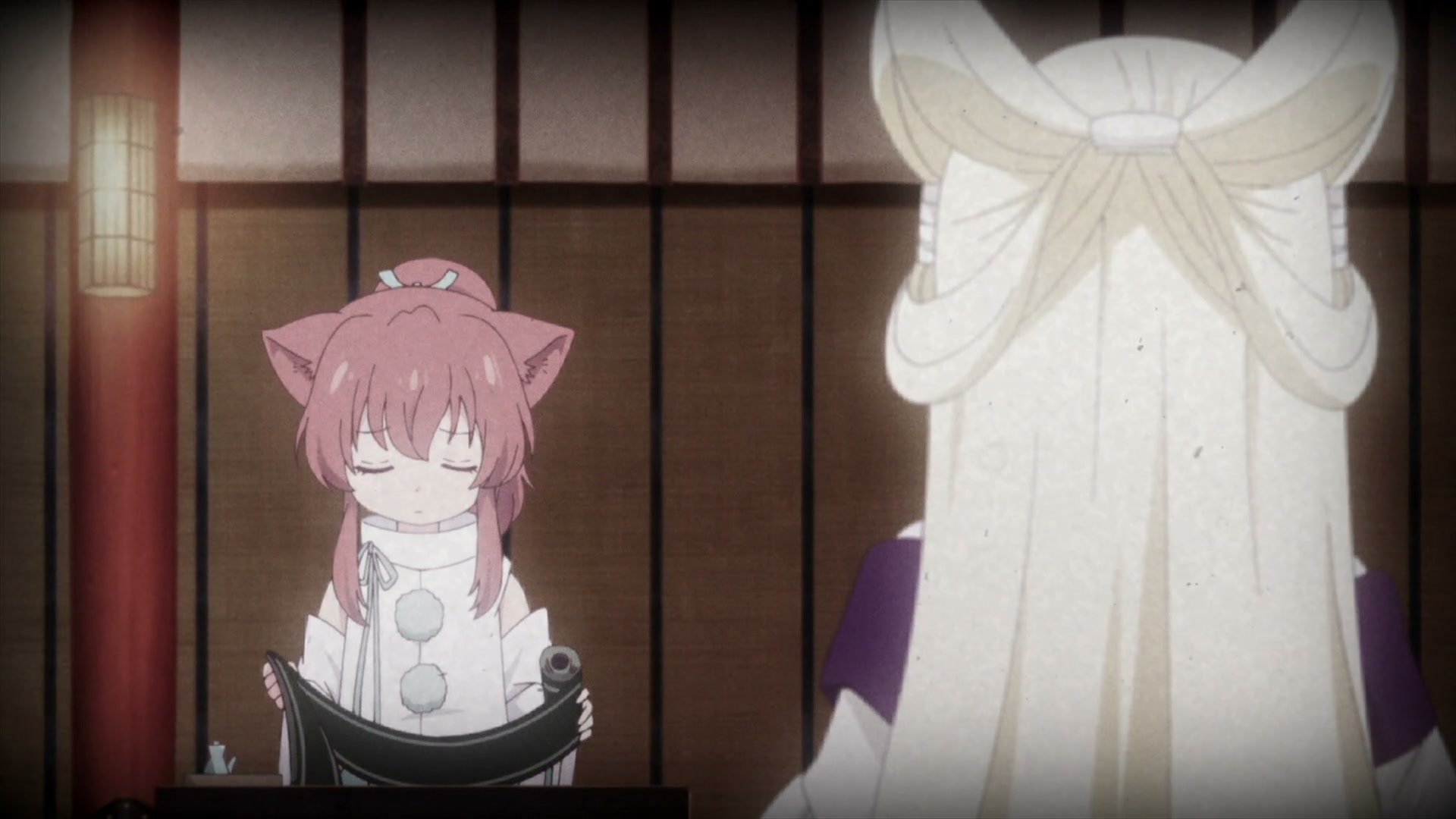
If the series has a single governing aesthetic principle, it is mono no aware, the bittersweet awareness of impermanence that runs through so much classical Japanese art and literature. Cherry blossoms fall mid-bath. A goddess dissolves into bubbles and reforms as casually as a guest checking out of a room. A mother spirit spends her stay sewing kimonos for a daughter who no longer exists in the living world, then departs peacefully to join her in whatever comes after. A discarded doll explains, without rancor, that being played with, worn down, and eventually left behind is the complete and fulfilling lifecycle of her kind.
None of this is presented as tragedy. The series refuses to frame transience as loss. Instead, it argues that impermanence is what gives connection its value. If the cherry blossoms were permanent, nobody would gather to watch them fall. If the goddess of bubbles never dissolved, her rebirth would carry no cosmic resonance. The pharmacist god from the first episode, having received an apology he didn’t need, asks the girls to “knock down a star” for him—a konpeitou candy, treated with the solemnity of a celestial object. Yuzu throws a towel into the sky, genuinely trying, and later claims she shot the star over the mountain. The god accepts this with perfect seriousness. It’s not a lie and it’s not a delusion. It’s play, and play is its own kind of truth.
This perspective reaches its most explicit articulation in Episode 4, when a skeptical daughter confronts Kiri about her mother’s elaborate fantasy of a living grandchild. Kiri’s response is the philosophical heart of the entire series: the fleeting dreams one has at Konohanatei, the entirety of a human life, to a fox spirit, it is not so different. What matters is that the experience was felt. “Ah, what a nice dream that was.” In the cosmology of this show, that is enough. It is more than enough. It is everything.
Hospitality as Spiritual Practice
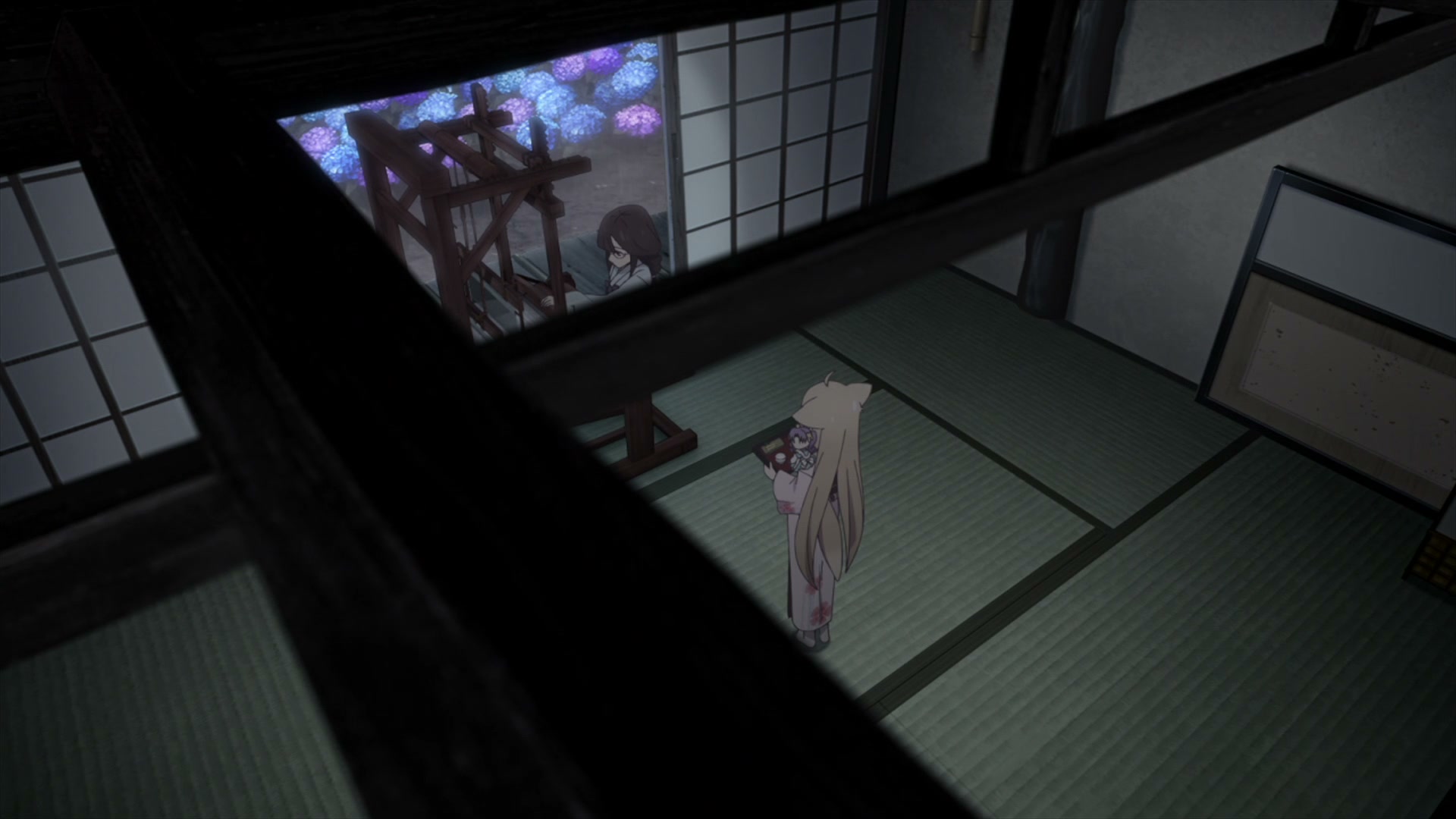
The Japanese adage okyaku-sama wa kami-sama, the guest is a god, operates literally here. The guests are actual deities, but they are not omniscient or distant. They are faded entertainment goddesses who haven’t been worshipped in centuries and spend their holidays drinking far too much at the inn. They are a battle god with no wars to fight, passing time by teaching kendo to a willing fox-girl. They are a weaver goddess working herself to exhaustion trying to match the speed of one sister and the skill of another, eating nothing and sleeping less. They are the primordial bubble goddess Awanami, who just wants a really good back scrub.
By making the guests flawed, lonely, and sometimes petty, the series deconstructs the very idea of divine perfection. A god is not inherently worthy of service because of her status. She is worthy of service because she is a being in need. The sacred nature of hospitality inheres not in the guest but in the posture of the host. Yuzu embodies this instinctively. Her talent is not flawless execution or deep knowledge of protocol. She is clumsy, she apologizes constantly, and she needs things explained to her multiple times. Her gift is something rarer: the ability to perceive the unspoken ache beneath divine bravado, the loneliness inside the god who claims to need nothing.
This is not a transactional ethic. The attendants do not serve in order to earn blessings or merit. They serve because service, genuine, attentive, self-forgetting service, is its own form of meaning. And in the economy of Konohanatei, that meaning circles back. The wish that created the inn was not a wish for oneself. It was a wish, spoken across time, for someone else to have a warm home.
Seasonal and Cultural Grammar
The series assumes a working familiarity with Shinto cosmology that rewards attentive viewing. The attendants are fox spirits, kitsune, specifically kenzoku, the divine messengers associated with Inari shrines. The finale’s time-travel sequence takes place in an office where kenzoku process human prayers, evaluating them according to purity of intent. Prayers for others may be granted. Selfish prayers are dismissed. This is not esoteric theology. It is fairly standard Inari folk tradition, but the series uses it as the narrative mechanism by which Yuzu’s selfless wish creates the inn itself.
Episode 4’s storyline about the grandmother and her invisible daughter Shino draws on specific Japanese folk concepts. The idea that children belong to the gods until age seven (nanatsu mae wa kami no uchi) is referenced directly. The practice of dressing dolls in wedding clothes for daughters who died before marriage (hanayome ningyo) hovers unspoken in the background. The grandmother’s experience is never confirmed as objective reality or dismissed as delusion. The series holds the ambiguity with respect, and Kiri’s philosophical response to the skeptical daughter settles the question without resolving it: if the comfort was real to the one who felt it, what more is there to ask?
The seasonal structure, cherry blossoms, rainy season, summer festivals, autumn leaves, New Year’s shrine visits, is not decorative. It is the narrative framework that ties individual episodes to the cyclical rhythms of the natural and spiritual world. The rainy season episode is literally about a goddess weaving rain. The summer festival episode features spirits returning from the afterlife. New Year’s, when the boundary between worlds is traditionally thinnest, is when Yuzu steps into the past and unknowingly sets in motion the events that will create her own future home. This seasonal consciousness is deeply embedded in Japanese aesthetic tradition, going back to the kigo of classical poetry, and the series wears it naturally.
Characters
Yuzu: The Value of Presence
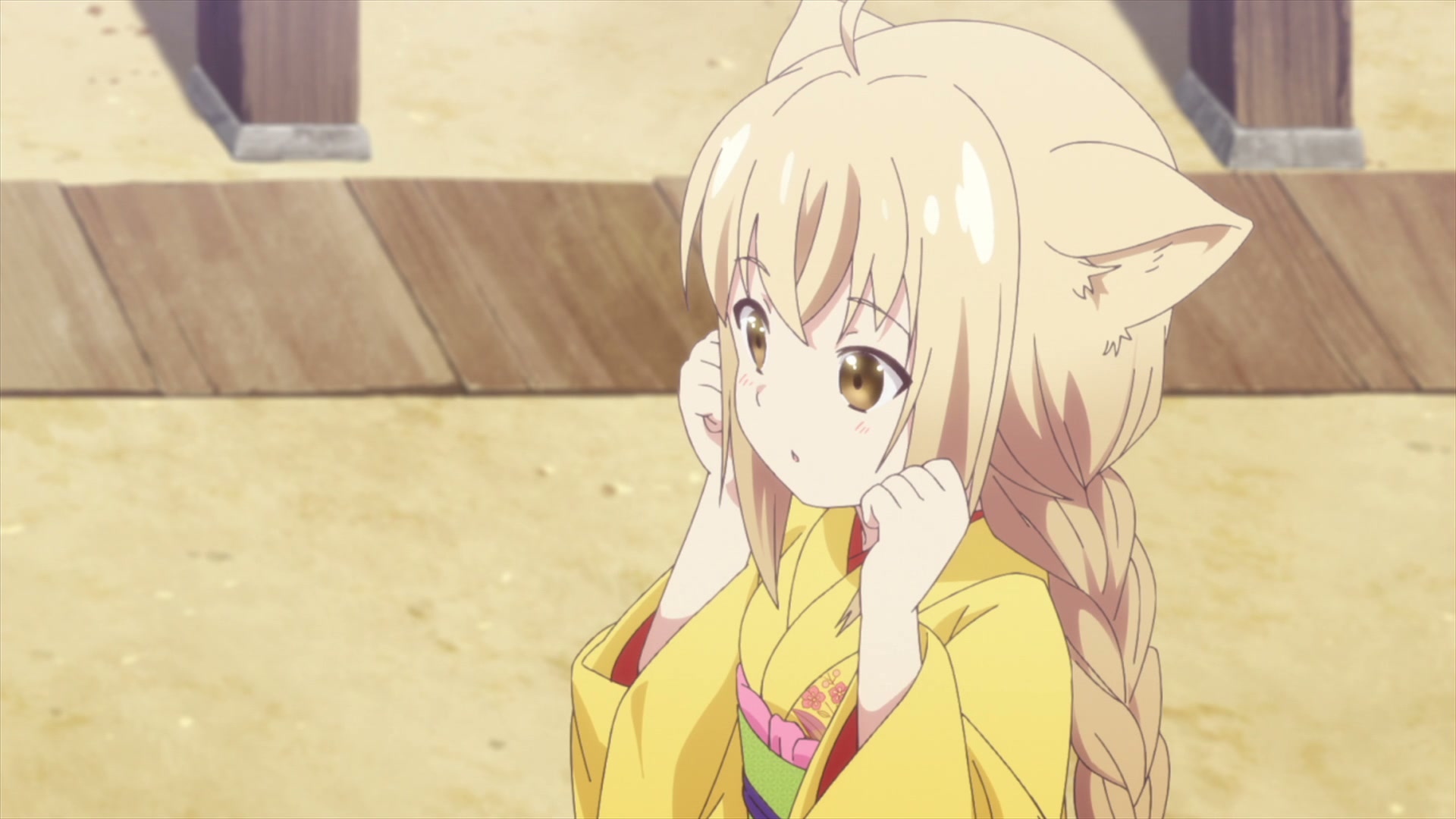
Yuzu is the series’ viewpoint character and emotional engine, a fox-girl raised from infancy by a human nun, Yaobikuni, at a secluded mountain temple. She arrives at Konohanatei with no experience of urban life, no familiarity with her fellow fox spirits, and little confidence in her own abilities. She is eager to a fault, perpetually apologizing, and constitutionally incapable of hiding her emotions. Her ears droop when she’s sad. She cries openly when moved. She says exactly what she feels without the protective filters that the other attendants have spent years constructing.
This guilelessness could be irritating. In a lesser series, Yuzu would be the generic genki girl whose naivety exists only to be cute. But the series gives her a specific, named wound that grounds her entire personality. As a child, she overheard Bikuni-sama discussing possibly sending her to serve at an Inari shrine. Bikuni’s intent was practical, not rejecting. Yuzu, already insecure about her place in the world, interpreted it as confirmation that she was useless and would be discarded. This terror of being abandoned for lack of utility became the engine of her desperate eagerness to please.
Her arc is not about becoming hypercompetent. She remains clumsy. She still makes mistakes. What changes is her understanding of value itself. Bikuni’s core teaching, recalled in the pivotal nightmare sequence of Episode 6, is the metaphor of the camellia flower. A flower does not know that it eases the mind and gives strength to those who see it. Its beauty and comfort are real regardless of its self-awareness. Yuzu does not need to become useful in a transactional sense. She already provides comfort, joy, and emotional honesty simply by being who she is. The goal is not to change her nature but to help her see that her nature is already a gift.
This culminates beautifully in the finale. Trapped in the distant past in the office of the divine messengers, Yuzu learns that the gods grant only wishes made for the sake of another. She has one wish, her ticket home, and she uses it not for herself. She writes, “I wish for a warm home for Tsubaki-san,” the lonely fox kenzoku who helped her. This single, selfless act creates Konohanatei itself, the home to which Yuzu will eventually return. She becomes the founder of her own belonging without ever knowing it. Her value was never in her utility. It was in her capacity to care about a stranger’s loneliness enough to wish it away.
Satsuki: The Wound of the Second Choice
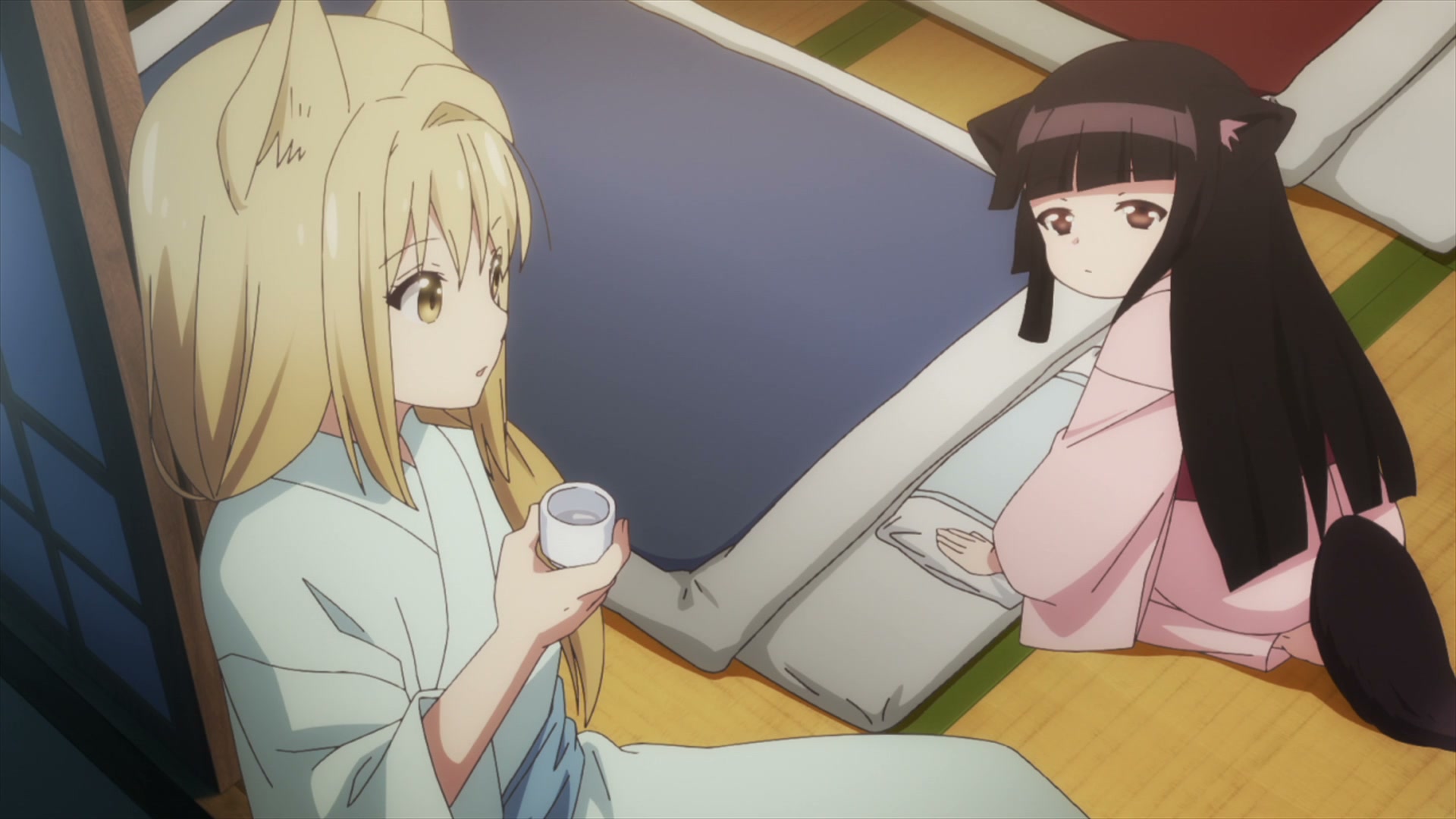
Satsuki is the series’ most psychologically credible and emotionally affecting character, a young woman whose entire personality has been constructed around a single, unhealed wound. She is the younger daughter of a fox family with two potential paths for their children. One daughter would serve at Konohanatei. The other would become a shrine priestess. Her older sister Hiiragi was the obvious prodigy, a natural dancer and singer who drew people to her effortlessly. Satsuki was the diligent one, the reliable one, the one who could imitate anything but was assumed to originate nothing. The family’s framing was devastating in its casualness: either assignment would be fine, which meant Hiiragi’s talent should go to the more prestigious role. Satsuki, without protest, went to the inn.
The result is a personality built on overachievement and emotional isolation. Satsuki is demonstrably excellent at her job. She works harder than anyone, studies protocol obsessively, and refuses to take breaks. But she cannot accept her own competence as genuine because she believes her entire life is a substitute, a consolation prize. She is not the one who was chosen. She was the one who was left over.
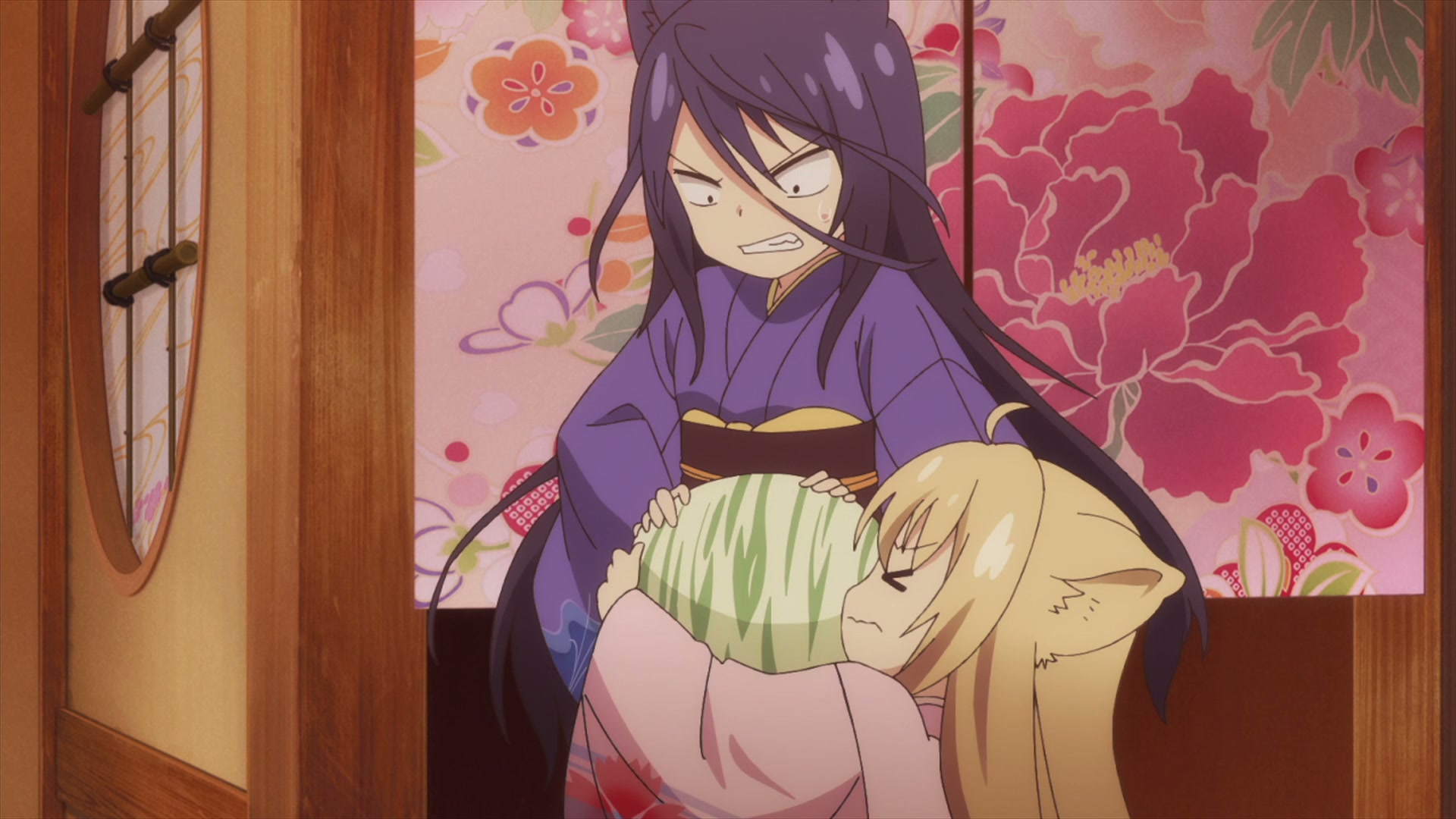
The dream sequence in Episode 4 is the rawest expression of this wound. A magical egg forces her into a dream reliving the childhood conversation that sealed her fate, and the question she has never been able to voice aloud erupts: “If it didn’t matter which of us would become a priestess, if it didn’t matter who, then why couldn’t it have been me?” Yuzu appears in the dream and answers directly, “It does matter who. It has to be you, Satsuki-chan. We need you.” The fact that this answer comes in a dream, from a projection of the one person who has made Satsuki feel genuinely seen, speaks to how deeply buried the need for this reassurance has been.
Her arc reaches its climax in Episode 10, when Hiiragi visits the inn. Satsuki is forced to perform a kagura dance beside her sister. She executes it flawlessly by following Hiiragi’s lead, then collapses in tears, calling herself a fake who only managed it through imitation. The episode’s hidden resolution, revealed after the sisters part, is that Hiiragi was stunned by Satsuki’s ability. Untrained, given only a few tips, Satsuki had matched the genius step for step. Hiiragi privately admits she lost. But she is too proud to ever tell Satsuki this, and the tragedy of their relationship is that they both admire each other and neither can say it.
Satsuki’s final integration comes not through surpassing her sister but through accepting that her place at Konohanatei is not a diminished alternative to the shrine. It is a genuine calling where her specific combination of diligence, hidden tenderness, and refusal to abandon a task is irreplaceable. The series does not give her a triumphant victory. It gives her something quieter: the slow, dawning awareness that she is wanted where she is.
Natsume and Ren: A Love Story Told Sideways
Natsume and Ren are a bonded pair whose relationship predates the series and defines both of them. They share a room, share a life, and communicate in a private language of teasing and care that has been decades in the making. The series never explicitly labels their relationship, but it does not need to. The depth and exclusivity of their bond is visible in every interaction.
Ren is the inn’s beauty, graceful, impeccably dressed, and obsessed with presentation. Her entire persona is a defense mechanism built around a childhood trauma. Pushed into the mud by a cruel boy, she was found and washed clean by the young Natsume, whom she perceived through tear-blurred eyes as a beautiful androgynous savior. From that moment, her self-worth became contingent on remaining beautiful in Natsume’s gaze. Her fastidiousness, her horror at anything crude, her reflexive hostility toward men, all of it traces back to the terror that if she becomes “soiled” again, Natsume will stop looking at her.
The tragic irony is that Natsume’s affection has never been contingent on Ren’s appearance. She loved the mud-covered, crying child as instinctively as she loves the polished adult. Natsume’s love language is not words but attention. She notices the new sandals. She remembers the festival years ago when Ren’s feet blistered and she went home alone. She gives piggyback rides without being asked and says, simply and devastatingly, “It was sad not being able to see your face, you know.”
Natsume herself is the group’s anchor, physically capable, emotionally steady, and constitutionally incapable of standing by when someone needs protection. Her apparent lack of inner conflict is not a writing flaw. She is the person who acts rather than agonizes, and her need to protect is itself a form of vulnerability. She needs to be needed, and Ren’s carefully hidden softness gives Natsume’s strength a direction.
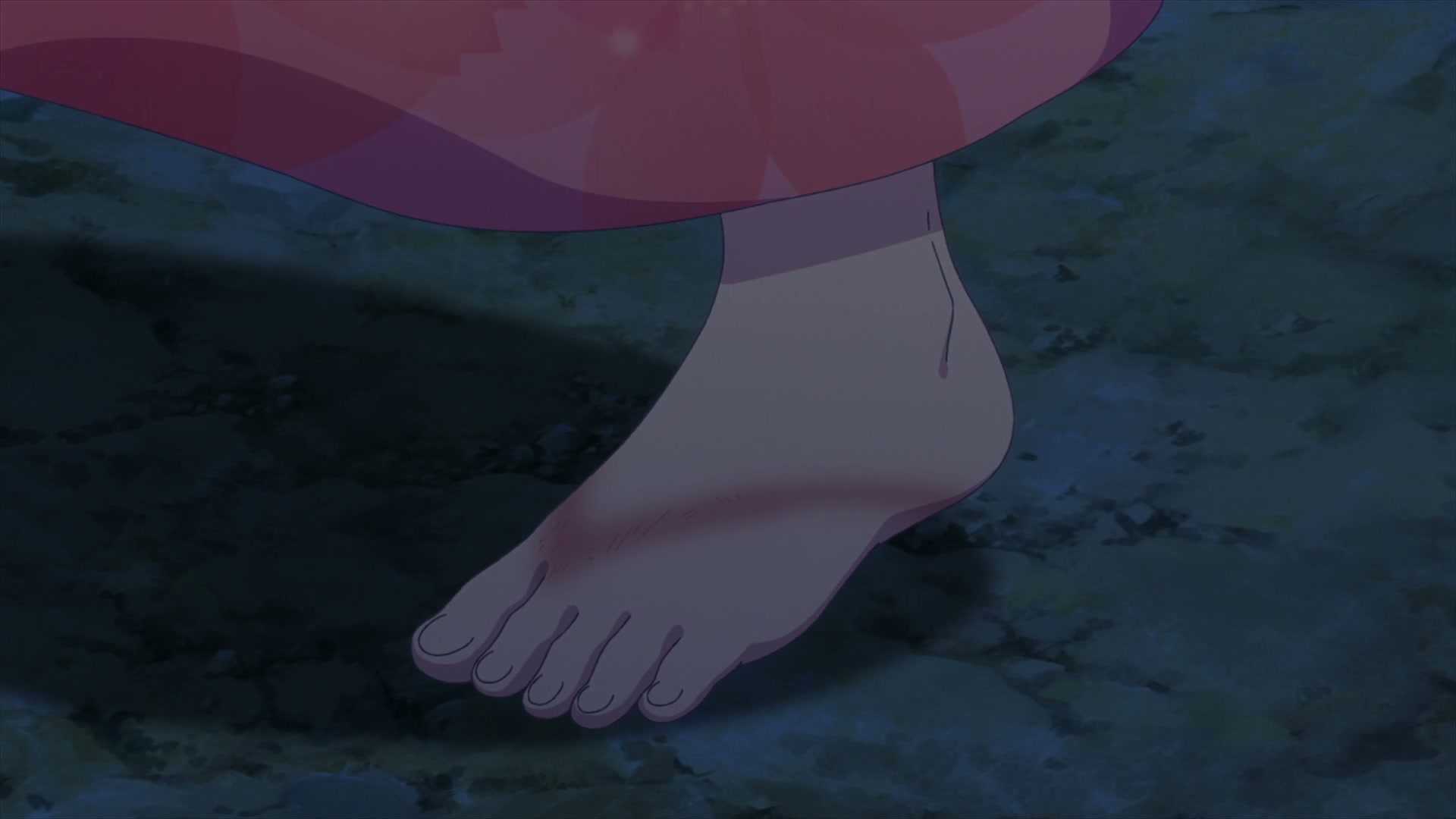
Their relationship develops not through dramatic confessions but through Ren gradually learning to trust that the bond exists independently of her performance of it. The summer festival episode is the turning point. Ren has dressed up meticulously and is crushed when Natsume seems oblivious, treating the outing as just another fun adventure. The piggyback ride and the quiet admission of worry recontextualize everything. Walking barefoot on the still-warm ground after the fireworks, Ren finally says, aloud and to herself, “Let’s go home. To our home.” She is not talking about the inn.
Kiri and the Okami: The Long Game
Kiri, the head attendant, is the inn’s serene, teasing maternal center. She assigns tasks not by rigid efficiency but by an intuitive sense of who needs to learn what lesson. She pairs Satsuki with Yuzu knowing it will crack Satsuki’s armor. She assigns Ren to the VIP goddess knowing Ren needs to fail and be helped. She gives Yuzu space to make mistakes and find her own way. Her authority is expressed not as control but as facilitation, removing obstacles so the others can grow.
The finale reveals the secret that recontextualizes everything about her. Kiri has known, for centuries, that Yuzu was the girl from the scroll, the one whose selfless wish created the inn. Every interaction across the entire series has been shadowed by this knowledge. Her patience was not just good management. It was the long-game care of someone waiting for a circle to close.
The Okami, the innkeeper, is that circle’s other half. In daily life she appears as a short, hunched old woman, gruff and demanding, quick to scold but quicker to defend her staff against any external threat. The finale confirms what attentive viewers may have suspected: she is Tsubaki, the lonely fox kenzoku for whom Yuzu wished a warm home, centuries ago, in a past that was also Yuzu’s present. She has been waiting all this time for the red-hooded fox girl to return.
When Yuzu, back from the past, stammers “I’m home,” the Okami’s quiet, simple “Welcome home” contains the accumulated warmth of centuries. It is one of the most quietly devastating final lines I can recall in a series of this type. It closes a loop that has been spinning since before the inn existed, and it lands with the weight of a promise kept across impossible spans of time.
The Supporting Ensemble
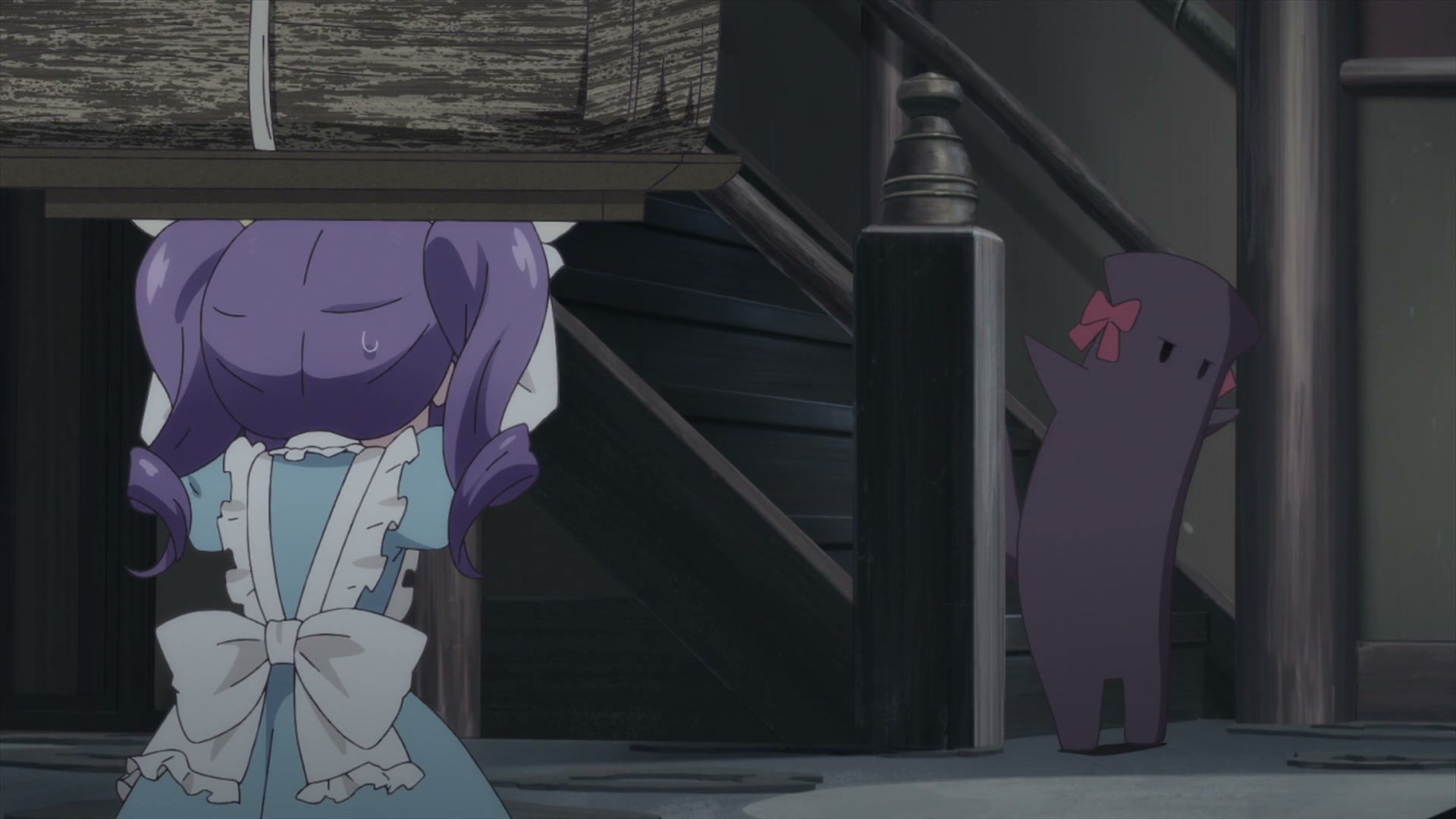
Okiku, the “cursed” doll brought to the inn for a cleansing who ends up staying permanently, provides comic relief that gradually deepens into genuine pathos. Her indignant protests against waitress work and rice-based repairs mask an agony she cannot articulate. She was custom-made for a human girl who quickly preferred a mass-produced toy. She has never been played with, never been loved in the way a doll is meant to be loved. Her pristine condition is not a mark of quality but of a life unlived.
Her encounter with a discarded Western doll in Episode 11 is the emotional climax of her arc. The doll explains that her scratches are memories of love, and that being thrown away when a girl grows up is the natural, fulfilling end of a doll’s purpose. Okiku, who has no scratches and no memories of being held, is confronted with the reality that she has never fulfilled her reason for existing. She breaks down, and Ren comforts her, calling her “Okiku” without irony for the first time. She has accepted the name the staff gave her. She has accepted the home.
Sakura, the silent zashiki-warashi, is a childlike house spirit who never speaks but whose presence is woven through the inn’s fabric. She is drawn to beauty, fascinated by scissors, and capable of communicating volumes through a tilt of the head or a small smile. Her relationship with Kiri, sharing a futon, being carried like a living plush toy, is a window into Kiri’s private capacity for physical affection. Sakura is the inn’s luck, its spirit of play, its reminder that not everything needs words to be understood.

Visuals and Animation
The Honest Assessment
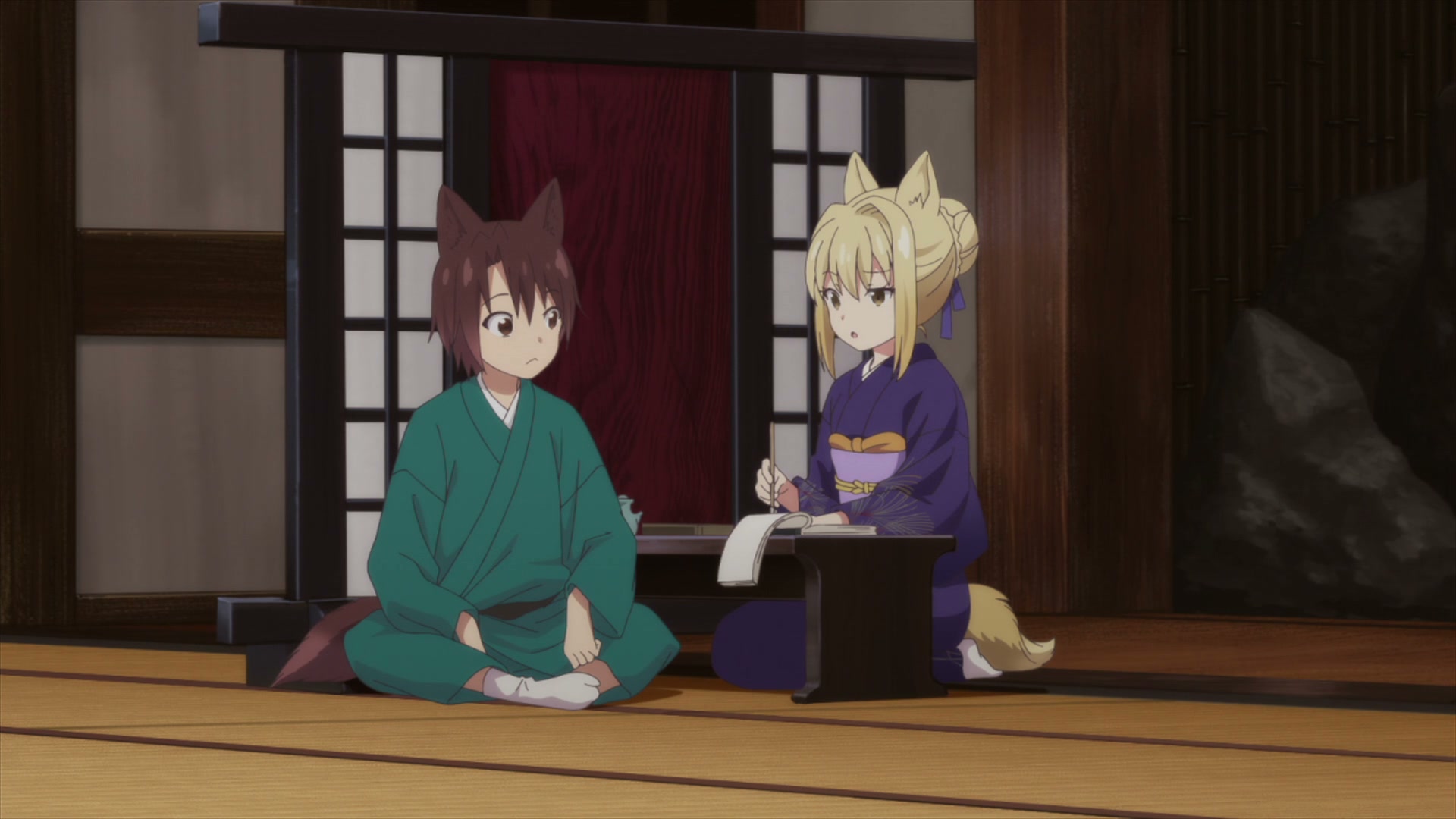
Konohana Kitan is not a high-budget production, and anyone coming to it expecting the fluid sakuga of a Kyoto Animation series or the atmospheric density of a Mushishi will need to adjust expectations. The animation frequently relies on held frames, mouth-flap dialogue, and minimal movement during conversation scenes. Background characters in crowd sequences are often static or minimally looped. The kagura dance in Episode 10, while emotionally potent, is choreographically simple, relying on costume swishes rather than complex body mechanics.
The distinction that matters is between stillness that serves the tone and weakness that results from limitation. The series’ iyashikei pacing means that long held shots of characters sitting quietly in a garden, with only subtle hair or fabric movement, are appropriate to the genre. This is not a flaw. It is the mode operating as intended. When the problem arises, as in some of the more crowded festival shots where background figures barely move, it registers as budgetary constraint rather than directorial choice.
What elevates the production is the intelligence of its resource allocation. Key emotional beats receive noticeably more care than transitional scenes. Close-up work during dramatic moments is genuinely good. Satsuki’s barely suppressed panic during the ghost episode, communicated through subtle trembling and dilated pupils, is more effective than any exaggerated reaction would be. Ren’s micro-expressions, caught between her polished persona and genuine emotion, are rendered with precision. Yuzu’s tears, which could easily tip into maudlin excess, are given enough restraint to feel earned.
Background Art and Environmental Design
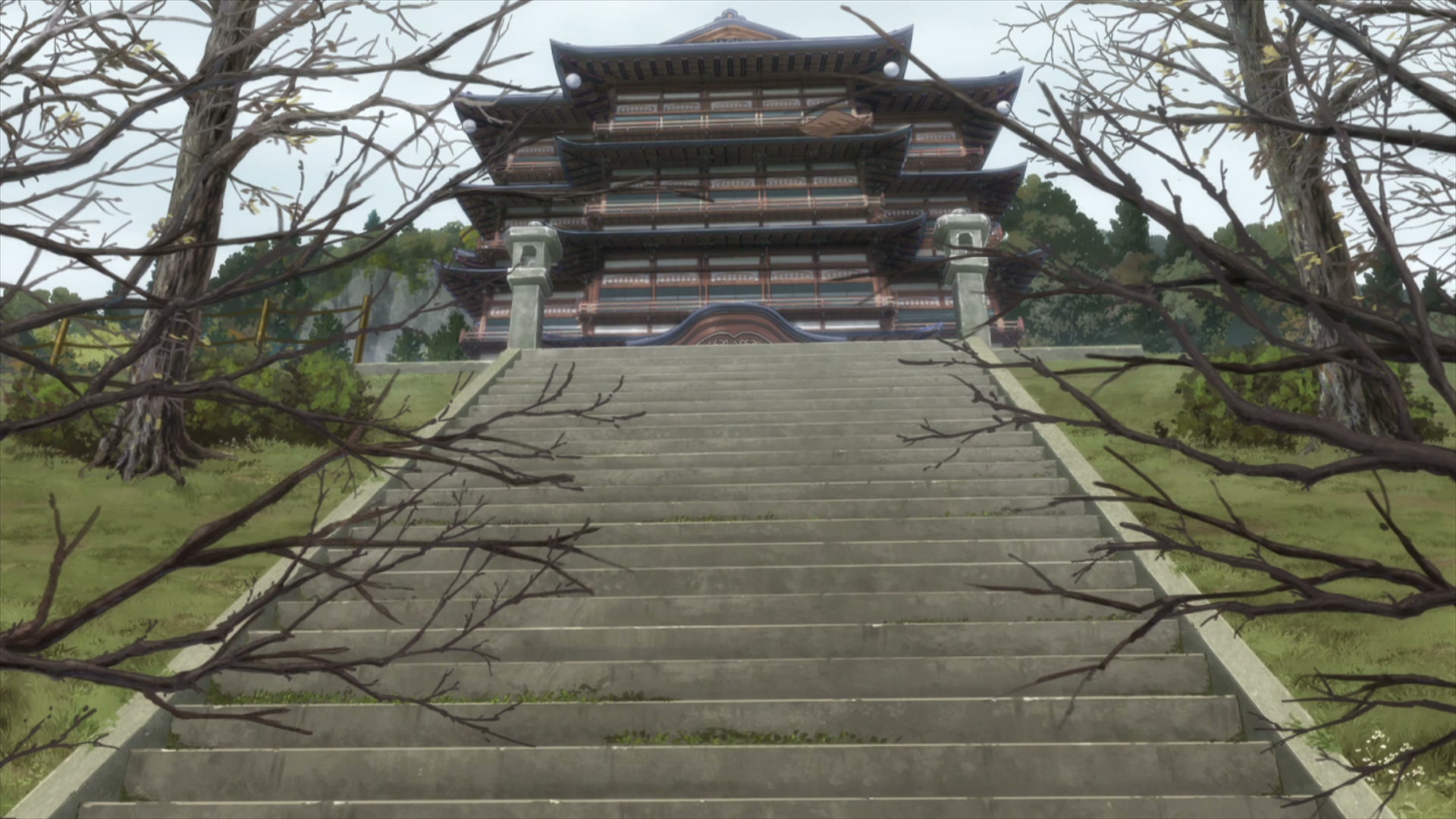
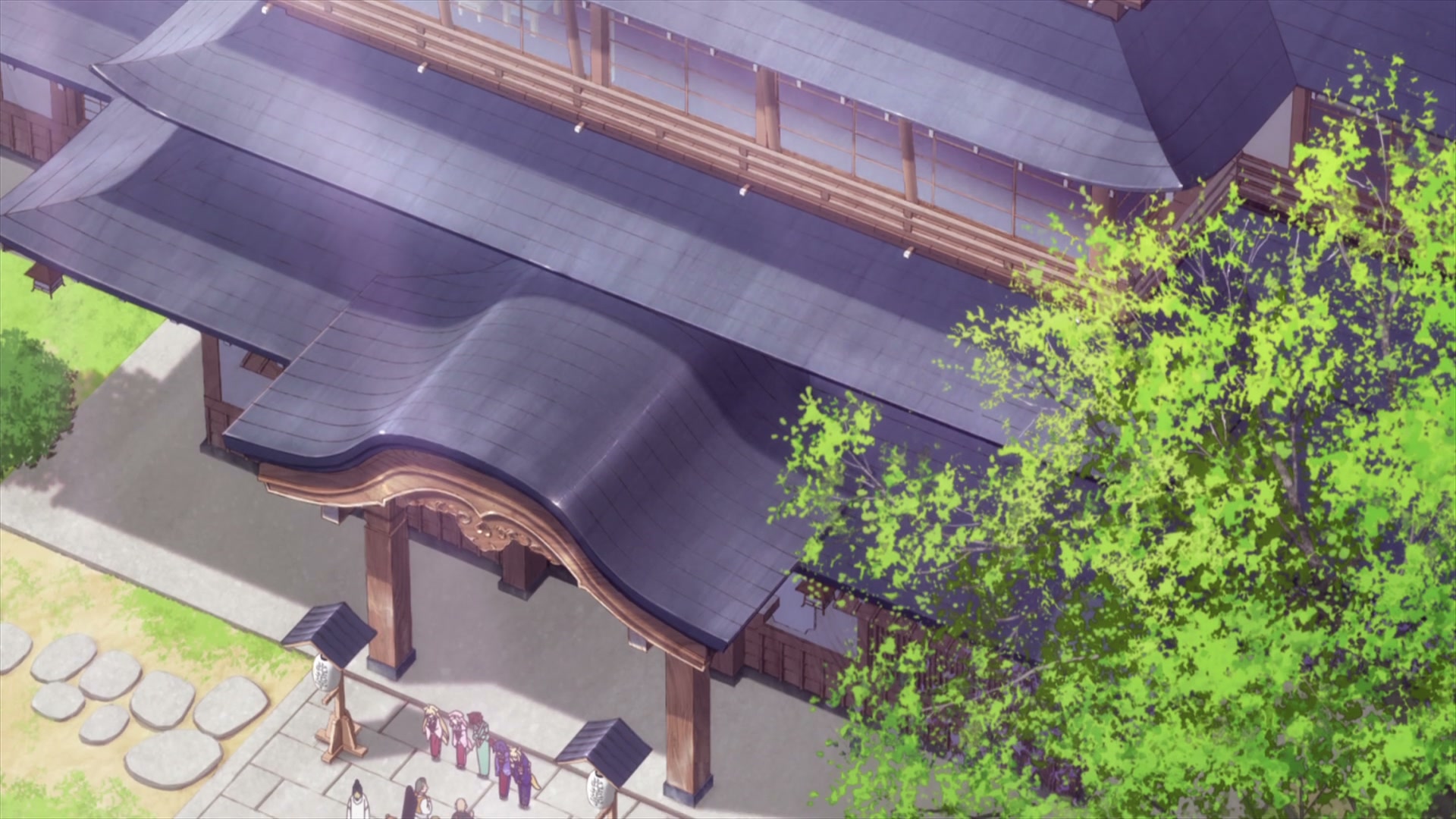
The series’ strongest visual asset is its environmental art. The architectural rendering of the inn, curved roofs, weathered wood, the specific texture of fusuma and tatami, is detailed enough to ground the softer character designs in something tangible. High-angle establishing shots show the inn’s position relative to the town and the shrine, creating a spatial legibility that makes the world feel coherent. You understand how the shed relates to the main building, how the outdoor bath connects to the garden, where the town sits relative to the mountain path. This is surprisingly rare in lower-budget productions.
Foliage is rendered in vibrant, saturated greens. Interior scenes use warm, desaturated earth tones, tans, wood grains, tatami greens, creating a lived-in quality that makes the inn feel like a real accumulation of centuries rather than a stage set. The painterly quality of the backgrounds contrasts effectively with the cleaner cel-shading of the characters, a marriage of styles that has become standard in contemporary anime but is executed here with particular care.
Color, Lighting, and Compositing
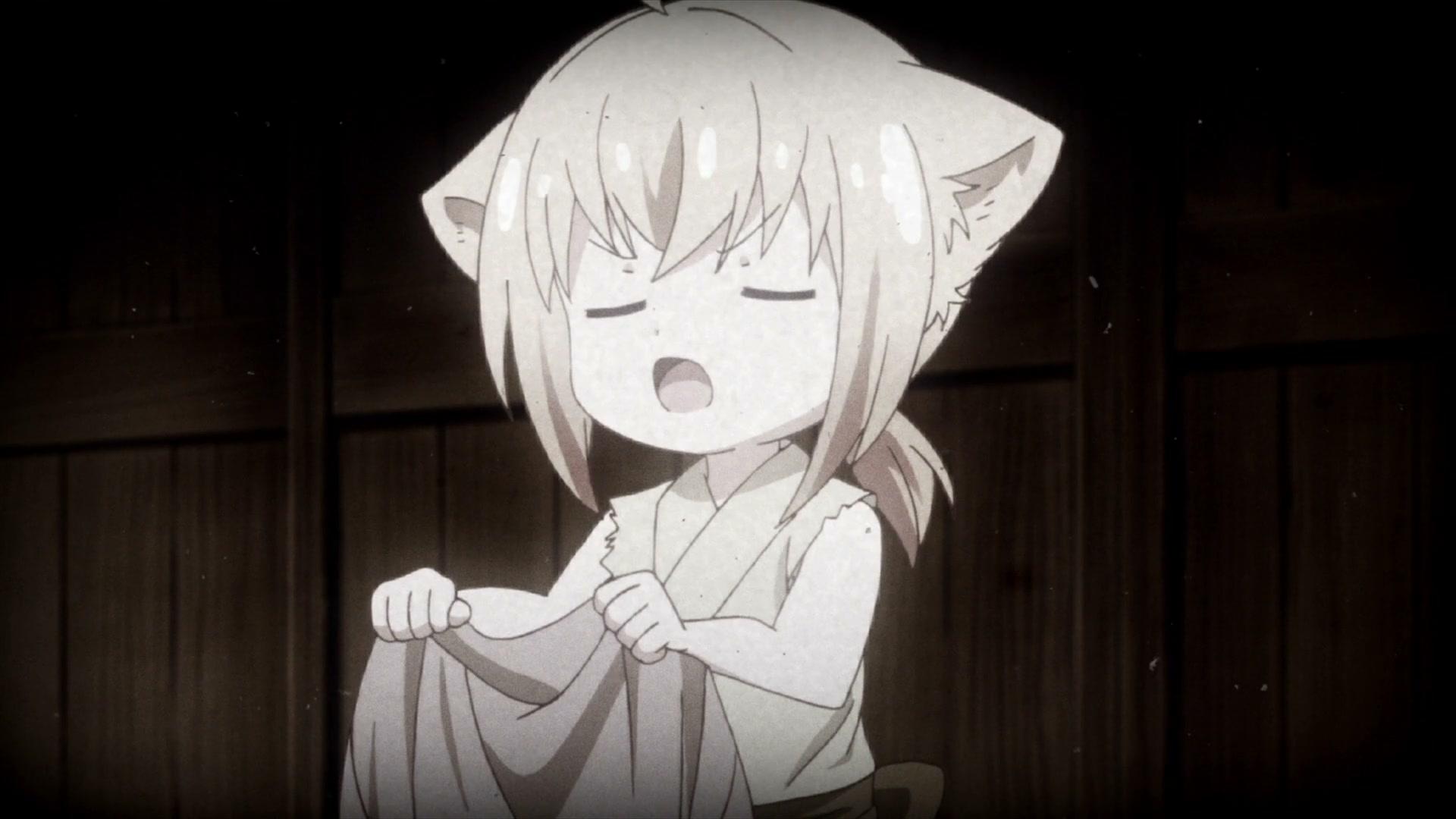
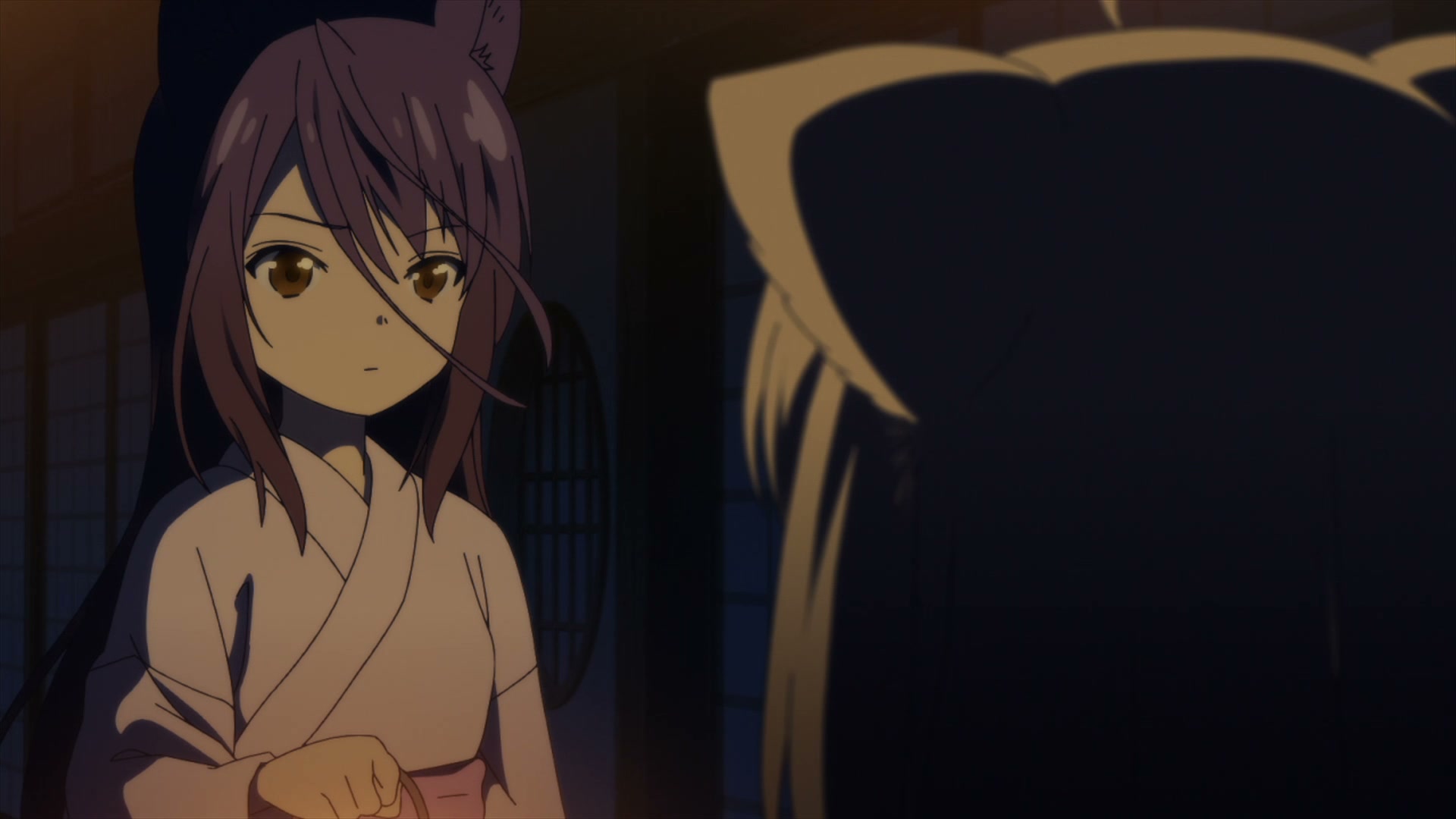
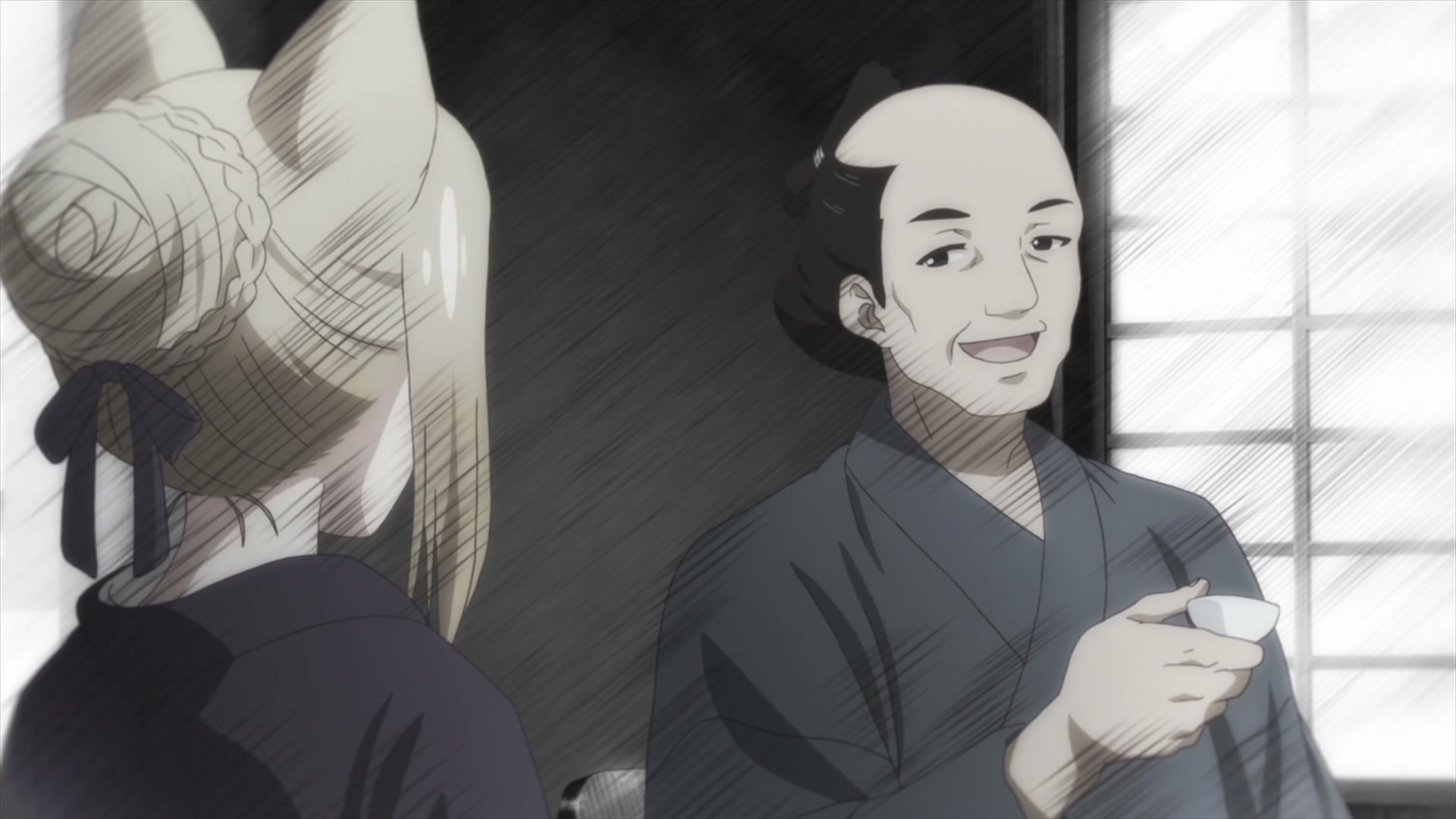
Color scripting does significant work in compensating for limited motion. Distinct palettes denote different times of day, seasons, and emotional registers. Night scenes use deep indigos and purples with high-value highlights on hair and skin to create a moonlit glow. Interior night scenes use warm amber key-lighting for domestic coziness. Flashback sequences deploy desaturated, sepia-adjacent palettes with simulated film grain and vignettes, cleanly demarcating past from present.
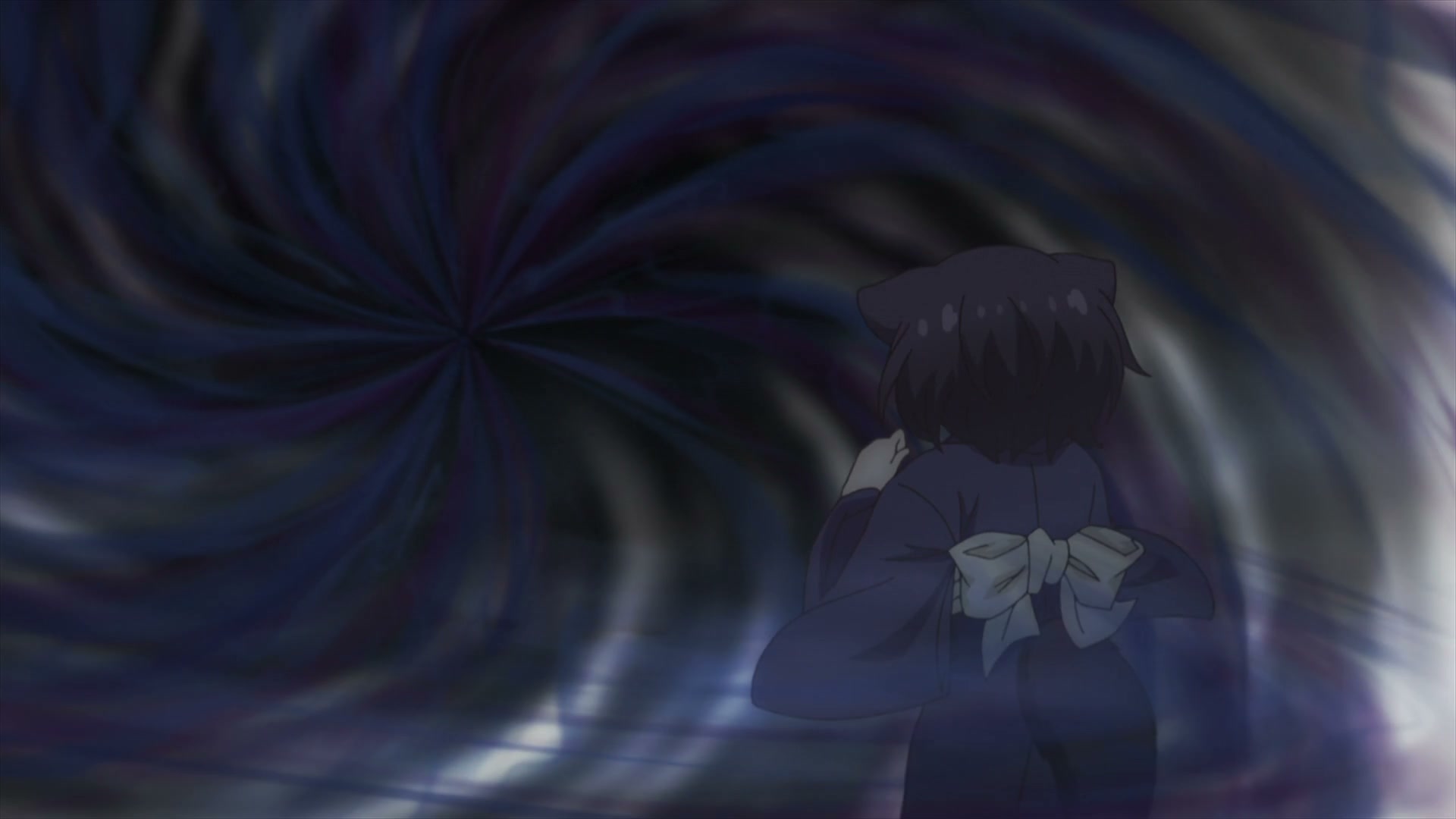
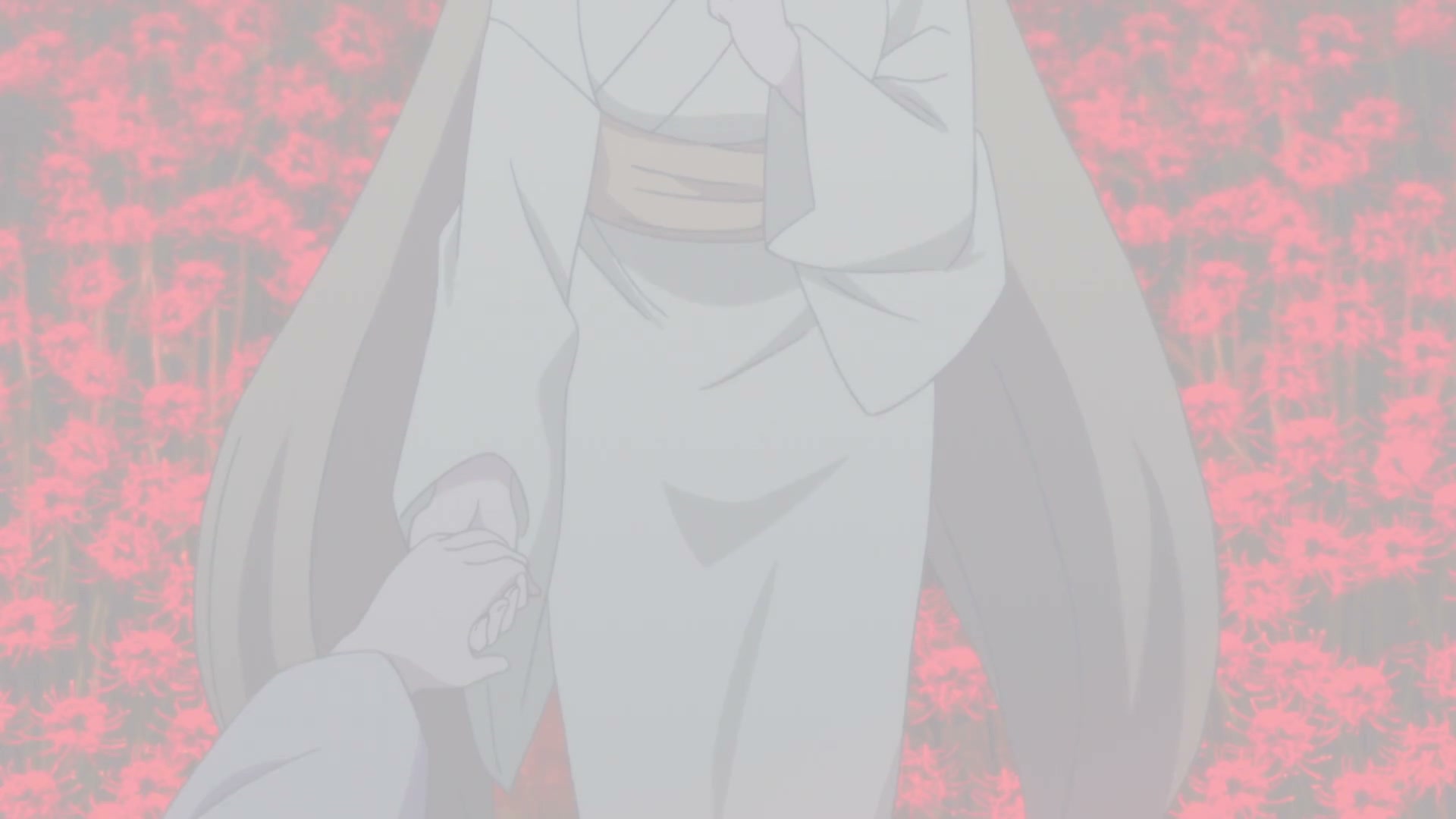
Spiritual and supernatural moments shift toward graphic stylization, sometimes incorporating textures reminiscent of washi paper. The bubble goddess episode contains the series’ most visually inventive sequence, the dissolution and chasing of the mini-bubbles, culminating in Yuzu’s brief, wordless vision of primordial creation. High-key white filters and floral motifs, red spider lilies for parting, cherry blossoms for renewal, are used for emotional emphasis. These could feel heavy-handed in a less gentle series. Here, they align with the overall aesthetic of heightened natural beauty.
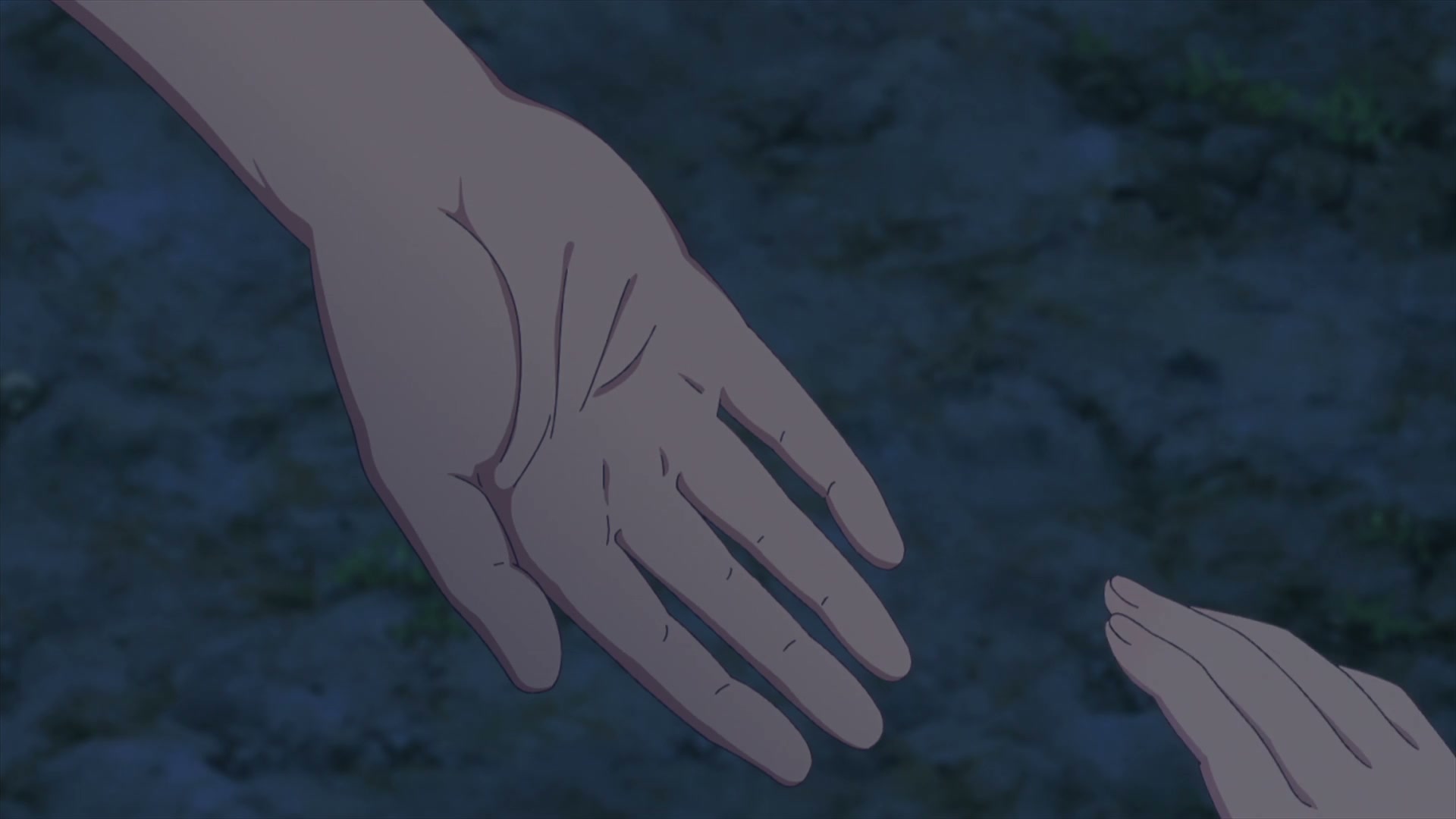
Compositing, particularly the use of bloom, atmospheric lighting, and shallow depth of field, elevates what might otherwise be flat shots. The direction favors insert shots, close-ups of hands, feet, specific props, creating a tactile intimacy that compensates for the limitations of wider framing. When the camera lingers on Satsuki’s hand hesitating before accepting a gift, or on Ren’s bare feet touching the still-warm ground after the festival, the visual focus on small physical details carries the emotional subtext.
Character Designs and Expression Work
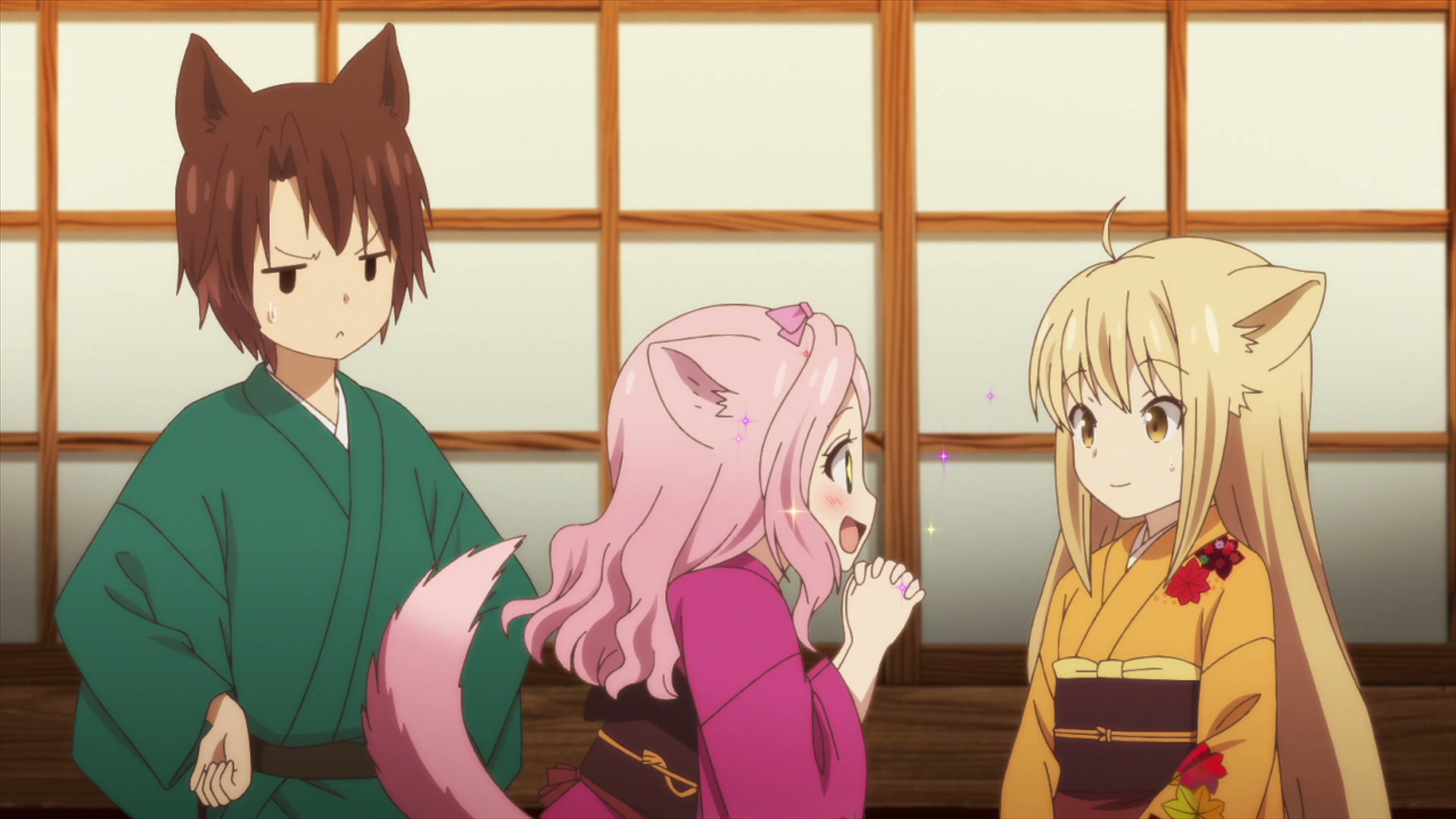
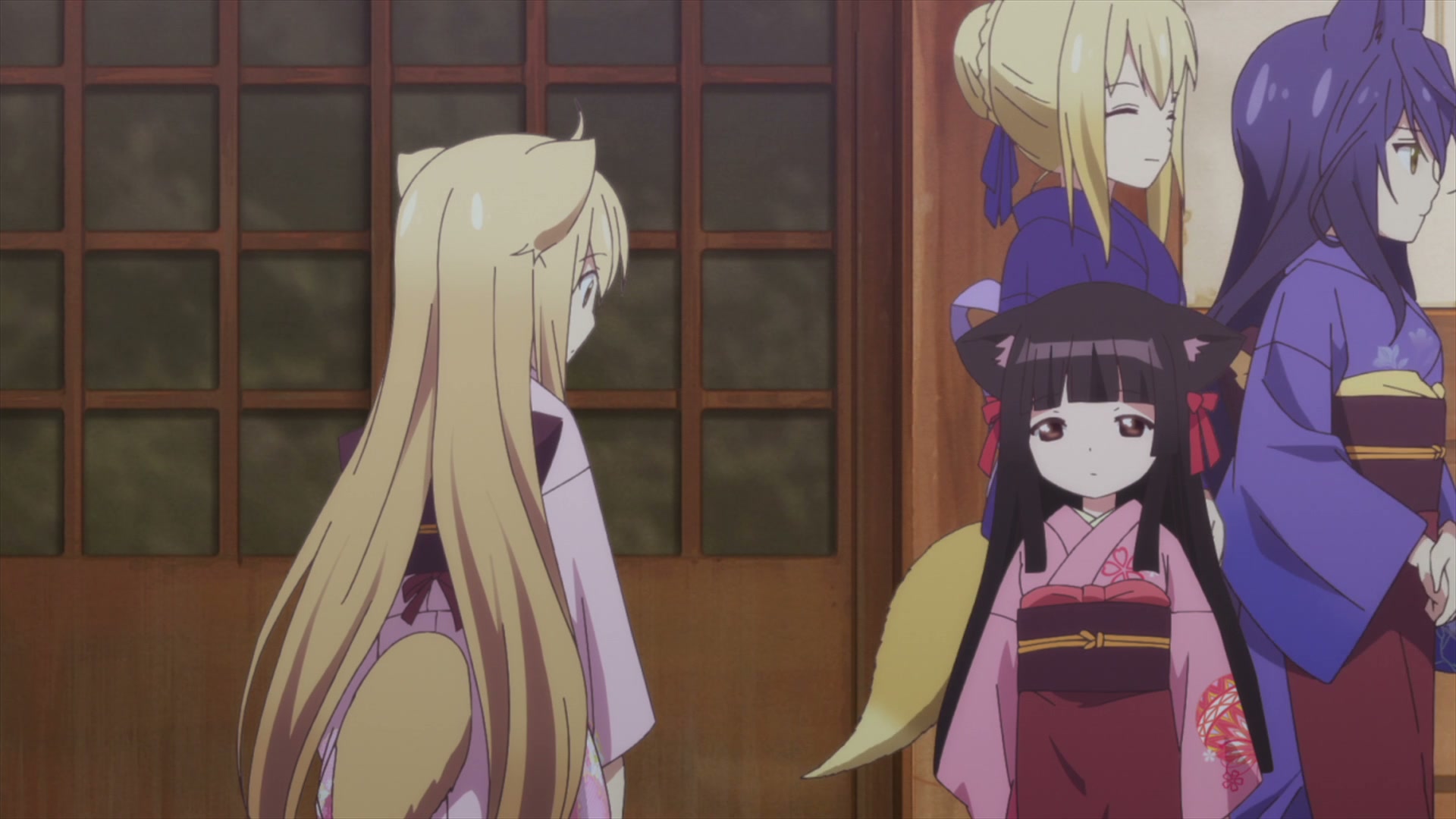
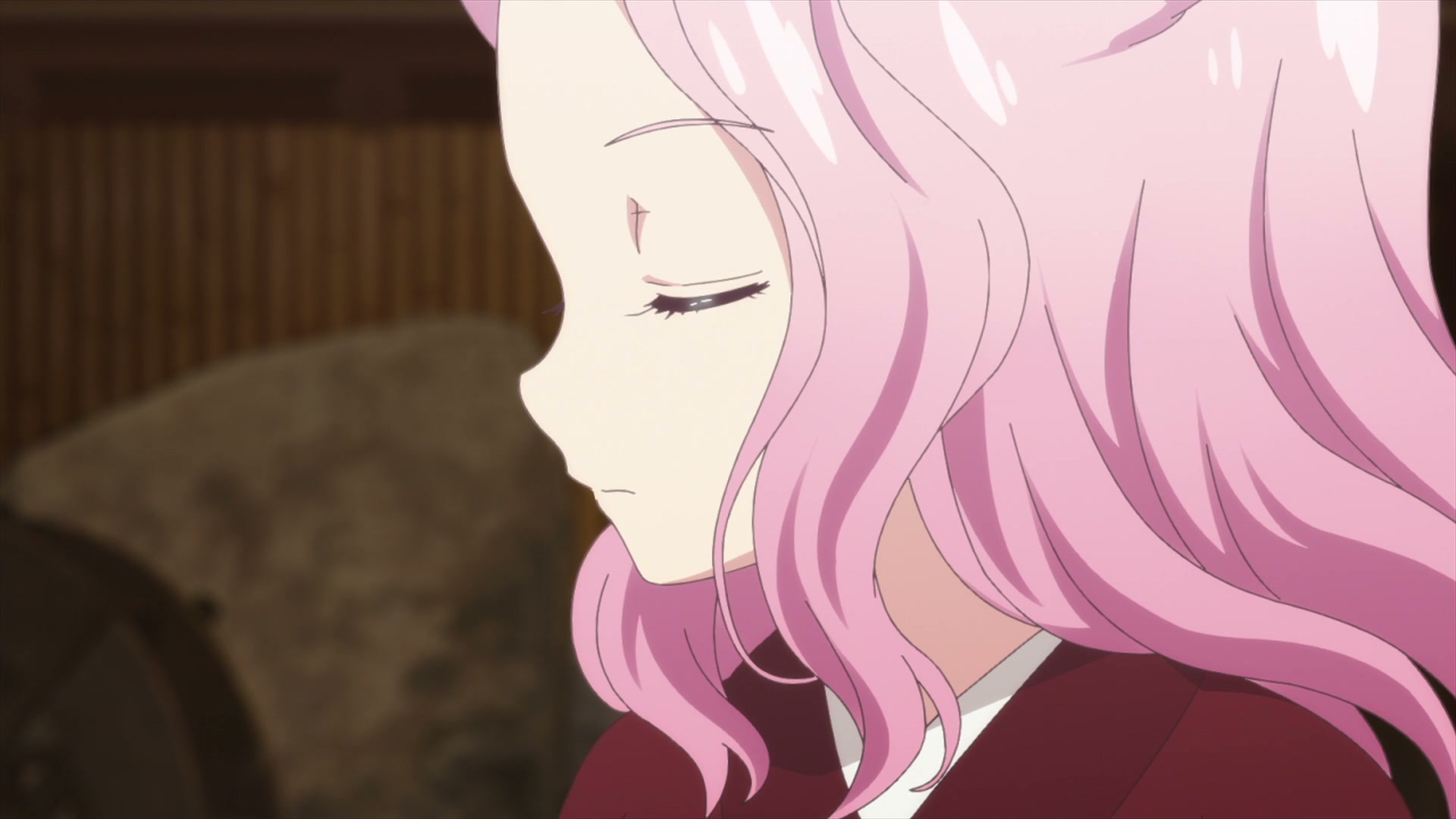
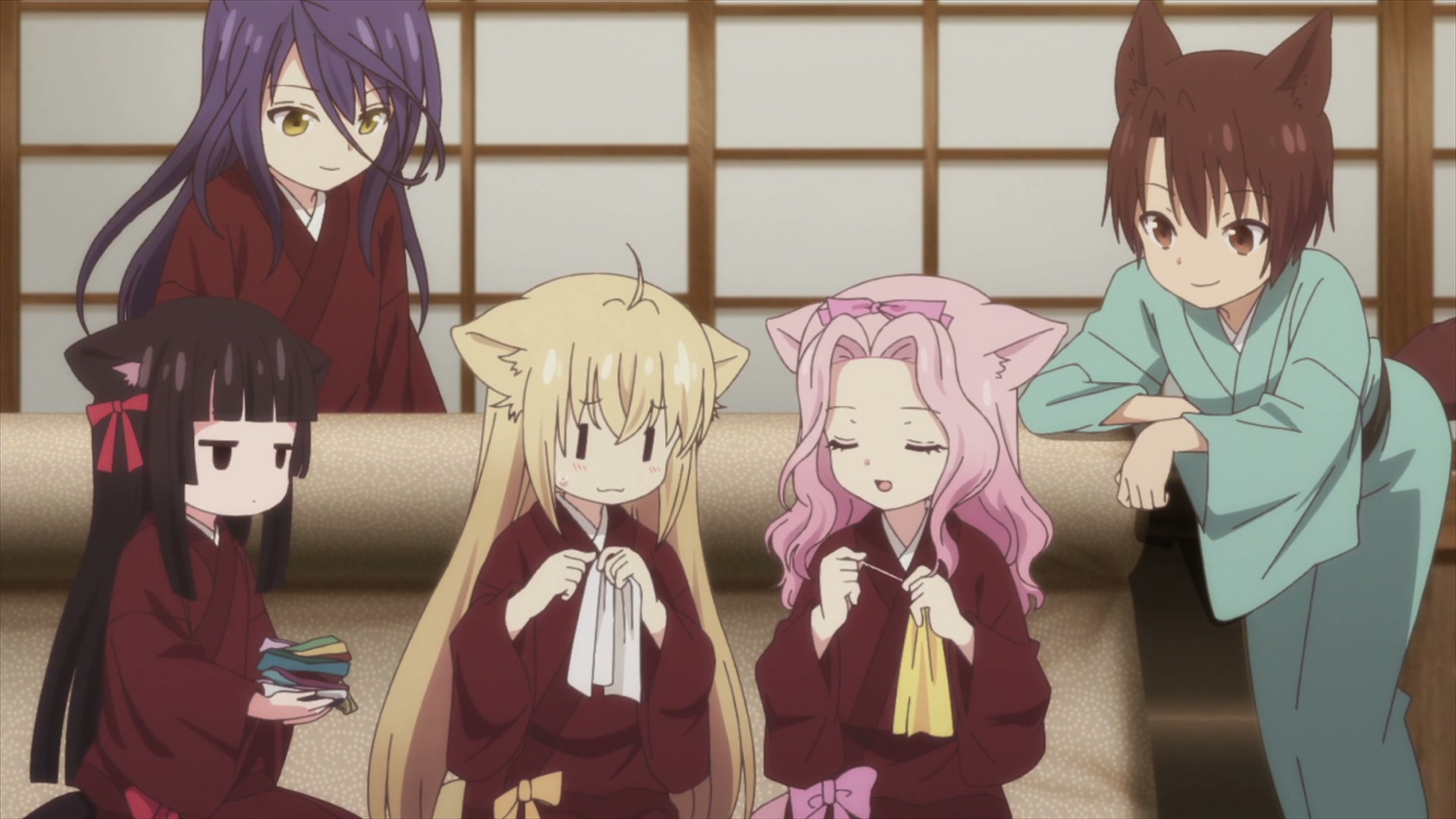
The character designs operate within a recognizable post-2010 aesthetic: rounded faces, large multi-tonal eyes with complex catchlights, soft linework, and fox ears and tails integrated with enough textural detail to feel like natural appendages. The kimonos and yukatas feature seasonal patterns, maple leaves, cherry blossoms, that tie the characters to the temporal framework.
The designs’ flexibility is their strength. The series moves fluidly between dramatic and comedic registers without tonal whiplash. In dramatic mode, the focus is on subtle blush, detailed hair strands, and nuanced shifts in pupil dilation. In comedic mode, the characters shift to chibi proportions, dot eyes, wavy mouths, and exaggerated squash-and-stretch expressions. The transitions are handled smoothly enough that the series never feels like it is lurching between incompatible styles.
The expression work in the dramatic register is the production’s strongest character animation. Satsuki’s barely-suppressed emotions are visible in the tension around her eyes and the slight droop of her ears. Yuzu’s open-heartedness reads in the way her entire face lights up, not just her mouth, when she is genuinely happy. These details require a level of attention that the production consistently provides where it matters most, even if it cannot sustain that level across every scene.


Sound and Music
The series’ soundtrack leans into traditional Japanese instrumentation, koto, shakuhachi, and taiko drums, blended with gentle piano and strings for more contemporary emotional underscoring. The music understands the assignment. It supports without intruding, swells without overwhelming, and knows when silence or the ambient sound of wind through trees or water in a bath is more effective than any composed melody could be. The festival episode’s shift into taiko rhythms, both diegetic and scored, is particularly effective at conveying the liminal energy of a night when spirits walk among the living.
The opening theme, “Kokoro ni Tsubomi” by eufonius, sets the emotional register with a gentle, lilting melody and lyrics about new beginnings and hidden feelings. The ending themes vary across episodes, often featuring different character vocalists, and serve as gentle cool-downs that extend the episode’s atmosphere rather than breaking it. Neither theme is a standout earworm, but both are perfectly calibrated to the series’ tone, and the opening’s visual sequence, with its seasonal imagery and character introductions, is a small masterpiece of efficient emotional setup.
The voice acting deserves particular mention. Ōno Yūko’s Yuzu is a difficult balancing act. The character is constantly apologizing, constantly exclaiming, constantly at an emotional pitch that could easily become grating. Ōno keeps her on the right side of endearing by letting genuine warmth and vulnerability bleed through the effervescence, so that when Yuzu does get quiet and serious, the shift lands with weight. Kubota Hikari’s Satsuki is all sharp edges and suppressed tremors, a performance that communicates the fragility beneath the armor without ever letting the armor fully drop. Okuno Kaya’s Ren is poised and elegant until she is not, and the cracks in her composure are some of the series’ funniest and most affecting moments.
Atmospheric sound design is immersive without calling attention to itself. The creak of wooden floors, the splash of water in the baths, the rustle of kimono fabric, the ambient chatter of the spirit-town market, all of these build a sonic environment that makes the world feel inhabited. The supernatural sound cues, the echoing quality of the ghost’s voice in Episode 6, the otherworldly hush when Yuzu steps into the past in Episode 12, are used sparingly and effectively.



Overall Verdict
Konohana Kitan is not a series that will convert skeptics of the iyashikei genre. It is too gentle, too episodic, too comfortable with silence and stillness to win over viewers who need dramatic stakes or rapid pacing to stay engaged. But for those who already have a home in this corner of the medium, who love Mushishi, Aria, Natsume’s Book of Friends, Flying Witch, this is a genuine entry in that tradition, one that understands the assignment at a bone-deep level and executes it with more thematic coherence than many flashier productions.
The fox-girl premise might suggest something lighter or more fetishistic than what the series actually delivers. There is no fanservice here in the exploitative sense. The baths are communal, the nudity is casual and unsexualized, and the emotional tone is one of warmth rather than titillation. The moe-adjacent character designs are a delivery system for something more substantial, and the series never uses its aesthetics as an excuse to shortchange its characters’ inner lives.
The animation limitations are real, and viewers for whom visual fluidity is a primary criterion will need to adjust expectations. But the series deploys its resources with intelligence, prioritizing what matters, faces, hands, the small physical details that carry emotional weight, and supporting those priorities with genuinely lovely background art, thoughtful color scripting, and atmospheric compositing.
The finale’s closed-loop structure is a storytelling achievement that elevates everything preceding it. The revelation that Yuzu’s selfless wish for a lonely fox kenzoku, spoken centuries ago in the past, is the wish that created the inn she now calls home, retroactively deepens every interaction she has had with Kiri, the Okami, and the place itself. It is the kind of structural elegance that rewards rewatching, and it lands with an emotional impact that feels both surprising and, in retrospect, inevitable.
Who should watch this: fans of gentle, character-driven storytelling, iyashikei veterans, anyone who finds genuine comfort in depictions of people being kind to each other in beautiful places, and viewers who appreciate folklore and Shinto cosmology woven naturally into a contemporary narrative.
Who might not enjoy it: those who need high stakes or fast pacing, viewers who find moe aesthetics inherently off-putting regardless of substance, and anyone who lacks patience for extended sequences where not much happens except the slow, steady work of making someone feel welcome.
The final image of the series is Yuzu in her red hood, bowing to a new guest. “Welcome to Konohanatei.” The inn continues. The work continues. The home that was wished into existence by an act of selfless care will keep receiving the lost and the tired, offering them a warm bath and someone who actually sees them. It is not a grand ending. It does not need to be. The series’ entire argument is that the daily, the ordinary, the small gesture of genuine welcome, is already sacred. Konohana Kitan believes this completely, and by the end, I did too.


Gallery