





The Warm, Weird Heart of Amateur Art
Somewhere in the mid-2000s, wedged between the boom of late-night otaku comedies and the slow decline of physical doujin events as the sole gateway to fandom, a small twelve-episode series called Doujin Work aired quietly and vanished almost as quickly. It never became a classic, never spawned a franchise, and never attracted the kind of passionate western fandom that elevated contemporaries like Genshiken or Lucky Star into enduring touchstones. And that is a shame, because Doujin Work understands something that few anime comedies manage to articulate: the joy of being mediocre at something you love, and the people who make that mediocrity feel like a triumph.
The show follows Osana Najimi, a college student who learns that popular doujinshi artists can earn millions of yen selling self-published manga at conventions. Her eyes immediately turn into yen signs. She declares she will make her fortune through doujin, despite having never drawn anything outside of school assignments and possessing no discernible artistic talent. What follows is a comedy about failure, misunderstanding, and the slow, reluctant discovery that money might not be the point after all.
I came to Doujin Work as someone who has spent years immersed in anime and Japanese subculture, and I found it unexpectedly warm. It is a series that mocks its characters without cruelty, that treats erotic manga as a perfectly normal creative outlet, and that builds toward a genuinely affecting finale in which a formerly profit-obsessed protagonist turns down a professional contract because she would rather hand-sell her crappy books to individual customers alongside her friends. For anyone who has ever poured hours into a creative hobby that will never pay the bills, this series feels like a love letter.

Story and Themes
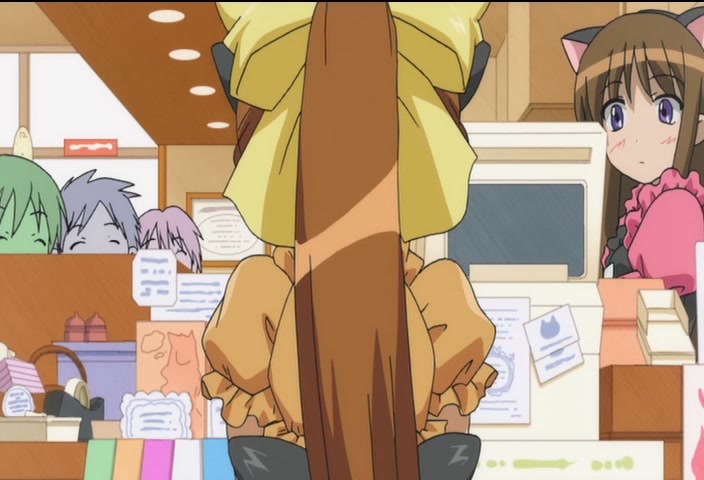
Doujin Work follows a loose episodic structure built around the rhythm of comic conventions. Najimi stumbles from one event to the next, printing tiny runs of ero-manga, panicking when they do not sell, and celebrating with tearful intensity when they do. The twelve episodes cover her first convention as a seller, her disastrous attempts to buy reference material in Akihabara, her stint working at a catgirl café to pay off printing debts, the emergence of a rival named Nidou Kaneru, a beach drawing camp that functions as the series’ emotional turning point, and finally an arc in which a magazine editor offers her a professional debut.
The pacing is brisk and front-loaded with comedy. Early episodes prioritize misunderstandings and situational embarrassment, with Najimi getting caught buying adult games, fleeing from police officers, and enduring her friends walking in on her workplace humiliation. As the series progresses, the comedy recedes slightly to make room for character growth. The beach camp episodes in particular mark a shift, forcing Najimi and Kaneru to produce manga on copy paper under a brutal deadline, and in the process discovering that they actually enjoy the focused labor of creation. The finale, structured around a literal chase sequence as Najimi flees from the editor trying to force her to stamp a contract, is both absurd and emotionally resonant.
The central thematic tension is between money and passion. Najimi begins the series convinced that doujinshi is a get-rich-quick scheme. She daydreams about designer condos and Rolls-Royces, her ambitions comically outsized relative to her abilities. The series systematically dismantles this fantasy. Justice, her childhood friend and a wildly popular doujin artist, sells thirty thousand books per event at a price that barely covers printing costs. He explicitly states that money is unnecessary, that having people read his work is satisfaction enough. Najimi scoffs at this idealism, but her own journey gradually proves him right. Her first book sells a single copy, to a customer named Hoshi Junichirou, and her joy in that moment is genuine and unforced. By the finale, when the professional contract arrives with the stipulation that she must quit doujin work entirely, she realizes that the hand-to-hand exchange with readers means more to her than any career path could.
A recurring metaphor runs through the series, introduced by Tsuyuri and gleefully amplified into disaster: doujinshi as a child. Tsuyuri refers to Najimi’s manga as something she has “given birth to,” asks about its “name,” and speculates about her “partner.” Justice, taking everything at face value as he always does, becomes convinced that Najimi is pregnant and that Hoshi is the father. The metaphor is ridiculous but pointed. These amateur books are embarrassing, imperfect, and deeply loved by their creators. They are things you stay up all night to finish, things you worry over, things you defend even when everyone tells you they are not very good. The parental parallel is silly on the surface but sincere underneath.
The series also makes a quiet argument for amateurism as an end in itself. Justice refuses professional offers because the industry would restrict the extreme content he wants to draw. Tsuyuri prefers to work at her own pace. Najimi ultimately chooses the cramped train rides after all-nighters, the embarrassment of buying eroge, and the thrill of selling five copies face-to-face over a stable career. The show does not frame this as a stepping stone toward eventual professionalism. It frames it as a valid, fulfilling way to engage with art. In an anime landscape filled with stories about striving toward greatness, Doujin Work champions the opposite: staying where you are, with the people you care about, doing something you love badly.
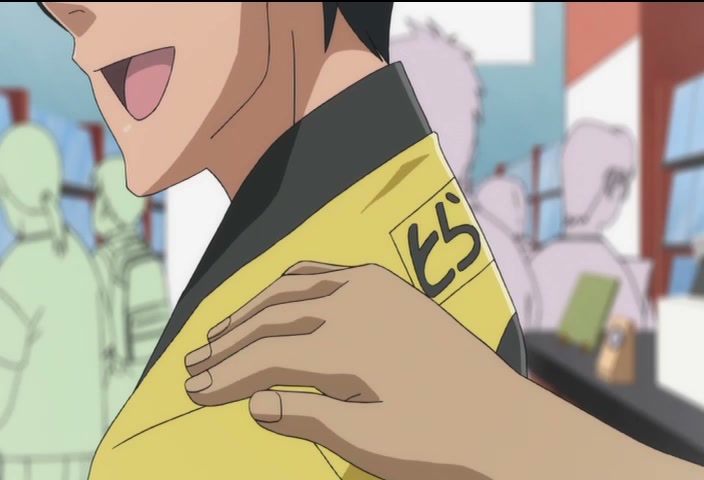
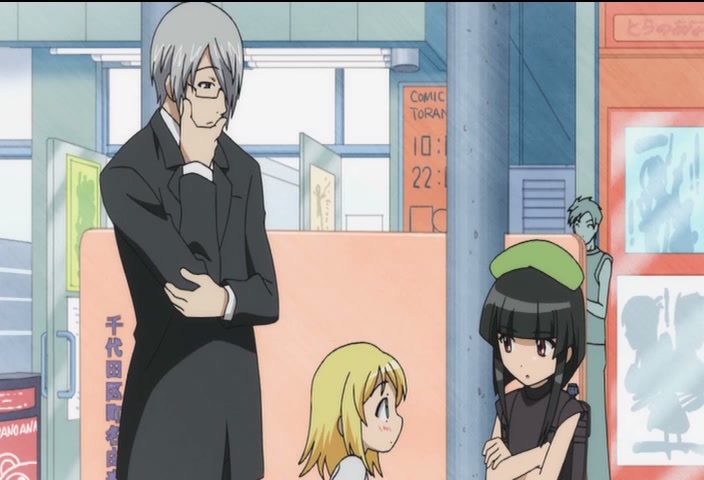
Culturally, the series is a time capsule of mid-2000s otaku life. The conventions are clear stand-ins for Comiket, right down to the registration deadlines, the early-morning train rides, and the frantic booth setup. Najimi’s mortifying visit to an Akihabara adult game store treats the purchase of eroge as something embarrassing but fundamentally normal, a form of research for aspiring creators. References to Otome Road, Toranoana, and Tiger’s Den anchor the show in a specific pre-streaming geography of fandom, when physical retail spaces and in-person events were the backbone of doujin culture. The catgirl café where Najimi works under the name “Luna” is both a comedic setting and a genuine cultural artifact, reflecting the era’s proliferation of themed cafés as otaku gathering spaces.
I cannot speak to how the anime adapts its source manga, as I have not read the original. What I can say is that the anime functions as a complete, self-contained story with a clear emotional arc and a satisfying conclusion. The twelve episodes do not feel rushed or incomplete. There is no sense that crucial context has been left out. Whatever changes the adaptation may have made, the final product coheres on its own terms.

Characters
Osana Najimi is a protagonist who should not work on paper. She is loud, greedy, impulsive, and genuinely incompetent at the thing she has decided will make her rich. Her early manga is terrible, and her early “improvement” consists of drawing only faces from one angle to hide her inability to render bodies. She lies badly, panics constantly, and drags her friends into increasingly absurd situations. And yet she is endearing precisely because her enthusiasm outraces her ability. When she sells a single copy of her first doujin, she hugs the customer and screams “I love you!” with an intensity that is both mortifying and weirdly touching. By the final episodes, her mercenary ambitions have softened into something more authentic. She still wants money, but she also wants the train rides, the all-nighters, and the friends who tease her mercilessly while never letting her quit.
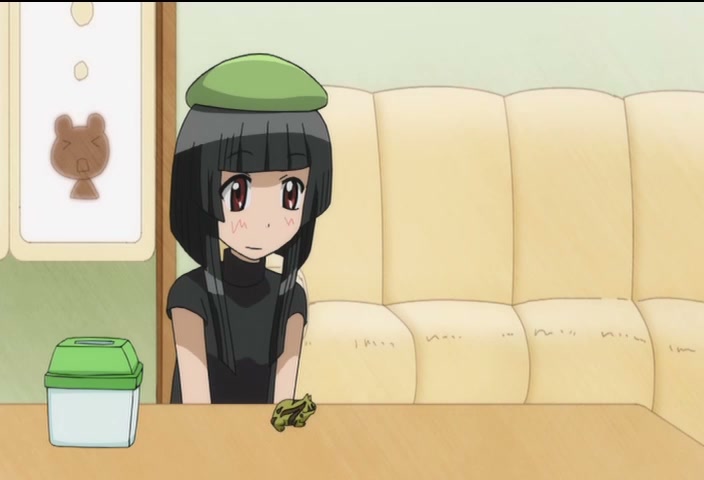
Tsuyuri is the series’ secret weapon, a deadpan kuudere who functions as both mentor and tormentor. She draws rape manga under the circle name “Panty Revolution” and delivers every line in a calm monotone regardless of the surrounding chaos. Her affection for Najimi is genuine but expressed almost exclusively through manipulation. She tells Justice that Najimi is pregnant, helps Kaneru improve her art specifically to intensify the rivalry, and watches the resulting disasters with a serene smile. Beneath the sadism, however, she is the character most invested in Najimi’s growth. She is the one who takes Najimi to buy reference materials, who pushes her toward opportunities, and who in the finale hands out applications for the next convention without a word. She wants Najimi to stay in this world, and everything she does, however perverse, bends toward that goal.
Justice is a parody of the chivalrous idealist, a childhood friend who has appointed himself Najimi’s moral guardian. He sells thirty thousand books at a loss, speaks in operatic declarations, and believes with absolute sincerity that Najimi’s virtue is his responsibility to protect. His inability to interpret social situations leads to the series’ most sustained running gags. He genuinely believes Najimi is pregnant because Tsuyuri used maternity metaphors. He draws a five-hundred-page manga to rehabilitate a young man he believes has corrupted her. He tries to get hired at the catgirl café to “watch over” her. And yet his sincerity never wavers. When he saves Hoshi’s life via CPR after a jellyfish sting, then immediately resumes their argument about Najimi, it is funny because it is also, in his deranged way, consistent. He is the moral center the series both mocks and endorses.
Nidou Kaneru emerges midway through the series as Najimi’s rival and gradually becomes her most important relationship. A twenty-four-year-old office worker who lives alone and talks to her bear plushie, she is shy, socially awkward, and secretly a massive fujoshi. Her rivalry with Najimi is built on mutual recognition. They assess each other upon first meeting with the identical thought: “She’s less skilled than I am.” They are both right. Kaneru’s arc involves coming out of her shell, encouraged by Tsuyuri to draw explicit boys’ love content that she pretends is only for “educational value” while her nosebleeds betray her enthusiasm. Her fear of abandonment when Najimi might go pro adds unexpected pathos to the comedy. Her tearful insistence that “Najimi-san, you’re going far away!” is the series’ most emotionally honest moment, the confession of a lonely woman who found a friend through competition and is terrified of losing her.
Hoshi Junichirou is Najimi’s first fan and, eventually, her self-appointed sales representative. He quits a prestigious university to promote her work, endures Justice’s death threats and Tsuyuri’s manipulations, and stakes his employment on the promise that her books will sell. His devotion is one-sided and frequently pathetic, but it is not blind. When he criticizes Najimi’s safe, face-only manga in episode eight, telling her “The manga of yours I love isn’t like this,” he reveals that his admiration is rooted in genuine artistic engagement. He wants her to be the creator he believes she can be, and his bluntness at that moment is the catalyst for her growth.
The supporting cast includes Hoshi’s older brother, a narcissistic magazine editor who interprets every female interaction as romantic interest and whose arrival in the final arc presents the temptation of professional success. Sora, Justice’s young booth assistant, serves as the group’s emotional anchor, a child whose simple “I’m happy as long as Najimi’s happy” becomes the thesis of the ending. The character writing throughout is broad and archetypal, leaning heavily on established anime personality types, but the interactions among them create a chemistry that feels genuine. These are not deeply complex individuals. They are recognizable types rendered with enough specificity and affection to make their relationships matter.


Visuals and Animation
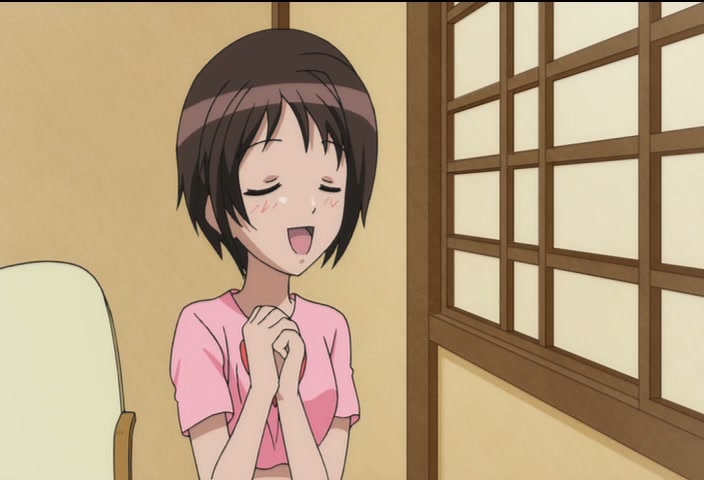
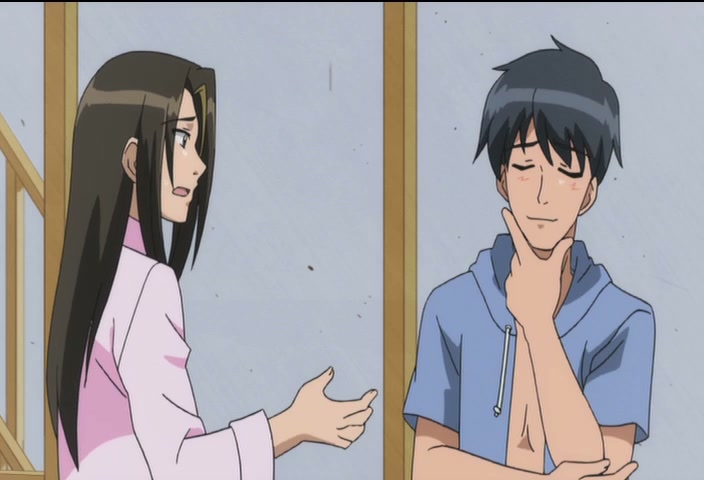
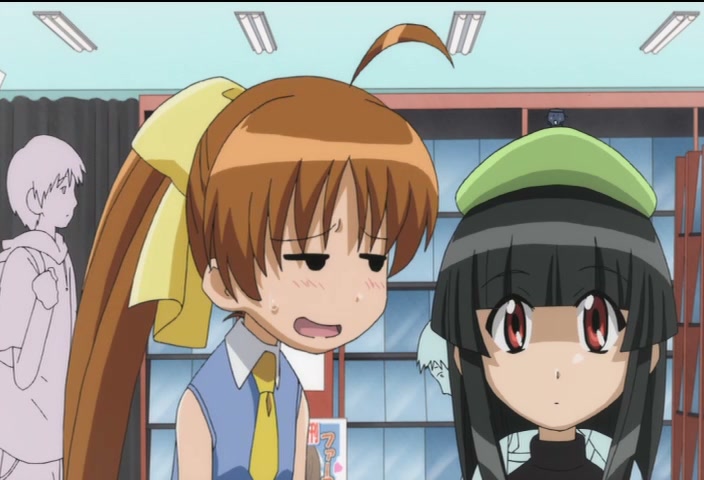
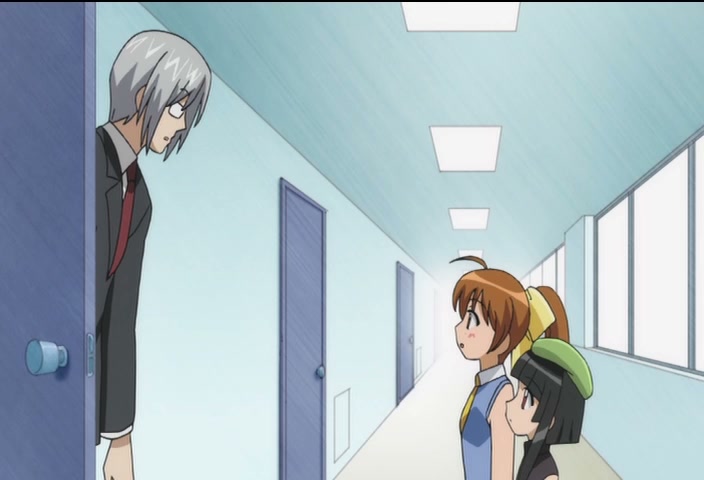
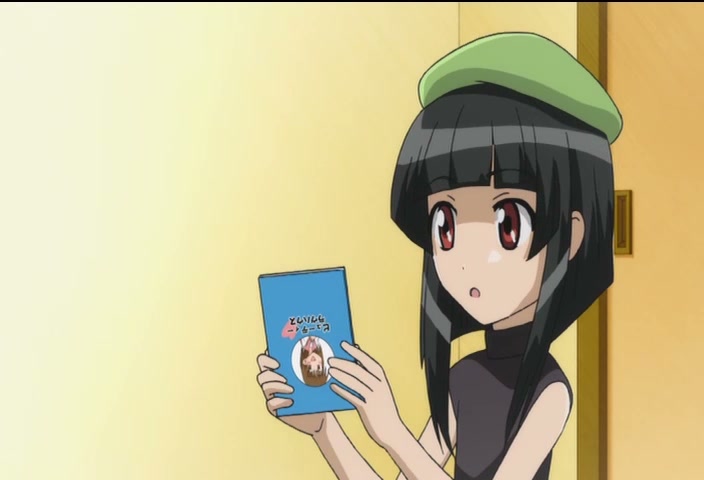
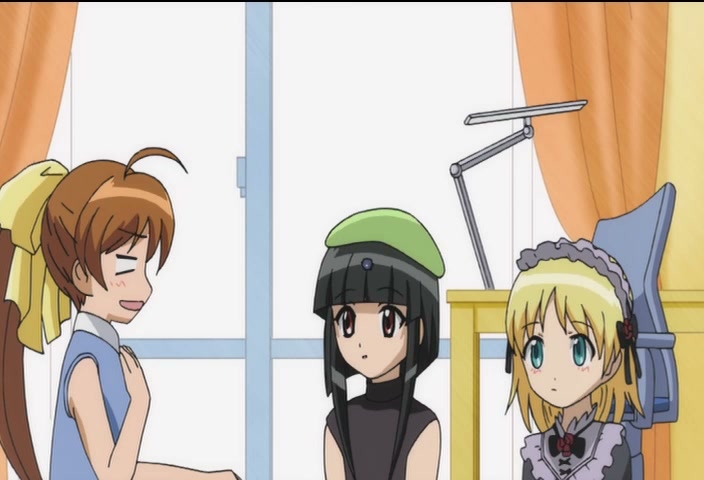
Doujin Work is a product of its era, a mid-2000s digital production that prioritizes character acting and comedic timing over cinematic spectacle. The art style is prototypically moe, with large expressive eyes, sharp clean linework, and a bright saturated color palette dominated by pastels and primaries. Character designs use strong visual signifiers to maintain distinct silhouettes. Justice’s beret, Sora’s bows, and the prominent ahoge that crowns Najimi’s head ensure that even in crowd scenes, the main cast is instantly recognizable.
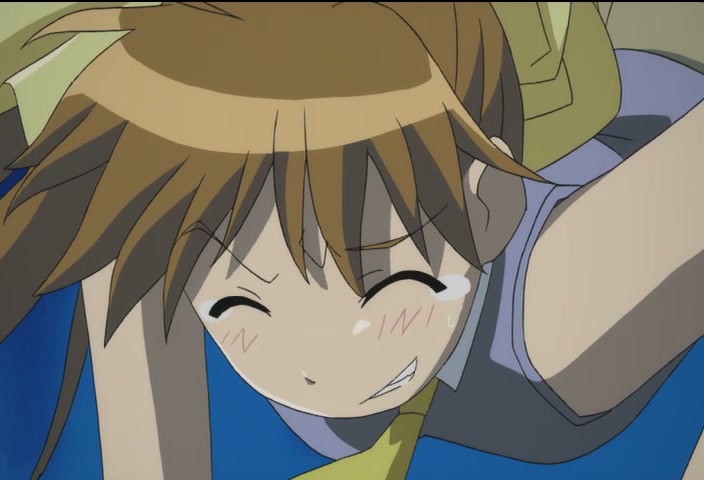
The series’ greatest visual strength is its expressive range. Characters cycle through an extensive repertoire of anime reaction shorthand: white-out eyes for shock, squiggling blush lines for embarrassment, anger veins, sweat drops, and full facial meltdowns when a situation becomes too mortifying to bear. The timing on these reaction shots is consistently sharp, with gags landing on the beat and expressions shifting rapidly to match the dialogue’s frantic pace. When Najimi’s cover is blown or Justice makes another catastrophic misinterpretation, the visual language amplifies the comedy without over-explaining it.
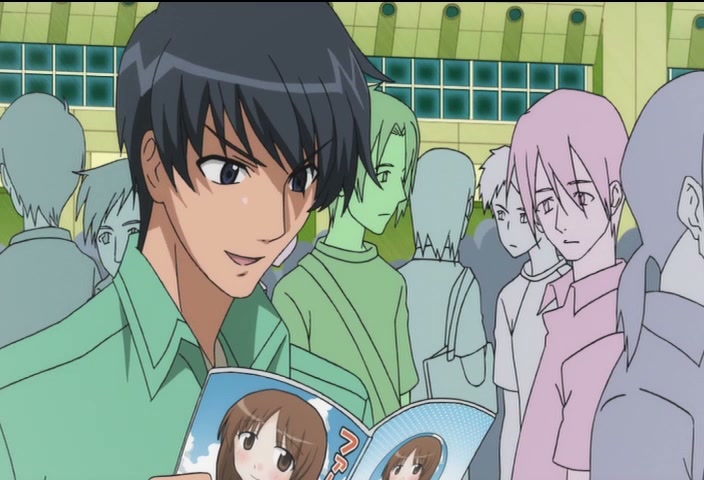
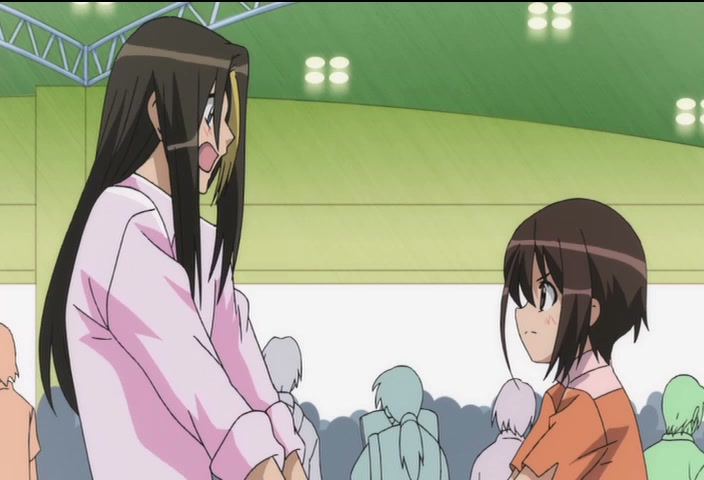
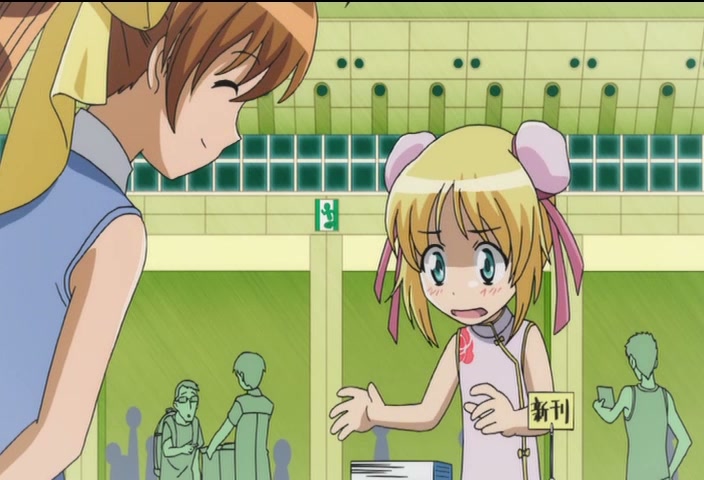
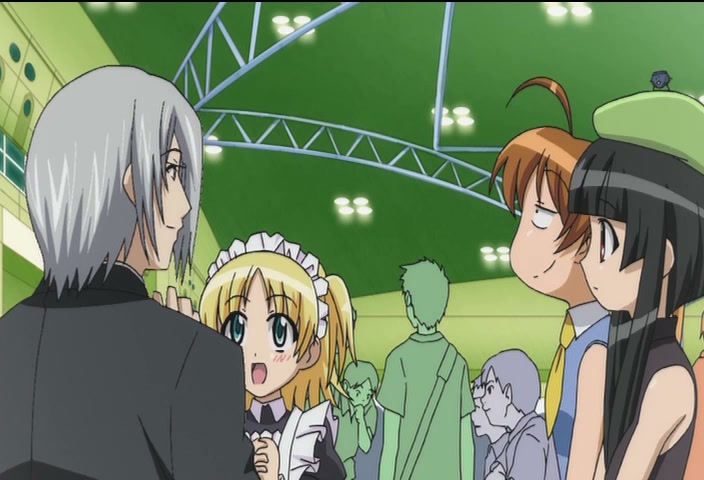
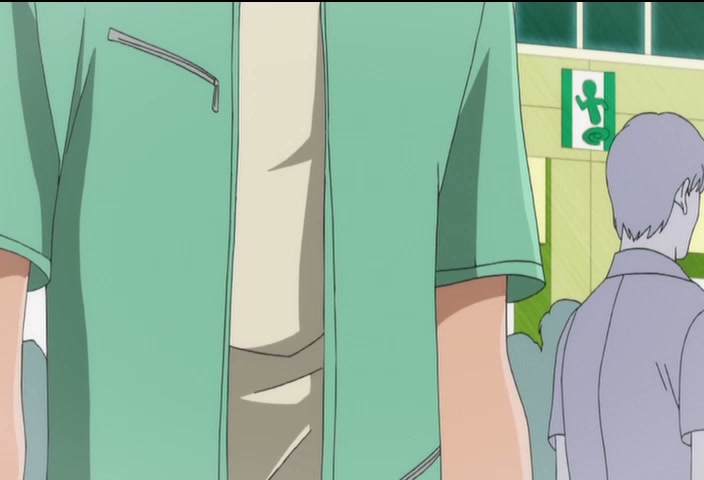
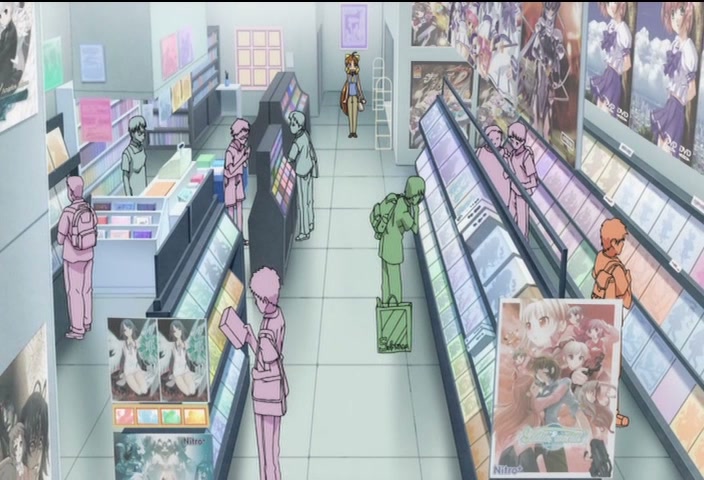
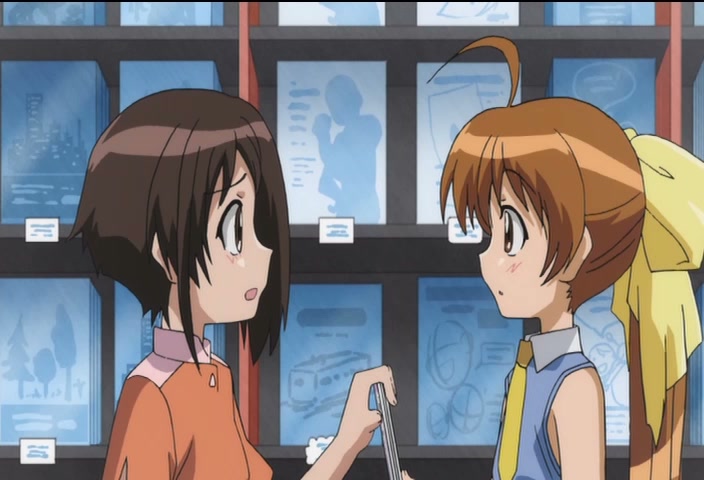
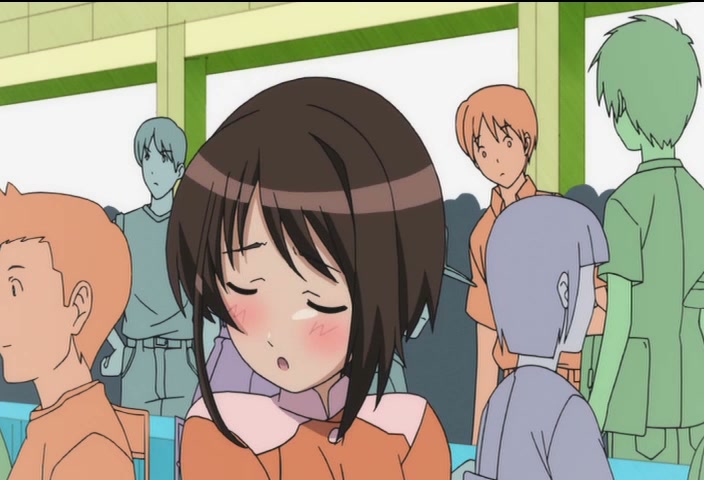
A clever budget-conscious technique appears in crowd scenes. Background convention-goers and passersby are rendered as monochromatic silhouettes in shades of mint green, lavender, and burnt orange. This approach simulates a busy environment without requiring detailed animation for dozens of background characters. It also creates a pleasant pop-art aesthetic that makes the world feel stylized rather than merely cheap. The conventions feel crowded and energetic even though the actual animation work is minimal.
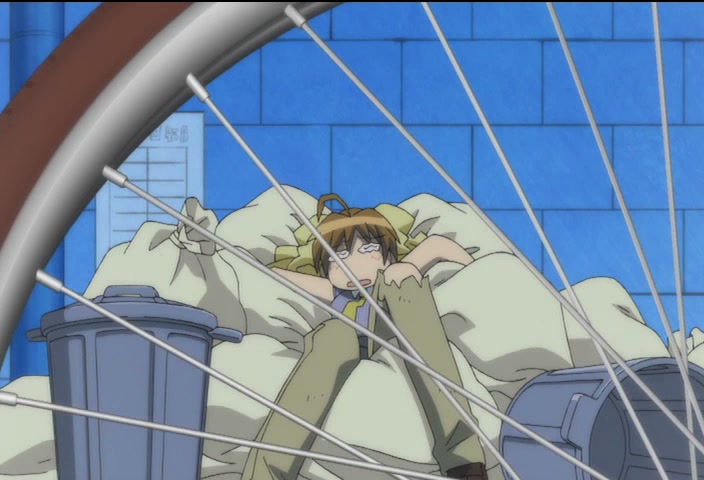
The animation is limited, and there is no point in pretending otherwise. Movement is often restricted to mouth flaps, head tilts, and dramatic still poses. Characters walk with minimal frames. Action sequences consist largely of speed lines and impact poses rather than fluid motion. This is the reality of a low-budget television production from 2007, and the series does not attempt to hide it. However, the limitation is deployed strategically. Many of the static moments, like Najimi freezing in embarrassment or Justice delivering a solemn glare while framed against a dramatic background, benefit from the stillness. These are comedic beats that require the audience to sit with a character’s reaction, and the lack of motion gives those reactions weight. Weakness appears when ordinary conversations lack any supplementary movement, leaving talking heads floating against flat backgrounds for extended stretches.
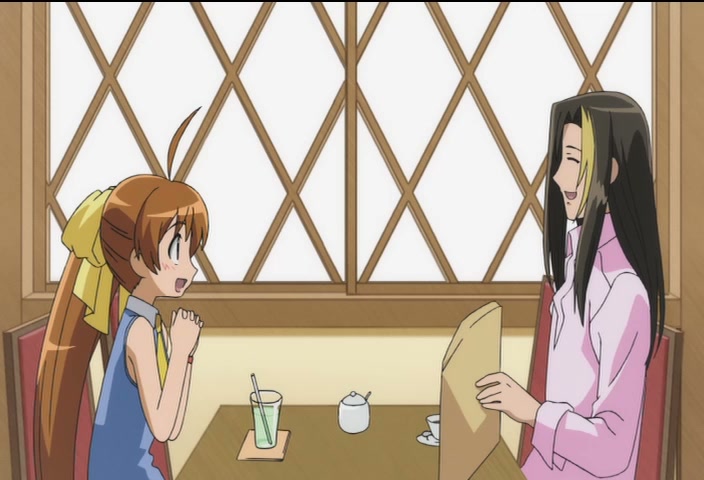
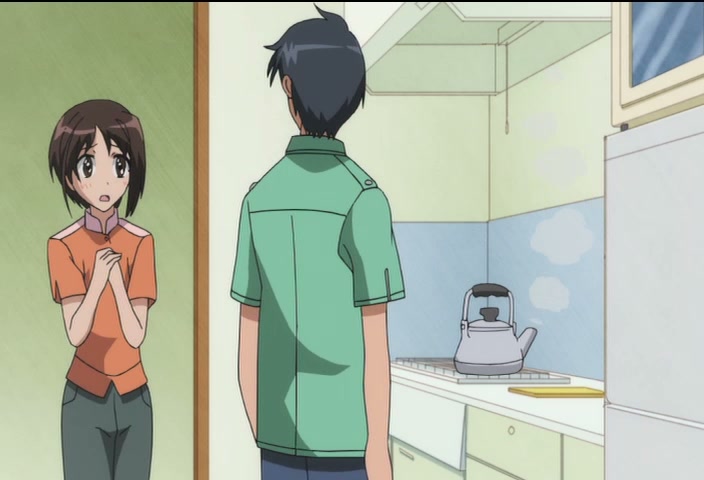
The background art is functional and varies in detail. Some interiors use strong one-point perspective and are populated with detailed static assets such as shelves of books or café decorations. These spaces feel lived-in and specific. Outdoor scenes often simplify trees and buildings to indistinct blobs of green and gray. The series occasionally uses solid black or gradient backgrounds during internal monologues, isolating characters in a void that emphasizes their emotional state. This technique is effective for comedy but contributes to the sense that the world is a stage set rather than a fully realized environment.
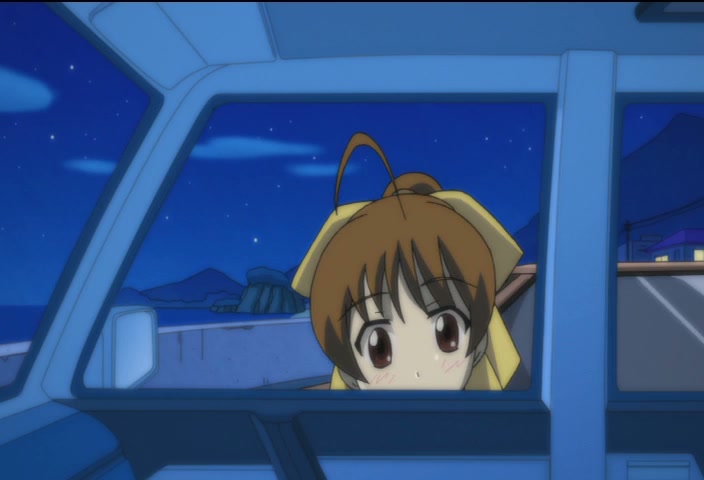
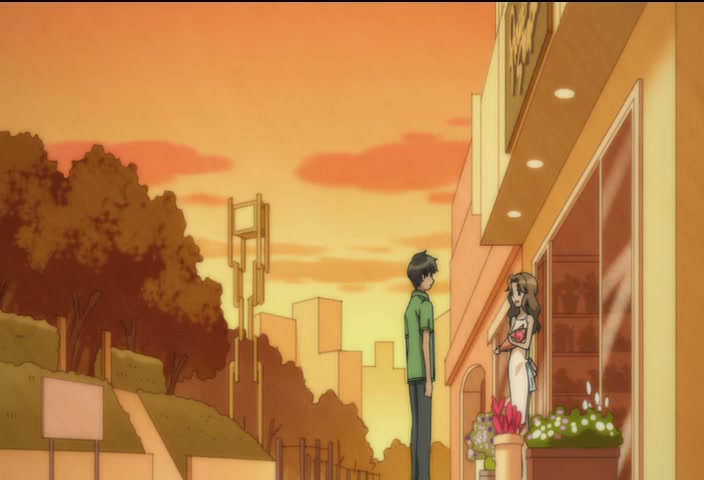
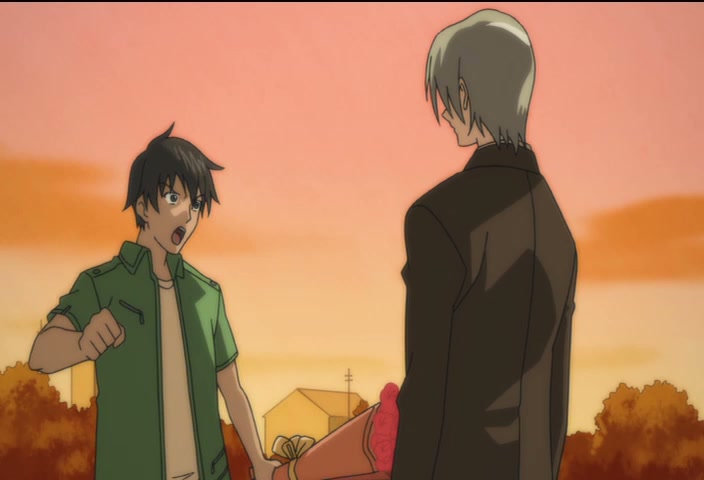
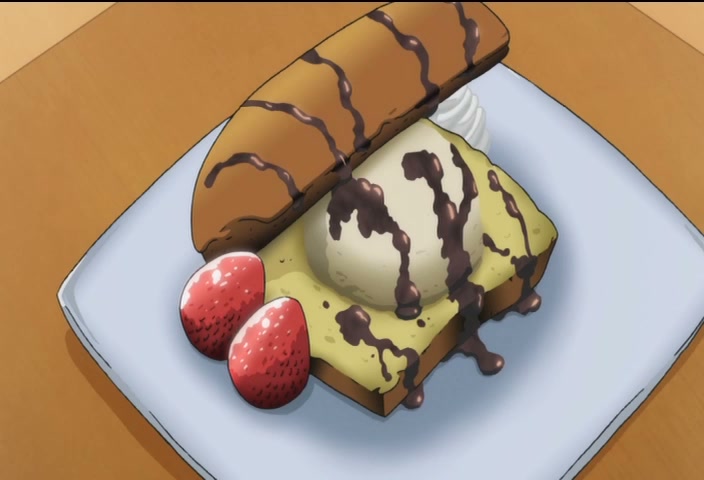
Lighting is generally flat, employing single-layer cel shading that avoids deep shadows or complex gradients. This contributes to a sunny, low-stakes atmosphere appropriate for slice-of-life comedy. The production does, however, show moments of greater ambition. Sunset scenes introduce warm orange washes with rim lighting on hair and clothing that add genuine depth. Nighttime sequences use a blue monochromatic filter to signal the time of day and create a quieter atmosphere. A recurring visual highlight involves food, which receives noticeably more detailed rendering than anything else on screen. The glossy highlights on desserts and the textured shading on bread suggest that someone on the animation staff cared deeply about making these small moments pop.
Compositing is relatively flat, with characters often feeling layered on top of backgrounds rather than integrated through environmental lighting or atmospheric effects. This is characteristic of digital anime from this period and is more a limitation of the production pipeline than a specific failure. The overall visual package is clean, legible, and perfectly adequate for the story being told. It will not impress anyone looking for sakuga showcases, but it never undermines the comedy or the character moments that form the series’ core.
Sound and Music
The opening theme is a bouncy, energetic pop track that establishes the series’ comedic tone immediately. Its lyrics focus on the chaos and excitement of doujin creation, matching Najimi’s initial enthusiasm before she learns how difficult the hobby actually is. The ending theme adopts a gentler, more reflective mood, with softer instrumentation and vocal delivery that complements the episodes’ tendency to end on warm character beats rather than punchlines. Neither song is particularly memorable as a standalone piece, but both function well within the context of the show, and the contrast between the energetic opening and the calmer ending mirrors Najimi’s own arc from frantic money-chasing to quieter satisfaction.
The background score is serviceable and unobtrusive. Light, bouncy tracks accompany comedic scenes, while slightly more subdued pieces underscore the rare moments of genuine emotion. The music never calls attention to itself, which is appropriate for a dialogue-driven comedy where the jokes and character interactions are the focus. There are no sweeping orchestral swells or memorable leitmotifs, but the score does its job of maintaining tone and pacing without distraction.
Voice acting is the audio element that deserves the most attention, and the cast delivers strong performances across the board. Asami Sanada voices Najimi with a manic energy that captures her swings between overconfidence and despair. Her line delivery during Najimi’s panicked explanations, where she speaks faster and faster as the situation spirals, provides some of the series’ funniest moments. She also handles the character’s gradual shift toward sincerity without losing the underlying comic voice. Kaori Mizuhashi as Tsuyuri is a highlight, delivering every line in a perfectly flat deadpan that makes her cruelest jokes land with maximum impact. Her calm, measured tone in the midst of chaos, whether she is telling Najimi she dropped “some porn” in public or calmly explaining that Kaneru’s uncensored manga cannot legally be sold, is consistently funny.
Nobuhiko Okamoto voices Justice with the theatrical gravitas the character demands, treating every line as though it were spoken on a stage, which makes his complete lack of self-awareness all the more absurd. His sincere declarations about protecting Najimi’s virtue, delivered with unwavering seriousness while the audience understands he has catastrophically misread the situation, rely entirely on his commitment to the performance. Ayumi Tsuji as Sora provides a bright, genuine child’s voice that cuts through the adult characters’ neuroses. Her simple, cheerful line deliveries ground scenes that might otherwise tip into pure farce.
Sound design is minimal but effective. The ambient noise of convention halls, crowded trains, and café interiors provides a sense of place without overwhelming the dialogue. Specific sound effects, such as the thump of a book hitting a table or the clatter of a train departing, are clean and well-timed. The audio mix prioritizes voices, as it should for a comedy driven by rapid-fire conversation and reaction.

Overall Verdict
Doujin Work is a small series about small stakes, and that is precisely its charm. It does not try to be a definitive statement about doujin culture, a comprehensive guide to Comiket, or a dramatic coming-of-age story about artistic genius. It is a comedy about a mediocre artist who discovers that she loves the process more than the potential payoff, and about the friends, rivals, and weirdos who make that discovery worthwhile.
The series will not appeal to everyone. Its humor relies heavily on sexual misunderstanding and ero-manga as a backdrop. Viewers uncomfortable with that subject matter, or with the casual treatment of adult content as a normal creative outlet, will find little to enjoy here. The limited animation and functional backgrounds may frustrate those accustomed to higher-budget productions. The character archetypes are familiar, and the series does not attempt to subvert them so much as execute them with affection and good timing.
For the right audience, however, Doujin Work is a gem. Fans of mid-2000s niche comedies, those with nostalgia for pre-streaming otaku culture, and anyone who has ever poured hours into a creative hobby that will never make money will recognize themselves in Najimi’s journey. The series is at its best when it balances its bawdy humor with genuine warmth, and the finale earns its emotional resolution honestly. Watching Najimi run from a professional contract, shouting that she wants to keep shamefully buying erotic games and hand-selling her crappy manga to each and every customer, is both ridiculous and weirdly moving.
The series understands that dreams do not need to come true to be worth having. Sometimes the point is not the fortune or the debut or the recognition. Sometimes the point is the train ride after an all-nighter, the embarrassment of buying reference material, the thrill of selling five copies face-to-face, and the friends who tease you mercilessly while never, ever letting you quit. Doujin Work is a love letter to that experience, and twelve episodes later, I found myself genuinely sad to leave these characters behind. That is the highest compliment I can give a comedy: I wanted to stay in their world a little longer, watching them be bad at something they love.

Gallery