





Introduction
There is a particular kind of mid-budget romantic comedy that flourished in the early 2000s, a genre built on a single high-concept premise, a small cast, and an almost defiant commitment to exploring its central idea from every angle before the season runs out. Okusama wa Joshikousei (My Wife is a High School Girl) belongs to this tradition completely. A 17-year-old girl is secretly married to her physics teacher. They live together, eat together, and navigate the daily rituals of domestic life while maintaining an absolute firewall between their private world and the school where they must act like strangers. Add a legally binding contract from the bride’s father forbidding any physical intimacy until graduation, and you have a pressure cooker disguised as a warm cup of tea.
I enjoyed this series more than I expected to. It knows exactly what it wants to accomplish and pursues that goal with genuine sincerity. The animation budget is modest, the pacing occasionally wobbles, and the male lead can test your patience. But the series has a clear thematic center, a surprisingly mature handling of its supporting cast, and enough tender domestic warmth to make its thirteen episodes feel like time well spent. This is not a show for everyone. If the student-teacher premise is a nonstarter for you, nothing here will change your mind. But if you can accept the central fantasy on its own terms, you will find a quietly affecting story about waiting, about the performance of identity, and about the unconventional families we build when traditional structures fail us.

Story and Themes
The Contract as Narrative Architecture
The entire series rests on a single plot device, a contract drafted by Onohara Iwao, Asami’s father, which declares that the marriage will be annulled if the couple engages in any “male-female relations” before Asami graduates from high school. This document functions as far more than a chastity belt. It is the structural spine of the narrative, the source of every comedic misunderstanding and every emotional complication.
The contract externalizes Kyousuke’s internal conflict. He loves Asami, genuinely and deeply, but his conception of love is initially paternalistic. To love her is to protect her, and to protect her is to deny both of them what they want. The contract gives moral weight to his natural reticence. He can interpret his fear as honor, his avoidance as integrity. This is simultaneously his most admirable quality and his most frustrating flaw. His decency traps him, and the series follows his slow, awkward journey toward understanding that protecting Asami’s future is not the same thing as protecting her heart.
For Asami, the contract transforms natural desire into forbidden fruit. Consummation would prove, in a way that words cannot, that Kyousuke sees her as a woman rather than a child. Her schemes and fantasies are not merely about physical pleasure. They are about validation, about closing the gap between her two identities. She is a high school girl in public, a devoted wife in private, and neither identity feels fully real to her without the other’s acknowledgment.
The series mines this premise for both comedy and genuine pathos. A shared bath becomes a high-stakes negotiation. A forgotten bag becomes a catastrophic security breach. The word “Darling” spoken in public becomes a weapon aimed at their entire life together. This constant low-grade tension is what makes their quiet domestic moments feel so precious. When they finally relax into each other’s company, the relief is palpable.
Performance of Identity
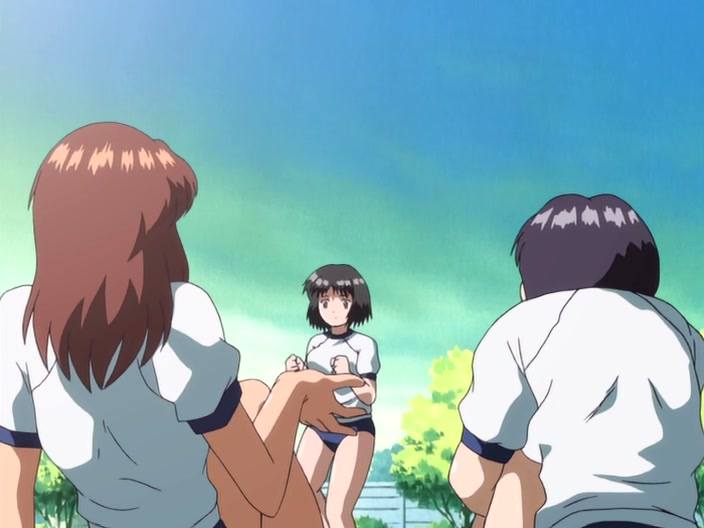
The thematic heart of Okusama wa Joshikousei is its exploration of identity as performance. Asami and Kyousuke maintain three distinct public faces. At school, they are student and teacher, polite and distant. In their neighborhood, they pose as siblings, an additional lie that generates its own complications. Only within their apartment walls can they exist as husband and wife.
This is not just a plot mechanic. The series consistently asks which version of the self is real. The one performed for society, or the one lived in secret. Asami’s frustration stems not merely from sexual longing but from the psychological exhaustion of code-switching constantly. When her friends tease her about having a crush on Ichimaru-sensei, the dramatic irony is almost painful. They are describing her husband, the man she cooks for and sleeps beside, and she must pretend they are speculating about a stranger.
The “sibling” cover story adds another layer. When their neighbor Sakura first suspects a forbidden brother-sister relationship, the series briefly flirts with an even more transgressive misunderstanding before resolving it with the truth. This is characteristic of the show’s approach to taboo. It acknowledges the provocative implications of its premise, lets them simmer for comic effect, and then defuses them with emotional honesty.
The Found Family
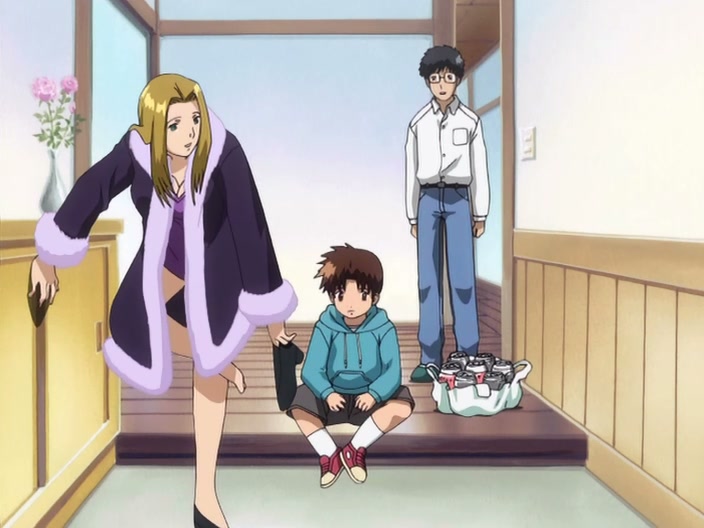
By the final episode, the Ichimaru household’s Christmas party includes the legally married couple, the wife’s tsundere father, a cabaret-club single mother and her son (who pose as siblings themselves), and a convenience store manager who was recently a romantic rival. This chaotic gathering represents the series’ quiet thesis about family. It is constructed through choice and loyalty, not just blood or law.
The Mizunosaki siblings, Sakura and Sasuke, are the most important pieces of this puzzle. They are a pseudo-family held together by performance, a mother and son pretending to be sister and brother. Their presence in the Ichimaru household normalizes the protagonists’ own unconventional setup by comparison. When Sakura discovers the truth in episode five, she does not become a threat. She becomes a protector, because she understands the weight of living behind a mask.
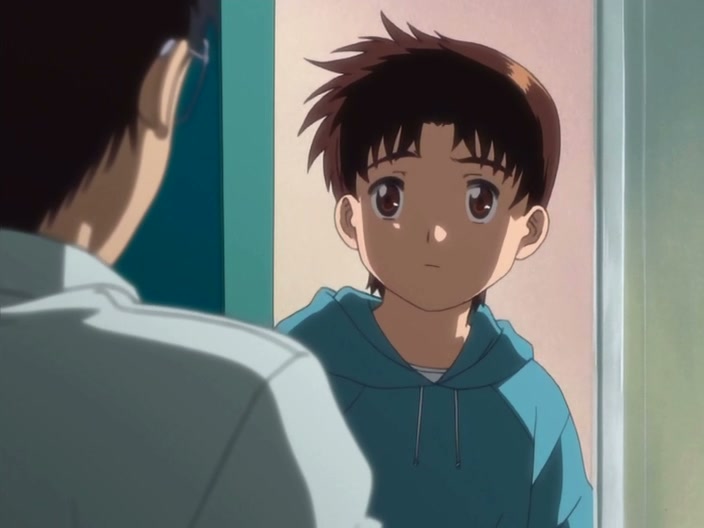
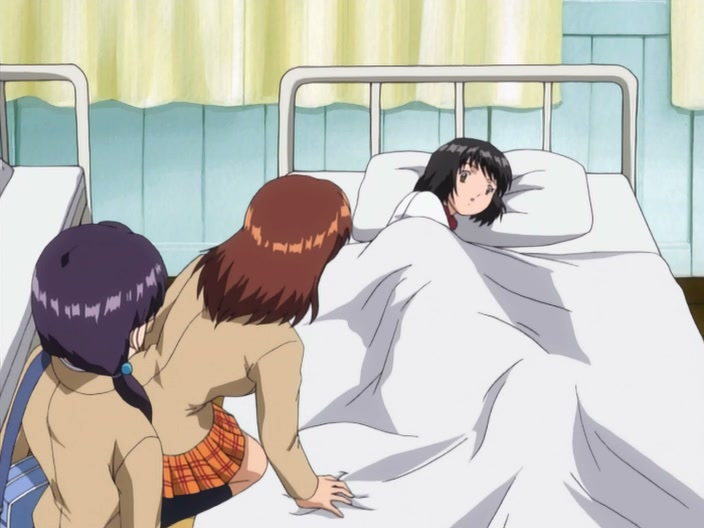
Sasuke, the precocious young boy with an exaggerated crush on Asami, functions as the symbolic child of this blended family. His loneliness when his mother works late, his immediate attachment to Asami and Kyousuke, and his genuine distress when Asami falls ill all reinforce the idea that this makeshift household is meeting real emotional needs for everyone involved, not just the central couple.
Astronomy as Emotional Language
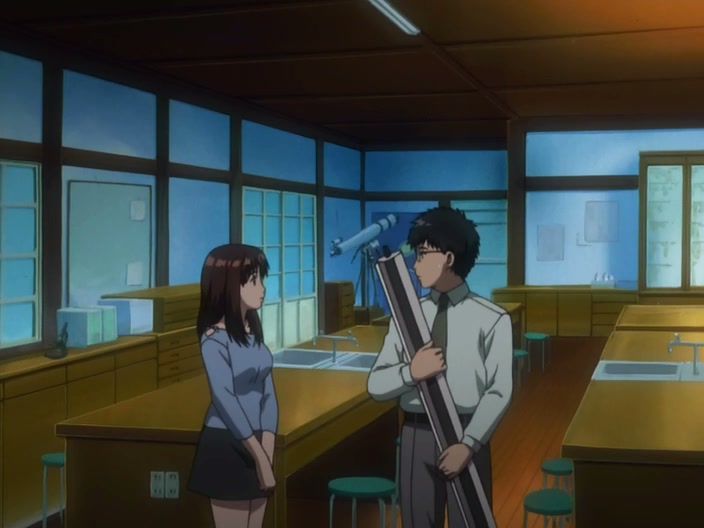
Kyousuke’s passion for astronomy is not mere character flavor. It is a thematic language. Stars are distant, beautiful, governed by impersonal laws, and observable only through careful, patient attention. The same could be said of Kyousuke’s public persona. His lectures about quasars, gravitational lenses, and stellar lifespans are the vocabulary he controls, a safe intellectual space away from the unpredictable realm of human intimacy.
The repeated motif of promised stargazing dates represents Kyousuke’s gradual willingness to share his interior world with Asami on her terms. Their first attempt, during his night duty in episode ten, is thwarted by Iwasaki-sensei’s intrusion. The second attempt, during the school field trip, becomes a group activity rather than a private moment. But the persistence of the promise matters. Kyousuke carries a heavy telescope across campus grounds, remembers a casual conversation from weeks earlier, and organizes his efforts around making Asami happy. This is how he expresses love, through thoughtful action rather than passionate declaration.
When he finally tells her she “shines brighter than any first-magnitude star,” he is translating his love into his native language. For a man so emotionally inarticulate, this is a profound act of vulnerability. The series understands that some people can only say “I love you” in their own private vocabulary.
Cultural Context and the Yome Ideal
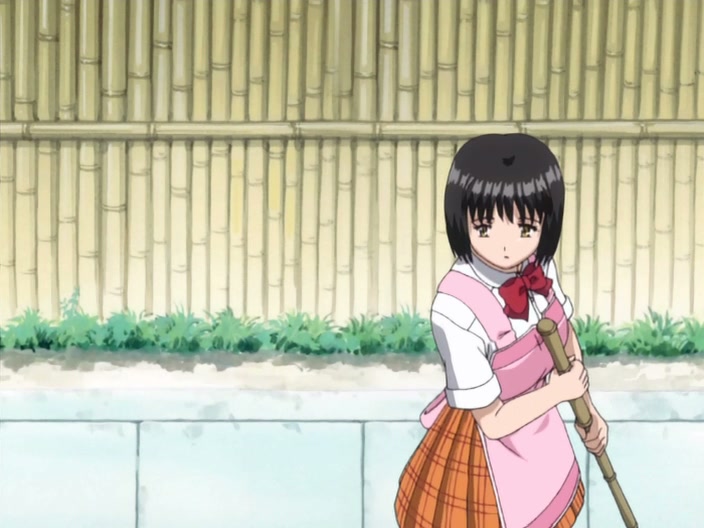
Asami embodies a specific fantasy fusion that has deep roots in Japanese romantic storytelling. She combines the devoted, domestically skilled yome (wife) with the innocent, earnest joshikousei (high school girl). She prepares elaborate meals from scratch, keeps a spotless home, greets her husband at the door with “Welcome home, Darling,” and simultaneously wears a school uniform, blushes furiously, and struggles with her emerging sexuality.
This combination appeals to a particular emotional register. The desire for a partner who is simultaneously nurturing and in need of protection, competent yet vulnerable, maternal yet innocent. It is a fantasy, but the series anchors it in enough specific domestic detail to make it feel grounded. The preparation of nikujaga (meat and potato stew), the shared bath, the morning send-off, the seasonal festivals. These rituals of Japanese home life provide a comforting baseline against which the more fantastical elements of the premise can play out.
The student-teacher relationship itself is a long-established trope in shoujo and josei manga, operating on the tension between institutional authority and genuine emotional connection. Okusama wa Joshikousei defuses the potential discomfort through several mechanisms. The marriage is already established at the story’s start, making the ethical breach a fait accompli we are asked to accept rather than watch unfold. Kyousuke is aggressively passive, the pursued rather than the pursuer, which inverts the typical power-dynamic anxiety. And the contract functions as a moral safeguard, assuring the audience that nothing “inappropriate” is happening, even as Asami desperately wishes it would.

Characters
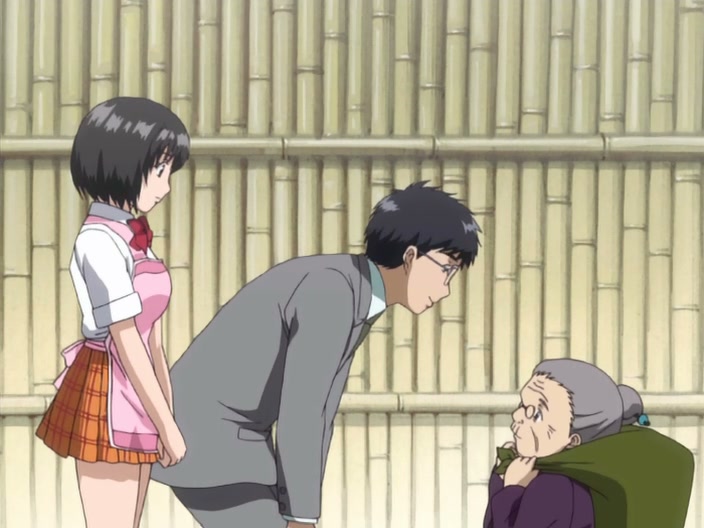
Onohara Asami: The Agent of Desire
Asami is the engine of this story. Her narration, heard throughout the series, reveals a constant undercurrent of longing. “Even though we are a married couple, we still haven’t done ‘it,’ not even once.” This refrain, repeated with variations across multiple episodes, could become tiresome in lesser hands. But Asami’s relentless optimism and fundamental good-heartedness keep her sympathetic even when her schemes become transparent.
She is, in many ways, the active protagonist. She pursues, she schemes, she confesses. Her agency is bounded by the contract and by Kyousuke’s reticence, but she never stops pushing against those boundaries. Her tragedy, if a romantic comedy can be said to have one, is that her greatest act of love—agreeing to the contract to keep Kyousuke in her life—is also the source of her greatest unhappiness.
Her emotional range is wide. She swings from domestic bliss to searing jealousy to crushing insecurity, often within a single episode. When Kyousuke lies about working overtime in episode four, her quiet “Darling, I can believe you, can’t I?” is devastating in its simplicity. When she sees him with Iwasaki-sensei and thinks “After all, I’m nothing more than a high school girl,” the self-directed cruelty of the thought reveals how deeply the secret has wounded her sense of self-worth.
Yet Asami never becomes spiteful or bitter. She becomes sad, which is a crucial distinction that preserves her likability. Her anger, when it comes, is directed at the situation rather than at Kyousuke. The “punishment dinner” of ultra-spicy food in episode ten is about as aggressive as she gets, and it is more comic than genuinely hostile.
Ichimaru Kyousuke: The Reluctant Husband
Kyousuke is the more difficult protagonist. His love for Asami is never in question, but his passivity can be genuinely frustrating to watch. He freezes when confronted with intimacy. He panics when their secret is threatened. He defaults to evasion and half-truths rather than trusting his wife with his burdens.
This is psychologically coherent. Kyousuke is a fundamentally decent man who has internalized his society’s judgment of his marriage. He believes, on some level, that he has done something wrong by marrying his student, and this guilt manifests as an almost pathological avoidance of situations that might confirm his transgression. The contract with Iwao provides him a framework for his fear, a way to be honorable by being distant.
What saves Kyousuke are the moments when his love breaks through his defenses. His drunken declaration to Iwao in episode one, “Asami belongs to me,” reveals a possessive passion he normally suppresses. His angry defense of Asami against the convenience store manager’s marriage proposal in episode eleven shows a fierce protectiveness that contradicts his usual timidity. His willingness to resign his teaching position in the final episode, based on a misunderstanding but accepted without hesitation, demonstrates that his career is secondary to his commitment.
His character arc, completed in that final episode, is the journey from protector to partner. He finally stops hiding behind the “dating” cover story and claims Asami as his wife, not just in private but in front of the one person whose knowledge could destroy them. “There’s no one I love more than her.” This declaration, simple and direct, is the culmination of thirteen episodes of fumbling toward emotional honesty.
Iwasaki-sensei: The Sympathetic Antagonist
Iwasaki-sensei is the series’ most complex character and its greatest writing success. She enters as a classic romantic rival, the beautiful colleague who aggressively pursues the male lead. She is manipulative, using fake chest pains and tearful confessions to corner Kyousuke. She is persistent to the point of harassment. And yet, the series never lets her become a simple villain.
Her confession in episode three about her past relationship with a student recontextualizes everything. She knows firsthand the pain of a forbidden love that cannot survive exposure. Her pursuit of Kyousuke is driven not just by attraction but by a desperate loneliness, a belief that she has found someone who might understand her. Her manipulation is real, but so is her suffering.
The revelation that Kyousuke and Asami are married, not just dating, is the turning point. She cannot compete with a wife. More importantly, her own history makes her incapable of destroying a bond she secretly idealizes. Her transformation from antagonist to protector is earned through this recognition. “I couldn’t do anything that would sadden the one I love,” she says, and the line carries the weight of her entire character arc. She chooses to become the guardian of the very love she once sought to claim for herself.
Onohara Iwao: The Tsundere Father
Iwao is pure comedic relief in form but thematically essential in function. His bombastic rage, his physical violence aimed at Kyousuke, and his constant brandishing of the marriage contract are all transparent masks for a deep, overprotective love for his daughter. He cannot admit he approves of the marriage without betraying his self-image as the protective patriarch.
His actions constantly betray his true feelings. He guards their house when they leave it unlocked. He brings stomach medicine when Kyousuke is ill. He brings watermelons and apples, framing these gifts as happenstance rather than care. His panic when Asami falls ill in episode twelve, his tearful cry of “Don’t die, Asami,” are one of the few moments when the mask slips completely.
Iwao represents the old guard, the traditional authority that the couple must circumvent and eventually win over. His gradual, unspoken acceptance mirrors the larger theme. Even the harshest opposition can be softened by genuine, demonstrated love.
The Supporting Cast
The Mizunosaki family, Sakura and Sasuke, function as a mirror to the protagonists’ own performance. Sakura’s pragmatic romanticism, her initial pursuit of Kyousuke as a stable husband, gives way to genuine investment in her neighbors’ happiness. Her discovery of the marriage in episode five transforms her from threat to ally almost instantly, a shift that speaks to her fundamental decency beneath the flirtatious exterior.
Sasuke’s exaggerated crush on Asami provides consistent comic relief. His obsession with her scent, his desire to bathe with her, and his constant declarations of affection are played for laughs while his genuine loneliness adds pathos. His confession in episode ten, “Mama will be late again tonight. Still, I really am lonely,” explains his constant invasions of the Ichimaru household as a search for the family warmth his own home lacks.
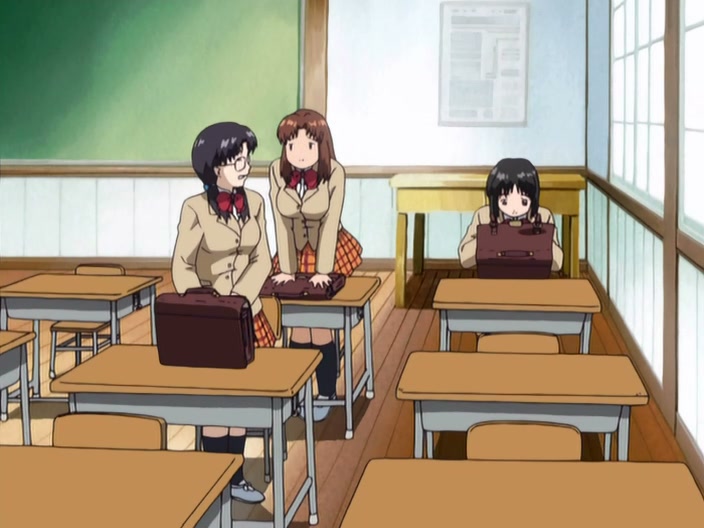
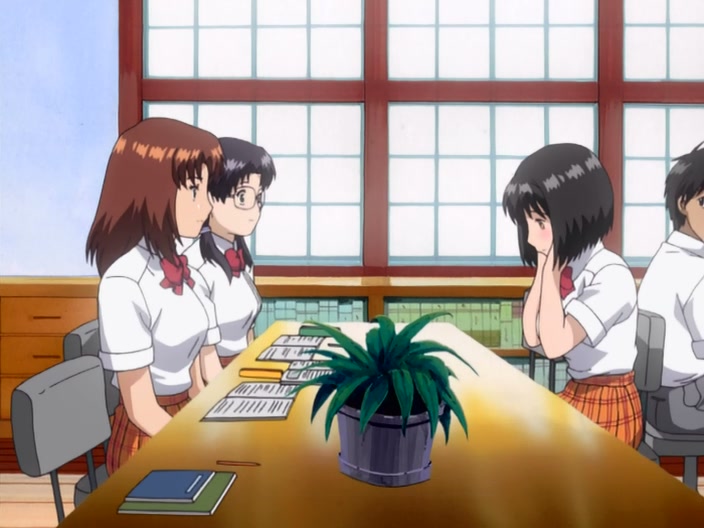
Asami’s friends Satomi and Kasumi remain functional rather than fleshed out, a consequence of the thirteen-episode runtime. They exist to react to Asami’s public persona, to provide the “normal high school experience” she is sacrificing, and to generate dramatic irony by encouraging her to pursue the man she has already married. They are effective in these roles but lack arcs of their own.

Visuals and Animation
The Early-2000s Digital Aesthetic
Okusama wa Joshikousei sits squarely in the visual language of its era, the transitional period when digital production was becoming standard but had not yet achieved the polish of later years. Linework is clean but thin. Colors are flat but carefully chosen. There is a softness to the overall image that is characteristic of early-2000s romantic comedies.
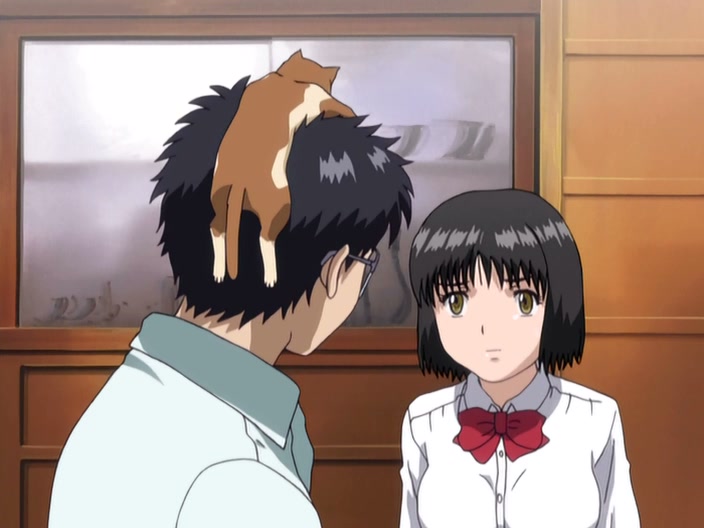
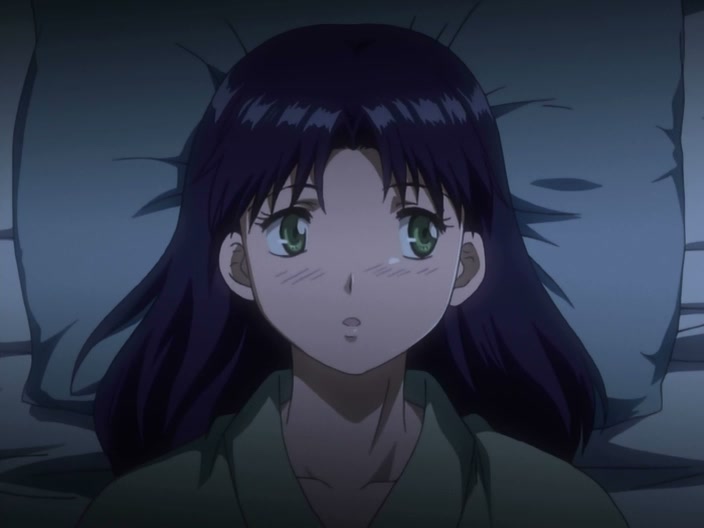
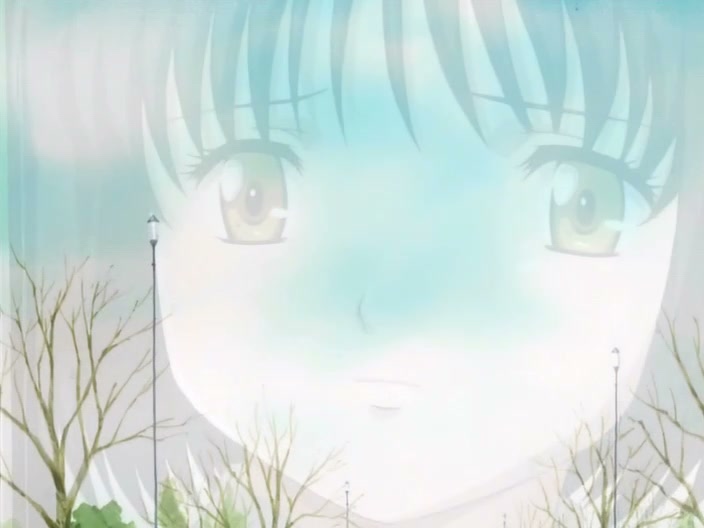
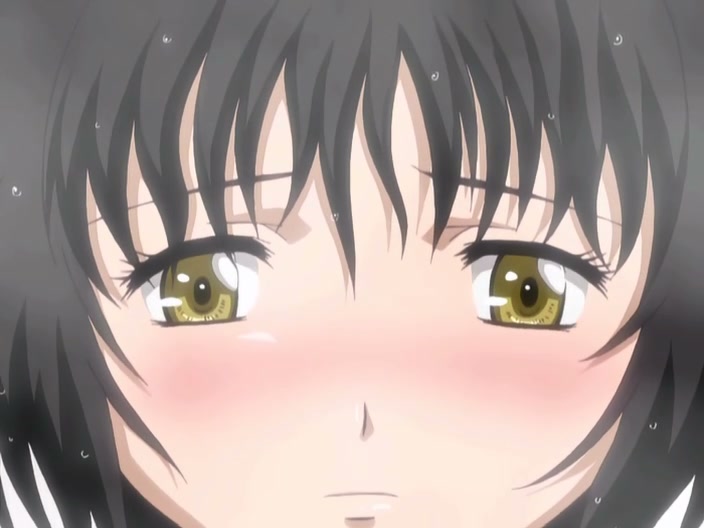
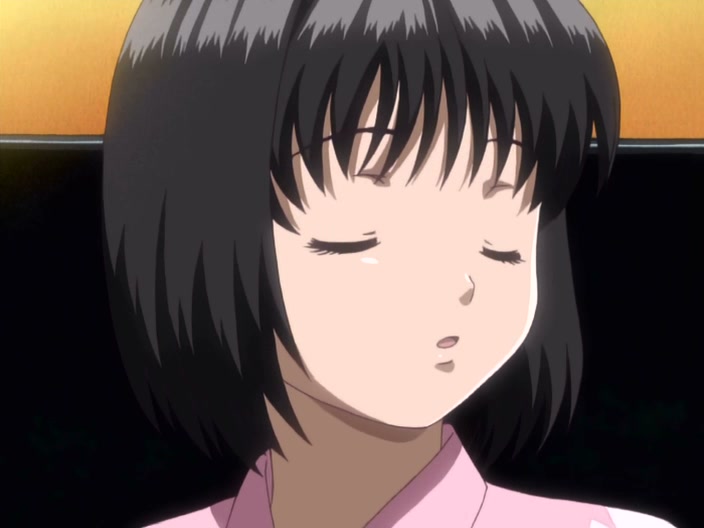
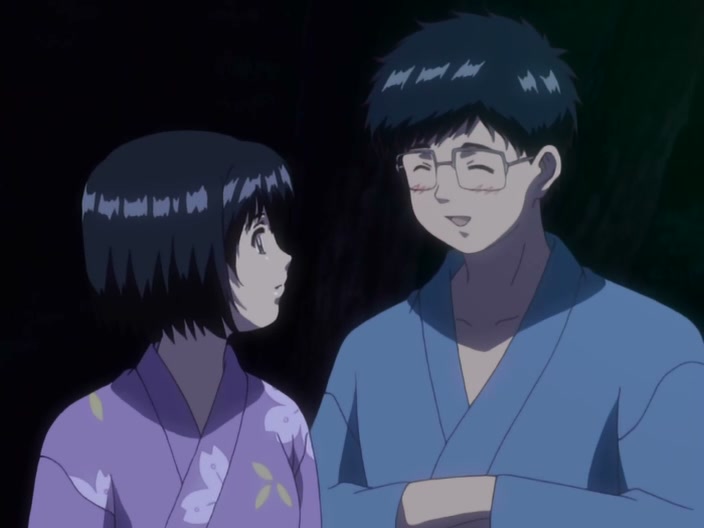
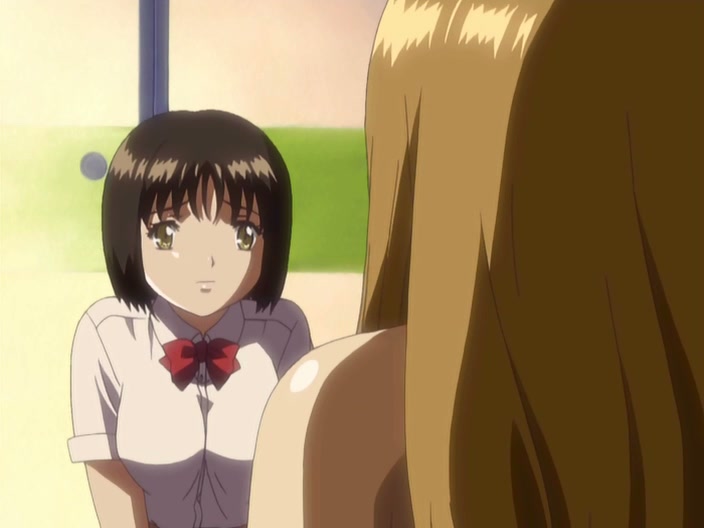
The character designs follow the “moe” template of the period with fidelity. Asami’s large, expressive eyes, soft facial features, and flowing dark hair are designed for maximum emotional legibility. Her expressions cycle through a wide range of states, joy, determination, jealousy, despair, and the series budgets its animation resources accordingly. Close-up shots of her face during emotional beats receive the highest level of polish, with detailed iris patterns, subtle blush gradients, and careful attention to the way tears gather before falling.
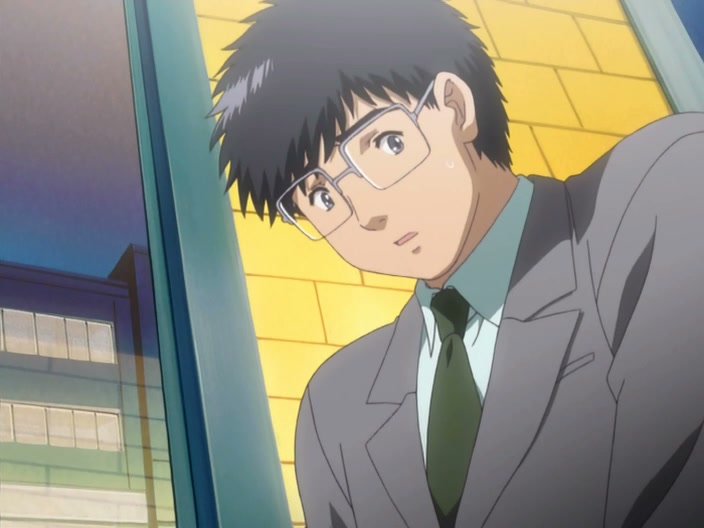
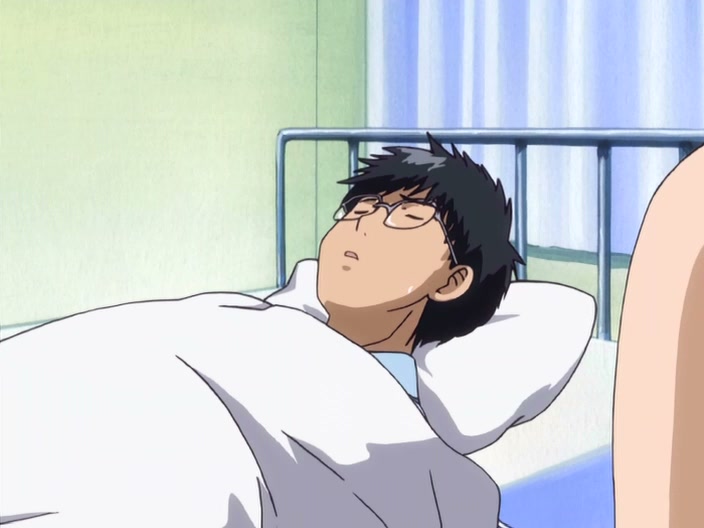
Kyousuke’s design communicates his character through visual shorthand. The glasses, the slightly disheveled hair, the lanky frame. He is meant to read as “kind but hapless academic,” and the design supports this effectively. His expressions are more constrained than Asami’s by design, but his micro-expressions, a twitch of the eyebrow, a sudden inability to meet her gaze, are rendered with enough clarity to convey his internal state.
The Money Shot Hierarchy
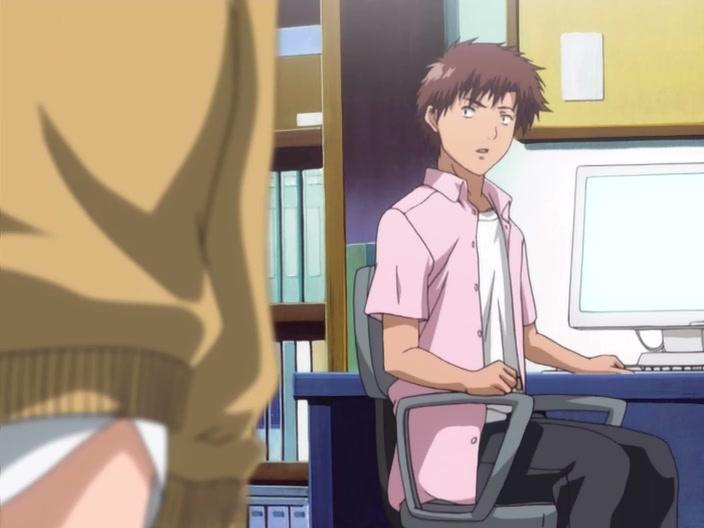
The production clearly allocates its limited animation budget toward emotional climaxes. When Asami’s face fills the frame, tears welling, or when Kyousuke’s expression softens into unguarded tenderness, the art reaches its highest level of polish. These “money shots” are what the audience remembers, and the series is smart enough to know where to place them.
In wider shots and comedic sequences, character models simplify considerably. Features reduce to dots or lines. Movement becomes stiffer. This is standard television anime triage, and while it is noticeable, it does not significantly damage the viewing experience. The series knows where its emotional weight falls and allocates resources accordingly.
Background Art and Domestic Warmth
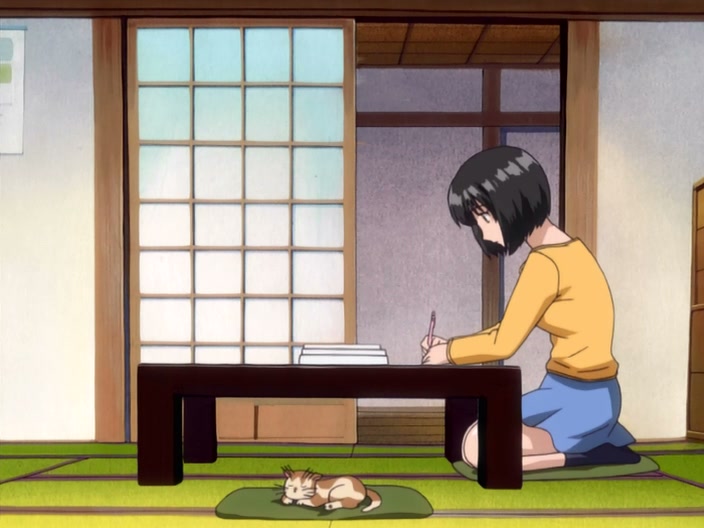
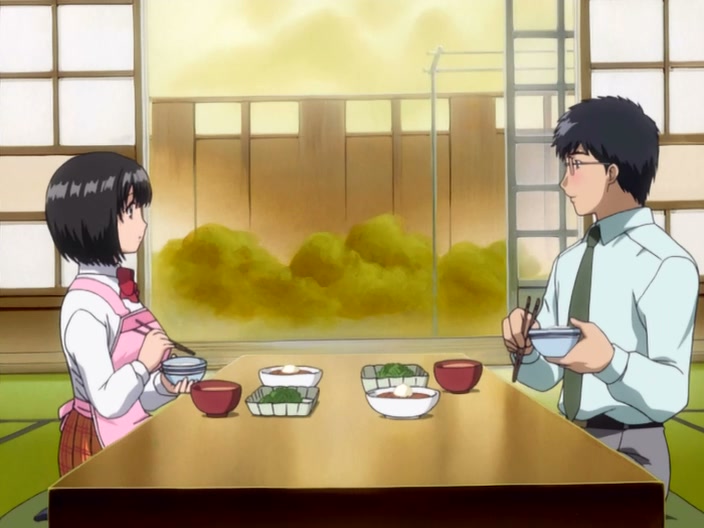
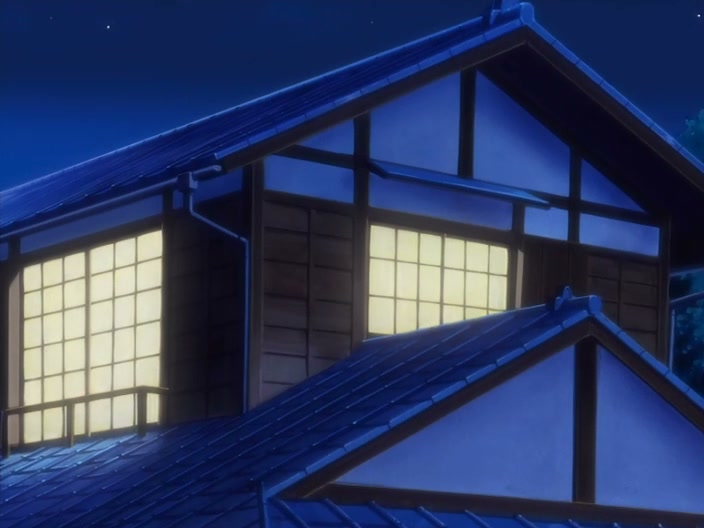
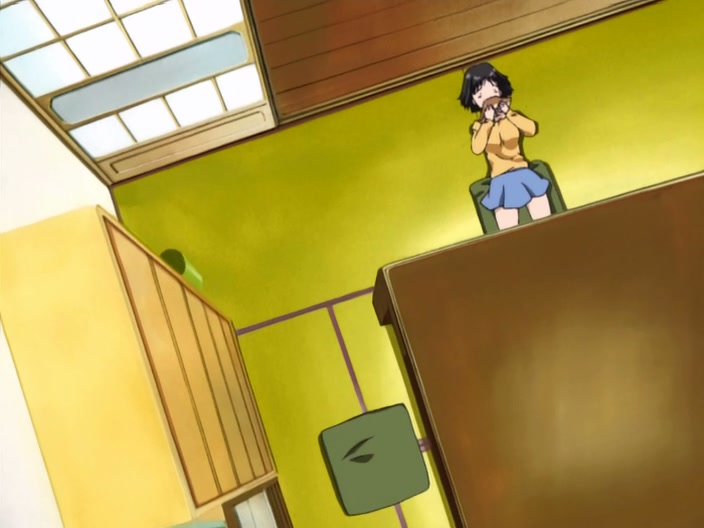
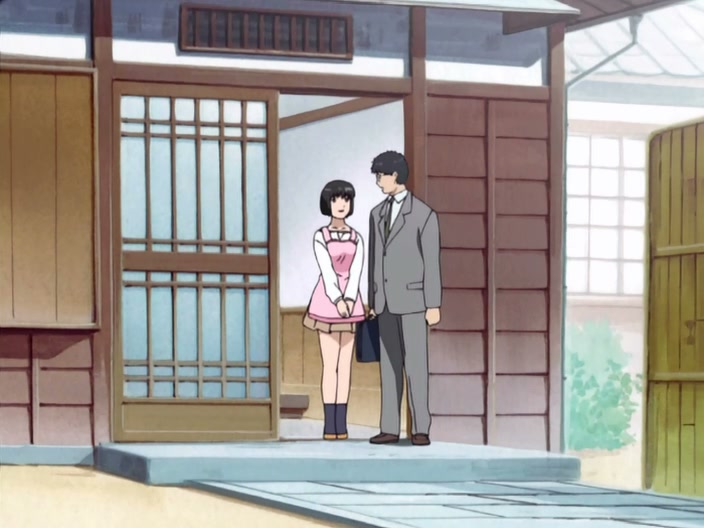
The Ichimaru apartment is the visual heart of the series. Warm wood tones, the low table, sliding doors, the small kitchen, these are rendered with palpable affection. The apartment feels lived-in, with scattered books, a cat that demands feeding, and the accumulated clutter of two people sharing a small space. This sense of domestic reality is essential for a series about the joys and challenges of daily married life.
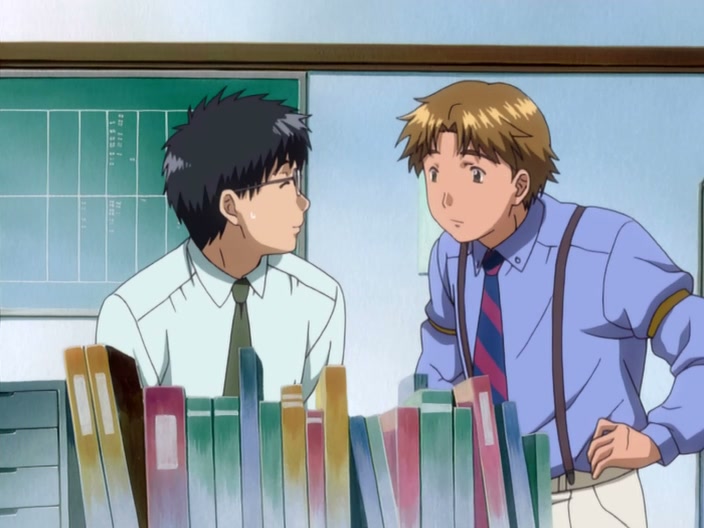
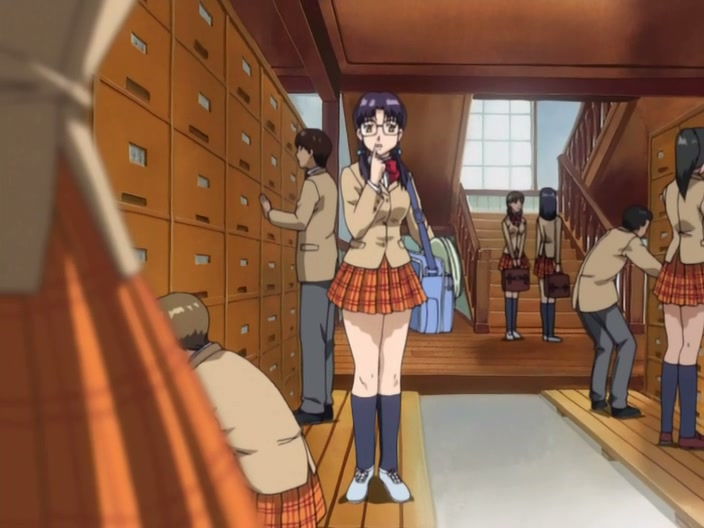
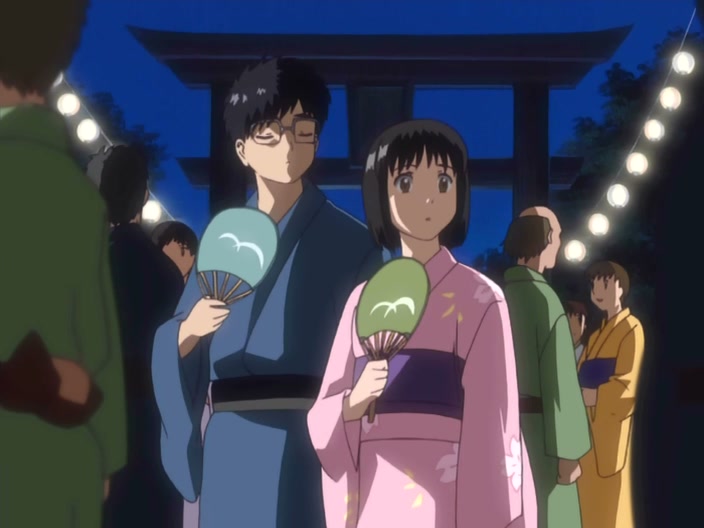
School settings are more generic but functional. Hallways, classrooms, the rooftop, the nurse’s office. They establish location without drawing attention away from the characters. Exterior locations like the park, the convenience store, and the shrine during the fireworks festival are rendered with enough specificity to create atmosphere while remaining clearly within budget constraints.
The background art occasionally reveals its limitations in the rendering of depth. Some environmental elements, particularly foliage and distant structures, appear as soft, blurry textures that create a slight “paper doll” effect, characters pasted onto a static background rather than fully integrated into three-dimensional space.
Lighting and Color as Emotional Guide
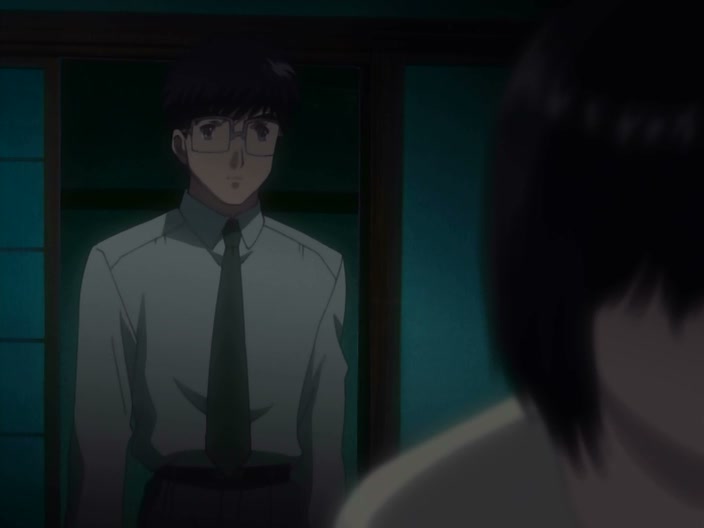
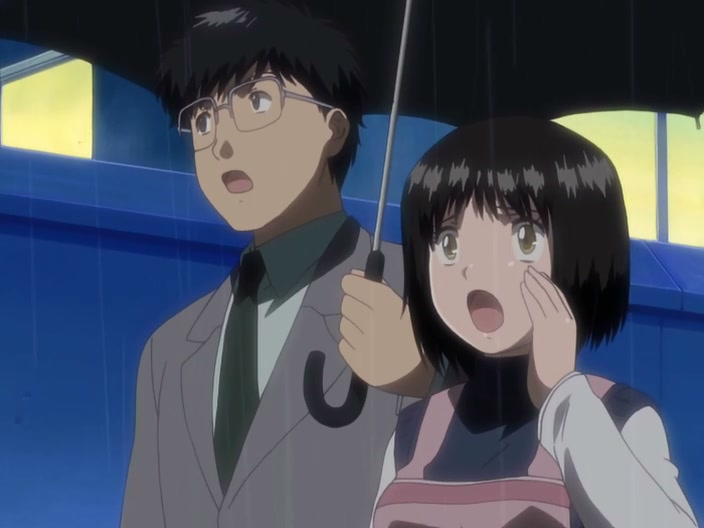
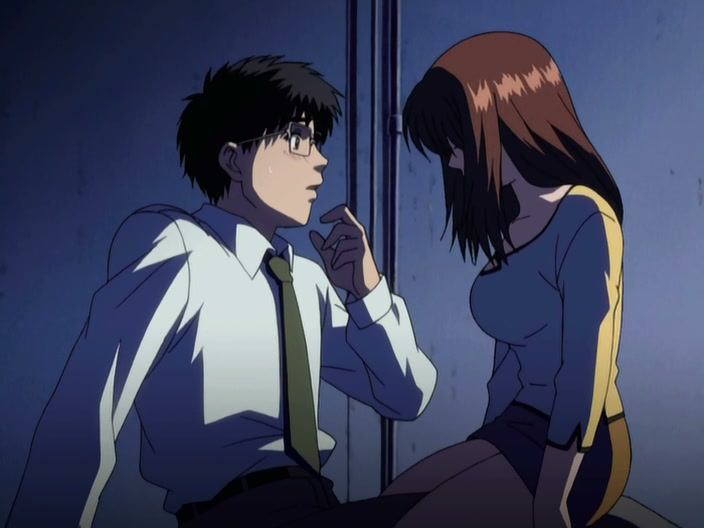
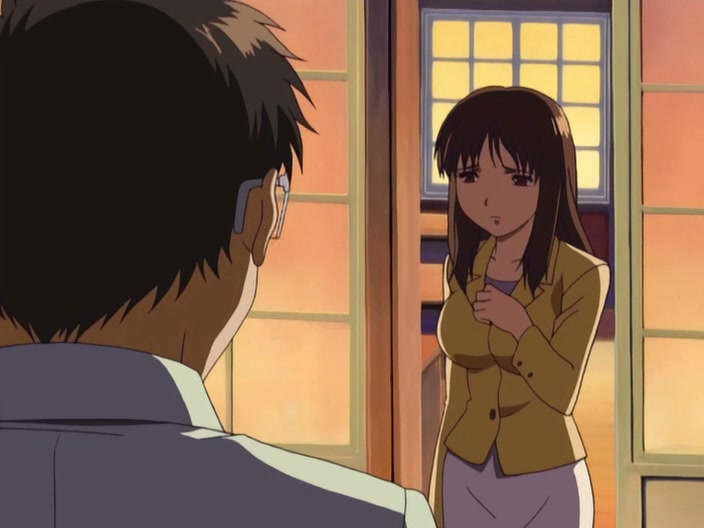
The single greatest visual strength of this production is its lighting design. The series uses color temperature with consistent emotional intelligence. Warm, golden-hour amber tones suffuse domestic scenes, creating a nostalgic, comforting atmosphere. Deep indigos and teals dominate nighttime exteriors, establishing a contemplative, romantic mood. Bright, slightly desaturated greys and greens mark institutional spaces like the school and the hospital, denoting routine or isolation.
Rim lighting and backlighting are deployed strategically to separate characters from backgrounds during pivotal emotional exchanges. This creates a heightened, almost luminous quality that elevates a scene’s impact without requiring expensive animation. The stargazing sequences use deep blues and soft bloom effects to create an ethereal, romantic atmosphere that supports the narrative’s most intimate moments.
Static vs. Weak Animation
Many scenes in this series are deliberately static. A long hold on a quiet domestic tableau. A character sitting in contemplative silence. A couple sharing space without speaking. These are not animation failures. They are atmospheric choices that serve the series’ “iyashikei” (healing) tonal elements. The stillness invites the audience to inhabit the space alongside the characters, to feel the weight of a shared silence.
Genuinely weak animation appears primarily in broader comedic sequences. When characters are meant to move quickly, Iwao’s ranting, Sasuke’s antics, group scenes at festivals, the in-betweens can feel sparse and the motion lacks fluidity. This is budget reality, and it is noticeable but not crippling. The series’ emotional core is in its quiet moments, and those are rendered with sufficient care.
Hair Rendering and Period Signifiers
The “sawtooth” digital highlights in the hair rendering are a distinctive hallmark of this production era. Sharp, blocky contrasts that suggest a glossy sheen. Some viewers find this charmingly nostalgic. Others find it harsh. I find it works well for Asami’s dark hair, creating a sense of weight and texture that complements her character design.
Facial Acting
For a production with limited animation resources, the facial acting is surprisingly nuanced. Asami’s emotional states are telegraphed through small shifts. The way her eyes lower when she is hurt. The slight tremble of her lip before tears begin. The gradual spread of a blush across her cheeks. The series trusts its audience to read these signals, which is a mark of respect for viewer intelligence.
Kyousuke’s facial acting is constrained by design, his reticence is the point, but the animators find ways to communicate his internal state. A brief softening around the eyes. A sudden inability to meet Asami’s gaze. A small, private smile when he thinks she is not looking.


Sound and Music
The opening and ending themes anchor the series in its era with a charming period-appropriate energy. The opening leans into an upbeat pop-rock sensibility that promises more frantic comedy than the series actually delivers, the show is gentler and more contemplative than its opening suggests. The ending theme settles into a softer, more melancholic register that better matches the emotional tone of the series’ quiet domestic moments.
The background music throughout episodes is functional and unobtrusive. Light piano themes for domestic scenes, gentle strings for romantic moments, occasional upbeat cues for comedic sequences. The soundtrack never draws attention to itself but effectively supports the emotional register of each scene. Atmospheric audio handles the small sounds of daily life with care. The clink of dishes, the running of bathwater, the ambient noise of a summer festival crowd.
The voice acting (seiyuu work) is one of the production’s clear strengths. Asami’s voice actress carries an enormous burden, she is in nearly every scene and must cycle through a wide emotional range while maintaining audience sympathy. The performance navigates the character’s oscillations between domestic contentment, romantic longing, jealous insecurity, and determined resolve with consistent skill. Kyousuke’s voice actor faces the opposite challenge, conveying emotional depth through restraint and small inflections rather than dramatic range. The performance captures his awkwardness and fundamental decency.
The supporting cast delivers solid work across the board. Iwasaki-sensei’s voice actress handles the character’s complex duality with particular skill, shifting between flirtatious confidence and genuine vulnerability in ways that support the writing’s more nuanced intentions for the character. Iwao’s bombastic delivery provides consistent comedic energy without becoming grating. Sakura’s voice work balances her pragmatic flirtatiousness with the warmth that makes her eventual role as ally feel earned.
Overall Verdict
Okusama wa Joshikousei is a product of its time, in its visual aesthetic, its narrative conventions, and its central premise. For viewers who can accept that premise on its own terms, a secret marriage between a high school girl and her teacher governed by a chastity contract, it offers a surprisingly tender and consistently entertaining exploration of love, secrecy, and the families we choose to build.
The series is not a masterpiece and does not aspire to be one. It is a mid-budget single-cour romantic comedy that understands exactly what it wants to accomplish and pursues that goal with genuine sincerity and thematic coherence. The contract, the performance of identity, the found-family motif, these threads are woven through every episode rather than abandoned when convenient.
Asami carries the series with her relentless optimism and emotional transparency. Kyousuke can frustrate with his passivity, but his gradual journey toward emotional honesty provides the series’ backbone. Iwasaki-sensei’s redemption arc is genuinely more mature than the genre standard. The supporting cast, from the tsundere father to the mirror-family neighbors, fills out the world with warmth and comic energy.
The animation operates within clear budget limitations but deploys its resources intelligently, prioritizing the intimate character beats that give the series its emotional weight. The lighting design and color work elevate the material considerably. The domestic spaces feel lived-in and welcoming. The facial acting, particularly from the lead, communicates volumes with small, well-chosen gestures.
This series will not appeal to everyone. Viewers who cannot accept the student-teacher premise should stay away. Those seeking fast-paced comedy or dramatic plot momentum may find the deliberate pacing frustrating. But for viewers with an appetite for early-2000s romantic comedies and a tolerance for their particular set of conventions, Okusama wa Joshikousei offers a quietly rewarding experience.
The series understands, with more depth than its premise might suggest, that the most intimate moments are often the quietest. A shared meal. A promised stargazing date finally fulfilled. A whispered apology in a cold park after their first real fight. It is a series about waiting, and it makes that waiting feel meaningful rather than merely frustrating. In a landscape full of forgettable single-cour adaptations, that is an achievement worth recognizing. I entered the Ichimaru household skeptical and left genuinely fond of its inhabitants. For a romantic comedy about a secret marriage, that feels like exactly the right result.

Gallery