




Introduction
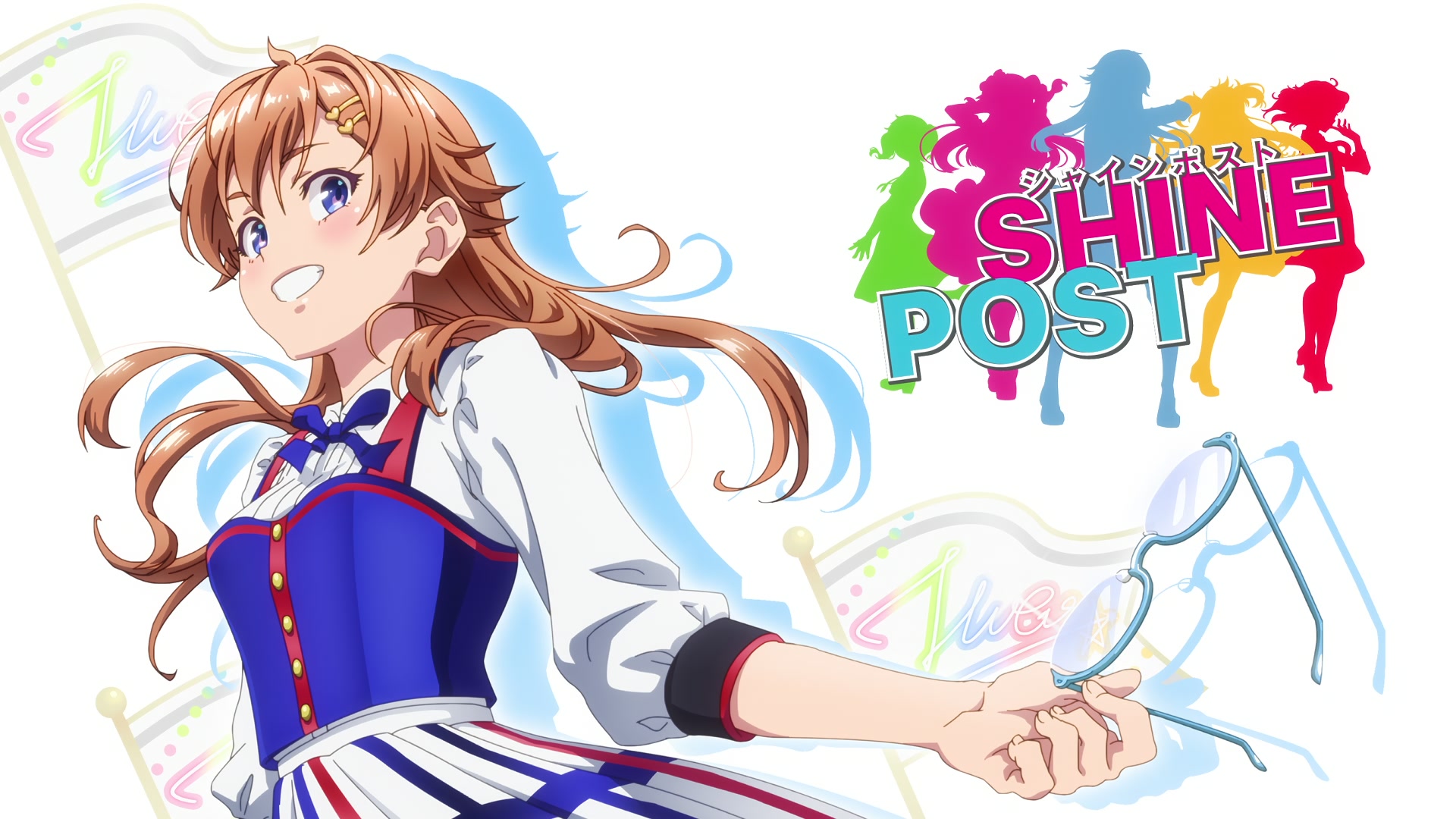
There is a moment early in Shine Post where Nabatame Haru, the cheerful center of the struggling idol group TiNgS, looks her new manager in the eye and says she wants to become a “shinepost.” It is a made-up word, the kind of clumsy neologism a teenager invents when ordinary language cannot contain what she feels. A shining guidepost. A beacon that tells everyone, anywhere, that it is okay to love idols out loud. That moment feels like a thesis statement. Everything that follows, all twelve episodes of tearful confrontations, bitter rivalries, and hard-won triumphs, orbits around that strange, earnest word.
Shine Post is an idol anime. It has the costumes, the concerts, the handshake events, the backstage pep talks. But describing it as just another idol anime would be like calling a coming-of-age film just another high school story. The series uses the machinery of the idol industry as a stage for a psychological drama about self-sabotage, masked vulnerability, and the terror of being truly seen. It is a story about five young women and their reluctant manager who must prove, in three months, that they can fill a 2,000-seat venue or face permanent disbandment. That premise sounds like a thousand other stories. The execution is what makes it remarkable.
This is a series for people who love character-driven melodrama, who appreciate it when a show treats its cast not as archetypes to be shuffled through plot beats but as knots of conflicting desires to be slowly, painfully untangled. It rewards patience. It does not rush its emotional payoffs. And by the time the final concert begins, you may find yourself unexpectedly moved by how thoroughly you have come to care about every single person on that stage.
Story and Themes
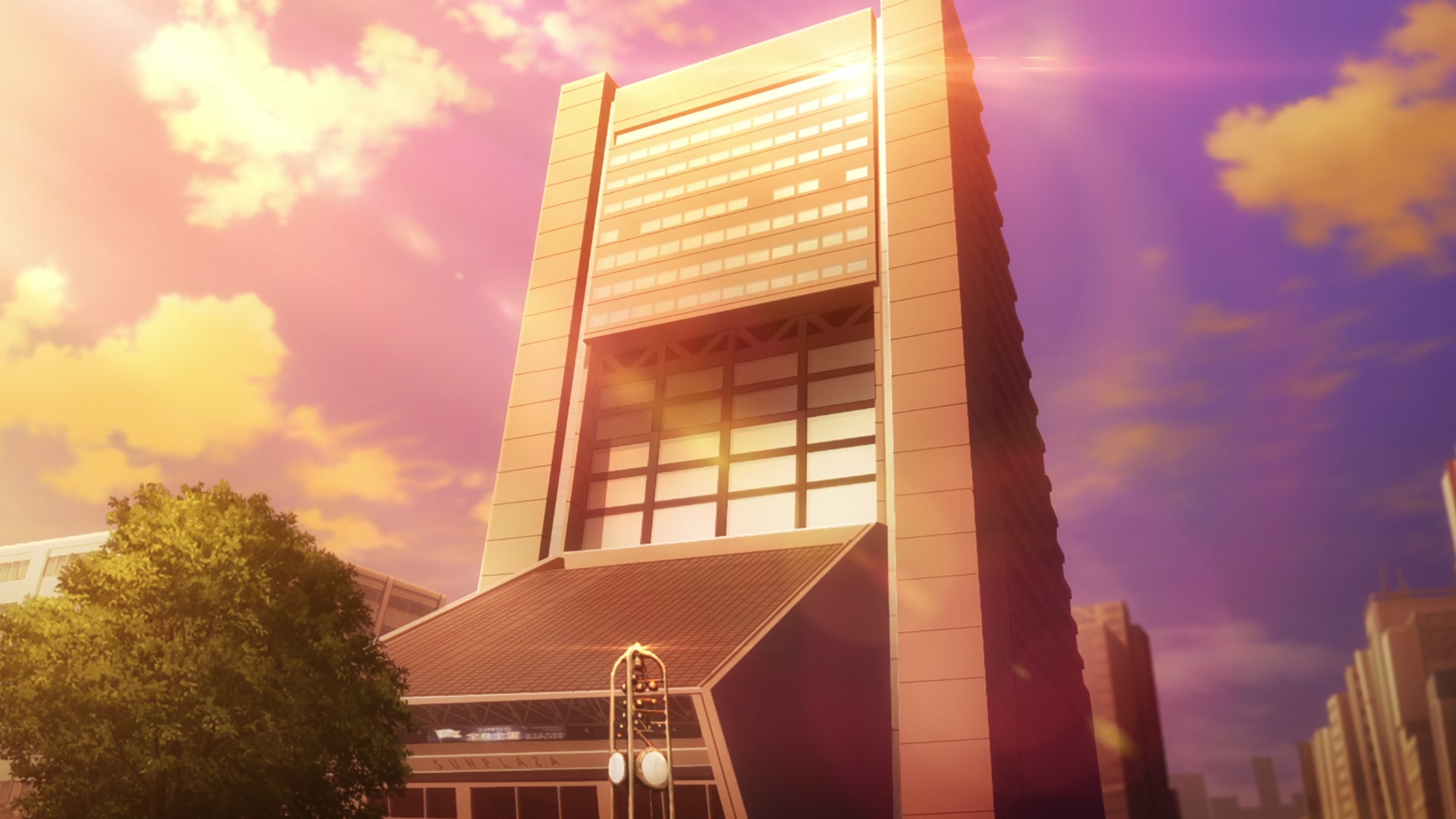
The narrative spine of Shine Post is straightforward. TINGS (originally styled as TiNgS to reflect missing members) are a three-girl idol unit performing to half-empty rooms. Their agency president, Yuuki, gives them a brutal ultimatum. Sell out Nakano Sun Plaza for their one-year anniversary concert or disband. To help them achieve this seemingly impossible goal, she assigns them a personal manager, Hinase Naoki, a man who promptly refuses the job because the one thing he will never do again is manage idols.
What unfolds from this setup is less a sports-style underdog story than a series of therapeutic interventions. Each arc isolates a particular character and examines the gap between who she pretends to be and who she actually is. The external stakes (ticket sales, venue capacity) are real, but the true stakes are internal. Can Haru trust her friends to withstand her full talent without breaking the way her previous group broke? Can Kyouka admit she wants to be special instead of hiding in a support role? Can Rio stop performing arrogant confidence and believe she has something of value to give?
This preoccupation with masks and truth is deeply rooted in Japanese social psychology. The contrast between tatemae (the public, socially acceptable face) and honne (one’s true feelings and desires) is not unique to Japan, but the Japanese cultural context gives it a particular weight. An idol stage becomes a sacred space where honne is not just permitted but demanded. The audience comes to see something real, and the idol’s obligation is to provide it. Every major turning point in Shine Post involves a character shedding her tatemae and exposing something raw underneath.
The “shinepost” metaphor is the thematic center. A michishirube, a guidepost or signpost, is something that reassures travelers they are on the right path. The absolute idol Hotaru, whose radiance inspired Haru, Kyouka, and Rio to pursue this career, functions as a shinepost, a fixed point of brilliance that others navigate by. But the series argues that a true shinepost is not a single, solitary star. It is a constellation. The goal is not for one member of TINGS to become Hotaru but for the group as a whole to become a shared light source, a network of reciprocal illumination where each member’s glow supports the others.
The theme of talent as burden runs parallel to this. Haru is genuinely gifted. Her singing, dancing, and expressive range are leagues beyond most professionals. And this gift is a curse. In her previous group, HY:RAIN, her effortless superiority crushed her best friend Kurogane Ren and ultimately destroyed the unit. Haru internalized this as proof that her talent harms the people she loves. She joins TINGS on the condition that she will not give her all until the group is strong enough to handle it. Her self-restraint is an act of love, but it is also a profound insult to her friends, who sense the condescension beneath her care. They are not fragile objects to be protected. They want to be her equals.
Naoki’s parallel arc reinforces this theme. He was once a driven, successful manager who pushed his idols to greater and greater heights, telling himself he was helping them achieve their dreams. In reality, he was burning them out. The idols he managed collapsed under the strain, relationships fractured, and Naoki walked away believing his management style was inherently destructive. His return to the profession through TINGS is an act of redemption. He applies the same formidable skills—strategic media placement, psychological insight, industry networking—but this time he channels them toward helping the girls face themselves rather than chasing external metrics. His line to Kyouka, “Idols don’t do what’s right. They do what they want,” is the series’ mission statement. The correct choice, the safe choice, the supportive choice, may not be the truthful one. Desire is more important than propriety.
The pacing is deliberate, almost theatrical. Episodes function like focused spotlights, rotating through the cast and giving each character’s conflict room to breathe. Episode 1 establishes the crisis. Episode 2 demonstrates Naoki’s competence. Episodes 3 and 4 are Kyouka’s two-part arc. Episodes 5 and 6 belong to Rio. Episode 7 introduces the Yukimoji complication and the revelation that Haru has been holding back. Episode 8 provides the flashback that recontextualizes Yukine and Momiji’s “betrayal” as an act of love. Episode 9 is Haru’s catharsis. Episodes 10 through 12 build toward and execute the Nakano concert and set up the next challenge. This structure sacrifices momentum for depth, and the trade-off generally works. Some viewers may find the early episodes repetitive as the group struggles with ticket sales and small-venue logistics, but the character work that unfolds during these scenes is essential groundwork.
Because this is an original anime (adapting a multimedia project that includes novels and a mobile game), there are no source material adaptation concerns in the traditional sense. The anime tells a complete, self-contained story with a clear emotional arc. The post-credits reveal in the finale, the identity of Hotaru and her connection to Haru’s past, might feel abrupt to some viewers, but it functions as a grace note rather than a dangling plot thread. The final challenge from HY:RAIN—a battle of the bands at Budokan—is not a cliffhanger but a promise. These characters are ready for whatever comes next.
Characters
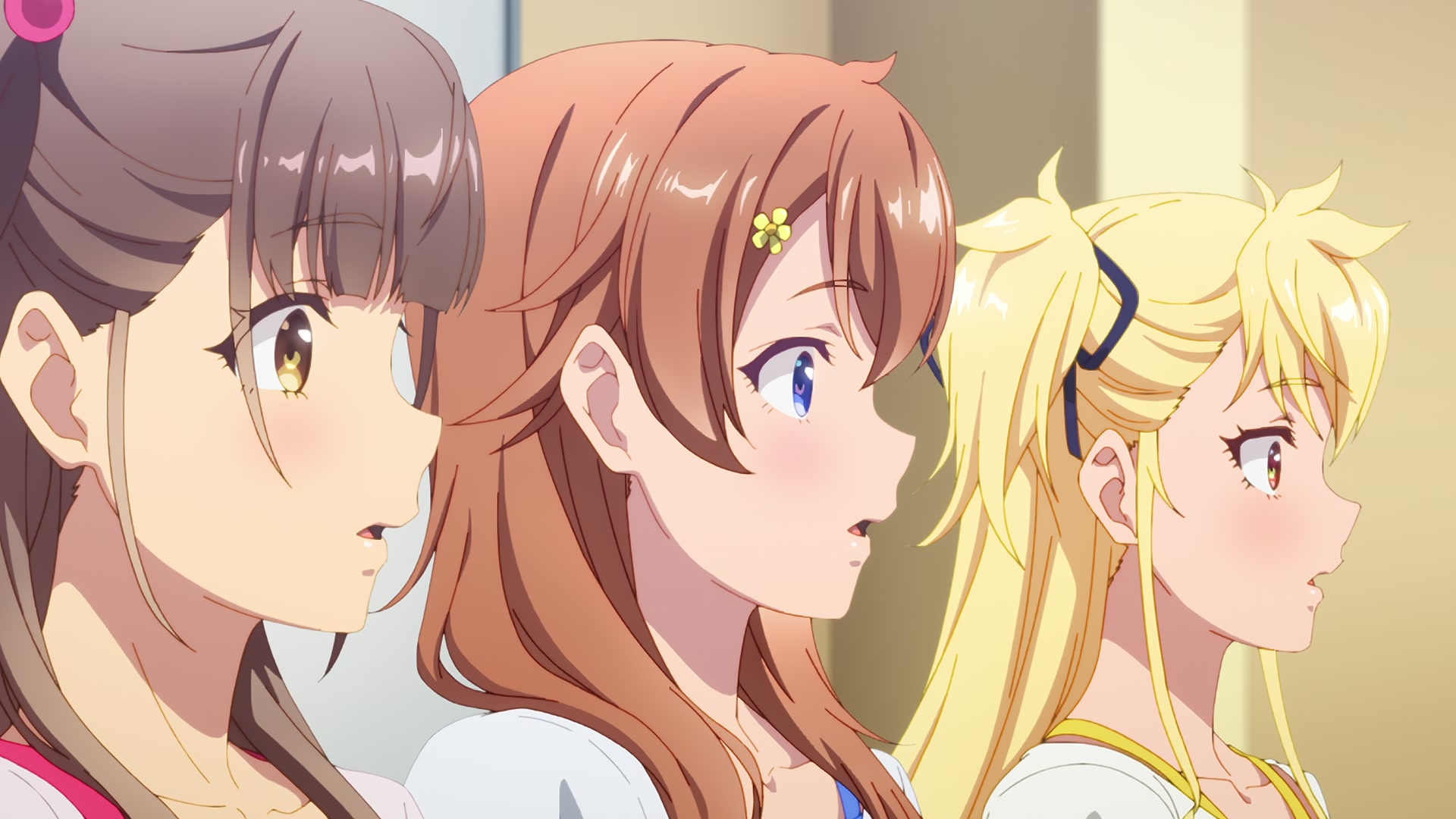
Nabatame Haru is the sun around whom TINGS orbits, but for most of the series that sun is deliberately dim. She presents as an irrepressibly cheerful genki girl who loves donuts and speaks in exclamation points. She is also the most traumatized member of the cast. Her time in HY:RAIN left her convinced that her full effort destroys the people she cares about, so she has become a master of self-suppression. She adjusts her singing and dancing to match her weaker groupmates, covers for their mistakes, and never, ever pushes herself to the limit. Her friends interpret this as a lack of trust, which it is. She does not trust them to survive her. Her arc is about learning that protection can be a form of arrogance and that the people who love you deserve the chance to stand beside you at your full height, not huddled beneath an umbrella you hold over them.
The episode 9 performance of “Be Your Light!!” is Haru’s crucible. For the first time since her childhood, she unleashes everything. Her voice fills the venue, her movements snap with precision and passion, and the audience is stunned into silence before erupting. The moment is not triumphant in a straightforward way. Haru breaks down crying afterward, apologizing for not trusting everyone sooner. It is a confession as much as a concert. Her friends crowd around her, and the group is finally, fully formed.
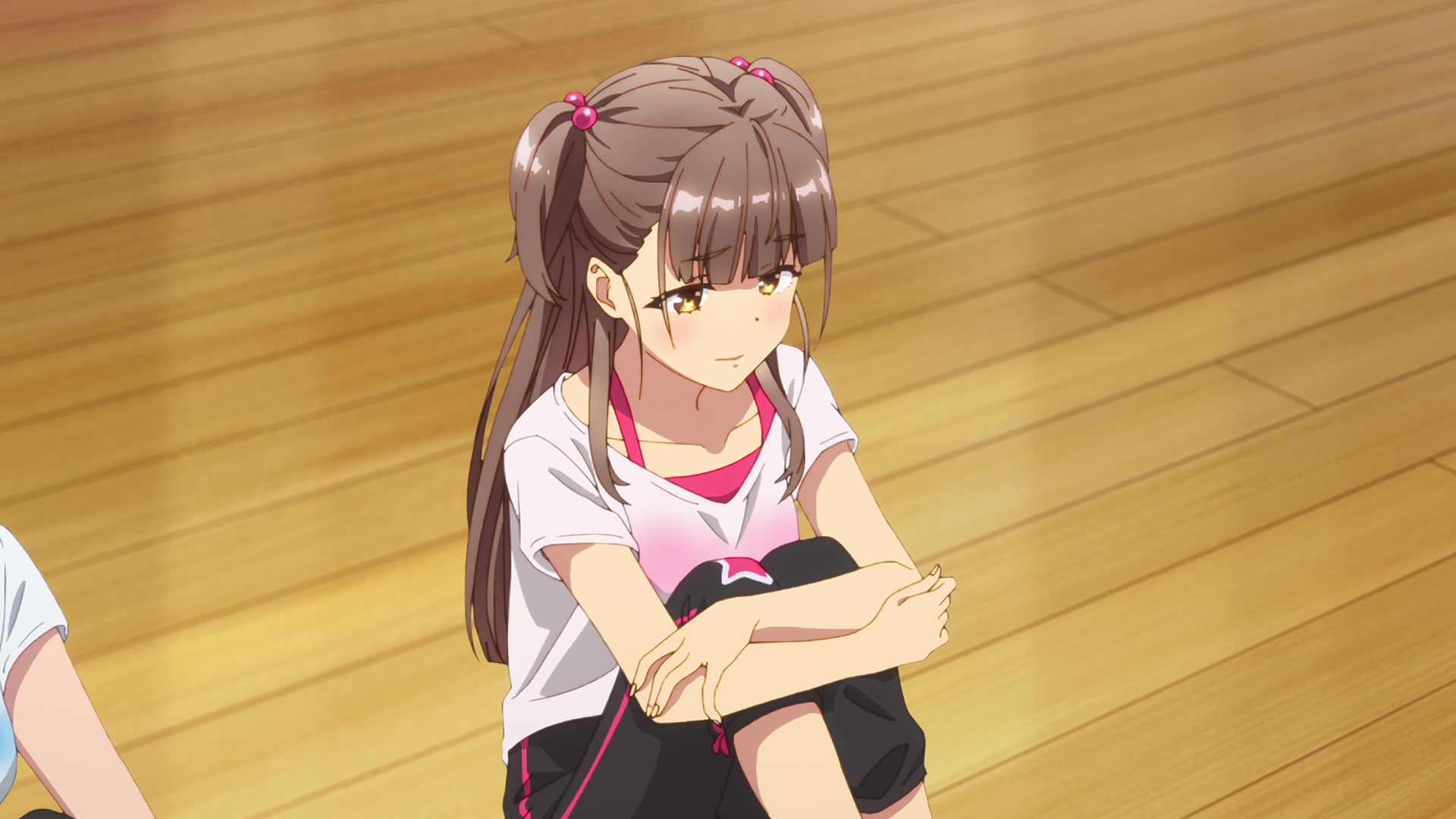
Tamaki Kyouka is the most intellectually compelling character. She is competent, analytical, and deeply insecure in ways that feel painfully real. She can perfectly reproduce anything she is taught. Choreography, MC scripts, stage blocking, all of it gets filed into her brain and executed without error. But she has no “spark,” no unique quality that makes her special, and she knows it. Her idol dream began when she attended a Hotaru concert and was overwhelmed by a brilliance she felt she could never possess. When she was given a center position for a new song and froze during her solo, the failure confirmed every doubt. She retreated into a support role and told herself it suited her best.
Naoki dismantles this self-deception across episodes 3 and 4. He forces her back into the center for “The World One Step Ahead,” and after an anguished night where she admits her ambition to him (and to herself), she delivers a performance that leaves her fans in tears. But the insecurity does not vanish. When HY:RAIN’s Kurogane Ren dismisses her with “You don’t make mistakes. But that’s it,” Kyouka spirals again. The resolution is not that she becomes a genius overnight. It is that Naoki designs a double-center formation pairing her with Haru. Kyouka’s steadfast consistency is the foundation on which Haru’s wilder expressiveness can safely dance. She is not the backup dancer. She is the bedrock. Learning to see that as a form of brilliance is her arc’s quiet, satisfying conclusion.
Seibu Rio is the group’s clown, and like many clowns, her performance masks a deep sadness. She calls herself “Rio-sama,” speaks in third person, and proclaims her magnificence at every opportunity. In reality, she is clumsy, a poor dancer, and convinced she has nothing of value to contribute. Her arrogance is a desperate smoke screen, an attempt to stop others from worrying about her so she can continue being the cheerful failure who doesn’t get in anyone’s way. Her idol dream was born from watching Hotaru and realizing that Hotaru was “helping everyone” with her music. Rio wanted to help people too. She just never believed she could.
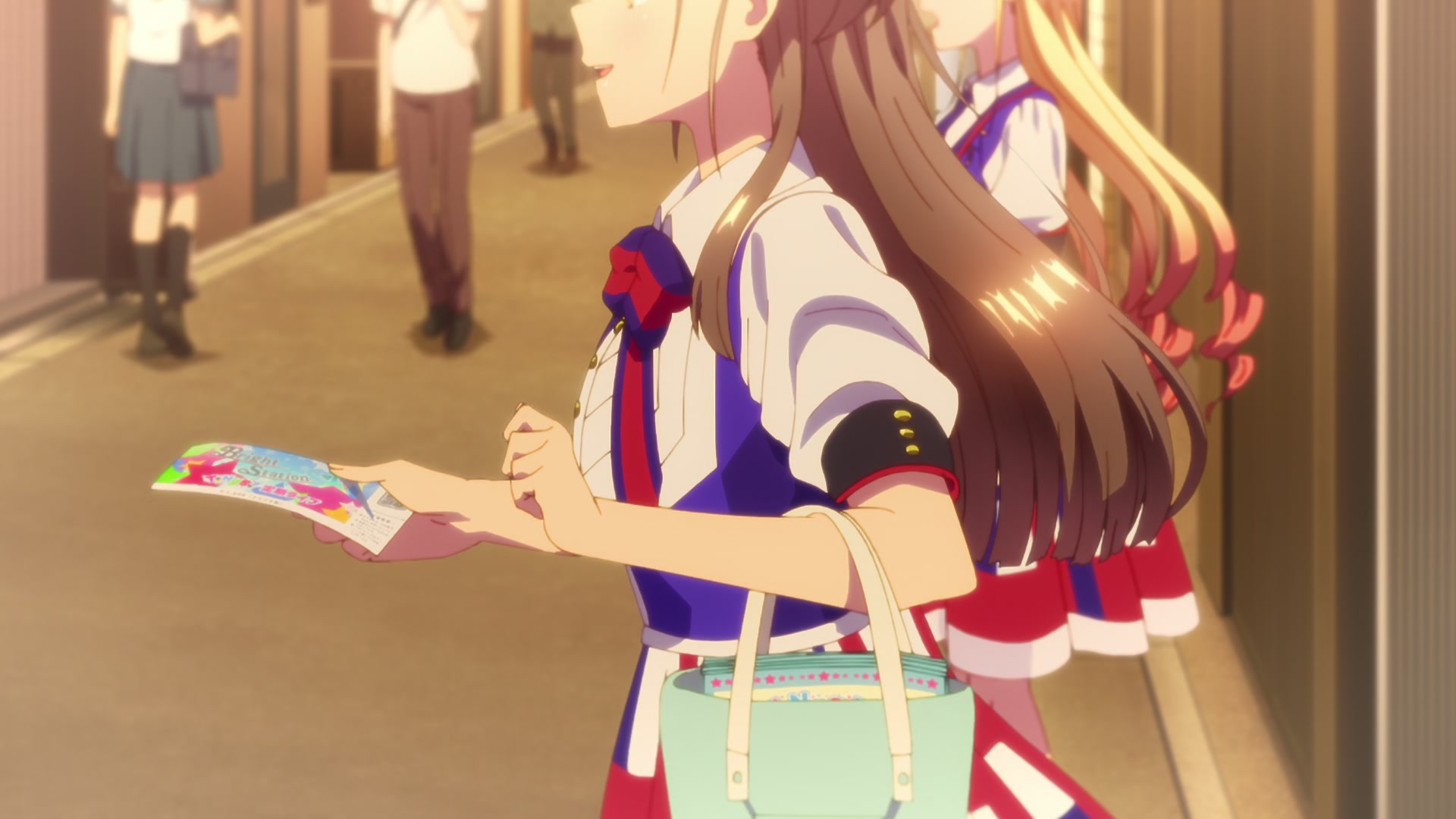
The green pepper incident in episode 5, where a location shoot goes disastrously wrong because Rio cannot hide her genuine disgust at a bitter vegetable, is a perfect crystallization of her character. Her honest reactions are too raw, too unfiltered for television. She runs off and tries to hand out flyers alone, sobbing that no one wants to see her, only Haru and Kyouka. Naoki’s solution is to give her a ballad, “Yellow Rose,” that strips away all dance choreography and leaves her alone on stage with only her voice. Rio has a beautiful voice, tender and sincere, but she never trusted it because it was not a “skill” like dancing. Singing “Yellow Rose” is her first moment of genuine, unarmored expression. The audience falls silent, then cheers for “Rio-sama,” but now the name means something real. She has earned it.
Gionji Yukine and Itou Momiji function as a dyad whose secret motivations drive much of the plot. Yukine is a former child actress who speaks in a cool, controlled register and initially serves as the group’s de facto leader and strategist. Momiji is quiet, perceptive, and the best dancer in the group by a wide margin. Together they leave TINGS to form the rival unit “Yukimoji,” an apparent betrayal that wounds Haru, Kyouka, and Rio deeply.
The truth, revealed in episode 8, reframes everything. Momiji noticed early on that Haru was never serious. She brought this to Yukine, and the two of them, with Yuuki’s backing, made the excruciating decision to become TINGS’ rivals. Their hope was that by growing strong enough to pose a genuine threat, they could force Haru to stop holding back and fight them for real. The plan failed. Haru only retreated further. Yukine and Momiji spent months playing villains while still showing up to every TINGS concert, unable to stop caring. When Kyouka finally calls them out (“What kind of rival watches every show?”), the facade collapses. Their return to TINGS is not a surrender but a reunion of people who never stopped being family.
Yukine’s personal motivation is her search for “real smiles.” She attended an idol concert as a child on her actress mother’s suggestion and was struck by the genuine, unguarded joy on the faces around her. She became an idol to create that same joy. Her “cool” persona is another mask, a role she plays because she feels she has nothing else to offer. Momiji sees through it immediately and calls her cute, which flusters Yukine in a way nothing else does. Their bond is quiet and steadfast. Momiji’s principle is simple: she will not let anyone be alone. She left with Yukine because she would not abandon her. She returned because she could not bear hurting Haru. Her bluntness (“your dancing is worse than nothing”) is never cruelty. It is honesty offered with an open hand.
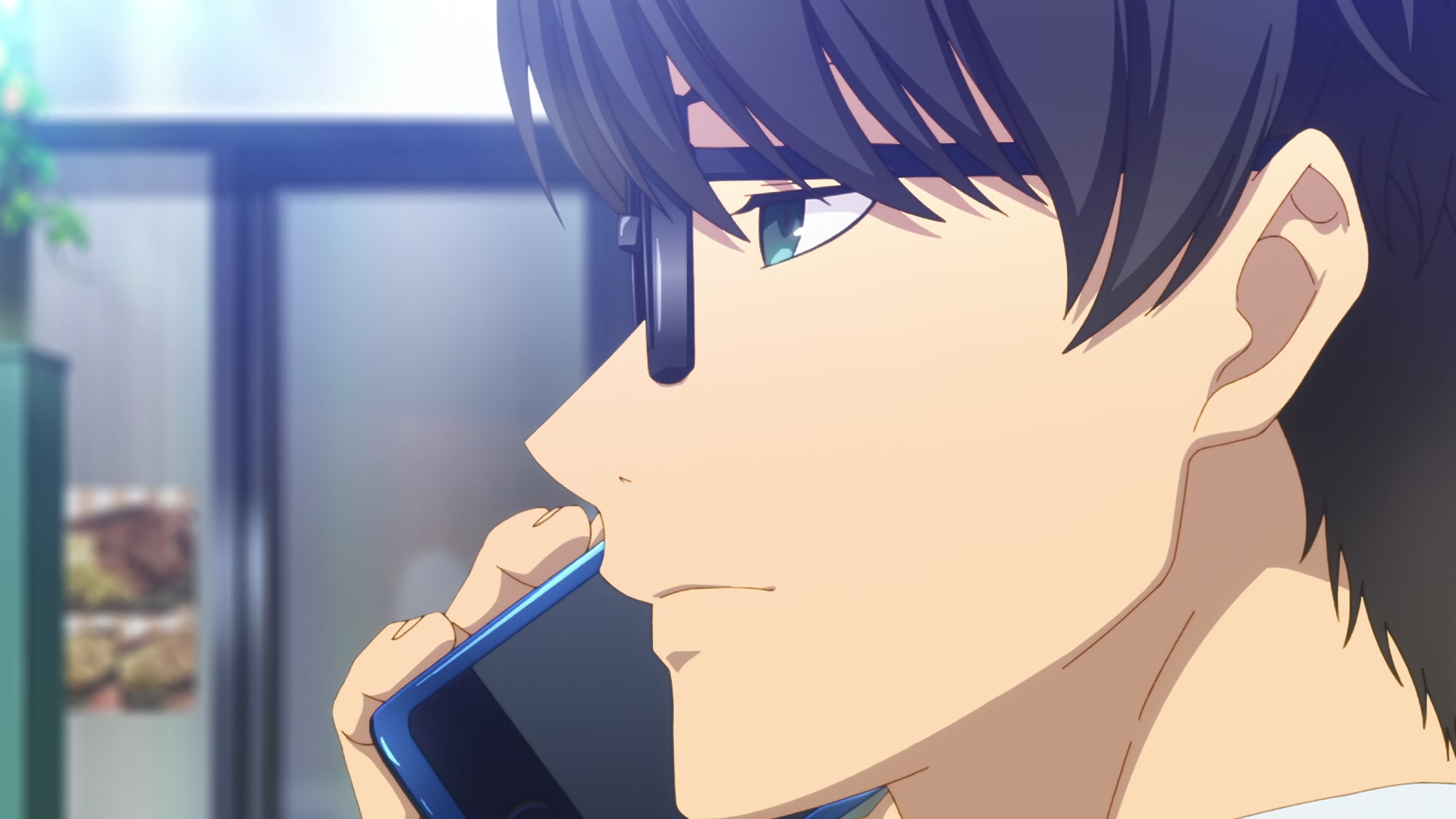
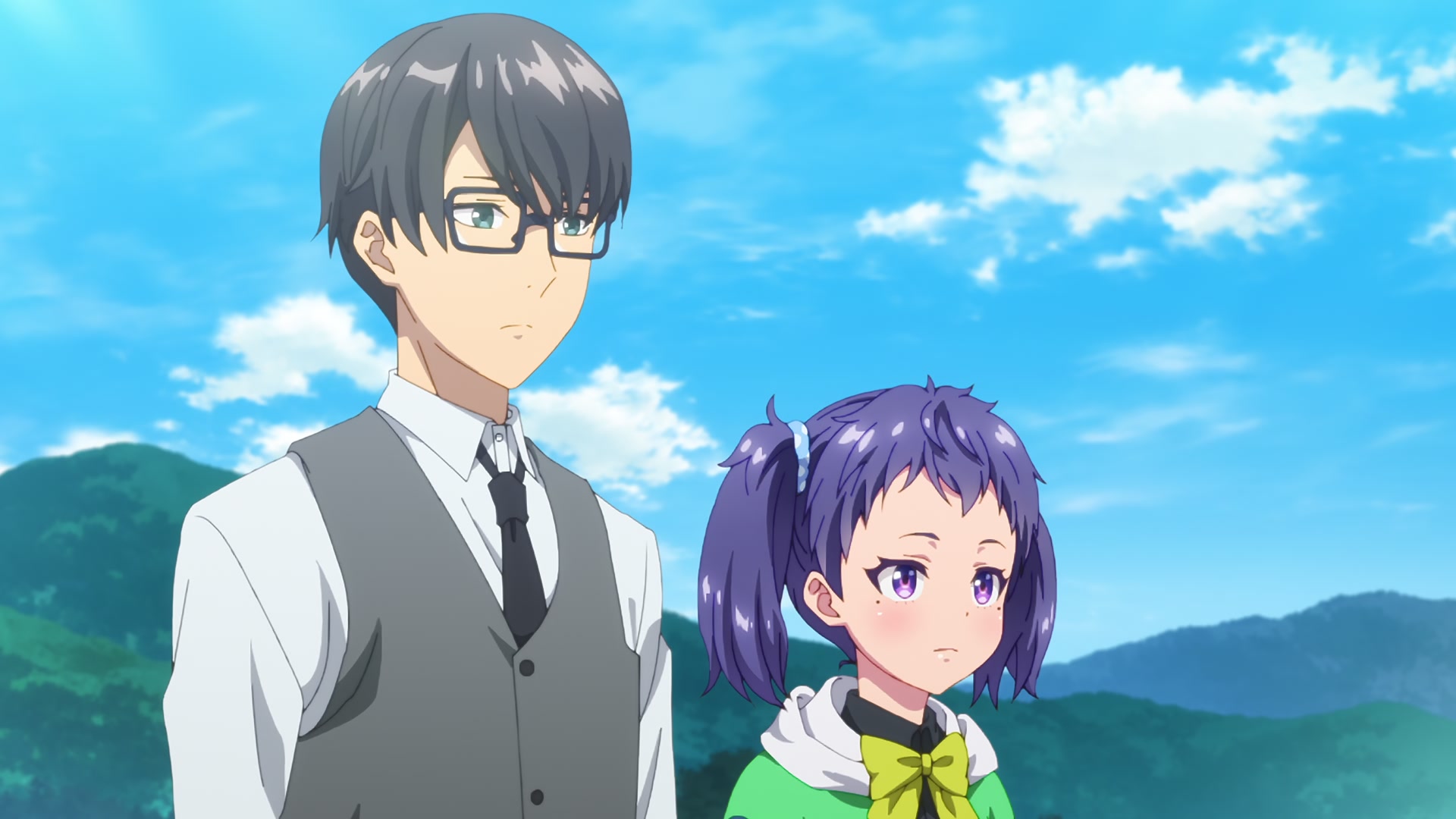
Hinase Naoki is the series’ second protagonist and emotional mirror. He arrives as a burned-out professional who once drove his idols to success at the cost of their wellbeing. His refusal to manage TINGS is not arrogance but self-protection. He does not trust himself not to hurt them. Haru’s “shinepost” speech changes his mind because it is the exact dream he once held. He wanted a world where idols are loved openly, where their sacrifices are rewarded, where the effort does not turn to ash. Haru’s naked sincerity rekindles something he thought was dead.
Naoki’s methods look cold. He assigns Rio to a food report knowing she hates vegetables. He forces Kyouka to be center against her will. He confronts Haru directly about her restraint. But these are not punitive measures. They are calculated acts of exposure therapy designed to force each girl into a situation where she must choose between her mask and her desire. He never tells them what the right answer is. He creates the conditions for them to discover it themselves. His gradual thawing, from temporary manager to committed partner, is understated but moving. The revelation in the finale that he was present, alongside Hotaru, on the day Haru lost her bag and received the “golden child” remark, ties his fate to hers from the very beginning. They saved each other.
The supporting cast is economical but effective. Kurogane Ren of HY:RAIN is not a villain but a wounded rival whose possessive love for Haru has calcified into obsession. Her cutting dismissal of TINGS as “backup dancers” and “vegetables” is the lashing out of someone terrified that her years of sacrifice were for nothing. Her arc resolves not with defeat but with acceptance. She sees Haru shine at Nakano and acknowledges, with visible pain, that Haru has become “Nabatame Haru of TINGS.” Her final challenge for a Budokan battle is a gesture of respect, a way to remain in Haru’s orbit without trying to consume her. The other HY:RAIN members (Yawara, Itoha, Aoba, and new member Nanoka) are sketched with enough personality to feel like real people rather than narrative obstacles. Kikuchi Eiko, the boisterous manager of YuraSis, provides a welcome burst of chaotic energy. Totsuka Nanami, the top idol who trains Yukimoji, represents the mentor figure who wants juniors to succeed. Tokka-san, Kyouka’s quiet, devoted fan, is a small but essential reminder of the bond between idol and audience.
Visuals and Animation
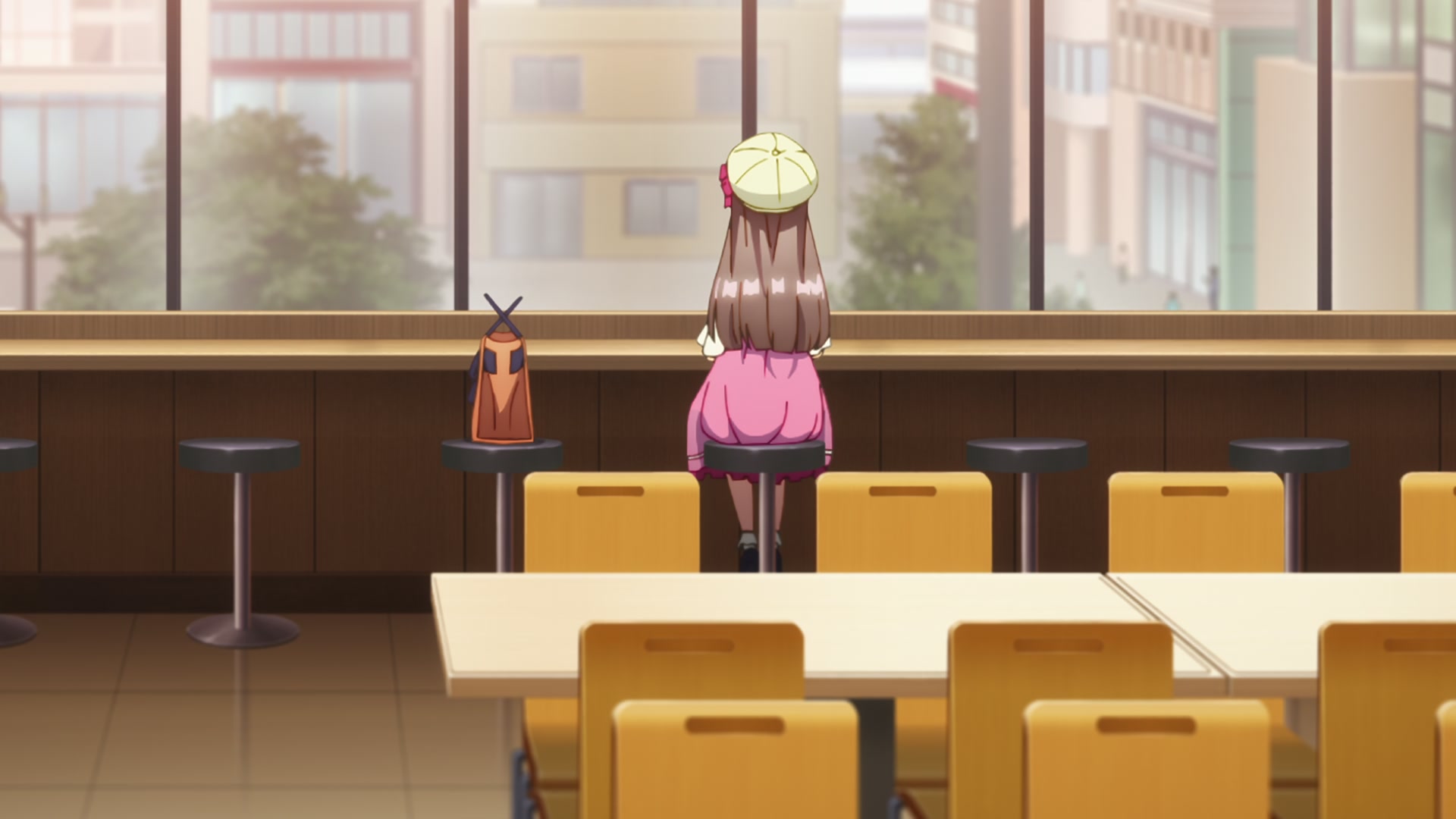
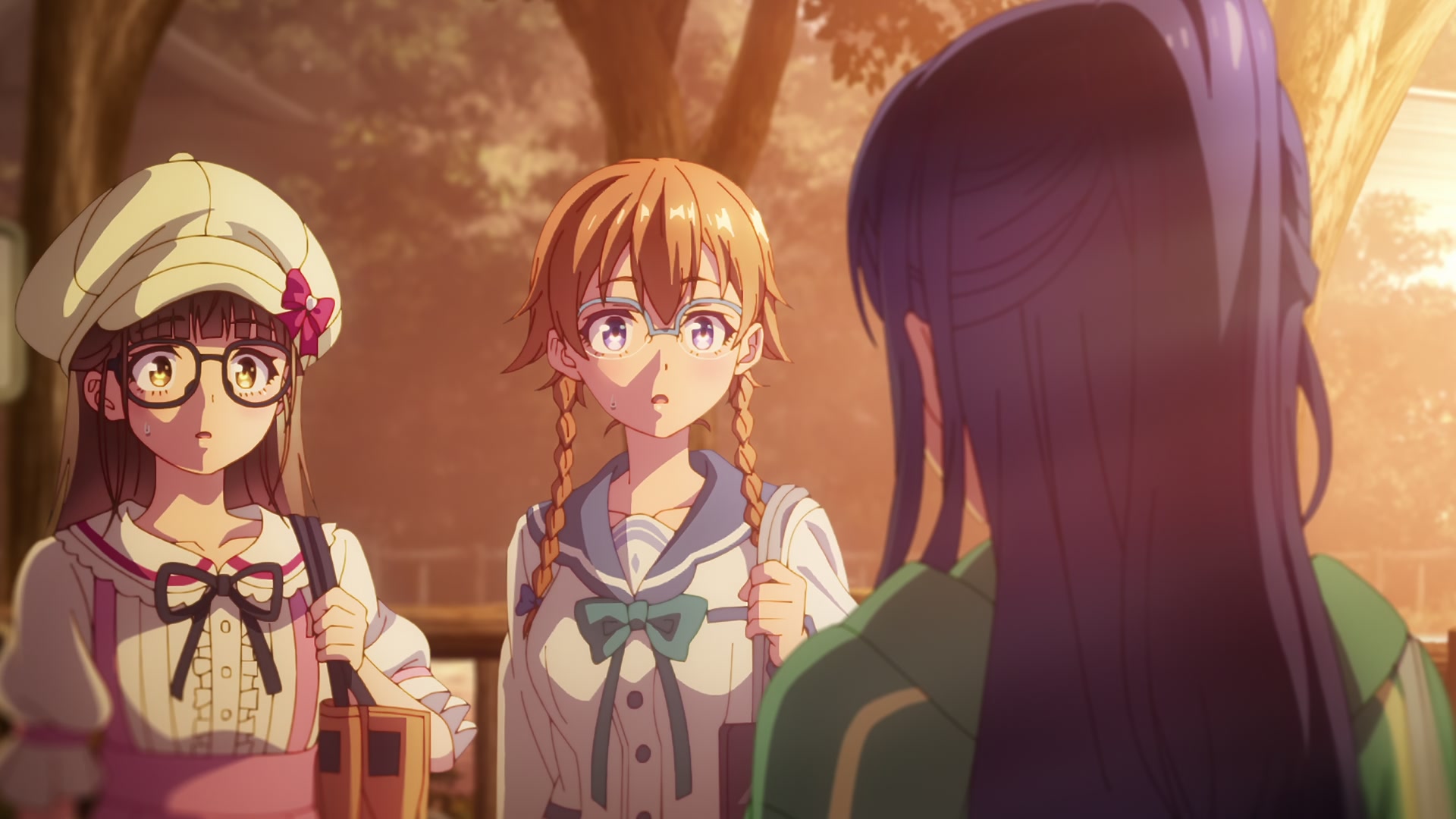
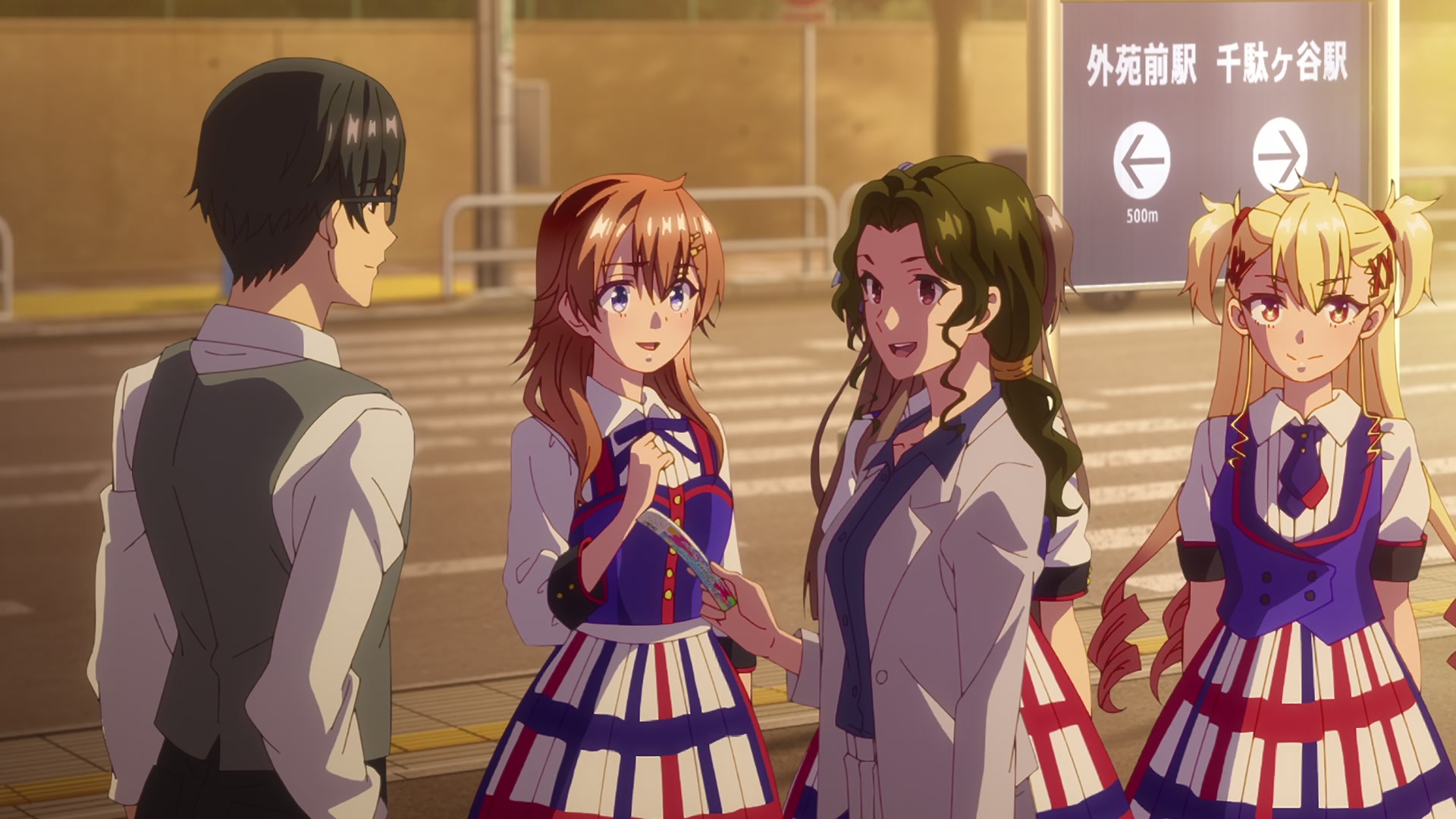
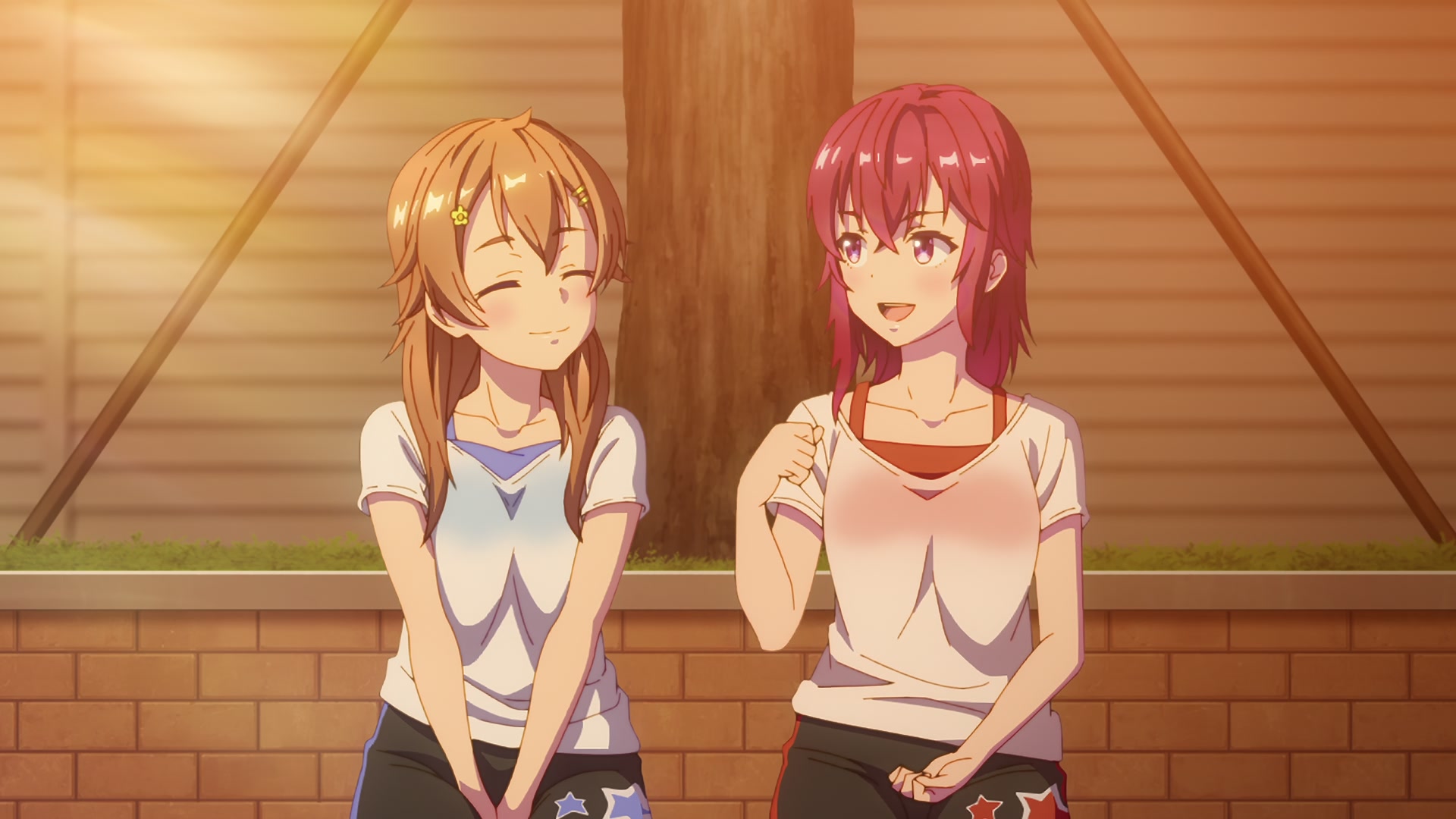
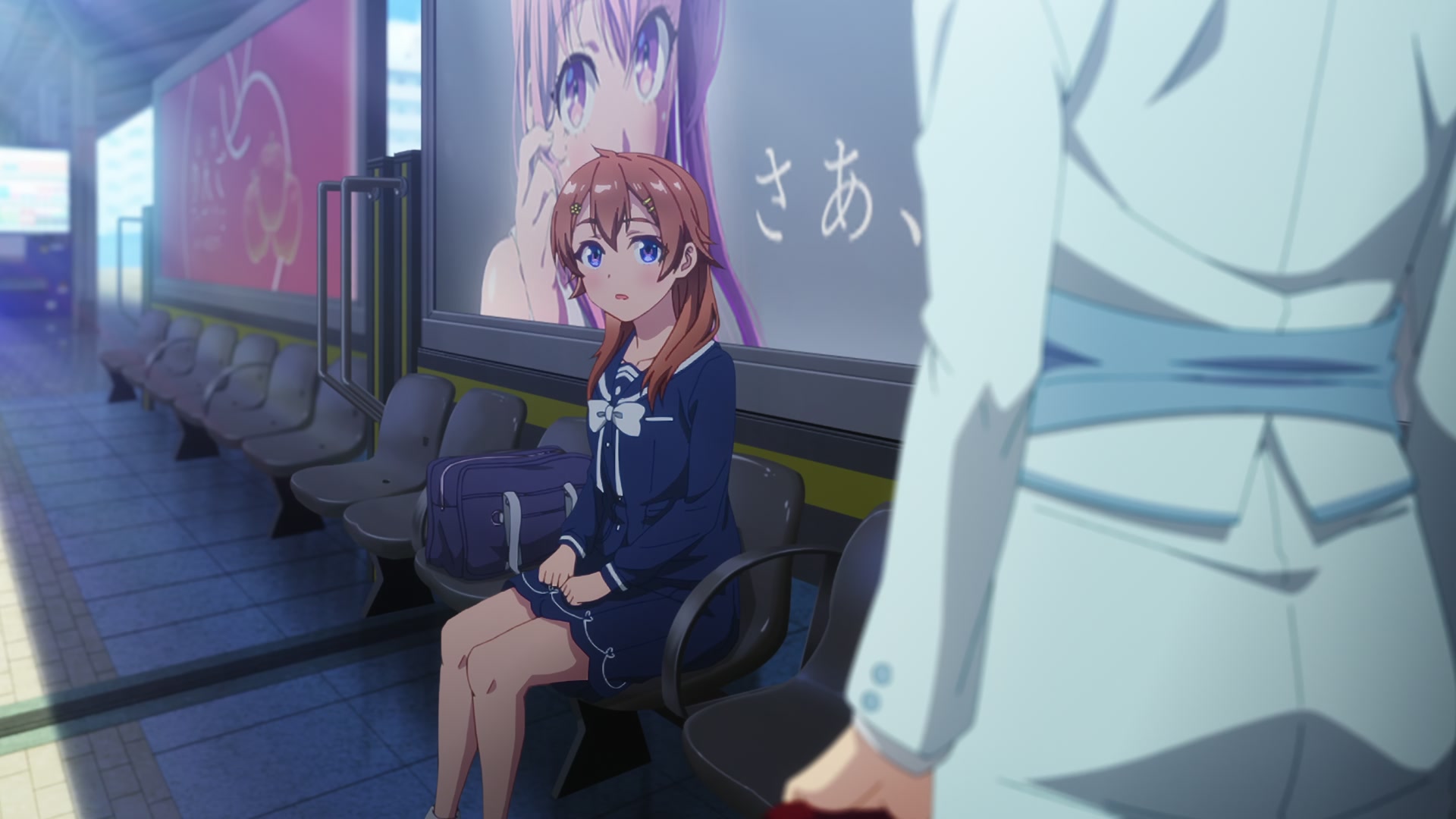
Shine Post is a showcase for modern digital compositing. Its visual identity is defined less by animation fluidity than by an almost obsessive commitment to lighting and atmosphere. The dominant aesthetic is what might be called the “golden hour” look. Warm orange and magenta overlays coat scenes in nostalgic sentimentality. Soft lens flares bloom across the frame. Characters are rim-lit with glowing edges that separate them from backgrounds and give them a faintly ethereal presence. This “thick” lighting is the series’ signature, and it is deployed with consistent intelligence. Conversations in rehearsal rooms feel intimate and safe. Outdoor scenes in parks or streets feel sun-drenched and hopeful. The stage is a cathedral of colored beams and haze.
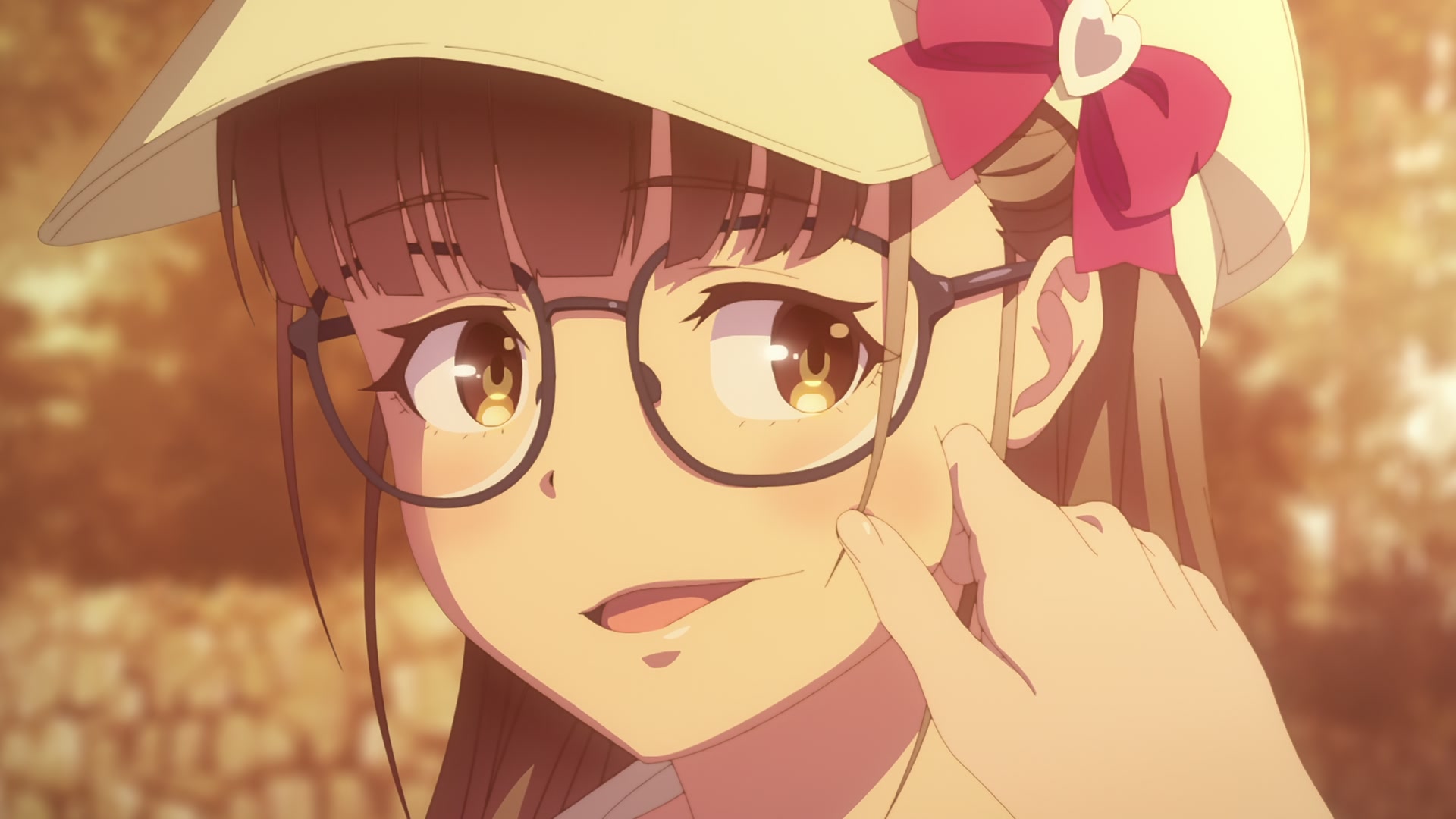
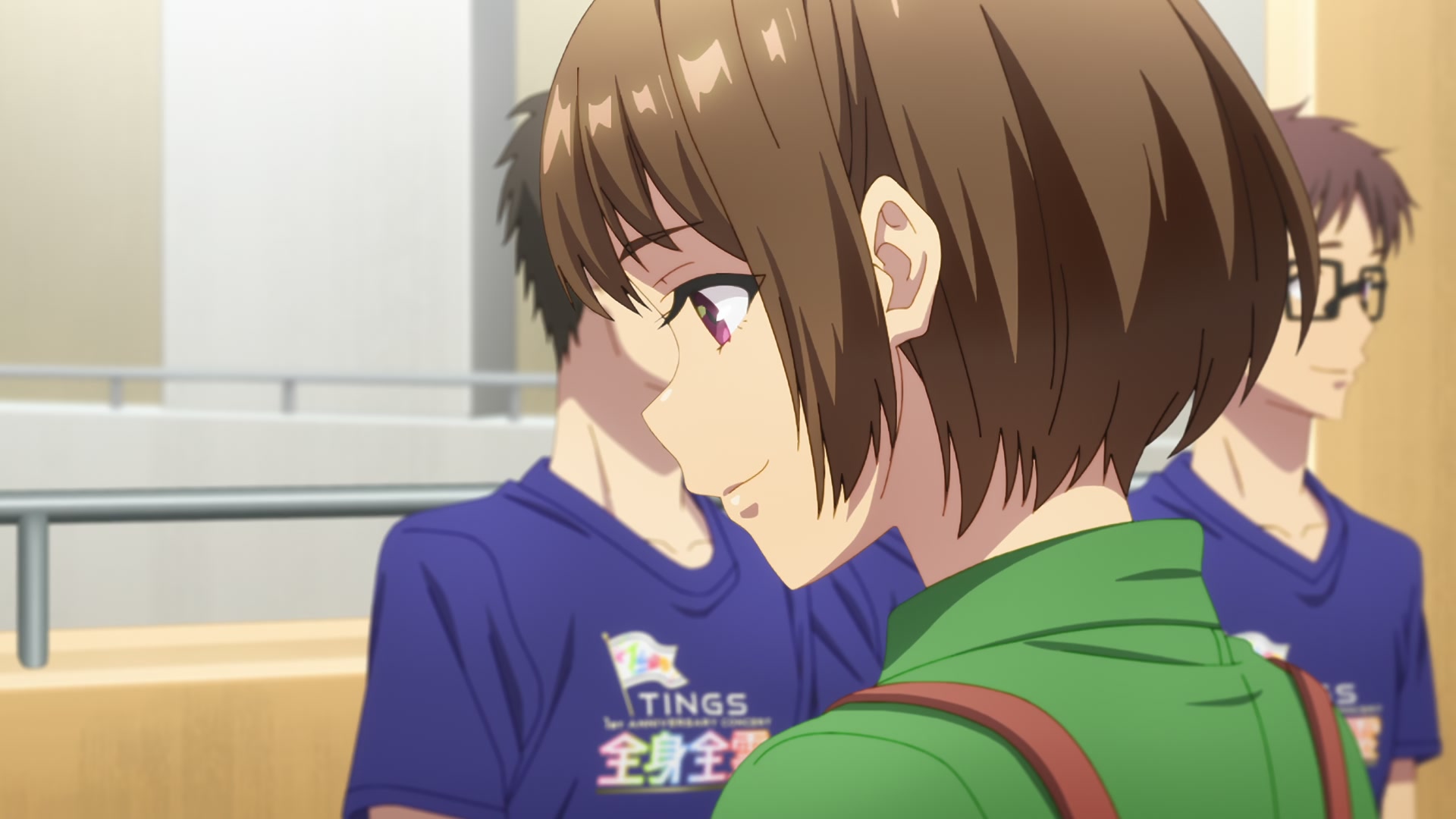
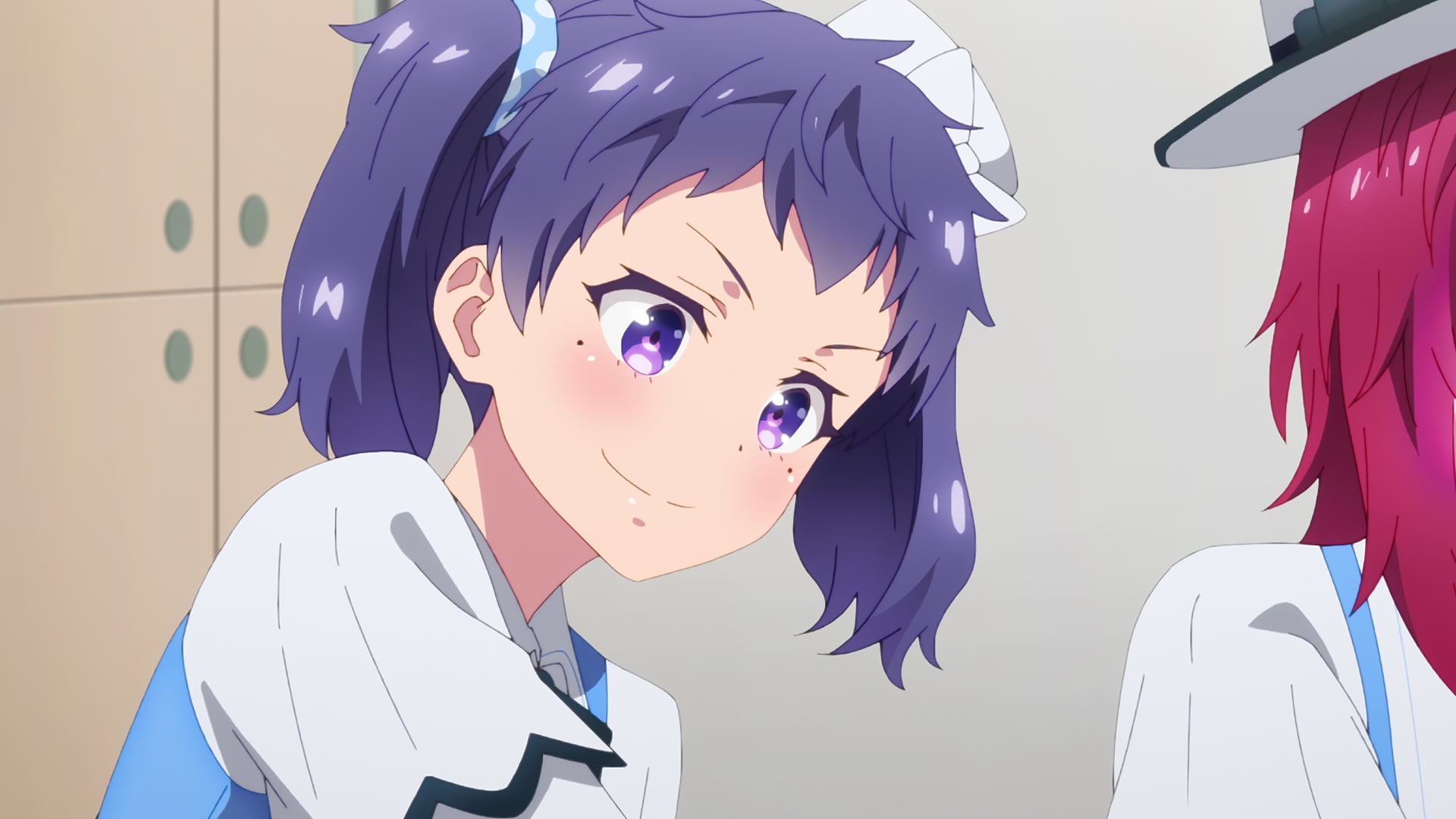
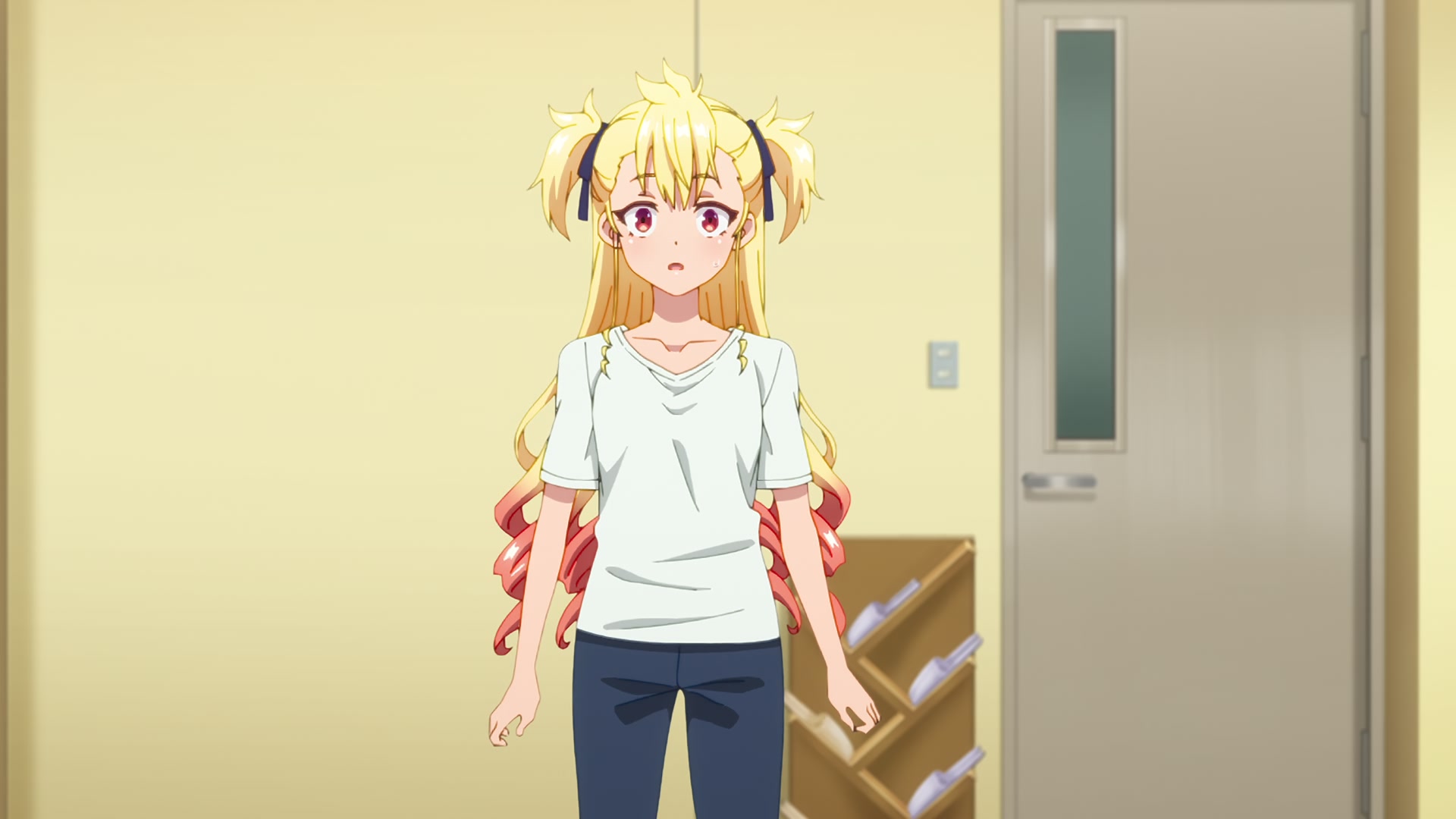
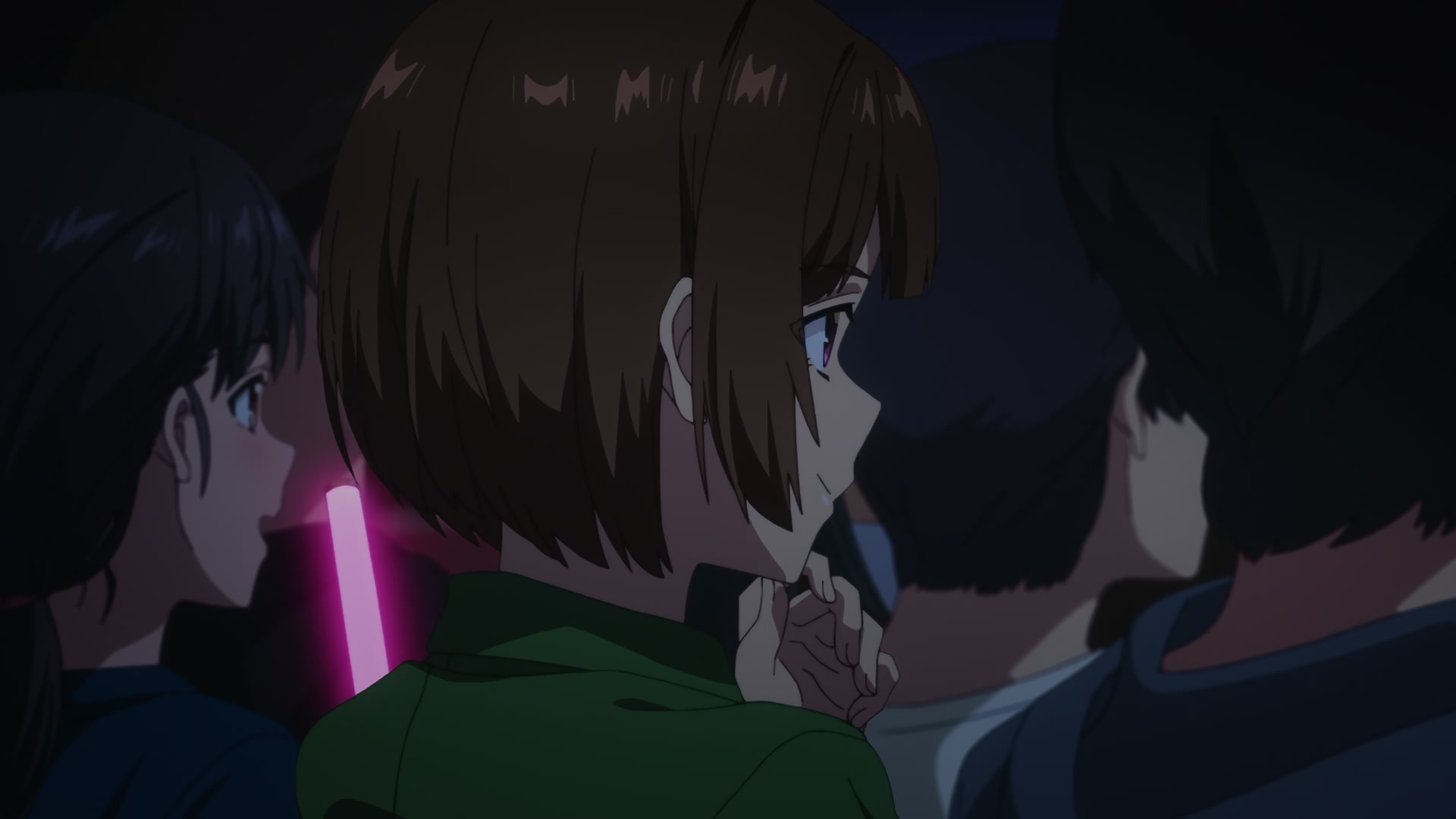
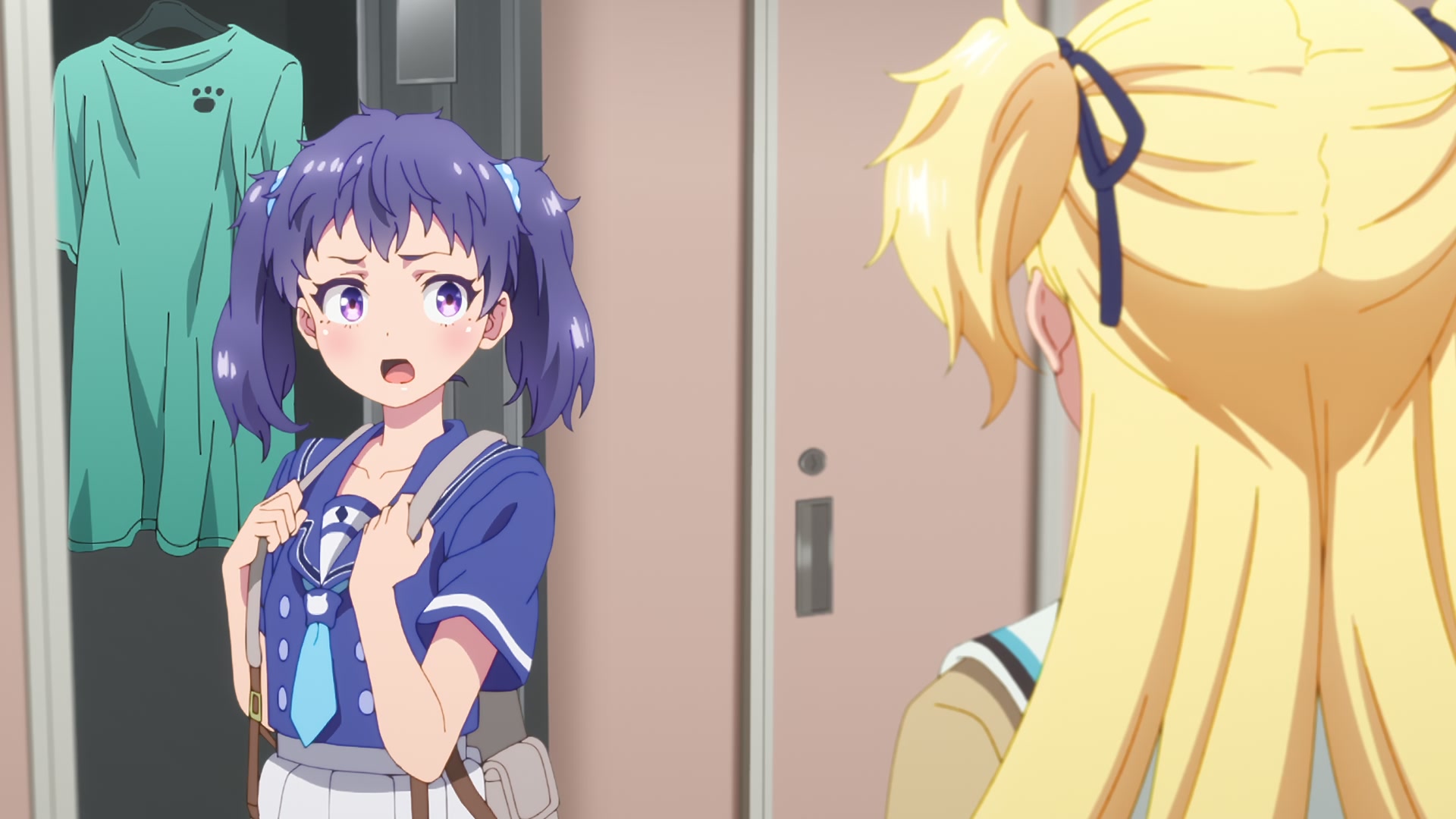
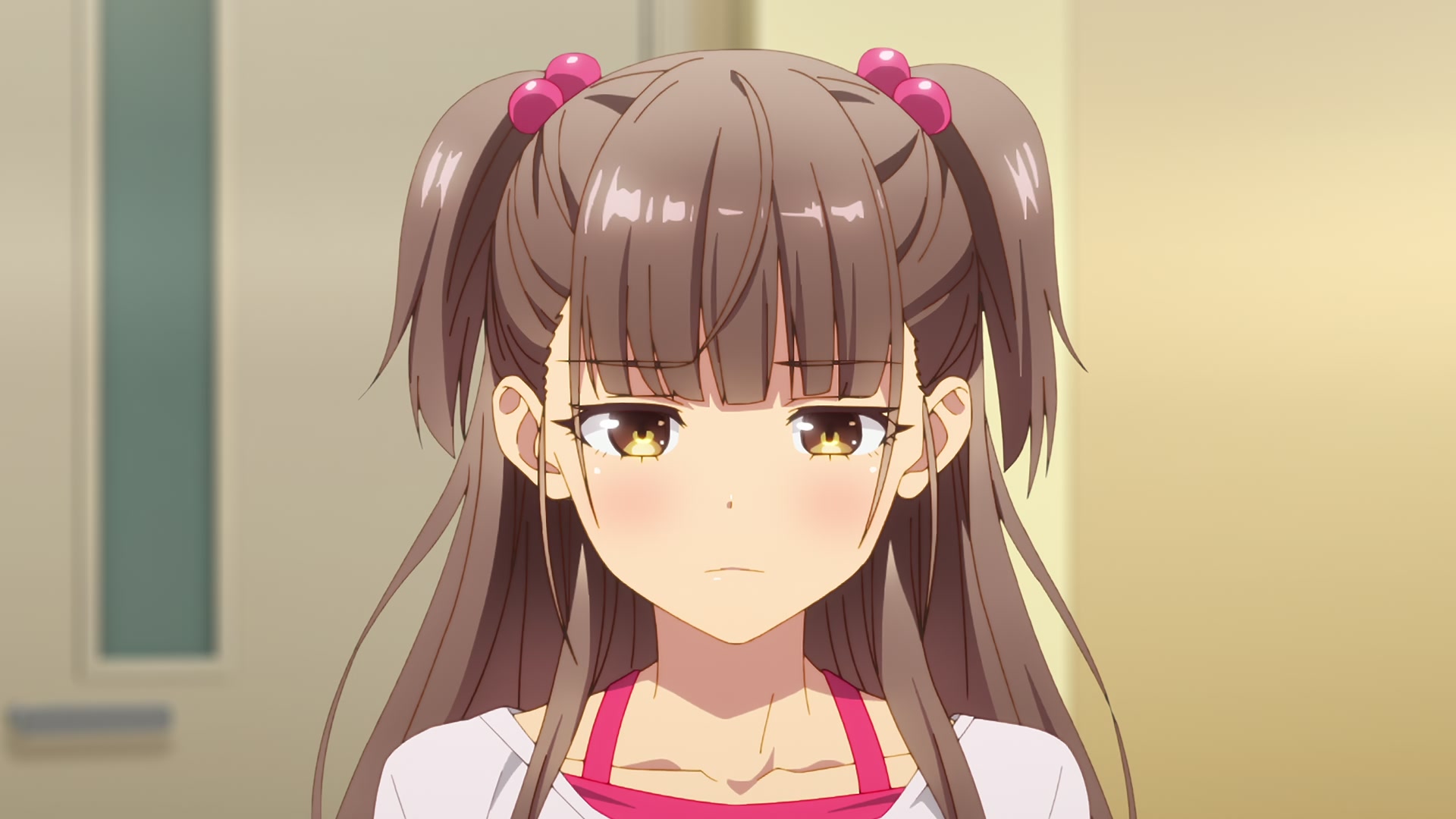
The character art supports this emphasis on mood. Linework is thin and clean. Eyes are the focal point. Irises are rendered with intricate color gradients and multiple catchlights, sometimes including tiny star-shaped reflections that make characters feel alert and emotionally present. Hair features soft color transitions (blonde to coral for Haru, for instance) and voluminous highlights that hold their shape across angles. There is a glossy, high-fidelity quality to the designs that aligns with the series’ aspirational tone. These are idols. They are supposed to look beautiful.
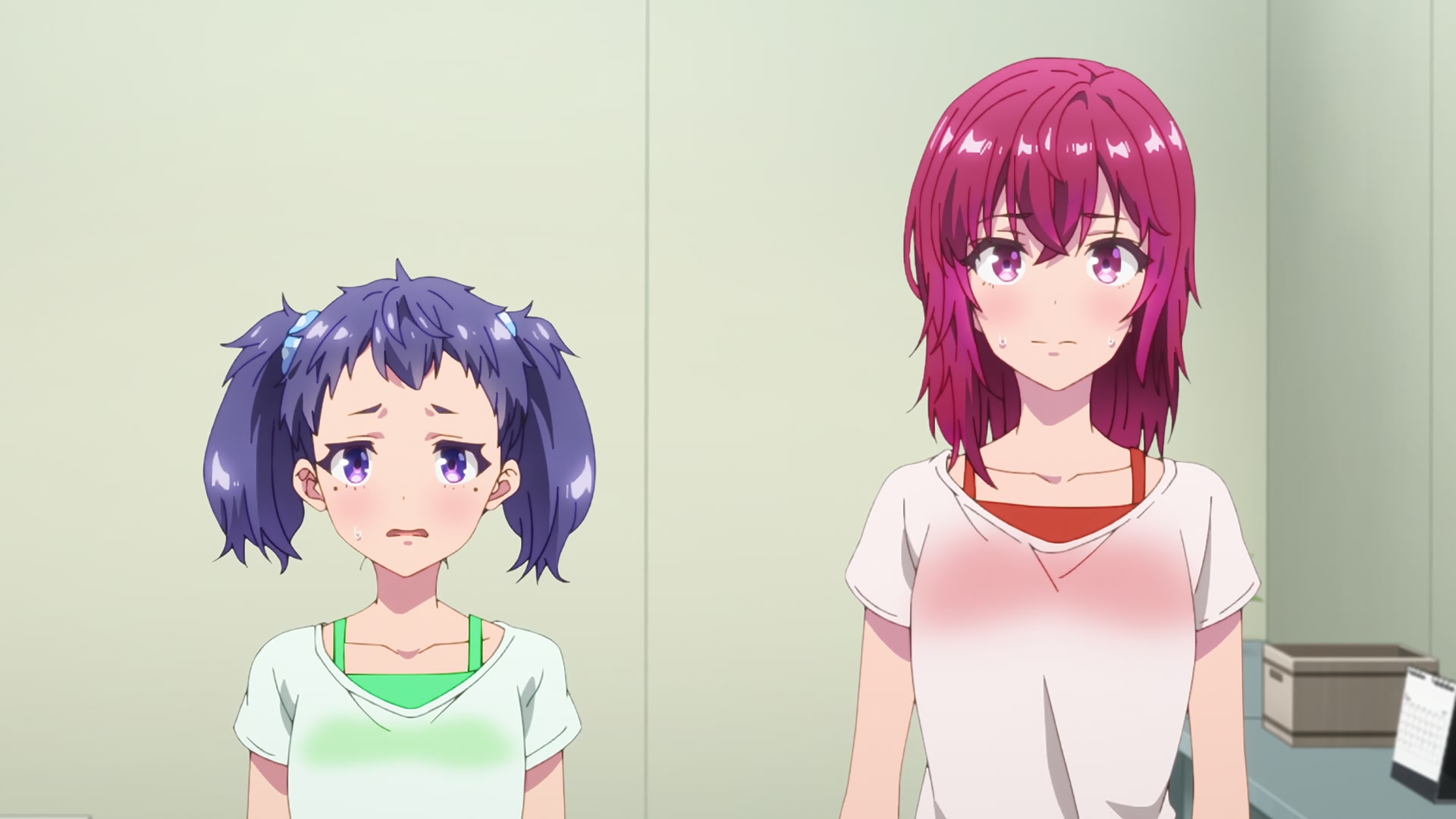
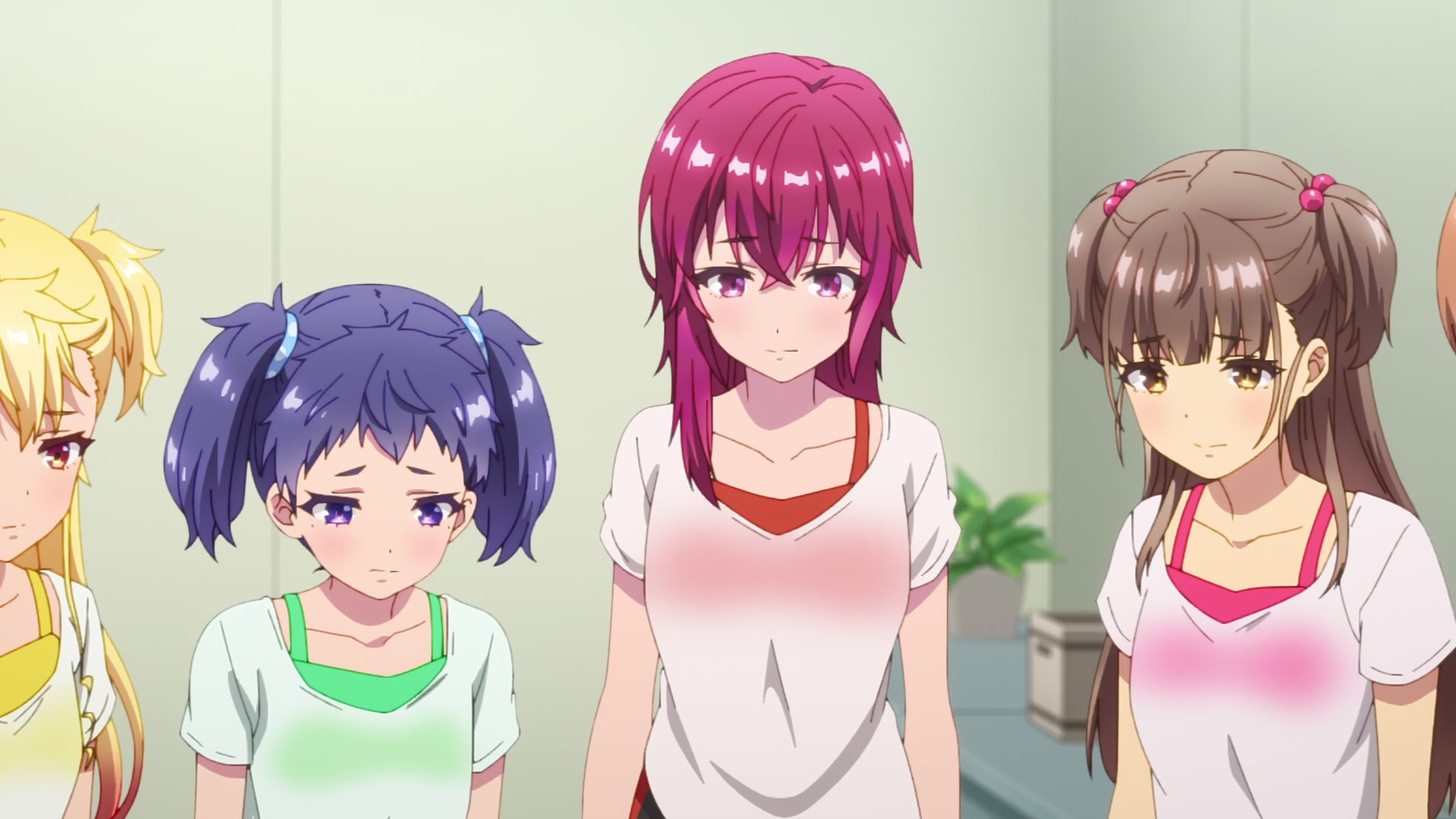
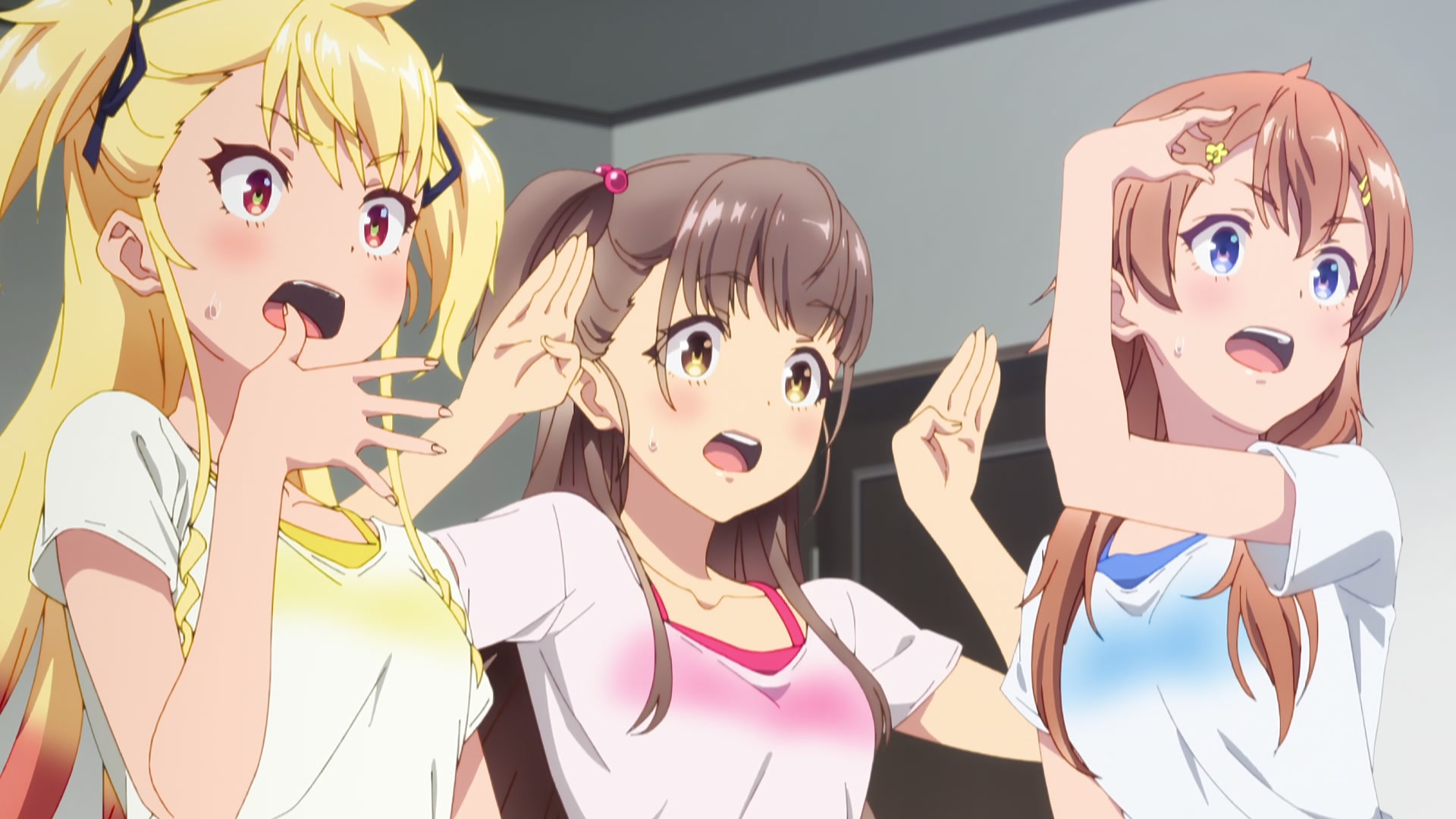
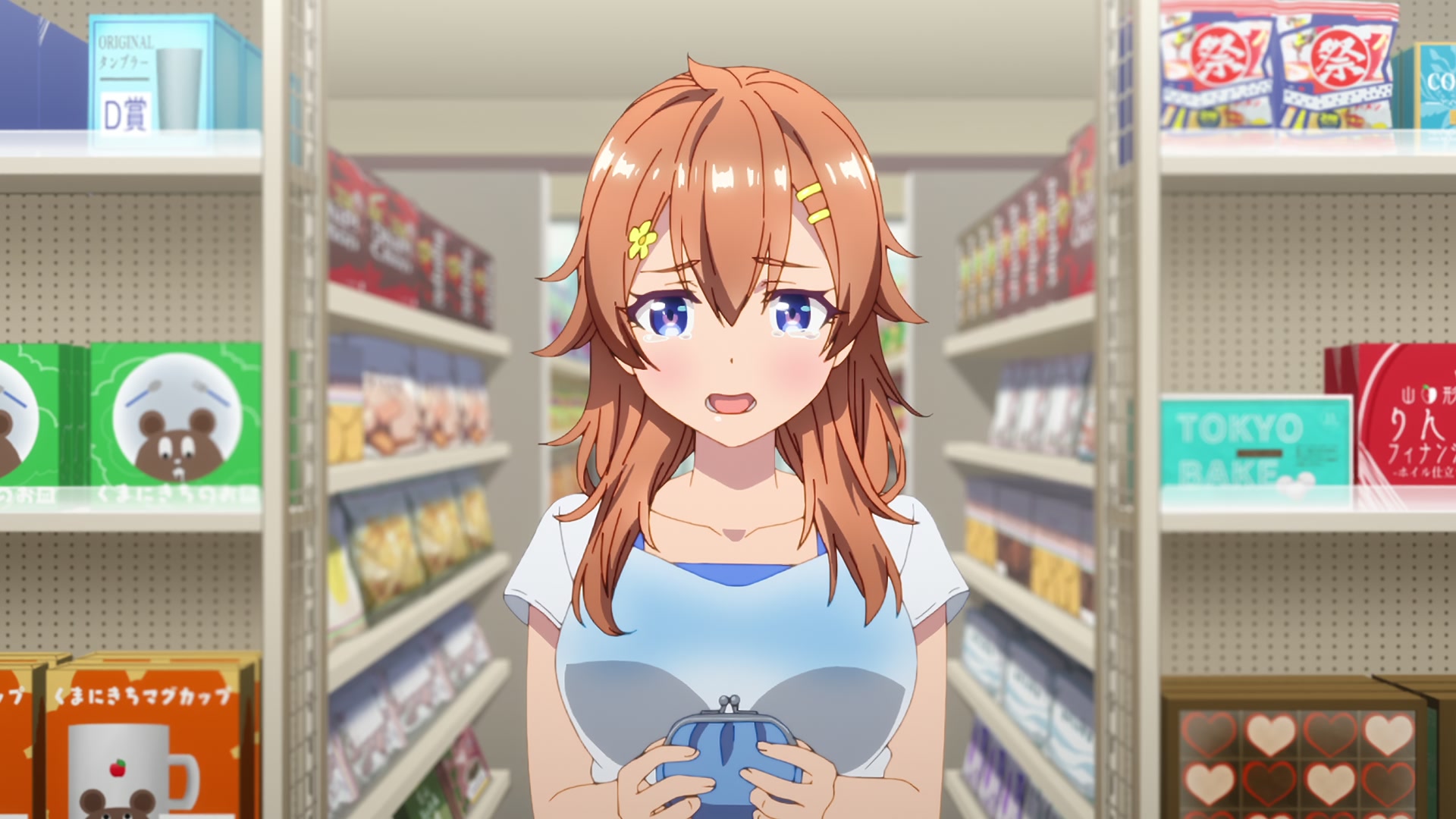
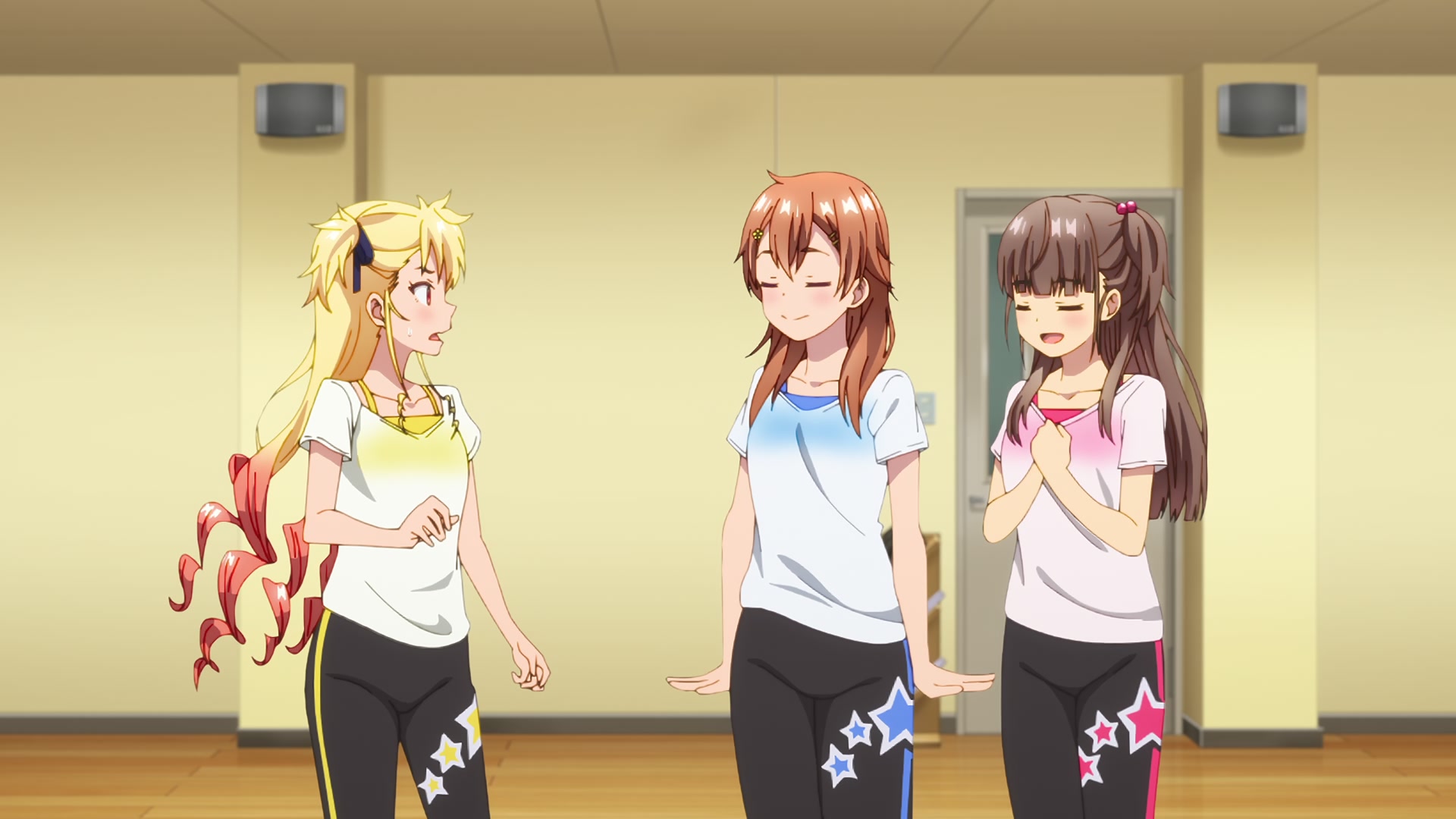
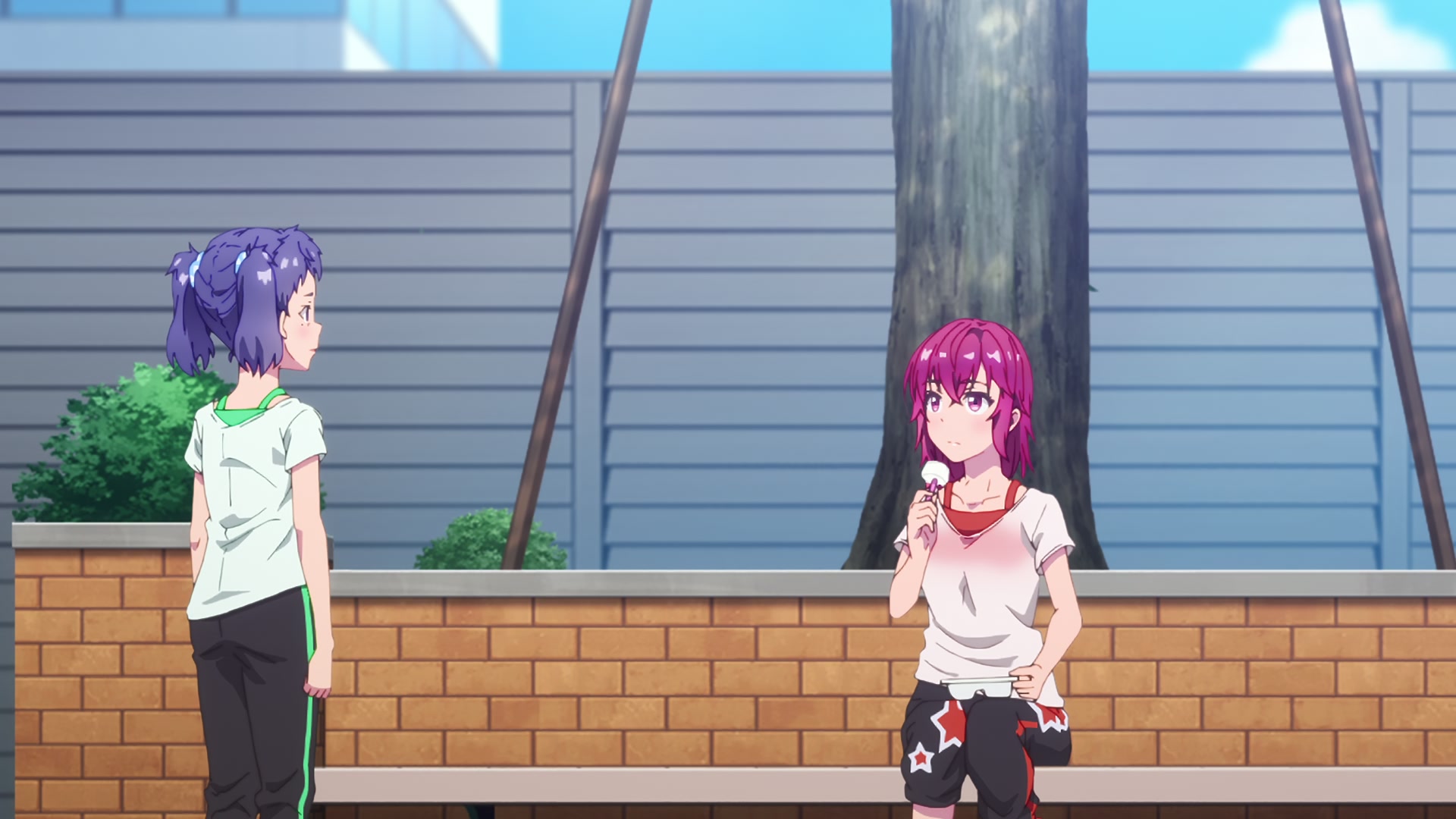
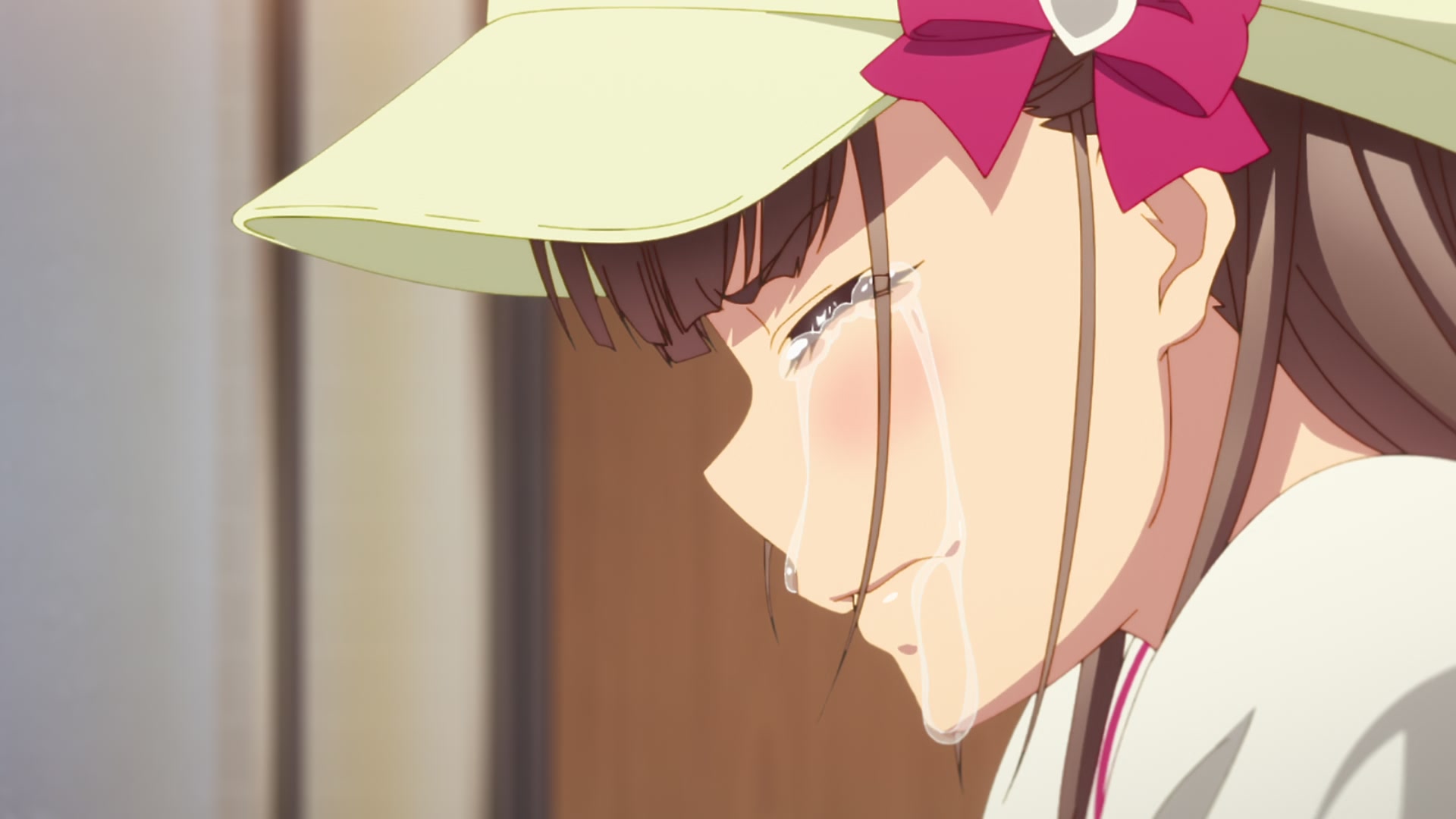
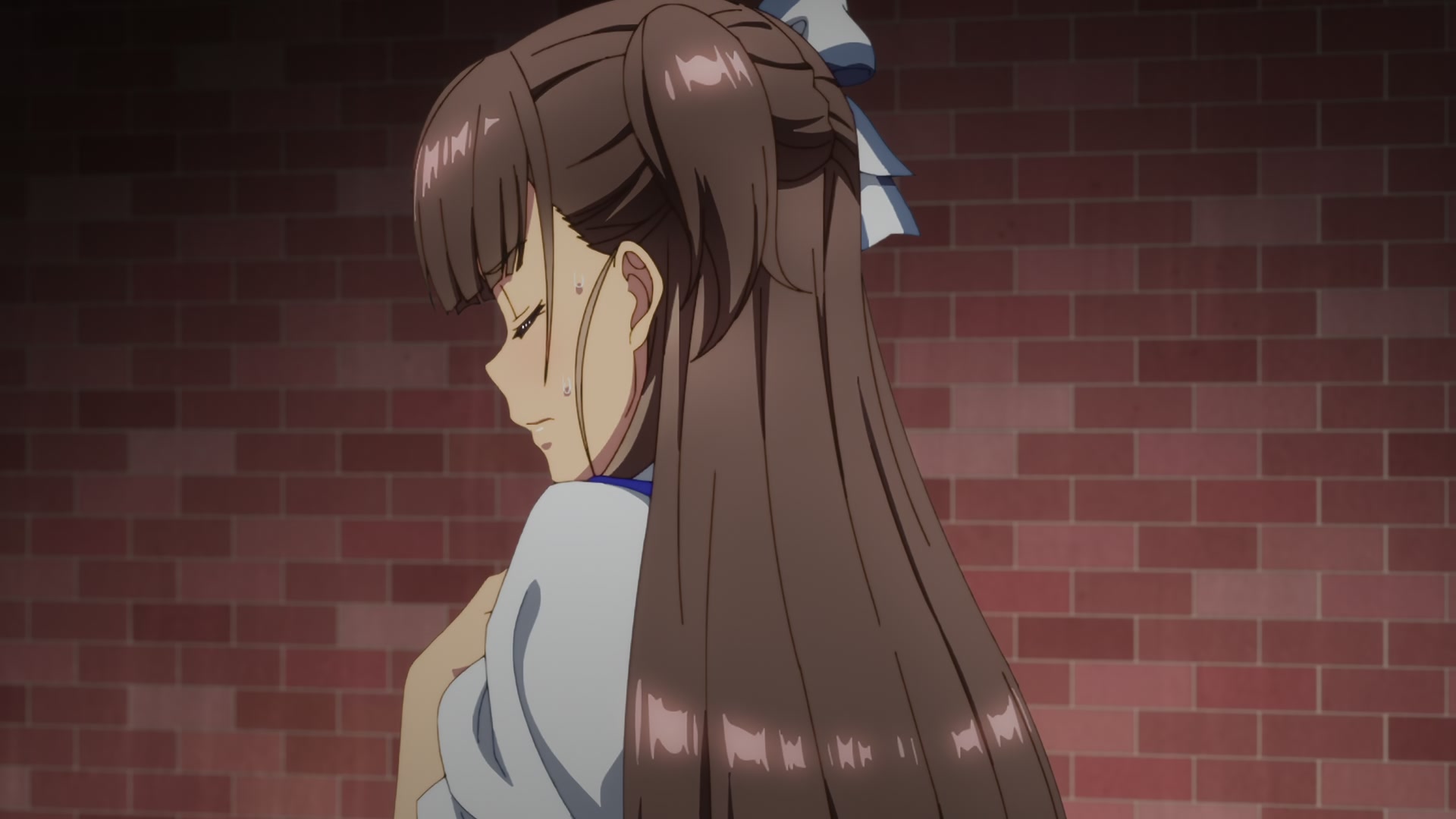
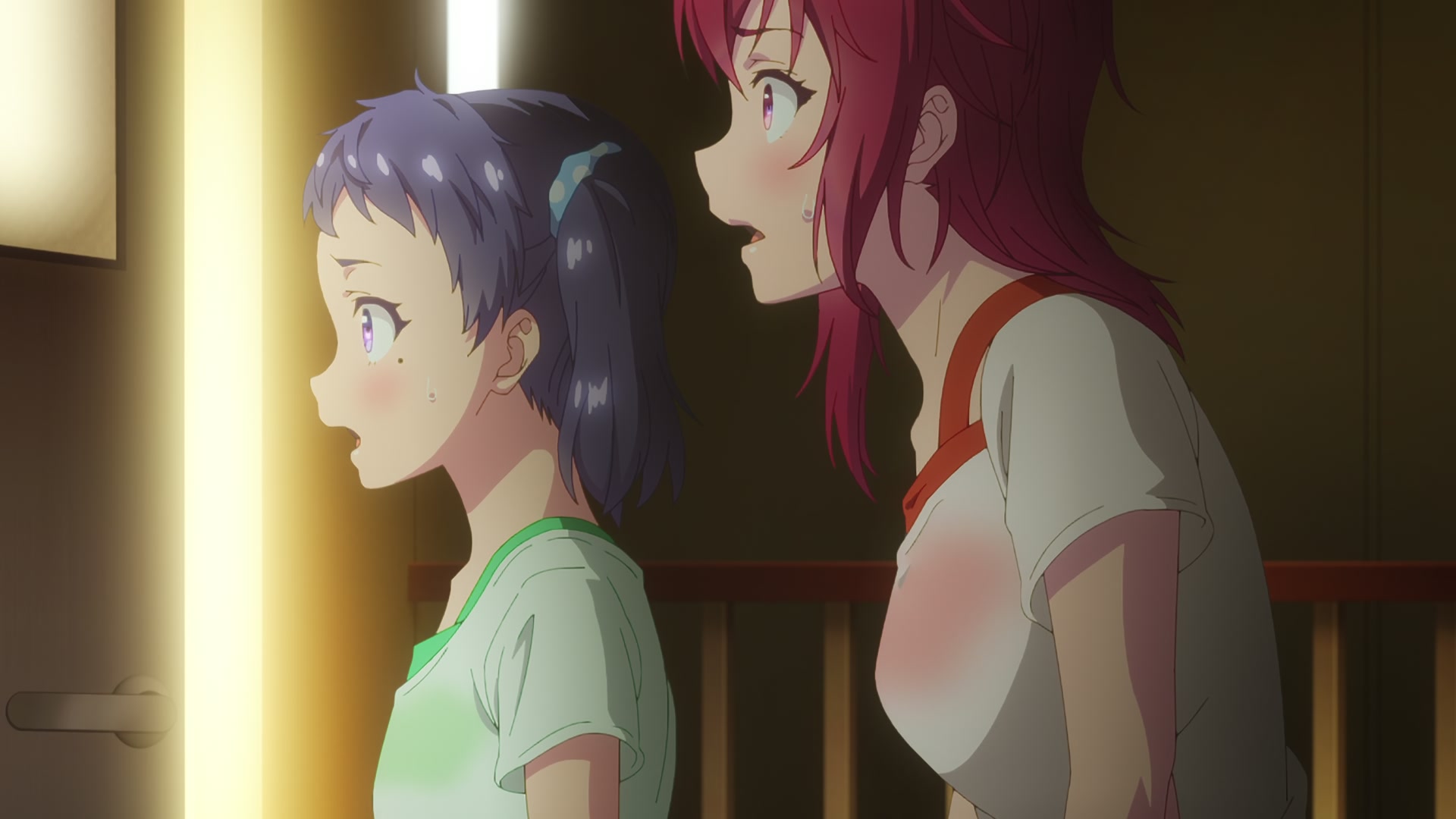
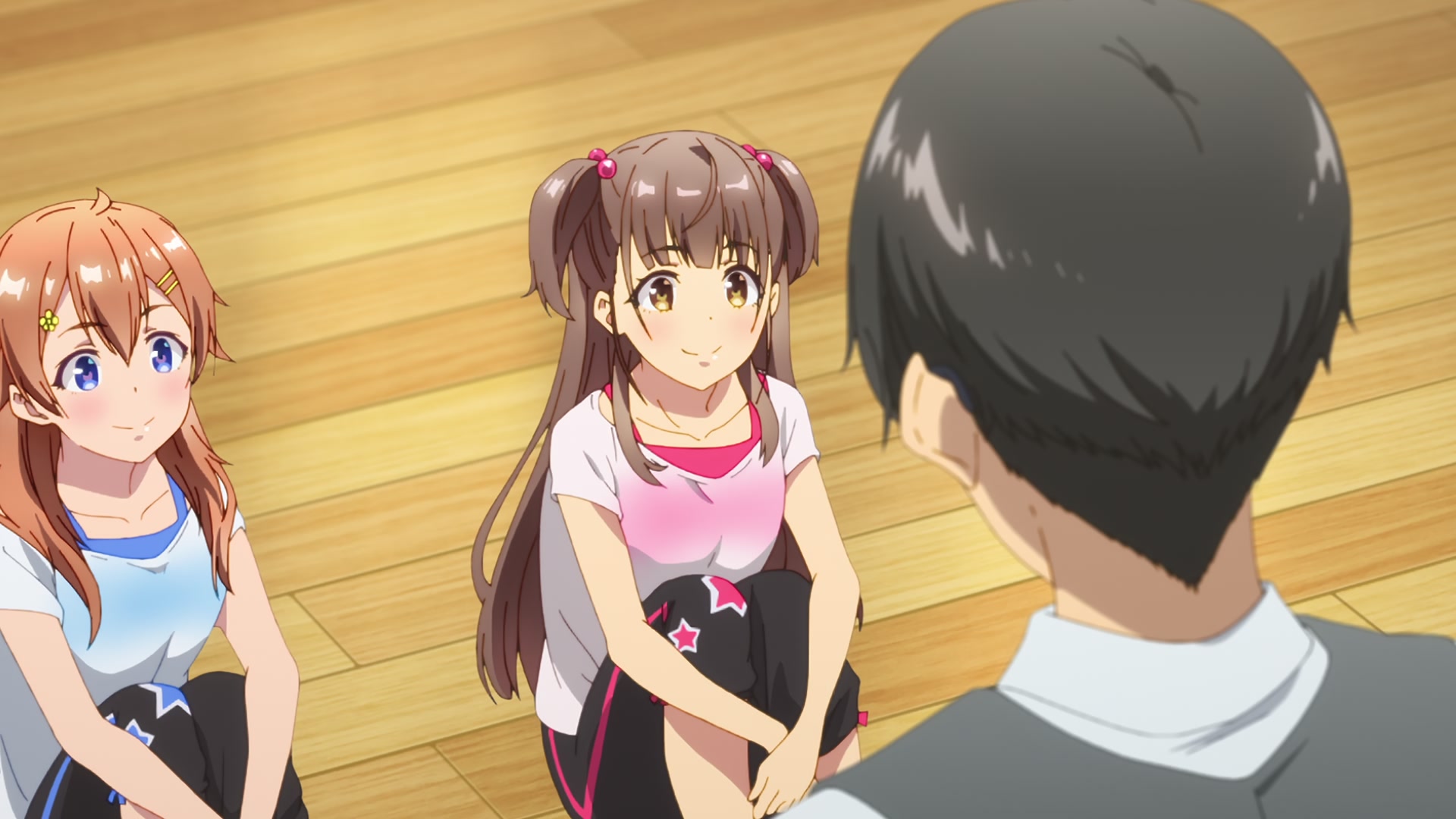
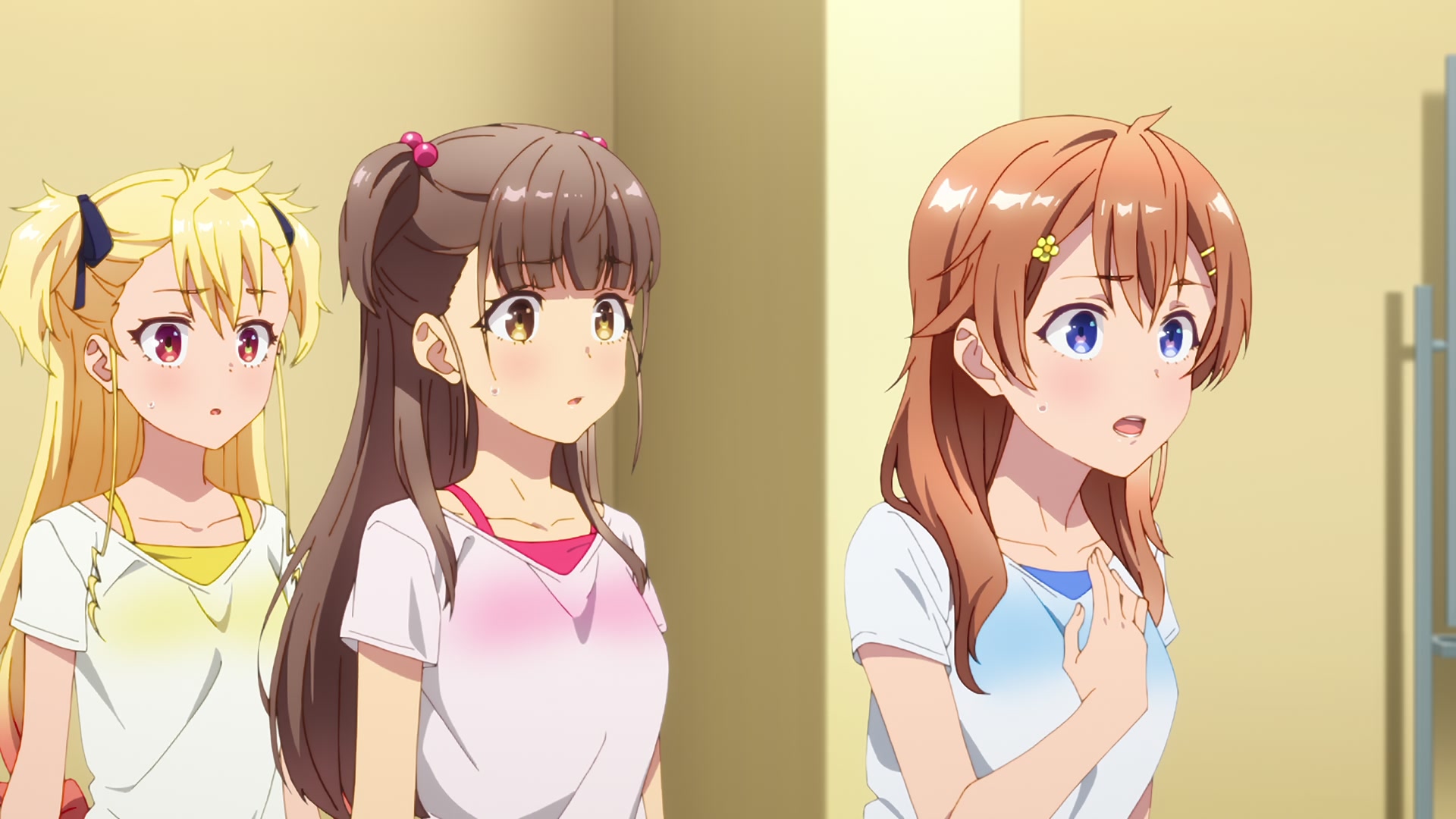
Facial expressions are where the production invests its real resources. The shift between comedic shorthand (sweat drops, chibi exaggerations) and grounded vulnerability is handled without tonal whiplash. The series’ secret weapon is its depiction of crying. Tears are rendered with high-viscosity highlights, the skin around the eyes reddens subtly, and the overall effect is of genuine, uncomfortable emotional rawness rather than prettified “anime crying.” When Haru breaks down after “Be Your Light!!,” her face is a mess, and the scene is stronger for it. When Kyouka admits her ambition in a fast-food parking lot at night, the tears feel earned. A unique stylistic touch is the use of soft, airbrushed color gradients on clothing to indicate heat or exertion during training scenes. It is a small detail, but it adds a distinctive visual signature.
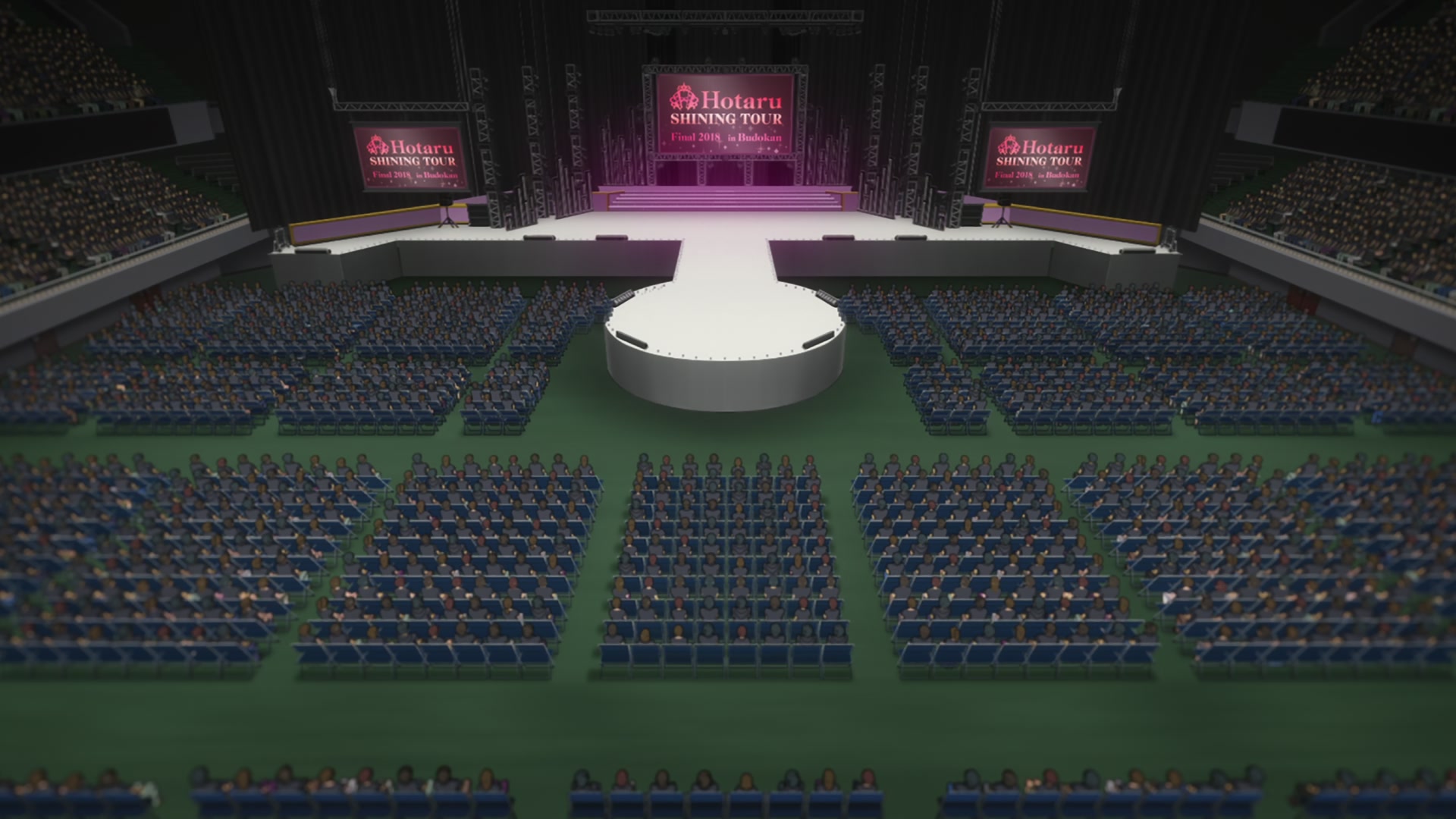
The series has a specific approach to depicting concerts and choreography. Rather than fluid long takes of full dance routines, it favors dynamic, well-composed stills, short loops, and camera moves that emphasize energy over literal depiction of movement. This is a common strategy for TV anime working within budget constraints, and Shine Post executes it with more style than most. The lighting design carries these scenes. A character striking a pose will be backlit by a piercing beam, or the entire stage will be washed in a saturated color that makes the idols look like paintings. The emotional impact of the performances is communicated through the audience’s reactions, the swelling music, and the sheer visual glamour of the shots.
Weaknesses exist. The animation is heavily “pose to pose.” Characters move from one strong keyframe to another, with limited in-between frames. This is functional for dialogue-heavy scenes (which constitute most of the series), and it can even feel stylish in the right context, but it is not the kind of fluid, expressive character animation that sakuga enthusiasts seek out. The 3D CGI used for large venue exteriors, most notably Nakano Sun Plaza itself, is competent and integrated through shared bloom filters, but it inevitably lacks the organic texture of the hand-drawn art. Some interior backgrounds (offices, hallways) are functional rather than inspired, serving as clean backdrops for the character art without drawing attention to themselves. These are acceptable trade-offs. The production clearly knows where to allocate its resources, and it prioritizes the faces, the lighting, and the emotional beats over flashy movement.
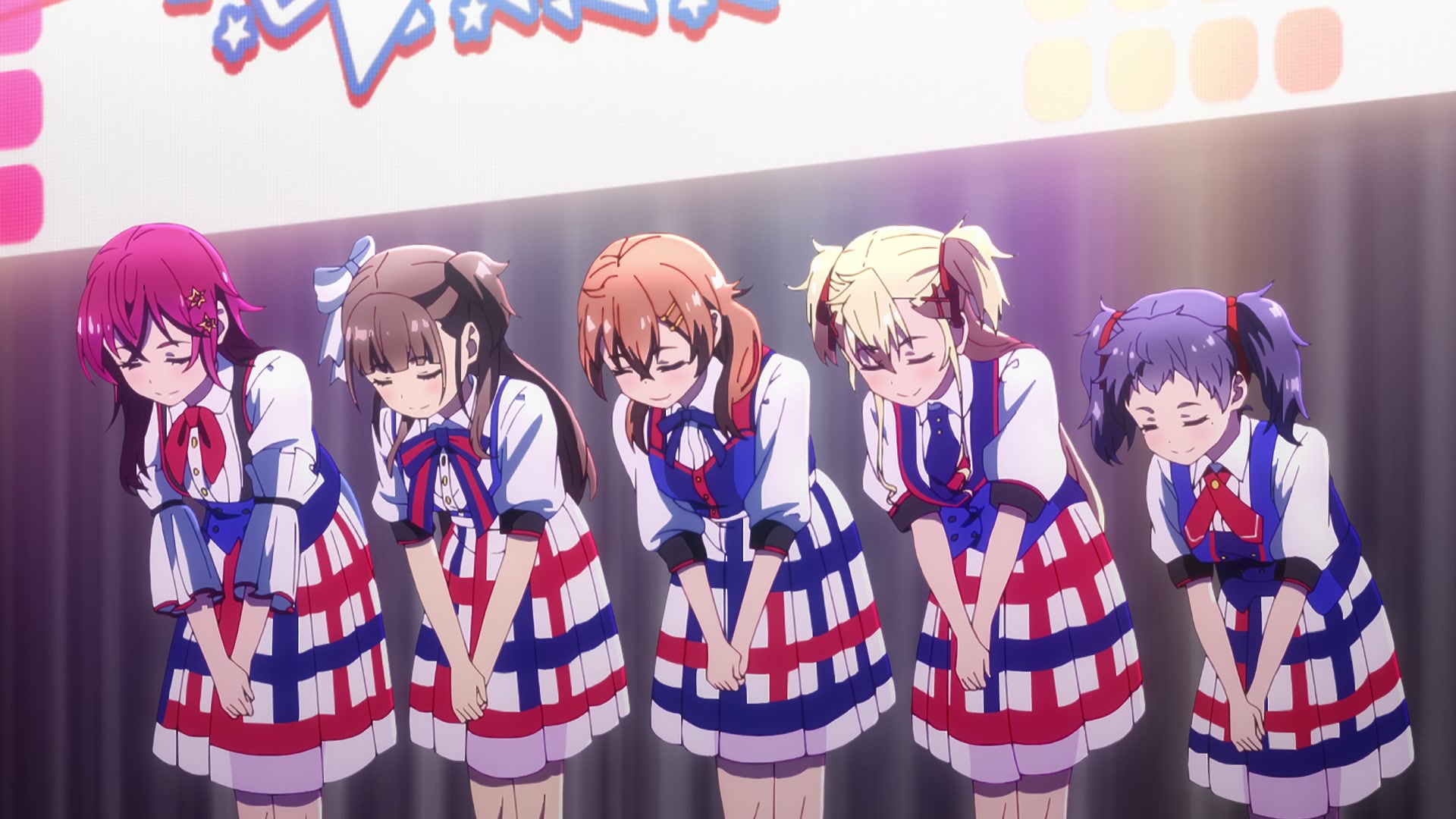
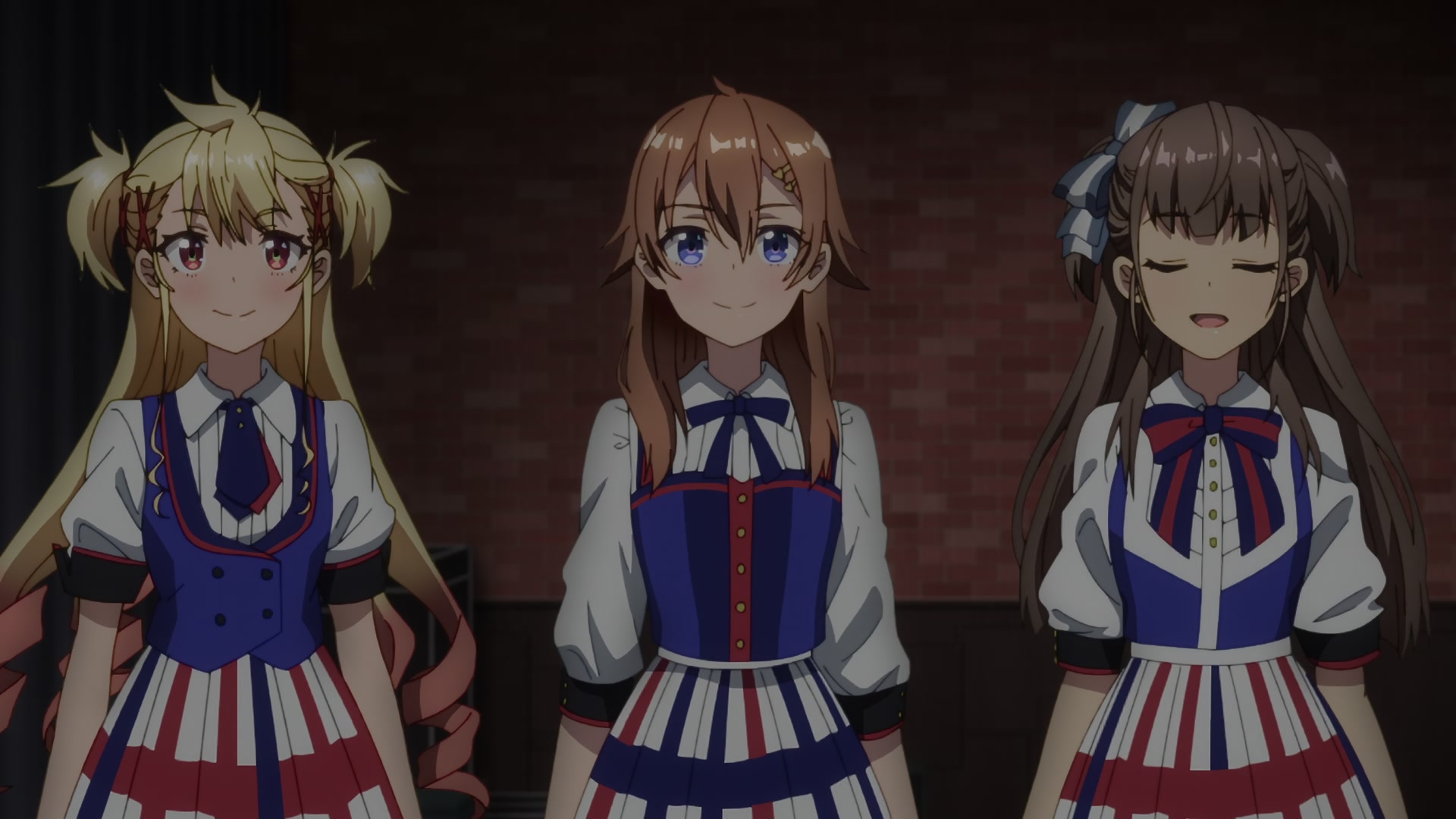
The character designs themselves are attractive and distinct without being radically inventive. Haru’s coral-tipped hair and perpetually bright expression, Kyouka’s sharp eyes and composed posture, Rio’s twin-tails and theatrical gestures, Yukine’s sleek, cool beauty, Momiji’s understated softness, each silhouette reads clearly and reinforces personality. The stage costumes evolve over the series, culminating in the new outfits for the Nakano concert that the girls themselves acknowledge as a confidence boost. The costume design is not particularly daring, but it fulfills its function of making the characters look like credible idols.
Sound and Music
The auditory dimension of Shine Post is best discussed in terms of its vocal performances and sound direction rather than a granular track-by-track breakdown. The seiyuu cast delivers uniformly strong work, which is essential for a series where characters spend significant time singing, crying, and delivering emotionally charged monologues.
Haru’s voice actor navigates the difficult task of playing someone who is consciously performing a weaker version of herself. There is a subtle difference between Haru’s “restrained” singing in early episodes and her full-voice performances later, a distinction that rewards attentive listening. The moment in episode 9 when she finally unleashes her real voice feels like a physical release, and the actor’s control of that transition is a significant part of why the scene works.
Kyouka’s seiyuu has to sell a character who is tightly wound, articulate, and perpetually on the edge of losing her composure. The performance in her breakdown scenes is raw without becoming histrionic. Rio’s voice, by contrast, swings between cartoonish arrogance and quivering vulnerability, and the actor handles these tonal shifts without making the character feel inconsistent. Her singing in “Yellow Rose” is deliberately unpolished in a way that feels genuine rather than incompetent.
Yukine’s cool, measured delivery serves as the group’s baseline of control, which makes the rare moments when her voice wavers (during the reunion, or when she is flustered by Momiji) land with extra weight. Momiji’s flat, blunt speech patterns are a quiet comedic highlight and a consistent source of emotional grounding.
The opening and ending themes are upbeat, catchy idol-pop numbers that suit the series’ tone. The insert songs performed during concerts function as both entertainment and narrative delivery systems. “The World One Step Ahead” carries Kyouka’s trauma and eventual triumph. “Yellow Rose” is Rio’s unarmored confession. “Be Your Light!!” is the group’s declaration of mutual trust. The lyrics are thematically on-point without being subtle, which is appropriate for idol music. The sound direction during concerts balances crowd noise, music, and character voices effectively, creating a sense of space and scale that the limited animation sometimes cannot provide on its own.
The background score leans into piano and string arrangements during emotional scenes, with synth elements during lighter moments. It is functional and pleasant without being particularly distinctive. The real auditory power of the series resides in the voices, the songs, and the silences between them.
Overall Verdict
Shine Post is a series that understands something fundamental about the idol genre. The appeal is not the spectacle, though spectacle is part of it. The appeal is the promise of sincerity. An idol stands on a stage and says, “This is who I really am,” and the audience says, “We accept you,” and for a few hours, everyone in the room is absolved of the need to pretend. It is a ritual of mutual vulnerability, and Shine Post treats it with the seriousness it deserves.
The series is not flawless. The animation is more functional than fluid. The pacing can feel leisurely to viewers accustomed to tighter plotting. The visual style, while beautiful, occasionally over-processes scenes with bloom and lens flares to the point of feeling airless. Some supporting characters and plot threads could have been developed more thoroughly if the episode count had been longer. These are real but minor complaints against a work that succeeds so thoroughly at its central goal.
The central goal is emotional catharsis, earned through careful, patient character work. You watch Haru go from a smiling enigma to a sobbing, genuine person and you feel the release. You watch Kyouka stop hiding behind “what is correct” and admit she wants to be special, and it resonates because everyone has felt like they are merely reliable while others are gifted. You watch Rio sing without her mask of arrogance and realize, along with her, that she was never empty. You realize that Yukine and Momiji’s “betrayal” was the purest love in the story, a sacrifice of their own reputations to shock a friend into living fully. You watch Naoki, a man who gave up on his own purpose, find it again in the exact dream that broke him the first time. And by the time the Nakano Sun Plaza concert begins, with the five members of TINGS in their new costumes, standing together as capital letters for the first time, the emotional investment has accumulated so quietly and thoroughly that the payoff feels almost overwhelming.
This series is for people who love melodrama when it is done with psychological intelligence. It is for people who enjoy watching characters struggle with internal contradictions and slowly, painfully resolve them. It is for idol fans, obviously, but it is also for anyone who appreciates stories about the courage required to be sincere in a world that rewards performance. The finale’s announcement of a Budokan battle against HY:RAIN is not a cliffhanger in the frustrating sense. It is a promise. These girls, having finally learned to trust one another with the full force of their combined light, are ready for any stage. That is the point. That is the shinepost. Not a destination, but a direction. And it is glowing.
Shine Post is a hidden gem in the idol genre, one that prioritizes psychological depth over spectacle and earns its triumphant moments through patient, careful character work. It deserves a wider audience. If the premise sounds even mildly appealing, watch it.
Gallery