





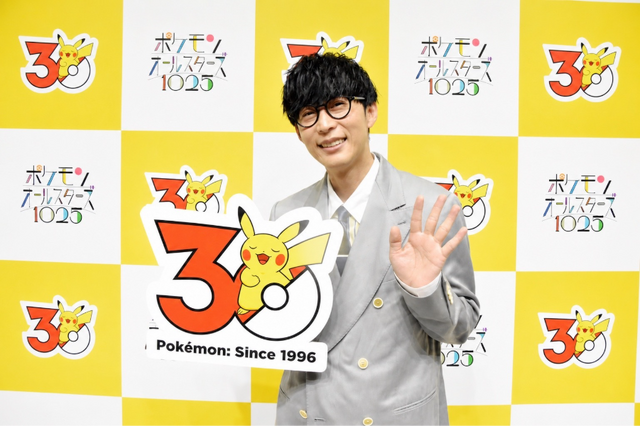
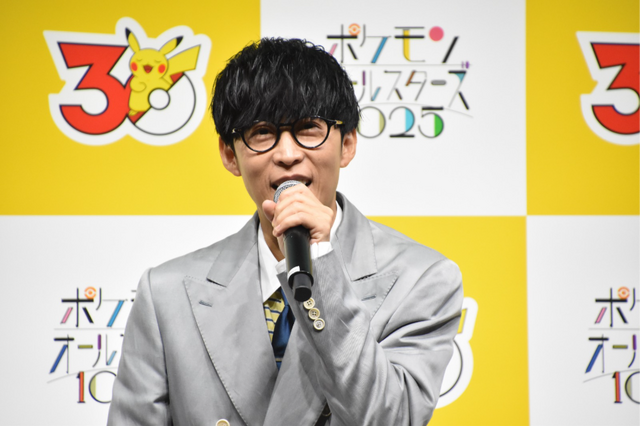
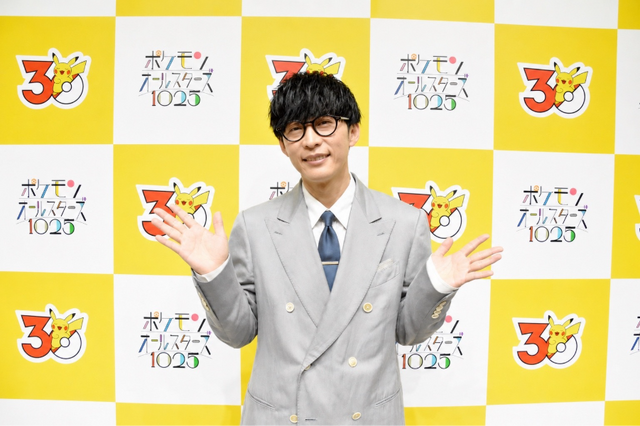
To celebrate the 30th anniversary of the Pokémon franchise, the song project “Pokémon All-Stars 1025” brings together all 1025 Pokémon in a single track. The song was written, composed, and performed by Oishi Masayoshi, who appeared at a September 3 event to unveil the music video alongside guests An Mica and Yagi Yusei (FANTASTICS from EXILE TRIBE). Oishi also revealed his top three favorite moments from the video, and later sat down for an exclusive interview with Anime! Anime! to discuss the unprecedented challenge of naming every Pokémon in one song.
“Everyone is the protagonist” – The message behind the song
When you received the offer to create a song featuring the names of all 1025 Pokémon, what was your first reaction?
Oishi: My first impression was, “They’re not sane” (laughs). I never imagined such a massive project would be handed to me. But what made me happy was that they said, “We really want you to do this, Oishi-san.” I felt a strong passion, and I thought, “This is definitely going to be a huge project!” So I accepted. However, I also felt from the start that I probably couldn’t do it alone, so I reached out to trusted music creators on my side and began by building a team.
The lyric “Everyone is the protagonist” seems perfect for Pokémon. Did the Pokémon side request a specific direction?
Oishi: When I received the offer, they said, “It would be great if it became a Reiwa-era version of ‘Pokémon Ieru kana?’” They also told me to treat each Pokémon equally, but that was something I wanted to do myself. So the chorus line “Saa, minna ga shuyaku da, wakiyaku wa doko ni mo inai” (“Come on, everyone is the protagonist, there’s no supporting role anywhere”) was actually my suggestion. From there, we built the song around that theme, communicating closely with the Pokémon team.
The opening line “Pikachu, Kairyu, Yadoran, Pijon” from “Pokémon Ieru kana?” is a nostalgic touch for longtime fans.
Oishi: Thank you! I proposed that homage. When looking back at 30 years of history, I wanted to sprinkle in familiar phrases and melodies that people might recognize. At anime song festivals, I’ve already performed the 213-Pokémon version, and even first-time listeners can do call-and-response from “Pikachu, Kairyu” to “Zubatto, Gyaroppu” (laughs). That made me think, “This is Pokémon’s DNA!” I created the song while feeling everyone’s own Pokémon history, and now I’m performing it too.
How did you decide the order of the 1025 Pokémon?
Oishi: There are billions—no, trillions—of possible combinations, and looking back, it was incredibly tough (laughs). Even when I thought, “This Pokémon would fit perfectly here,” I’d already used it. I kept saying, “Oh, I can’t use that name again!” So the staff prepared a spreadsheet-like system to check which names had already been used.
Basically, I focused on the “sound” of the names—whether the sequence felt good when spoken aloud—while also arranging Pokémon by evolution lines, by type, or by region. But even then, I’d wonder, “Did I say that name?” or “I haven’t said it yet.” Avoiding duplicates was surprisingly difficult.
One thing I discovered was how much Pokémon names can rhyme. I expected there would be many, but actually trying it led to all sorts of new findings, and that was really fun.
This song will likely be performed at anime song festivals and elsewhere. Do you have any tips for singing it?
Oishi: When you sing karaoke, the lyrics appear on screen, but with this song, if you try to follow the lyrics, you probably can’t sing it. You really have to memorize it (laughs). It’s probably the hardest song I’ve ever made, even among my own works.
But because it’s difficult, it makes you want to challenge it—that’s the nature of an otaku, I think (laughs). I’d be very happy if Pokémon fans and trainers give it a try. And if you can sing it, that means you’ve memorized all 1025 Pokémon, so you can brag to your friends: “I can sing the full version” (smug face). I hope it becomes a point of pride.
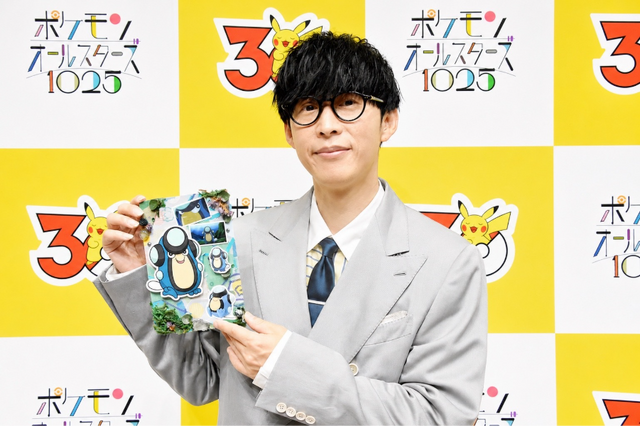
Do you have a particular favorite among the 1025 Pokémon?
Oishi: I have affection for all of them, but if I had to choose, it’s Gamagaru. There’s a reason: one of my fans is a “Gamagaru uncle” (laughs). He loves Gamagaru so much that he comes to every live show covered in Gamagaru merchandise, so he stands out. While everyone else shouts “Oishi!” or “Look this way!”, he’s the only one yelling “Gamagaru!” (laughs).
Recently, I had a chance to talk to him at a signing event. He’s a really nice guy, but in the short time we spoke, he asked with a desperate look, “What’s your favorite Pokémon?!” When I answered “Gamagaru,” he left overjoyed. From then on, I fell deeper into Gamagaru’s charm—its ability “Hydration” is also a selling point (laughs). So now I love Gamagaru.
Finally, a message for Pokémon fans.
Oishi: I spent a production period that I could say I staked my musical life on to complete this masterpiece. It’s full of Pokémon love and my own musical soul, so please listen to it, learn it, and if possible, sing every line. I’ll be performing this song in various places and want to share Pokémon love with everyone.
I’m truly glad to be part of such a dream project in this 30th anniversary year. After finishing the song, I felt that the 30th anniversary isn’t a goal—it’s a new start. I want to keep walking with Pokémon, and if Pokémon ever reaches 10,000, I’d love to try “Pokémon All-Stars 10000” (laughs). Thank you for letting me be part of this project.
Oishi Masayoshi’s Top 3 Favorite Moments in the Music Video
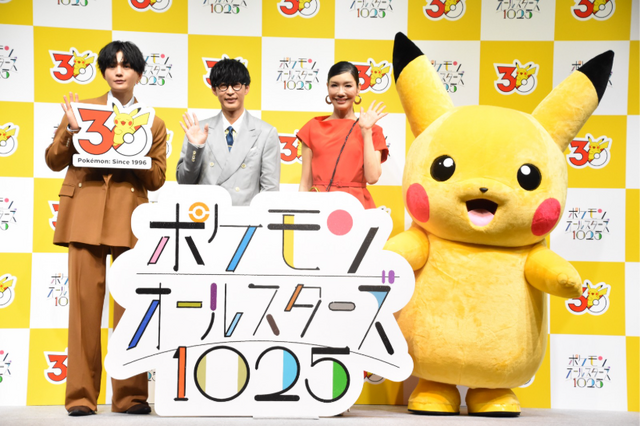
At the event, Oishi presented his own “Top 3 Favorite Points” from the music video, saying, “I chose them while gritting my teeth (laughs).”
3rd Place: Changing the musical style for each type
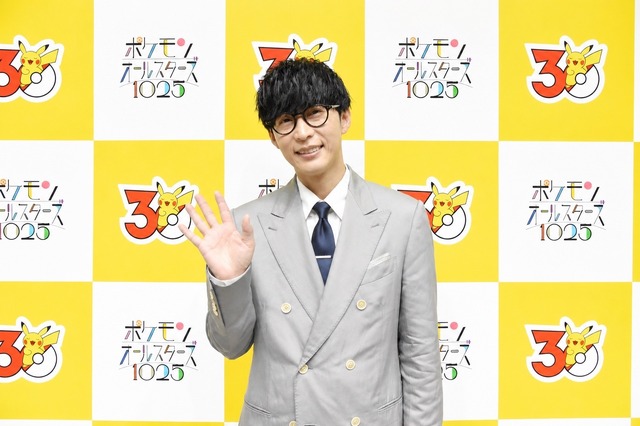
There are 18 Pokémon types, and in the song, the musical style and singing approach change according to each type’s characteristics. Oishi proudly said, “I put a lot of care into this.” He explained that not only he, but also Pokémon-loving music creators participated in the production. “The music is packed with each creator’s Pokémon love,” he said.
His favorite part is the Ghost-type section. “It’s like you’ve slipped into a musical audience or come to a theme park—an immersive part. I hope you feel like you’re riding an attraction,” he said.
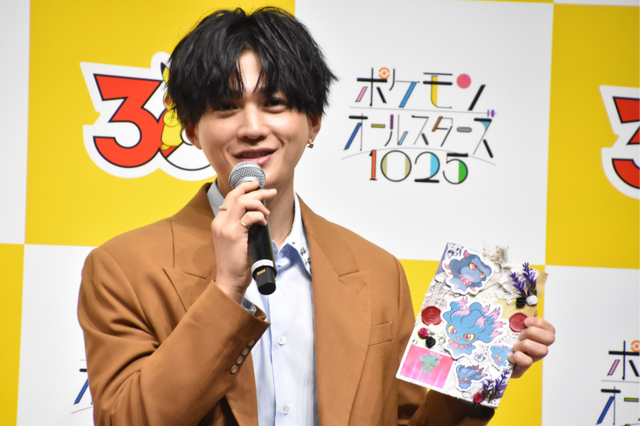
Yagi, who is also a singer, expressed admiration: “I’ve always thought Oishi-san is amazing.” Having known Oishi’s music for a while, Yagi praised, “He’s surpassed the best again.” About the type-based changes, he said, “It’s fun for the listener and the singer. I can’t wait to sing it in karaoke!” However, the song is about 22 minutes long. An Mica joked, “You’d have to tell everyone in advance, ‘I’m going to sing for 22 minutes now!’” drawing laughter from the audience.
Oishi requested, “I want to hear Yagi-kun sing ‘Pokémon All-Stars 1025’ somewhere!” But he admitted the song is “quite difficult.” Even with lyrics displayed, “If you miss one, you’ll tumble down from there,” he explained.
2nd Place: Cut-ins from past anime and game scenes
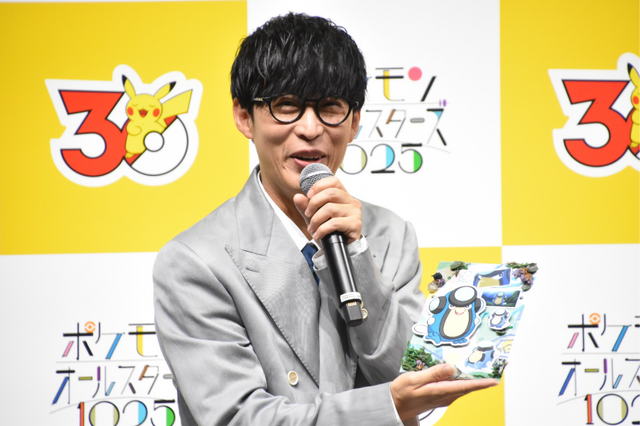
Given the nearly 30-year history of Pokémon, the music video is filled with nostalgic footage that makes you want to exclaim, “That’s nostalgic!” Oishi noted that bringing together scenes from various media—anime, games, and more—into one video is “quite rare.” He said, “It’s very difficult to bring together works from different sections. I’m extremely happy that it was realized this time, as the person who wrote the song.”
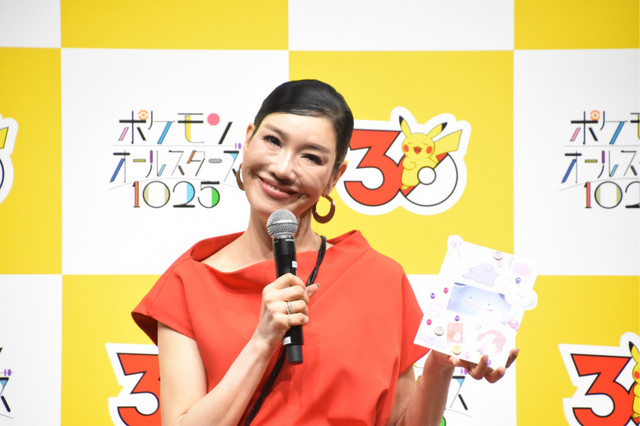
An Mica commented, “For longtime fans and for children who recently discovered Pokémon, it brings up emotional and joyful feelings.” Yagi agreed, “I felt a lot of nostalgia. It’s precious that it reminds us of our memories. The music is bright and pop, but it keeps moving me.” An Mica was also drawn in by the changing music and visuals, and said she felt like getting to know Pokémon she didn’t know before.
Oishi himself was moved by the video. “I can watch it as a viewer. I actually cried about three times,” he confessed. An Mica described it as “a video where you can reunite with your past self.” It seems to be a work that lets people across generations look back on their own history with Pokémon.
1st Place: The phrase “Saa, minna ga shuyaku da, wakiyaku wa doko ni mo inai”
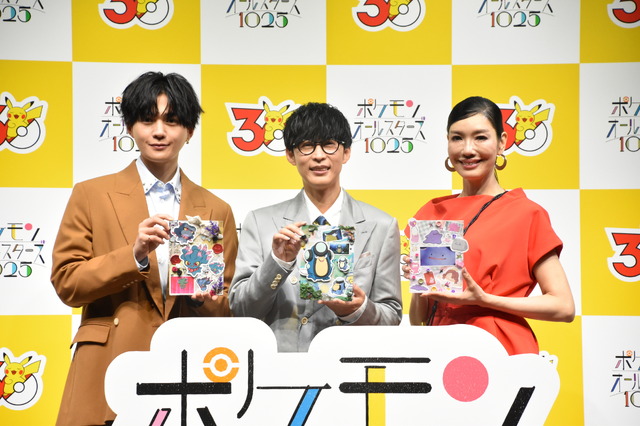
Oishi said that in singing all 1025 Pokémon, he wanted to “not create any outcasts.” He explained, “With each Pokémon having its own significance, I always wanted to create it under the big theme that everyone is the protagonist and there are no supporting roles.” He scattered this phrase throughout the 22-minute song as a symbol of that feeling.
Oishi also recalled the moment he recorded the 1025th Pokémon. He described the long session as “like a marathon” and confessed, “When I knew it was the last one, I burst into tears.” The actual recording includes his crying voice, and although he considered re-recording, he chose to keep that take to preserve the emotion of the moment.
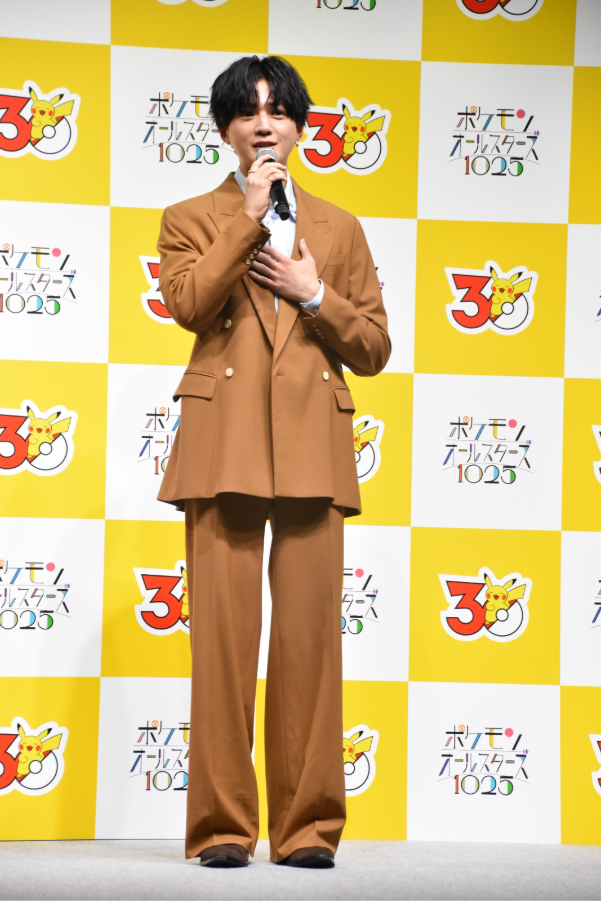
An Mica was moved: “As you keep listening, you feel like you don’t want to say goodbye, you want to hear more. That voice was really good.” Oishi reflected, “Even now, I think I captured a very emotional moment.”
Yagi analyzed that even with all the different Pokémon names and musical shifts, “This phrase keeps the song’s axis from wavering. Each Pokémon has a different personality, but because of this wonderful power word, there isn’t a single moment where you forget that everyone is the protagonist.”
(Written by Yoneda Kaori)

![Who was the most “oshi” female voice actor of 2025? Hanazawa Kana, Ueda Reina, Hayami Saori, Sakura Ayane, Uchida Maaya… Diverse activities are the reason to support them! [Anime! Anime! General Election]](https://animeworld.info/wp-content/uploads/2025/12/826389.jpg)
