





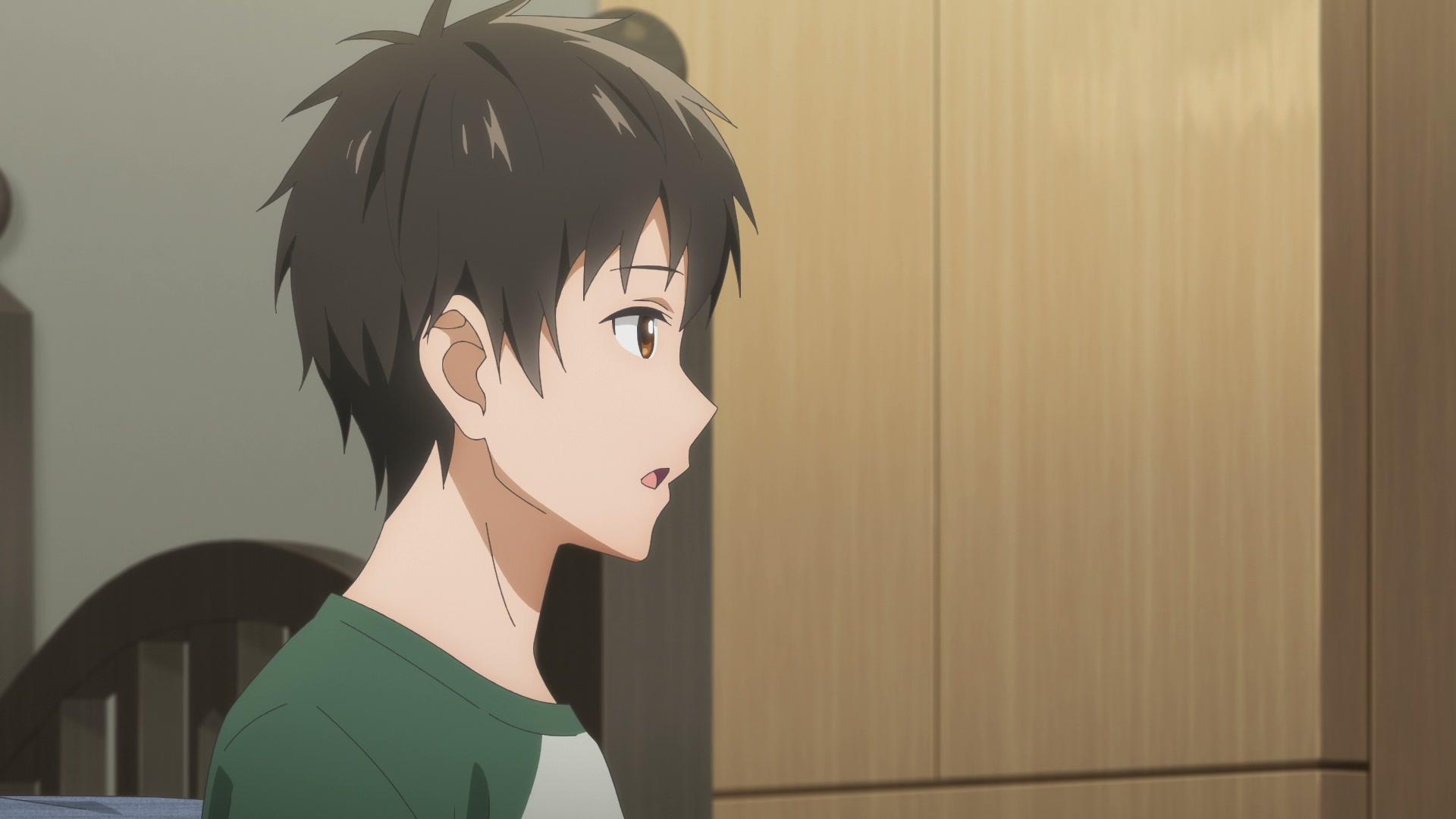
The moment Fuyutsuki says she has six months left, the entire shape of this show changes. Not because the information is surprising. The hospital setting, the chemo brain, the recurrence that spread to her retinas. All of that pointed somewhere grim. But hearing her say it so plainly, almost casually, while Sorano is still trying to process why she called his memories “annoying,” lands like a door slamming shut.
Episode 8 is where the romantic comedy scaffolding finally collapses. What remains is something quieter and much harder to watch.
The Apartment Scene Feels Like a Wake
The episode opens with the three of them crammed into Narumi’s place, eating gyoza and trying to make sense of a situation that refuses to make sense. Narumi plays the mom role, pushing food on everyone, telling Hayase to stop crying, acting like a hot meal can fix what is fundamentally unfixable.
Hayase’s anger feels real. She snaps at Sorano, then at Narumi, then eats half the gyoza because she gets hungry when she’s in a bad mood. The sausage fight that follows is the kind of dumb physical comedy this show does well, but it’s undercut by Sorano’s internal observation that all of this, the worrying, the crying, the fighting over food, is just another way of expressing despair.
That line stuck with me. Nobody in that room knows what to do. They’re not strategizing. They’re just filling space so they don’t have to sit with the fact that Fuyutsuki looked at them like strangers.
The Volunteer Plan Is a Flimsy Excuse
Hayase finds the hospital’s student volunteer recruitment flyer, and suddenly they have a plan. It’s not a good plan. Narumi even points out that they’ll fail the interview if the staff sense a hidden agenda. But Hayase’s reasoning is honest in a way that matters: she wants to do the volunteer work regardless, and since they found Fuyutsuki, they might as well try.
The show doesn’t pretend this is noble. Sorano admits he had no other choice if he wanted to be near her. The interviews go fine, the paperwork is tedious, and the orientation nurse gives them the standard speech about not discussing illnesses with the children. Then she introduces Fuyutsuki as one of the patients who plays piano during kids time.
That introduction is the first time Sorano gets confirmation that she’s actually admitted. He says he had a feeling she probably was. The way he says it, flat and resigned, tells you he’s been bracing for this.
The Hospital Is a Different Kind of Stage
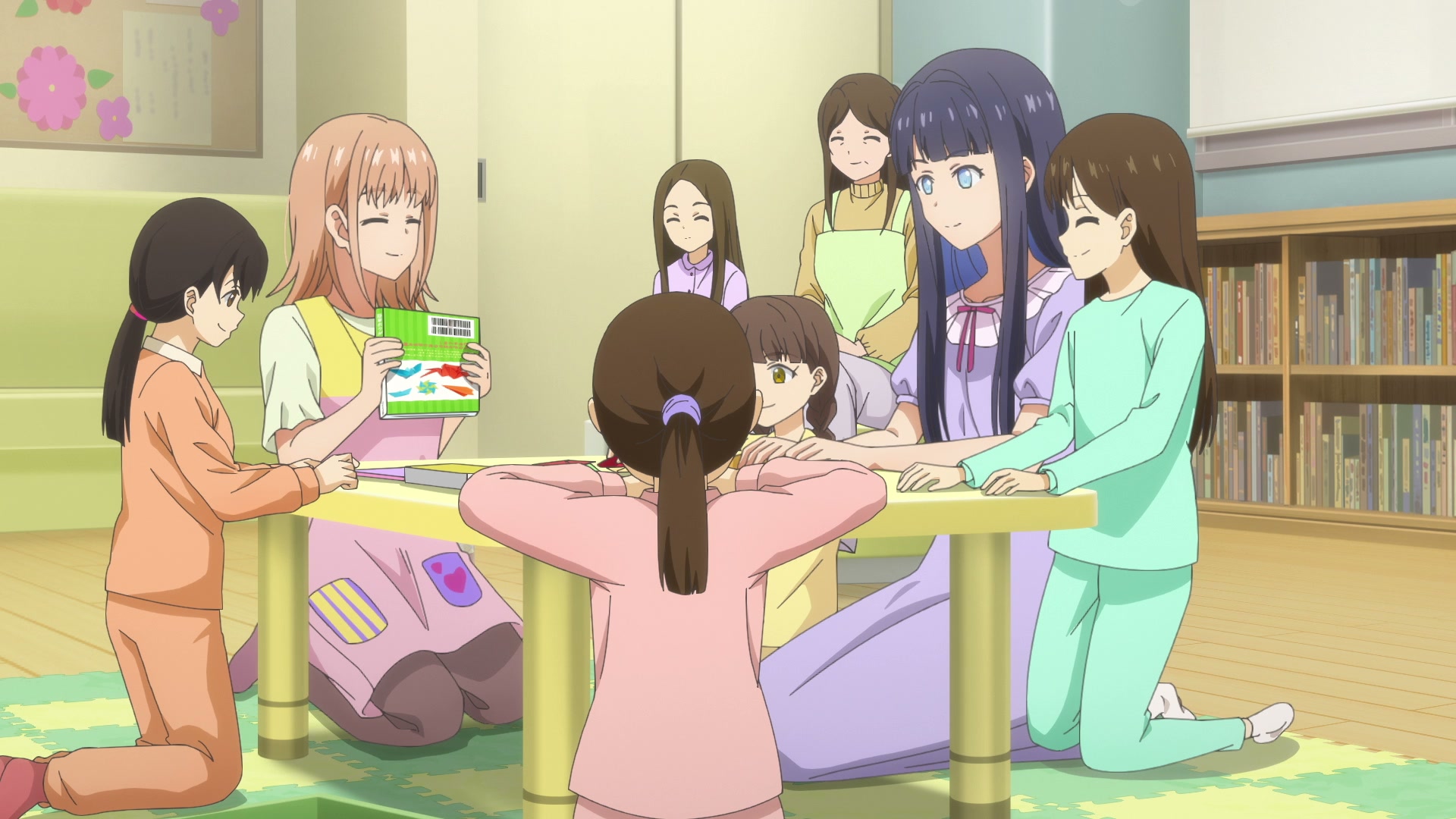
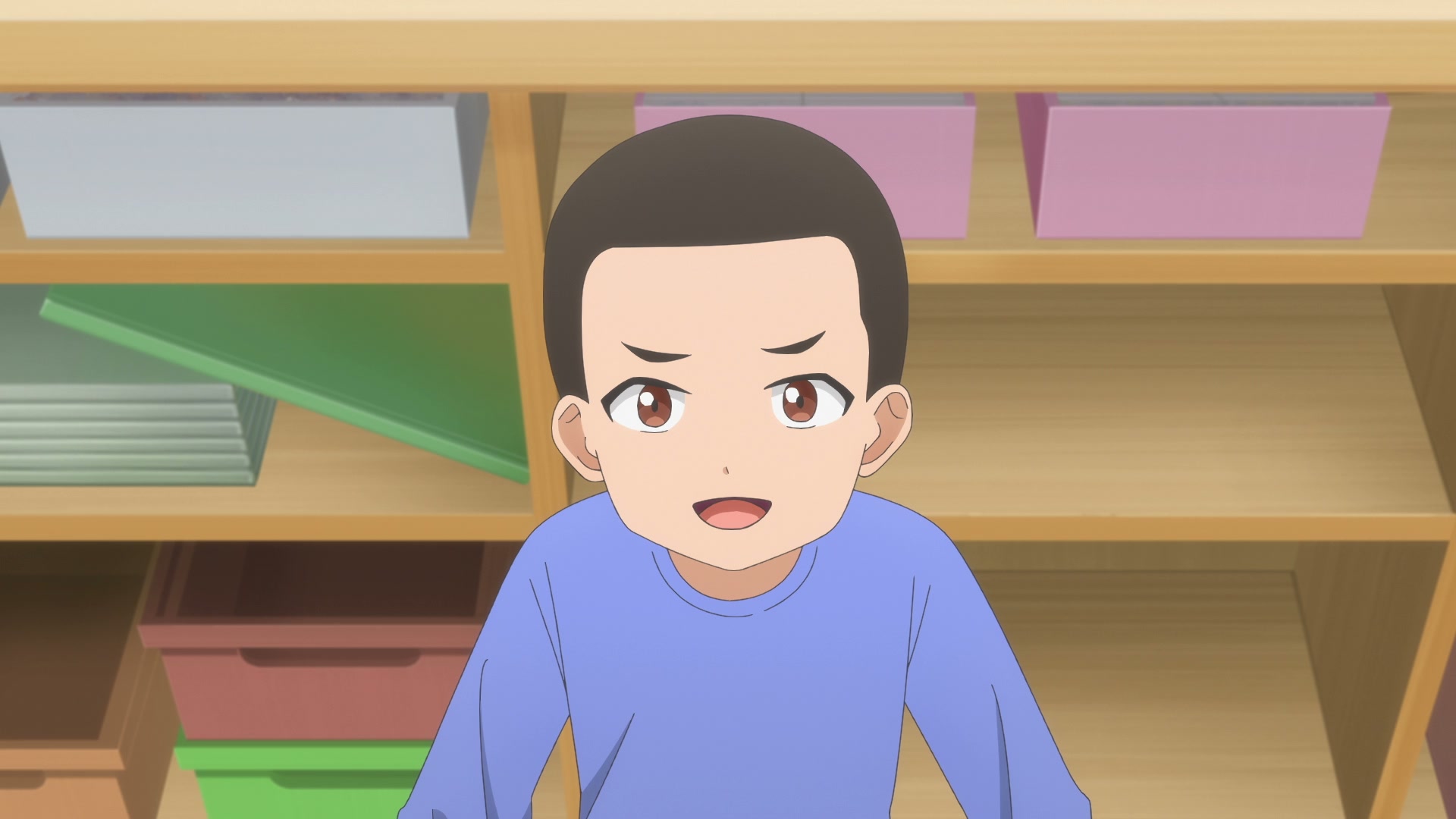
The kids time scenes are where the episode finds its strange, uncomfortable rhythm. Fuyutsuki folds origami with the children, makes paper planes, and Sorano hovers nearby trying to help without being obvious. A kid with a buzz cut calls him out for staring at her, then accuses him of looking at her boobies, and suddenly Sorano is being chased around the room by a small child yelling “Boobies! Boobies!”
It’s funny. It’s also deeply sad. Sorano is standing in a hospital playroom, watching the girl he loves interact with children who are fighting serious illnesses, and he can’t even talk to her normally. The comedy doesn’t undercut the sadness so much as it makes the whole situation feel more surreal.
Narumi catches the kid and gets called “old man,” which leads to a bit about being a streamer doing 200 push-ups. The housewives watching them comment that they’re like a comedy duo. Everyone is performing. Sorano is performing normalcy. Fuyutsuki is performing the role of a patient who doesn’t know these people. The children are performing play.
The Bench Scene Changes Everything
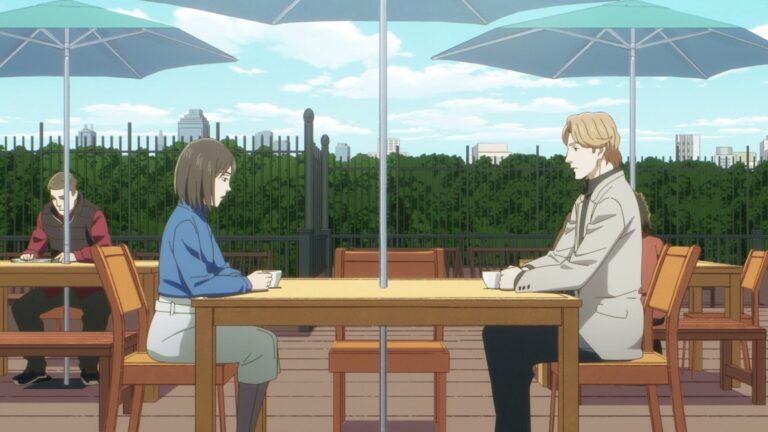
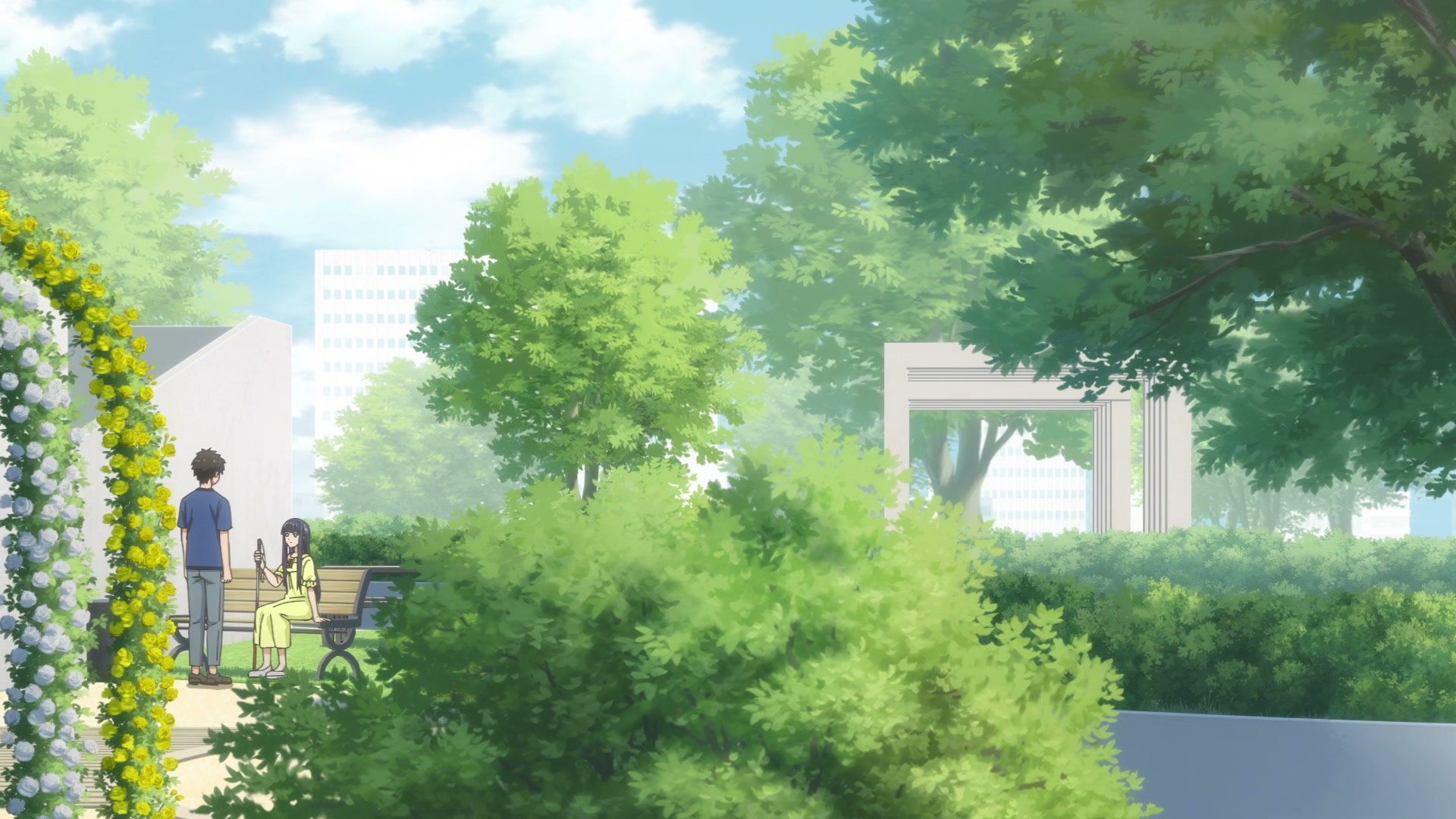
Fuyutsuki asks Sorano to step outside, and for a moment it feels like progress. She wants to clear things up. She asks directly if she attended the same college as him and his friends, if they were acquainted, if she lost her memories.
Sorano says yes to all of it. Then she asks what he wants her to do about it. Would he want her to remember everything?
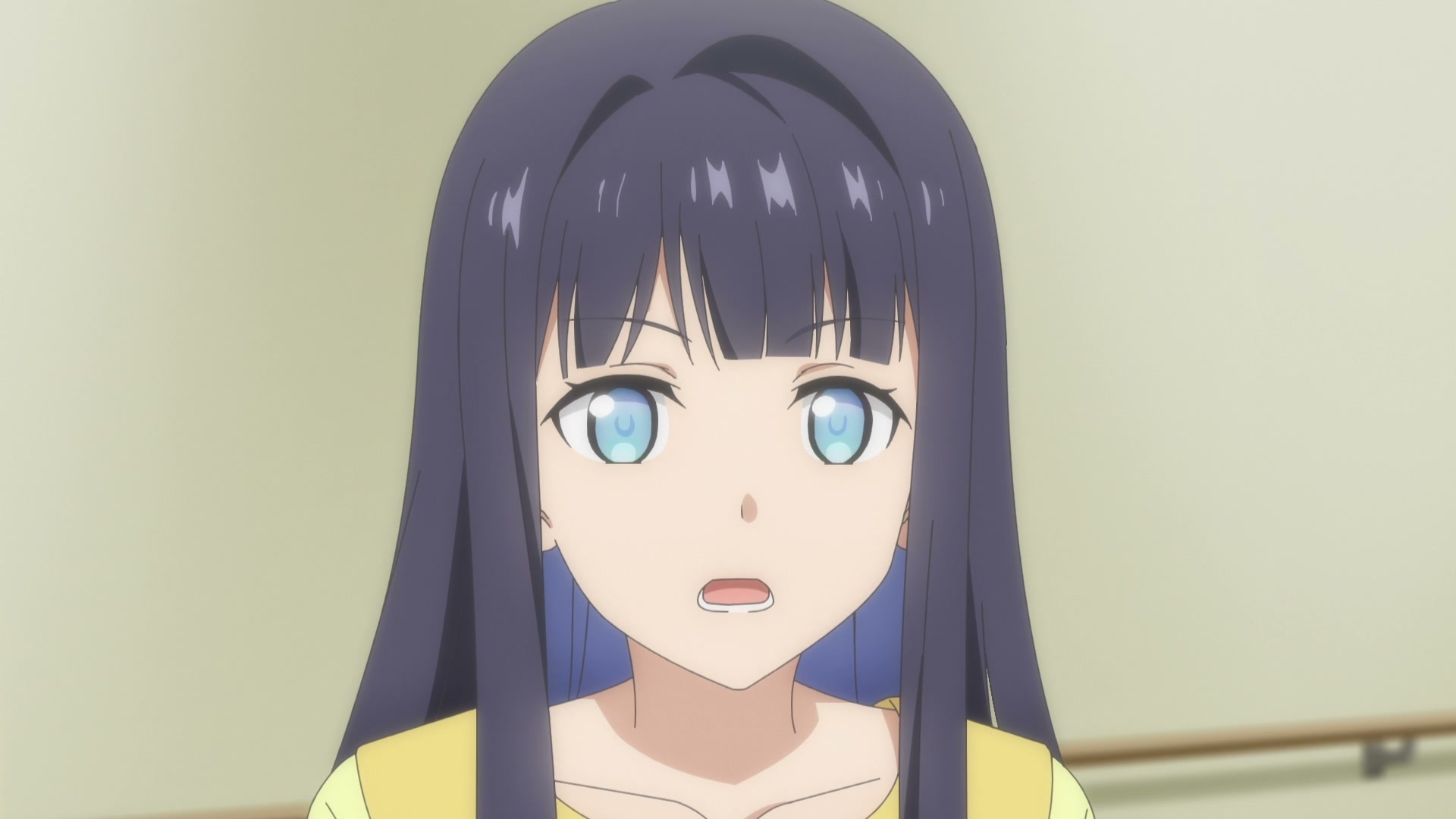
He says yes, and she says that would be extremely annoying.
That word choice is brutal. Sorano’s internal reaction, “Does the precious time we shared mean absolutely nothing to her now?”, is the question the whole episode has been building toward. But Fuyutsuki’s answer reframes everything. She’s not dismissing their memories because they don’t matter. She’s saying that remembering them would make dying harder.
Six months. The cancer has spread to her liver. She’s on her third round of chemotherapy. In two weeks, she won’t be able to leave her room.
She tells him to forget about her. She says it would be a waste of time.
Sorano apologizes. He apologizes for being stubborn, for how he acted, and his internal monologue admits that his love for her is pouring out of him. He’s a mess.
What This Episode Does to the Love Story
The confession video, the kiss, the hand-holding in the rain. All of that history exists only on Sorano’s side now. Fuyutsuki has no access to it, and even if she did, she’s telling him she doesn’t want it back.
This is not a story about winning someone over. It’s not even a story about waiting for someone to remember. It’s a story about whether Sorano can accept that the person he loves is dying and has decided that forgetting him is easier than holding on.
The episode doesn’t offer a solution. The volunteer work gives them a reason to be in the same building, but Fuyutsuki still avoids him. When she does talk to him, it’s to scold him about his college attendance, which is almost worse than being ignored. She’s treating him like a stranger who needs guidance, not like someone she once kissed.
The sing-along scene near the end, where Sorano watches her from a distance and realizes she just keeps walking as if she hadn’t heard him, is the quietest kind of heartbreak. He thinks about how he wishes he could disappear. Then he thinks about how all he wants is to be near her. The contradiction is the point.
Closing Thoughts
This episode hurt in a way I wasn’t prepared for. The show spent seven episodes building a gentle, awkward romance between two people who were slowly lowering their guards. Now one of them has forgotten the other, and the one who remembers is being asked to let go.
Fuyutsuki’s line about six months is the kind of thing that recontextualizes everything. The opening line of the series, “I want to go on living even after my death!”, suddenly feels less like a mystery and more like a wish. She’s not trying to be cruel. She’s trying to protect him from a grief she’s already accepted.
Sorano’s final admission, that his love is pouring out of him and he’s a mess, is the most honest he’s been all series. No psychology terms, no rationalization. Just a boy standing outside a hospital, realizing that the girl he loves is dying and there’s nothing he can do except keep showing up.
Whether that’s enough is the question the rest of the season will have to answer.
Screenshots
← Episode 7 | All Toumei na Yoru ni Kakeru Kimi to, Me ni Mienai Koi wo Shita Season 1 posts →