





A new feature-length anime film made with extensive use of generative AI, Hoshi no Uta ga Kikoeru, has been released for free on YouTube. It arrived on October 22, 2026, Anime Day in Japan, and runs 117 minutes.
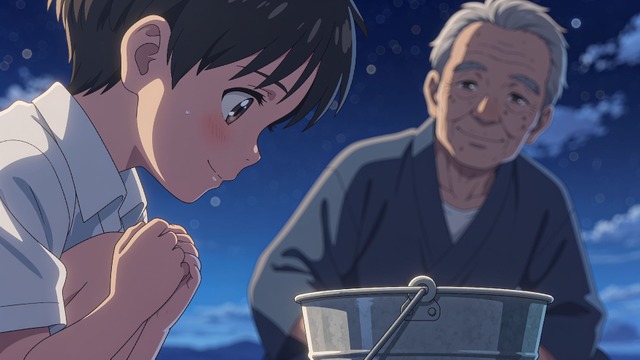
The film is an unusual feature-length work for a three-person production team. Production began in April 2026, was suspended once to concentrate management resources, and resumed in August of the same year. After about three months of actual work, the team completed the 117-minute film.
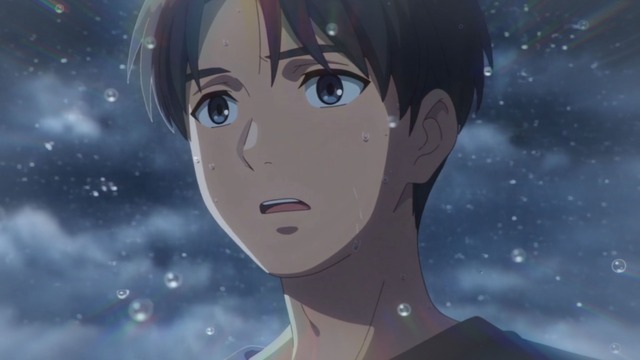
A story about results, distance, and the heart
An original fictional work informed by director and entrepreneur Yuno Hirotaka’s own experiences, the film centers on Shinomiya Rei. After losing his parents at a young age, Rei becomes an entrepreneur who can feel his own value only by producing results.
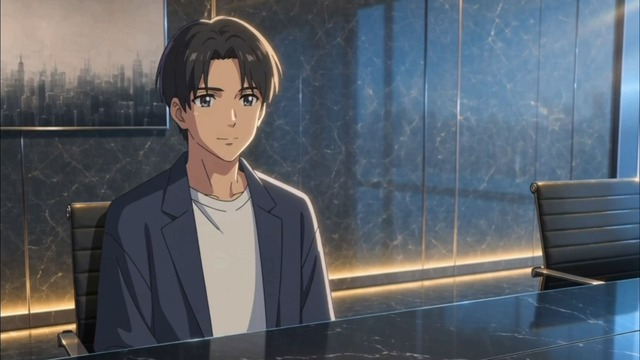
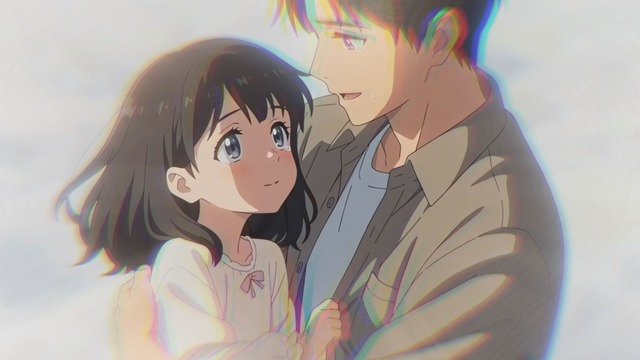
Rei is unusually sensitive to other people’s feelings, yet he cannot hear the voice of his own heart. As business success costs him his colleagues, his family, and himself, he recovers a human heart through the simple Aso-region prayer of “wishing upon a star.” The film is described as a modern parable about people chased by results and numbers, unsure what they are working for.
Pushing generative AI to feature length
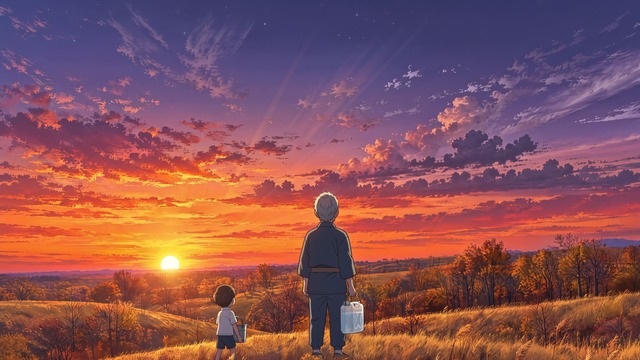
The production’s biggest challenge was to see how far a commercial-level feature-length anime story could be made with generative AI. Achieving the intended images was extremely difficult, but the team created delicate scenic beauty inspired by Shinkai Makoto’s works and backgrounds of Kumamoto’s Aso region after carefully rewriting prompts. Video generation used multiple AI tools, including Seedance and MiniMax. Each of the roughly 1,500 cuts received an average of at least five retakes, for more than 10,000 trials and revisions in total. For audio, the film used actual voice actors, with AI voices also used for some parts.
Director’s comment: AI as a “partner that expands creativity”
Director: Yuno Hirotaka (real name: Imai Shouhei)
Yuno described the film as his first directing, writing, and voice-acting work, made with one year of video production experience and alongside his work as a manager. He said he is glad it could be released despite what he sees as many inexperienced points.
In his comment, Yuno argued that current AI anime has spread mainly in short-form works and music videos because long-form production remains difficult: backgrounds and compositions can break down, characters can break down, and emotional continuity is hard to maintain. He said the film clears those hurdles at feature length and that he believes it may be the first such attempt in the industry.
He stressed that the film treats AI not as a “cost-effective tool” or a means of “stealing technique,” but as a “partner that expands creativity,” and that the project records efforts to improve prompt techniques for various kinds of scene-making. He also noted that, amid negative images of AI works copying existing material, this film does not directly incorporate anime works into its prompts or references.
Under the belief that “only humans can make things that move humans,” the main cast was chosen for real voices, and the lyrics, script, and prompts were all written by hand. Yuno said the generation cost was about one-tenth of a typical anime film, and that costs could fall further as the workflow becomes clearer.
The film is not aimed at profit, he said, and is planned to remain free as a way to share technical know-how. Acknowledging criticism of AI video and voice theft, he said future activities will respect and protect the efforts and culture of past animators and manga artists while advancing anime in a wide range of genres, including battle scenes, love stories, works for children, and original anime commissions. He added that he hopes to be part of bringing Japanese culture to the world.

Film details
| Title | Hoshi no Uta ga Kikoeru |
|---|---|
| Runtime | 117 minutes |
| Release date | October 22, 2026 |
| Release platform | YouTube (free) |
| Production | DELINE PRIME (SPEED EFFECT Co., Ltd.) |
| AI tools | Seedance, MiniMax (video); ChatGPT image, Nano Banana (image); Midjourney; Suno (music) |
| Genre | Human drama / animation |
Cast
| Character | Cast |
|---|---|
| Shinomiya Rei (adult) | Sakurai Hayato |
| Shinomiya Rei (child) | Rio |
| Shinomiya Rei (elderly) | Yajima Tomokazu |
| Jiji | Yuno Hirotaka |
| Kazuki | Tanaka Undoubu |
| Nishimura | Yuno Hirotaka |
| Miyamori Sayaka | Takamoto Iori |
| Tanaka | Ryuuichi |
| Ishihara Mai | Hina |
| Yoshioka | Hina |
| Hikari (childhood) | Kurumi |
| Hikari (adult) | Takamoto Iori |
| Sora | Sakurai Hayato |
| Naruga | Kurumi |
| Yamakawa | Iwase Daichi |
| Seoritsuhime | Risako |
| Yakuza (50s) | De-chan |
| Professor Takeuchi | Yajima Tomokazu |
| Kazuki’s mother | Fukada Asa |
Staff and production credits
| Original work, screenplay, director, storyboards, music, backgrounds, character design, SE, editing | Yuno Hirotaka |
|---|---|
| Video production, SE | Horikawa Shougo, Tsunei Hideto |
| Cooperation | JPC Co., Ltd. / Amusement Media Sougou Gakuin / NPO Oshitoishi no Oka |