






![Start the New Year of 2026 with a Hatsumoude and Seichi Junrei! An Anime-Related Shrines and Temples Guide [Kinki Region Edition]](https://animeworld.info/wp-content/uploads/2025/12/825183.jpg)
Start 2026 with a Pilgrimage! Anime Sacred Site Guide for New Year’s Visits [Kansai Region]
2025 is almost over, and 2026 is about to begin. The first thing to do in the new year? Hatsumōde—the first shrine visit of the year. It’s a traditional Japanese event where you visit a shrine or temple after the new year begins to express gratitude for the past year and pray for health, safety, happiness, and more in the coming year.
As anime fans, if we’re going, we might as well visit places that are anime “sacred sites”! This time, the Anime! Anime! editorial team will introduce some recommended shrines and temples in the Kansai region.
A Sacred Site for Morimi-sensei Fans! Shimogamo Shrine (Sakyō-ku, Kyoto City): ‘Uchōten Kazoku’, ‘Yojōhan Shinwa Taikei’, and More
Shimogamo Shrine is not only representative of Kyoto but of Japan itself. This shrine has been worshipped here since before the construction of Heian-kyō (ancient Kyoto) and has played a crucial role in guarding the capital and wishing for the people’s peace. Along with Kamigamo Shrine, it is collectively known as the “Kamo-sha” and has been a site of faith for protecting the royal capital, guarding Kyoto’s demon gate.

Speaking of Shimogamo Shrine, it’s also famous as a sacred site for Morimi Tomihiko-sensei‘s ‘Uchōten Kazoku‘ and ‘Yojōhan Shinwa Taikei‘. When the TV anime ‘Uchōten Kazoku’ celebrated its 10th anniversary, it even became a point for a commemorative stamp rally.
Speaking of Morimi-sensei, he has many other works set in Kyoto. ‘Yoru wa Mijikashi Arukeyo Otome‘ and ‘Taiyō no Tō‘ are also representative, right? There are many other Kyoto shrines that appear in Morimi’s works—if there were a “Shrine Tour to Savor Morimi’s Works” tour, we’d absolutely join.
World Famous! Fushimi Inari Taisha (Fushimi City, Kyoto Prefecture): ‘Meitantei Conan: Meikyū no Crossroad’, ‘Touken Ranbu’, ‘Inari, Konkon, Koi Iroha.’, and More
This is also Fushimi Inari Taisha, representing not just Kyoto but Japan. It’s the head shrine of the approximately 30,000 Inari shrines across the country. The countless vermilion torii gates lining the mountain path are iconic, making it a famous spot that attracted many foreign tourists even before the inbound tourism boom. The enshrined deity is Ukanomitama-no-Kami, known for very practical benefits directly connected to life and work, such as bountiful harvests, business prosperity, and household safety.
Due to its distinctive scenery, it appears in numerous anime works. The movie ‘Meitantei Conan: Meikyū no Crossroad‘, ‘Touken Ranbu‘, ‘Inari, Konkon, Koi Iroha.‘, ‘HELLO WORLD‘, ‘Boku no Kokoro no Yabai Yatsu‘, ‘Go-tōbun no Hanayome‘, ‘Ao no Exorcist‘… if you look it up, you’ll probably find twice as many titles. Even if it’s not for hatsumōde, it’s a shrine anime fans should visit at least once. Recently, it’s been a topic of discussion due to overtourism issues, so the 2026 hatsumōde might be a good time to aim for.
Collab Starting from New Year’s Day! Kaikō-ji (Kyoto City, Kyoto Prefecture) / Gokōnomiya Shrine (Kyoto City, Kyoto Prefecture): ‘Noragami’
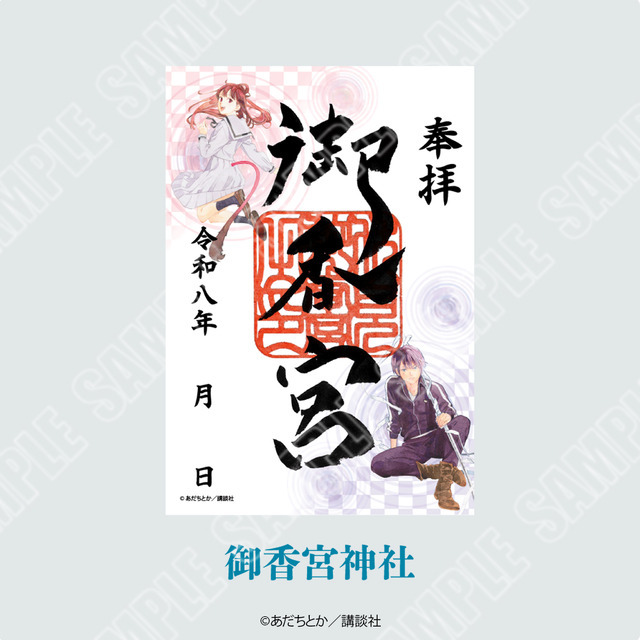
Here’s some info on a collaboration starting from New Year’s Day 2026. ‘Noragami‘ has captivated many fans by depicting the bonds and growth between gods and humans centered on the protagonist Yato, with its beautiful illustrations, dynamic battle scenes, and gods full of humanity. To coincide with the “Misogi” (purification) scene in the work, they are offering a special experience touring temples and shrines associated with “water”. The popular goshuinchō (stamp book), water fortune slips, and go-en himo (tie strings) from the Tokyo event will remain, and from New Year’s Day, Kaikō-ji and Gokōnomiya Shrine will each have a special New Year’s version of the goshuin (shrine stamp).
Yato and Hiyori: Gokōnomiya Shrine
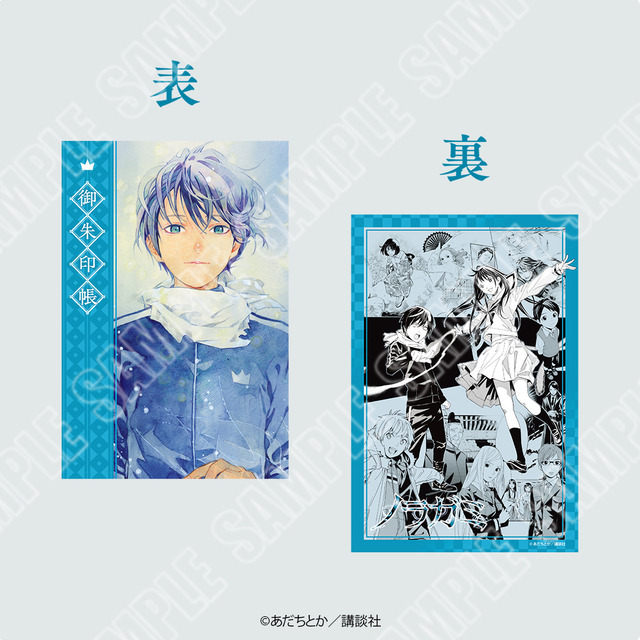
Goshuinchō (1 type) – 3,300 yen

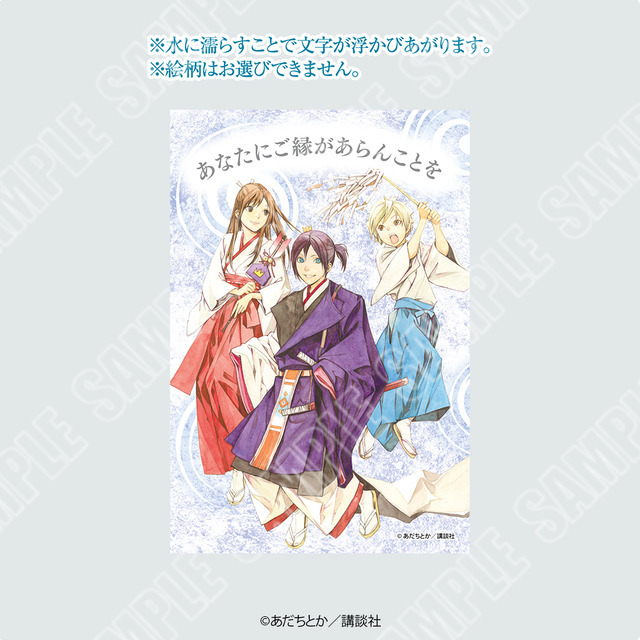
Mizu-ura Water Fortune Slips (5 types) – 500 yen each
The “Goshuin (2 types)” have different designs at each temple/shrine—a lineup sure to stir collector’s desire with “Yato and Hiyori: Gokōnomiya Shrine” and “Yato and Yukine: Kaikō-ji”. The “Goshuinchō” features original artwork unique to this project, blending characters with a solemn worldview—a delightful touch. Perfect for deepening your attachment to the work while collecting stamps from the visited sites! The “Mizu-ura” water fortune slips come in 5 types. They feature beautiful illustrations, and when dipped in water, famous character quotes appear—a mystical fortune-telling experience. Please enjoy this special experience to divine your fortune while reliving the work’s moving moments.
Original Talismans Too! The Head Temple of Tendai Buddhism, Enryaku-ji on Mt. Hiei (Shiga Prefecture): ‘Blue Lock’, ‘GeGeGe no Kitarō’, ‘Sengoku BASARA’
Enryaku-ji on Mt. Hiei, a special temple referred to as the mother mountain of Japanese Buddhism, with its grounds encompassing the entire Mt. Hiei spanning Shiga and Kyoto Prefectures. The entire Mt. Hiei is the precincts of Enryaku-ji; within its vast grounds of about 500 hectares, there are approximately 150 halls, broadly divided into three areas: Tōtō (East Pagoda), Saitō (West Pagoda), and Yokawa. In the Konpon Chūdō, the symbol of Enryaku-ji, the eternal light of the Dharma (said to have been lit by the early Heian period Japanese Buddhist monk Saichō) has continued to burn without going out for over 1200 years.
This Mt. Hiei is also famous for collaborating with numerous anime works. It has collaborated with ‘GeGeGe no Kitarō‘ and ‘Sengoku BASARA‘, and more recently with ‘Blue Lock‘, where original talismans were offered at Enryaku-ji’s Saikyō-ji Matsuo Kannon Temple. They might collaborate with another work soon, so let’s keep an eye out.
The Sacred Site of Karuta! Ōmi Jingū (Shiga Prefecture): ‘Chihayafuru’
Ōmi Jingū, nationally famous as the sacred site for competitive karuta (card game), became a sacred site for the anime ‘Chihayafuru‘, which features competitive karuta. It’s depicted as the venue for tournaments in the series, and its vermilion gate and precincts appear in important scenes, drawing fans for pilgrimages. It was also used as an actual location for the live-action ‘Chihayafuru’ movies.
It’s said to offer benefits for good luck, warding off evil, academic success, industrial promotion, and culture (especially karuta). Furthermore, as the enshrined deity, Emperor Tenji, is also worshipped as the “God of Time” and “God of Guidance” for having “set time,” benefits related to “seizing chances” and “decisiveness” can be expected, making the “Tokishimesu Mamori” charm popular. For those wanting to seize some chance in 2026, how about visiting here for your first shrine visit?
A Pioneer of Sacred Site Pilgrimages! Hirota Shrine (Hyōgo Prefecture): ‘Suzumiya Haruhi no Yūutsu’
Hirota Shrine appeared in ‘Suzumiya Haruhi no Yūutsu‘, a series known for faithfully depicting real scenery as anime backgrounds, creating numerous sacred sites. The shrine has existed for over 1800 years and holds the oldest history in Hyōgo Prefecture. It enshrines the Aramitama (violent spirit) of Amaterasu Ōmikami and is known for benefits like victory luck, passing exams, rising fortune, and eliminating calamities. In the series, they film a movie here… leading to scenes like Mikuru surrounded by pigeons, a strangely colored pigeon appearing, and being chased by the head priest.
After the broadcast, ema (votive tablets) with character illustrations appeared lined up, and the sight of many anime fans visiting at a time when “sacred site pilgrimages” weren’t as widespread was impressive. By the way, the model for the school in the series, Nishinomiya Kita High School, is the alma mater of the original author, Tanigawa Nagaru-sensei, but it is set to close at the end of March 2027. Even if you think “I’ll go someday,” the sacred site itself can disappear for various reasons, so if you feel like it, we hope you’ll go visit.
This time, we picked shrines that left an impression, based on the editorial team’s actual visits, but there are many other shrines that have become anime sacred sites. Next time, we aim to introduce places outside the Kanto and Kansai regions by visiting more shrines.
Please try doing hatsumōde at a sacred site and welcome a good year! ♪
《Yoneda Kaori》
_