





When the Replicas Find Each Other
There’s a moment early in this episode where Nao reflects on what it means to be Sunao’s copy. “I may get to spread my wings for a day, but the next day, I don’t even get to walk. That’s just how it is for me.” She delivers the line with the same quiet resignation she’s always had, but something has shifted since the zoo trip. She’s tasted something real now. She spent her entire life savings on a single afternoon. And Sunao told her to disappear.
The question hanging over the episode isn’t whether Nao will vanish. It’s what happens when two people who aren’t supposed to exist find out they’re not alone.
Sanada-kun Wasn’t Who I Thought He Was
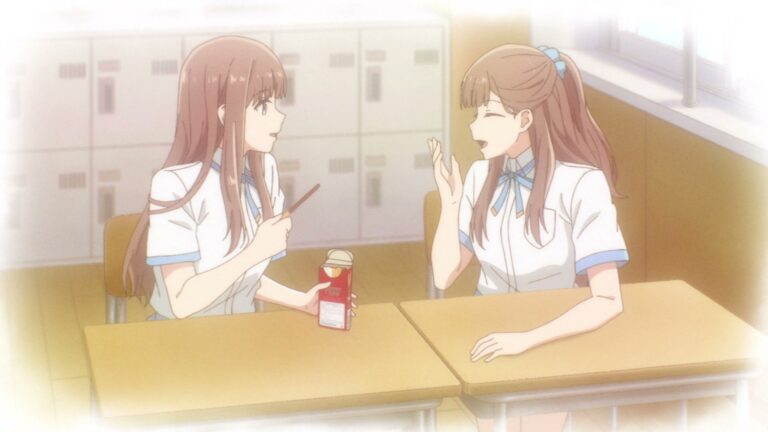
The episode opens deceptively soft. Ricchan passes out snacks from Akai-sensei that are close to expiring. Nao remembers the zoo, the red pandas, the brief happiness she wasn’t supposed to have. Sunao summons her again after a month of silence, and their interactions are exactly what you’d expect now: cold, transactional, laced with something that feels like contempt. “Just go away,” Sunao says. “Hurry up and get dressed.” Nao complies, because that’s what replicas do.
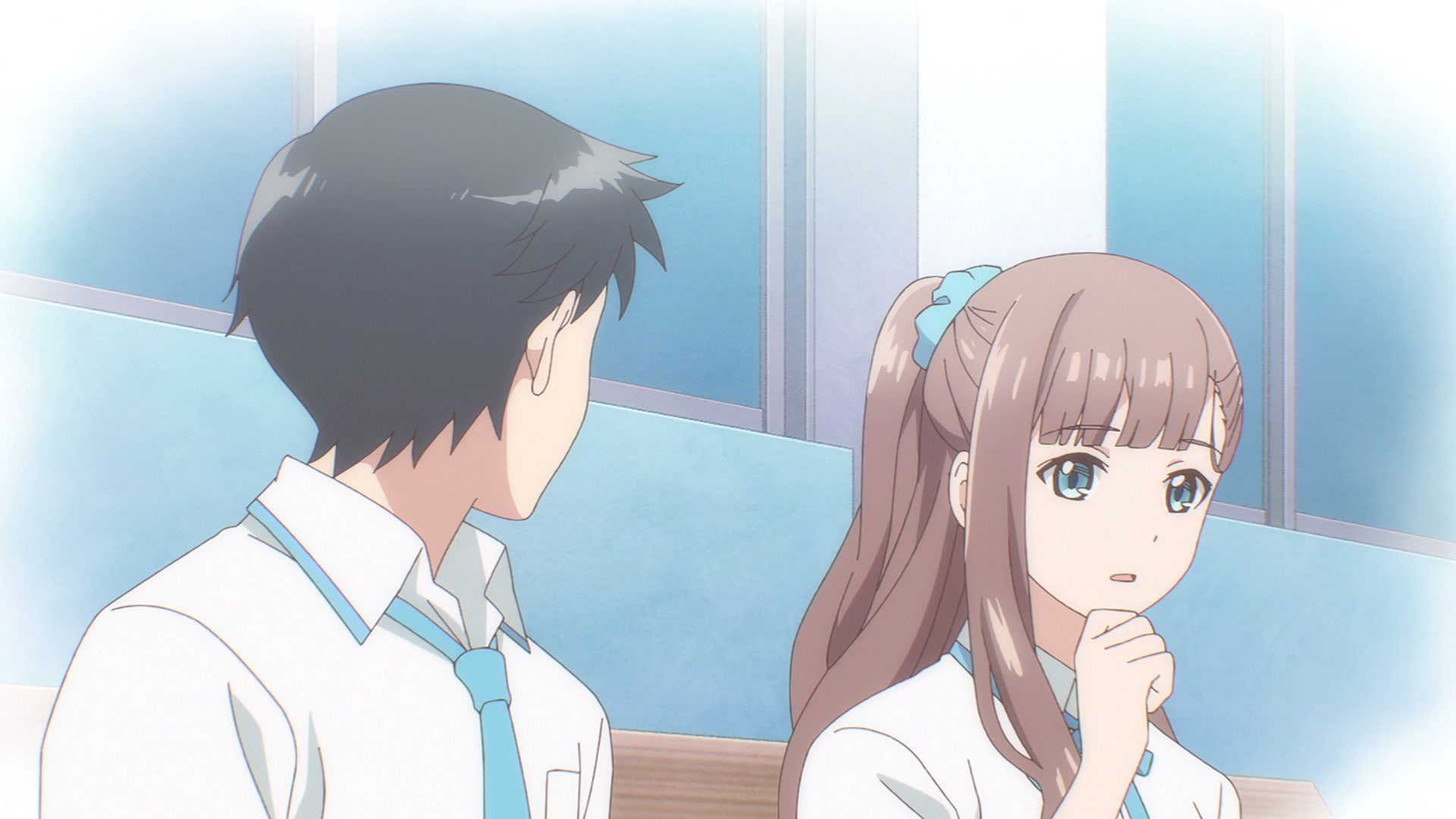
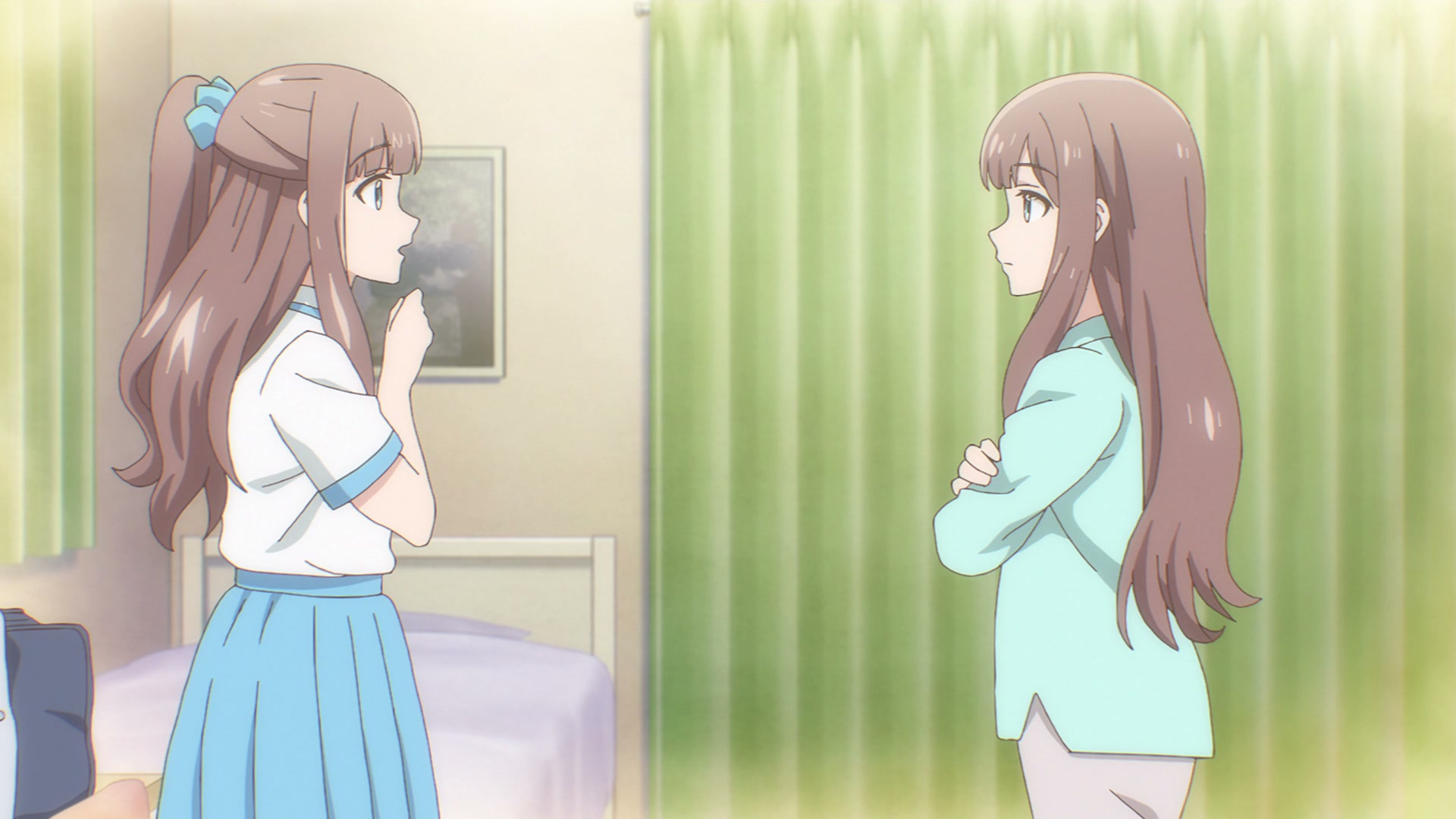
But the real engine of this episode starts turning when Aki confronts Nao. He notices her hair is down. She forgot to put it up. The half ponytail signal, their private code, is absent. And then he just says it: “You’re not Aikawa, are you? You’re not Aikawa Sunao, are you?”
I did not expect him to be so direct. The confrontation in the stairwell is tense in a way this series rarely gets. Aki chases after her, calls her name repeatedly, corners her. Nao looks like she’s about to shatter. And then the reversal: “I’m actually just like you.”
He’s not Sanada Shuuya. He’s a replica too.
The scene where they sit together and compare notes is easily the highlight of the episode. Aki reveals he was created in June, the morning Shuuya was supposed to return to school after his hospitalization. The real Shuuya hasn’t left his house since breaking his ankle. He can’t play basketball anymore, the one thing he was genuinely praised for his entire life. “Where his heart should be, it’s completely hollow,” Aki says. He’s been filling in ever since.
Nao calls herself Sunao’s replica. Aki picks up on the word immediately. And then they negotiate names, like they’re figuring out the rules of a new country. He’ll call her Nao, like Ricchan does. She’ll call him Aki-kun, from the first character of Shuuya’s name. It’s a tiny moment of self-determination for two people who were made to be substitutes, and it lands with surprising weight.
Two Replicas, Two Different Expiration Dates
What makes the conversation fascinating is how differently they relate to their originals. Nao has always framed her existence as something she hopes Sunao will eventually accept. Even after being told to go away forever, she still carries out tasks, still answers when summoned, still uses “we” when talking about the decisions Sunao makes for her body. The power imbalance is total.
Aki’s situation feels different. He mentions, almost offhand, “I probably don’t have long.” When Nao asks what he means, he deflects. But later, at the festival, he’s more explicit: “This will be our last day. I won’t be needed as a replica anymore. I was created so Shuuya could have his revenge.”
Revenge against Hayase Kou, the former basketball star who lured Shuuya into an ambush and broke his ankle. We finally get the name and the motive. Sunao knew about it. Everyone at school apparently knows. What kind of revenge Shuuya is planning remains unclear, but Aki speaks as if he was made with a specific purpose and a built-in expiration. Once the revenge is complete, he’s done.
The contrast with Nao is stark. She was created because a seven-year-old Sunao didn’t want to face Ricchan after a fight. Her purpose was vague, ongoing, open-ended. Aki’s purpose is singular and finite. Both are tragic in different ways.
The Festival That Shouldn’t Have Happened
Ricchan sets up the shrine festival with her usual oblivious cheerfulness. She’s too busy with her novel draft to go herself, so she pushes the idea onto Nao and Aki. The fact that she’s “doing research” while her two friends are quietly discovering they’re both copies of real people is the kind of dramatic irony this series does well.
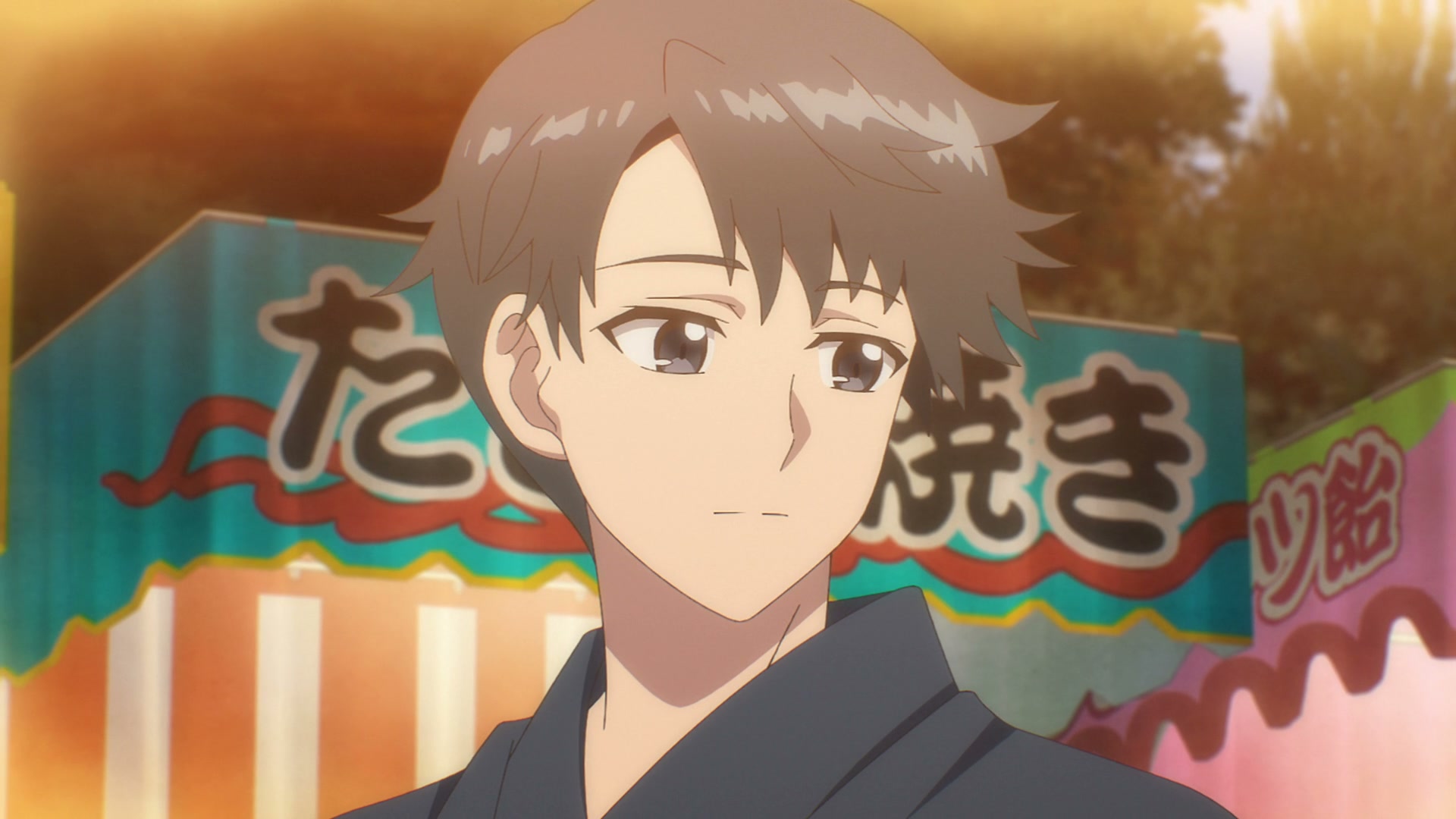
The festival sequence itself is simple and warm. Neither Nao nor Aki has ever been to one. Aki says he wanted to see Nao in a yukata. She says the same. They can’t actually wear them, so they pretend, describing the patterns they’d choose: a flowery one on aqua fabric for her, a plain navy one for him. “There. Now that we’re in yukatas, we should eat,” Nao says. The playfulness feels earned after everything she’s been through.
The shaved ice scene is genuinely charming. They both get brain freeze at the same time. Aki guesses her flavor is melon. She guesses his is Blue Hawaii, and her tongue turns blue from it. He points out she said “taste buds” instead of “tongue,” and she fires back asking if calling it a “licker” is dialectical. It’s the kind of easy, natural back-and-forth that makes you forget, for a moment, that neither of them is supposed to exist.
And then Aki ruins it. Or rather, the episode does what it has to do. “I don’t want to lose you,” he says. Nao agrees. They’re both smiling, carefree, experiencing so many firsts together. And then: “This will be our last day.”
The shift in tone is brutal and effective. Nao’s internal monologue had been so hopeful: “I wanted to save these moments in my heart forever.” But the episode won’t let her. Or us.
Sunao Is Still Watching
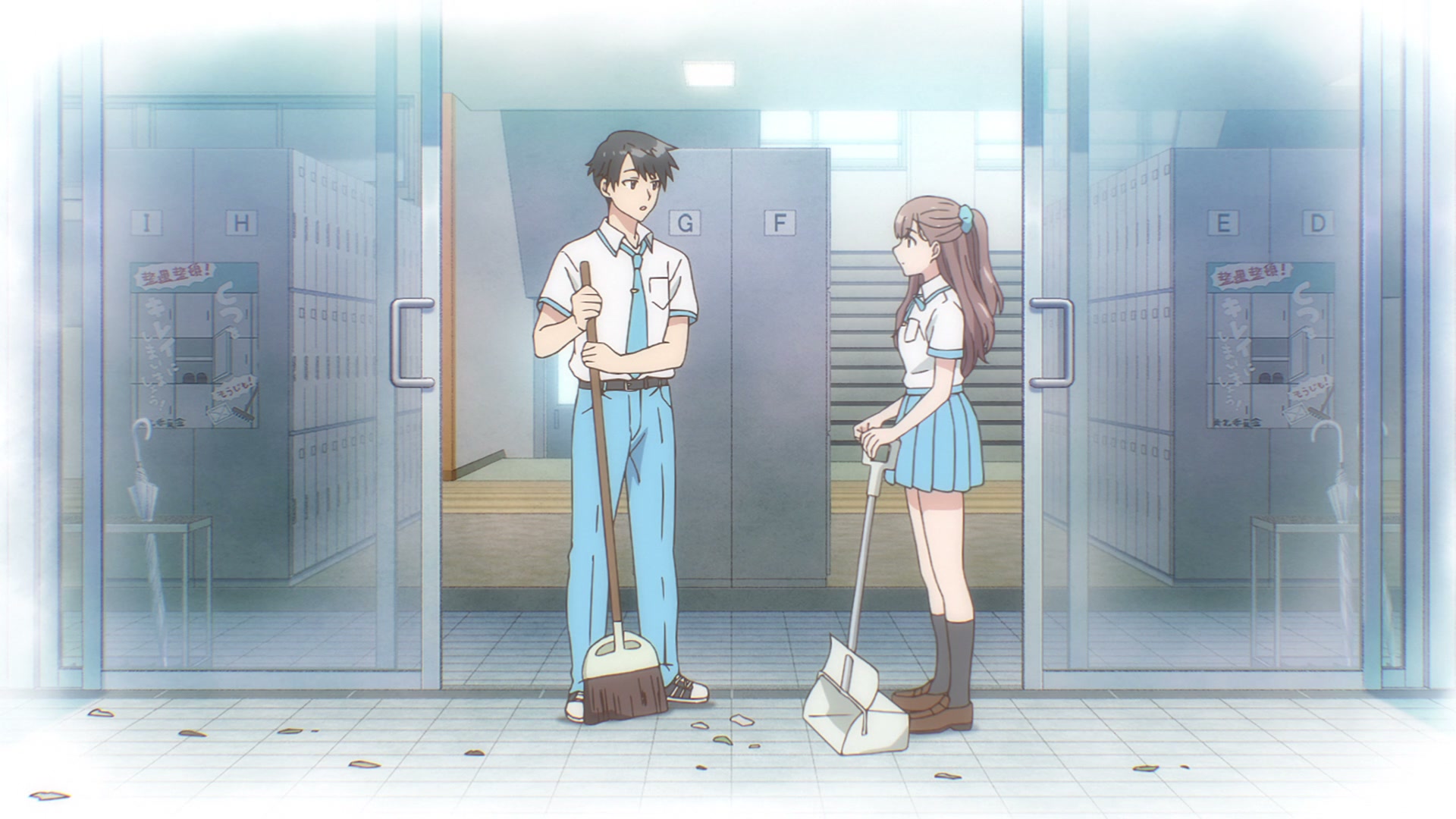
While Nao experiences the festival, we get a brief but significant scene with Sunao. Her teacher tells her she can get into her first-choice college based on grades, but pushes her to think about whether that’s really what she wants to do with her life. Sunao gives a flat “Yes, sir.” Later, she asks Nao directly if she and Sanada are dating, then presses about what they talk about. Career paths, Nao says. The conversation is awkward and loaded.
Sunao also reveals she knows exactly who injured Sanada’s ankle. Hayase Kou. There’s a brief encounter in the hallway where Hayase leers at Sunao, suggests she wants to be the team manager, and Sunao shuts him down with a cold “Sorry, I’m not interested.” The scene is uncomfortable and suggests Sunao has her own history with the basketball team, something Nao apparently didn’t know about despite sharing Sunao’s memories.
There’s also a moment where Sunao tells Nao that the real Sanada could’ve gone to the authorities about the assault. The implication seems to be that Shuuya chose not to, and that choice led directly to the creation of Aki as a tool for private revenge.
Kokoro Keeps Echoing
Aki quotes K’s suicide note from Soseki’s Kokoro, the novel Nao recommended to him back in episode one: “I should’ve died a long time ago. Why did I wait so long to die?” He admits he’s been chewing over why there’s no easy answer to K’s death in the book, and what his own reaction would be in a similar situation.
Nao’s response is immediate and personal: “If we were going to the zoo tomorrow, I wouldn’t want to die.” It’s such a simple line, but it captures everything about her character. She doesn’t need grand reasons to exist. She just needs something to look forward to. A red panda. A trip. A conversation. A friend who knows what she really is.
Aki teases her about the red pandas. The mood lightens briefly. But the Kokoro reference hangs over the whole episode. A novel about isolation, hidden feelings, and the distance between people, now being discussed by two people who are literally not the people they appear to be. The layers are doing a lot of work here.
A Few Visual Moments Worth Mentioning
The stairwell scene where Aki confronts Nao uses the harsh overhead lighting and concrete walls to create a sense of exposure. Nao is backed into a corner, literally and figuratively. When they sit down to talk, the framing relaxes, but the dialogue stays intense.
The festival sequence is bathed in warm lantern light and deep blue evening tones. The contrast with the sterile school interiors is deliberate and effective. The moment where they both eat shaved ice and get brain freeze is framed like a reaction-shot comedy beat, but the warmth of it makes the later turn toward farewell hit harder.
There’s a recurring visual motif of Nao touching her hair throughout the episode. She forgets to put it up. She’s conscious of what the half ponytail means. Her hair becomes a quiet marker of her identity, or lack of one, depending on who’s looking.
Where This Leaves Things
By the end of the episode, Nao has found the one other person in the world who understands what she is. But Aki is already preparing to disappear. His purpose is finite. Shuuya’s revenge, whatever it entails, will mark the end of him.
Nao’s situation is the inverse. Sunao has already told her to go away permanently, but she hasn’t been fully dismissed yet. She’s in limbo. She has a friend who shares her secret, and she’s about to lose him before she even got to fully understand what that friendship means.
The episode ends on Aki’s line about revenge, leaving the specifics deliberately vague. We don’t know what Shuuya is planning. We don’t know how Aki fits into it. We don’t know if Nao will try to stop him, or if she even can.
What we do know is that two replicas spent an evening at a shrine festival, pretending to wear yukatas, eating shaved ice, and admitting they don’t want to lose each other. And that might be the most human thing either of them has ever done.
Screenshots
← Episode 2 | All Replica datte, Koi wo Suru Season 1 posts →
[…] ← Episode 3 | All Replica datte, Koi wo Suru Season 1 posts → […]