





The Blade’s Tremble
The episode opens mid-crisis, picking up from last week’s ambush. Himedaka Sakura cuts down an insurgent in a few brutal seconds, but the sequence is less about the action and more about what’s going on inside her head. A scattered internal monologue overlays the fight: “Don’t hesitate. It will weaken you. Stay angry. You can’t become a blade without hatred.” We’ve seen Sakura define herself as Hinagiku’s sword before, but hearing the corrosive thoughts she’s internalized makes it land differently. This isn’t a coolheaded warrior’s mantra. It’s someone forcing herself through violence by clinging to rage, because the alternative is paralysis. When it’s over, she’s drenched in the attacker’s blood, and after a beat of reassurance, Hinagiku notices what the audience already suspected: Sakura is shaking. For all her ferocity, the act of killing rattles her. The show doesn’t make a huge speech about it. Hinagiku simply says, “But you’re shaking,” and Sakura’s earlier request for praise suddenly feels less like a knight’s devotion and more like a human being who needs to hear that what she just did was right. The episode gives Sakura that moment without undercutting her strength, and it’s one of the quietest, most honest character beats in the series so far.
Hinagiku’s Story Finally Reaches Someone
Ten years of isolation left Kayou Hinagiku with halting speech and a habit of hiding. In this episode she doesn’t just emerge from that shell. She actively uses her own pain to pull someone else out of theirs. Hazakura Ruri, the Agent of Summer, has spent three months locked in her room because her older sister and guard Hazakura Ayame is getting married and leaving her role. The parallels to Hinagiku’s own long strike are obvious, but what elevates the writing here is the directness with which Hinagiku offers her story. She tells Ruri, plainly, that she also shut herself away once. She explains how insurgents attacked her, how the Village of Spring abandoned her, how she refused to call spring out of bitterness, and how that refusal got Sakura hurt and expelled. Then she frames the whole thing not as a morality tale about duty, but as a warning about regret: “Sometimes, you really don’t get to see someone again. So if you don’t want regrets, be nice to the people you like.”
It’s the first time we’ve seen Hinagiku deliver an extended, coherent testimony about her past to someone other than Sakura, and the effect on Ruri is immediate. The summer goddess who spent half the episode sulking transforms into someone who just needed to hear that her grief made sense. The show doesn’t suggest a simple fix, but Hinagiku’s vulnerability opens a door. The fact that this woman, who still can’t use a phone and refers to herself in third person, managed to pull another Agent back from the edge by simply talking about her own wounds is quietly triumphant.
Ruri and Ayame’s Knot Doesn’t Untangle Easily
The Hazakura sisters drive much of the episode’s emotional weight, and the confrontation between them avoids tidy resolutions. Ayame’s initial anger at Ruri reads like a frustrated older sibling dealing with what she sees as a tantrum. But Ruri’s grief runs deeper. She didn’t manifest summer for the world or for divine obligation. She did it because Ayame once asked to see summer flowers. Every season she’s ever called was a love letter to her sister. When Ayame announces she’s leaving, it doesn’t just feel like abandonment. It feels like the reason Ruri endured her role is being ripped away.
The script gives Ayame her own buried confession later, and it’s genuinely knotty. She admits she’s put up with a lot. She gave up her youth. She’s wanted freedom. In her head, she’s even thought: “I didn’t like my sister. I hated my sister.” The words are cruel, but they come from a place of exhausted honesty. What makes the scene work is that Ayame immediately follows that venom with, “But I loved my sister,” and then the true shape of her pain emerges. She doesn’t actually wish Ruri were gone. She wishes she could have traded places with her. If she’d been the goddess, she could have been a better sister. That’s a horrible, loving, impossible thought, and it mirrors the way Sakura has always wanted to absorb Hinagiku’s suffering. The Hazakura bond is messier than the spring pair’s, but it’s rooted in the same soil. One person shoulders a divine burden, and the other dedicates their life to making that burden survivable. When one side of that equilibrium threatens to break, the other doesn’t know how to stand alone.
Winter’s Shadow and Sakura’s Unhealed Grudge
While the episode focuses heavily on Summer’s internal crisis, it also advances the ongoing tension with Winter in a few deft strokes. After the attack, Spring staff arrive and reveal that Village of Winter security forces were on standby and provided backup. The orders came from Kantsubaki Rousei and Kangetsu Itechou, the Agent and Guard of Winter, in absolute secrecy. Sakura’s reaction is immediate and sharp. Her internal voice cuts in: “Do you think I can’t cut it? Or is this your idea of making amends, Itechou?”
That single line reopens a wound the series laid down in earlier episodes. Sakura hasn’t forgiven Itechou for what she perceives as a broken promise during the search for Hinagiku. His quiet attempt to protect them from afar lands on her not as kindness, but as an insult or a guilt offering. It’s a pointed character difference. Hinagiku, when asked, says she’d like to see Rousei again. Sakura would rather keep them apart until Winter proves its sincerity. The asymmetry between the spring goddess’s gentle longing and her guard’s hardened distrust keeps the door cracked on a reconciliation that still feels many episodes away. Meanwhile, Ruri gets off the line of the episode when she calls Rousei “Mr. Gloomy the Blizzard Man,” which tells you exactly how the younger Agents view each other when they’re not burdened by decade-old trauma.
What This Episode Settles and What It Leaves Open
By the end, the immediate insurgent threat recedes, and Ruri and Ayame reach a fragile but genuine detente. Ruri gets something she’s lacked: a friend in Hinagiku who won’t treat her with polite distance. Ayame says she’s sorry in a way that doesn’t fix everything but at least acknowledges the weight of what her sister carries. The summer garden no longer feels like a prison Ruri is locked inside. It feels like a place where two hurting pairs of women briefly overlapped and recognized each other.
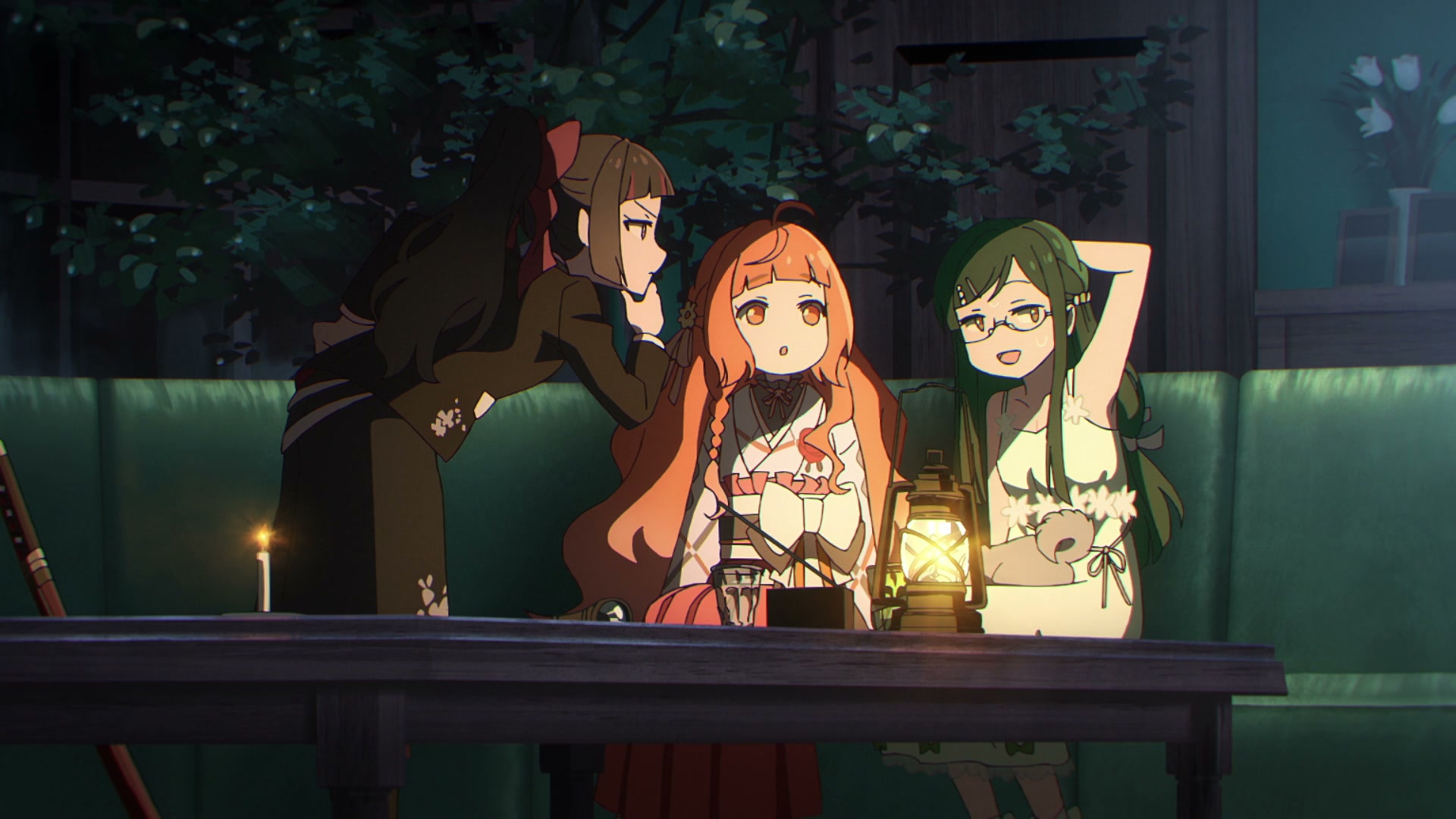
The larger plot hasn’t moved dramatically, but the emotional architecture of the series is in much better shape. Hinagiku has proven she can be more than the one who needs saving. Sakura has shown she’s not just a weapon but a person who trembles after a fight. The Hazakura sisters are no longer a one-note conflict, but a parallel case study in how the Agent system warps familial love. And Winter’s distant, clumsy attempts at protection continue to hang unanswered, with Sakura’s bitterness acting as the main obstacle. The Council of Seasons still looms somewhere ahead, but for now, the show earns its quieter victory: three goddesses and their guards, sitting in a dark palace, trying to stay warm until morning.
Screenshots
← Episode 3 | All Shunkashuutou Daikousha – Haru no Mai Season 1 posts →