





The Beach Episode Arrives With Unexpected Guests
The summer trip finally happens, and it wastes no time establishing its own brand of chaos. What I appreciate about this show is how it keeps piling unexpected reunions and misunderstandings onto what should be a straightforward beach outing. The villa’s owner turns out to be Vice President Kogori Kaoru, and watching him get ambushed by his own childhood friend’s scheming while six underclassmen spectate from the sidelines is exactly the kind of energy this series thrives on.
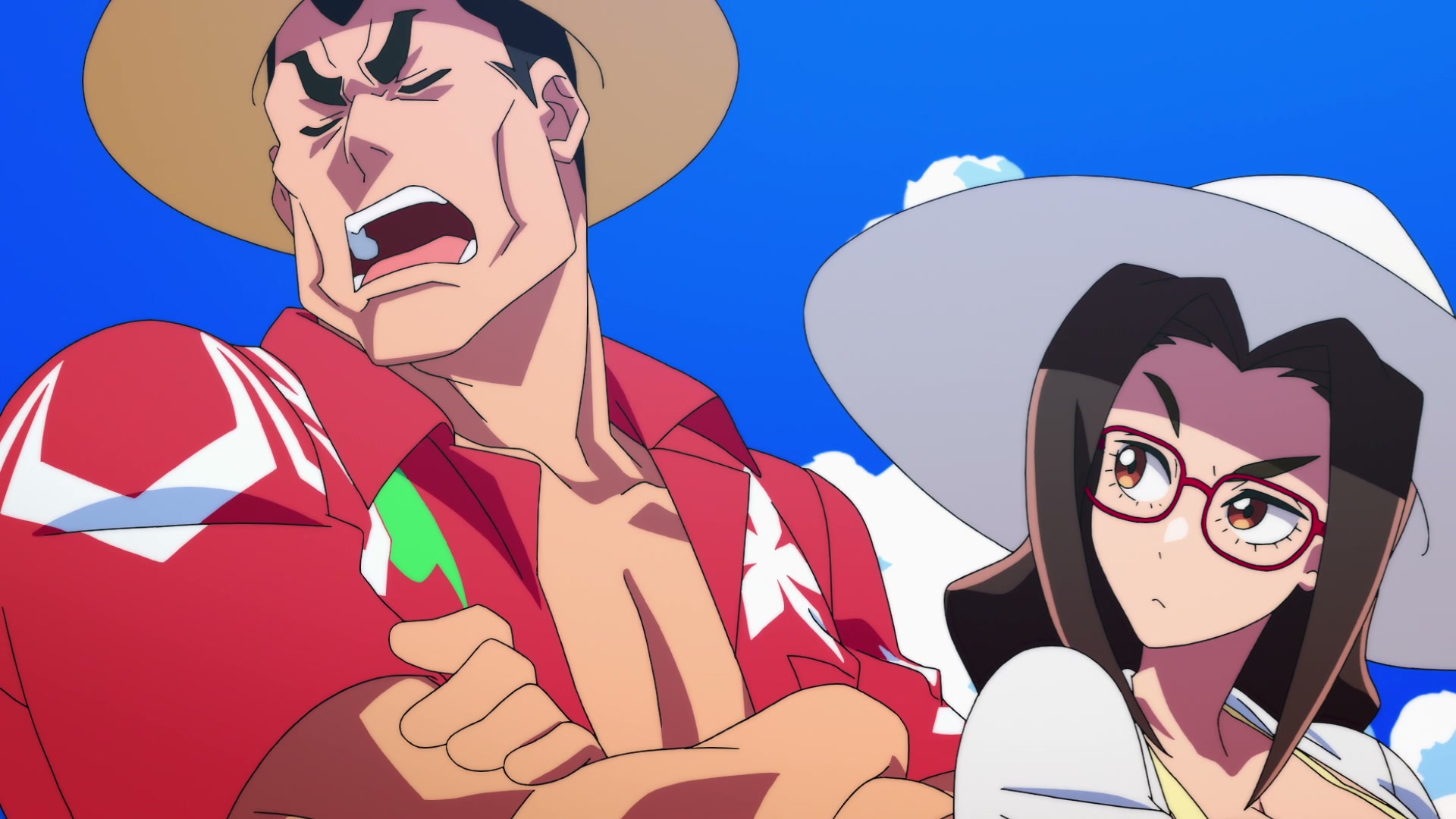
Togo opens the episode by laying down rules before anyone even reaches the sand. No co-ed mingling after 8 PM. Lights out at 9 PM. Poem’s immediate “Is this a field trip?!” reaction speaks for everyone watching. The bit where Togo and Kaoru both independently declare there will be no illicit relationships, with nearly identical phrasing, and Poem mutters “déjà vu” under her breath, is the show winking at its own formula. These two klutzes are cut from the same cloth, and the episode knows it.
The beach pickup scene gives Togo another chance to play morality police, but the real joke is the would-be harassers getting spooked by the visual dissonance of their group: a delinquent, a yakuza-looking guy, and a class monitor standing together. They just leave. No fight, no confrontation. Izubuchi didn’t even need to swing his watermelon-splitting bat.
Nadeshiko's Revenge Disguised as a Test
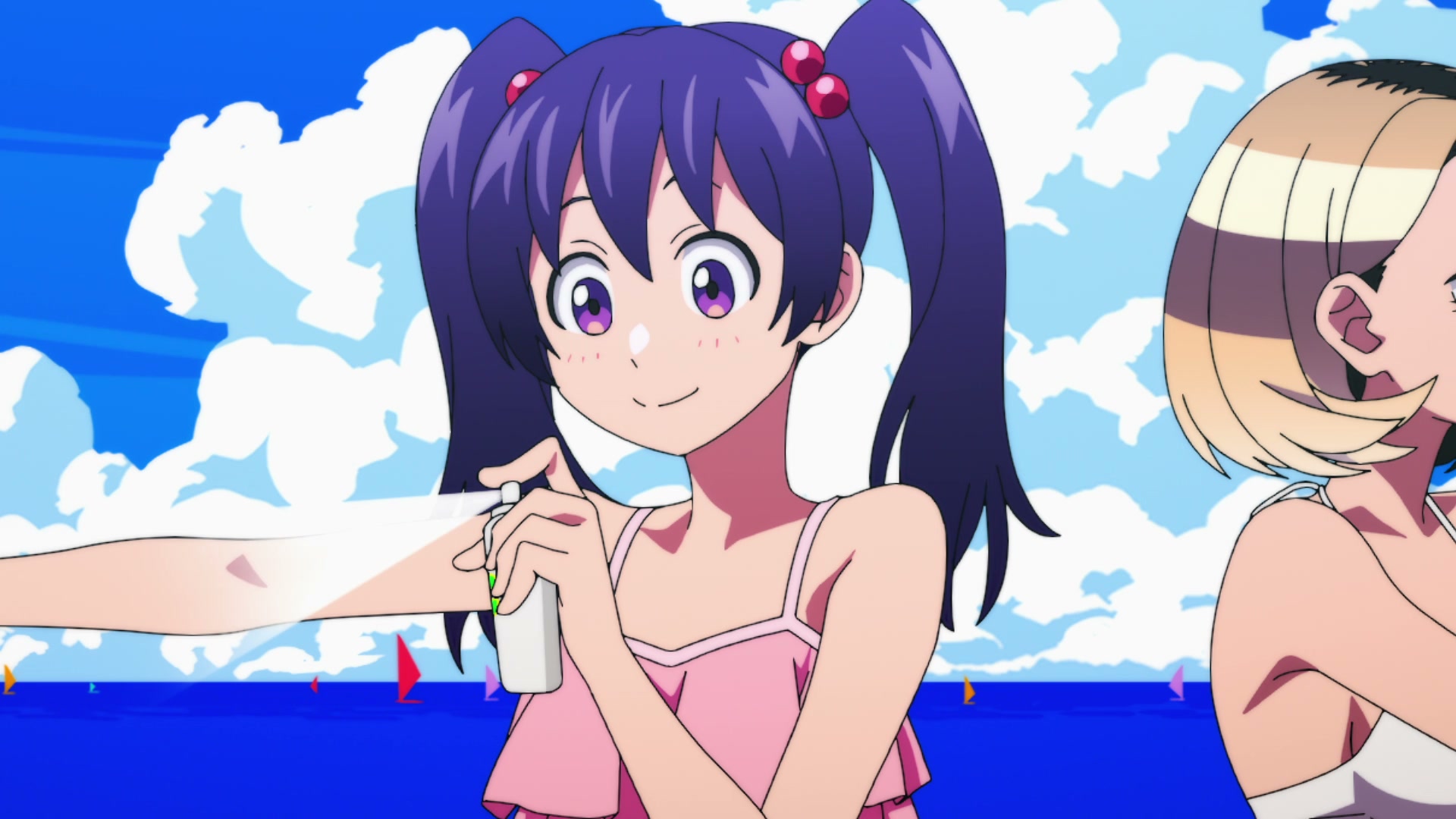
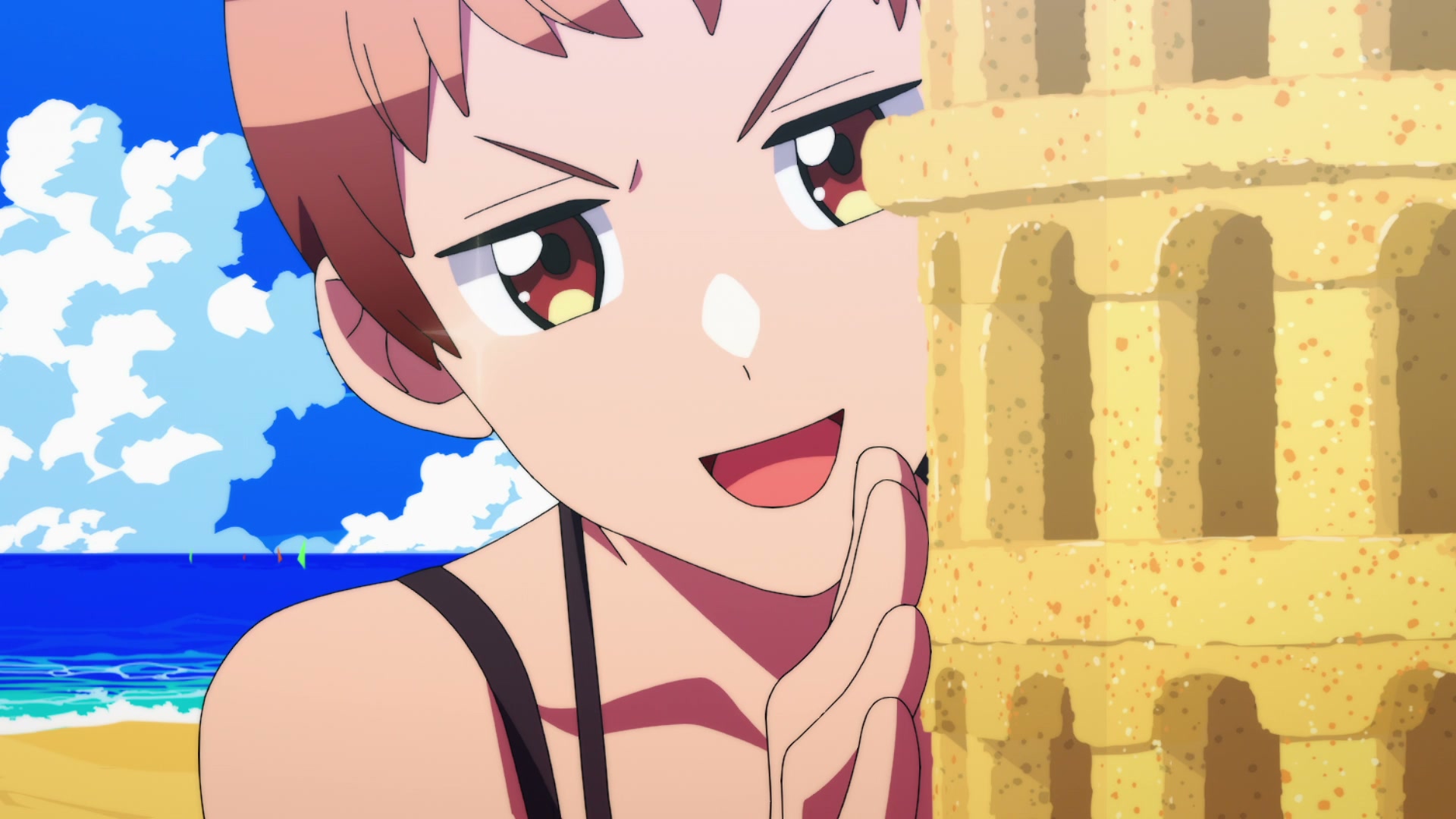
The centerpiece of this episode is Nadeshiko’s decision to test Kaoru after he loudly insists he’s never seen her as a woman. She disappears, returns in full gal makeup and a different swimsuit, and approaches him as a stranger. He doesn’t recognize her. At all.
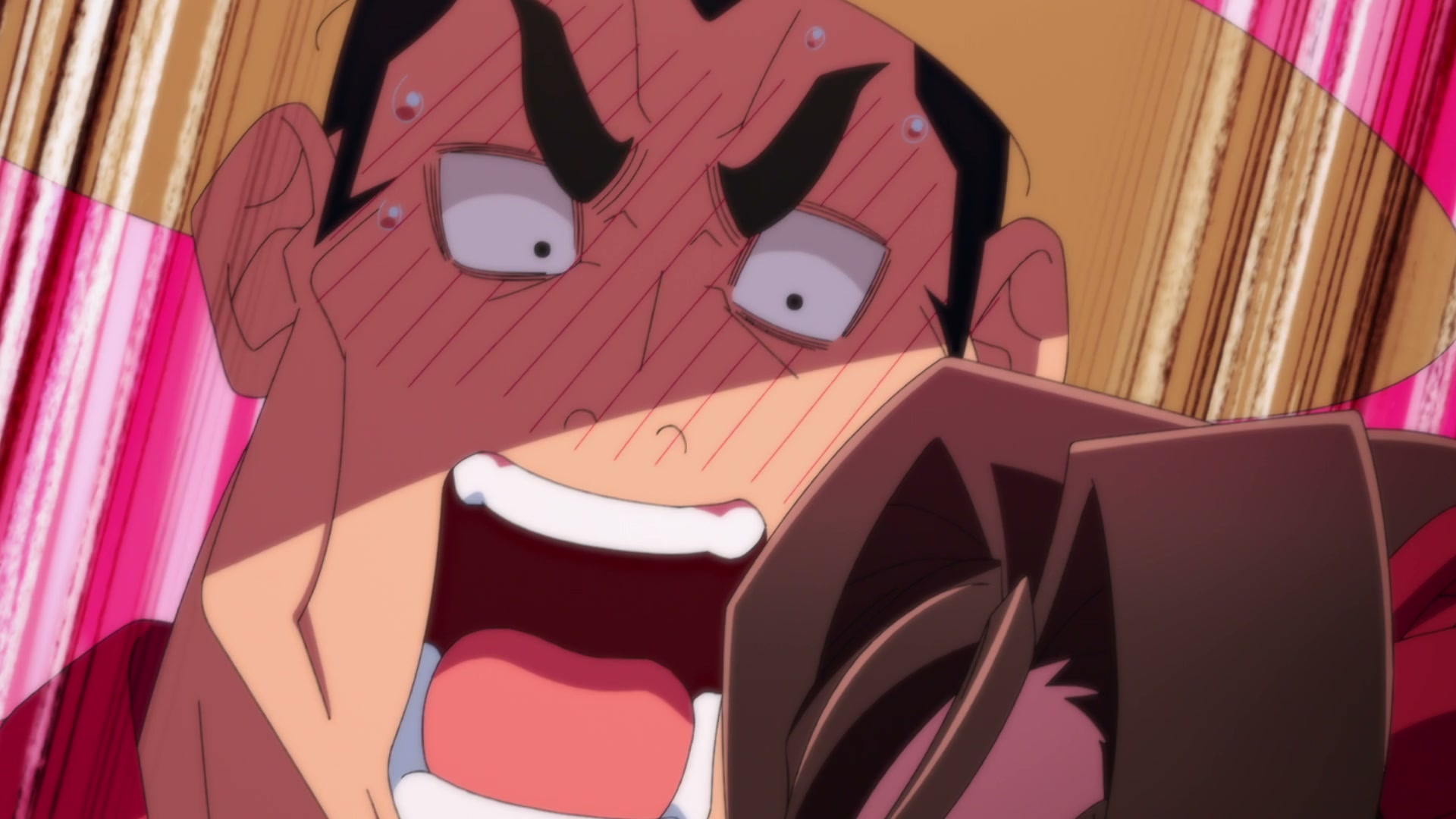
What sells this sequence is the peanut gallery. Poem, Tasaki, and Akina hide nearby and provide live commentary like sports announcers watching a car crash. When Kaoru starts listing every reason his childhood friend is the furthest thing from feminine, and Nadeshiko’s “act” momentarily cracks with a nostalgic “That did happen, huh?”, Poem hisses “President! Your act! Your act!” like a stressed stage manager. The girls’ whispered panic as Kaoru inches closer to figuring it out from her muscles, the collective “He hasn’t noticed?!” when he misses obvious clues, the slow-building horror as he insults Nadeshiko to her disguised face. It’s comedy built on dramatic irony, and the timing never drags.
The payoff is unexpectedly sincere. When Kaoru describes Nadeshiko as his life’s greatest rival, someone worth spending his whole life fighting, the teasing evaporates. She drops the act. He’s not seeing her as a man or a woman. He sees her as an equal. She admits she got hung up on something silly and apologizes.
Then he passes out from the shock of realizing who she is. The emotional whiplash from genuine character moment to physical comedy is so perfectly this show.
Kaoru's Monologue Turns Hostility into Respect
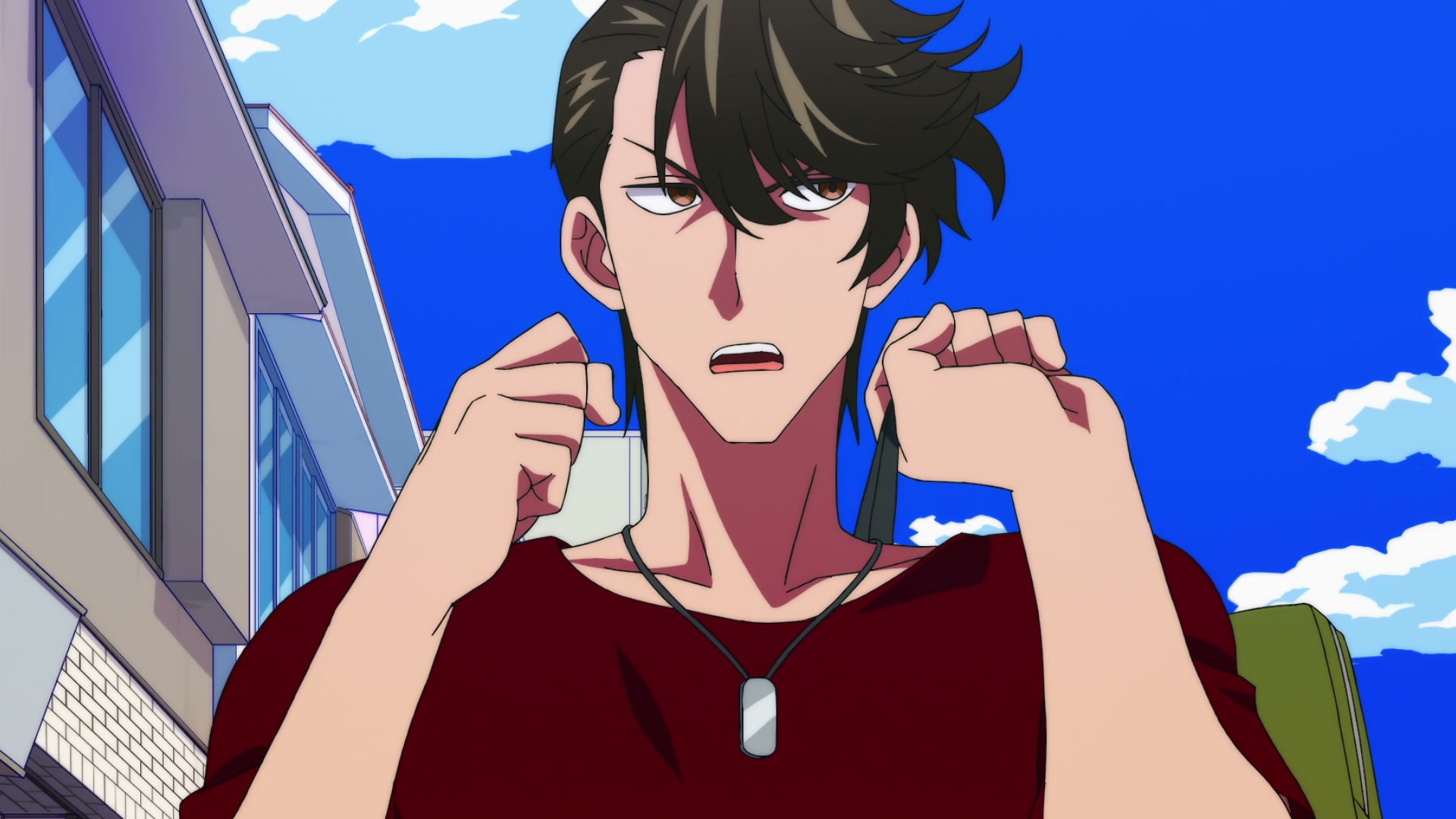
For someone introduced as an antagonistic gorilla screaming about school rules, Kaoru gets a surprisingly tender internal monologue. His description of Nadeshiko isn’t romantic in the conventional sense. He respects her as the one person he’s never beaten, in academics, sports, strength, or committee work. The word he lands on is “rival,” but the weight he gives it suggests something deeper than simple competition.
When he wakes up on the beach and realizes he never even asked the mysterious woman’s name, there’s genuine melancholy in his voice. “I wonder if I’ll ever get to see you again.” He’s mourning someone who was standing right next to him the whole time, and he still doesn’t quite put it together. The narrator’s “Klutz” label has never been more earned.
The episode also confirms what was hinted earlier: Nadeshiko was the one who wiped out groups of delinquents from neighboring schools in middle school. Poem’s friends immediately connect this to Izubuchi, and the implication that he might have been one of her victims adds a layer to their dynamic that the show hasn’t fully explored yet. The gorilla woman earned her reputation.
Little Sister Sidebar
The brief cutaway to Kikuka and Lyric continues their subplot from the previous episode. Lyric’s deadpan “It’s actually Poem, but whatever, Pudding’s fine” when Kikuka uses the nickname Togo invented is a small moment that says a lot about how this family has just accepted Togo’s odd naming conventions. Kikuka not owning a cell phone and offering her home number instead is a character detail that fits her earnest, slightly old-fashioned personality. These two are clearly being set up as recurring characters, and the narrator’s “Unbeknown to Sakuradaimon-kun and Poem-chan, their younger sisters were growing even closer as friends” frames it as the kind of parallel development that will eventually collide with the main cast.
Tsukishima Complains About the Narrative Structure
The post-credits scene deserves mention because it’s Tsukishima breaking the fourth wall to complain about the iris-out ending being too cliché. His “Hey, hey, hey!” bookends the episode, and his objection to the punchline being predictable is the show once again letting its resident recluse comment on storytelling conventions from inside the story. For a character whose whole gimmick is being a library prince who hates sunlight, having him critique the episode’s directorial choices fits perfectly.
What This Adds to the Season
The Nadeshiko and Kaoru dynamic deepens considerably here. We knew they were childhood friends engaged in some kind of rivalry, but this episode establishes that Kaoru’s antagonism is actually deep respect, and Nadeshiko’s scheming is partly insecurity about whether he sees her as a woman at all. The answer is complicated. He doesn’t, but he also values her more than anyone else in his life. Whether that changes now that he’s seen her in an explicitly feminine presentation remains an open question.
The villa stay itself hasn’t even started yet. This entire episode was just the beach day preamble. Watermelon splitting got postponed. The actual overnight portion, with Togo’s strict rules and Kaoru’s likely ongoing confusion, is still waiting. The setup is solid, and the character work on the student council duo gives the expanded cast more weight than simple comedic foils.
One last thing. The narrator now has three separate characters shouting “The Klutz and the Skirt” or variations thereof. At this point it’s become a full ensemble catchphrase, and I respect the commitment to the bit.
Screenshots
← Episode 6 | All Ponkotsu Fuuki Iin to Skirt-take ga Futekisetsu na JK no Hanashi Season 1 posts →
[…] ← Episode 7 | All Ponkotsu Fuuki Iin to Skirt-take ga Futekisetsu na JK no Hanashi Season 1 posts → […]