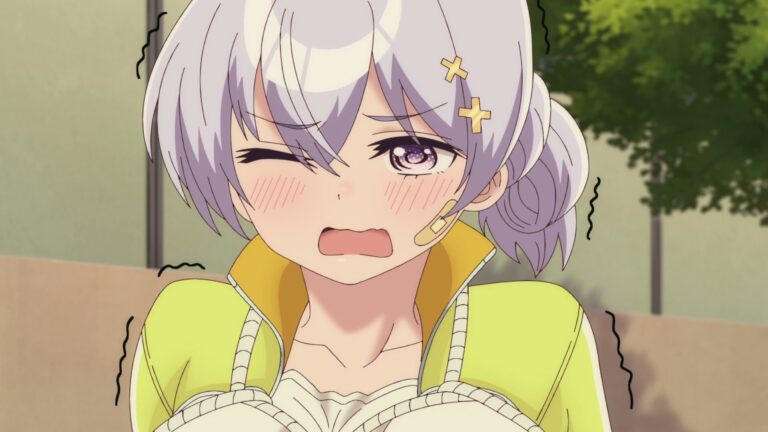






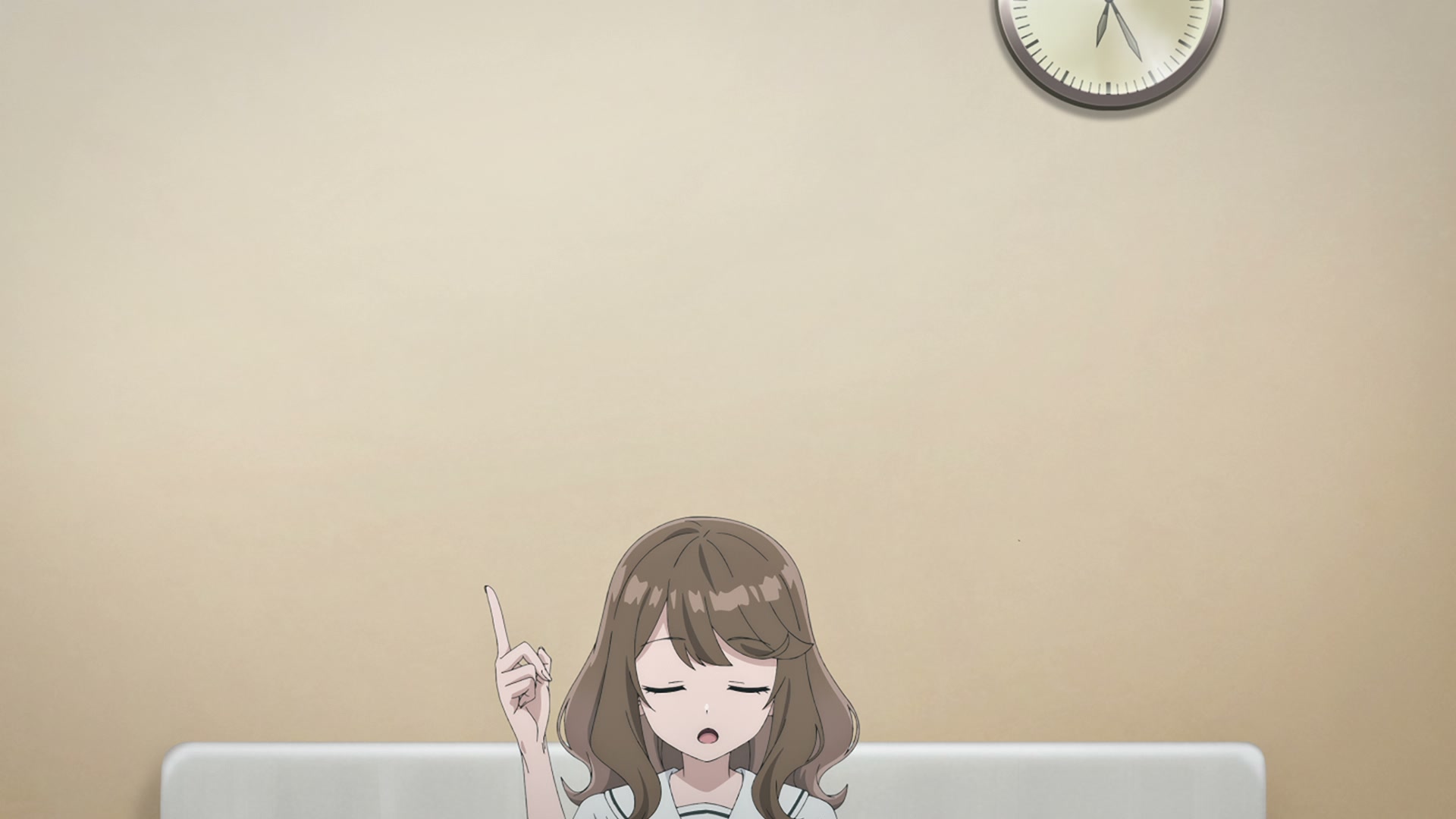
Haruki’s camouflage is still the central hook of this series, but episode two makes it clear that the act isn’t just about maintaining a perfect image. It’s also a survival mechanism for navigating the kind of social minefield she genuinely hates. The opening scene, where her friends chatter about a trendy drama and speculate about who’s dating whom, is a small masterpiece of discomfort. Haruki sits there with a polite, frozen smile, offering nothing, until Hayato’s clumsy hallway rescue gives her an escape route. The moment she drops the act in the storage room, slumping against the wall and complaining about “who’s got the hots for who,” you can feel the relief radiating off her. This isn’t a girl who secretly enjoys being the untouchable school idol. She’s just someone who learned the hard way that being herself around the wrong people leads to trouble.
Hayato’s response to her camouflage continues to be the show’s quietest strength. When she asks what he thinks about her fooling everyone, he shrugs and says he doesn’t think anything except, “Yeah, that’s Haruki.” It’s not a grand declaration of acceptance. It’s just the kind of unbothered, matter-of-fact recognition that only a childhood friend can offer. He doesn’t need her to explain why she presents as a girl now, or why she built this persona. He just sees the same person he used to play with, and that’s enough. That single line does more to sell their bond than any amount of dramatic backstory could.
The Cell Phone Problem Is Surprisingly Relatable
The episode’s main comedic engine is Hayato’s lack of a cell phone, and it works because the show commits to the bit without turning him into a complete country bumpkin. He’s not technologically illiterate. He just moved from a place where the signal was so bad that owning a phone felt optional, and now he’s paralyzed by the sheer number of models available. When Haruki demands his number and he has to admit he doesn’t have one, her immediate “Idiot!” is the exact right mix of frustration and affection. It’s the kind of insult you only throw at someone you’re completely comfortable with.
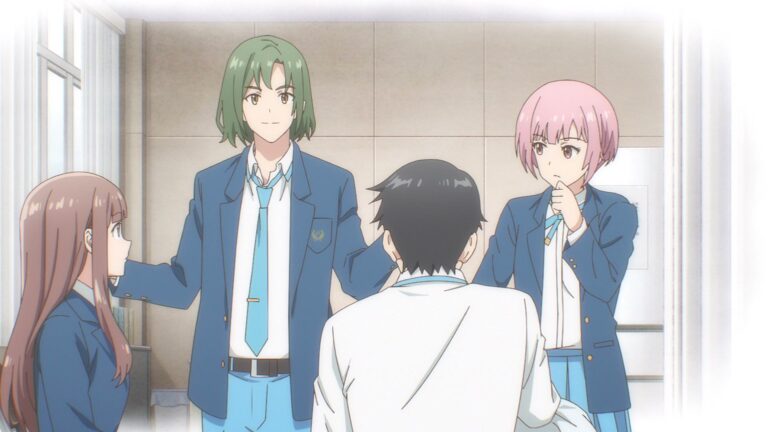
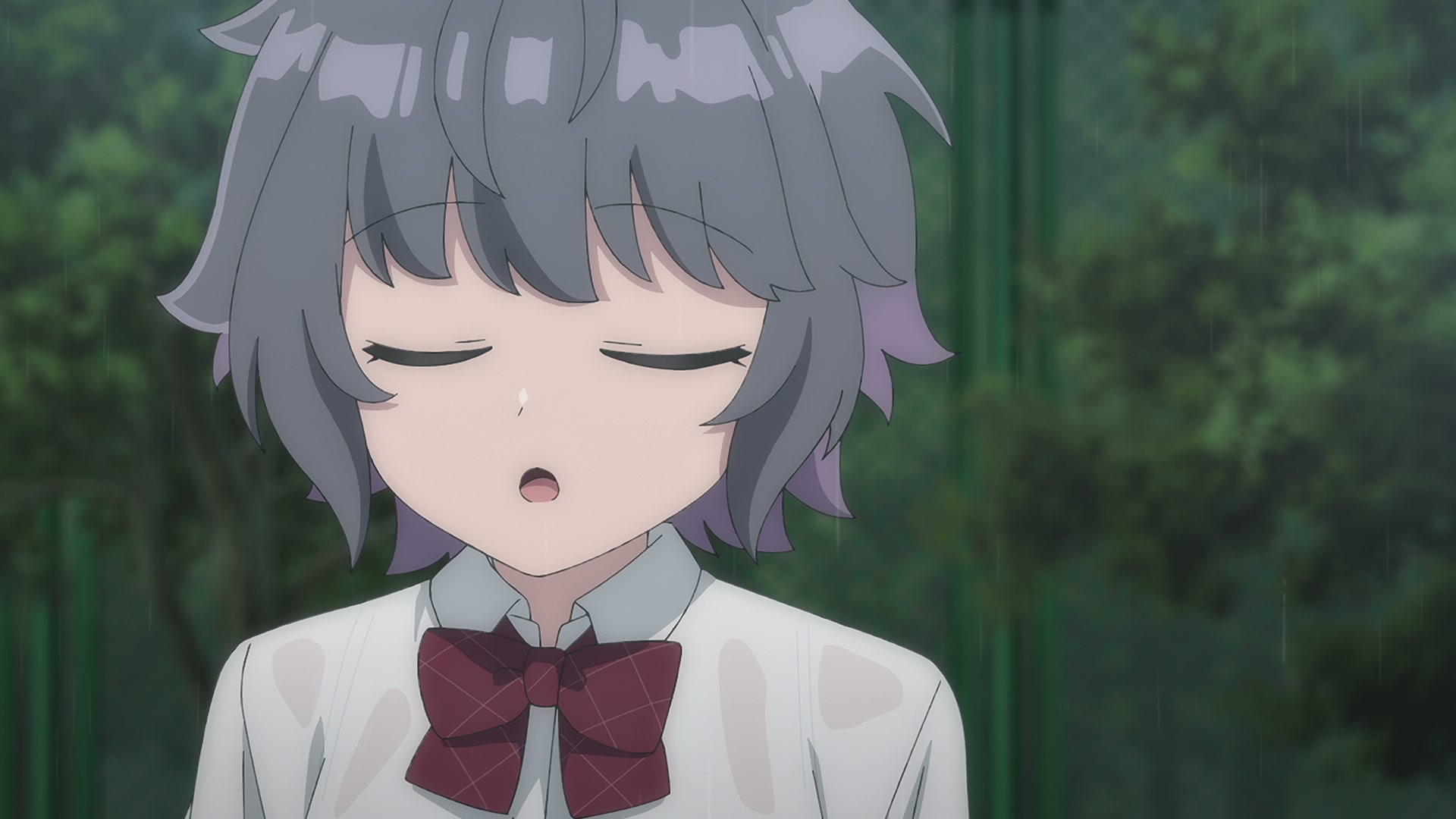
The fallout is even better. Haruki, ever the perfect student, lends him a towel after he gets caught in the rain, then smoothly pivots to asking for his number so he can return it. When he repeats that he doesn’t have a phone, the surrounding students interpret it as a brutal rejection. The boys drag him off for a “friendly chat,” and Hayato’s betrayed glare at Mori is pure gold. The show understands that high school rumors run on incomplete information, and watching Hayato suffer for a crime he didn’t commit is the kind of low-stakes chaos that makes slice-of-life comedies sing.
What keeps the phone plot from feeling like a contrived misunderstanding is how it ties back to Haruki’s real desire. She’s not just teasing him. She wants a way to talk to him outside of school, and his technological void is a genuine obstacle. When she finally gets him to admit he just doesn’t know which phone to pick, her laughter is warm rather than mocking, and her offer to go shopping with him over the weekend feels like a natural next step. It’s a promise that carries weight because it’s the first time she’s actively invited herself into his life outside the storage room.
Himeko Steals Every Scene She’s In
Hayato’s younger sister Himeko only appears in a couple of scenes, but she immediately establishes herself as a force of nature. Her deadpan lecture about cell phones being as essential as a fridge or a tractor is delivered with the authority of someone who has fully embraced urban life and has no patience for her brother’s rustic hesitation. The detail that she still chats daily with Murao-san from their old village adds a nice layer of warmth beneath her blunt exterior.
Her real moment of glory comes in the post-credits convenience store outing. The way she insists on going to a “legit, urban convenience store at night,” dressing up to “get in the mood,” and then dramatically announcing their arrival like they’ve reached a sacred landmark is comedy perfection. It’s the kind of exaggerated reverence for mundane city life that only a recent transplant would have, and the show plays it completely straight. When Haruki shows up looking effortlessly stylish and Himeko immediately asks if she’s Hayato’s girlfriend, the timing is so perfect that you almost forget the episode was about to end. Himeko doesn’t just provide comic relief; she gives us a glimpse of Hayato’s home life and a second opinion on his relationship with Haruki that feels both teasing and genuinely curious.
A Quiet Lunch and a Shared Hobby
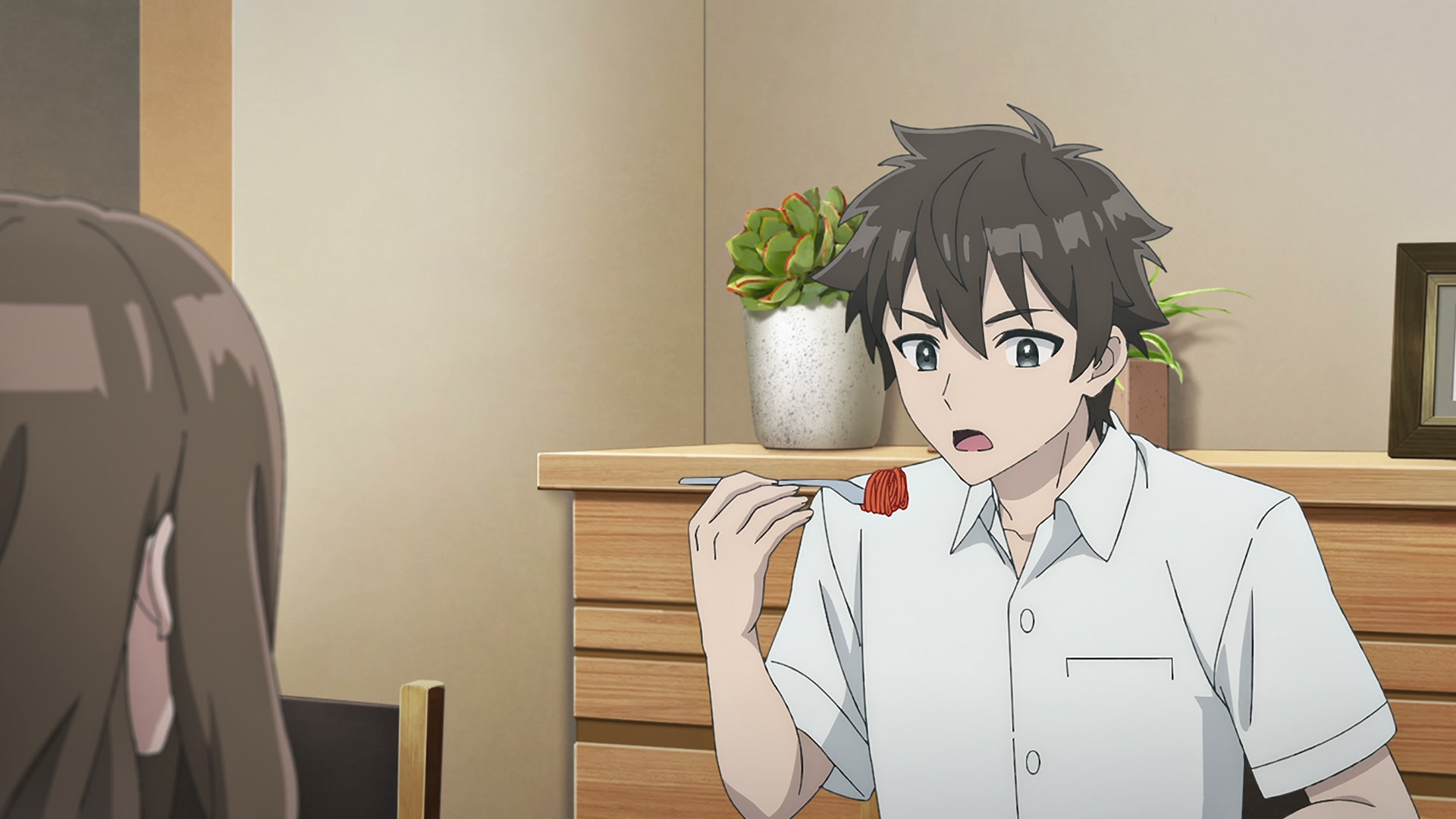
Between the phone chaos and the convenience store antics, the episode carves out space for smaller, quieter moments that deepen the central friendship. The lunch scene where Hayato offers Haruki half of his homemade rice croquettes is a lovely reversal of expectations. Haruki, who survives on convenience store nutrition drinks, is genuinely surprised that Hayato can cook, and her delighted reaction to the cheese-filled croquettes is one of the few times we see her completely unguarded in a positive way. Hayato’s deadpan “I made it myself” lands perfectly because he’s not showing off. He’s just sharing food with a friend.
The grocery store run-in later that evening adds another layer. Hayato gets caught buying candy toys, and instead of mocking him, Haruki casually mentions that she built a diorama using parts from the same Showa candy store series. The way she talks about repeatedly pulling the bench and developing a “new respect for the laws of probability” is so specific and nerdy that it instantly makes her feel more real. These two aren’t just childhood friends who fell back into a routine. They share the same kind of niche, slightly obsessive hobbies, and the show trusts the audience to appreciate that without over-explaining it.
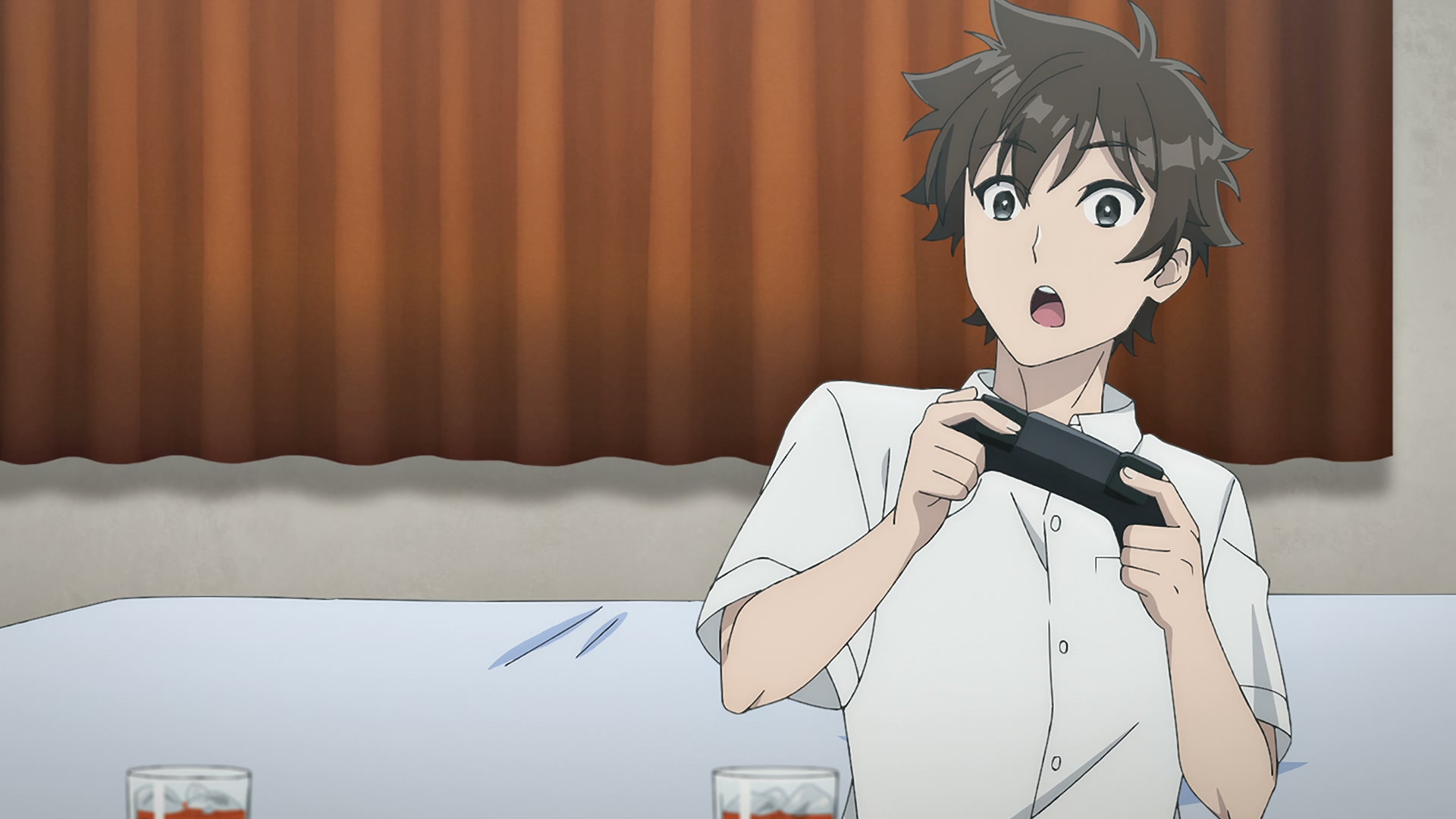
The video game session near the end of the episode is a direct extension of that shared language. They bicker over strategy, run out of MP, and get wiped because they were both too aggressive. It’s the same competitive energy from their childhood rock-paper-scissors matches, just translated into a new medium. The scene doesn’t advance the plot in any dramatic way, but it’s exactly the kind of comfortable, aimless hanging out that makes a friendship feel lived-in.
The Convenience Store Date That Wasn’t
The final sequence deserves a special mention because it pulls off a tricky tonal shift. Himeko’s nighttime convenience store pilgrimage is played for laughs, but when Haruki appears, the mood softens. She’s dressed up, her usual school uniform replaced by something more mature, and her greeting is so polished that for a split second even Hayato seems thrown. Himeko’s blunt question, “Is this your girlfriend?”, hangs in the air just long enough to make everyone a little flustered before the episode cuts to black.
It’s a smart way to end the episode because it doesn’t force a romantic confession or a big misunderstanding. It just plants a seed. Haruki and Hayato’s relationship is still firmly in the “old friends reconnecting” phase, but Himeko’s question acknowledges the elephant in the room: to an outside observer, they already look like a couple. Whether that observation will push either of them to examine their own feelings is a question for future episodes, but for now, it’s a perfectly timed comedic button that also feels a little bit true.
Closing Thoughts
Episode two of Tenkou-saki no Seiso Karen na Bishoujo ga, Mukashi Danshi to Omotte Issho ni Asonda Osananajimi Datta Ken doesn’t try to escalate the drama or rush into romance. Instead, it settles into a comfortable rhythm, using a simple problem like a missing cell phone to explore how Haruki and Hayato navigate their rekindled friendship in a modern high school setting. The comedy lands because the characters feel consistent: Haruki’s public persona is a mask she wears out of necessity, not enjoyment, and Hayato’s country-boy obliviousness is never played as stupidity. The introduction of Himeko and the brief appearance of gardening club member Mitake hint at a wider social world without distracting from the core duo. By the end, the promise to go phone shopping together feels less like a plot device and more like a natural step forward for two people who are slowly, awkwardly, figuring out how to be in each other’s lives again.
Screenshots
← Episode 1 | All Tenkou-saki no Seiso Karen na Bishoujo ga, Mukashi Danshi to Omotte Issho ni Asonda Osananajimi Datta Ken Season 1 posts →