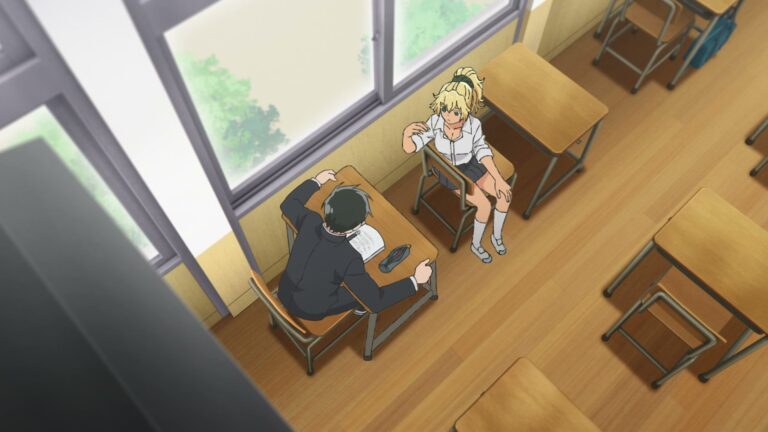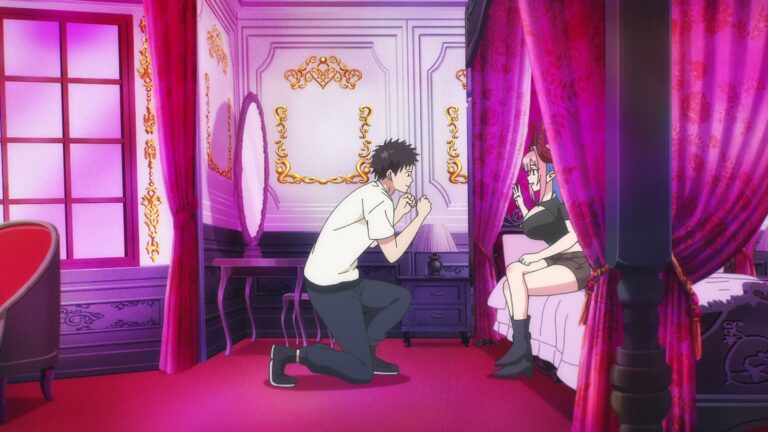







The moment Micchan vaults through that window in the previous episode, you know the show is about to stop letting Mizuka hide. But episode seven does something smarter than just forcing her onto the stage. It makes her watch someone else do the thing she refuses to do, and then it makes her feel the difference.
The Weight of a Disbanded Dream
The cold open lands on Mizuka’s past with surprising economy. We already knew her father was Black Lotus and that she hates him. What we didn’t know was the specific shape of that hatred. The Lotus Circus didn’t just stop being her home. It was taken apart by the same man who built it, and he did it because he couldn’t accept performing below his own standard anymore.
That’s the detail that makes everything click. Black Lotus disbanded the troupe not because of money or injury or failure, but because he couldn’t forgive himself for aging. The audience came to see him at his peak, and rather than let them watch him decline, he chose to vanish while they could still dream. Micchan explains this with a kind of resigned admiration, but you can hear the old wound in it.
Mizuka’s reaction is the emotional core of the episode. When her father tells her she’ll stand on a circus stage someday, she says “I’d rather die.” Not because she hates performing. Because the only stage she ever wanted was the Lotus Circus stage, with everyone there. The dream and the home were the same thing, and he destroyed both at once.
That’s why she refuses to become a performer now. It’s not stubbornness or trauma in the simple sense. It’s loyalty to something that no longer exists. She’d rather not fly at all than fly somewhere that isn’t that.
The Challenge That Actually Works
Micchan’s provocation is blunt, but it’s also the first time someone has met Mizuka on her own terms. He doesn’t try to convince her with sentiment. He challenges her directly, and when she accepts, he immediately changes the terms. It won’t be Mizuka performing solo. It’ll be a catcher showdown with Ouka as the flyer.
The setup is clever because it forces Mizuka to participate without making her the center of attention. She’s the catcher, not the flyer. She has to support Ouka, to be part of a pair, to think about someone else’s performance instead of her own refusal.
But then Shizuku and Svetlana step in and take the challenge away from her entirely. That’s the moment the episode shifts from “will Mizuka perform” to “what is Mizuka missing.” Shizuku says there’s no need for Micchan to take part in a little contest like this. She and Yamada will handle it.
The reveal that Svetlana used to be an aerial performer too, and that she stepped aside so Shizuku could partner with Ouka, adds another layer to their history. These two have been making quiet sacrifices for each other for years. The challenge becomes less about winning and more about showing Mizuka something she’s never seen.
The Difference Between Impressive and Moving
The actual showdown is brief, and that’s the point. Ouka and Mizuka’s act is technically more impressive. A single somersault with little impact, but the narration notes it was “more impressive.” Then Shizuku and Svetlana perform, and the troupe’s reaction is completely different.
They’re not cheering for difficulty. They’re cheering for joy. The chant of “Ya-ma-da” that starts up is ridiculous and warm in exactly the way Himawari Circus should be. These two aren’t just executing a routine. They’re having fun, and the audience can feel it.
Mizuka watches this and doesn’t understand why she lost. Micchan’s question cuts to the heart of it: “Have you ever found the circus fun?” Her answer is that practicing until she can do a trick she couldn’t before is fun. That’s true, but it’s also not the same thing. It’s the satisfaction of mastery, not the joy of sharing.
The episode doesn’t resolve this for her. It just makes the gap visible. She storms off calling Micchan a “mustached jerk” and a string of microbiology insults, which is still the funniest running gag in the show. But underneath the comedy, she’s genuinely shaken.
Micchan's Quiet Exit
The conversation between Micchan and Maria near the end is the most understated scene in the episode, and maybe the most important. Micchan admits that Mizuka doesn’t know things any professional should know, and that it’s their fault. The adults who raised her in the Lotus Circus thought they had taught her properly. They thought they had shown her properly. But they didn’t.
So he asks Maria to take care of her. “I’m no longer the one who can guide her. I want to entrust her to all of you.”
This is a man who was part of the problem, acknowledging that he can’t be part of the solution. He’s not asking for forgiveness. He’s just handing over responsibility to people who might actually be able to reach her. Maria accepts without hesitation.
It’s a small moment, but it reframes the entire relationship between Mizuka and Himawari Circus. They’re not just her captors or her creditors anymore. They’re the people Micchan trusts to finish what the Lotus Circus started.
The Promise of a View She's Never Seen
The final scene sets up the next episode with a simple promise. Mizuka says she’s quitting the circus after the next show. Ouka tells her she can’t quit, not until she’s truly accepted it. Mizuka insists she has, and Ouka’s response is perfect: “You’re much more difficult than that.”
Then the troupe tells her they’ll take her somewhere she’s never stood before. Somewhere she needs to see. Somewhere she’ll see a view she’s never seen before.
The episode ends on the Himawari Circus show itself, with fewer people than usual in the audience. The threat from Blue Rose Circus is real, and the troupe is hanging by a thread. But the stage is set, literally and figuratively, for Mizuka to finally understand what she’s been missing.
What I appreciate most about this episode is that it doesn’t rush Mizuka’s growth. She’s still angry, still confused, still refusing to perform. But the walls are starting to crack, and the people around her are patient enough to let them fall on their own. That’s a kind of storytelling you don’t see often in shows about performance and trauma. It trusts the audience to sit with the discomfort instead of resolving it immediately.
The Himawari Circus is in trouble, Mizuka is at a crossroads, and the next show might be their last. But for the first time, it feels like she might actually be ready to see what’s in front of her.
Screenshots


← Episode 6 | All Grow Up Show – Himawari no Circus-dan Season 1 posts →