




The Klutz and the Skirt Hit the Ground Running
The first episode of Ponkotsu Fuuki Iin to Skirt-take ga Futekisetsu na JK no Hanashi doesn’t waste a single second. We open on Sakuradaimon Togo, class monitor, already deep in his morning ritual of lecturing Kohinata Poem about her dyed hair and miniskirt length. It’s a routine they’ve clearly performed many times, and the chemistry is immediate. What could have been a simple “strict boy meets rebellious girl” setup instead feels like two people who’ve already been circling each other for weeks. The episode knows it, the side characters know it, and we get to enjoy every moment of it.
Togo’s Earnestness Is the Real Engine Here
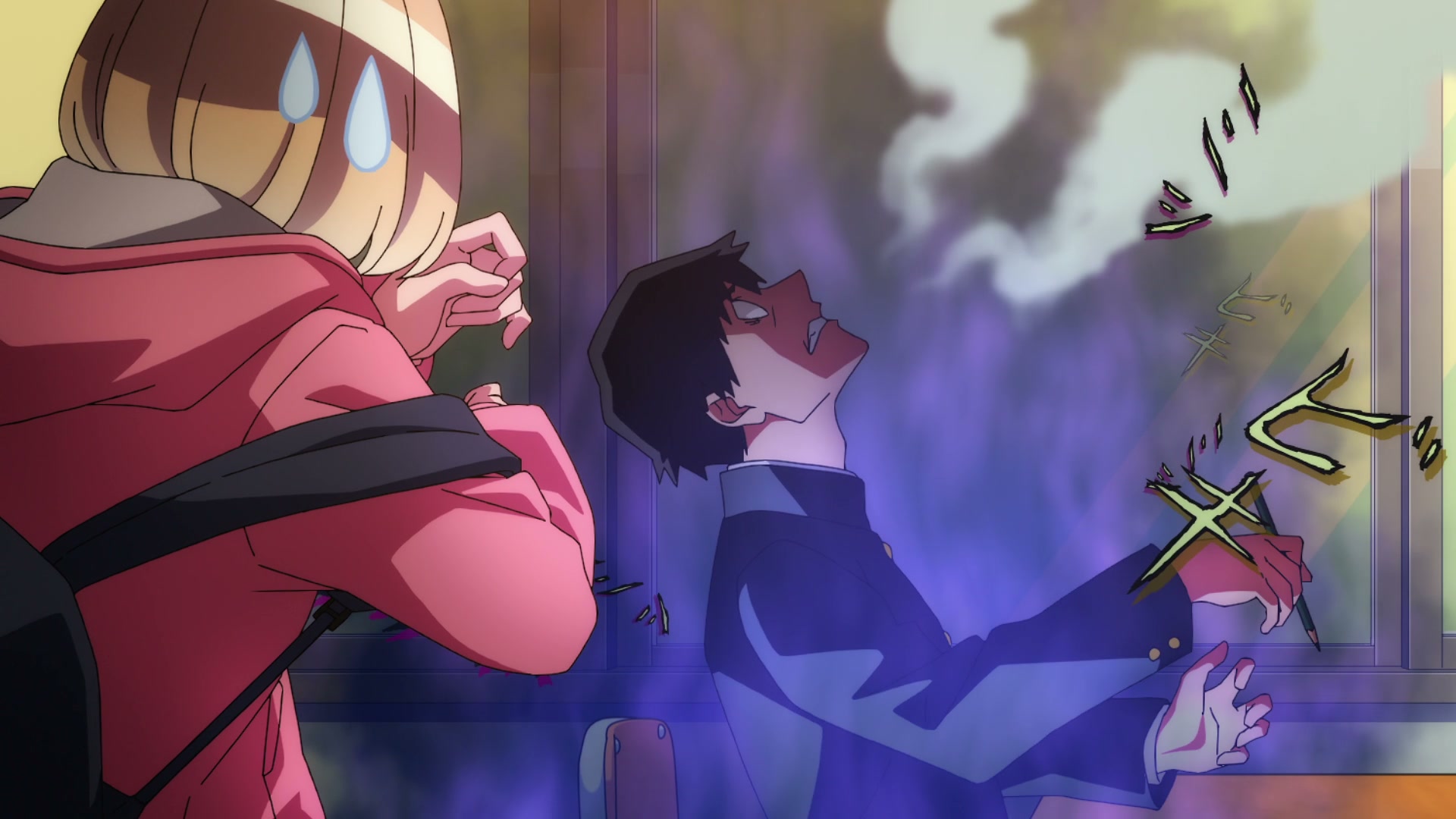
What makes the premiere work is that Togo isn’t a villain. He’s not the antagonist here to enforce rules out of malice. He’s painfully earnest, and that earnestness drives the entire series. When Poem fires back that her skirt is within “commonly accepted standards,” Togo responds not with anger but with a deadpan observation that he’s seen her underwear “two or three times now” and that it’s the kind “designed to stoke young men’s carnal desires.” It’s such a blunt, socially oblivious thing to say, and Poem’s outraged “Die!” in response sets the tone for their entire dynamic. He’s not leering; he’s genuinely worried about her safety. Later, when he walks her home and says her skirt “inherently stokes carnal desire,” you almost believe he thinks he’s being helpful.
The turn happens in a supplementary lesson, where Poem discovers Togo is absolutely terrible at math. This is the first real glimpse behind the monitor facade. He admits he struggles with “flexible thinking,” and Poem instinctively calls him rigid. But instead of leaving him to struggle, she ends up teaching him. It’s a small act of kindness that Togo latches onto. His sincere “Please grant me your instruction” and the subsequent thank-you mark the first time he sees her not as a rule-breaker but as a kind person. In return, he offers her a five-centimeter skirt allowance above the knee as a “special exception.” The negotiation is absurd in the best way, and it establishes that while Togo clings to rules, he’s willing to bend when he believes someone deserves it. That flexibility, however small, is exactly what Poem told him he lacked.
The Walk Home and the Pieces Clicking Into Place
The walk home is where the episode really nails the rom-com timing. Poem jokes about Togo escorting her, and he immediately agrees. She realizes they live a stone’s throw apart, which explains why they’ve never met before: Togo arrives earlier than anyone else and leaves later. The narrator’s line, “Many puzzle pieces finally clicked into place,” highlights the inevitability that this series thrives on. They were always going to collide. And when Togo, seeing her get flustered, calls her a “cute girl” and says her name suits her, Poem’s rapid-fire “Shut up, shut up, shut up!” is the purest tsundere energy. She’s already in trouble, and she knows it.
Togo’s social blind spots aren’t just comedy; they make you root for him. When he tells Poem she’s “quite kind” and admits his classmates have called him “stifling” or “boring,” there’s a faint loneliness there. He’s not unaware of how people see him. He just doesn’t know how else to be. That’s why his small adjustments for Poem feel so significant. He’s learning, at a glacial pace, to be more human.
Tasaki, Akina, and the Chaos They Bring
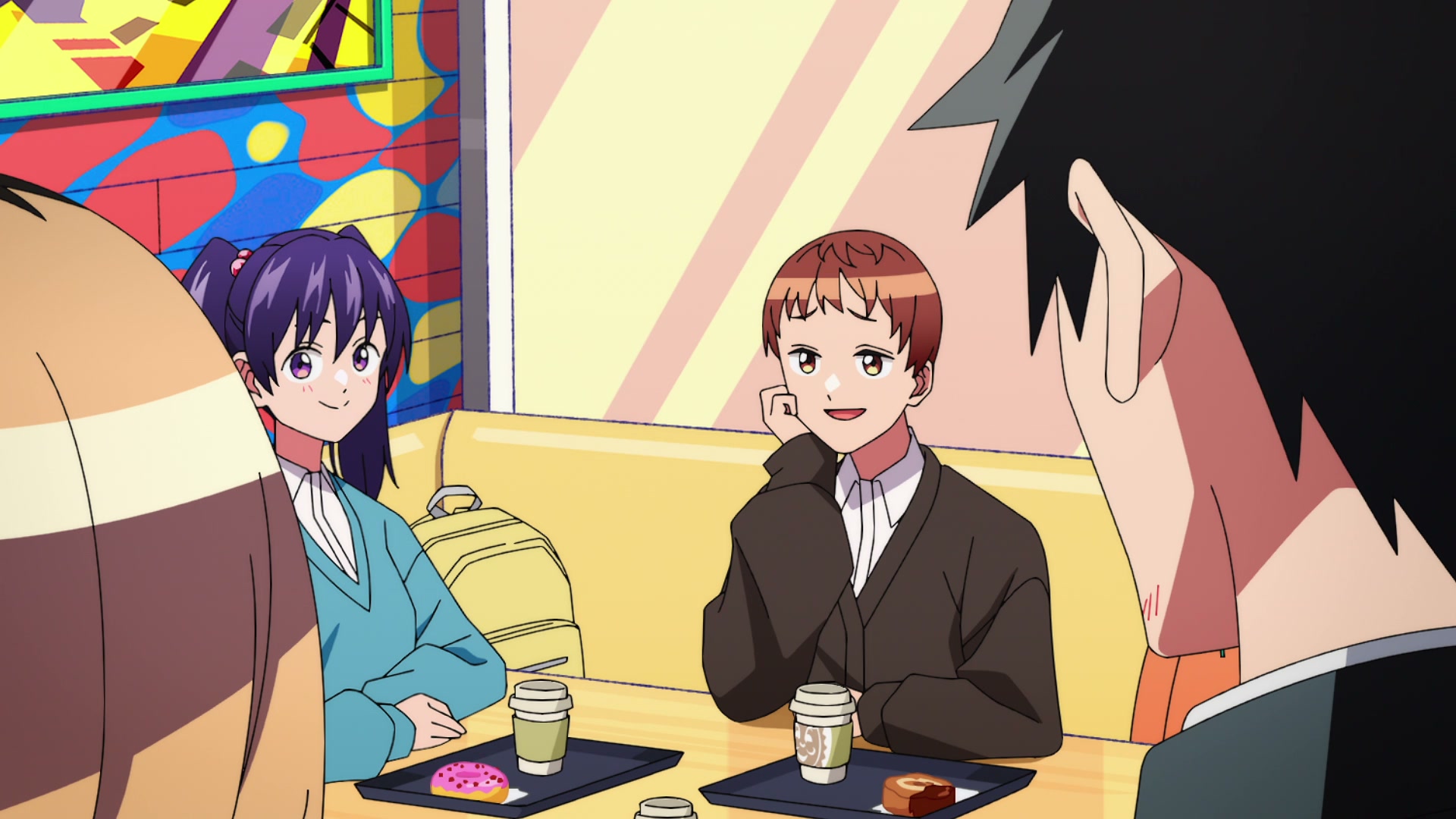
Poem’s friends Tasaki and Akina add immediate bounce. They have history with Poem, having called her “Poe” or “Poe-Poe” in elementary school, a nickname she now loathes. Their dynamic with Togo is unexpected. They tease him, pull him into their after-school coffee (a violation he initially resists, then nearly drinks before catching himself), and find him surprisingly funny. Tasaki’s “Drink it! Drink it and be freed!” during the chaotic coffee scene is the perfect amount of absurd. Akina calling Togo “surprisingly lax” after he says grabbing tea after heading home would be okay shows they’re starting to see the person behind the monitor.
Then there’s Izubuchi Yu, the health representative who enters like a typhoon: white coat, foul mouth, princess-carrying Akina down the stairs with a stream of, “You’re not hurt anywhere, are you?! Hey!” He and Togo are immediately at odds on the committee, each zealously guarding their own jurisdiction. The episode sets up their rivalry beautifully. During the assembly heatwave, when Poem nearly passes out, both Togo and Izubuchi try to claim the right to carry her to the nurse’s office. It degenerates into a “I’m taking her!” shouting match while Poem, semiconscious, despairs that they’re both idiots. The punchline, that she ends up being carried by neither and Tasaki later says she “missed her chance,” is a great deflation of the usual dramatic rescue. Izubuchi’s closing line, “That woman’s definitely a delinquent!” met with Togo’s “No, she’s a nice girl,” confirms the central tension: the world sees Poem one way, Togo sees her another, and that’s the whole point.
A Little Detail About Her Name
Poem’s name deserves a mention because it’s handled perfectly. It’s written as “Hohoemi” (微笑み, literally “smile”) but pronounced “Poem.” This isn’t just a quirky fact; it’s a genuine source of embarrassment for her. Her parents probably thought it was cute, but for a high school girl, it’s an unusual name that draws attention. When the hospital calls “Kohinata Poem-san!” in her imagined future, she calls it “harassment across time.” Togo, of course, thinks it’s a wonderful name and tells her it suits her, which mortifies her even more. This is exactly the kind of small, character-rooted detail that makes slice-of-life romance work. It’s not a throwaway joke; it’s a part of who she is, and Togo’s genuine appreciation of it chips away at her defenses.
Where This Leaves the Series
After one episode, Ponkotsu Fuuki Iin to Skirt-take ga Futekisetsu na JK no Hanashi has already delivered on its premise. It’s a rom-com built on the collision of two extremes: a boy so rule-bound he’s practically a parody and a girl whose fashion choices make her his perpetual target. But the show doesn’t stop at the surface. Togo is rigid because he was raised that way, and he’s painfully aware of his own failings. Poem is defiant because she doesn’t want to be controlled, but she’s observant and surprisingly gentle. The supporting cast is lively, and the stage is set for the kind of slow-burn, comedic romance where every shared walk home and every bent rule feels like a small victory. I’m all in.
Screenshots
All Ponkotsu Fuuki Iin to Skirt-take ga Futekisetsu na JK no Hanashi Season 1 posts →