





This episode twists the fake dating premise into something far more tangled than anyone on either side of that broken wall expected. Satsuki writes a fictional date scenario as a memory reinforcement strategy, but the scenario itself is a confession. Rinko reads it, falls into its emotional gravity, and then tries to pull back into safer territory by asking if they can be friends instead. Meanwhile, Usaharu, whose crush epiphany last episode left him newly vulnerable, spends the episode sidelined, lonely, and ends up misunderstanding a perfectly reasonable rejection as hatred. The balance of domestic chaos has shifted. The goddess-devotee structure is cracking, and the pretend-boyfriend act is now a real, awkward negotiation.
Usaharu’s God Status Comes Back to Bite Him
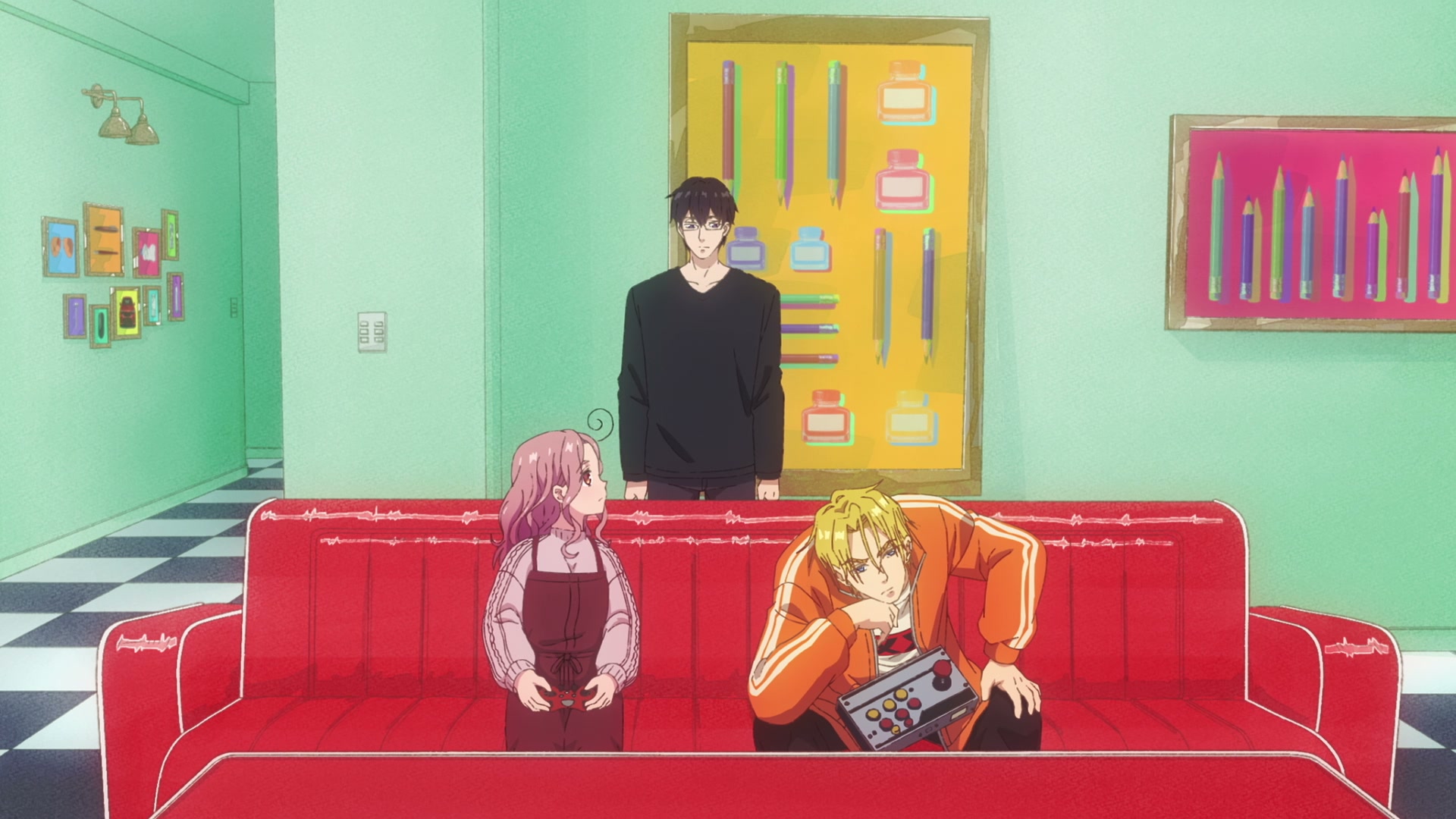
The cold open picks up right where last week left off, with Usaharu still trying to negotiate for Rinko’s attention like she’s an accessory. “Let me have Rinko. If you won’t, lemme borrow her. If I’m wrong about how I feel, I’ll return her.” The phrasing is so transactional it almost sounds like he’s haggling over a rare doujinshi. Satsuki, calm and unimpressed, drops the line that defines the whole conflict: “Gods can’t be romantic interests.”
That single sentence sums up the trap Usaharu has built for himself. He demanded absolute worship from Rinko, and she gave it to him with terrifying sincerity. She calls him a god, treats his manga as scripture, and frames every interaction through the lens of fan-devotee distance. So when Satsuki tells him that his disadvantage is that he’s a god, it’s not posturing. It’s a painfully accurate read of the emotional architecture in that apartment. The closer Rinko sees him as a divine creator, the further he is from being someone she could ever consider in a romantic light. Usaharu’s possessiveness, which once felt like ego-driven comedy, now reads as genuine frustration. He’s trapped in the pedestal he built for himself, and Satsuki knows it.
The negotiation ends with Satsuki warning him not to do anything that would prevent Rinko from genuinely enjoying his stories. The implication is sharp: if Usaharu muddles the creator-fan boundary carelessly, he might lose her as a reader too. The scene is quiet, just two guys talking while Rinko is out shopping, but it reframes the entire triangle. Usaharu isn’t just jealous. He’s stuck in a role that actively blocks what he wants.
A Fake Date Scenario That Feels Too Real
The real structural magic trick of the episode is the way it blurs the line between Satsuki’s writing and the characters’ lived reality. After Rinko panics at the thought of the pretend-boyfriend act ending, Satsuki clarifies that he meant they needed a more solid cover story, not that he wanted out. Then he casually suggests they “go out for real” and presents Rinko with a scenario he’s written: a detailed first-date narrative, complete with a Ferris wheel, a confession, and a kiss.
For a long stretch, the episode lets us believe we’re watching that date. The rooftop view, Rinko’s “people are like garbage” line, the confession scene inside the Ferris wheel car. It’s all shot warmly, the kind of gentle romantic sequence that makes a viewer lean in. And then Rinko reacts from outside the story, and we realize we’ve been watching her read Satsuki’s manuscript. The whole thing was fiction. A script. A memory implant designed to strengthen their couple alibi.
The reveal lands because Rinko’s reaction is so believably layered. She’s awed by Satsuki’s writing ability, calling him a god just like she does Usaharu, and she’s also deeply shaken by how closely the scenario mirrors her own feelings. The dialogue in the script is her voice, her nervous cadence, her exact hesitation patterns. She says out loud that she can’t differentiate between her own feelings and the ones the story gives her. That sentence is the emotional core of the episode, and maybe of the series so far. The fake dating setup was supposed to be a simple performance, but Satsuki’s writing has now colonized her internal landscape so thoroughly that she no longer knows where the act ends.
Satsuki, for his part, is doing something quietly audacious. By confessing through fiction, he gives her an out. If she doesn’t feel the same way, it was just a story for cover purposes. If she does, the door is open. When she later blurts out that she’s a fan of analyzing OTP compatibility and that harboring impure intentions toward a god is sacrilege, he mutters “impure intentions” to himself. He’s cataloguing every barrier she’s erected around herself, and his fictional scenario is his way of slipping past them.
The Friend Zone Request That Satsuki Accepts With Grace
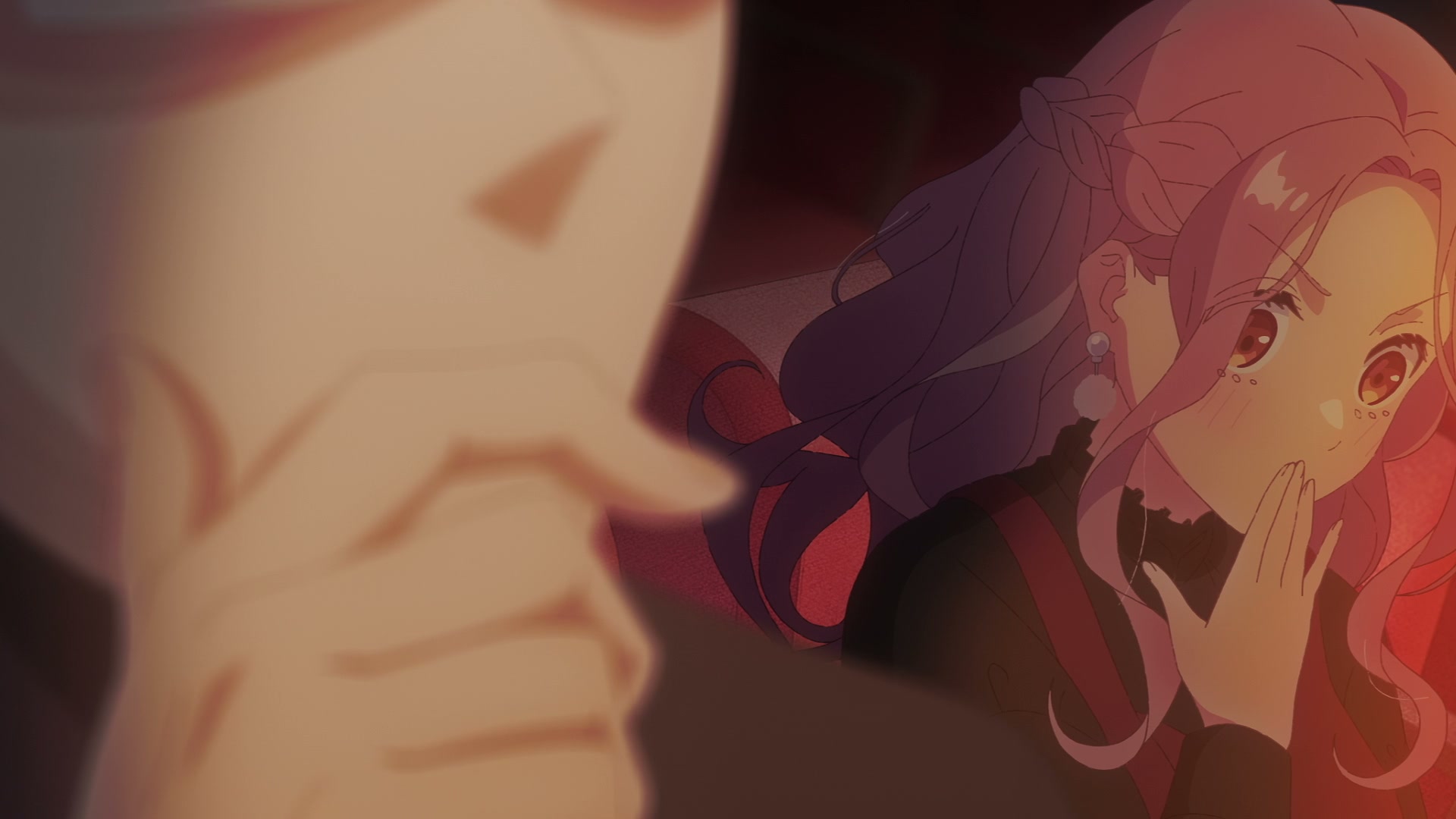
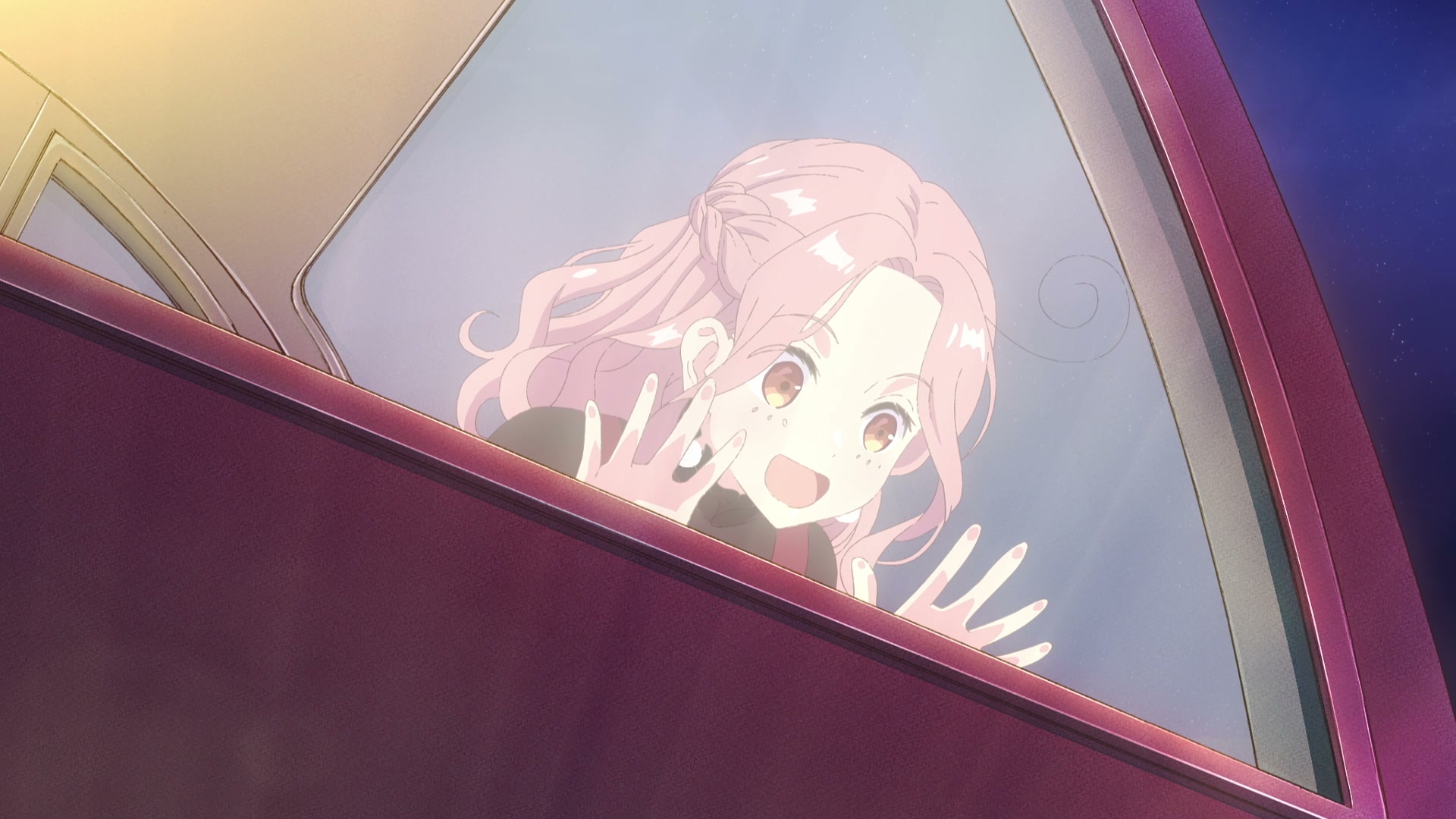
The actual date they go on later is not a reenactment of the script but something messier. Satsuki picks her up, comments on her earrings and outfit, and they go through a series of classic date beats: a movie, a cute shop, a Ferris wheel at night. Rinko’s internal monologue during all of this is a tightrope act. She’s hyperaware that this is her first ever date, but also unsure if it counts, because the premise is still technically fake. She notices every small kindness, gets flustered by Satsuki’s natural ease, and keeps reminding herself that this is all for the act.
And then, at the highest point of the Ferris wheel, with the city lights spread out below them, she asks if she can consider him her friend.
The request comes after Satsuki tries to call her Rinko-chan, a small but loaded shift from the formal Nakama-san he used even in his script. She fumbles, panics, and lands on “friend” as the safest possible label. It’s not a rejection in the cruel sense. It’s Rinko trying to find a category that doesn’t violate her internal rules about gods, creators, and romantic impropriety. She can’t let herself fall for Satsuki the same way she can’t let herself feel anything impure toward Usaharu. The only safe space she can imagine is friendship.
Satsuki’s response is remarkable. He barely pauses before agreeing, and then he hands her a pair of fish-shaped earrings he bought earlier. “Since we’re friends, please accept this.” He uses “Rinko-chan” immediately, cementing the new label while simultaneously taking a small step closer. It’s an incredibly patient move. He doesn’t push, doesn’t sulk, doesn’t pull the manipulative Nice Guy card. He just adjusts the relationship to the closest possible setting and waits. For a guy who earlier made a dark joke about being able to kill someone, this quiet acceptance adds a strange, disarming gentleness.
Usaharu’s Loneliness and a Hug Rejected
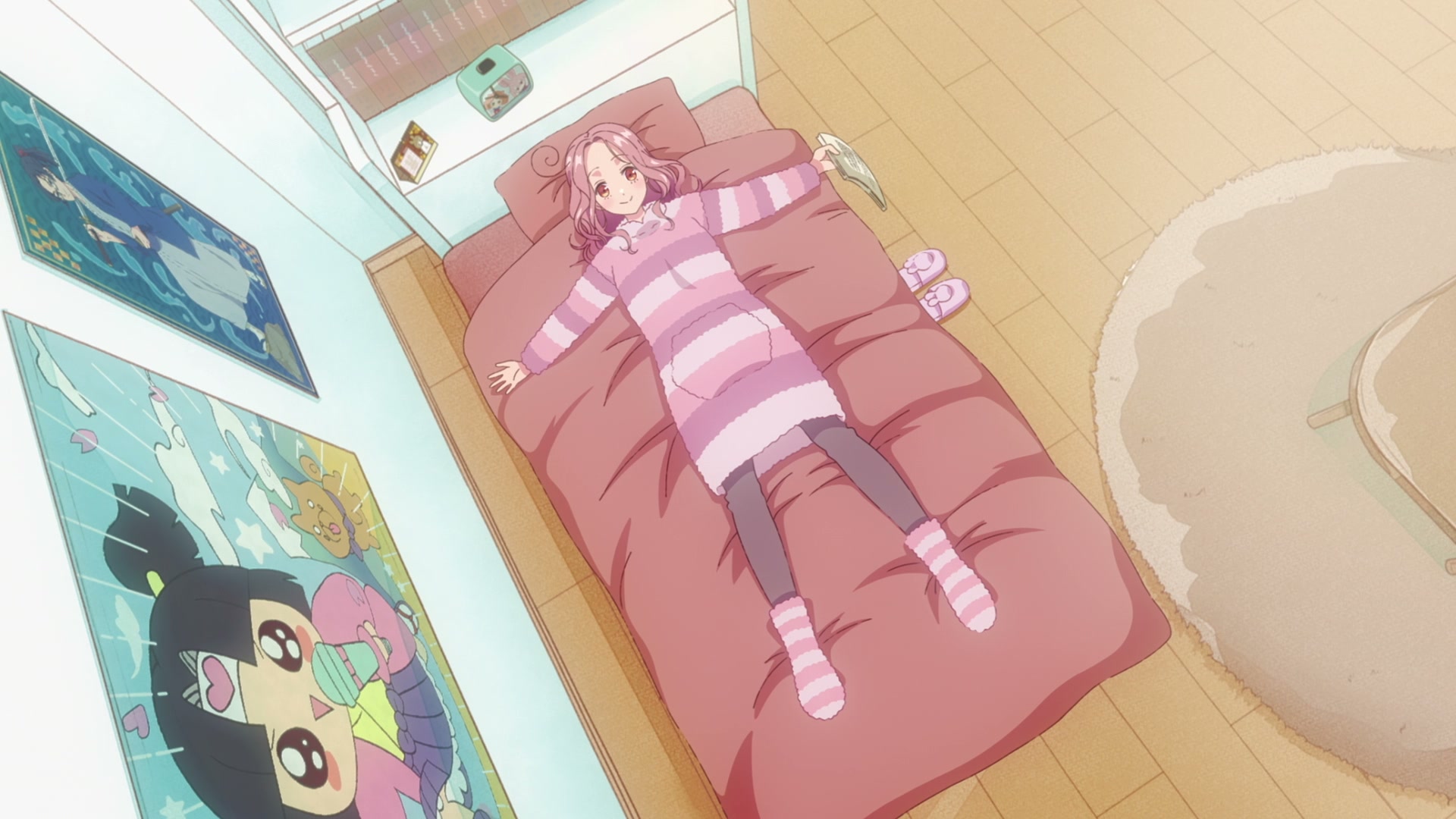
While Rinko and Satsuki are out navigating their fake-date-turned-friend-outing, Usaharu is alone. The episode gives us a long stretch of him sitting in his apartment, phone dead, craving flan, irritated that his two neighbors are off together. When Rinko finally returns with flan as a gift, he’s so pathetically grateful that he calls her amazing and immediately moves to recharge via physical contact, the same hug-based stress relief she once gave him based on her Tada-Oja podcast tip.
And she pulls away.
Rinko’s polite but firm refusal, a flustered “P-please excuse me!” followed by a quick retreat, leaves Usaharu frozen. His reaction is pure panic: “Did she just reject me? Did I just make Rinko hate me?!” The contrast with Satsuki’s earlier composure is stark. Usaharu, who spent the opening scene negotiating for Rinko like a possession, now experiences the smallest withdrawal of affection as a catastrophe. His loneliness isn’t just about missing company. He’s now emotionally dependent on her presence, and he has no framework for a relationship that isn’t either worship or possession. The hug rejection is the first crack in his assumption that she will always be there to soothe him.
The episode’s post-credits stinger lingers on his expression, and it’s the first time Usaharu looks genuinely small.
A Small Detail Worth Noting
Satsuki’s identity gets a tiny but significant push this week. When Rinko calls him a god after reading his scenario, he demurs, saying he’s “a writer of sorts” but nothing extravagant. That casual admission fills in an earlier gap. We knew his job was mysterious, and he’d deflected questions before. Now we learn he’s a writer, probably a novelist or something adjacent, which makes his “I could probably kill him” comment from a few episodes ago feel less like a random edgy one-liner and more like a writer’s awareness of narrative possibility. It also recontextualizes the scenario he wrote for Rinko. That wasn’t just a thoughtful boyfriend gesture. That was a professional writer crafting a story designed to move a specific reader, and he knew exactly what he was doing.
Where This Leaves Things
The false equilibrium of the first few episodes has officially collapsed. The fake dating act is now a real friendship with unspoken romantic potential simmering underneath. Usaharu’s crush has made him vulnerable in a way his divine persona never prepared him for. Rinko is caught between two men she’s called gods, one whose work she worships and one whose writing she can’t separate from her own feelings. The wall between their apartments remains open, but the emotional walls are shifting faster than anyone can keep up.
The next episode title, “It’s Just a Kiss?!”, suggests someone is about to push the boundary again. Given how this episode ended, I’m not sure anyone is ready.
Screenshots
[…] ← Episode 5 | All Tadaima, Ojamasaremasu! Season 1 posts → […]