




The manga club finally gets its hands dirty, and the result is the most satisfying episode of Kore Kaite Shine yet. Not because anything dramatic happens. If anything, the drama takes a backseat to process. But watching three amateurs fumble their way through a four-page manga under Teshima-sensei’s reluctant supervision turns out to be exactly what this series needed.
The Club Finally Makes a Real Manga
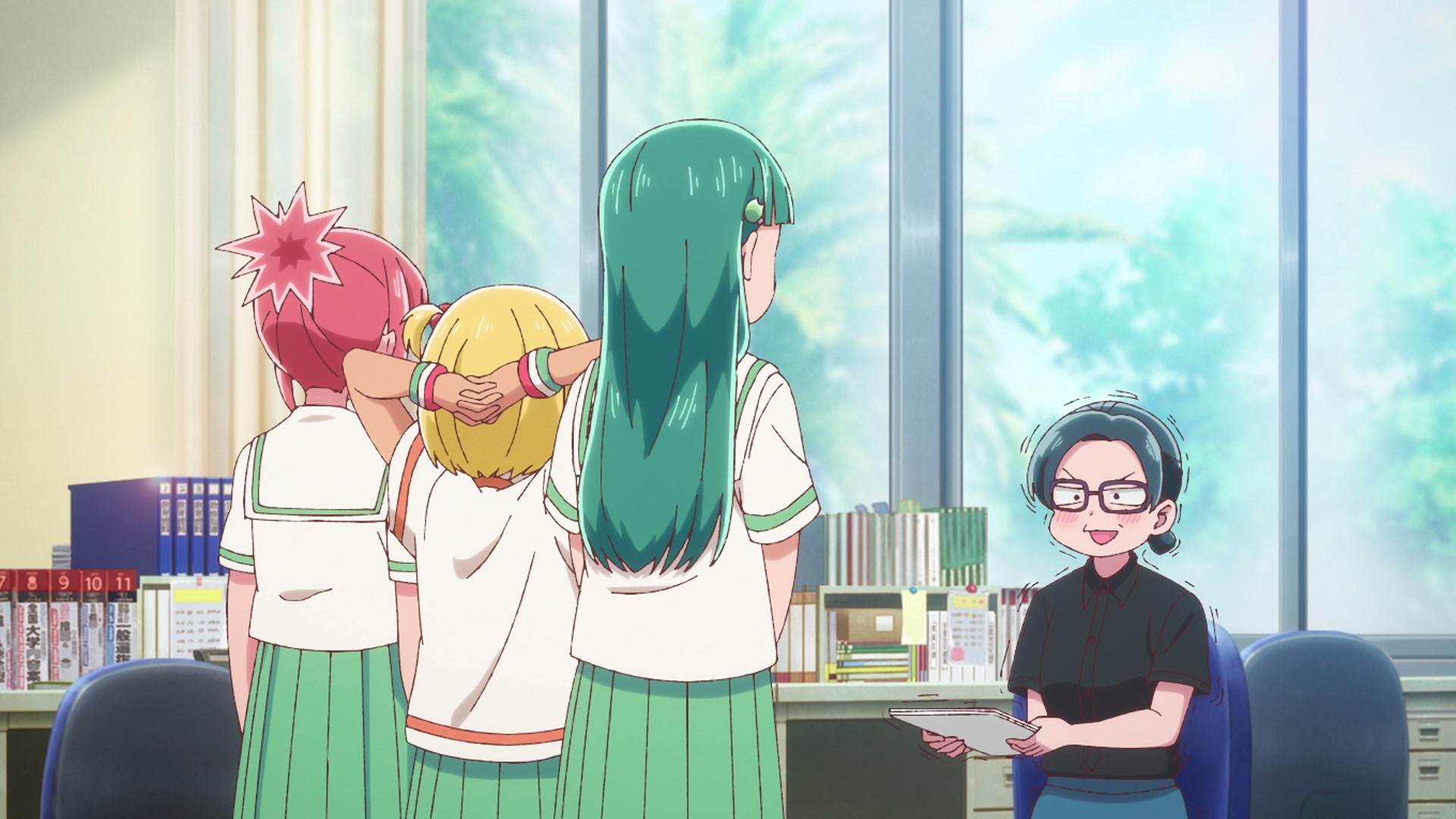
Episode 4 opens with the club room taking shape. Bookshelves go up, chairs and a desk arrive, and Teshima-sensei immediately establishes the pecking order by telling Nana to get out. The dynamic is comfortable now. Ai draws, Kokoro redraws, Sachi reads manga and offers blunt criticism. It feels like a real club, not just three people sharing a room.
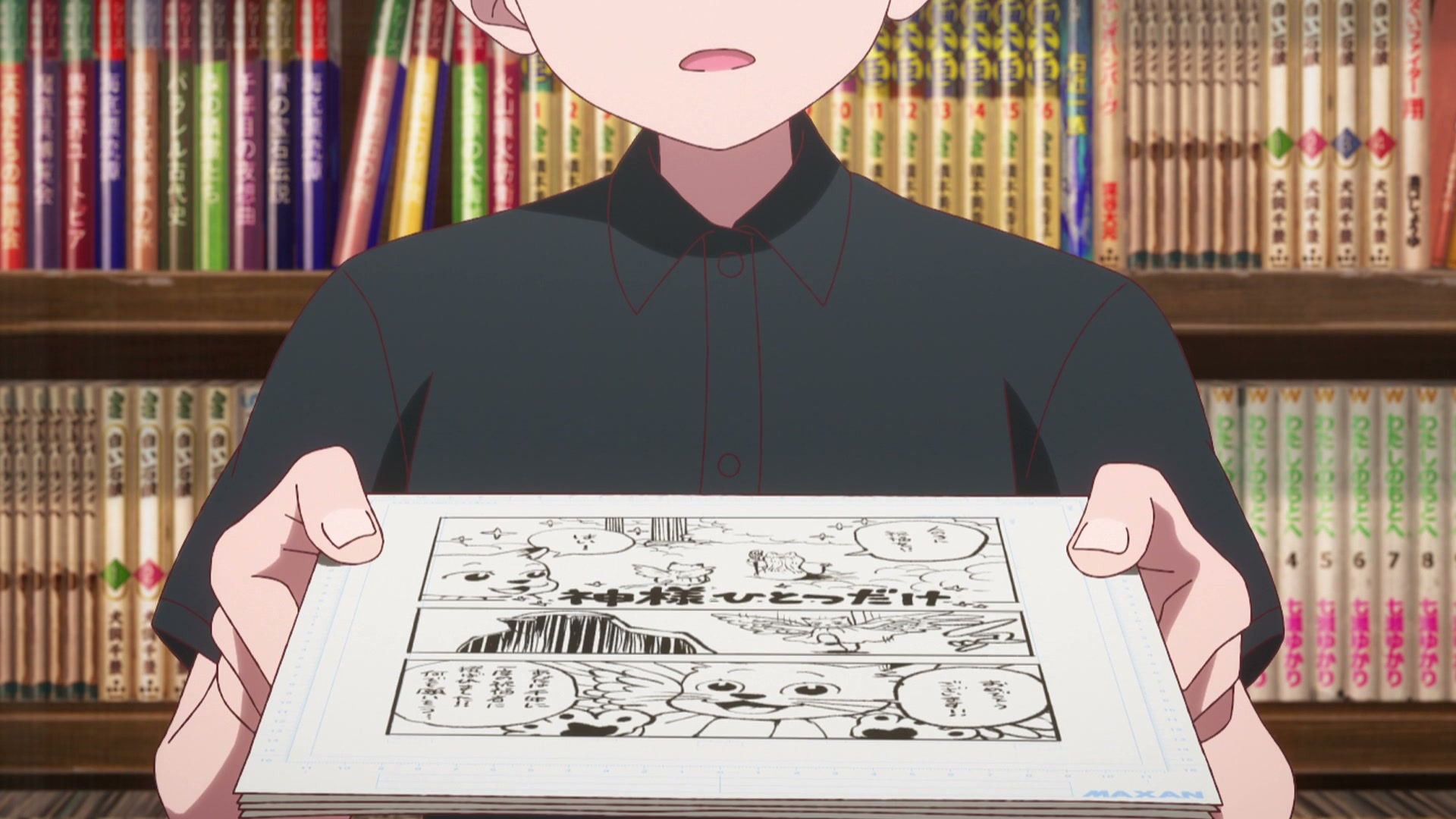
The production process becomes the episode’s backbone. Teshima-sensei walks them through panel borders, pen nibs, inking, erasing, screentone application, and white ink corrections. Each step gets just enough screen time to feel tangible without turning into a tutorial. The light box moment is particularly charming. Teshima-sensei says “Ta-da!” out loud, and Ai’s internal reaction, She said “Ta-da!” out loud, lands perfectly. This is a woman who clearly loves the craft despite every wall she’s built around herself.
The four-page manga they produce, “The Princess’s Favor,” is exactly what you’d expect from beginners. The princess rejects increasingly absurd gifts from suitors, turns invisible when she falls for someone, and the story ends with a splash page. It’s simple, a little clumsy, but complete. That last part matters. Ai finally figured out how to end a story.
The Inductive Method Saves Ai's Writing
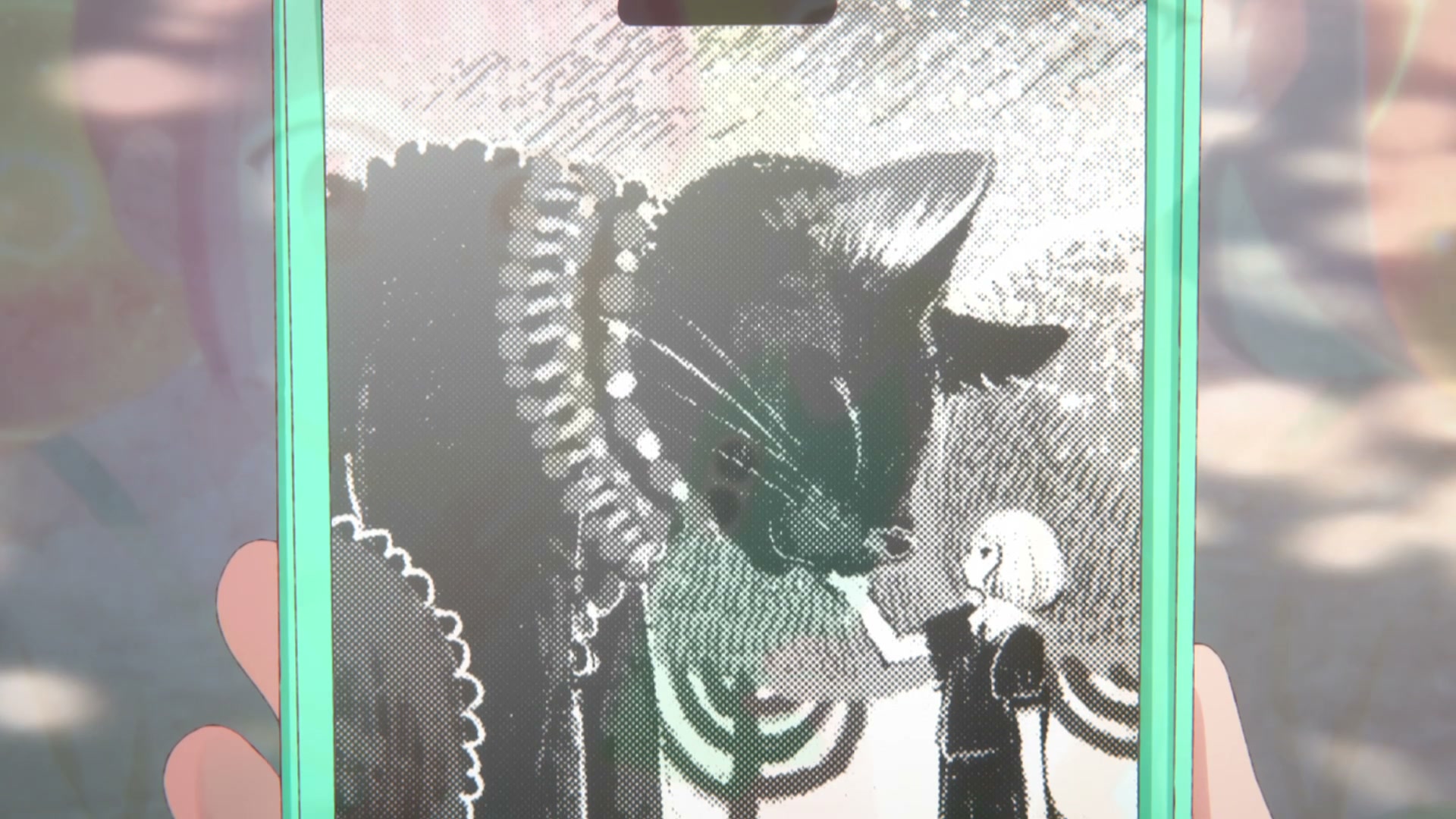
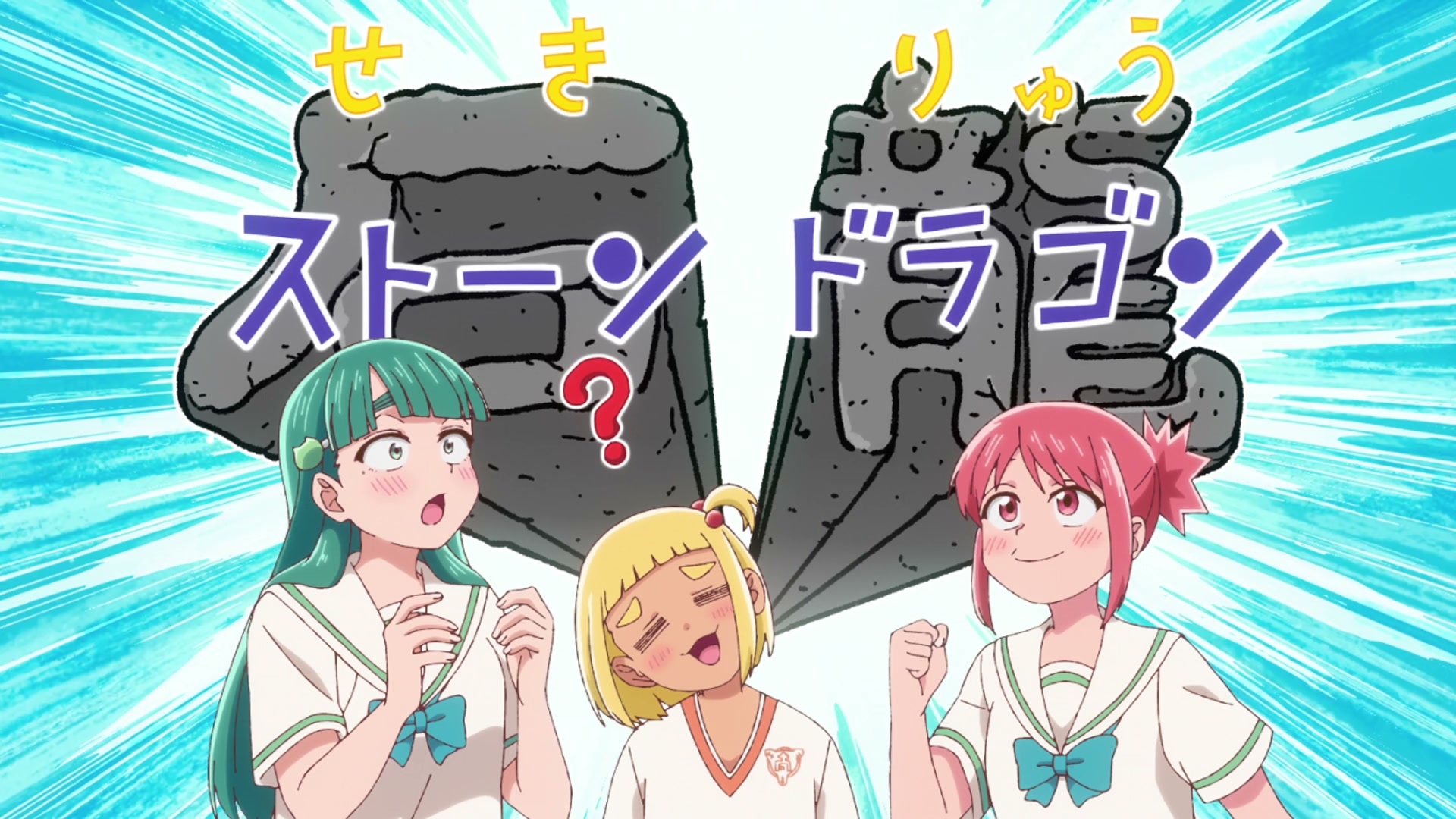
Ai’s struggle with endings has been the club’s biggest creative hurdle. Her early drafts either cut off abruptly or collapsed under their own ambition. The breakthrough comes from an unexpected direction. Kokoro shows Ai a splash page she drew in the style of Stone Dragon-san, a popular social media mangaka. Ai realizes she can work backwards from that final image.
Teshima-sensei names this approach the “inductive” method, citing Tezuka Osamu’s book on manga creation. You start with the ending and build toward it. The “deductive” method, making things up as you go, is what Ai had been doing. The episode doesn’t linger on the theory, but it’s a meaningful moment. Ai and her friends stumbled onto a real technique through trial and error, and Teshima-sensei’s quiet approval feels earned.
Her internal monologue afterward is telling. She thinks about how Ai’s unfettered imagination, Kokoro’s artistic skill, and Sachi’s objective opinions are “the bare essentials needed to create manga.” Then she catches herself. “They don’t need any more stimulation. It’s just a hobby.” The protective instinct is still there, but so is the recognition that these three might actually have something.
Hikaru Is a Different Kind of Weird
The episode’s other major development is the introduction of Sekiryu Hikaru, the Stone Dragon-san whose work Kokoro admires. She transfers to their school, and the reveal is handled with a nice bit of dramatic irony. Ai and Kokoro don’t recognize her at first, but the audience knows immediately from the name.
Hikaru is strange in a way that feels distinct from Ai’s social awkwardness. She asks Ai to show her the beach, then immediately starts narrating sound effects for an imaginary dragon in the clouds. “Flash! Rumble, rumble, kaboom! Crackle, crackle, bzzap!” Ai’s imaginary friend Pokota watches this and says, “You two are on completely different pages!” It’s a funny moment, but also a little sad. Ai has finally met someone who shares her love of obscure manga, and they still can’t quite connect.
The conversation about Robota & Pokota is the episode’s warmest scene. Hikaru loves the part where Robota tries to cry in chapter three. Ai is genuinely shocked. “I’ve never met anyone else who’s read it!” For a lonely girl who built her social skills around manga tropes, this is huge. But Hikaru declines to join the club, saying she’ll pass “even though you’re a fun person.” The rejection stings, but it’s not cruel. Hikaru just operates on her own wavelength.
Teshima-sensei's Walls Crumble a Little More
The final scene brings Hikaru to the club room, where she immediately recognizes Teshima-sensei as Hoshino Rei and declares her love for her manga. The reaction is instant chaos. Nana yells at Hikaru to get her hands off Rei-chan. Sachi eggs it on. Kokoro and Ai are stunned. Hikaru, unfazed, says, “Let’s go to Comitia together.”
This is the first time someone outside Ai and Nana has directly confronted Teshima-sensei about her secret identity. Her “Gulp!” is audible in the subtitles, and the moment lands because we know how much she’s tried to bury that part of herself. Hikaru doesn’t care about any of that. She’s a fan, and she wants to go to Comitia with her favorite mangaka.
The episode ends there, on a cliffhanger that’s more comedic than dramatic. But it sets up something interesting. Hikaru is a successful social media mangaka who loves Hoshino Rei’s work. She’s also weird, direct, and completely unbothered by social norms. She could be a rival, a mentor, a friend, or all three. The club’s dynamic is about to get more complicated.
The Small Moments That Stuck
A few details worth noting. Ai’s apology to Kokoro on the hill is handled with real care. She admits she let the compliments get to her, and Kokoro’s response, “I’m your biggest fan,” is simple but effective. The episode doesn’t milk the moment. It just lets it breathe.
Sachi continues to be the club’s conscience in the weirdest way. She calls Ai’s manga “cohesive to the point of being boring,” then “predictable,” then complains about too many twists. Her criticism is harsh but useful. Ai rewrites based on Sachi’s nitpicks, and the final product is better for it. Sachi also steals taiyaki from her family’s shop for the celebration, which feels very on brand.
The beach scene with Hikaru is visually distinct from the rest of the episode. The wide shots of the ocean and the strange rock formation give the conversation a slightly dreamlike quality. Hikaru’s cloud dragon narration adds to the sense that she sees the world differently from everyone else.
Where This Leaves the Club
Episode 4 is a quiet turning point. The club has produced its first complete manga. Ai has learned a fundamental storytelling technique. Teshima-sensei has been forced to engage with her past in a new way. And Hikaru has arrived, bringing both inspiration and disruption.
The episode doesn’t overplay any of this. It trusts the audience to understand that small steps matter. Ai’s first compliment from Teshima-sensei is a big deal precisely because it’s so rare. The club’s celebration with stolen taiyaki feels earned because we watched them work for it.
Kore Kaite Shine continues to be a series about people who love manga too much for their own good. Episode 4 shows what happens when that love gets channeled into actual creation. It’s messy, slow, and occasionally frustrating. But when the screentone goes on and the white ink corrections are done, there’s a real manga at the end. That’s worth celebrating.
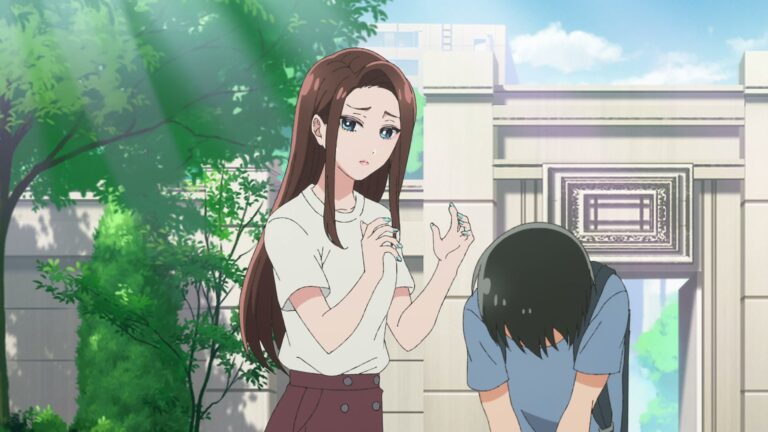
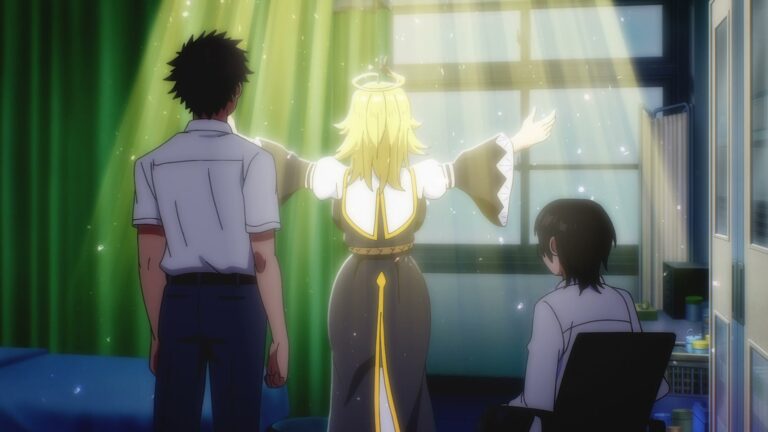
Screenshots

[…] to content Flash News Kore Kaite Shine Episode 5: When Words Fail, Draw MangaKore Kaite Shine Episode 4: The Club Finally Makes a Real MangaKingdom Hearts Gets First Original Anime Series from Disney Kids & Family and Square […]