


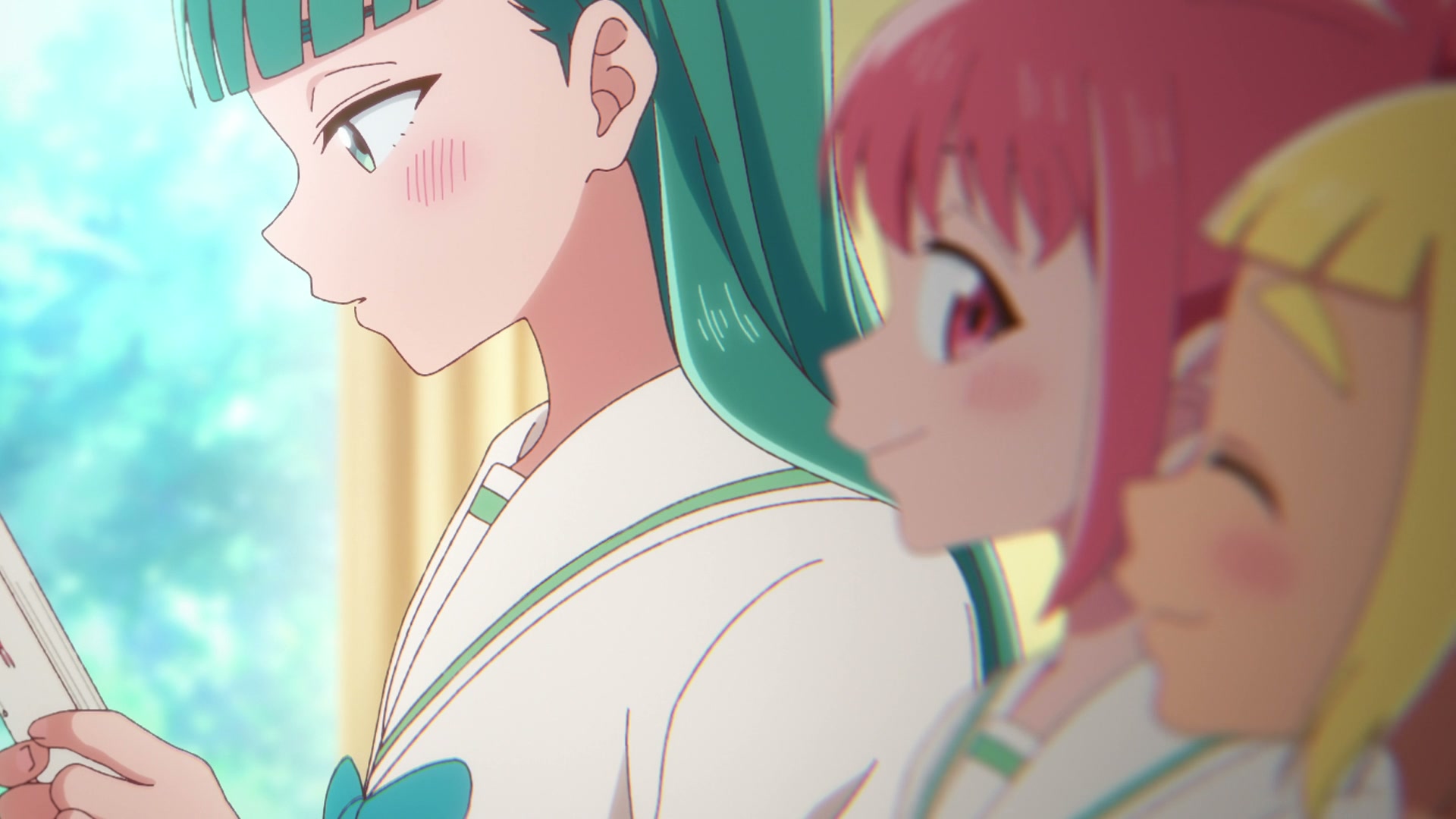
The episode opens with Ai still buzzing from Comitia, and the club immediately starts dreaming about participating. Teshima-sensei shuts it down with her usual list of practical concerns: page count, schoolwork, travel costs, parental permission. But Hikaru, in her typical direct fashion, reframes the whole thing as a solvable problem. If they make a book without sacrificing grades, get permission, and cover costs, what’s the actual obstacle? The group’s collective “Yeah!” feels earned after four episodes of watching these girls slowly find their footing.
What follows is the kind of episode that makes me appreciate this show’s patience. It doesn’t rush toward the event itself. Instead, it spends time on the unglamorous logistics: Teshima pulling an all-nighter to make a trip plan, the girls asking their parents, the anxiety of whether Kokoro can even bring it up at home. The Comitia application deadline looms, but the real tension is domestic.
Kokoro's Manga Says What She Can't
The study session at Kokoro’s house is the emotional center of the episode, and it lands hard. Kokoro’s mother is immediately suspicious, then angry when she learns Kokoro joined the manga club without telling her. The way she berates Kokoro in front of her new friends, bringing up the hairpins again, makes it clear this isn’t just about manga. It’s about control, about Kokoro not fitting the mold her mother has decided for her.
Hikaru’s intervention is the moment I’ve been waiting for since she showed up. She doesn’t yell or argue. She books the ryokan as a day-use guest, calls her own mother to handle the staff, and calmly removes the power imbalance. “Hey, lady. We’re guests here.” It’s blunt, but it works because Hikaru isn’t trying to win an argument. She’s just refusing to let Kokoro’s mother treat them like intruders in a space they have every right to occupy.
But the real breakthrough comes from Kokoro herself. She can’t speak to her mother face-to-face, so she draws a manga instead. The sequence where her mother reads it, with Kokoro’s internal monologue overlaid, is quietly devastating. “When you get mad at me, I get too scared to say anything. It feels like I’m at the bottom of the ocean.” The hairpins her mother hates were a gift from her father. The friends her mother yelled at are the first friends Kokoro has ever made. The manga becomes a bridge that words couldn’t build.
Her mother’s response is understated but meaningful. She doesn’t apologize or break down. She just says Kokoro’s friends can come over anytime, and she should study hard and draw more manga. It’s not a dramatic reconciliation, but it’s real. Sometimes parents need to see things from a different angle before they can adjust.
Hikaru's Rough Edges Start to Show
Hikaru has been fascinating since her introduction, but this episode adds a layer I didn’t expect. After the confrontation, she admits she’s not trying to be cool. She says she has no problem speaking her mind, but she’s bad at gauging relationships. “One day, I’ll end up hurting you, too. Manga are my only friends.”
That line reframes everything about her character. She’s not just eccentric or socially oblivious. She’s aware of her limitations and has accepted them as the cost of being herself. The moment where she says she could’ve said things better through manga is both sad and completely in character. She’s someone who found a way to communicate that works for her, and she’s not willing to compromise it for social niceties.
The reveal that she’s repeating a grade hits differently after that. She spent all her time drawing manga and got held back. It’s not played for drama or judgment. It’s just a fact of her life, another consequence of the choices she’s made. Teshima’s concern about her quiz scores feels less like nagging and more like genuine worry from someone who understands what it means to lose yourself in manga.
The Club Finds Its Rhythm
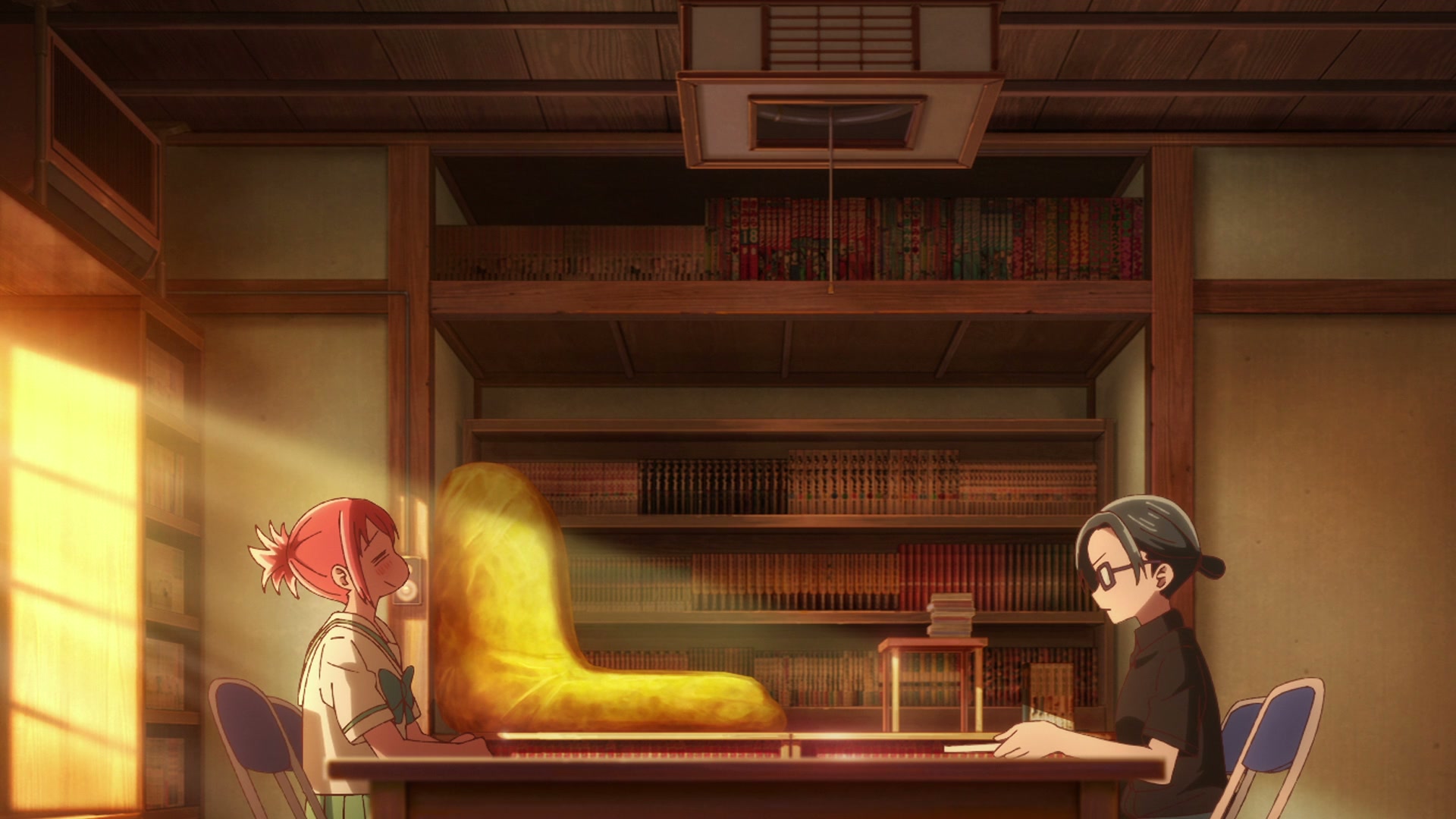
The second half of the episode shifts to the practical work of preparing for Comitia. The circle name “South Oshima High Manga Club” is straightforward, but the pen name discussion is where the group dynamic shines. Ai and Kokoro combine their names to create “Sou,” the first kanji in “imagination.” Sachi immediately tries to insert herself into the name, and Kokoro’s gentle correction that they’re all a team anyway feels like the club finally clicking into place.
Teshima’s story about printing a thousand copies and selling one is the kind of detail that makes her feel like a real person with real experience. She’s not just a strict teacher imposing arbitrary limits. She’s someone who’s been burned and doesn’t want her students to make the same mistakes. The decision to print twenty copies feels reasonable, not defeatist.
The scene where Ai asks Teshima about drawing storyboards in family restaurants is a small moment that carries weight. Teshima’s description of those late nights, staring out the window, hitting on an idea and entering a frenzy, drawing until morning, is the most openly nostalgic she’s been about her manga days. “You couldn’t exactly call it happiness, but those moments were precious.” It’s the closest she’s come to admitting that part of her life meant something.
The Trip to Chiba Is the Right Kind of Silly
The final stretch of the episode is pure travel comedy, and it works because the show has earned it. Sachi’s escalating amazement at Tokyo, the Rainbow Bridge, the hotel bed, the all-you-can-eat breakfast, is infectious. Her declaration that she’s never going back to Oshima is the kind of thing a teenager would actually say.
Then Teshima drops the punchline: they’re not in Tokyo. They’re in Maihama, which is in Chiba. Sachi’s “Chiba’s amazing!” is the perfect button on the joke. It’s not mean-spirited. It’s just the reality of booking a hotel near Tokyo Big Sight on short notice.
The late-night scene where Ai can’t sleep and ends up drawing her own manga, with Pokota cheering her on, is a nice callback to her earlier conversation with Teshima. She wanted to know what it felt like to draw in a family restaurant, and now she’s experiencing her own version of that creative restlessness. The fact that she stayed up all night and wants to add her own book to the table is exactly the kind of impulsive decision Ai would make.
Teshima’s reluctant approval, calling it a “hobbyist work,” is her way of allowing Ai to have this moment without endorsing the path that hurt her. It’s protective, but it’s also a little sad. She can’t fully celebrate what Ai is doing because she knows where it can lead.
Where This Leaves the Club
By the end of the episode, the club has cleared every hurdle: parental permission, application accepted, book planned, travel arranged. The next episode will presumably be the event itself, and I’m genuinely curious how it will go. Will they sell all twenty copies? Will they sell none? Will Hikaru’s thousand-copy print run dwarf their modest effort?
More importantly, the episode deepened the relationships in ways that feel earned. Kokoro found a way to communicate with her mother. Hikaru showed vulnerability beneath her blunt exterior. Teshima revealed a little more of her past without turning it into a lecture. And Ai, the girl who couldn’t finish a manga, is now staying up all night to draw one on her own.
The show continues to treat manga as both a creative outlet and a way of connecting with others. Kokoro’s manga letter to her mother is the clearest example yet, but it’s there in Hikaru’s admission that manga are her friends, and in Ai’s late-night drawing session. These girls aren’t just making comics. They’re figuring out how to be themselves.
Screenshots
[…] to content Flash News Kore Kaite Shine Episode 6: The Quiet Cruelty of ComitiaKore Kaite Shine Episode 5: When Words Fail, Draw MangaKore Kaite Shine Episode 4: The Club Finally Makes a Real MangaKingdom Hearts Gets First Original […]