






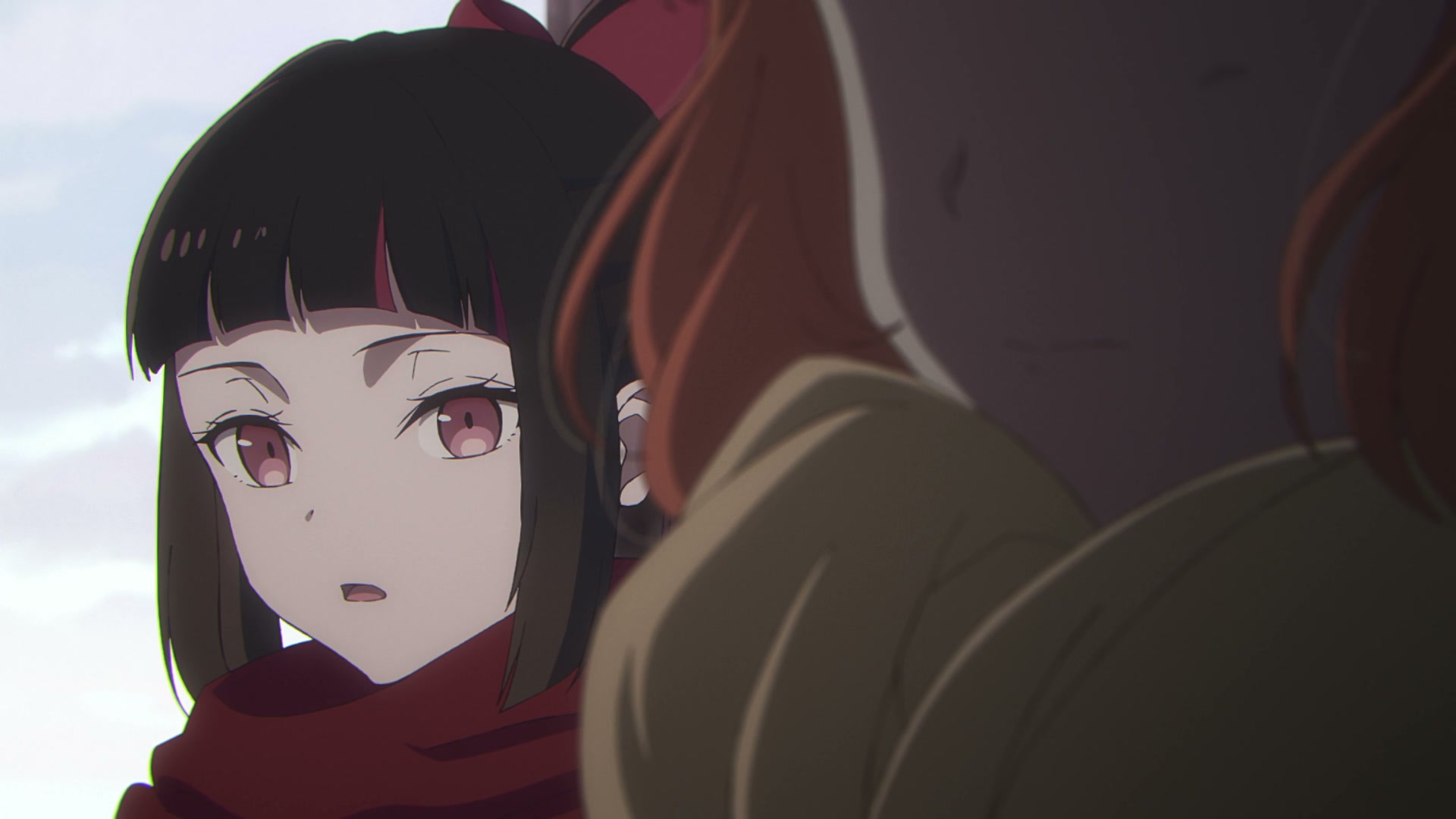
The Memory That Wouldn’t Stay Buried
This episode opens on a quiet note that immediately reorients everything. Hinagiku, standing in the hills near the Village of Spring, tells Sakura she can feel a leyline. The phrasing is characteristically hers, indirect and sensory. But what follows is brutal in its directness: “That girl… remembers.”
Not “I remember.” That girl remembers. Hinagiku distances herself from her own younger self even as the memories flood back, and the episode commits fully to showing us why.
The flashback structure here is the most extended and devastating the series has attempted. We see Kobai Yukiyanagi, Hinagiku’s mother and the previous Agent of Spring, already visibly ill. We see a five-year-old Hinagiku meeting her father, Kayou Shungetsu, for what seems like the first time, reciting a formal greeting she was told to practice. “My name is Yukiyanagi Hinagiku. I’ve come from Akebono. I am Kobai Yukiyanagi’s daughter. I will turn five this year.”
The formality of a child introducing herself to her own father lands like a punch. Shungetsu’s response is to criticize Kobai for not coming sooner and alone, and little Hinagiku’s immediate instinct is to defend her mother. “Don’t pick on my mother!” The entire family dynamic unfurls in seconds. A man who sees his daughter as a complication. A mother trying to hand off her child before she dies. A child who doesn’t understand any of it yet.
The Scandal the Village Won’t Forget
While Itechou fills Rousei in on the political backstory, the flashback provides the emotional reality. The affair between Kobai and Shungetsu became village-wide scandal. Shungetsu had married into the powerful Shirafuji family. When his wife discovered the affair, she attacked Kobai and the newborn Hinagiku with a knife. After that, Kobai and Hinagiku lived outside the village, Kobai often absent, Hinagiku raised by a grandmother who eventually died.
The subtitle dialogue earlier showed village attendees calling Hinagiku’s succession “an unprecedented ill omen” and “a bad omen.” Now we understand why. She wasn’t just the product of an affair. She was the daughter of a woman who had been publicly shamed and driven out, then became Agent anyway, as if the position itself refused to respect village politics.
Shungetsu’s words to young Hinagiku after Kobai dies are “You… practically murdered her.” The accusation that becoming the Agent of Spring somehow caused her mother’s death hangs over her entire childhood, and the episode shows us Shungetsu reinforcing this belief directly.
“Keep a Blade in Your Heart”
Kobai’s final instructions to Hinagiku are the emotional core of the episode and possibly the series so far. “Endure, and wait for your chance to strike.” “Run away, if it helps you survive.” “Keep a blade in your heart. Because someday, your time to bloom again will come.”
This isn’t the gentle maternal wisdom you’d expect. It’s survival advice from someone who knows her daughter will be hated, isolated, and blamed. When Hinagiku protests that she doesn’t want to fight, Kobai’s answer is heartbreaking: “Of course not. But sometimes you have to.” She wishes she could protect Hinagiku from everything, but “you have your own life to live. You’re the only one who can live it.”
The scene of Kobai leaving turns into a desperate game of hide-and-seek. “Don’t come looking for me until I call you. Someday, when you’re so sleepy you can’t keep your eyes open anymore, I’ll come tell you that it’s time.” Hinagiku’s cries of “Don’t leave me alone” echo across the years, and when we cut back to present-day Hinagiku at the leyline, the weight of that memory sits in every pause of her speech.
When a Golden Peach Rumor Built a Lifelong Bond
The episode doesn’t stay in the darkness. The second half gives us the origin of Hinagiku and Sakura’s relationship, and it starts, improbably, with a rumor about golden peaches.
Young Sakura, an orphan living in a children’s home after being abandoned by her parents, sneaks into the old mansion where Hinagiku is being kept and trained. She’s there because some kids at the home claimed there were golden peaches in the garden, and Sakura figures they’d sell for a lot. What she finds instead is a lonely girl her own age, eating hard peaches alone on a veranda.
Their first conversation is remarkably egalitarian for what their relationship will become. Sakura doesn’t know who Hinagiku is. She just sees another kid who’s alone. “My mom and dad left me, and now I’m in the home.” “People call them a blot on the Himedaka name and a disgrace to the Village, so all the other kids’ parents tell them not to be friends with me.” Hinagiku responds in kind: “My mother died. My father says it’s my fault. He says, since I became the Agent, I’m cursed.”
Two children, both carrying shame they didn’t earn, finding each other through sheer accident. Sakura promises to come back, and when she does, Hinagiku’s relief is overwhelming. “Thank goodness! I thought you’d never come back!”
The Hunger Strike
When the mansion caretakers catch Sakura and throw her out, calling her parents “a disgrace to the Village,” Hinagiku does something remarkable for a child who has been taught only to endure. She refuses to eat. “I won’t do my duty if you keep Himedaka Sakura away from me.” She holds out until they bring Sakura back, and the moment Sakura returns, Hinagiku pulls out the secret stash of hard peaches she’d been surviving on.
The village leadership’s response is coldly pragmatic. They notice that Hinagiku’s divine powers have grown since Sakura’s return. “It seems she cannot bear the thought of being separated again.” The line “Agents manifest with their hearts” takes on a darker meaning here. Hinagiku’s power grew not because she was training harder but because she was desperately clinging to the one person who made her existence bearable.
Sakura’s official appointment as Guard of Spring is presented as almost transactional. A useful arrangement that keeps the Agent functioning. But the episode gives us what matters: young Sakura promising “I’d always be with you, at your side all day long. I’d never leave you, even for a moment.” And the small, devastating addendum: “Or so I thought.”
Rousei’s Concern
The framing scenes with Rousei and Itechou do important work. Rousei, having overheard fragments of the truth about Hinagiku’s birth, pushes Itechou for the full story. He’s not just curious. He’s trying to understand why the Village of Spring treats their own Agent this way, why they’d refuse extra security after an insurgent attack, why they’d claim the attack “targeted the Summer Palace, not the Agent and Guard of Spring.”
Itechou’s account fills in what the flashback shows. The Shirafuji family’s influence. Shungetsu’s political marriage. The affair, the scandal, the knife attack. Kobai and Hinagiku living in exile. Kobai’s illness and death. And then the village’s cold reception of a child Agent who reminded everyone of a scandal they’d rather forget.
Rousei’s instinct is protective. He wants to know more because he needs to keep her safe. The episode doesn’t dwell on this, but it’s there in his questions and his frustration with Spring division politics.
Where This Leaves Us
This is an origin story episode, and it works because it doesn’t try to explain everything. It shows us the wound. Hinagiku was a child who lost her mother, was blamed for that loss by her father, was called an ill omen by the village she was supposed to serve, and found exactly one person willing to be her friend. That person became her guard, her sword, her entire support system.
When present-day Hinagiku says “That girl… remembers,” she’s talking about memories that still hurt. The episode ends with young Sakura’s voice repeating the promise that has defined both their lives: “I’d always be with you, at your side all day long. I’d never leave you, even for a moment.”
We know what happened ten years ago broke that promise. We don’t know how yet. But now we understand exactly what breaking it cost.
One small moment worth noting: during the hunger strike, when the servants finally bring Sakura back, Hinagiku’s first words are “Sakura, come here.” Not “Himedaka Sakura.” Not a formal summons. Just the name of the only person she has ever trusted, called out with the urgency of a child who can’t bear being alone anymore. The episode earns that moment completely.
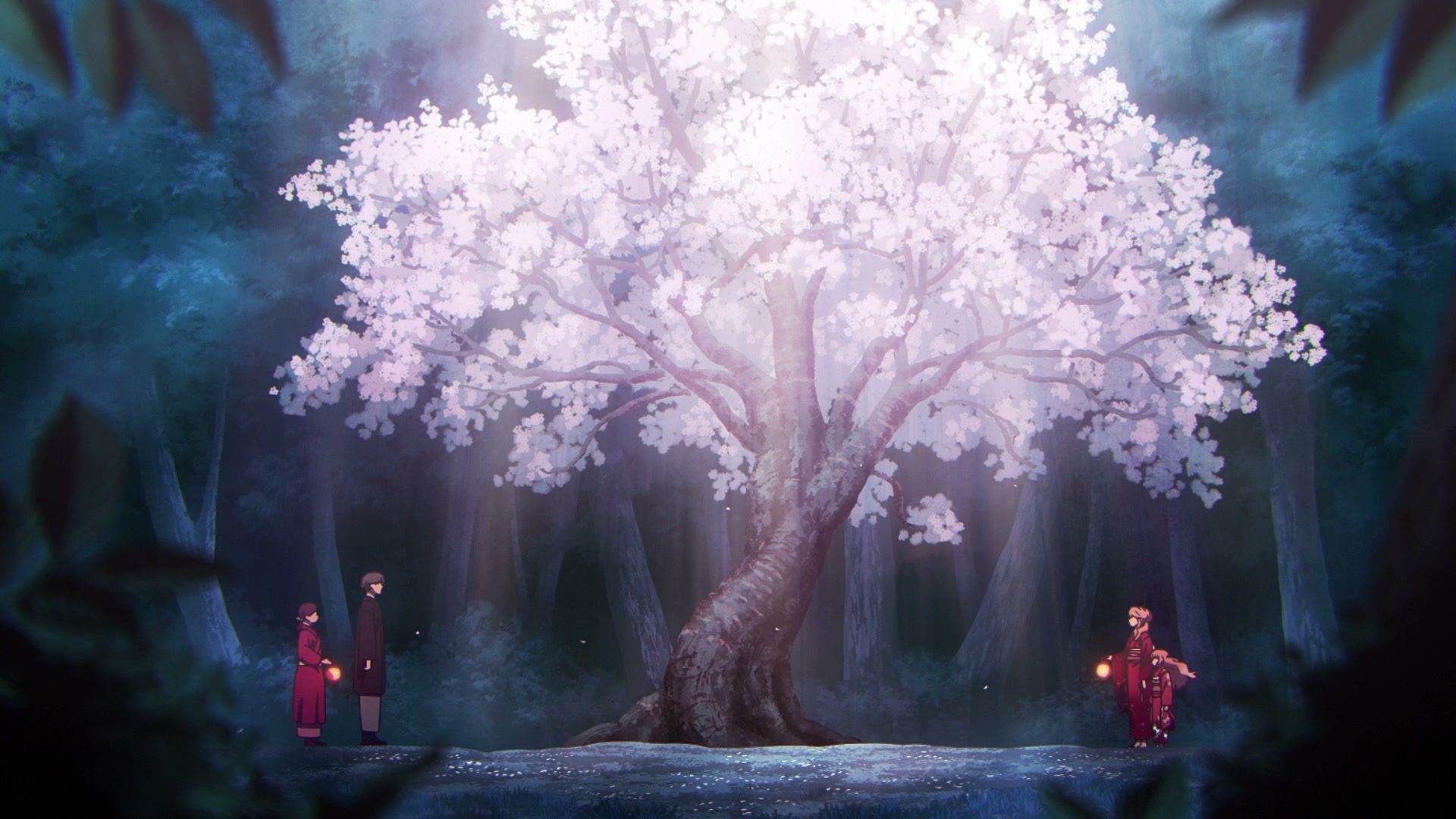
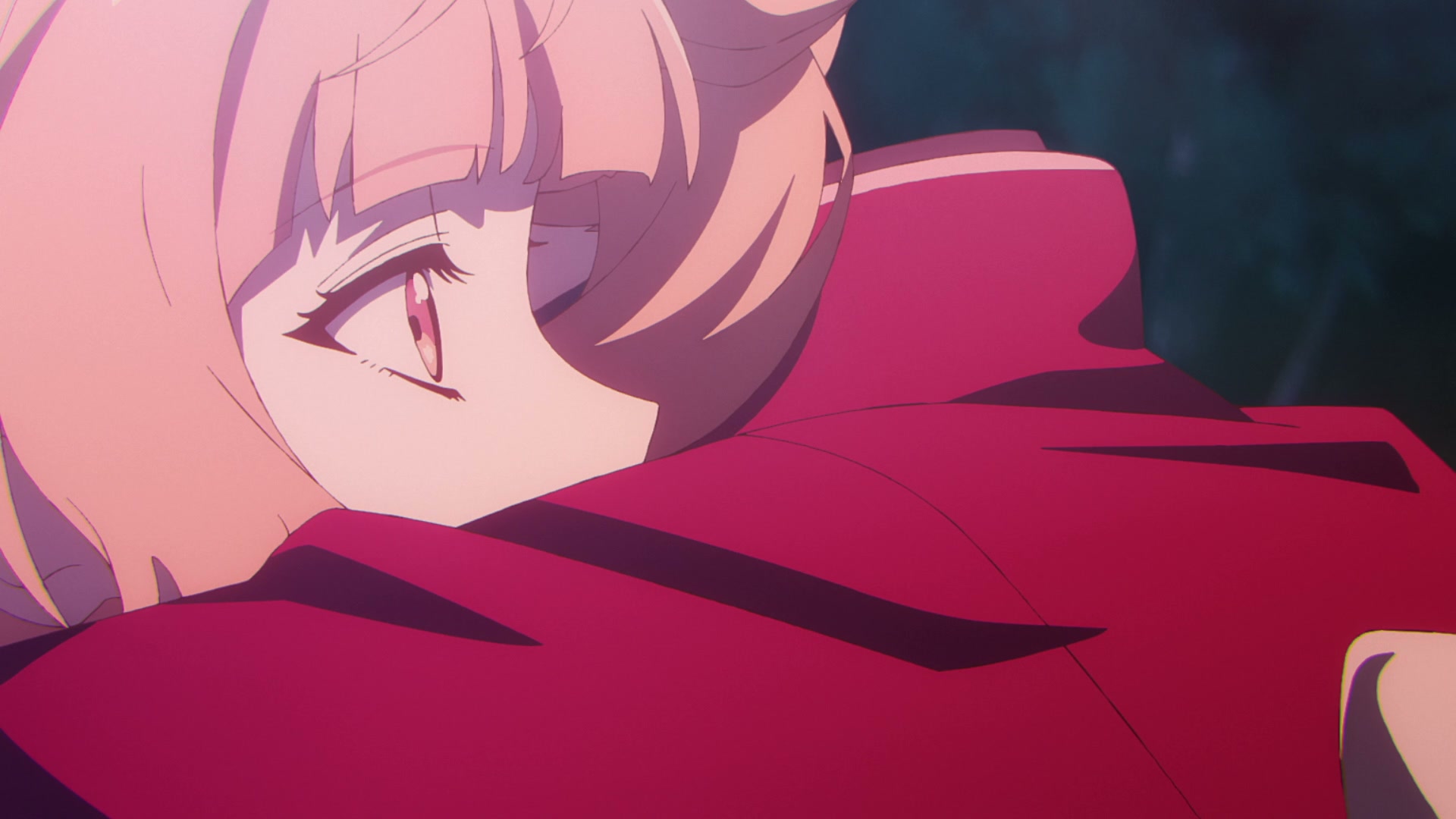
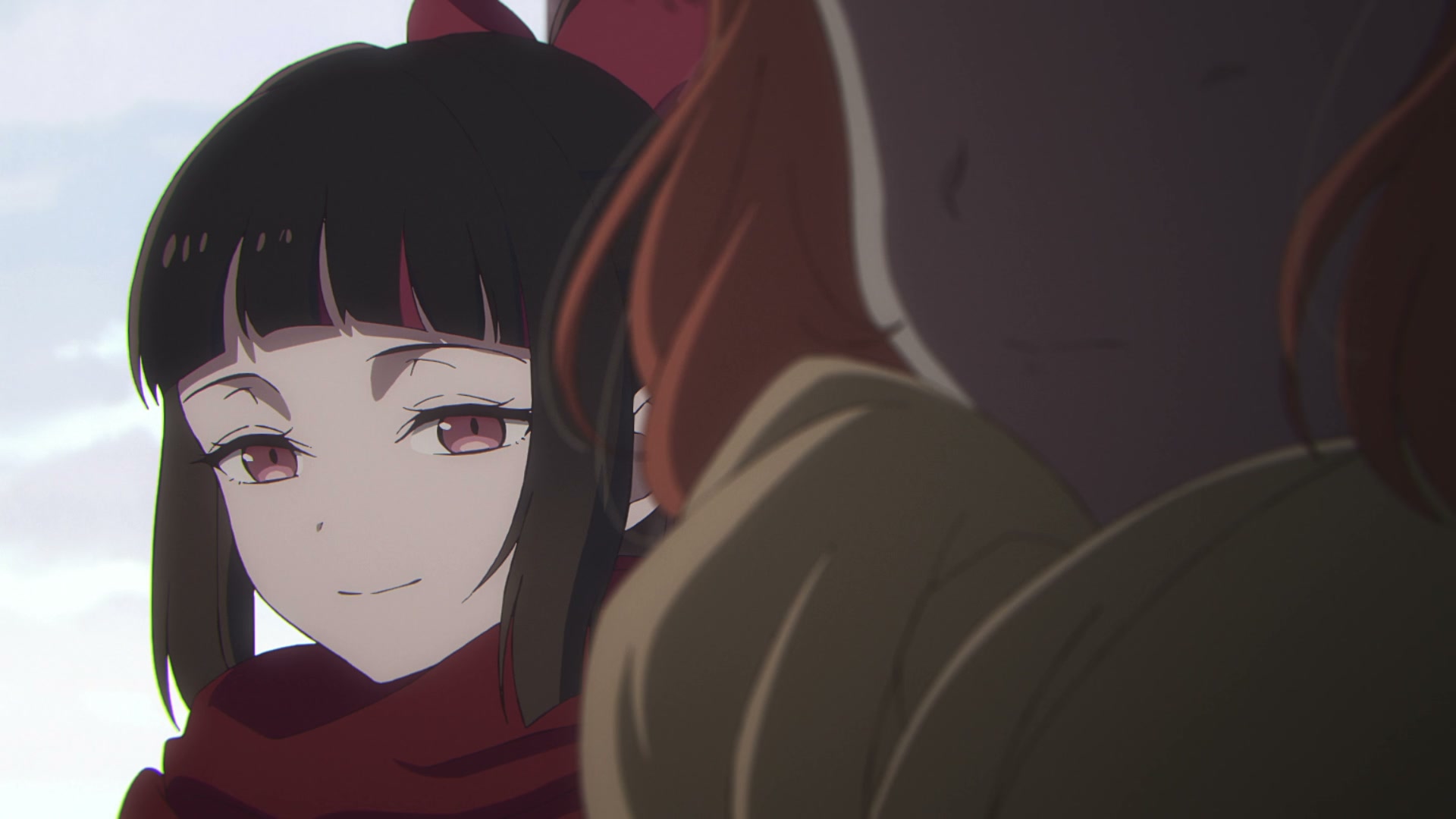
Screenshots
← Episode 4 | All Shunkashuutou Daikousha – Haru no Mai Season 1 posts →

[…] ← Episode 5 | All Shunkashuutou Daikousha – Haru no Mai Season 1 posts → […]