


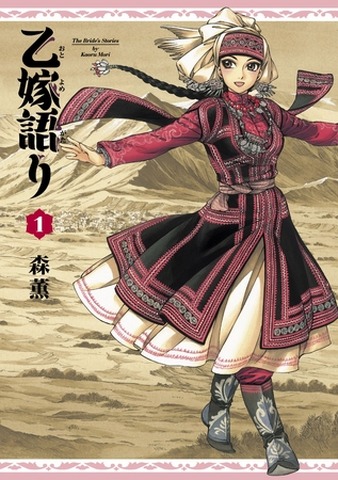
The anime and manga editorial team at Anime! Anime! has been spotlighting manga that deserve anime adaptations. This time, we turn to a masterpiece that has remained unadapted for nearly 18 years since its serialization began: Mori Kaoru’s Otoyomegatari.
Set in the late 19th century around the Caspian Sea in Central Asia, this ensemble drama portrays the marriages, families, work, meals, and clothing of people living in nomadic and settled cultures. The series began in 2008, with the 15th volume released in November 2024 and a wide edition in February 2025. It placed second in the Manga Taisho awards in 2011 and won the grand prize in 2014. Internationally, it received the Generation Award at the Angoulême International Comics Festival in 2012.
Note: This article contains spoilers.
A Story That Begins with Marriage
The story opens with Amir, a beautiful 20-year-old woman, marrying Karluk, a 12-year-old boy. The age gap, the clash between nomadic and settled lifestyles, and the expectations of their families set the stage for drama. But Otoyomegatari is far more than a tale about marriage—it’s about what it means to live with someone.
Sharing meals, making clothes, tending the home, working, raising children, worrying about others, and moving hands for their sake. Even without grand battles or dramatic incidents, daily life is full of stories. Mori depicts these routines with astonishing care.
Though the setting is far from modern Japan, readers soon feel intimately connected to the characters’ lives—wondering what they’ll eat today or how a garment is made. The narrative doesn’t fixate solely on Amir; it expands to other women like Talas, the twins Laila and Leili, and Pariya, each navigating marriage and life in their own way.
The Art That Sets the Bar
One reason Otoyomegatari may not have been animated yet is Mori’s overwhelming artwork. The embroidery on traditional clothing, hair ornaments, textiles, buildings, tableware, horse tack, and sweeping landscapes are drawn with such precision that they transcend mere background or decoration.
The costumes, in particular, are iconic. The layering of fabric, fine stitching, and texture of ornaments convey the culture, family history, and the time spent by the makers. Reproducing that in animation would require an enormous amount of drawing and meticulous research.
But it’s precisely because the art is so detailed that we want to see it in motion. Imagine fabric fluttering in the wind, horses galloping across the plains, flames flickering, steam rising from meals, and fingers moving needle and thread. The challenge of translating Mori’s lines into animation is one we’d love to witness.
Imagining the Sounds and Motion
When Otoyomegatari becomes an anime, it’s not just the dramatic moments we anticipate—it’s the quiet everyday scenes. The sound of weaving, cooking, horse hooves, wind crossing the grassland, and family voices around the table. Adding audio would make the world three-dimensional, especially with music evoking Central Asian culture. Or perhaps the anime could let the crackle of fire and the wind carry a family’s quiet moments.
We want to see Amir riding across the land, Karluk’s peaceful time with his family, Pariya’s ever-changing expressions, and Laila and Leili running around energetically. Above all, we want to see those beautiful garments sway in the breeze.
This isn’t just about adapting a beloved manga—it’s about experiencing the world within it through motion and sound. The thought of getting closer to the world these women live in is enough to keep our expectations high.
Anime! Anime!