





Introduction
There is a particular kind of anime that doesn’t announce itself with explosions or dramatic declarations. It settles in quietly, builds its world through small moments, and before you realize it, you’ve become genuinely invested in whether a teenage girl can hit a golf ball one hundred yards. Sorairo Utility is exactly that kind of series. It takes the sports anime framework and strips away the tournament brackets, the heated rivalries, and the promise of national glory. What remains is something more honest and, in its own way, more compelling: a story about discovering that something can matter to you.
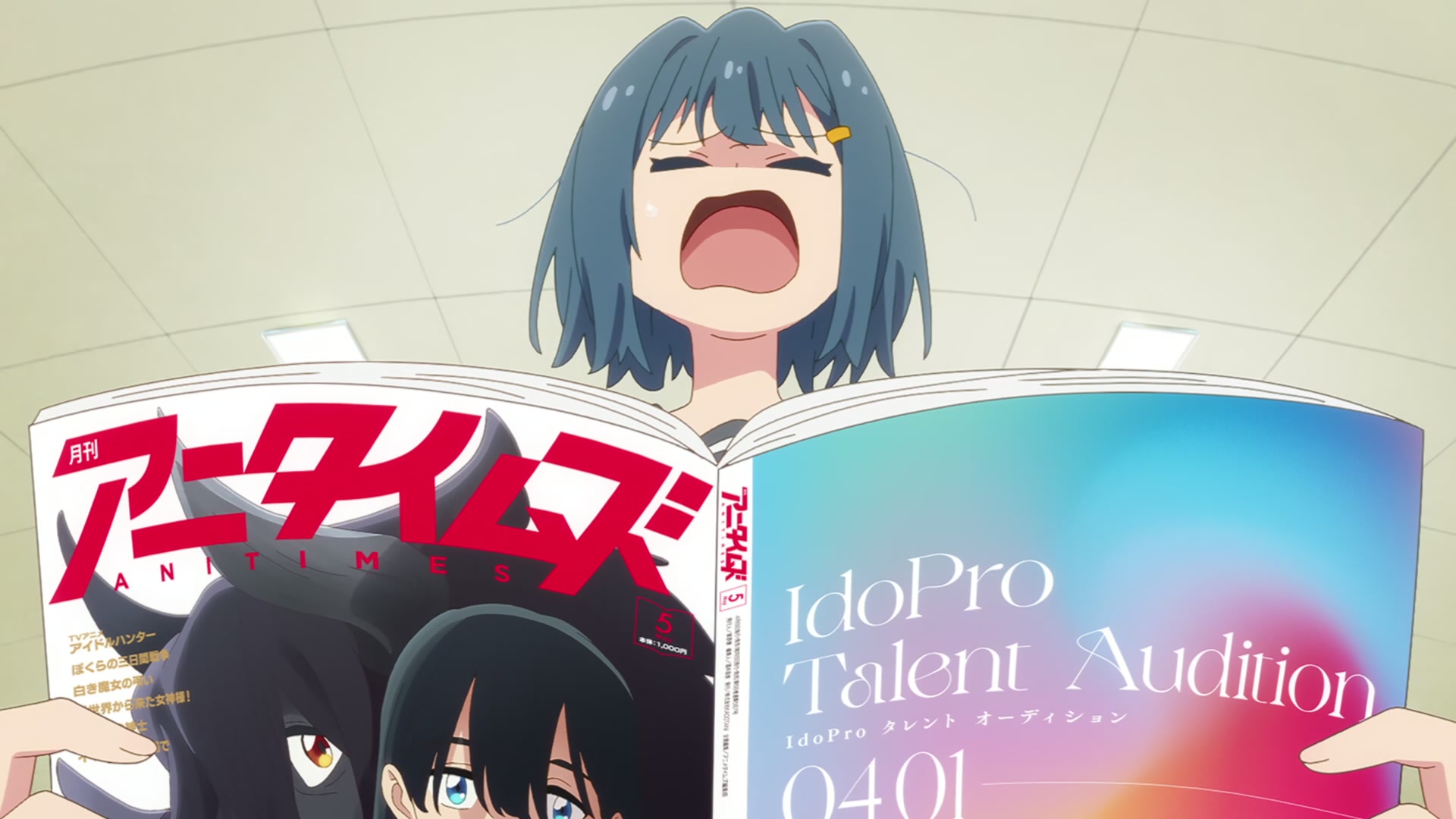
The premise is deceptively simple. Aoba Minami, a first-year high school student, learns that the mobile game she has poured her time and allowance into is shutting down. Faced with the sudden absence of her primary hobby, she embarks on a search for what she calls her “exceptional special something.” This search leads her, through a chance encounter with an elderly man who has fallen, to a golf driving range. There she meets Akane Haruka, a third-year high school student with a complicated history in competitive golf, and Hoshimi Ayaka, a college student and social media influencer. What follows is twelve episodes of Minami learning to play golf, but more importantly, learning what it means to genuinely love something.
This series is for viewers who appreciate character-driven storytelling over plot mechanics. It’s for people who understand that the most meaningful moments in life are often quiet ones: a shared meal after a long day, the satisfaction of a well-hit ball, the comfort of finding people who accept you as you are. If you need high-stakes drama or spectacular action to stay engaged, Sorairo Utility might test your patience. But if you’re willing to meet it on its own terms, you’ll find a warm, emotionally intelligent series that respects both its characters and its audience.
Story and Themes
The Search for Something Special
The narrative engine of Sorairo Utility is Minami’s quest to find her “exceptional special something.” This concept, introduced in the first episode, captures a universal anxiety: the fear of drifting through life without ever finding something that makes you feel alive. Minami articulates this fear in gaming terms, worrying that she’ll graduate as a “nameless Villager A” whose only role is to say “this is the village” when the hero passes through. It’s a silly metaphor, but the feeling behind it is real.
What makes the series distinctive is how it treats this search. Minami doesn’t discover hidden genius. She’s genuinely average at golf. Her scores are unimpressive, her technique is unconventional, and her progress is slow. The series never pretends otherwise. When she scores 100 on her first round, she initially celebrates it as a perfect score before learning that lower numbers are better. It’s a joke, but it’s also a statement of intent: this series isn’t about becoming the best. It’s about finding something worth doing regardless of how good you are at it.
The “special something” Minami eventually finds isn’t golf itself, or at least not golf alone. It’s the community that golf brings into her life. The elderly regulars at the driving range who treat her like a granddaughter. Haruka, who teaches her without expectation. Ayaka, who understands her insecurities because she shares them. The series argues that meaning doesn’t exist in isolation. It emerges from connection.
The Many Faces of Golf
One of the series’ most effective choices is its refusal to present any single approach to golf as correct. Each character represents a different relationship with the sport, and the narrative treats all of them with respect.
Haruka plays for joy, having stepped away from competitive golf after experiencing burnout at the U.S. Women’s Amateur Championship. Ayaka plays for social connection and creative expression, using golf as content for her Minstagram and MyuTube channels. The elderly golfers play for companionship and the simple pleasure of being outside. Hina Yoarashi, the genius middle school golfer introduced late in the series, plays to win. Megumi, the caddie, plays to support others.
This democratic approach to the sport is the series’ philosophical core. Golf, the series suggests, is like life: there’s no single correct way to engage with it. What matters is that you find your own approach and pursue it sincerely.
Gaming as a Framework for Understanding
Minami’s gaming terminology isn’t just comic relief, though it often functions that way. It’s her genuine framework for understanding the world. She approaches golf like an RPG, thinking in terms of “leveling up,” “unlocking skills,” and “boss battles.” The series treats this framework with respect rather than mockery.
This is significant because it validates the ways different people process experiences. Minami isn’t wrong to think of golf in gaming terms. The framework helps her conceptualize the sport’s complexity and gives her a sense of progress when improvement feels slow. The series suggests that the frameworks we use to understand the world are valid if they help us engage with it meaningfully.
The transition from mobile gaming to golf also represents a shift from passive consumption to active participation. In games, progress is guaranteed through grinding. In golf, progress is uncertain and requires genuine engagement with failure. The series doesn’t condemn gaming, but it does suggest that the needs games fulfill (achievement, community, purpose) can be met more satisfyingly through real-world pursuits.
Failure and Growth
The series is remarkably honest about failure. Minami’s golf journey is filled with whiffs, bad shots, and disappointing scores. Her first full round is a struggle from start to finish, with balls lost in water hazards and shots that go nowhere near where she intended. The series doesn’t sugarcoat this difficulty.
Haruka’s backstory provides the series’ most profound meditation on failure. Despite her talent, she experienced a crisis of confidence at the U.S. Women’s Amateur that led her to abandon competitive golf entirely. Her description of that moment, the fear that “everything I had worked so hard for would be wasted,” captures the paralysis that can come from caring too much about outcomes.
Her recovery, facilitated by teaching Minami and playing with friends, suggests that healing requires reconnecting with the fundamental joy of the activity rather than focusing on results. It’s a lesson that applies far beyond golf.
Cultural Context
The series is deeply rooted in Japanese culture, though it wears this lightly. The senpai-kohai dynamic between Haruka and Minami reflects traditional mentorship values. The elderly golfers embody the Japanese respect for age and experience. The pressure Minami feels to find her path before high school ends reflects the real anxieties of Japanese youth.
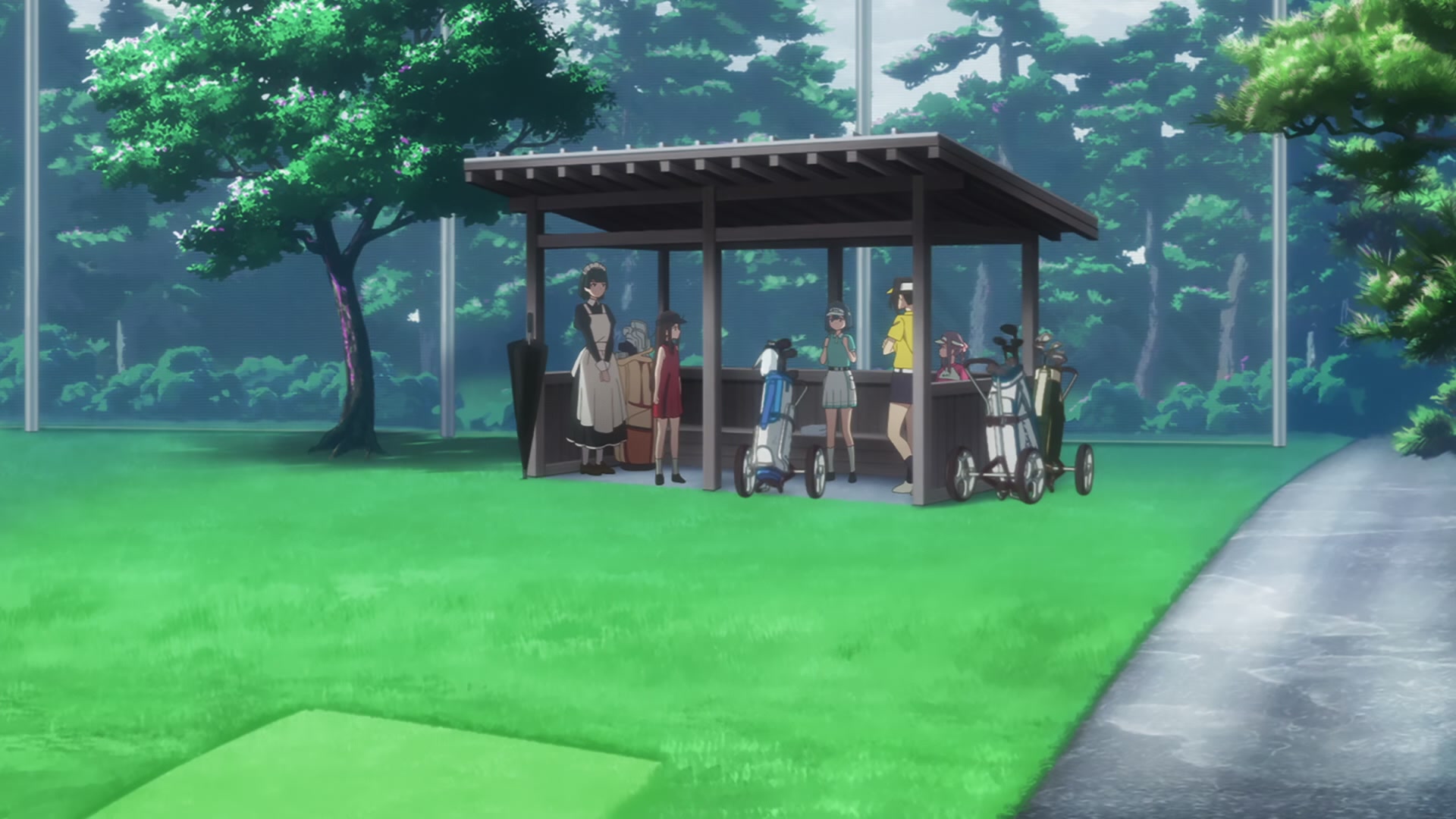
The driving range itself is a distinctly Japanese institution. In a country where land is expensive and full golf courses are often inaccessible to casual players, the urban driving range serves as a community space where people can practice and socialize. The Nishitokyo Golf Center becomes a “third place” for Minami, neither home nor school but a space where she can be herself.
Ayaka’s influencer career reflects contemporary Japanese social media culture. The series treats this career with surprising nuance, acknowledging both its appeal and its pressures. Ayaka’s struggle to find authenticity in a world of curated content is a distinctly modern concern, and her eventual turn toward meaningful projects like the “Keep A Green” polo shirt campaign represents a positive use of influencer culture.
Adaptation Considerations
Sorairo Utility is an original anime series, not an adaptation of existing source material. This means there are no concerns about skipped or badly adapted content. The series tells a complete story within its twelve episodes, with satisfying character arcs and thematic development. The pacing is deliberate, especially in the early episodes, but this slowness feels intentional rather than padded. Each episode contributes something to the characters’ development, even when the plot doesn’t advance dramatically.
Characters
Aoba Minami
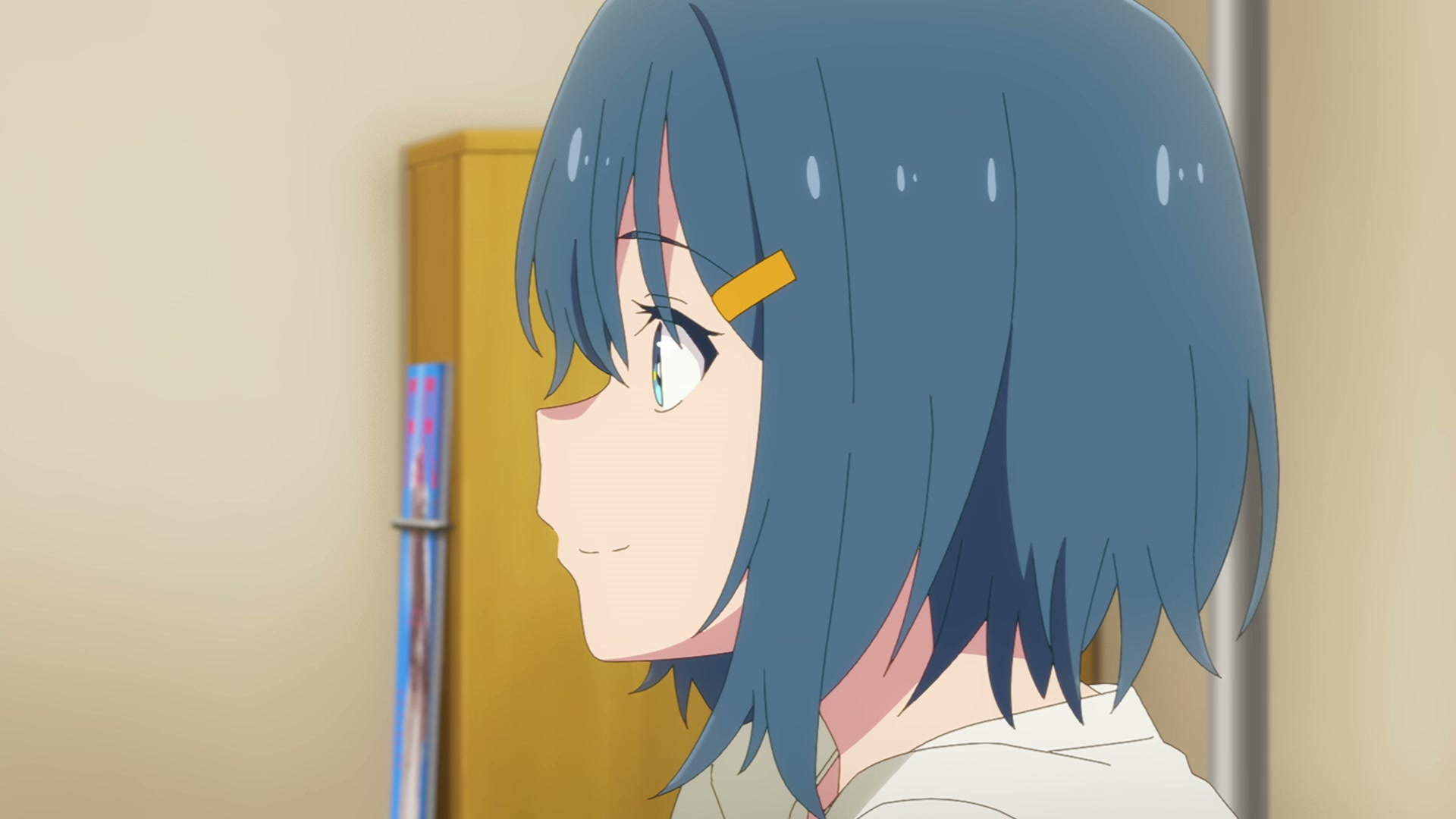
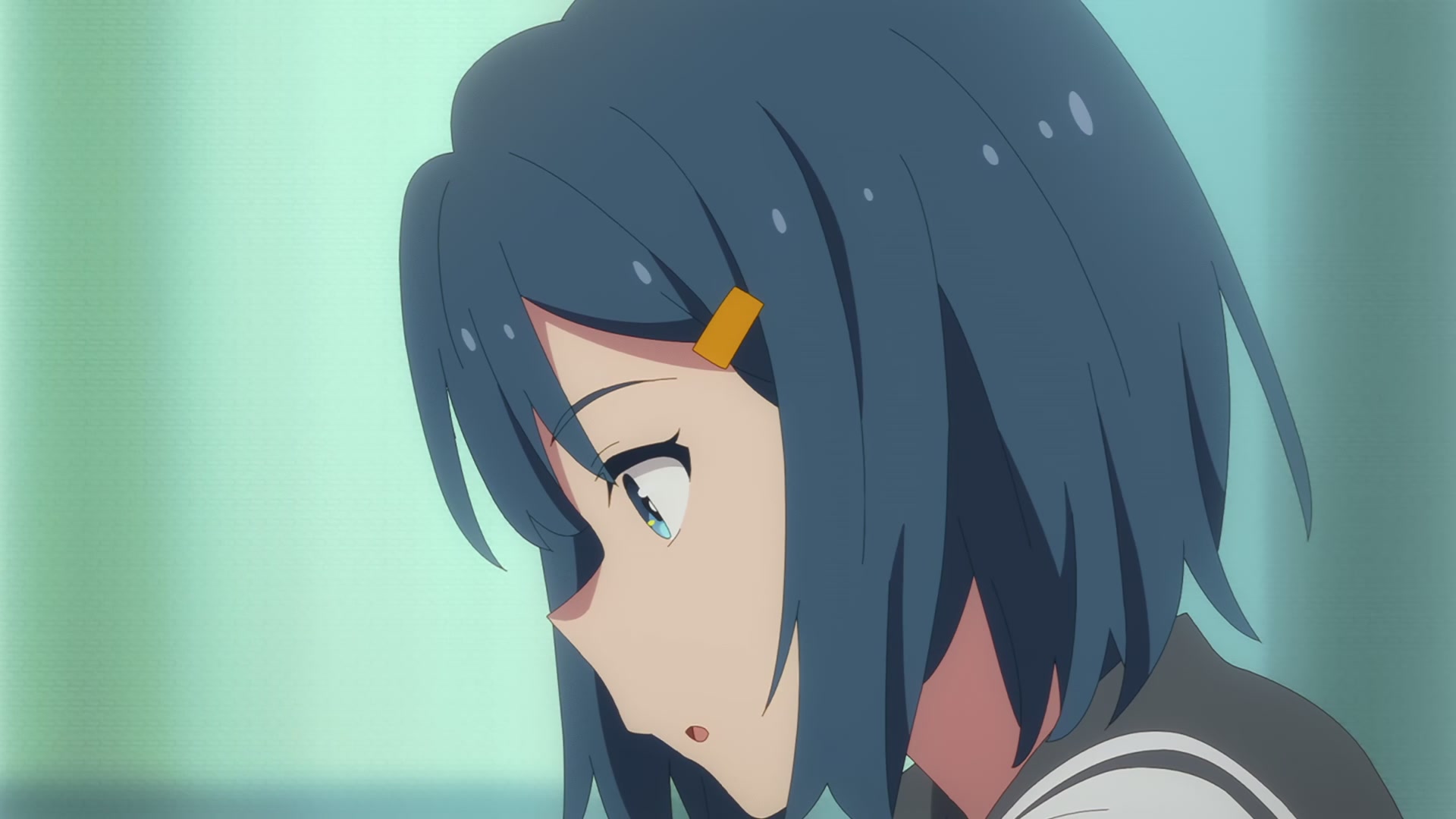
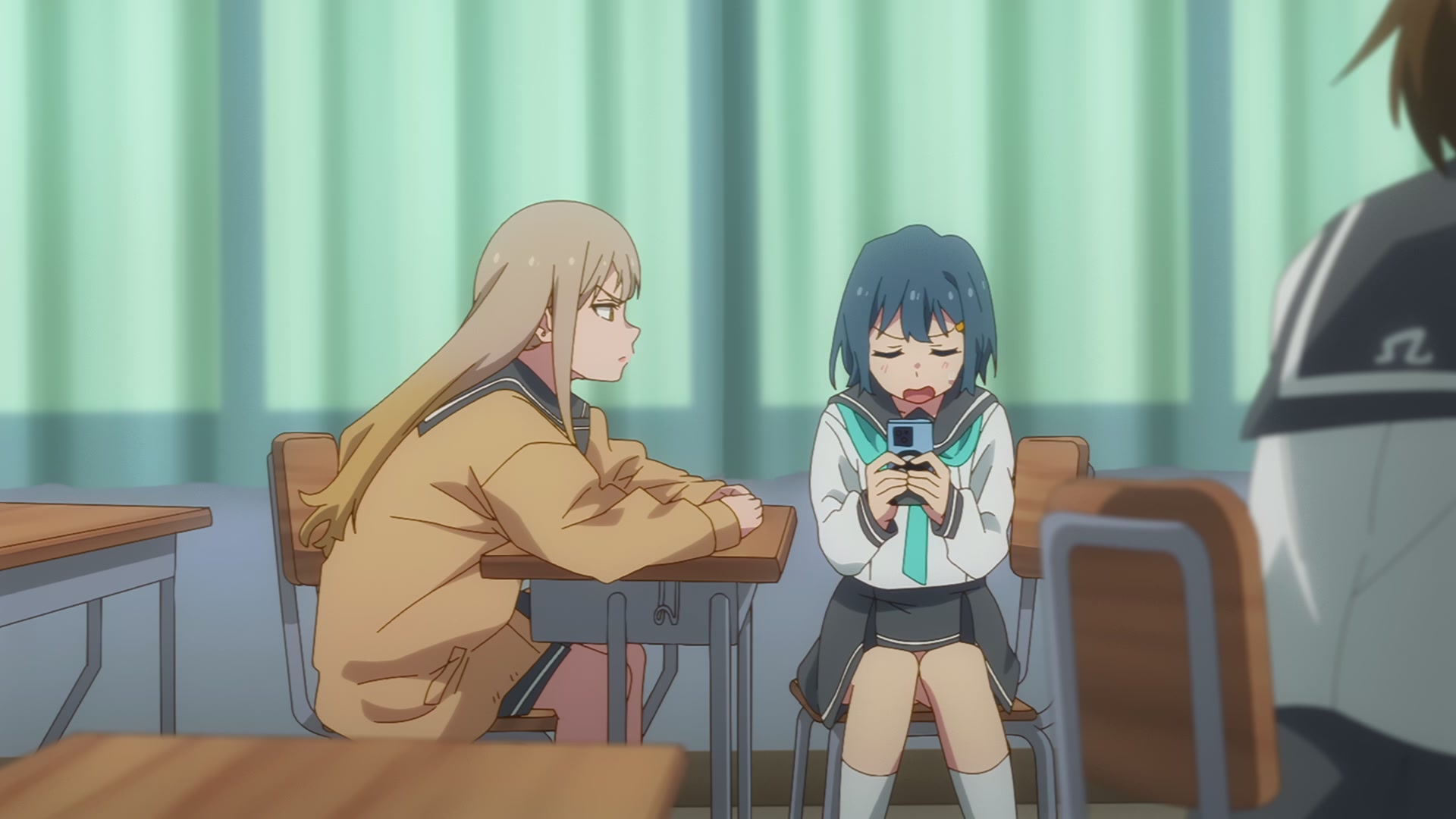
Minami is the heart of the series, and her characterization is the primary reason it works. She’s energetic, imaginative, and emotionally transparent. She approaches life with an enthusiasm that could easily become grating but instead feels endearing because it’s so clearly genuine. When she’s excited, she bounces. When she’s disappointed, she collapses. When she’s determined, she grits her teeth and pushes through.
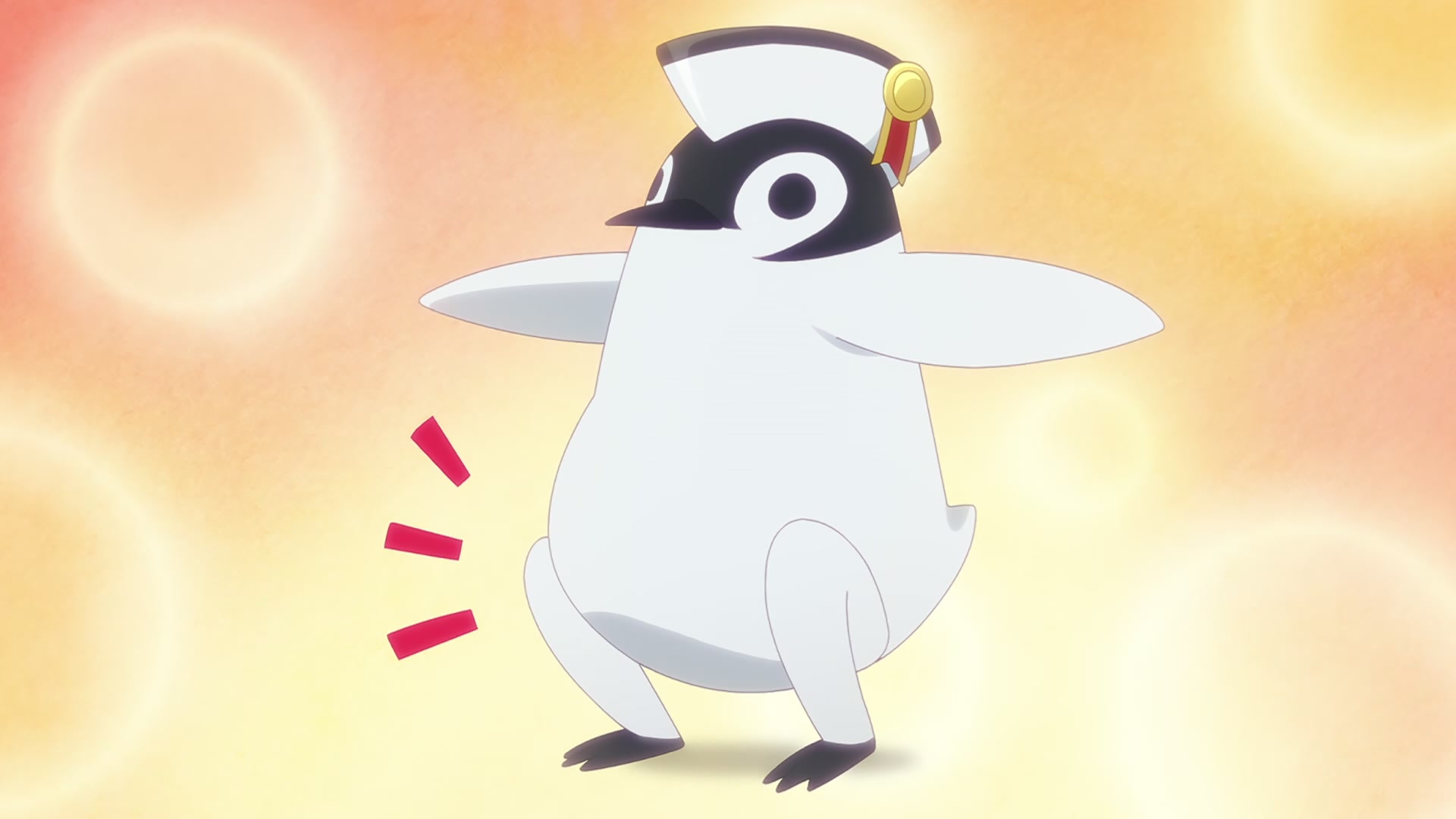
Her gaming terminology is a defining trait, but it’s not a gimmick. It’s how she processes the world. When she develops her signature “Penguin Slider” shot, a low rolling approach inspired by her penguin keychain, it’s not just a quirky moment. It’s Minami finding her own way to play golf, adapting the sport to her strengths rather than forcing herself into conventional molds.
Her growth over the series is subtle but significant. She begins as someone who passively consumes entertainment, looking for something to fill the void left by her mobile game. She ends as someone who actively pursues a passion, willing to practice alone, to fail publicly, and to keep trying even when progress feels impossible. Her first par in the final episode is earned through genuine effort, and the fact that she wants to share it with her friends rather than celebrate alone demonstrates how far she’s come.
Akane Haruka
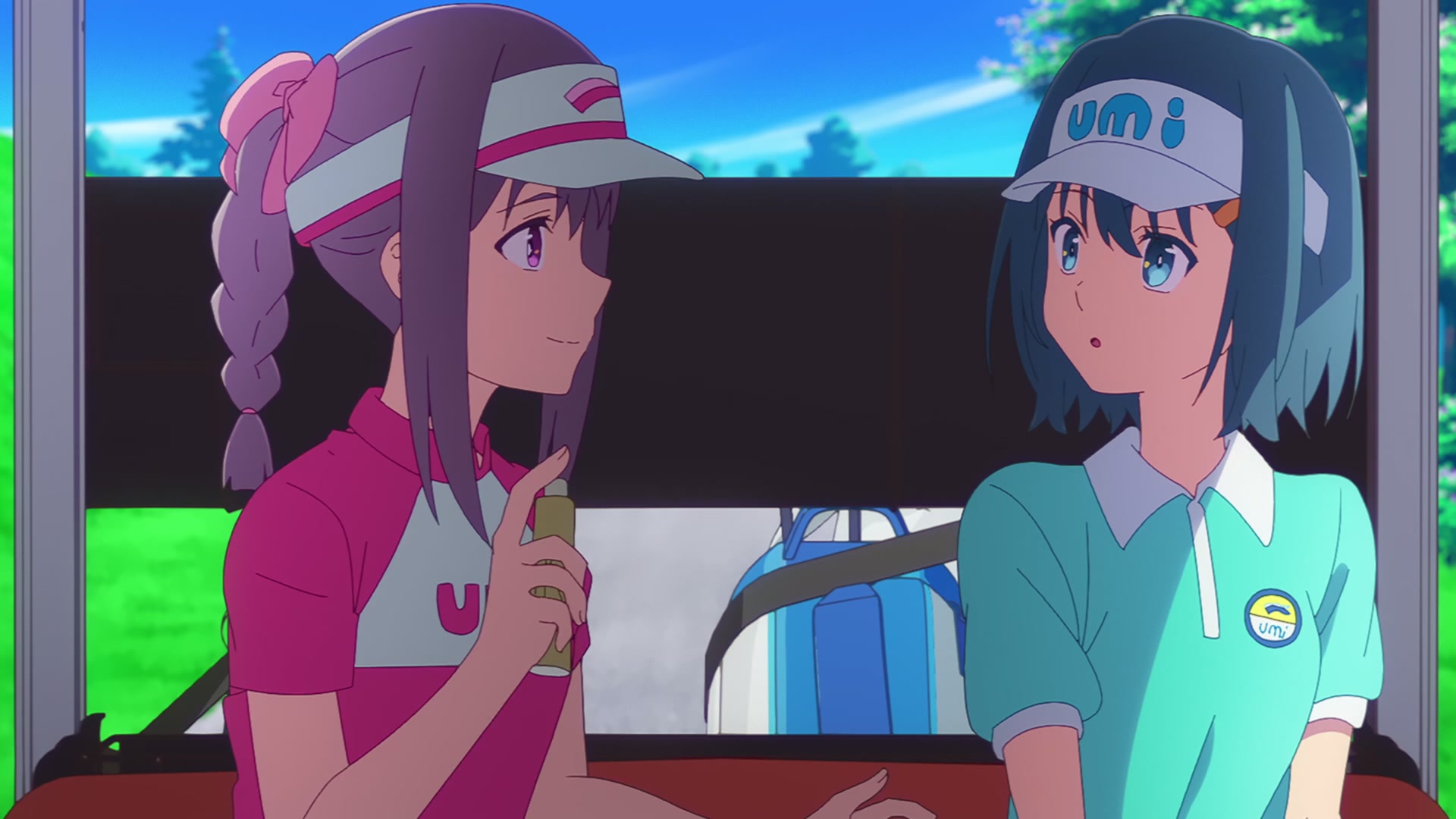
Haruka is a study in contrasts. Outwardly laid-back and cheerful, she carries the weight of past disappointments that she rarely discusses. She’s the type of person who makes everything look effortless, whether it’s hitting a perfect stinger shot or casually mentioning that she competed in the U.S. Women’s Amateur.
Her relationship with golf is complicated. She loves the sport, but competitive pressure nearly destroyed that love. Her current philosophy, emphasizing enjoyment over achievement, is both genuine belief and protective mechanism. Teaching Minami becomes a way to reconnect with golf’s fundamental joys without the pressure of competition.
Her arc is subtler than Minami’s but equally significant. Through teaching Minami, playing with Ayaka, and confronting Hina, she gradually integrates her competitive past with her present philosophy. Her decision to take the professional test next year, revealed in Episode 11, suggests that she’s ready to return to competition on her own terms. She’s not being pressured back. She’s choosing to return because she’s found a way to approach it that doesn’t threaten her love of the sport.
Hoshimi Ayaka
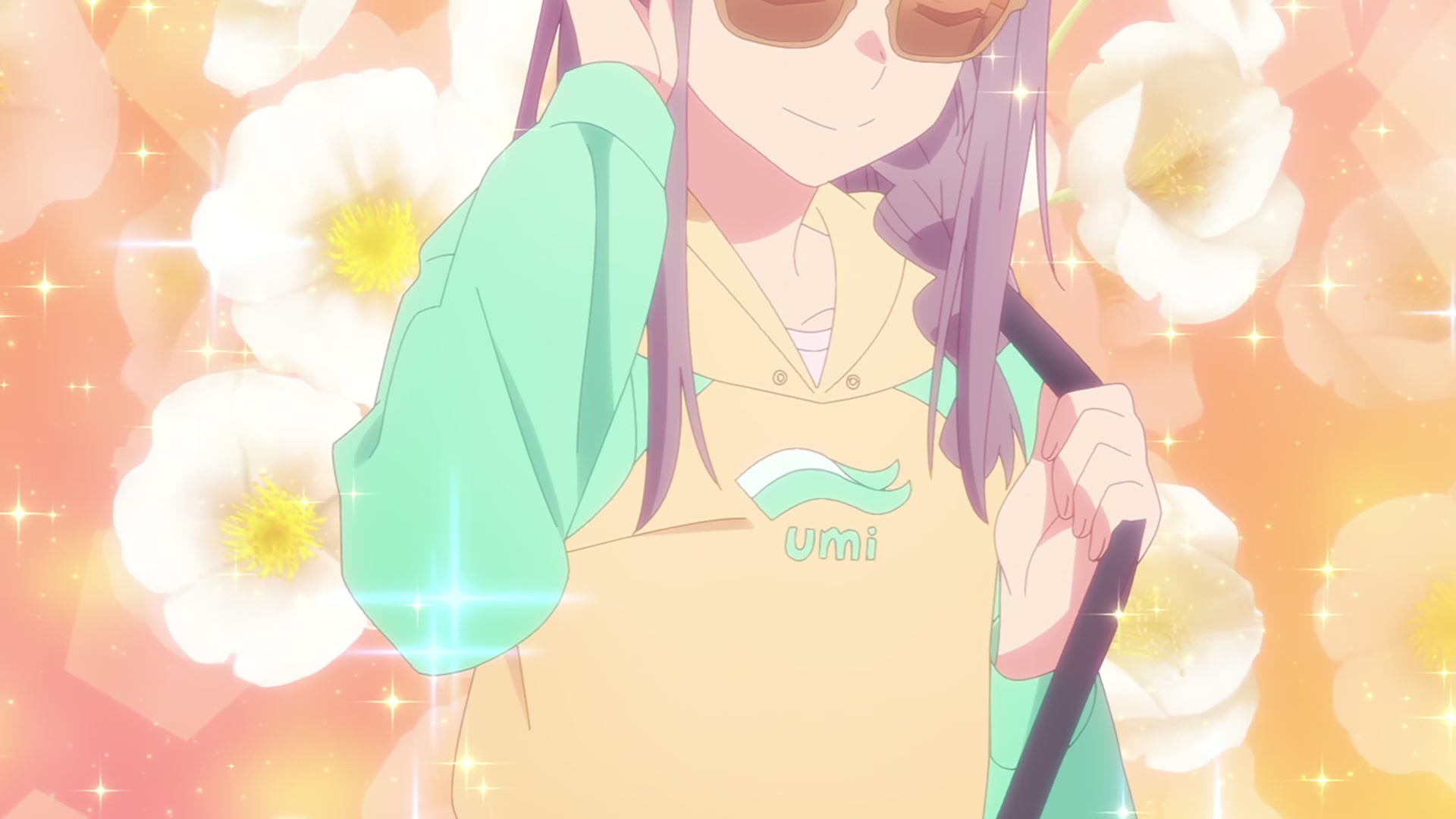
Ayaka initially appears to be a superficial character, a social media influencer who plays golf as part of her public persona. But the series quickly reveals hidden depths. Her confession in Episode 9, that she “didn’t have anything I wanted to do or goals,” reveals the emptiness behind her curated image.
Her arc involves discovering that her value doesn’t depend on external validation. The “Keep A Green” project, which promotes golf etiquette through fashion, represents a turn toward authenticity. Instead of chasing trends, she creates something meaningful that aligns with her values. Her statement that she’s “gotten to like myself even more, because I encountered golf” encapsulates her journey from external validation to internal satisfaction.
Her relationship with Minami is particularly significant. Minami’s earnest enthusiasm reminds Ayaka of why she started golf in the first place, and Minami’s lack of pretense helps Ayaka let down her own guard. Their friendship is mutually beneficial, with each helping the other find what they’re looking for.
Hina Yoarashi
Hina is introduced late in the series as an antagonist figure, a genius middle school golfer who dismisses casual players and challenges Haruka to return to competitive golf. She’s a classic tsundere, proud and dismissive on the surface but secretly vulnerable and desperate for connection.
Her idolization of Haruka is central to her character. She watched Haruka compete in the U.S. Women’s Amateur three years ago and was inspired by her aggressive, attacking style. Haruka’s subsequent withdrawal from competitive golf feels like a personal betrayal.
Her doubles match with Minami in Episode 11 is the crucible for her development. Forced to work with someone she considers a “novice,” Hina initially tries to do everything herself. But Minami’s unconventional approach proves effective, and Hina gradually learns to appreciate it. By the end of the match, she’s not just tolerating Minami but genuinely enjoying their partnership.
The Supporting Cast
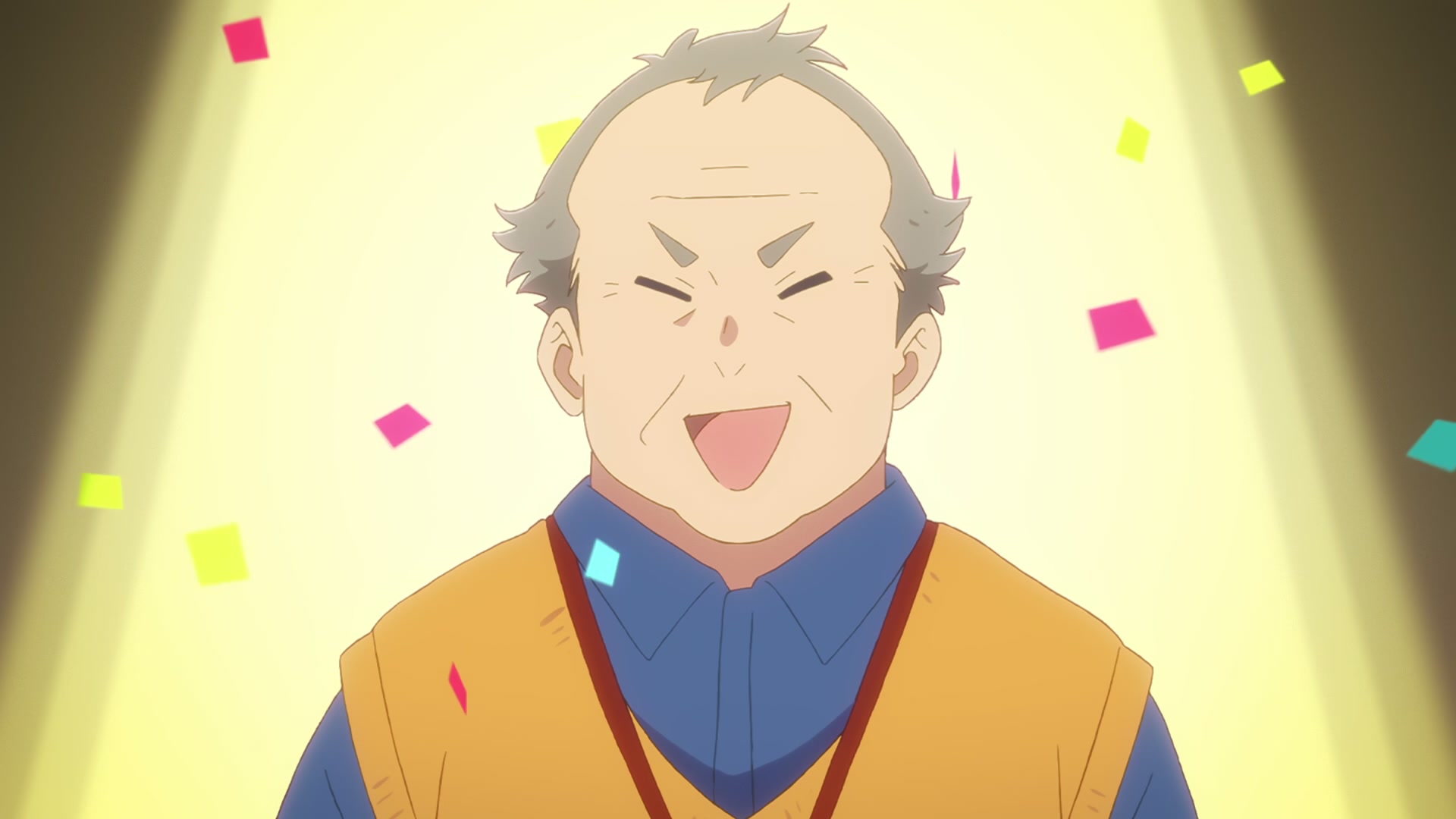
The elderly golfers, Masa, Tetsu, and Cho, serve as surrogate grandfathers to Minami. They provide wisdom, comic relief, and a reminder that golf can be enjoyed at any age. Their attempts at dramatic “finishing moves” are absurd in the best way, but they also reveal something touching: these men have never lost their capacity for play.
Megumi, the caddie, represents an alternative path in golf. She gave up her dream of going pro after becoming a single mother, but she’s found fulfillment in supporting others. Her statement that she’s “happy being able to be connected to golf, no matter what shape or form” offers a different perspective on what it means to love a sport.
Izumi, Minami’s best friend, provides grounding. Her own pursuit of shogi creates a parallel to Minami’s golf journey, suggesting that the search for meaning is universal. Her observation in the final episode that Minami has “become quite resilient” shows that she’s been paying attention to her friend’s growth.

Visuals and Animation
Art Direction and Style
Sorairo Utility employs a clean, modern digital aesthetic typical of contemporary slice-of-life productions. The linework is crisp and consistent, with thin, delicate outlines that prevent characters from feeling too heavy against the environment. The character designs lean into a “moe” sensibility with soft, rounded proportions and large expressive eyes, yet they’re grounded enough to fit within realistic settings.
The overall look is bright and inviting. The color palette favors high-key lighting and vibrant, saturated colors. Teals, soft greens, and pale skin tones dominate, creating a fresh, airy feeling that matches the series’ optimistic tone. Accent colors, such as vibrant hair hues or specific props, pop against softer backgrounds.
Character Acting and Expressiveness
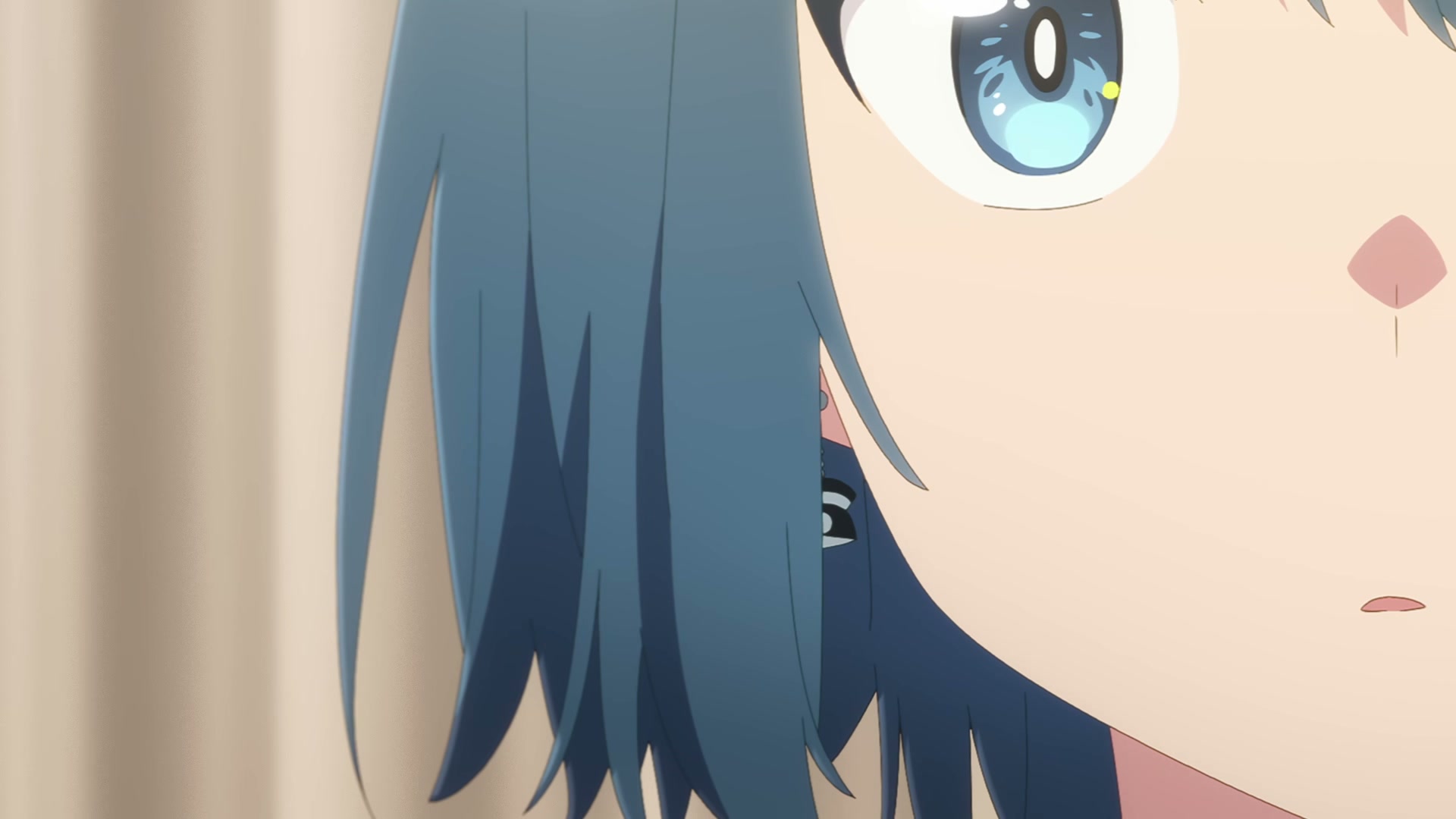
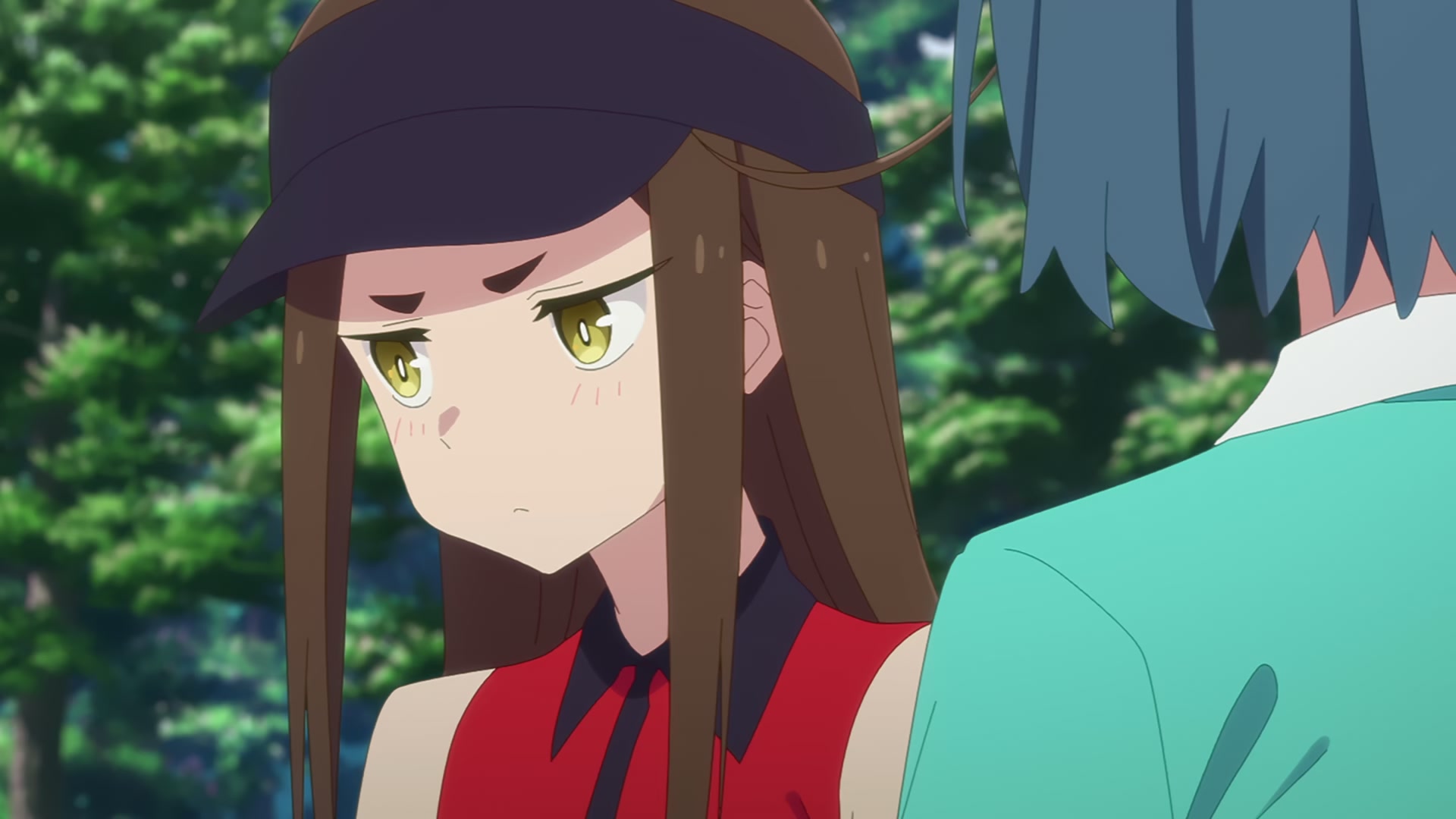
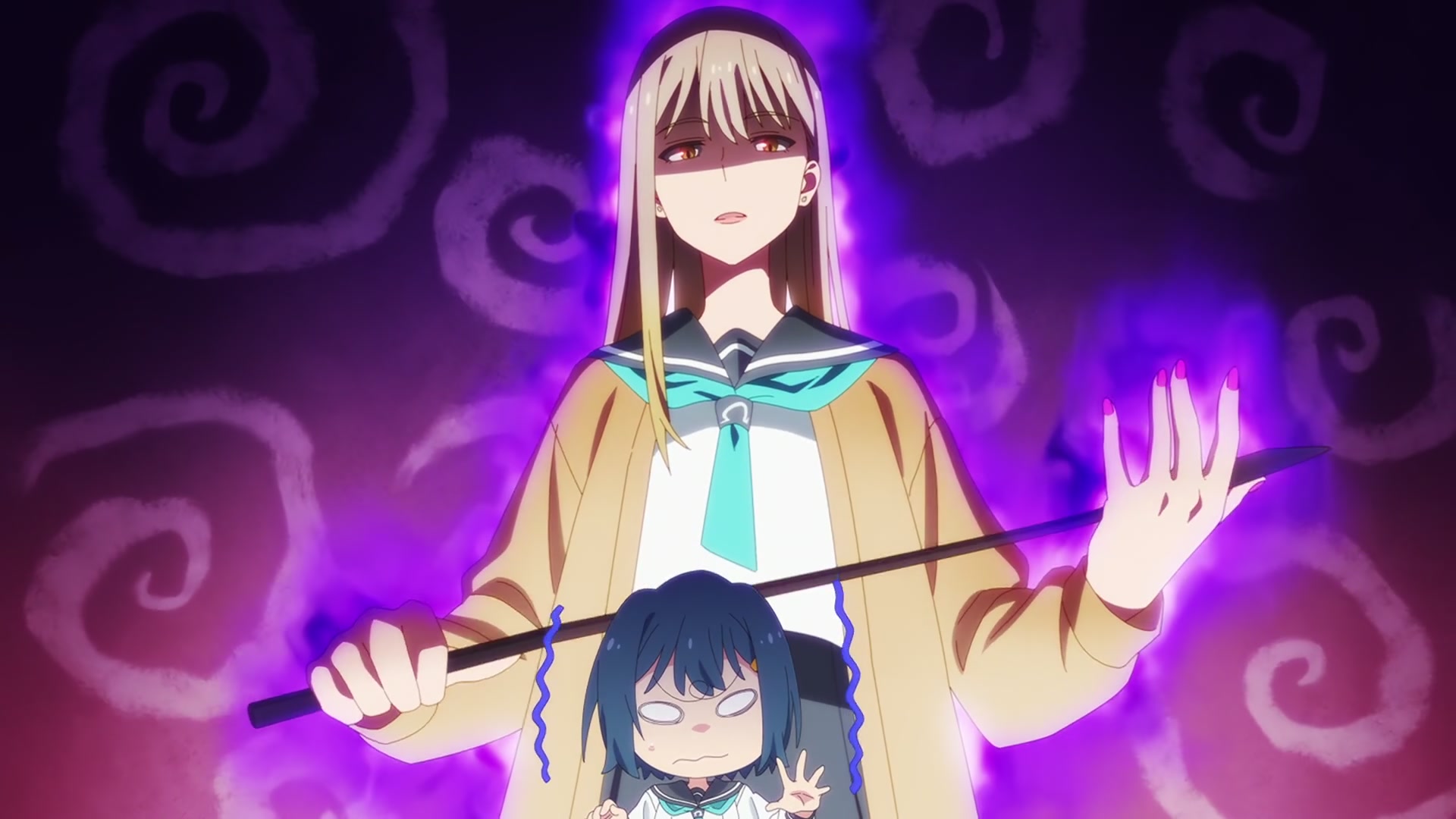
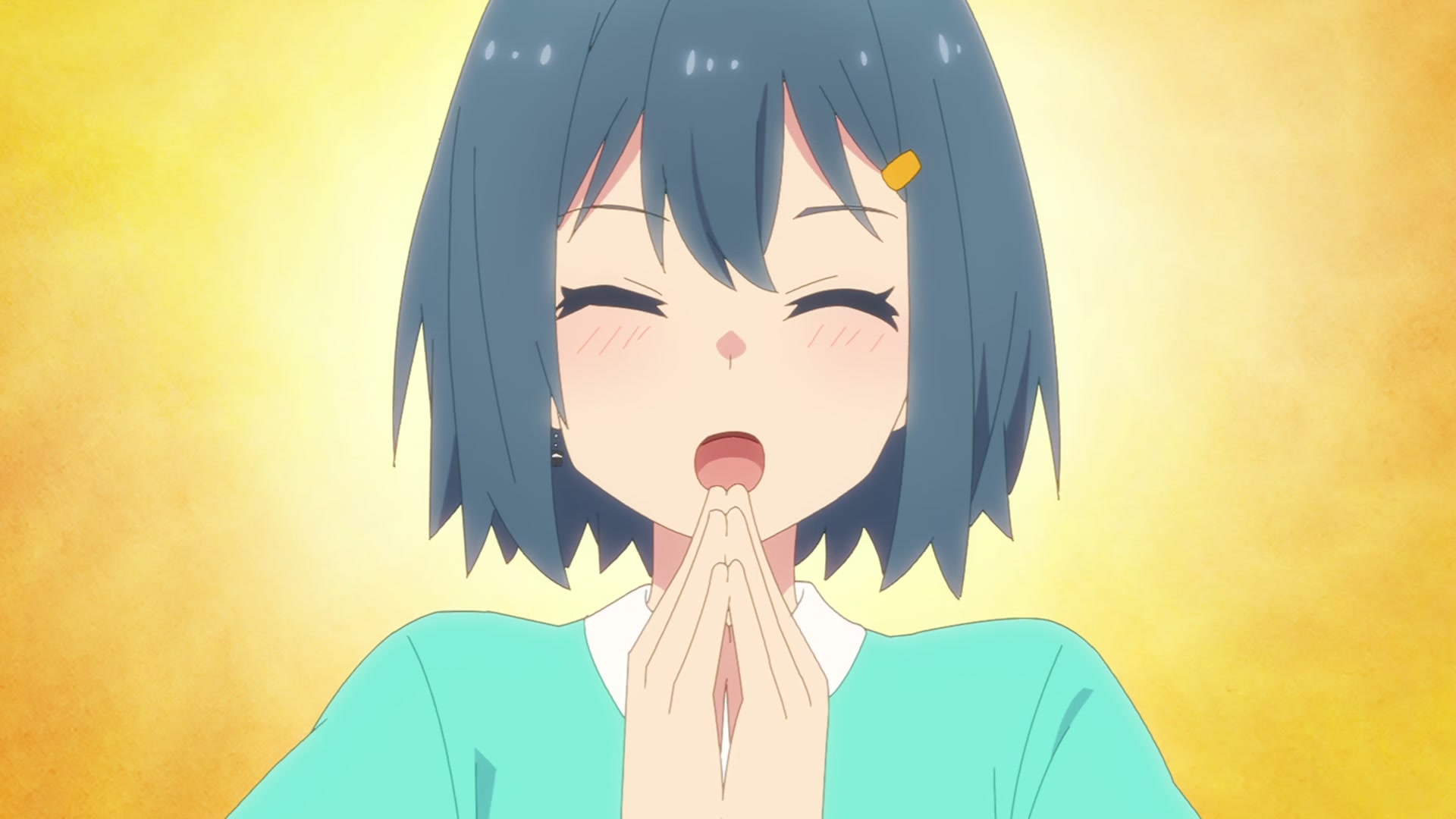
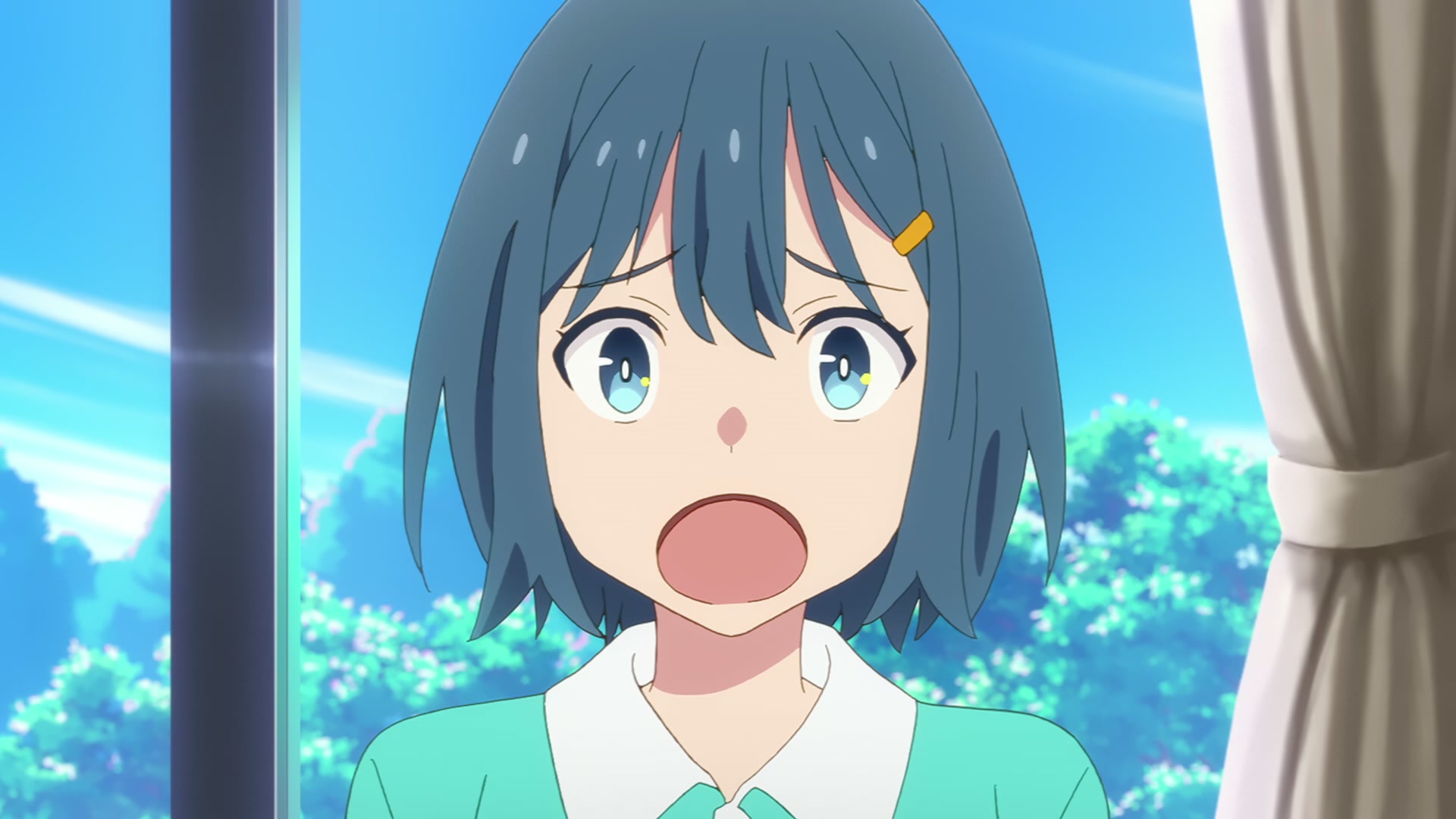
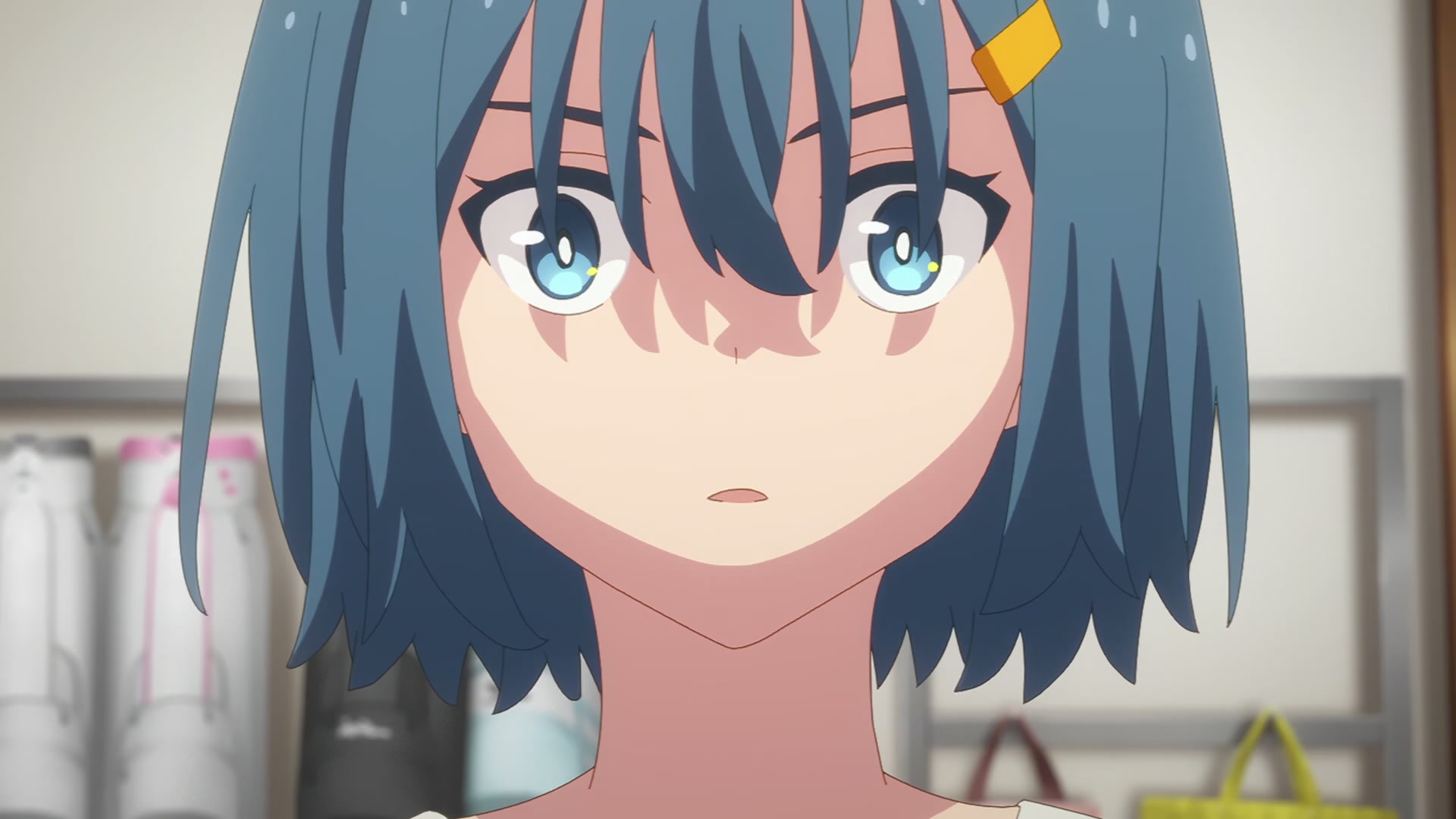
The series’ greatest visual strength is its character acting. The facial animation captures nuanced micro-expressions, with detailed iris rendering and complex gradients that convey intensity or realization. This subtlety contrasts effectively with moments of visual hyperbole, where the series shifts into super-deformed (chibi) styles or caricatured expressions to punctuate comedic beats.
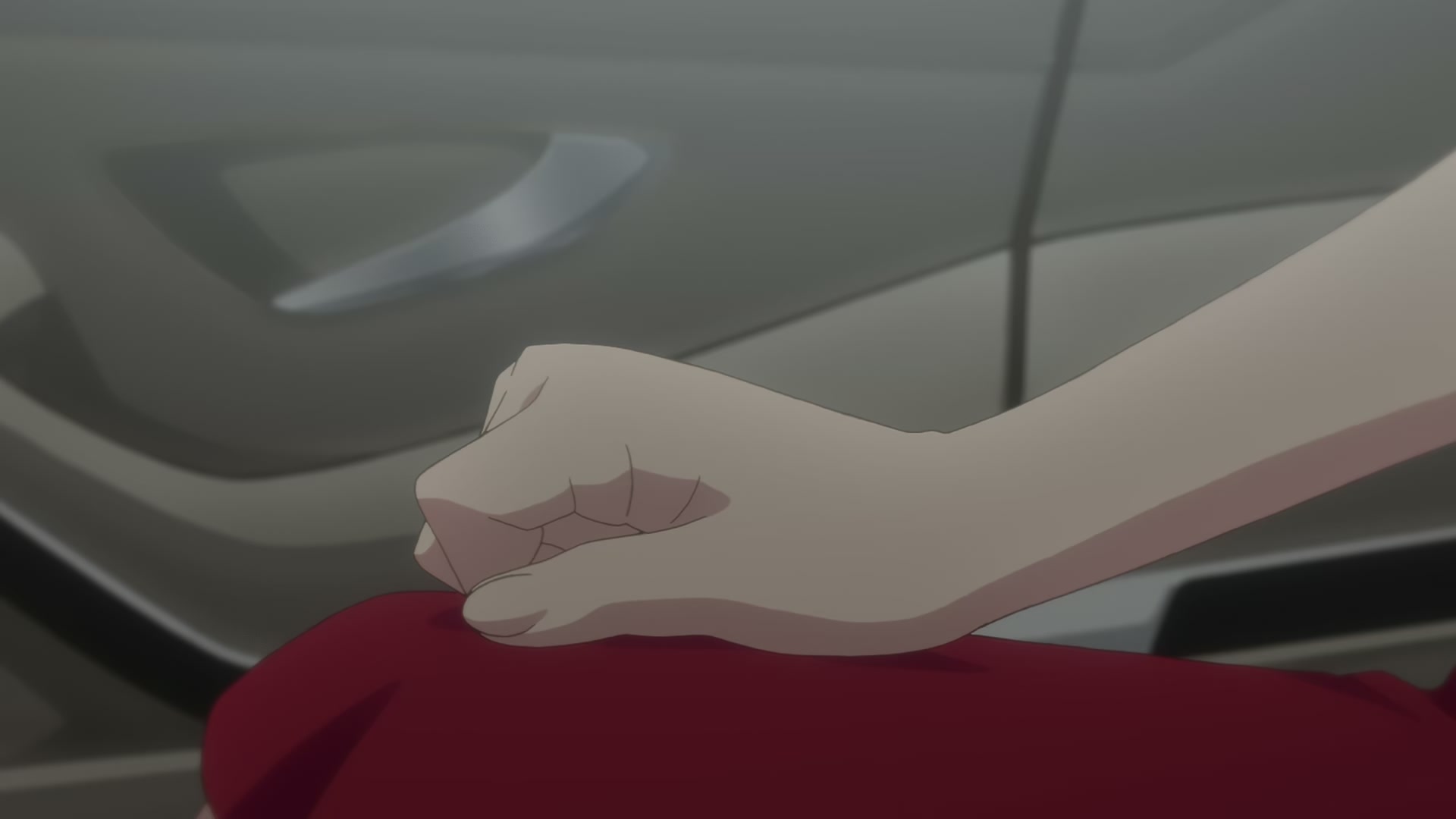
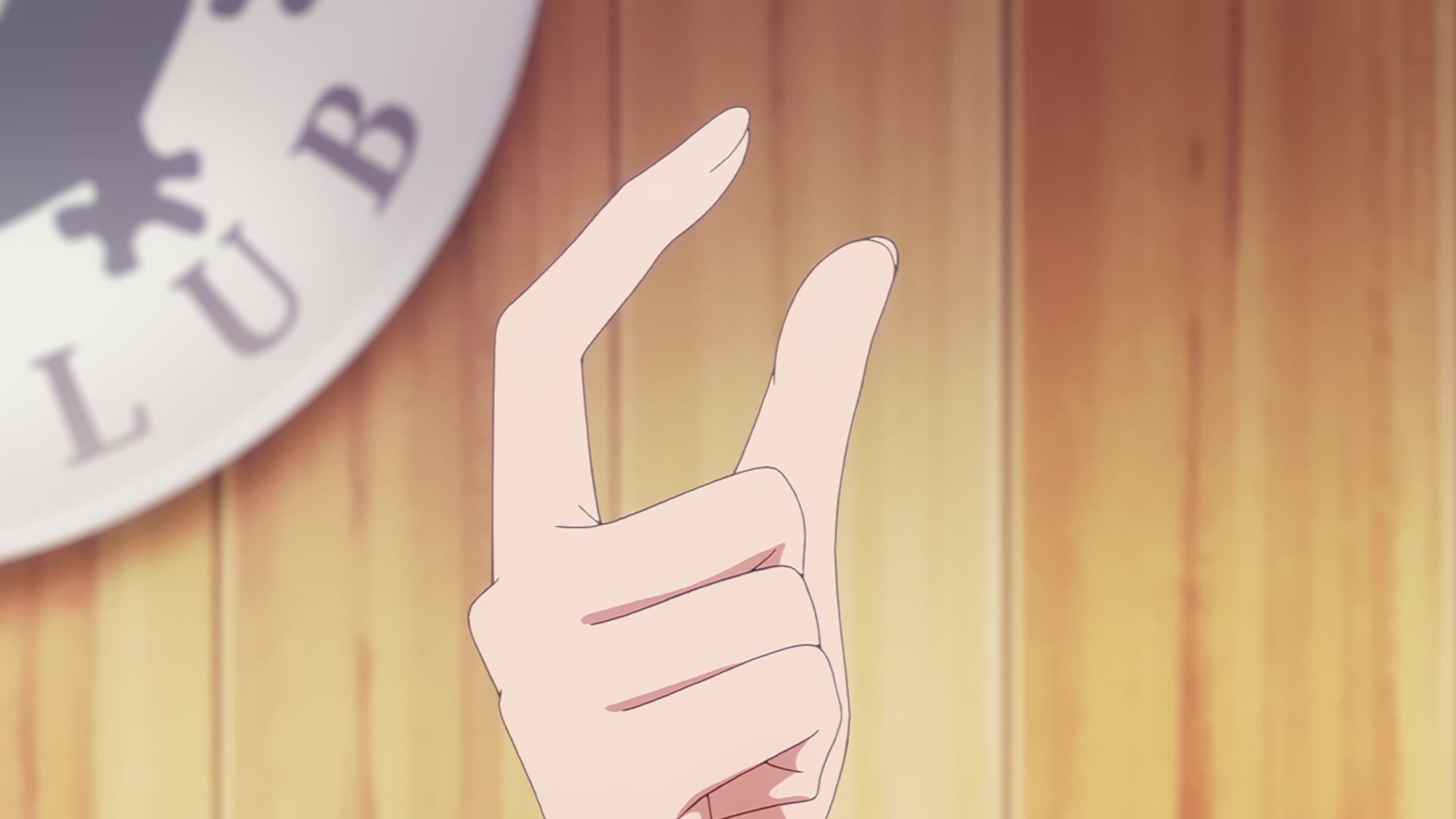
Body language is equally expressive. The attention to anatomy in close-ups, such as the tension in a clenched hand or the mechanics of a grip, suggests a production that values physical acting as much as facial expressions. This is particularly important in a sports series, where the body’s relationship to equipment is central.
Prop Design and Fidelity
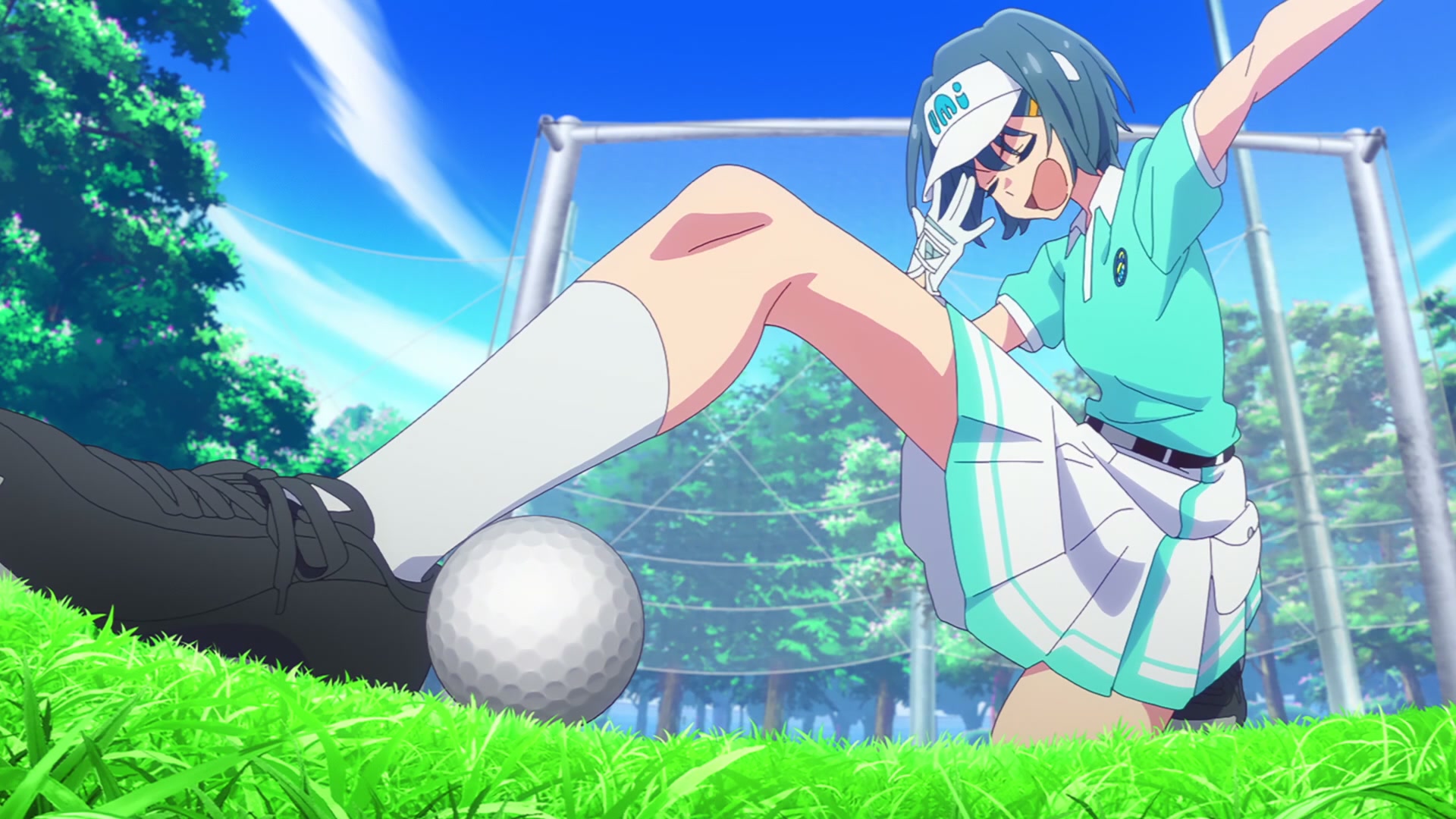
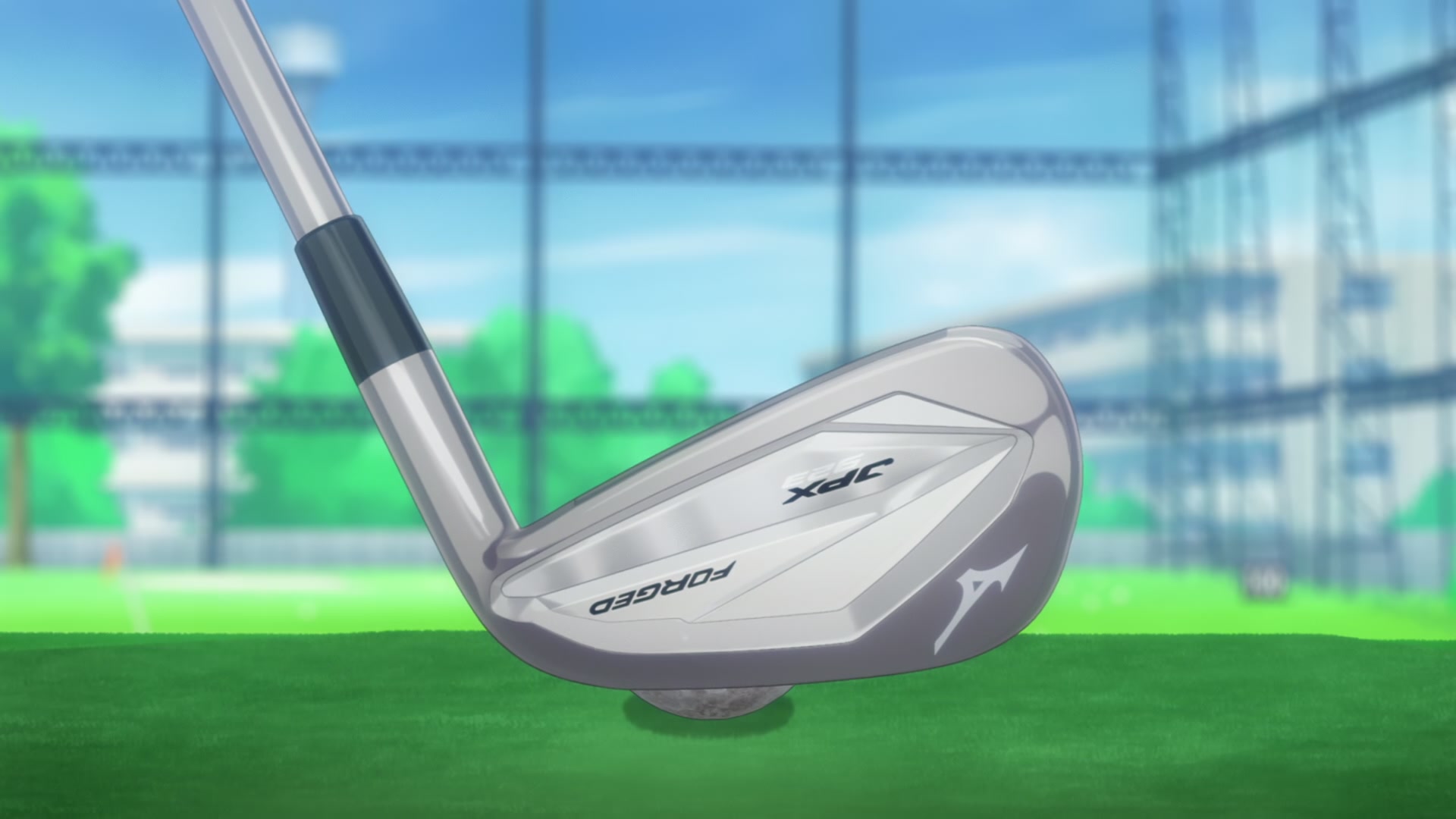
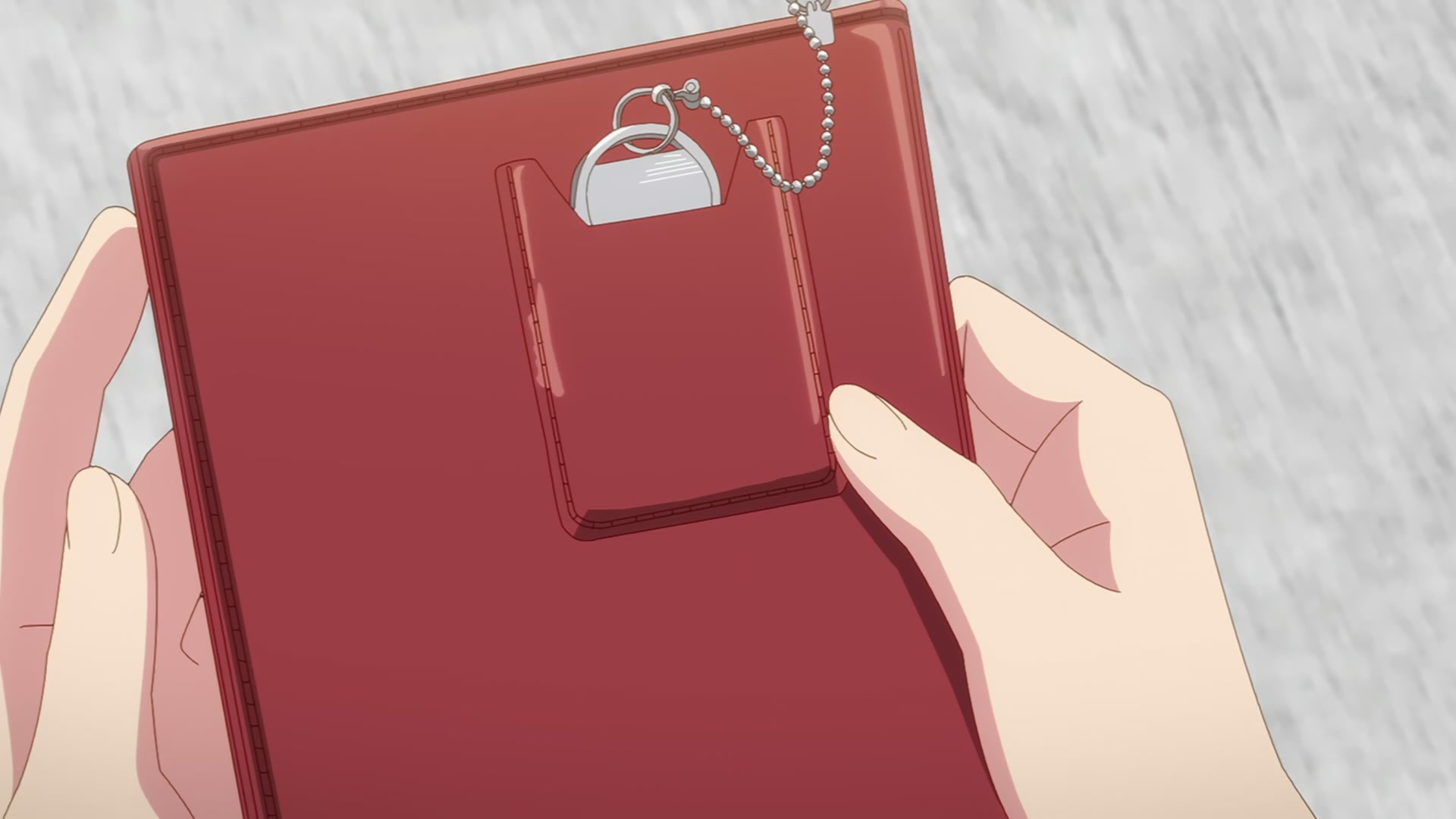
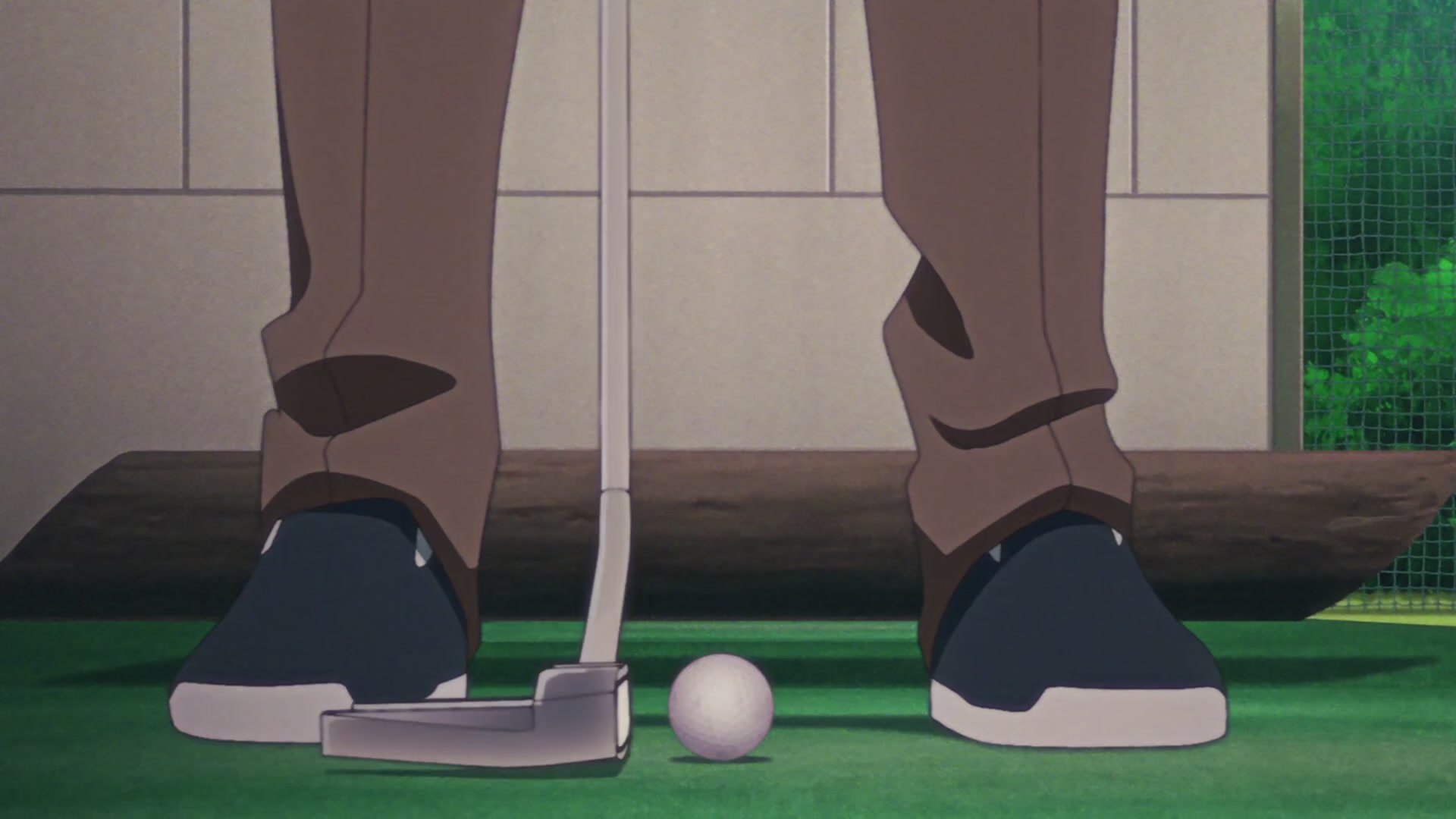
There’s a notable disparity in detail between characters, props, and environments, suggesting a strategic allocation of resources. Props often receive hyper-realistic treatment. Golf clubs are rendered with near-photorealistic lighting and texture, capturing metallic sheens and specific branding. This high fidelity elevates mundane objects into focal points of significance.
Minami’s utility club, which she names “Excalibur,” is treated as a character in its own right. The detailed rendering of the club reinforces this characterization, making it feel like a genuine partner rather than just a tool.
Background Art and Environmental Detail
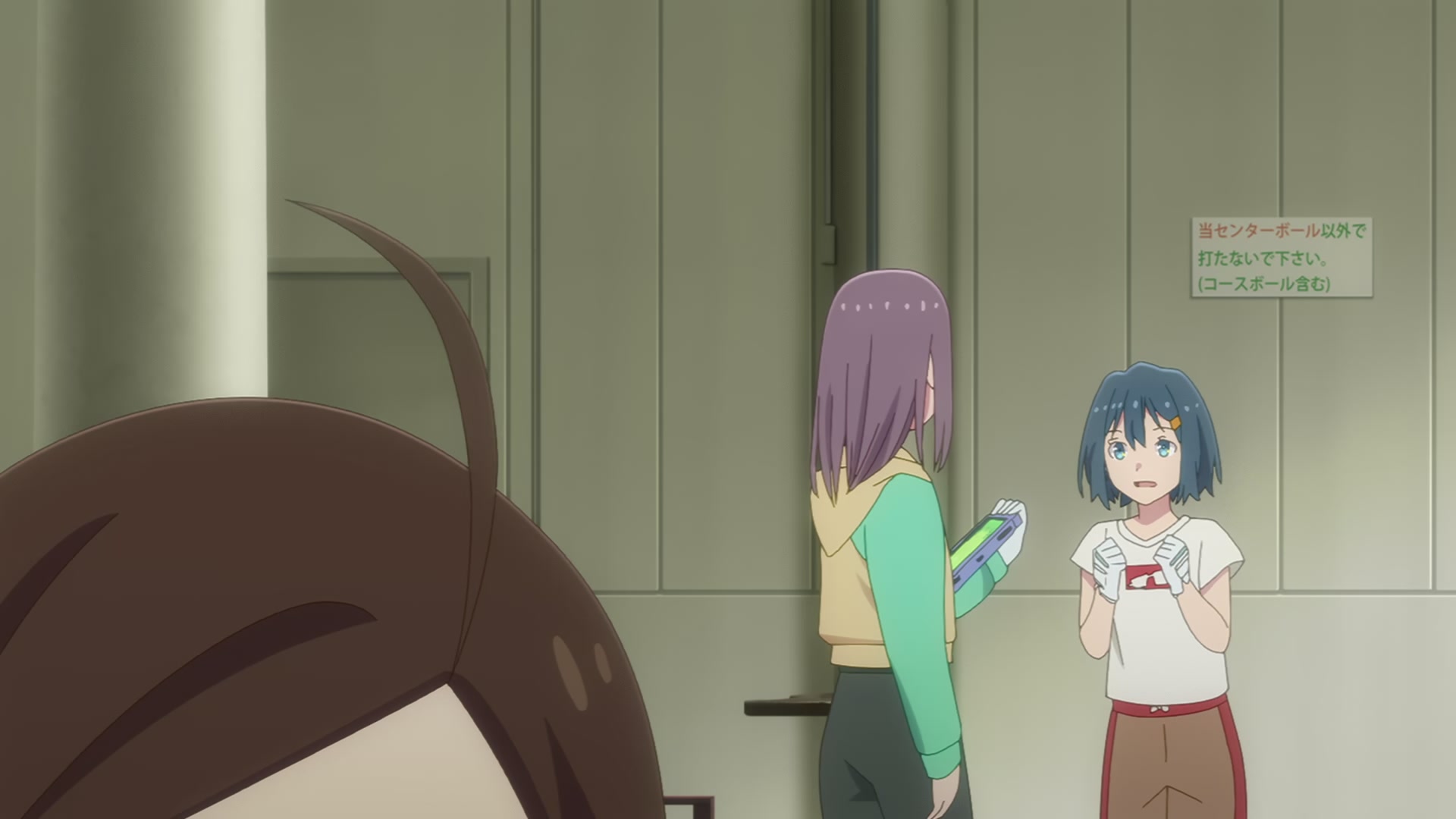
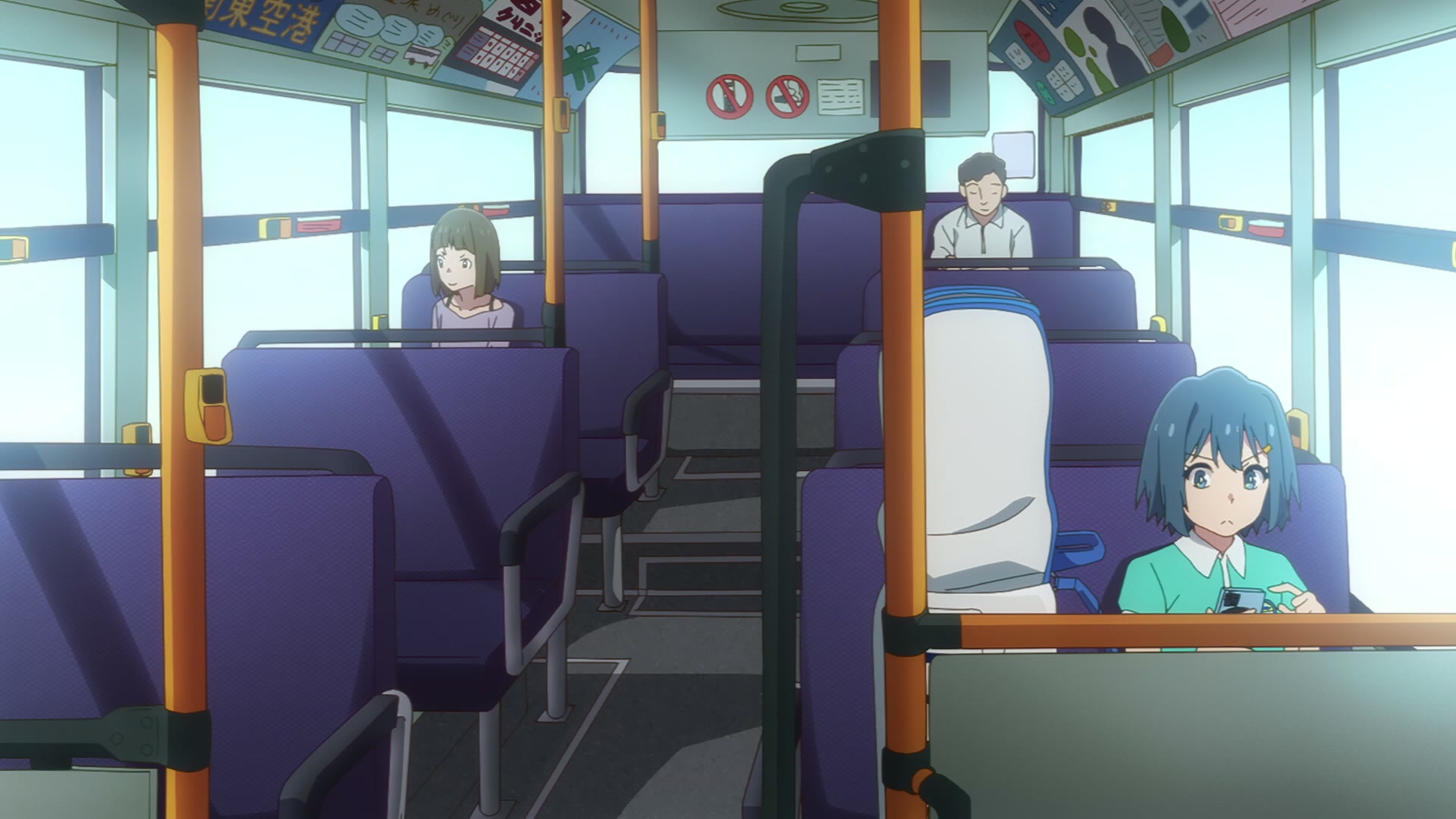
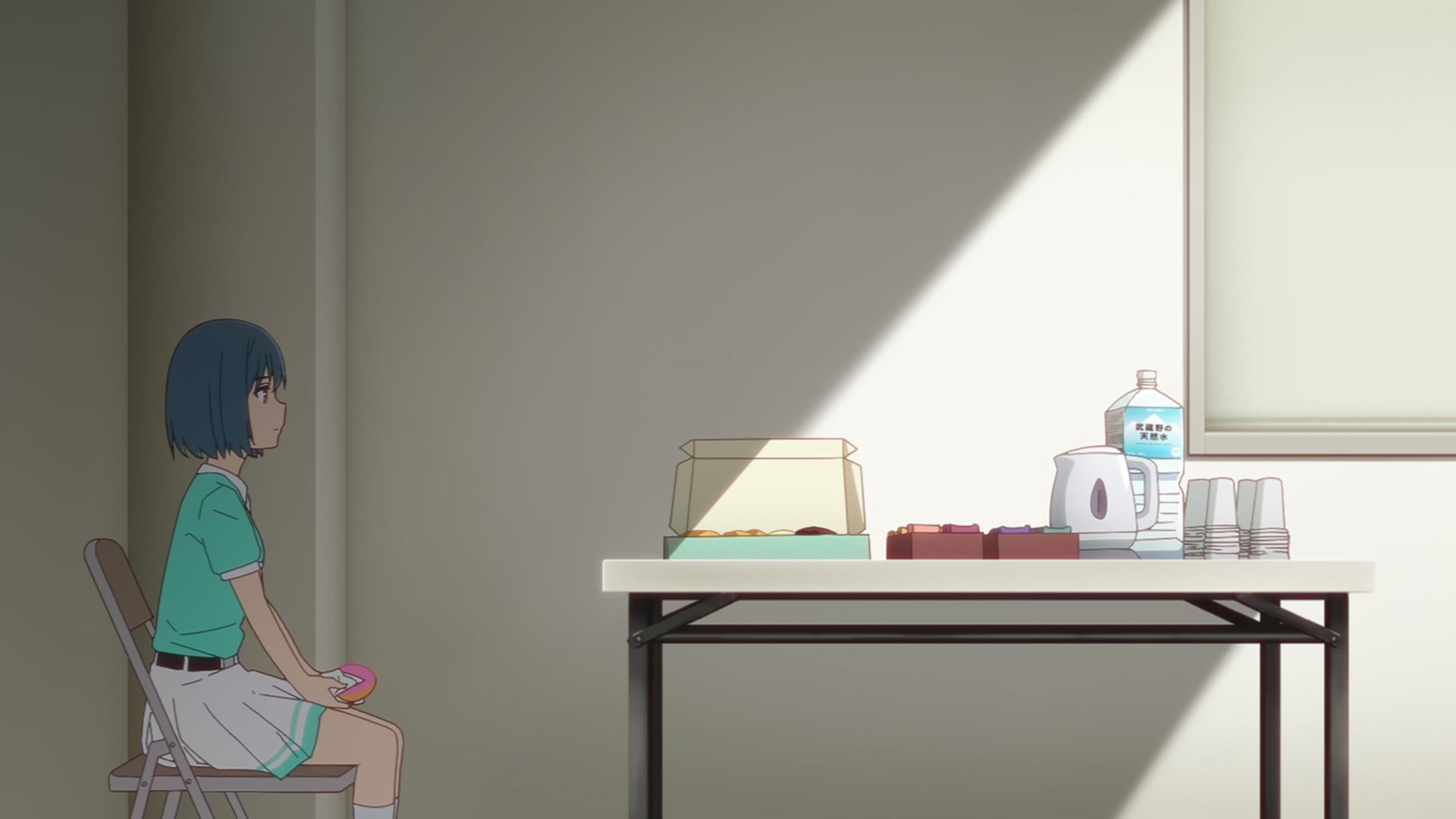
The background art varies depending on the setting. Indoor scenes, such as classrooms or club rooms, tend to be functional and clean, using simple geometric shapes and soft focus to keep attention on the characters. This is a reasonable trade-off for a character-driven series.
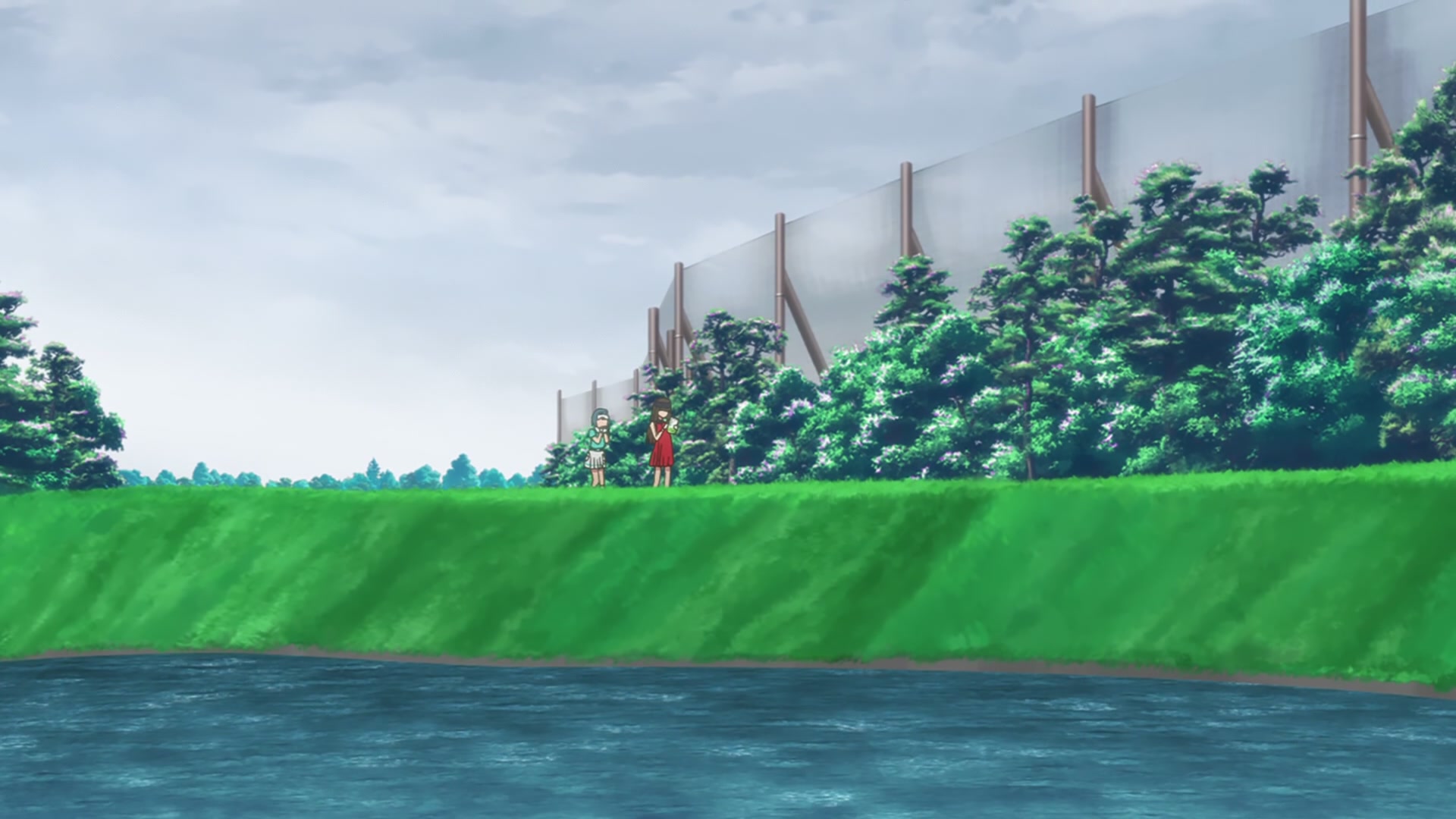
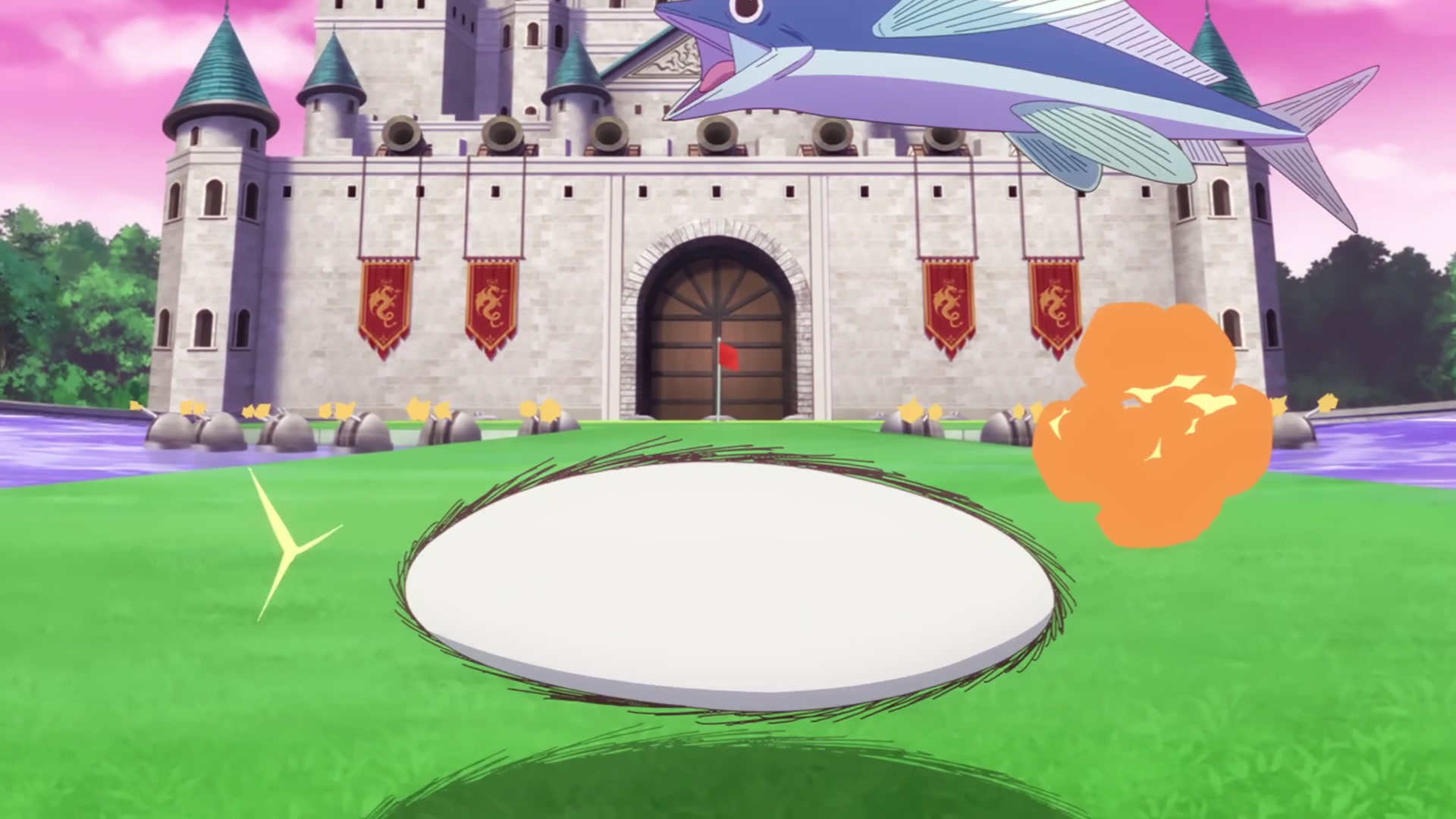
Outdoor sequences, however, demonstrate a significant step up in quality. Lush, verdant greens establish the setting with varying shades from sun-drenched lime to deep forest tones. Wide shots utilize depth and scale effectively, incorporating elements like water textures, distant tree lines, and architectural structures to create a sense of space. The golf course itself becomes a character in the series, a space of challenge, beauty, and possibility.
Lighting and Compositing
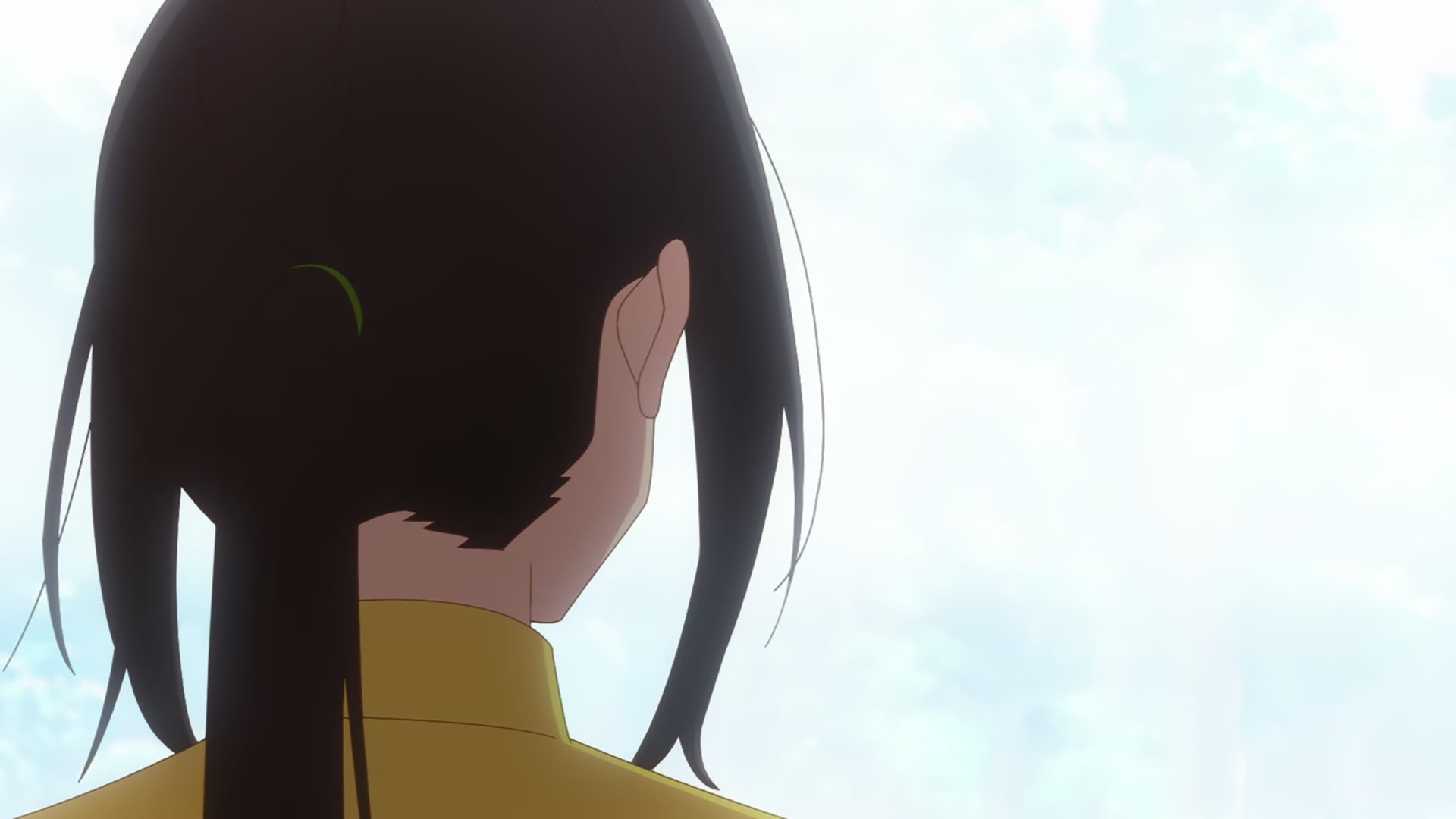
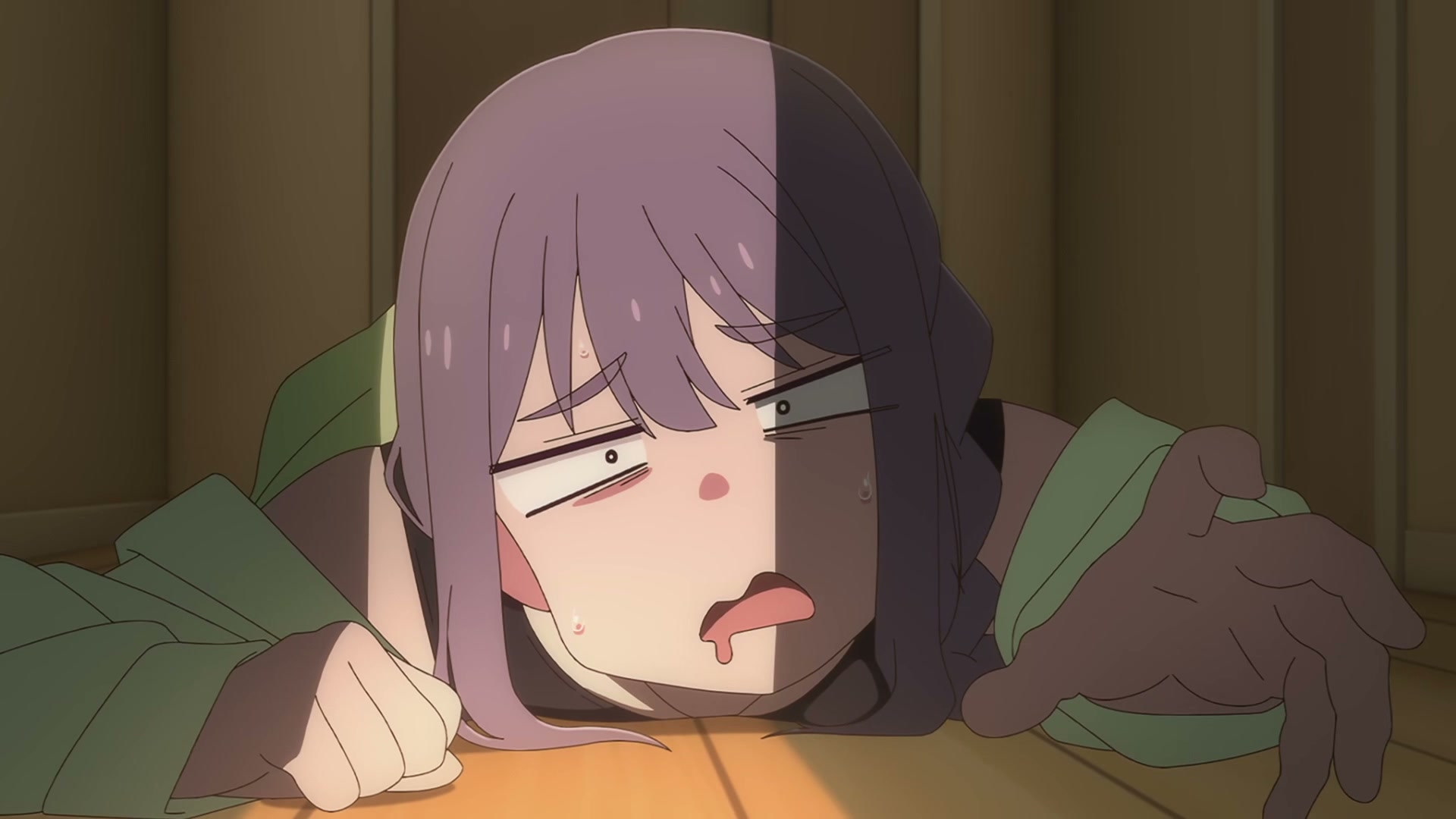
The lighting design is versatile and effective. The default is flat, even lighting that maintains a friendly mood. But the series employs sophisticated techniques for emotional moments. Dramatic contrast is used selectively, with some scenes utilizing strong chiaroscuro lighting that casts half a character’s face in shadow to convey exhaustion or internal conflict.
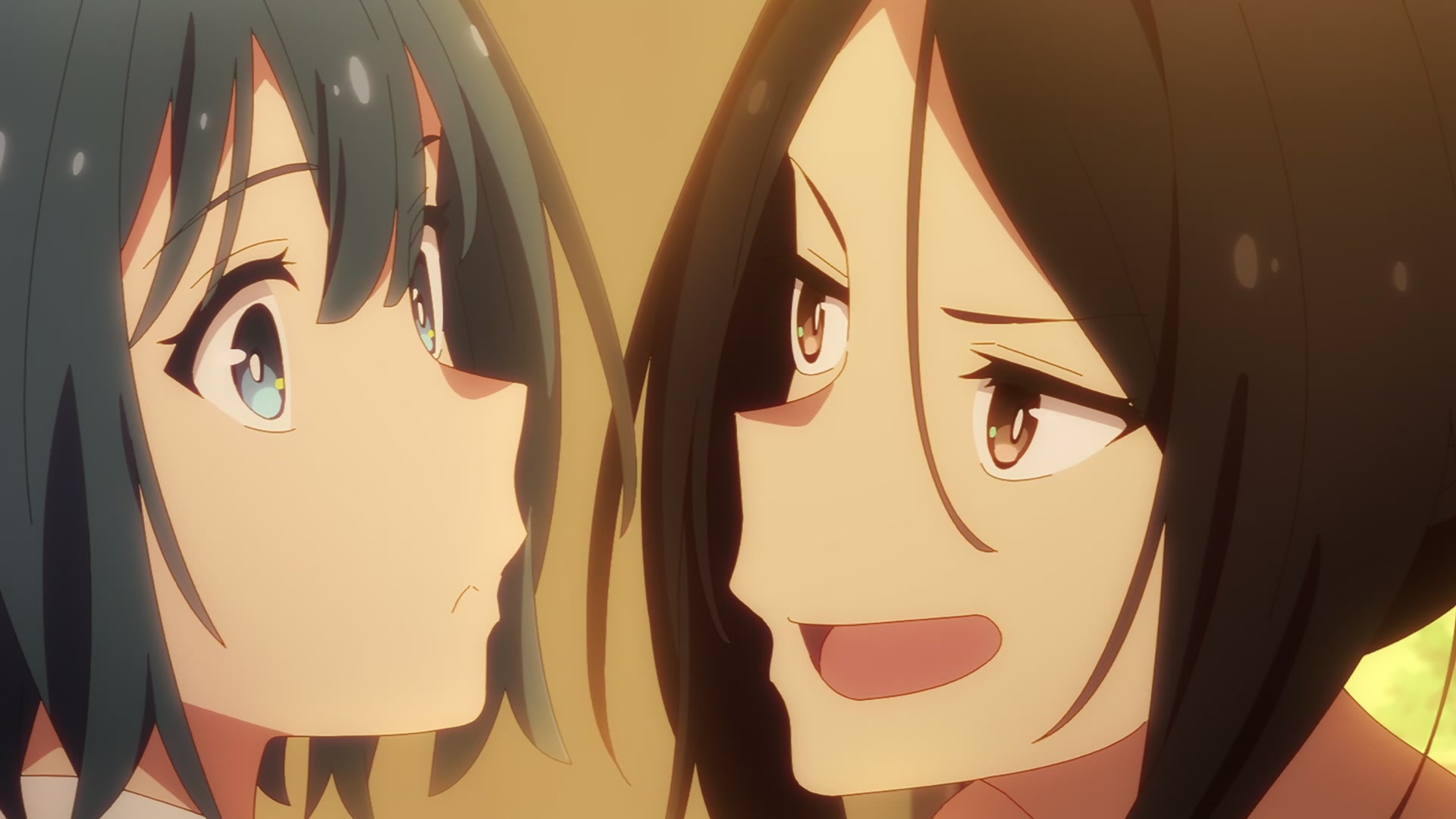
Moments of realization or warmth are often bathed in heavy backlighting or “golden hour” hues, using bloom and lens flare effects to create a dreamlike atmosphere. These moments of visual beauty reinforce the series’ emotional peaks.
Animation Quality
The animation quality is generally solid, though not spectacular. The series is dialogue-heavy, and many scenes are appropriately static, with characters talking, drinking tea, or watching others play golf. These scenes don’t require dynamic animation, and their stillness fits the series’ contemplative tone.
The golf sequences themselves are often simplified, with limited frames of animation. This is understandable, as golf swings are complex movements that are difficult to animate convincingly. The series compensates through strong character acting and expressive facial animation. Even when the motion is limited, the emotional content carries the scene.
There are moments when the animation feels limited rather than intentional. Some repeated actions use obvious motion cycles that can feel mechanical. Background characters in crowd scenes are often static or minimally animated. These are common limitations in anime production and don’t significantly detract from the viewing experience.
The series clearly prioritizes character acting over motion. The detailed facial expressions, the nuanced body language, the careful attention to emotional beats, these are where the animation budget went. This is a reasonable trade-off for a character-driven series, and the result is a show that feels emotionally rich even when its animation is limited.

Sound and Music
Opening and Ending Themes
The opening theme, “Yaritai o yannakucha!” (Gotta Do What You Wanna Do!), sets the tone for the series perfectly. It’s an upbeat, energetic song that emphasizes self-determination and the joy of finding something to be excited about. The lyrics reinforce the series’ message about pursuing your passions, and the melody is catchy enough to stick in your head long after the episode ends.
The ending theme is more contemplative, matching the series’ quieter moments. It plays over scenes of the characters going about their daily lives, reinforcing the sense that the series is about ordinary moments made meaningful through connection.
Voice Acting
The seiyuu work is excellent across the board. The voice actors bring genuine warmth and personality to their characters, making even minor interactions feel authentic. The performances are particularly strong in emotional moments, where the actors convey vulnerability without becoming melodramatic.
The voice acting for Minami is especially noteworthy. The actor captures her enthusiasm without making her annoying, her vulnerability without making her pathetic, and her determination without making her strident. It’s a nuanced performance that anchors the series.
Sound Design
The sound design is effective without being showy. The ambient sounds of the driving range, the satisfying thwack of a well-hit ball, the rustle of wind through trees, all contribute to the series’ immersive quality. The sound design understands that golf is a quiet sport, and it uses silence effectively to create atmosphere.
The atmospheric audio during outdoor scenes is particularly well done. The distant sounds of birds, the whisper of wind, the crunch of grass underfoot, all create a sense of place that enhances the viewing experience.

Overall Verdict
Sorairo Utility is a quietly radical sports anime. It prioritizes personal growth over competitive achievement, community over individual glory, and the joy of discovery over the pressure of excellence. In a genre often dominated by high-stakes competition and dramatic rivalries, it offers a refreshing alternative.
The series isn’t for everyone. Viewers seeking spectacular animation or dramatic plot developments will likely find it slow. The pacing is deliberate, especially in the early episodes, and the series never builds toward a conventional climax. There’s no tournament to win, no rival to defeat, no promise of professional glory.
But for viewers willing to meet it on its own terms, Sorairo Utility offers something rare: a genuine meditation on what it means to find your place in the world. The series understands that the most meaningful victories are often invisible. The first time you hit a ball properly. The first time you make par. The first time you realize you’ve found your people.
The series’ title captures its essence. “Sorairo” means sky blue, representing the open sky of golf courses, the optimism of new beginnings, the brightness of a life lived with purpose. “Utility” refers to the versatile golf club that becomes Minami’s signature weapon, symbolizing her adaptable approach to both golf and life. Together, they suggest a philosophy: stay open, stay flexible, and find your own way to fly.
I would recommend Sorairo Utility to fans of slice-of-life anime, to viewers who appreciate character-driven storytelling, and to anyone who has ever struggled to find something that matters to them. It’s a warm, emotionally intelligent series that respects both its characters and its audience. It won’t change your life, but it might remind you why you fell in love with anime in the first place.
Final rating: 8.5 out of 10. A gentle, sincere series that understands the quiet joy of discovery and the importance of finding your people.

Gallery