


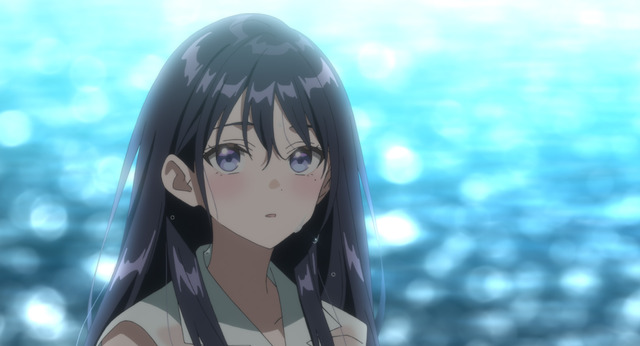
The anime film Doko yori mo Tooi Basho ni Iru Kimi e opens in theaters across Japan on October 9, 2026. The youth fantasy centers on Tsukigase Kazuki, a boy who transfers to a high school on a remote island for certain reasons, and Akishika Nao, the girl he meets there. Set on an island surrounded by beautiful nature, the film depicts the fresh everyday lives of its young characters alongside a bittersweet story that crosses time.
Director Wada Junichi and character designer and chief animation director Hechima spoke with AnimeAnime about the production. They discussed what they valued when adapting the original novel into film, how visiting the model island of Oki no Shima shaped the world, the character designs for Kazuki and Nao, and the changes brought by the voices of Ishibashi Hiiro, Nagase Anna, and the rest of the cast. The feature’s headline also highlights the reaction to Ishibashi and Nagase’s performances: ‘Mou daijoubu to omoeta’ (I felt it would be all right now).
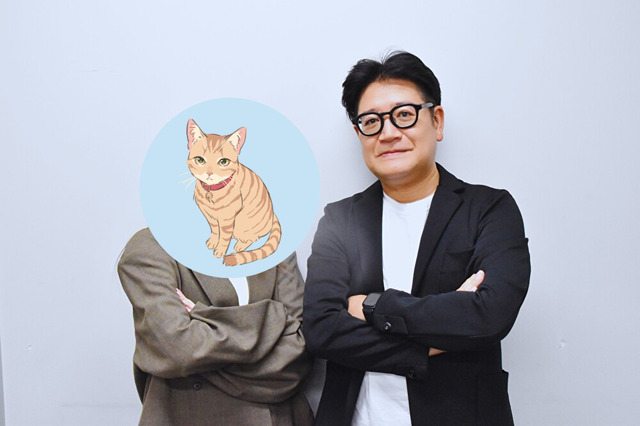
Profiles: Wada Junichi and Hechima
| Staff | Profile |
|---|---|
| Wada Junichi | Director and episode director. Main works include directing Shuumatsu Nani Shitemasu ka? Isogashii Desu ka? Sukutte Moratte Ii Desu ka?, directing and series composition for Sakugan, and directing HIGH CARD, among others. |
| Hechima | Animator. Began animation production while in university and from 2016 has served as an animation director and in other roles at Studio Colorido. Also handles character illustrations for light novels, social games, VTubers, and more. Character design (co-original concept) for Gakuen Idolmaster; character design and chief animation director for Chou Kaguya-hime!, among others. |
Interview and text by Yoneda Kaori.
The island world: ‘If it were here, the events in the novel could really happen’
Q: Before production, what discussions did you have about the film’s visuals and characters?
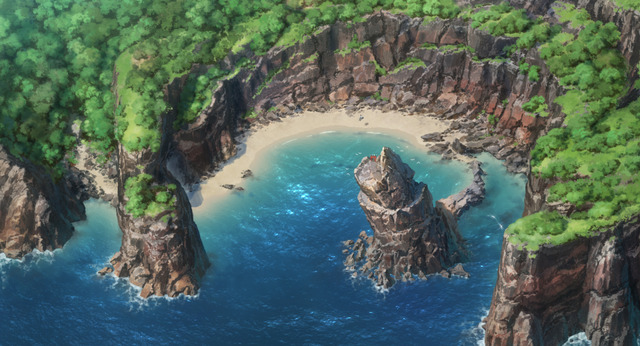
Wada: One of the things we valued most in this work was the island itself, which serves as the setting. When we began production, Hechima and the art, sound, and other staff visited the model island together. While expanding our ideas there, I told them I wanted the film to convey a sense of ‘ruralness’ and for the characters themselves to feel somehow ‘island-like.’ That said, Hechima has a strong artistic vision of his own, so I do not think I gave detailed orders like ‘please do it exactly this way.’
Hechima: I mainly draw characters, so I was not directly involved in the background art itself, but walking around the island together was still extremely important. There are atmospheres you cannot understand unless you actually go there, and I feel we were able to share them with the staff.
Q: What did you take away from visiting the island?
Wada: Of course, it is a place with very beautiful nature, including the sea and greenery, but beyond that, people actually live there. You can feel the human life typical of the countryside, while there is also an overwhelming atmosphere, as if ‘gods are present.’ The everyday air and the mysterious air within the great nature coexist on Oki no Shima, which we visited for research. Standing in that place made me think, ‘If it were here, the events depicted in the novel could really happen.’
Q: The original is a novel. What did you especially keep in mind when turning it into an animated film?
Wada: Not just for novels, but for manga and games too, my personal approach to adapting a work with source material into film does not change that much. What I felt first when reading the original this time was that it is a story told from Kazuki’s perspective. There is a lot of narrative text, and many of Kazuki’s inner words appear. Since we cannot put that directly into visuals, I thought about how to express it through direction. At the scenario stage, I thought we might include a little more narration, but that might have made it less engaging. So instead, I deliberately created silent time and sequences with no dialogue where only music plays. Since we were expressing it as a film, I thought it was better not to explain everything in words and to leave room for viewers to think. I was more conscious of that than in my usual anime work.
Hechima: When I read the original novel, the characters’ appearances felt quite ‘visible’ to me. So rather than struggling and forcing ideas out, it felt natural: ‘This child probably looks like this.’ I simply brought out those images without twisting them too much. There are not characters with extremely distinctive speech patterns, but even so, I could strangely feel each one’s personality already in the original.
Designing Kazuki and Nao—and the one character who sparked debate
Q: How did you build the designs for Kazuki and Nao, the two characters at the center of the story?
Hechima: Kazuki is called ‘prince’ in the story, so I wanted him to look like someone who could be called that without it feeling strange. I imagined a slightly androgynous, beautiful boy with a certain shadow to him.
For Nao, ‘cat-like’ was one keyword in her design. There were various changes along the way, but in the end, I saw her as a somewhat rustic girl born and raised on the island, with a straightforward personality—in a way, a classic heroine. Above all, what mattered in designing her was whether Kazuki falling in love with Nao would be convincing.
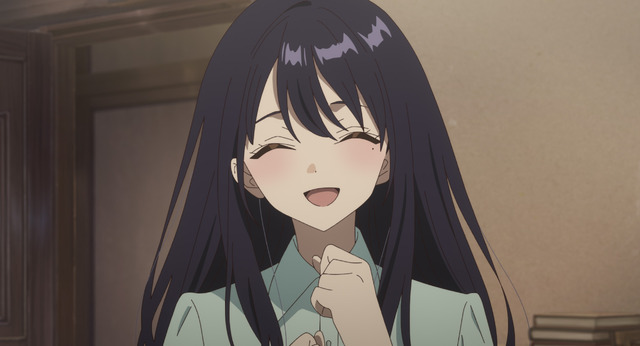
Q: Did Director Wada make any requests to Hechima about the character creation?
Wada: For most characters, the image I had in my head and what Hechima submitted were close. So I do not think I asked for major changes very often.
The only one we discussed repeatedly was Mishima Tamaki, a classmate of Kazuki. Hechima drew her based on impressions from the novel and script, while I had a directorial image of what I wanted to do, so we refined that point a little.
Hechima: Tamaki was where my image and the director’s image clashed a bit. I wanted to give her a design with a fairly big gap from Nao. But the director requested that I bring out her reliable nature more strongly. At first I gave her droopy eyes, but then it became ‘this character probably is not droopy-eyed’ (laughs). From there, I explored how to differentiate her from Nao.
Wada: Hechima has an incredible range of ‘cute’ and ‘cool’ variations. It is not the case that all cool male characters go in the same direction or all girls have similar faces; each one has a properly different charm. It also does not become a situation where ‘cool characters’ or ‘cute characters’ just keep multiplying, so the overall balance is excellent. He had many ideas I lack, so I was truly grateful.
Uniforms, hair colors, and keeping individuality distinct
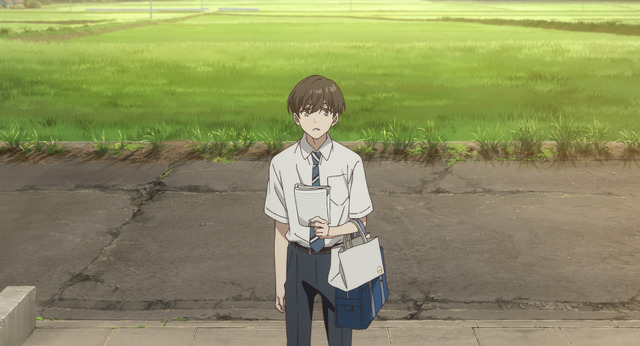
Q: The students wear the same uniform, and their hair colors are relatively realistic. Did you consciously work to keep their individual traits from overlapping?
Wada: For the main characters, Hechima created color images together with the designs. They were submitted in a form that said, ‘You can use these as they are, or adjust or change them.’ Since we could use that as a base for discussions with the color designer, it was a huge help. Still, Hechima was quite worried about whether the characters’ individuality overlapped.
Hechima: I was extremely worried about it (laughs). I would check things like, ‘These two feel a little close, do they not? Is that okay?’
Wada: I, on the other hand, was not worrying that much. So I would say, ‘Probably fine, right?’ (laughs)
Hechima: In the end, I thought, ‘If the director says so’ (laughs). I trusted the director there.
Interview and text by Yoneda Kaori.