

Replica datte, Koi wo Suru S01E01
The Premise Hooks Quietly
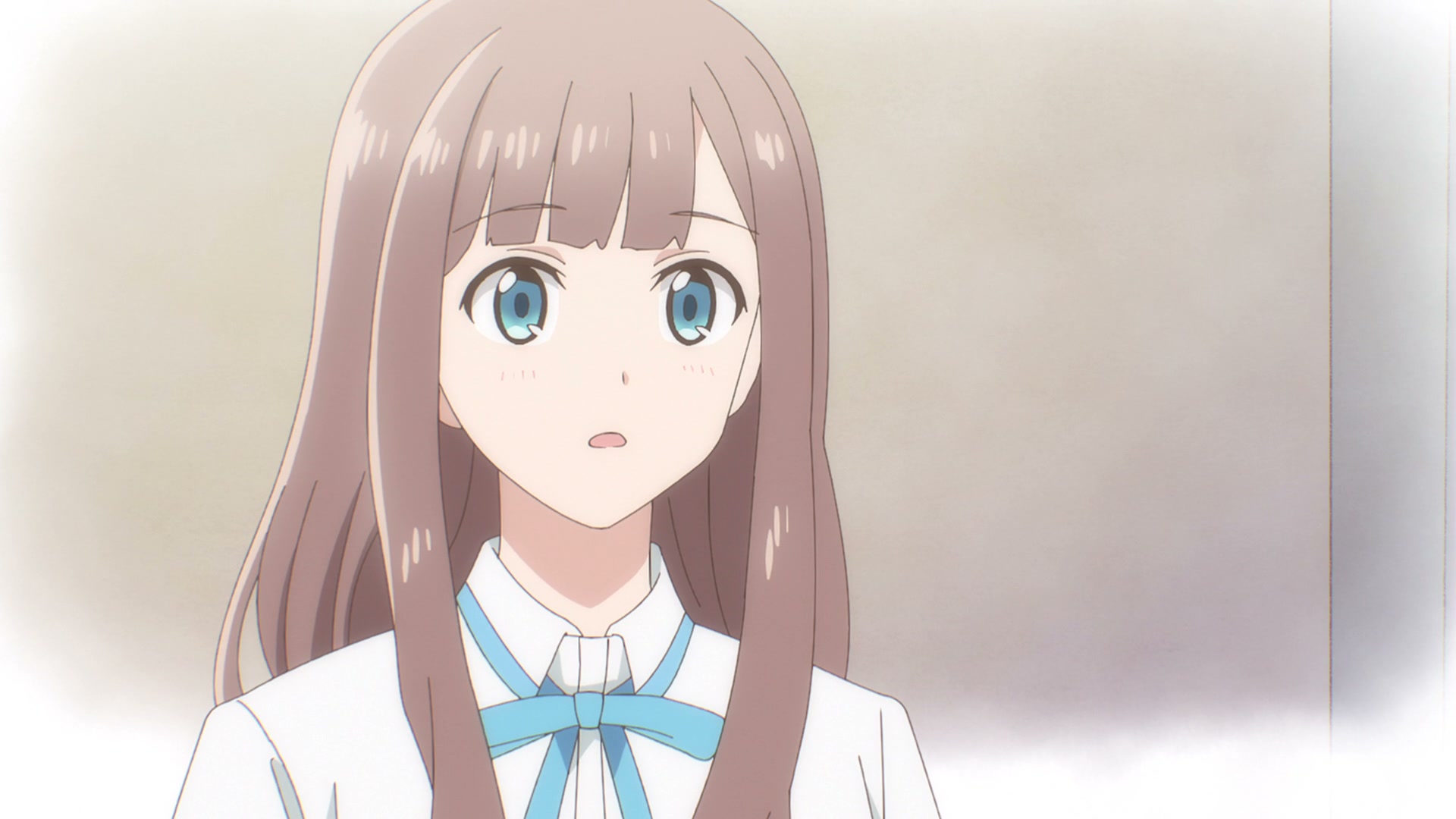
There’s something immediately disarming about how this first episode unfolds. No frantic exposition dump, no overly dramatic premise setting. Just a girl named Sunao who can apparently create a copy of herself, and a replica named Nao who exists to take her place at school, in social obligations, in the parts of life Sunao doesn’t want to handle herself.
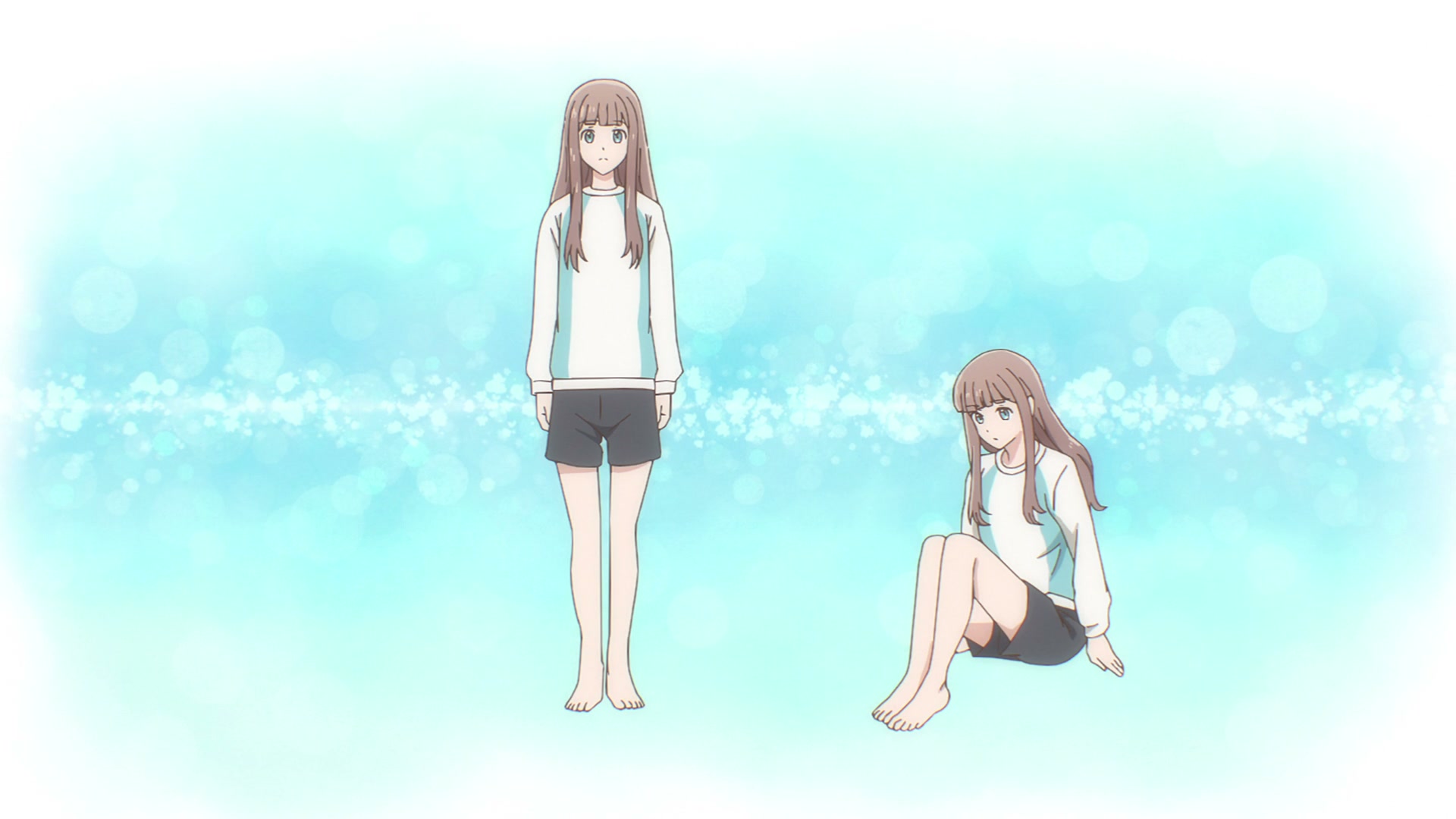
The cold open is sparse. Nao mentions she’s never slept in a bed, only dried blankets in the sun and rushed to bring them in before sunset. It’s the kind of line that lands differently once you realize what she is. A replica wouldn’t have childhood memories of bedtime. She just appears when called, already wearing whatever Sunao is wearing, stepping into the world like someone walked out of a mirror.
Their morning routine is efficient and slightly sad. Nao handles the errands, goes to school, manages the social calendar. Sunao stays behind, complaining about cramps and envying Nao for not having to deal with period pain. “You’ll never know how much this hurts,” she says, and Nao just agrees. Yeah.
Nao's Existence Is Defined by Service
The episode doesn’t rush to explain the mechanics. It lets details surface naturally through Nao’s narration. She was born when Sunao was seven, after a fight with a neighborhood friend named Ricchan. Sunao was too stubborn to apologize but still wanted to make things right, so those conflicting feelings somehow created Nao. A replica who could go to the community center and say the words Sunao couldn’t.
That memory sequence is brief but effective. Young Sunao pleading “Please help me,” and Nao appearing. The reconciliation with Ricchan. Sunao hugging Nao afterward when she heard the good news. And then: “Let’s keep this a secret between the two of us.” The first rule of their coexistence.
What follows is a childhood montage of experimentation. Testing whether parents could tell them apart. Figuring out how long a replica could exist. Rock-paper-scissors games where they threw the same hands. The rules of Nao’s existence get established through these small moments, not voiceover exposition. She vanishes when dismissed. She appears matching Sunao’s current state. Clothes she acquires in the real world stay behind when she disappears, keeping everything balanced.
The detail about the 50-yen coins stuck with me. Nao doesn’t get an allowance, so she’s been cleaning bathrooms and doing laundry since grade school, getting small coins from Sunao’s mother. She keeps them in a chocolate crunch can, never spending the money. It’s a small concrete image that says a lot about her position in this household. She does the work and receives tokens, but she doesn’t really participate in the economy of a normal life.
The Literature Club Gets a New Member
The present-day plot centers on the literature club, which is really just Nao and Ricchan, now reunited after years apart. Ricchan writes stories. Nao gives feedback. The club room has a broken fan, and they’re suffering through summer heat with nothing but green peas to complain about.
Their dynamic is comfortable. Ricchan calls her “Nao-senpai” and wants honest criticism. Nao provides it thoughtfully, pointing out where a snowy reunion scene could use more emotional interiority instead of dramatic description. It’s the kind of specific, practical advice that makes you think Nao has been paying attention to how stories work, maybe because her own existence is so defined by the gap between surface and interior.
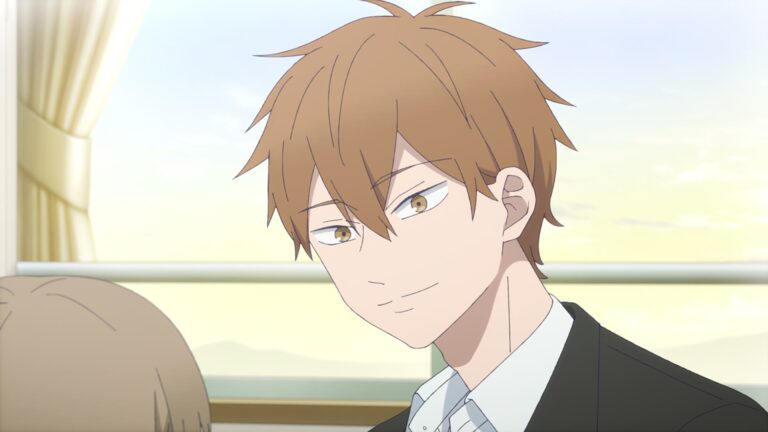
Then Sanada Shuuya walks in.
He’s a classmate who was hospitalized before the volleyball Inter-High qualifiers and only recently returned to school. Sunao has never spoken to him, but Nao knows things through Sunao’s memories. The information comes across as slightly fuzzy, the way Nao describes memories that don’t make a strong impression on Sunao being “fuzzy and hazy.” It’s a nice bit of worldbuilding folded into characterization.
Shuuya joins the literature club with minimal ceremony. He doesn’t seem particularly interested in books, but he brings a spare electric fan from home and accepts their joking funeral for the old broken one. The moment where Nao and Ricchan pray over the dead fan and Shuuya awkwardly joins in with “You did good, electric fan” is the kind of low-key comedy that makes slice-of-life club dynamics work.
Nao recommends Soseki’s Kokoro after Shuuya remembers exactly one line from class: “Anyone with no ambitions is an idiot.” The choice feels deliberate. Kokoro is a novel about isolation, about the distance between people who should be close, about someone who exists in relation to another person’s life. Nao probably didn’t pick it for thematic reasons in-universe, but the resonance is there for viewers.
Quiet Visual Moments
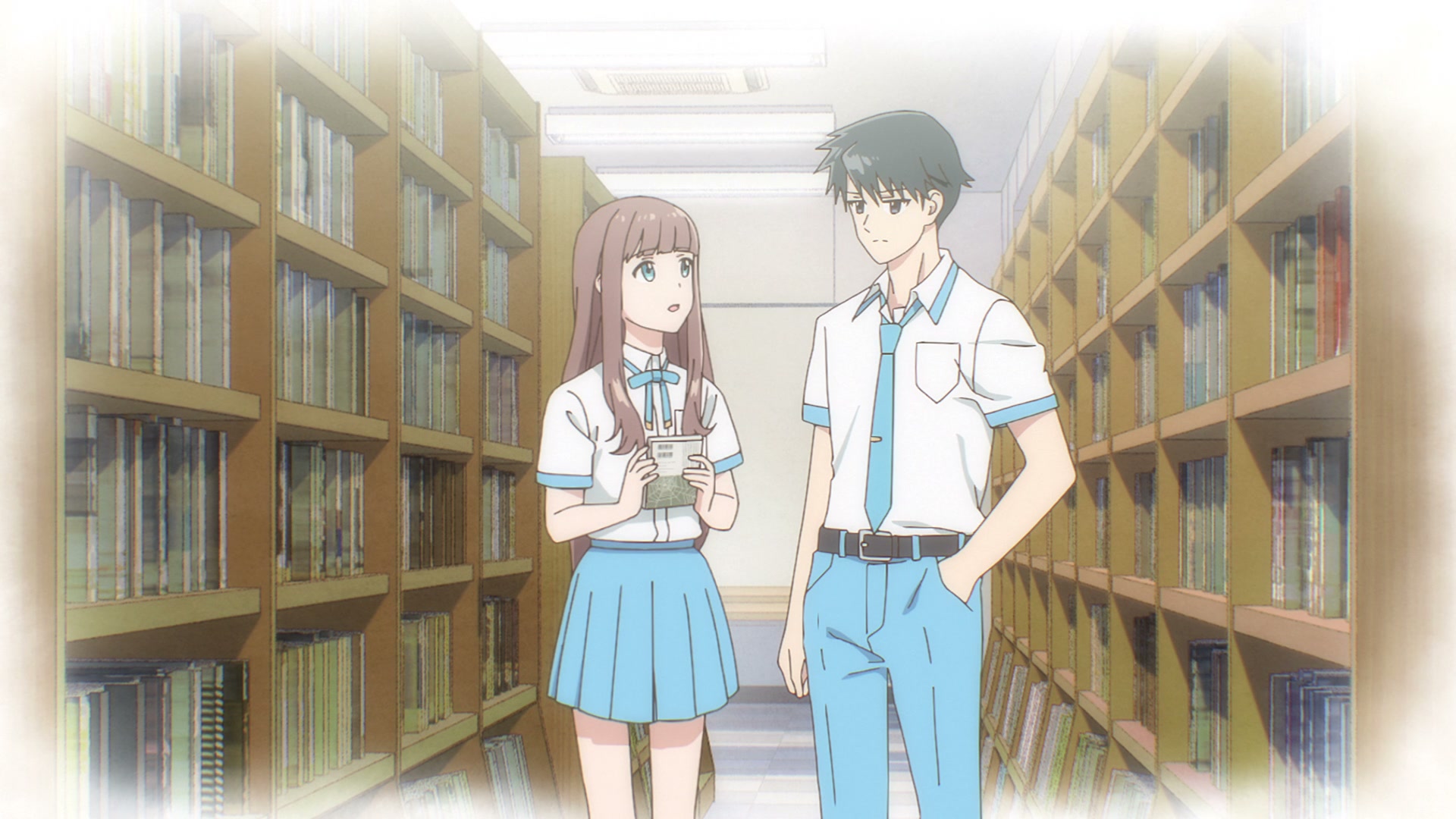
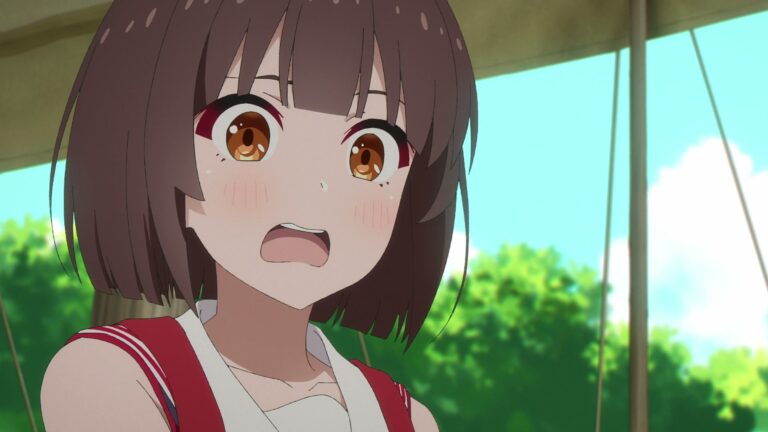
The screenshots emphasize stillness. Nao standing in the living room where she used to play with Sunao but now just stares at empty space. Nao in the library, face pressed close to the spines of books. The way she describes reading a book as similar to reviewing Sunao’s memories. Strong impressions read clearly. Uninteresting things go fuzzy.
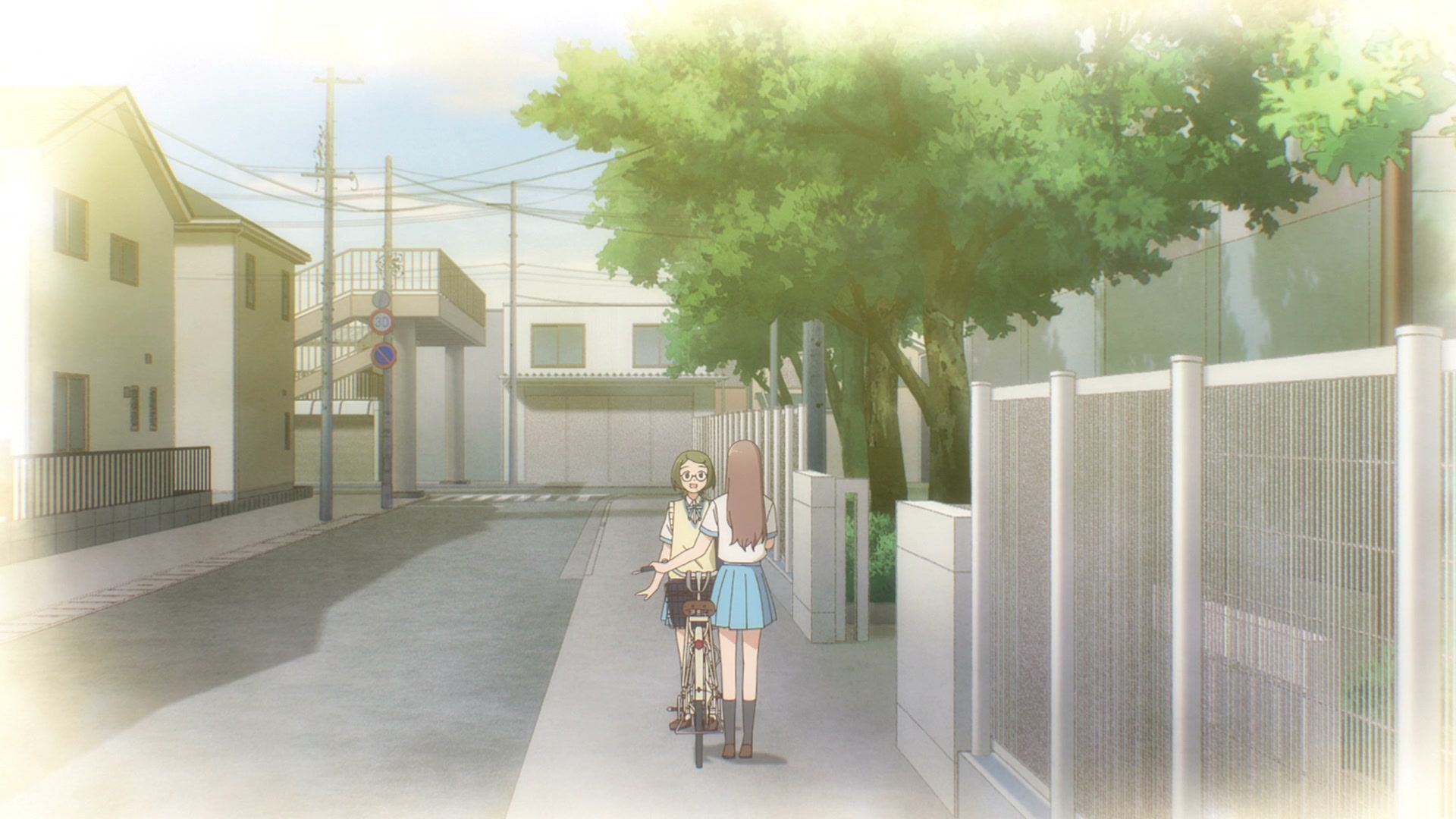
There’s a shot of Nao looking at the school building or courtyard that captures the summer heat and the slight remove she maintains from everything. She’s inside Sunao’s life but not quite of it. The episode’s pacing reinforces this. It isn’t in a hurry. Conversations drift. Silences hold.
The club room itself feels appropriately humble. A small space with stacks of paper, the broken fan, Ricchan sprawled in discomfort from the heat. When Shuuya arrives, the dynamic shifts slightly but not dramatically. He’s another presence, another variable in Nao’s life as Sunao’s substitute.
A Bittersweet Twist at the End
The episode closes with Shuuya approaching who he thinks is Nao about the fan he promised to bring. But it’s actually Sunao. She has no idea what he’s talking about. “Fan? What’s this about?”
It’s the first real collision between the two worlds Nao navigates. Shuuya knows “Aikawa” from the literature club. Sunao has no memory of that conversation because she wasn’t there. The disconnect is immediate and uncomfortable. You can feel the confusion on Shuuya’s side and the blankness on Sunao’s.
This ending complicates what came before. Nao spent the episode building connections. With Ricchan, through their shared club time and her thoughtful feedback on stories. With Shuuya, through book recommendations and the gentle absurdity of holding a funeral for an electric fan. But none of those connections actually belong to her. They belong to Aikawa Sunao, the person she’s replacing.
And Sunao, based on what little we see, doesn’t seem particularly engaged with this life Nao is maintaining for her. She wanted Nao to take her test, go to school, handle things. Nao worked hard to get good grades and do well in gym, hoping it would make Sunao smile. But Sunao just tells her to go away when mom’s about to come home.
Where This Leaves Things
The first episode establishes a fascinating emotional landscape. Nao is a replica who experiences the world vividly. She has opinions about books. She makes friends. She gives thoughtful feedback on fiction. She takes pleasure in small rituals like thanking an old fan before throwing it away.
But her entire existence is contingent on Sunao’s needs, and Sunao seems to need her less and less. “It’s gotten to the point where she only calls me a few times a month on a whim.” Nao says she still doesn’t know what’s going through Sunao’s head. And when Nao says “a replica is made never to dream,” it lands as something she’s telling herself as much as reporting to us.
The title, “Replica datte, Koi wo Suru,” promises that a replica will fall in love. This episode doesn’t rush toward that. It builds the foundation first. Who Nao is, what her existence costs, and the quiet tragedy of someone who does all the living but doesn’t get to keep any of it.
Shuuya’s arrival and the final mix-up with Sunao suggest the complications ahead. Nao has begun forming something that looks like a life. But it’s a life borrowed from someone else, and the real Aikawa Sunao can walk into it at any moment without knowing what’s going on.
Screenshots