





Sometimes a show quietly builds toward a moment you know is coming, and when it finally arrives, the execution still hits harder than you expected. Episode 8 of Haibara-kun no Tsuyokute Seishun New Game is that kind of episode. Hikari has been running from her father for a while now, and running away from home was the logical endpoint. What makes this work is not the confrontation itself but everything around it: the vulnerability, the awkwardness, and the way Natsuki navigates a situation that no amount of past-life experience could have prepared him for.
The Sleepover That Should Not Be This Tense
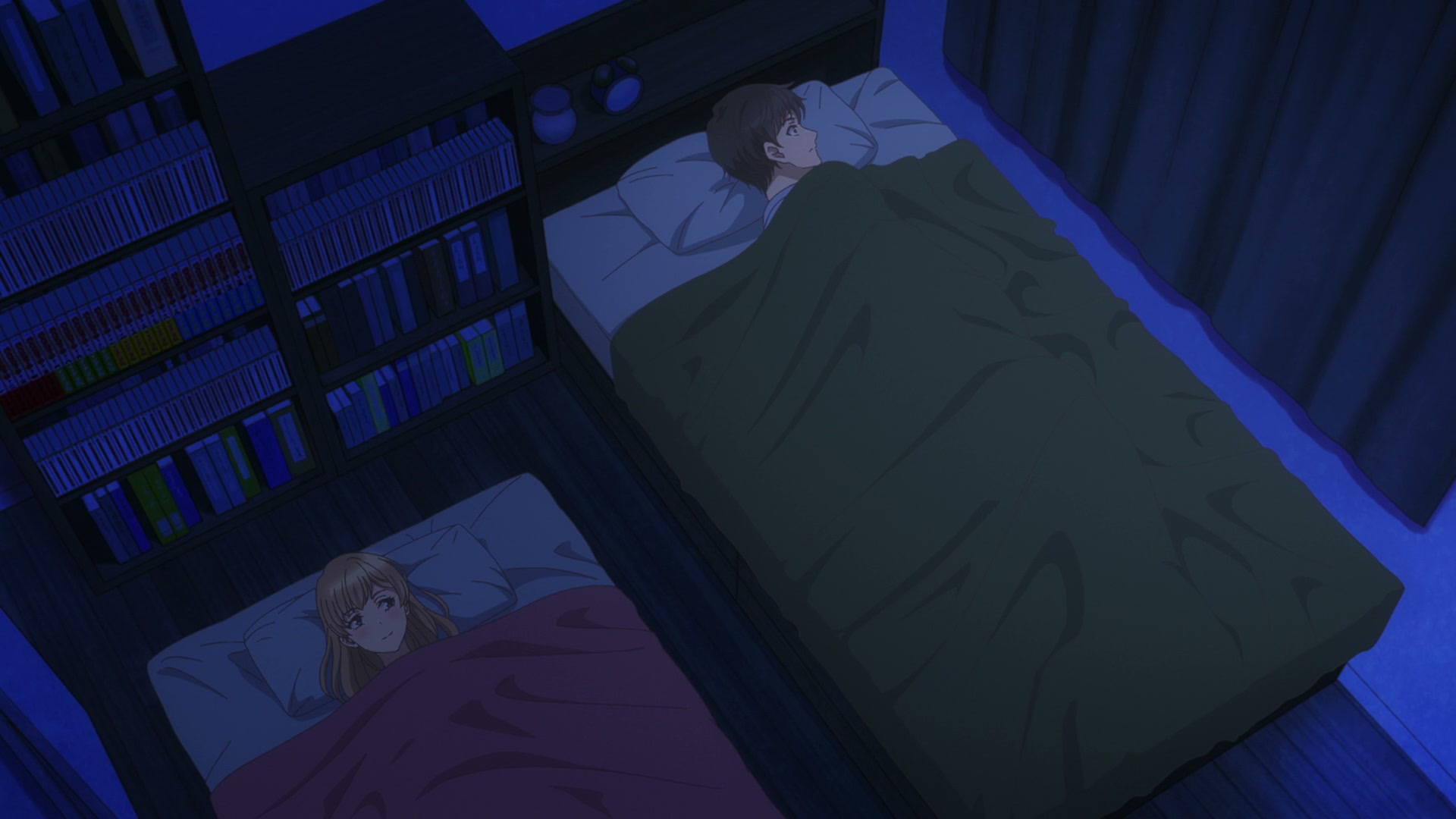
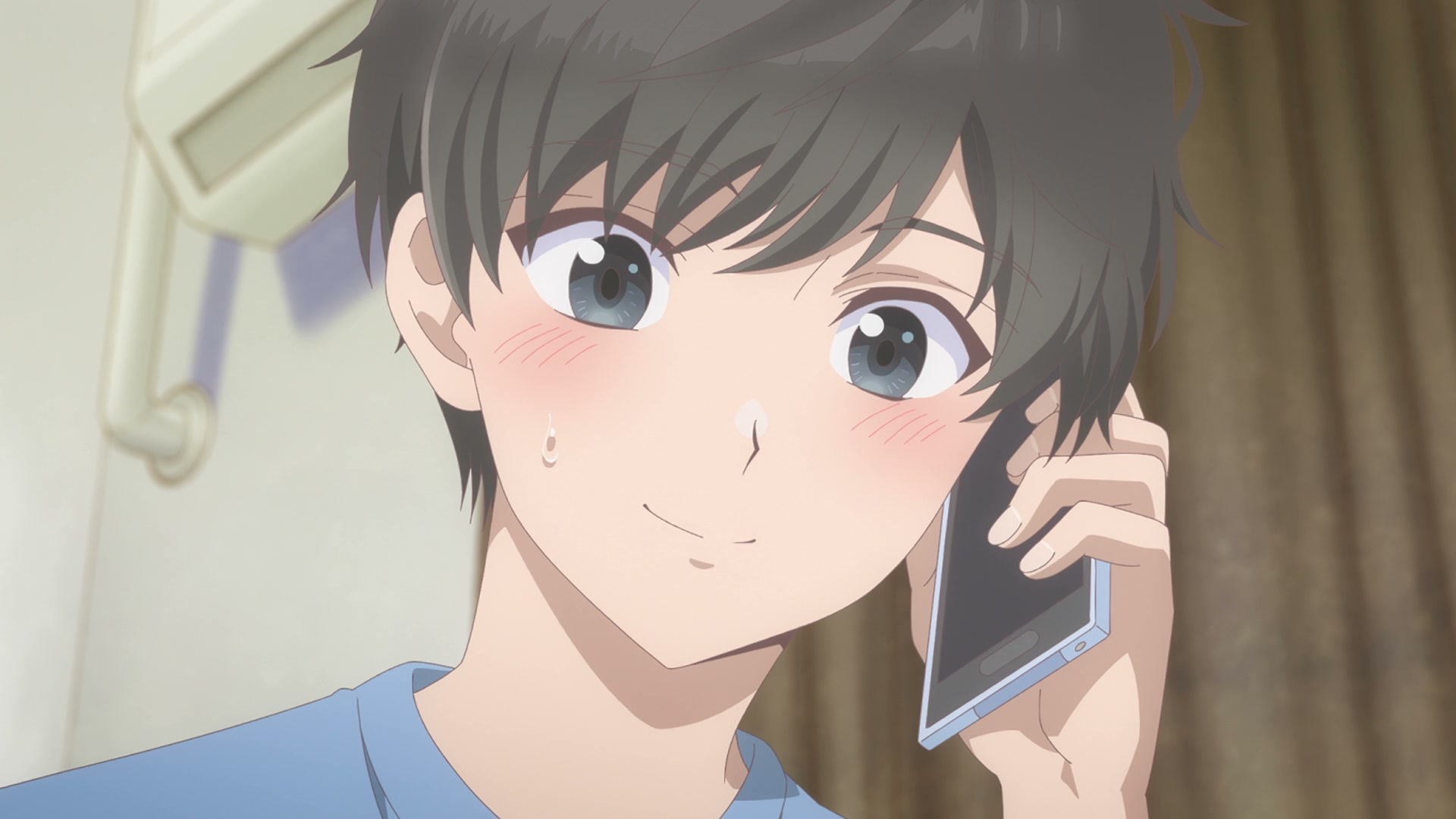
The episode opens right where the last one left off: Hikari standing at Natsuki’s door, having fled her house. Natsuki’s internal monologue is exactly what you would expect from someone who spent his first high school run as a socially isolated otaku. “When did I become a light novel protagonist?” he asks himself, alone in his room at night with his crush. The self-awareness is perfect. He knows how this looks. He also knows it is not like that at all.
Namika steals every scene she is in. She walks in on them, immediately assumes the worst, and then cycles through every possible genre convention. Girlfriend? No. So they just sleep together? When did he become an eroge protagonist? The younger sister who is somehow both the voice of reason and the most chaotic element in the house is a well-worn anime archetype, but Namika makes it work because her reactions feel genuinely sibling-like. She is scandalized, curious, and a little too invested in the drama. Her whispered question about whether she should sleep in the living room “because of the noises” is the kind of jab only a sister could deliver.
The bath scene is handled with restraint. Natsuki consciously reminds himself to keep his thoughts pure, to be Hikari’s rock. The show does not linger or leer. Hikari borrowing his clothes, the quiet awkwardness of sharing a room, the barley tea. These are small, grounded details. The episode understands that the tension here is not sexual. It is emotional. She is trusting him, and he is terrified of violating that trust.
The Mask Comes Off
The heart of the episode is Hikari’s confession, not about romance but about identity. She shows Natsuki an old photo. The real her, she calls it. A gloomy, quiet girl with no friends who found solace in novels. The Hikari everyone knows at school, the cheerful popular girl, is a performance she crafted because her father hated who she actually was.
This recontextualizes everything about her character. The emotional radar, the way she notices when people are troubled, the sharpness beneath the smile. It all comes from years of studying people, of performing a personality so thoroughly that it became second nature. She says writing novels made the performance easier. She was already used to inhabiting characters.
The line that sticks is when she calls herself her father’s puppet. Not angrily. Just matter-of-fact. She gave up everything she wanted to become the daughter he wanted, and it worked. He stopped getting mad. She got a kind of peace. But it was never actually peace.
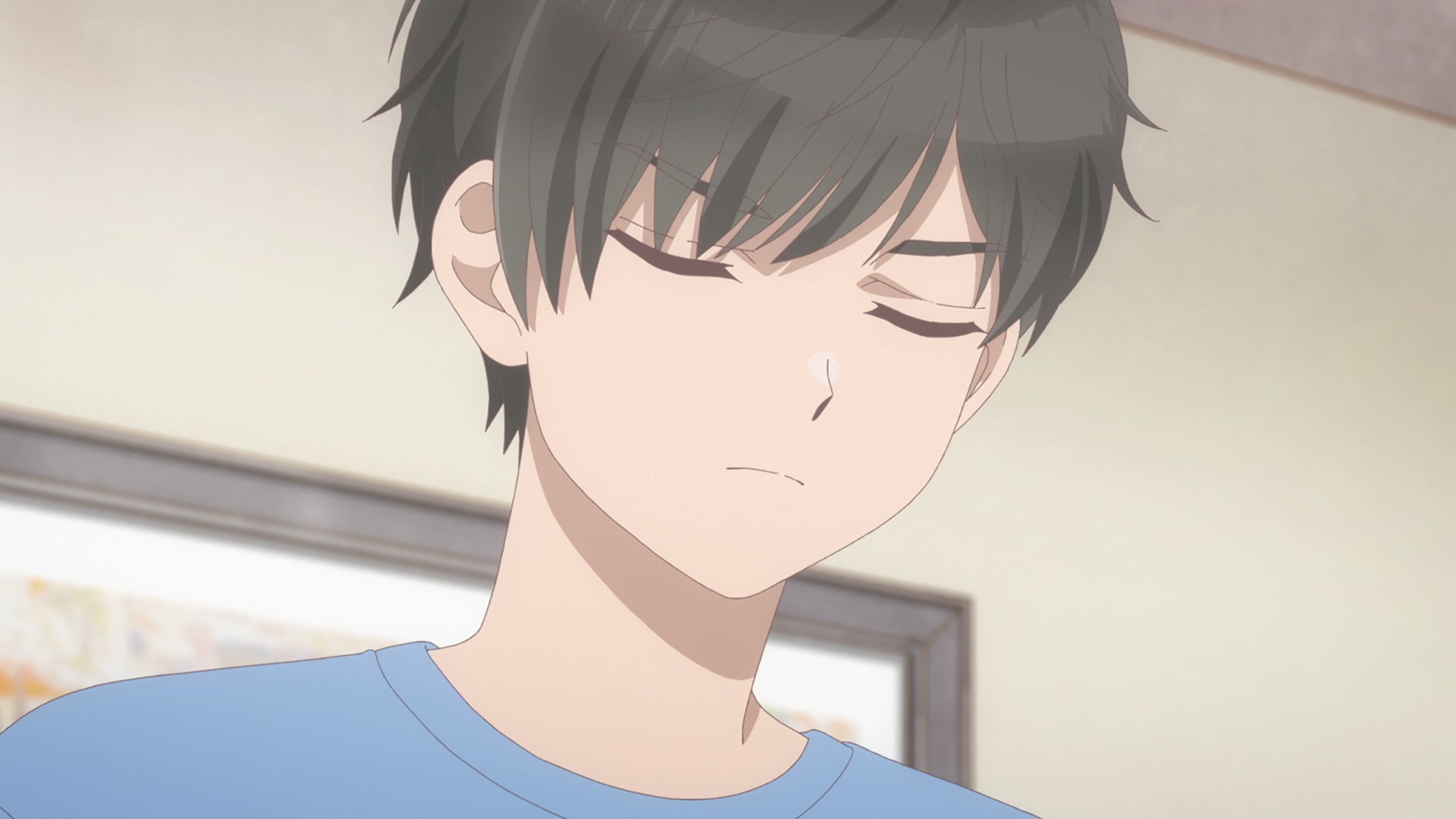
Natsuki’s role here is mostly listening, and that is the right choice. He interjects just enough to keep her going, and when she tests him by saying she did not like him at first, he protests exactly like you would expect from someone whose emotional fragility is, in his own words, “like glass.” The moment she says she likes him, then clarifies she meant as a friend, is a small cruelty. He spirals for a second. The show lets him. It does not make it a joke.
The Dad Conversation Is Complicated
Sei Hoshimiya shows up at Yuino’s place, and the confrontation that follows is not a triumph. It is not clean. Hikari says what she needs to say. She calls him out on his own unhappiness, points to his failed marriage, and asks if he can really claim to be happy. It is brutal in a way that feels earned. She is not arguing from a position of strength. She is arguing from years of resentment finally finding words.
Sei’s response is interesting because the show does not make him a monster. He says he understands how she feels. He lived according to his own father’s wishes. He rebelled in his mind but ultimately complied, and he has been successful by every external measure. He genuinely believes he is doing this for her sake.
The problem is that Hikari sees him clearly. He has money but no family. His wife barely tolerates him. His daughter hates him. And he cannot admit any of this. He has built his identity around being right, and to accept Hikari’s autonomy would mean accepting that his whole framework might be wrong.
Her demand is simple: read her novel. If he thinks it is good, he has to accept that she will not be his puppet anymore. She is using the thing he values as a weapon against him. Novels were her escape from his world, and now she is asking him to judge her on the terms of that escape. He takes the manuscript. He cannot promise he will like it. But he takes it.
Yuino Shows Up for Her Friend
Yuino gets less screen time here, but her presence matters. When Hikari explains why she went to Natsuki instead of her, the reasoning hurts. Hikari has always relied on Yuino for everything. She did not want to be a burden. She wanted to figure it out herself.
Yuino’s response is to invite Hikari to stay with her, just for one night, because her mom would be mad if she found out she was helping a runaway. The practicality does not undercut the warmth. Yuino is the friend Hikari made when she was the gloomy, quiet girl in the photo. She has seen the real Hikari all along. That she is still here, still offering her home, says something the episode does not need to spell out.
The Novel Draft and the Unspoken Feelings
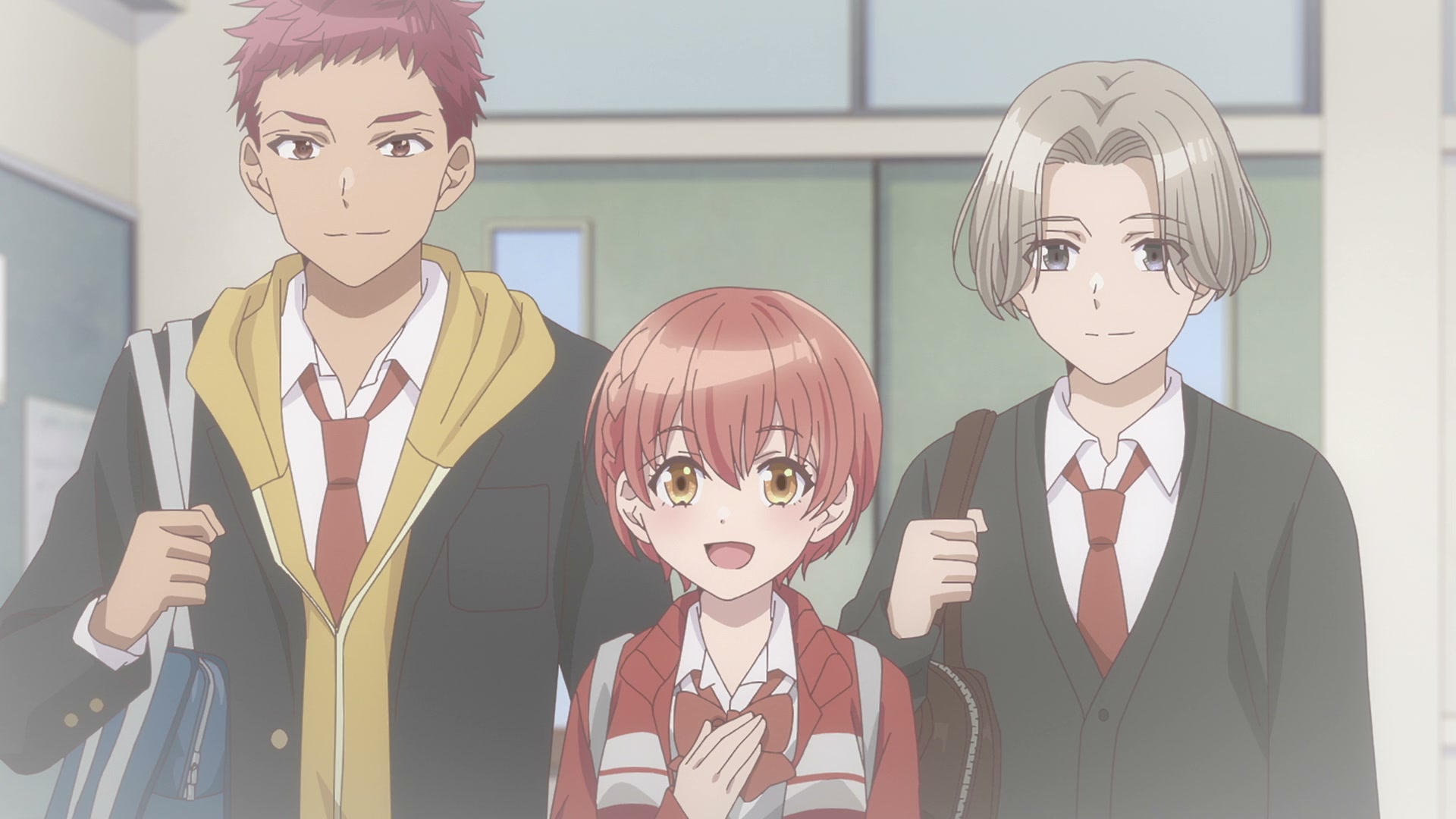
The brief scene of the group working on Hikari’s manuscript is a nice callback to the series’ ensemble energy. Yuino immediately identifies the male lead as being based on Natsuki. Hikari denies it too forcefully. Natsuki notices. The scene is short, but it reinforces that these characters have lives and relationships beyond the central conflict.
Hikari’s questionnaire for Natsuki, asking his impressions of her, his values, his family, what kind of girls he likes, is framed as character research for the novel. But the final question, “Is there anyone you like right now?”, lands differently. He says yes. He does not say there are two of them.
His internal admission is the episode’s quietest bombshell. He likes both girls equally and cannot choose. He made advances on Hikari and then went to Tanabata with Uta. He wonders what Hikari thinks of him. He calls himself the only one who does not understand anything. The self-recrimination is familiar for this character, but it is also honest. He is not faking indecision. He genuinely does not know what he wants, or he knows and cannot admit it.
A Few Moments That Stuck
Namika asking where Hoshimiya-san went and sounding genuinely disappointed she would not be staying another night. She was invested.
The brief flash of Natsuki walking in on Hikari changing, handled as awkward comedy but also giving Hikari a moment to call him a perv with just enough edge to remind you she is not actually a pushover.
Natsuki’s internal reminder that Sei rejected him in the original timeline’s job interview, and his quick self-correction. “Idiot! That’s not the problem here!” The past-life knowledge is still there, simmering, but this episode is about Hikari. He knows it.
Where This Lands
This episode could have been melodramatic. A runaway daughter, a controlling father, a sleepover with a crush. The pieces are all there for something overwrought. Instead, the show plays it close to the chest. Hikari’s pain is real and specific. Her father is not a cartoon villain. Natsuki is helpful but not heroic. He gives her a place to stay, listens, and helps with the novel. That is all he can do.
The resolution is incomplete on purpose. Sei took the manuscript. He made no promises. Hikari went home. Whether anything actually changes depends on whether her father can see her novel as more than a child’s hobby and whether Hikari can sustain the courage she found in running away.
The episode ends with Natsuki telling Yuino that Hikari will probably be fine. He says it with the confidence of someone who has seen a version of Sei that respects people who think and act on their own. Whether that version exists in this timeline is the question. The manuscript is in his hands now. That is as much closure as this story can offer right now, and it is enough.
Screenshots

← Episode 7 | All Haibara-kun no Tsuyokute Seishun New Game Season 1 posts →

[…] ← Episode 8 | All Haibara-kun no Tsuyokute Seishun New Game Season 1 posts → […]