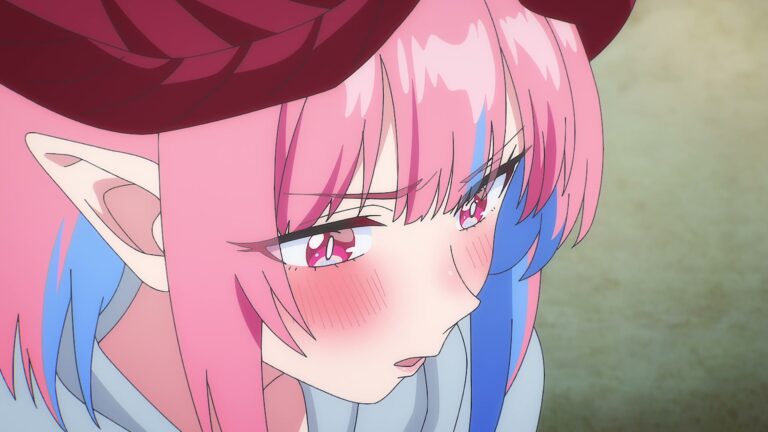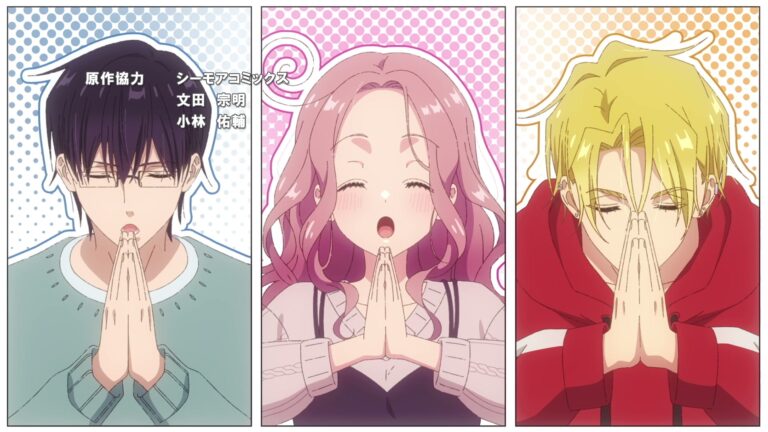






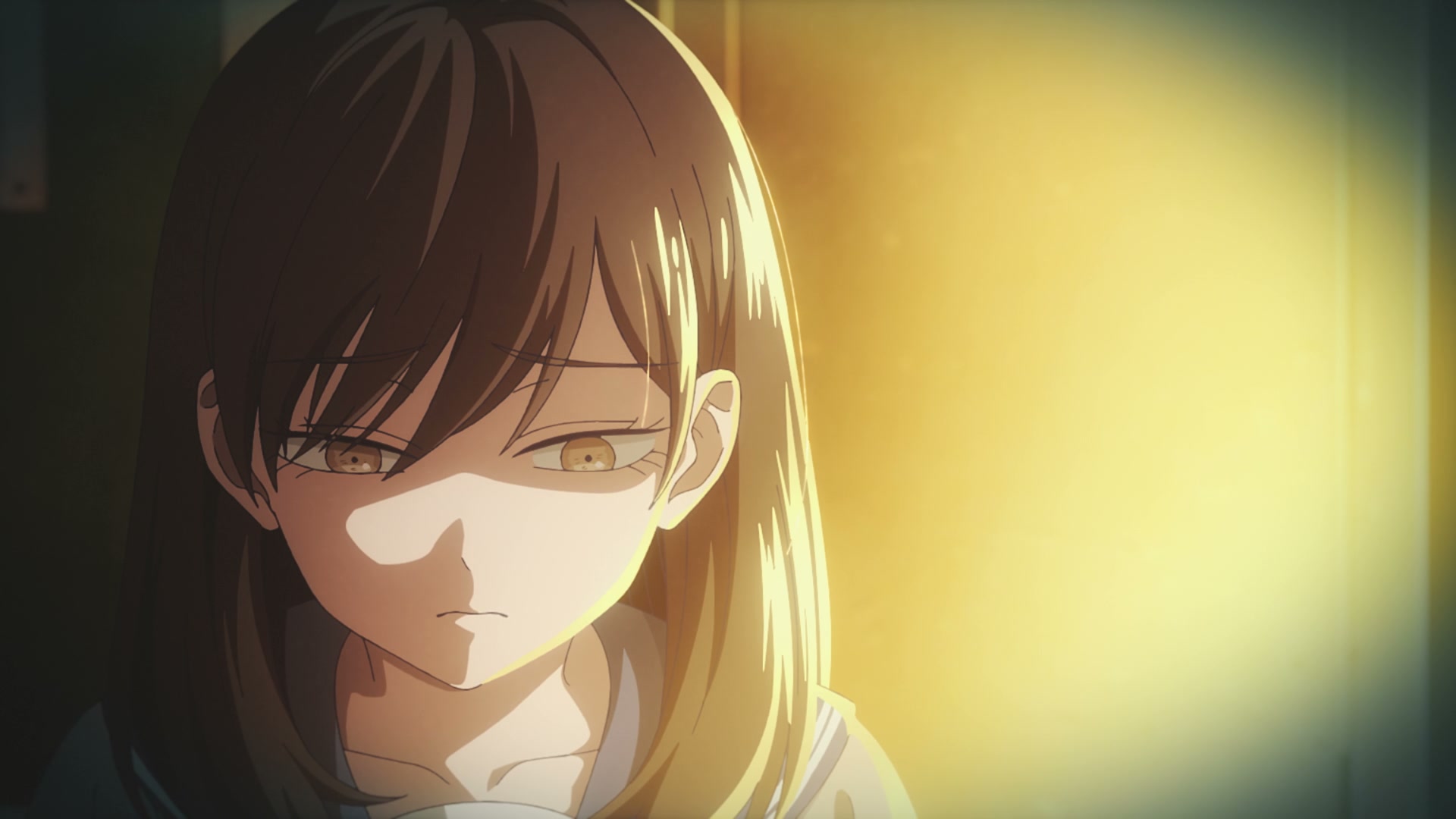
The episode I have been waiting for since Akine first appeared with that too-polite smile finally lands, and it does not pull its punches. S01E11 of Koori no Jouheki is almost entirely Koyuki’s memory, a long, uncomfortable flashback that fills in the exact shape of her middle school wound. The present-day frame is light by comparison, but the way it mirrors the past makes every small interaction feel loaded.
The Flashback Earns Its Runtime
The episode opens with Koyuki’s voiceover introducing herself, then cuts to Manatsu’s introduction, and the contrast is immediate. Manatsu is bright, athletic, already claiming a place. Koyuki is quiet, grateful that her neighbor Sacchan invited her to the basketball club, relieved that the upperclassmen are kind. The early scenes have a soft, almost nostalgic warmth: the senpais fussing over Koyuki, calling her cute, the first-year practice menu handed over without drama. It feels like a normal club start, the kind of memory that should be unremarkable.
And then the cracks appear, so small you could miss them if you were not looking for them. Manatsu’s first question, “Why are you the one calling the shots?” is delivered with a smile that does not reach her eyes. Koyuki rationalizes it as dislike of being told what to do. But the episode lets the unease accumulate: the comment about Koyuki’s height, the way Manatsu’s hostility sharpens whenever Koyuki is near the senpais. Koyuki’s narration is calm, almost clinical, but the editing makes the pattern unmistakable. Manatsu was not just a difficult teammate. She was systematically isolating someone she saw as a threat to her own access to the upperclassmen.
The turning point is the fake reconciliation. Manatsu suddenly calls Koyuki a “super nice girl,” says she had her all wrong, and asks to be called by her first name. Koyuki, desperate for the friction to stop, accepts it. The line that sticks with me is Koyuki’s own assessment: “It was a relationship built not on trust, but on mutual benefit.” She knew, even then, that the warmth was transactional. Manatsu got closer to the senpais through Koyuki. Koyuki got a reprieve from open hostility. Neither of them liked the other.
The Kind of Cruelty That Leaves No Marks
What makes Manatsu’s harassment so insidious is that it never crosses into the overtly physical or the easily reportable. The shoe locker incident is the closest it gets, and even that is deniable. A note in her shoe locker, a water bottle mocked behind her back, the slow exclusion from lunch tables. When Koyuki finally snaps and confronts her, Manatsu’s defense is textbook: “I told you, that wasn’t me. Everyone passes by the shoe lockers.” The moment Koyuki traps her by mentioning the shoe locker without being prompted, Manatsu’s mask slips into open contempt, but by then the damage is already done. The episode understands that this kind of bullying thrives on plausible deniability and the victim’s exhaustion. Koyuki quit the club not because of one big incident, but because the cumulative weight made staying impossible.
The confrontation scene is the episode’s rawest moment. Manatsu, cornered, drops all pretense and spells out exactly what she thinks: Koyuki is a gloomy loner who cannot do anything by herself, who ran away from club, got allies, and is now acting tough. The words land hard because they echo Koyuki’s own worst fears about herself. And then Igarashi shows up, playing the protector, and Manatsu’s final whispered jab, “Playing the victim and getting boys on your side… Don’t get full of yourself,” is the kind of poison that sticks. Koyuki’s voiceover after the flashback, “I really hate this! The more I think back, the more I hate my middle school environment. No, even more than that… I hate who I was back then!” is not self-pity. It is the sound of someone who sees her own complicity clearly and cannot forgive it.
Koyuki’s Own Worst Memory
The episode does not let Koyuki off the hook, and that is why it works. She admits that she dated Igarashi not out of affection, but because she wanted to hurt Manatsu, who liked him. She went out with him hoping she would eventually feel something, and when she did not, she ended it in a way that was deliberately cruel. The guilt over that choice is not new information, we heard it in an earlier episode, but seeing it placed in the timeline, right after the harassment, changes its weight. It was not a random mistake. It was a reaction born from the same toxic environment, and Koyuki knows she became part of the ugliness. The flashback ends with her wishing she had quit the club immediately and cut ties completely, but she did not, and that regret is still alive.
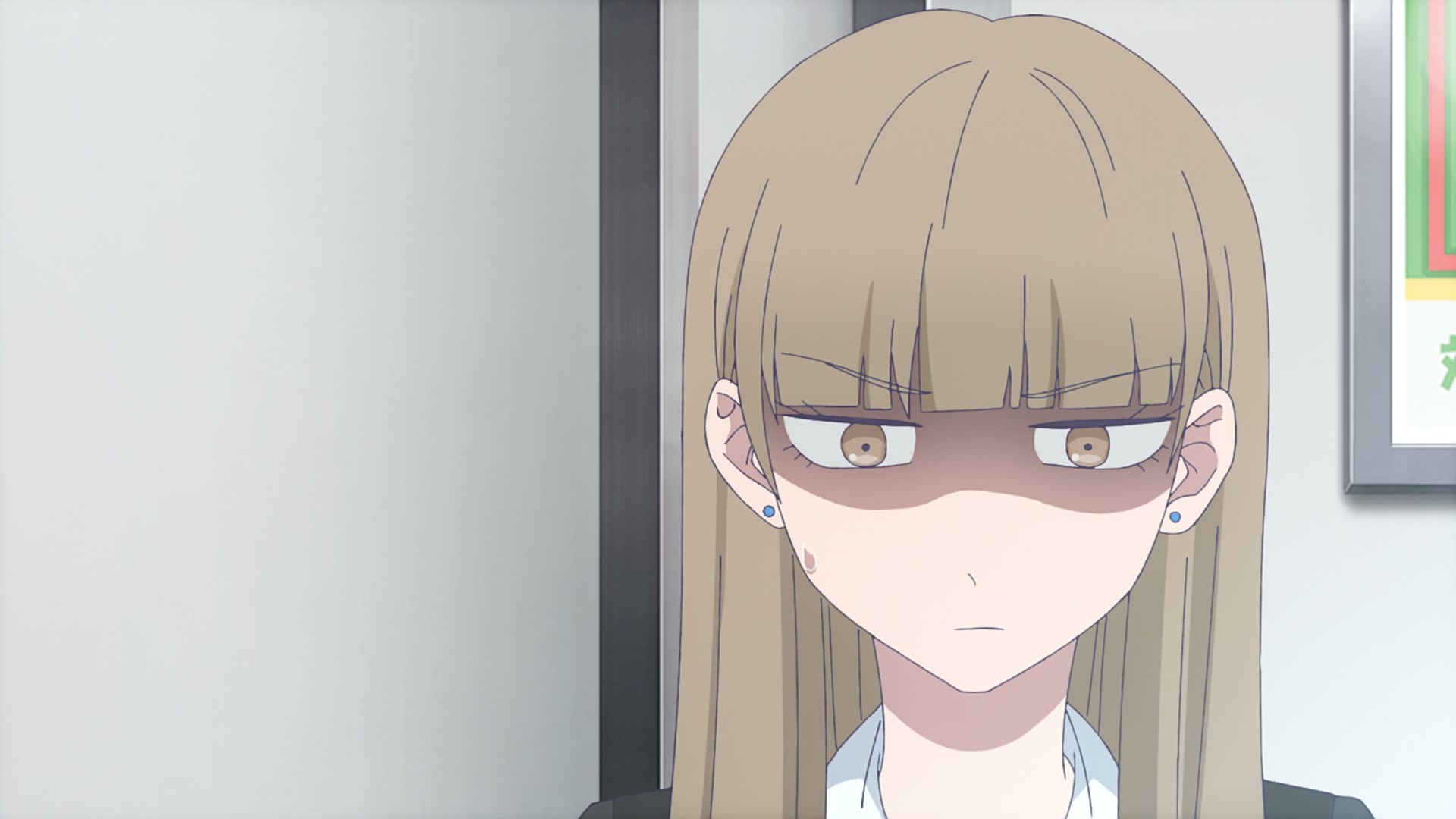
The present-day scenes are quieter, but they carry the aftershock. Koyuki’s internal monologue on the train with Akine is painfully relatable: “Someone might know inner parts of me I don’t want anyone to know. That alone makes my heart feel horribly unsettled.” Akine has done nothing openly hostile, but her polite attention feels like a continuation of her sister’s watchfulness. The episode does not resolve whether Akine means harm or is simply curious, and that ambiguity is the point. Koyuki cannot trust it.
Minato’s Small Rescue and the Gyoza Misunderstanding
Amamiya Minato’s appearance on the train is a welcome pressure release. He slots into the conversation with Akine effortlessly, talking about music, keeping the mood light, and Koyuki’s internal gratitude is genuine: “Amamiya-kun… I’m sorry for thinking your questions were tiring back then.” It is a small moment, but it shows how far their dynamic has come. He is still pushy, still boundary-blurring, but here that quality functions as a shield. When Akine asks him directly if he has a girlfriend, he answers without hesitation, and Koyuki’s relief is palpable.
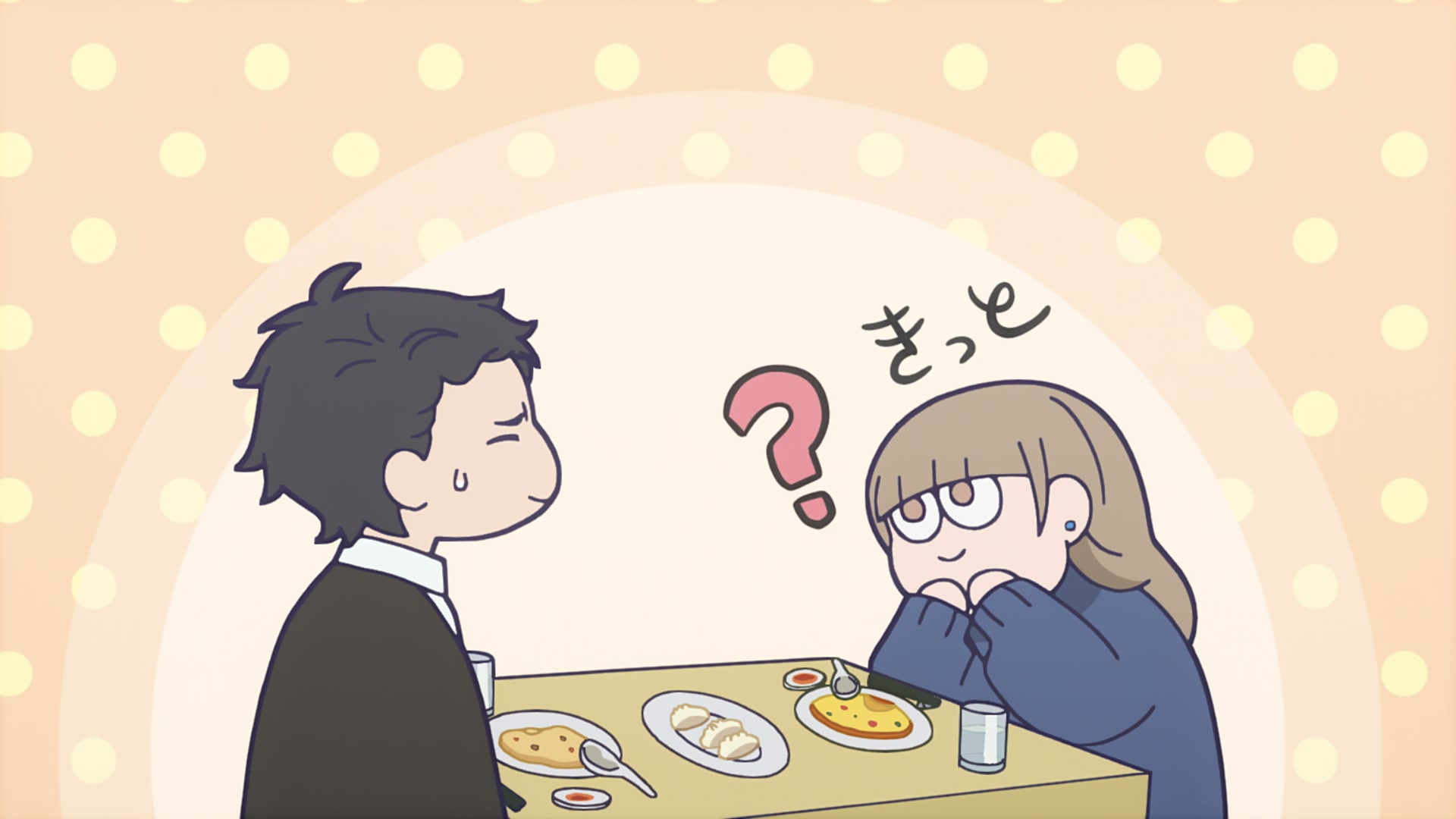
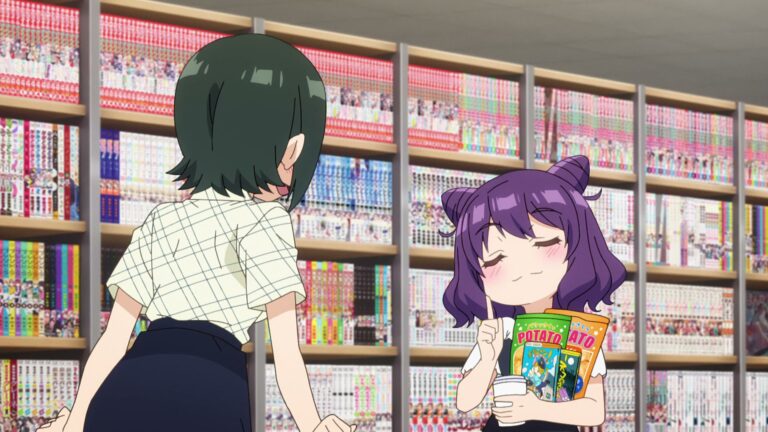
The gyoza date misunderstanding later is the episode’s best comedic beat. Kuriki Momoka, the doll-like first-year with an obvious crush on Minato, spots Koyuki and Yoota leaving a restaurant and immediately assumes they are a couple. Koyuki’s flustered denial and Minato’s desperate insistence that he has zero dating experience are played for laughs, but there is a layer of discomfort underneath. Momoka uses the nickname “Koyun-chan” for Koyuki, a name that originated with Miki and feels intimate. Hearing it from a near-stranger is a small violation, another reminder that Koyuki’s carefully managed social boundaries are porous.
Akine’s Role Comes Into Focus
The final scene between Akine and Momoka recontextualizes a lot. Akine reports that Minato does not have a girlfriend, and Momoka’s delighted “Right! Ehehe.” makes it clear that Akine’s information-gathering has a purpose: she is helping Momoka pursue Minato. This does not make Akine harmless, her sister’s shadow still hangs over her, but it does suggest her interest in Koyuki might be more about navigating social connections than about carrying forward Manatsu’s grudge. The episode leaves it open, and that uncertainty is exactly what Koyuki has to live with.
Where This Lands
This episode is the series’ most concentrated character study so far. It does not advance the romantic tangle much, though Momoka’s crush adds a new thread, and it does not resolve the Akine question. What it does is make Koyuki’s present-day behavior completely legible. Her instinct to withdraw when the friend group feels too warm, her fear of being a burden, her reflexive distrust of people who are nice to her without reason, all of it traces back to a middle school experience where kindness was a currency and friendship was a weapon. The flashback is not just backstory. It is the answer to why Koyuki’s walls are so high, and why lowering them feels like a risk she cannot afford.
The episode ends on Momoka’s giggle, a light note that almost feels like a palate cleanser. But Koyuki’s voice from the middle of the episode stays with me: “I pretended not to notice.” That is the line that defines her past, and the whole series is about whether she can stop pretending.
Screenshots