






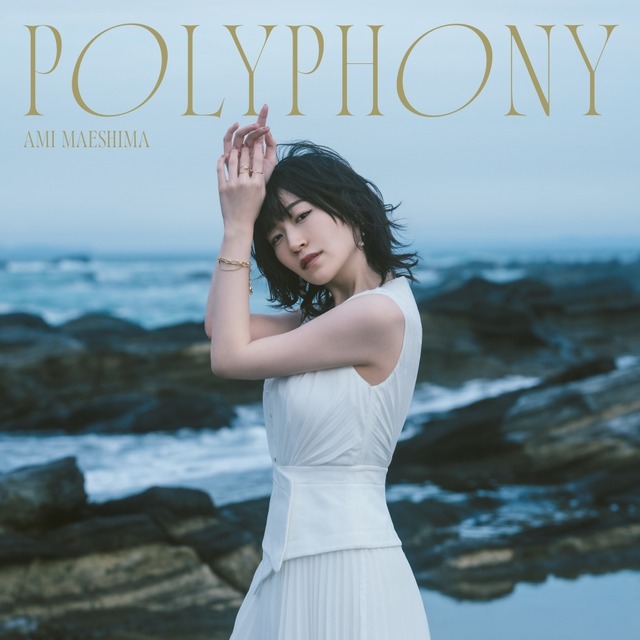
The August 2026 issue of Megami Magazine’s interview feature “Megami’s Voice” spotlights Maeshima Ami, who has just released her second album, POLYPHONY. In the interview, she discusses the meaning behind the album’s title, her collaboration with Tsunku, and the personal growth that shaped the record.

Why “Polyphony”?
Maeshima explains that she came across the word “polyphony” in a book she was reading at the time, and felt that its meaning—”multi-voicedness”—was exactly what she needed. With her careers as voice actress, singer, and stage actress, she wanted to express herself through many voices. The term also resonated with her work as a voice actress, a profession that fights with the voice.
She also reflects on the concept of polyphony as accepting all the different voices, opinions, and intentions that exist in oneself and the world, without declaring any single one as correct. “I want to establish having multiple job titles as my individuality through this album,” she says, and move forward from there.
A Two-Act Structure
The album contains 10 songs divided into two acts of five songs each. Maeshima says that because of her experience as a stage actress, she thought dividing the album like a musical would be something unique to her. Since five of the songs feature lyrics written by herself, she grouped them together in the second act.
Tsunku-Penned Lead Track “Megami Stay Gold!”
One of the two lead tracks is “Megami Stay Gold!”, written and composed by Tsunku. Maeshima had long dreamed of working with him, and with a “hit or miss” spirit she sent him a letter explaining her past audition as a Hello! Project Egg, her current activities as a voice actress and artist, and her passion for this album. Tsunku accepted, saying he felt her enthusiasm.
She asked for a lively song that could include audience calls, and also shared her love for Berryz Kobo, her admiration for Tsugunaga Momoko, and her favorite points of their songs. When she received the track, she was moved by how the lyrics seemed to cheer her on, and by the sound that evoked Berryz Kobo. The phrase “宇宙” read as “sora” was a special touch, and she put strong feeling into the recording.
To nail the Hello! Project-style 16-beat rhythm, she went to voice training, studied the beat, and even had a special 16-beat click track made for recording. She focused on sharp endings and precise pronunciation, and recorded multiple versions of the opening call before choosing the one that best opened the album.
“Kanpeki janai watashi” and the Anime Tie-Up
The other lead track, “Kanpeki janai watashi”, is the ending theme for the TV anime Saijo no Osewa: Takane no Hana darake na Meimonkou de, Gakuin-ichi no Ojousama (Seikatsu Nouryoku Kaizero) wo Kage kara Osewa suru Koto ni Narimashita. Maeshima wrote the lyrics after reading the original work, noting down words that stayed with her. Since the story features three heroines, she wanted the lyrics to move between their feelings, including spoken lines in the song. She also emphasized the theme of imperfection, a point she shares with the work.
Maeshima also appears in the anime as Asahi Karen, a character she describes as a sun-like girl who connects the heroines and the protagonist. She was encouraged when other cast members said that Karen and another classmate make the scene feel calm.
New Songs and Personal Lyrics
Among the new songs, “DAI SUKI” is a sharp number whose title means “big gap” rather than “I love you.” Maeshima liked the contrast between the sweet ending of “Wish for you” and the pushy attitude of “DAI SUKI.” She paid attention to the delivery, especially the “hai hai” line toward a boyfriend gaming all night, and used whispers to express inner thoughts—another form of polyphony.
“Jeanne d’Arc” is based on her dream of playing Joan of Arc in Jean Anouilh’s play Hibari (The Lark). She reread the play and researched Joan, accumulating about 30,000 characters of notes, which she condensed into one song. The track is a digital rock arrangement by Saitou Shinya, and includes phrases she insisted on, like “black to white” and the word “maveric.”
“Samidare” was created under the theme of summer, love, and sadness. Inspired by the short story Amayadori, it became a heavy love song. Maeshima deliberately chose a more withdrawn vocal style after the strength of “DAI SUKI,” focusing on delicate breathing and a storytelling approach.
The only ballad on the album is “Inner speech,” which Maeshima interprets as “inner language”—the many words that sound inside a person even when not spoken aloud. She gave alternative readings to kanji such as “words” and “voice” to avoid repeating herself too much, and says she cried while writing the lyrics.
“Yuuryou Bukken Shoumeika♡” is a sequel to her previous song “Shokugyou: amita,” which was created with Hyadain. The new song pushes the concept further, with lyrics that start with Ami as a good match and end with moving to Atami together. It is full of calls and meant for live performance. Maeshima admits that her idea of love may be heavier than most, and she put all of that into the song.
A Challenge in Writing
Writing lyrics for five songs was a big challenge for Maeshima. She says taking that step was important to her, and she wanted the album to fight with words as well as voice. Looking back, she feels she was able to establish her individuality through the album.
Artwork and Photoshoot
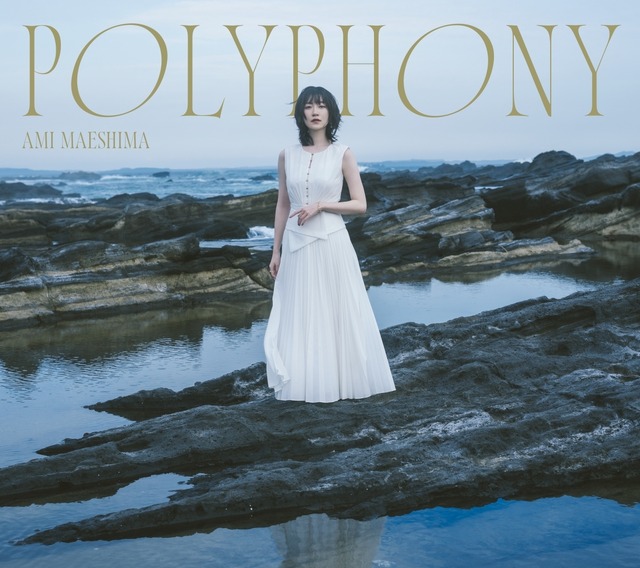
For the artist photo, she took inspiration from the phrase “spark of revival” in the play Hibari. The shoot used fireworks, a dress with a classic feel, and barefoot styling. She says she never had to force a smile, and everything came out naturally.
Live and Future
Maeshima will hold Maeshima Ami LIVE 2026 POLYPHONY on September 19 at Kannai Hall (Large Hall) in Kanagawa. After creating POLYPHONY, she feels her color as a voice actress and artist has been decided, and she hopes to make the live a free and expressive experience that fully embraces polyphony. She also mentions free release events for the album and invites fans to join.
Profile
Maeshima Ami / Born November 22. From Saitama Prefecture. Belongs to Voice Kit. Started entertainment activities in 2010, and has appeared in various works as a voice actress and actor. Made solo artist debut in November 2024 with the album Determination. Notable voice roles include Kirishima Mika in Haibara-kun no Tsuyokute Seishun New Game.
Information
On September 19, Maeshima Ami LIVE 2026 POLYPHONY will be held at Kannai Hall (Large Hall) in Kanagawa. For event and live participation methods, check the official website: https://maeshima-ami.net/.
POLYPHONY
Now on sale via King Records. The second album contains 10 songs themed around “polyphony.” The W lead tracks are the anime ending theme “Kanpeki janai watashi” and “Megami Stay Gold!” written and composed by Tsunku.
Limited edition: 9,900 yen (tax incl.)
Regular edition: 3,300 yen (tax incl.)


