






Anime once belonged to the living room. When the medium shifted toward late-night slots, both its audience and its production stance changed in a major way. The recent revival of evening programming, however, looks like more than a scheduling adjustment — it suggests anime is once again aiming at a broad range of viewers. With broadcasters’ programming decisions, sponsors’ expectations, and the division of labor with streaming services all in play, there seems to be renewed emphasis on titles that can reach families and local communities alike.
This article focuses on three summer anime that aired in Sunday evening slots and embody that trend — a lineup impressive enough to satisfy dedicated late-night anime fans as well — and asks why the “return to the living room” is happening now.
Let’s Go Kaiki-gumi: Horror and Gags the Whole Family Can Share
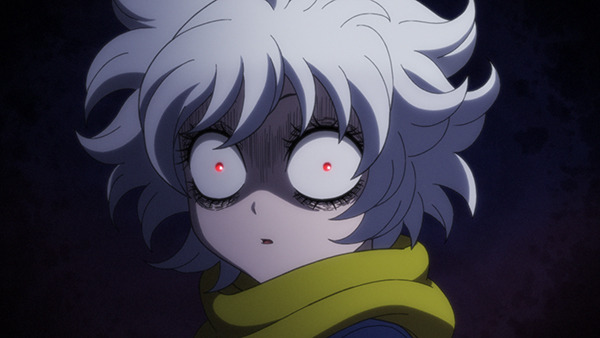
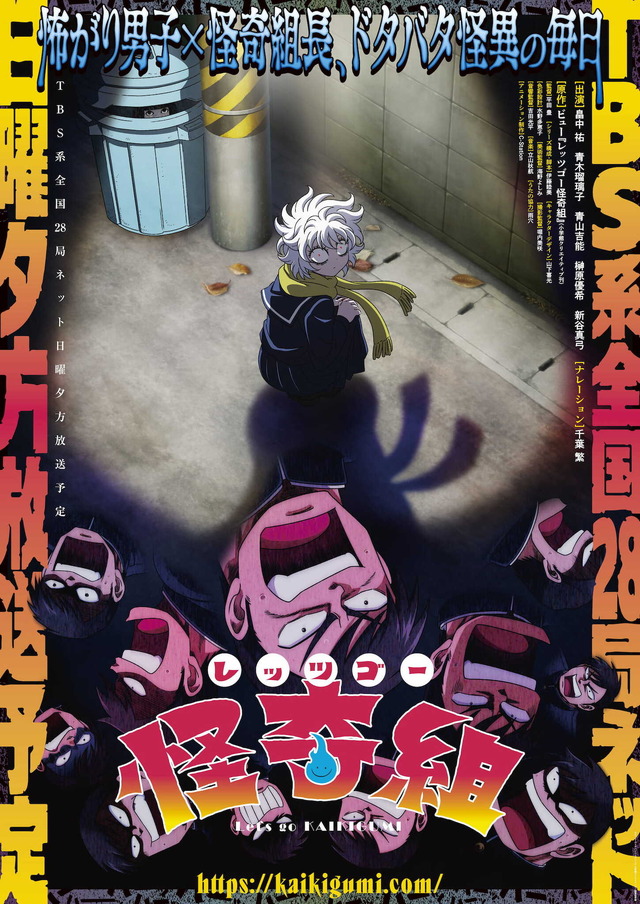
Let’s Go Kaiki-gumi is a horror comedy that aired on TBS and its affiliates on Sundays at 16:30. The protagonist is a man who is terrified of ghosts. He meets a girl who declares herself the leader of the “Kaiki-gumi,” and he ends up naming her Mecha-ko. She leads ghosts whose trade is scaring people, yet she has no understanding of human fear at all, so the man supports her.
What makes the series appealing is the way it balances gags and horror while the pair confront ghosts nursing absurd grudges and settle the trouble they cause. The comedy built around an excessively fearful protagonist and a Mecha-ko who cannot grasp human fear is deftly handled: the script stacks small gags before delivering a big, hard-hitting one, and the visuals and sound answer back with just the right amount of pushback. Every time the protagonist says something slightly off, Mecha-ko quietly corrects him — a flow that is easy to miss but pleasant to watch. When a strange ghost appears, the protagonist’s over-the-top reaction is drawn with real force, producing laughs that land immediately. It is a work that excels at the pacing of comedy.
The series also gives clear shape to ghosts as creatures that instill fear, precisely by having its characters respond to them in ways that miss the mark. Through Mecha-ko, who cannot understand fear, the show dissects what humans are actually afraid of — and in doing so, digs deeper into horror as a genre.
Seihantai na Kimi to Boku: Empathy Built on Opposites
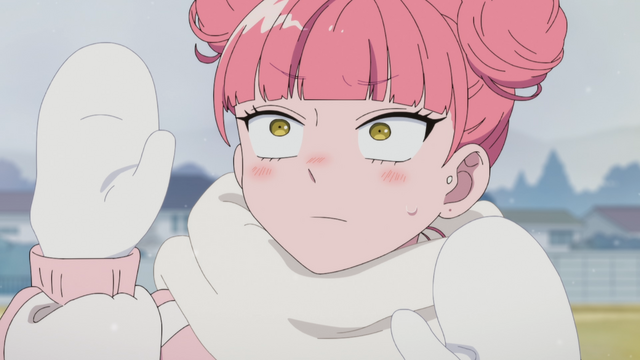
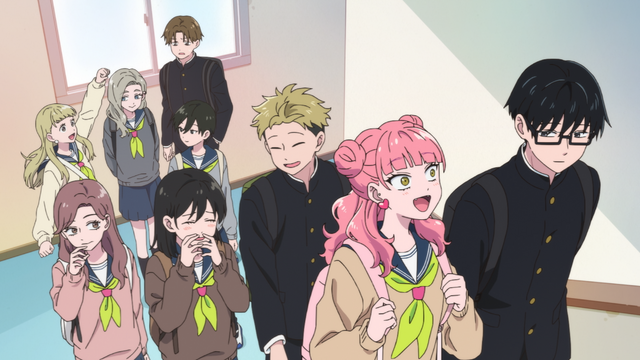
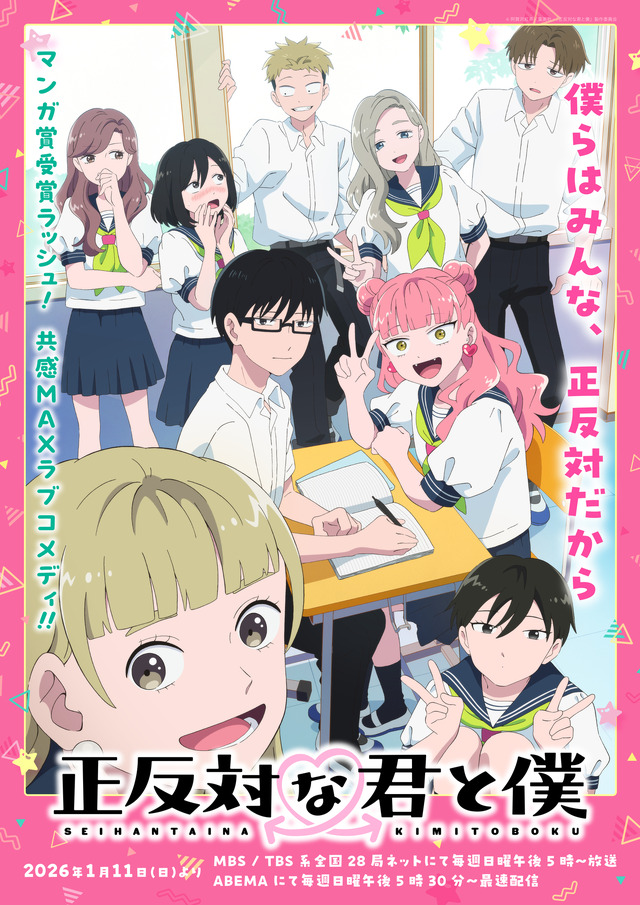
Another pair of opposites can be found in Seihantai na Kimi to Boku, which aired on TBS and its affiliates on Sundays at 17:00. The series depicts the romance and self-consciousness of high schoolers at a life-size, relatable scale.
Its starting point is the relationship between Suzuki, a bright and energetic girl who cannot help worrying about how others see her, and Tani, a quiet boy who can still state his own opinions clearly. In the second season airing this summer, the focus shifts to supporting characters as well. Taira, a boy with a strong sense of self-consciousness who still carries the unremarkable self-image he had before middle school, and Nishi, a plain girl with little confidence who cannot voice her own opinions, are among the characters who face worries that are personal yet universal.
Each character’s worries and relationships are sorted out individually, so the story stays clean and easy to follow. Even so, it packs in plenty of relatable details from inside and outside school, which gives the work depth. The points essential to understanding the main story — characters’ emotions and relationships — are conveyed concisely through dialogue, while complex emotional shifts are reinforced with speech bubbles and on-screen text. The result is an approach that leaves little to overlook and keeps the viewing experience stress-free. What keeps the series from becoming over-explanatory is the large number of touches scattered throughout that do not affect the main story even if viewers never notice them.
Small courtesies between characters, or changes in clothing and hairstyle to fit a situation — the show is full of details that are never spelled out but reward careful attention. By preparing them, the series establishes an appeal on a different axis from the straightforward clarity of dialogue and captions. It is a work that achieves both accessibility and the pleasure of watching closely.
Tetsunabe no Jan!: A Cooking Battle With No Rules and Only Victory
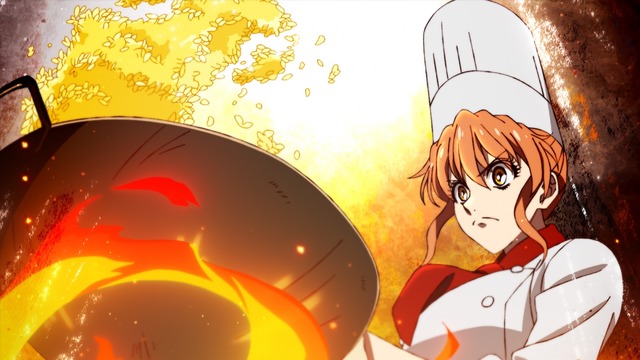
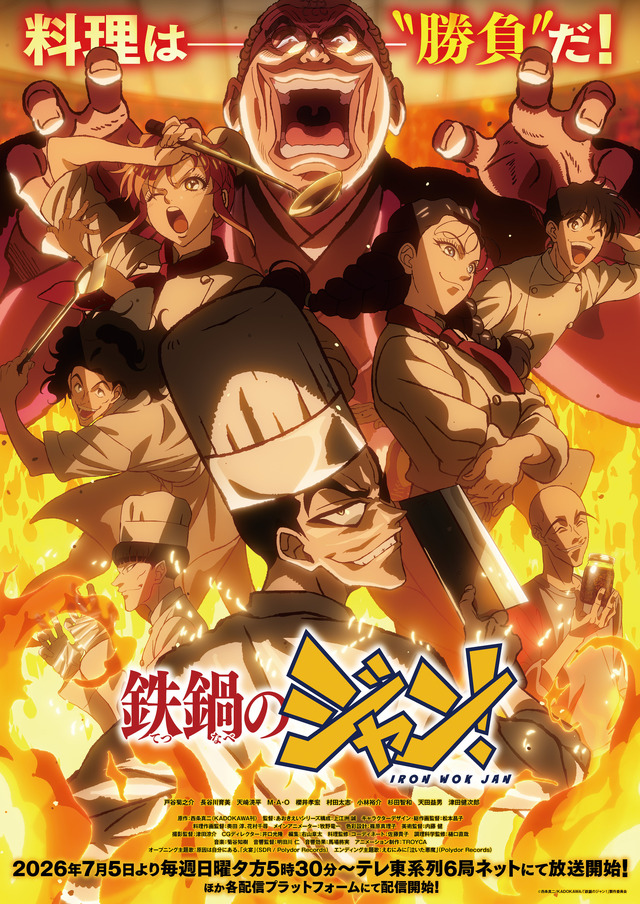
No look at this season’s evening anime would be complete without Tetsunabe no Jan!, which aired on TV Tokyo and its affiliates on Sundays at 17:30. Based on a well-known manga that began serialization in 1995, the adaptation kept the original’s harsh depictions and became a talking point.
The protagonist is a young Chinese chef, Akiyama Jan — known simply as “Jan.” He declares that cooking is a contest and will not choose his methods if it means winning. His rival, Gobanchou Kiriko, insists that cooking is about the heart and aims to cook in a way that stands beside people’s feelings. The series takes a figure who would normally be the hero — a person of principle — and makes him the rival, while putting Jan in the lead, a man willing to use ingredients with hallucinatory effects in pursuit of victory. That challenge to the standard formula is where the appeal lies.
In an ordinary cooking manga, making something delicious is the condition for winning, and that premise is never doubted. Here, dishes that exploit loopholes in the rules appear, and Jan’s fixation on winning is depicted relentlessly. His conduct is unscrupulous, but the work’s status as a classic makes it easier to accept. Whenever a misleading depiction or extreme expression comes up, narration sometimes explains, in light of the situation at the time of serialization, that it has been “left as it was back then.” Inserted into the main story, that narration barely damages the pacing — even among commentary-heavy cooking anime — and instead helps make Jan’s unusual style convincing.
Provocative as it is, the narration creates a degree of distance that lets the material land as comedy. Unlike the growing number of adaptations of classic manga in recent years, Tetsunabe no Jan! turns being a classic into a strength, making it a one-of-a-kind work.
The Sunday evening slot covers a wide range of genres — horror comedy, a school youth story, and an unorthodox cooking battle. What all three share is a strong, universal appeal that suggests each was made on the premise of being watched by as many people as possible rather than for one narrow audience.
In an age when streaming lets viewers watch whatever they want whenever they want, there may be special value in an evening slot where a diverse mix of people encounters the same work at the same time. Funny, relatable, and occasionally startling, Sunday evening anime has the power to sit at the center of the living room once again.
(C) View Berg Hamburg Berg / Shogakukan Creative / Kanto Kaiki-gumi
(C) Agasawa Koucha / Shueisha / “Seihantai na Kimi to Boku” Production Committee
(C) Saijou Shinji / KADOKAWA / “Tetsunabe no Jan!” Production Committee


