






*Evangelion*’s Enduring Legacy: A Dive into Its Heisei Roots
The groundbreaking *Evangelion* series celebrates its 30th anniversary in 2025. This enduringly popular work — can it truly be called a “nostalgic Heisei anime”?
The groundbreaking *Evangelion* series celebrates its 30th anniversary in 2025. To commemorate this monumental occasion, the “EVANGELION 30th ANNIVERSARY PROJECT RADIO EVA “THE 30”” is currently underway. As part of this exciting project, a special initiative called “Tsukiichi Eva” (Monthly Eva) is bringing six *Evangelion* series films to cinemas nationwide, with one film screening each month from October 2025 through February 2026.
Without a doubt, with its TV series first airing in 1995, *Evangelion* stands as one of the definitive anime of the *Heisei* era. However, revisiting the series through these revival screenings, I found myself with a curious impression: “It surprisingly doesn’t feel nostalgic at all.” This feeling might stem from the fact that *Shin Evangelion Gekijouban*, the final film in the series, was only released in 2021. Up until then, *Evangelion* films had been periodically released in theaters, and the franchise has consistently expanded into various other forms, including games, pachinko, and stage plays.
The original setting of the series, 2015, was already a bit into the future when it first debuted. Perhaps because of this, the character designs, clothing, and cityscapes don’t quite evoke a strong sense of “Heisei-ness.” This time, I wanted to focus on the smaller details and expressions that weren’t always fully explored in the animated films. So, let’s take a nostalgic look back at the manga version of *Shin Seiki Evangelion*, affectionately known among fans as “Sadamoto Eva.” The big question is: can we find that distinct “Heisei-ness” within its pages?
The Manga Version: “Sadamoto Eva”
The manga version actually began its serialization in “Gekkan Shounen Ace” in 1994, predating the anime’s broadcast. Its distinctive artwork was handled by Sadamoto Yoshiyuki, a renowned artist famous for his character designs in popular works like *Summer Wars* and *Great Pretender*. The manga series concluded its run in 2013, and a beautiful seven-volume *aizouban* (collector’s edition) was released in 2021, much to the delight of fans.
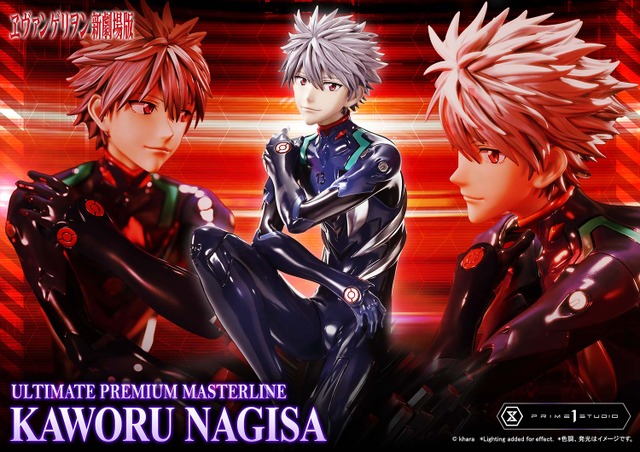
While the *Evangelion* series is known for its “branching systems” that offer “somewhat” different narratives across its various iterations, if I were asked which version I prefer most, I would wholeheartedly choose “Sadamoto Eva.” I find that the manga version allows the story to sink in much more smoothly, particularly those parts that might have felt a bit ambiguous or difficult to grasp in the TV anime or theatrical films. A unique charm of “Sadamoto Eva” is undoubtedly the abundance of scenes featuring Nagisa Kaworu. It delves into aspects of his character that weren’t depicted in the anime or movies, offering a slightly different, yet compelling, portrayal of this enigmatic character.
Unearthing “Heisei-ness” in the Manga
Upon rereading the manga after all this time, I pinpointed several moments that immediately made me exclaim, “Ah, this is definitely *Heisei*!” These include:
- Misato’s speech patterns, like “chotchi dake.”
- Kaji Ryouji’s answering machine message left on a landline for Misato.
- Asuka’s letter of explanation addressed to Kaji Ryouji.
Outside of her workplace, Misato’s casual conversational tone in the manga, with phrases like “~~na no yo ne” and “~~yo,” definitely struck me as quite “old-fashioned.” And “chotchi dake” – well, that’s practically a dead word in today’s vernacular!
Furthermore, in an age where almost everyone carries a smartphone, it’s hard to imagine intentionally leaving an important message on a landline. Back in the *Shouwa* and *Heisei* eras, there was a whole sequence of interactions when calling a friend’s house: first, a family member would answer, then you’d ask them to connect you to your friend. Thinking about it now, it feels a bit awkward and, frankly, troublesome!
Similarly, the scene where Asuka meticulously pens a letter to Kaji Ryouji to clear up a misunderstanding made me think, “Wouldn’t a quick phone call or a LINE message be perfectly fine nowadays?” It certainly strips away any sense of old-school romanticism or emotional nuance!
What’s more, she doesn’t even hand the letter directly to Kaji; instead, she entrusts Shinji to relay it, which just seems like an incredibly convoluted and troublesome request! Speaking of junior high school girls, there used to be a vibrant culture of exchanging letters with friends and keeping *koukan nouto* (exchange notebooks). I wonder if that cherished tradition still thrives in the *Reiwa* era?
A Timeless Future
While the manga definitely offers glimpses into these charmingly out-of-date cultural aspects, it also contains depictions that still feel remarkably “modern” even from our *Reiwa* perspective. For instance, computers are integrated into Shinji’s school lessons, and vast underground cities were constructed to protect the populace from the Angels. Even the distinctive plugsuits worn when piloting the Evangelions don’t feel old-fashioned; they still look like quintessential “futuristic costumes.”
Even though its initial setting of 2015 is now well behind us, *Evangelion* continues to present a world that feels distinctly futuristic and steeped in science fiction. It’s a truly timeless piece of content, destined to keep “walking alongside us” for generations to come.
Written by Suisaido Momo
_