


![Ninja to Koroshiya no Futari Gurashi – Is Bishoujo x Gag Rare? The Balance of “Destruction of Common Sense” in Gag/Comedy [Fujitsu Ryota no Anime no Mon V #119]](https://animeworld.info/wp-content/uploads/2025/06/777499.jpg)
Human lives are cheap… One might entertain such morbid thoughts because Ninja to Koroshiya no Futarigurashi (also known by its abbreviation, NinKoro) is so fascinating.
Kusagakure Satoko-san is a kunoichi who became a nuke-nin (rogue ninja), simply swept along by her companions. It was Kogawa Konoha-chan, a high school girl and professional assassin, who picked up Satoko-san when she collapsed, stranded in the city. Why did the thoroughly cool-headed Konoha-chan end up living with Satoko-san? It’s because Satoko-san’s only usable ninjutsu—the ability to “change anything not alive into leaves”—is surprisingly useful for an assassin’s work. On top of that, Satoko-san is skilled at housework. For Konoha-chan, Satoko-san is essentially a “convenient woman.”
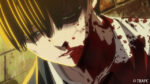
As a rogue ninja, Satoko-san constantly faces various kunoichi sent as assassins after her. However, these attackers are no match for Konoha-chan. They are steadily killed, one after another, and transformed into leaves. Furthermore, in Chapter 4, titled “The Relationship Between the Ninja and the Assassin,” they even use these very leaves to bake sweet potatoes. This dry, repetitive cycle forms the foundation of the early part of this series.
The term “gag” encompasses a very wide range. For now, I want to focus on one particular element within gags: the “destruction of common sense.” It’s about brazenly tearing down what everyone considers “normal” or “obvious.” This can be considered a crucial element of gag comedy. The degree of aggression towards common sense is a major factor that distinguishes gag comedy from humor.
However, what makes this difficult is that the common sense targeted for “destruction” differs depending on the time and situation, and indeed changes according to the circumstances. For instance, the classic gag of “a gentleman slipping on a banana peel and falling” worked because the common understanding that “gentlemen” possessed a certain kind of authority was shared by society. This is why it also worked with other figures of authority—for example, the stern “kyoiku mama” (education mama) with glasses often depicted in 1970s manga.
Yet, when such gags are repeated too often, they become clichés, and the cliché itself begins to form a part of “common sense.” When this happens, new directions emerge in gag comedy: a meta approach of “turning the clichéd into a source of laughter,” or omitting the original premise of “authority” and expressing “someone without authority falling” as a form of humor. Thus, as “common sense” is updated, the process of how to “discover common sense” and how to “destroy it” is what sustains the dynamic movement of gag comedy.

《Fujitsu Ryouta》
_