




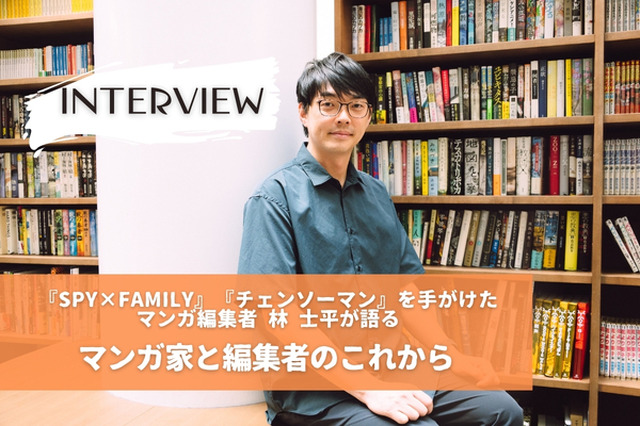

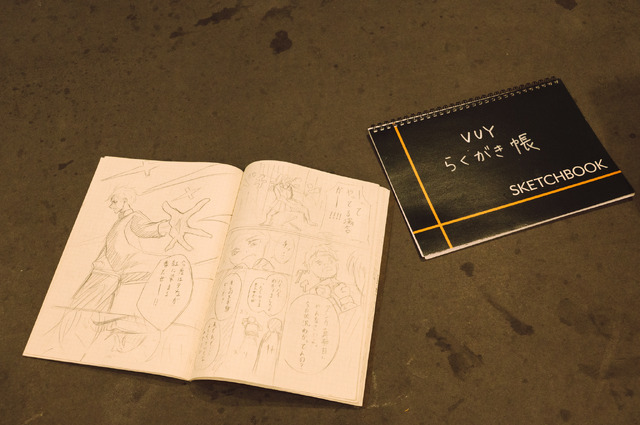
【Exclusive Interview】From “VUY” to the World: Manga Editor Hayashi Shihei, the man behind SPY×FAMILY and Chainsaw Man, discusses the future of manga artists and editors.
Manga editor Hayashi Shihei, leveraging his experience and diverse artist development, is focusing on creative support and nurturing new talent through “VUY,” envisioning the industry’s future.
2025.8.25 Mon 12:00
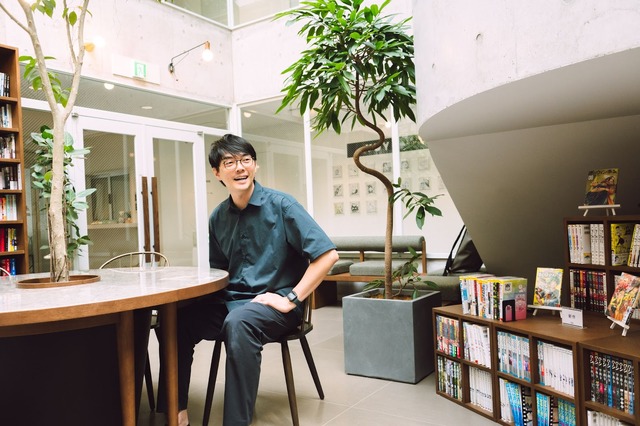
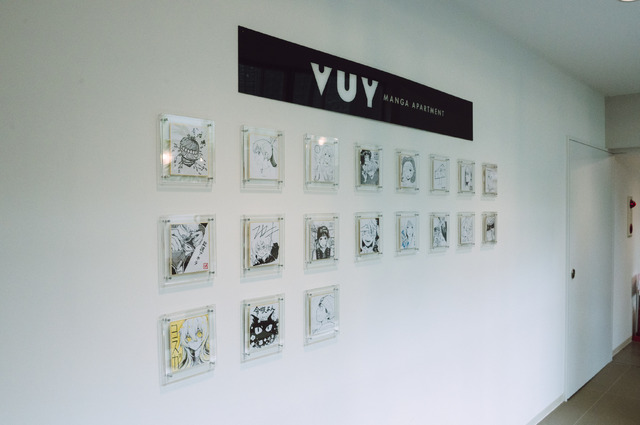
Hayashi Shihei-shi, the editor behind numerous hit manga like SPY×FAMILY, Chainsaw Man, and DANDADAN, has a remarkable career. Starting his career as an editor at Shueisha’s Monthly Shonen Jump, he later moved to the Shonen Jump+ editorial department before becoming independent. Currently, while managing manga editing and anime production through his own company, Hayashi-shi also launched the MANGA APARTMENT VUY project in 2024, aimed at supporting aspiring manga artists. (Henceforth referred to as “VUY”).
Since April 2025, the first batch of residents has moved in, garnering significant attention as a hub for young creators dedicated to their craft. In this interview, we delved into the motivations behind VUY’s establishment, Hayashi-shi’s philosophy as an editor, and his insightful perspectives on the future of the manga industry.
[Interview and Text by Mori Motoyuki, Photography by Shida Ayaka]
A Journey into Manga Editing
ーーーHayashi-san, could you please give us a brief introduction of yourself?
I am Hayashi Shihei, a manga editor. I’ve been in the manga editing field since 2006, so that makes it about 19 years now. I initially joined Shueisha, starting as an editor for a monthly manga magazine where I worked for nearly a decade. After that, I transferred to the Shonen Jump+ editorial department and spent several years there before leaving the company. Currently, I manage manga editing and anime production through my own company.
ーーーWere you always aspiring to be an editor since you were a child?
No, not particularly. It all started during my job search when I casually thought, “Maybe I’ll apply to a publishing company.” It wasn’t until after I received an offer that I seriously began considering the work of an editor. While I did read manga, I was truly surprised by the passion and intensity of everyone around me once I joined the industry. I couldn’t honestly say, “I read manga a ton!” back then, and even now, I’d describe my relationship with it as more of a casual appreciation.
ーーーYou left Shueisha in August 2022 to start your own company. Is it common for editors to pursue such a career path?
Honestly, I believe it was a rather unconventional path with not many precedents. However, to continue my work in manga editing, “leaving” felt like the only route available to me. I was in my 15th or 16th year at the company, having reached the position of associate editor-in-chief, and there was a possibility of becoming editor-in-chief if I continued to build my career further.
However, there was an internal rule that becoming an editor-in-chief meant stepping away from hands-on editing work, shifting primarily to organizational management. Of course, I didn’t dislike the idea of managing an organization itself. But I had a strong feeling that it wasn’t the right time to move away from working directly with the artists I was in charge of. I strongly desired to remain a frontline editor, deeply involved in the creation of works, for at least another five to ten years.
At that time, the works I was involved with were reaching the public, and I felt a strong sense that my working methods and instincts were on the right track. Having continued for 16 years, I also had a genuine feeling that my work truly resonated with the artists I collaborated with. So, naturally, there were moments of hesitation, wondering if leaving at that very moment was the right choice. But in the end, I simply followed my honest desire to do what I wanted. My greatest aspiration was to continue creating works alongside manga artists as an editor, and that desire was the strongest force within me.
How Living Arrangements Influence Creative Quality
ーーー”MANGA APARTMENT VUY” started in 2025. Could you tell us what inspired you to launch VUY?
When creating works with artists, sometimes I collaborate with established, best-selling artists who already have ongoing serializations. Other times, I start with entirely new talent, guiding them from winning manga awards, through several one-shot stories, to finally achieving serialization, and then supporting them as they become successful with their second or third works.
My own working style has leaned more towards the latter. Rather than scouting already successful artists, I often focused on nurturing talent from the development stage, accompanying them through serialization and ensuring they achieve solid success with subsequent works.
How to nurture artists has been something I’ve constantly pondered since my time at Shueisha, and it’s a question I continue to grapple with even after leaving the company. What I’ve particularly identified as a challenge is the alarming number of aspiring manga artists who give up midway. I’ve witnessed countless instances where individuals who won awards, made their debut, or were just on the cusp of serialization, abandon their path for various reasons.
It truly feels like such a waste. In most cases, they have to work to support themselves, which reduces the time they can dedicate to drawing manga, ultimately leading them away from a professional career. If there was an environment where they could focus solely on manga for one to several years, perhaps these individuals wouldn’t have to give up… and that thought led me to where I am today.
ーーーWhat is the origin of VUY’s name?
We had extensive discussions about the name within the company. To be honest, many of the initial ideas were a bit uninspiring (laughs). Names like “Wakakuso-sou” (Young Grass Apartment) and others came up. Ultimately, we arrived at “VUY.”
This name carries several meanings. One discussion point was the unique characteristic of Japanese, possessing both phonetic and ideographic characters, which might be one reason why manga culture has taken such deep root in Japan. Manga itself is a form of expression that encompasses both sound and meaning. With this background, we wanted the name to also convey “meaning.”
The name “VUY” first represents tools for drawing—imagining the tips of pens. V symbolizes the G-pen nib, U the maru-pen, and Y a mechanical pencil. And, of course, positive meanings like “Victory” can be layered on top later. Its short, powerful sound was also appealing.
Another surprisingly significant factor was that the name “VUY” didn’t exist anywhere else. This is quite rare, and we felt it made for a strong, original name. Even now, I don’t think you’ll find any other organizations or services with the same name.
In that sense, I believe the name “VUY” is deeply imbued with both meaning and intent.
ーーーWhat do you hope to achieve through VUY?
I believe that even a single increase in the number of professional artists is a tremendous blessing for me and for the manga industry as a whole. When new professional artists emerge, readers discover exciting new manga, and I, as an editor, find immense joy in my work. Essentially, there are only positive outcomes. That’s why my fundamental wish is for VUY to become a place that produces even one more professional artist, to begin with.
While that is the primary objective at present, I also believe the purpose of VUY could evolve as we continue to operate it. Due to various issues, the industry as a whole has come under intense scrutiny, and attitudes towards work-life balance have significantly changed. Nowadays, working hours are managed quite strictly. In the past, there were times when we’d work late into the night, sometimes even with drinks, but now I think we’re moving in a much healthier direction.
However, while editors can now work in a healthier manner, artists are still independent contractors. They continue to draw their works from morning till night, pouring their hearts and souls into them. In such a situation, if an editor were to distance themselves, saying, “I can’t work overtime this month…”, is that truly the right thing for their work? That internal conflict still lingers within me. For my part, I simply can’t bring myself to do that.
ーーーGenerally, meetings with artists are held online or in publisher conference rooms. However, at VUY, artists live under one roof. Do you think this living arrangement impacts their creative output, including their mental state?
I don’t have a complete answer yet, but it’s true that I feel the proximity to the artists has increased. However, I also have the impression that we used to “meet” even more often in the past.
About 15 years ago, email wasn’t as convenient as it is now; there were limitations on data size for sending images, and very few artists even owned scanners. So, there were times when we communicated via fax or MiniDisc. In those days, exchanging storyboards (name) was quicker and easier by meeting in person, so naturally, there were more opportunities to see artists face-to-face. Face-to-face meetings were the norm, and the only option for communicating with artists in rural areas was by phone.
That all changed rapidly with the COVID-19 pandemic. Everything shifted online, and that has become firmly established. While it’s more convenient, I sometimes feel that the unique atmosphere created by face-to-face conversations and the sharing of subtle nuances have diminished.
A Place to Support That “Last Push”
ーーーIt’s been a few months since the first batch of VUY residents moved in. What kind of artists tend to apply and reside there?
The artists who have joined us truly come from diverse ages and backgrounds. They range widely from 21 to around 35 years old, and I’ve noticed that many of those who are drawing manga while working are precisely at that “critical point where they might give up,” as I mentioned earlier. Those in their 30s often have already published one-shot stories and possess undeniable skill, even if they haven’t achieved serialization yet. On the other hand, some haven’t won awards yet but have joined with the desire to “focus on drawing because I’m close to winning an award.” In that sense, it truly feels like a diverse group has gathered here.
They also hail from all corners of the country, from Hokkaido to Kyushu. We’ve even received submissions from high school students in Okinawa, and there have been applications from Japanese individuals living overseas. One person applied from Boston, and I was deeply moved by their willingness to participate across borders.
ーーーWith such diverse backgrounds, what was the atmosphere like when they first moved in?
Everyone is an adult, and we treat them as such, so we don’t force a “let’s all be friends!” kind of vibe. Of course, some naturally become friends, while others are the type who prefer to quietly pursue their own path, so it’s really varied.
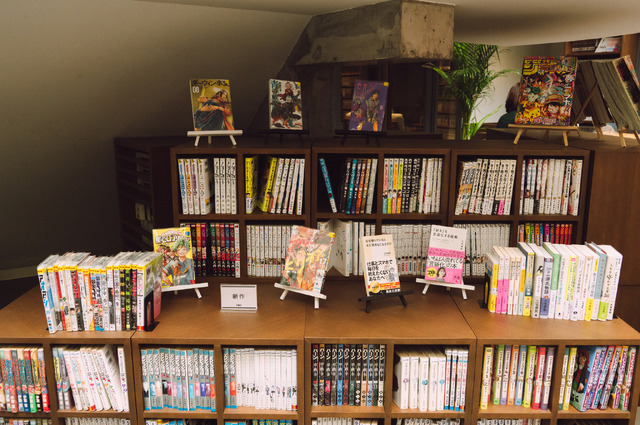
For our part, we’re happy as long as everyone coexists peacefully; there’s absolutely no need to force friendships. We have no intention of imposing that. The bottom line is, “Please just draw.” We tell them, “There are plenty of resources available, so read, think, and concentrate on your work.”
But surprisingly, everyone gets along quite well. There’s almost a youthful, “school days” kind of atmosphere. They go play basketball, go shopping together, visit exhibitions, and watch movies late at night. Of course, it varies from person to person, but it’s heartwarming to see these natural relationships form. I feel they treat each other with respect.
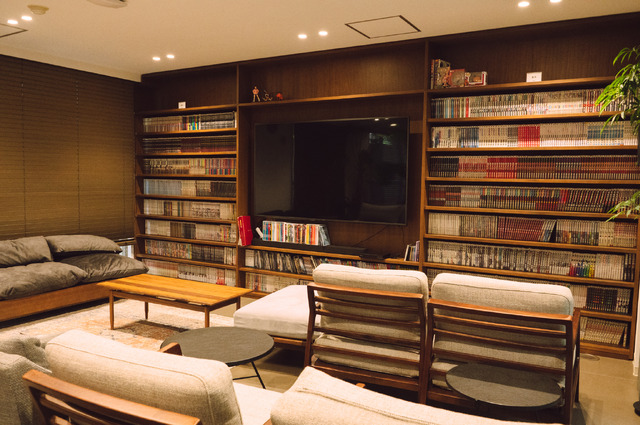
Regarding living rules, the living room is shared, but going into each other’s private rooms is prohibited to prevent trouble. For basketball, there are several courts nearby, and it seems they often go together.
Of course, no one would argue in front of me, so I’m sure there are things I don’t see. But at least from what I observe, everyone behaves very maturely.
Currently, it’s a space where everyone is engrossed in their creative work and daily lives. Nothing else intrudes, and I believe a very simple yet rich flow of time exists here.
ーーAre there any artists who already have ongoing serializations?
Among the artists, some have already had award-winning works or one-shot stories published. However, at present, none of them have ongoing serializations that have been collected into tankobon volumes. Essentially, everyone here is a pre-serialization artist. But the truth is, many of them are truly “just a little bit away” from achieving serialization. They have the potential to get serialized if they concentrate on their work for six months to a year. Yet, that “last push” is often the most challenging. They have to work to support themselves, which reduces the time they can dedicate to manga. That seems to be a common situation.
Most people are pressured to find employment around age 22, after graduating from university. If they have understanding parents, they might be able to say, “I want to become an artist, so please let me draw at home for a year or two.” But I feel that in most cases, they can’t say that. As a result, when they start working, the momentum of their creative flow, which was just building, comes to a halt. I hope to provide a place where such situations can be avoided.
In Japan, there are shared houses for creators—places where aspiring musicians, actors, and comedians gather to live. However, a fully supported environment specifically tailored for manga, like VUY, hardly exists yet.
I hope VUY can be a place that fills that void. Especially for pre-debut artists, the initial period often lacks financial resources, and loneliness is a significant challenge. That’s why I feel that having a communal living environment where they can live with like-minded companions can provide crucial mental support.
In fact, I’ve heard from slightly older artists that “loneliness is tough.” Many don’t have families, so for them, having a place where they can focus on their creations with peace of mind holds great meaning.
Of course, creating a living arrangement that satisfies everyone is not easy. Preferences and lifestyles differ, and some degree of compromise might be necessary. But, I want to explore mechanisms that can lower the hurdles a little when facing challenges like dealing with loneliness and engaging in creative work. There are approaches for younger artists, and perhaps different forms for more experienced ones. For example, if everyone in the neighborhood were artists, it might already ease their minds. Whether it’s a communal living space or an “artist town,” I don’t know yet, but I’m currently exploring various possibilities, including such future prospects.
Looking Towards the Future of the Manga Industry
ーーーWhy do you care so much about artists?
Well… fundamentally, it’s because I genuinely love manga as a form of expression. If there’s more interesting manga, I’m happy as a reader and as an editor. So, simply put, I’m grateful for an increase in amazing artists.
How much people think about the industry as a whole varies from person to person, but there are definitely those who do. The Jump group, in particular, places importance on internal development rather than actively recruiting from outside. There’s a strong sense of urgency that “if we stop nurturing talent, the industry will die,” which is why they don’t hesitate to invest in young talent.
Take, for example, special issue magazines. They are essentially operating at a loss, yet they continue to publish them. Why? Because young artists cannot grow without the painful experience of publishing their work and finding it doesn’t quite connect or resonate. Only tens of thousands of copies are published, and the feedback is limited. Yet, they still release them. I believe this is an action driven by considering the future of the entire industry.
Of course, you can’t think this way if you don’t have the luxury. I imagine some media outlets might be thinking, “Just give us popular artists quickly,” or “The magazine will die at this rate,” and I do hear such voices. But for me, I truly love manga, and if more amazing artists emerge, there will be more interesting manga that I can truly enjoy. That makes me happy. I think having plenty to read in old age would be wonderful, and not just manga, but if movies and novels remain consistently interesting, life won’t be boring.
So, enriching the industry I’m a part of ultimately leads to my own happiness. I think this is a very normal sentiment. If the entire industry expands, it becomes easier to attract talent to my own endeavors. While I’m not solely thinking about myself, acting for the industry’s benefit also serves my own. There’s a strong alignment there.
Of course, it’s not entirely without ego. If I meet great talent and that artist becomes successful, I’m happy. It’s rewarding both professionally and personally. So, rather than being driven by ulterior motives, it’s a natural desire to see them succeed. However, I don’t believe “success is all that matters.” I want artists to endure for as long as possible. I want them to continue creating in a sustainable way, rather than burning out and disappearing. That thought is always with me.
ーーーRecently, it feels like content is being consumed at a very rapid pace.
While that’s often said these days, I personally don’t feel it’s accelerated all that much. For example, Demon Slayer: Kimetsu no Yaiba is still a hit this year, and Detective Conan continues to sell well even now. When I see such works consistently being loved, I think, “Good things truly endure.”
Certainly, the number of works that disappear might be increasing. But I believe that’s because the sheer number of works being created has increased in the first place. The platforms for publication have expanded dramatically, with manga apps, video streaming services, social media, movies, dramas, and other channels for delivering stories becoming more diverse. As a result, the number of works has increased, and there’s a tendency for the average quality to decline. If more things are made carelessly, it’s natural that more will also fade away, and perhaps that’s why people feel “consumption is fast.”
However, this isn’t entirely a bad thing. The fact that there’s an environment where works with less intensity can still be released means there are more opportunities for trial and error. In other words, it can also be said that the environment is becoming more conducive to nurturing talent.
But there are challenges. The current structure is less about “tightly filtering for only geniuses to rise to the top” and more about “a broadly open field where talent gradually makes its way up.” This means that sometimes, moderately talented individuals can become successful without undergoing the appropriate stress or refinement processes at the right time. In such cases, there’s a risk of overlooking talent that could have soared even higher, and opportunities for development might be lost.
That’s precisely why those of us in positions like mine need to provide appropriate filtering mechanisms and nurturing systems. The current environment is full of possibilities, yet also carries risks of oversight. Finding the right balance is what I see as the challenge ahead.
ーーーWriter-san, how do you approach communication with artists?
I believe that truly understanding each other through conversation is very important. However, I personally don’t think “talking too much” is always a good thing.
I once had a fellow editor who viewed me as a rival, and he’d say, “To beat Hayashi-san, I’m going to have so many meetings!” While I thought, “Go for it,” at the same time, I also wondered, “Is talking too much really effective?” I worried that if artists and editors talked endlessly, they might become satisfied or convinced just by the conversation itself, causing the passion they pour into their work to diminish. That’s why I usually keep meetings to an hour to an hour and a half. It’s more like, “Let’s work towards what we discussed today, and that’s it!”
Of course, when casual conversation is needed, or for those who are mentally unstable, I will talk extensively, including life advice. Sometimes, meetings regarding anime adaptations or secondary uses can be long. But for story-related discussions, long conversations aren’t always beneficial. The ideal is to end the discussion in a state where they can immediately start drawing.
ーーーYour stance on drawing is quite clear.
Yes. Ultimately, if I constantly have to nag them to draw, I wonder, “Are you going to keep this up forever?” Because it’s their work, not my life. So, I make sure to tell them, “It’s your life, so you choose.” I naturally start to distance myself from those who don’t draw. I stop contacting them, thinking, “They won’t draw anyway.” Of course, if they can live that way, then that’s fine. But it’s the people who draw on their own initiative who tend to survive longer. I work with the hope that more people will feel “I want to draw,” and “I can draw” after meeting with me.
ーーーHow do you perceive the role of an editor?
I believe an editor is someone who pushes an artist forward, but not someone who holds their hand and walks them every step of the way. That’s why I’m conscious of maintaining an appropriate distance and engaging at the right times. Ultimately, artists stand on their own two feet and weave their stories with their own words. If I can provide support for that, I believe that’s the best I can do.
ーーーHow do you view the entertainment industry outside of manga?
Recently, I’ve had the impression that the game and anime industries are very active. The game industry, in particular, has overwhelming financial power, so I sense that very large-scale projects are underway.
The anime industry has also seen an increasing number of training programs in recent years. Previously, there was an impression that young talent wasn’t being nurtured much, but now, out of a sense of crisis that “younger generations won’t grow otherwise,” there’s a movement to properly pay and train them. I think it’s a very positive development that systems are being put in place to train young people who are not yet established, turning them into professionals over one to two years.
ーーーIn the anime industry, many works are based on manga.
That’s right. Currently, anime adaptations of manga and novels are mainstream. There are various patterns for manga becoming successful: cases where it becomes popular purely because it’s interesting and sales increase, cases where it gains attention after winning a manga award, and cases where media adaptation triggers a sudden surge in popularity. Media adaptation is, in a sense, a form of “promotion,” so most artists probably think, “It would be great if it became an anime,” or “I’d be happy if it became a movie.” When a serialization begins, I have thorough discussions with the artist about “how to get it out into the world.” We collaborate on how to use social media for promotion, what kind of audience we want to reach, and so on, tailored to the work’s characteristics.
A Place to Support the “Desire to Draw”
ーーーHow do you perceive artists’ dreams and motivations?
I believe it’s perfectly fine for them to draw energy from anything—money, fame, the desire for recognition, or even a dream. For example, if someone says, “I want to become an anime and marry a voice actor!” I think, “Why not?”
Creating is truly hard work. Although I’ve never drawn manga myself, there are times when, even after thinking from morning till night, nothing comes to mind. I sincerely respect those who endure such hardships and still continue to draw.
ーーーVUY is currently recruiting for its second batch of residents. What kind of people are you hoping to apply?
To be honest, I really hope “geniuses” apply. If even one genius joins, the atmosphere of that space and organization has the potential to transform completely. I truly believe such people exist. However, spotting someone as a “genius” from the outset is, frankly, difficult. That’s why, what I truly hope for are people who can diligently continue to draw. Those who constantly draw, who consistently face their work head-on. If many such individuals gather, I believe the atmosphere of that place will naturally become one where people feel, “I must draw,” “I should draw.” I think VUY already has that kind of atmosphere, and if it continues, the place itself will gain power. When you’re there, you naturally want to draw. You feel like you have to draw. Personally, I think such a space is truly wonderful.
ーーーDo you have a message for aspiring artists?
I honestly believe it’s a “fun job.” Of course, when categorized broadly as “creators,” it’s too wide-ranging to make a blanket statement, but specifically for manga, I strongly feel this way.
An artist’s work fundamentally involves sitting at a desk and drawing alone, right? But once that work is serialized, it’s published to the world three to four weeks later, and it has the potential to be read by people all over the globe. Nowadays, many works are translated into various languages, and sometimes you receive feedback from countries you never expected. You find your manga published in places you didn’t even know existed when you started drawing.
Just last week, I went to Finland, and even there, local bookstores had dedicated manga sections, and SPY×FAMILY and Chainsaw Man were on the shelves. It really brought home that my work is reaching and being translated in countries I wasn’t even aware of.
To have a work drawn at a desk in Japan, or anywhere in the world, be read in various countries and receive feedback months or years later—I don’t think there are many jobs like that. While novelists are also gaining more international recognition these days, manga, with its visual nature, has the power to transcend language barriers. The charm and passion of the art convey meaning beyond words.
Therefore, if you have even the slightest thought of “I want to draw,” or “I want to create,” I truly believe that being a manga artist is a profession worth dedicating yourself to. It’s truly enjoyable; I want to convey that with all my heart.
VUY is currently accepting applications for its second batch of residents until the end of September. If this article has piqued your interest in any way, we would be delighted if you applied. For those genuinely committed to manga, those seeking an environment where they can continuously draw, and those who wish to share their work with the world, VUY can undoubtedly be a place that empowers you.