

The Original Author of “Peleliu: Rakuen no Guernica” on Depicting a Battlefield of Madness, and the Declaration Entrusted to the “Kousekigakari”: “This Story May Not Be Entirely Factual” [Film Adaptation Interview]
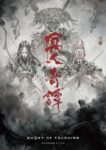
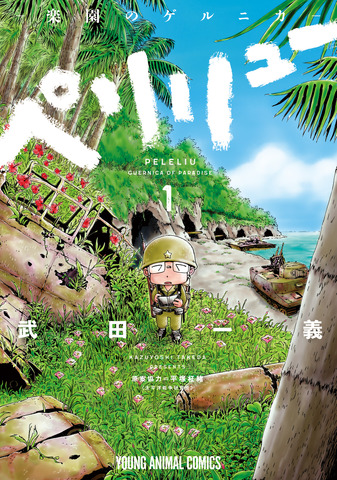
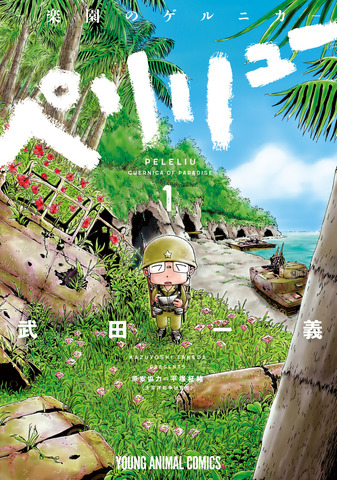
The critically acclaimed manga Peleliu: Rakuen no Guernica (ペリリュー ─楽園のゲルニカ─) by Takeda Kazuyoshi-shi, which vividly portrays the Battle of Peleliu Tou during the Pacific War, is set to be released as a feature-length animated film this winter. This powerful work takes us into the harrowing battlefield through the eyes of Private First Class Tamaru Ittouhei, a young man who aspires to become a manga artist. Beyond the intense battles against US forces, the manga unflinchingly depicts numerous non-combat hardships faced by soldiers, such as the depletion of food supplies, starvation, and illness. It has garnered significant acclaim for its unique artistic style, rendering the harsh realities of war with surprisingly endearing, three-heads-tall characters. The animated film faithfully adapts the manga, condensing its entire 11-volume story into a single cinematic experience. Takeda-shi himself was deeply involved in this challenging process and is credited as a co-scriptwriter.
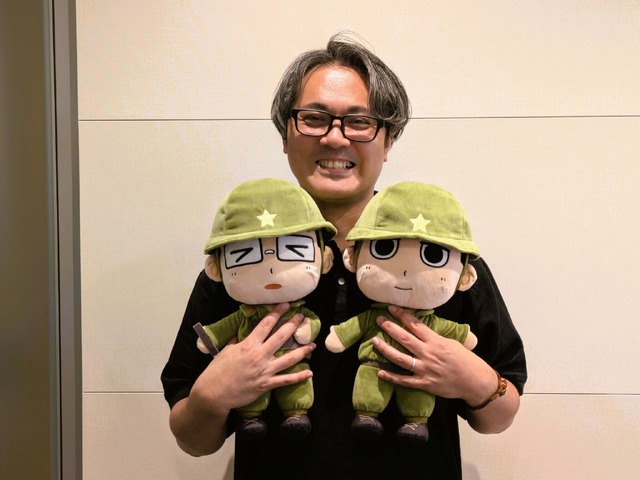
We had the privilege of speaking with Takeda Kazuyoshi-shi about his deep involvement as the original creator in this anime adaptation, and the formidable challenges he undertook in tackling a manga about war.


Staff
| Role | Name |
|---|---|
| Original Creator / Co-Scriptwriter | Takeda Kazuyoshi |
| Co-Scriptwriter | Nishimura Junji |
The Toughest Challenge: Re-composing for the Film
–When you first heard about the plans for an anime adaptation, what was your initial, honest reaction?
Takeda: As the original creator, I was simply overjoyed to hear that there was interest in adapting my work into a visual medium. Given that Peleliu: Rakuen no Guernica isn’t strictly an entertainment piece, I felt immense gratitude that someone was willing to take on such a project. Naturally, I wanted to offer my utmost cooperation as the original author.
–Did you ever feel any apprehension about how much of the original manga would be depicted in the anime?
Takeda: From the very beginning, it was conceived as a theatrical anime film. So, my thoughts were primarily on which parts of the manga would be covered and how deeply the depiction of war would go. When I heard from the team, they expressed a desire to adapt the entire original work. Therefore, deciding on the overall composition to condense the story into a limited runtime was the most time-consuming part of the process.
–Takeda-sensei, you also participated in the scriptwriting. This was undoubtedly crucial for selecting which episodes to feature from the 11-volume manga.
Takeda: That’s right. The anime production side initially wanted to include everything, but that simply wasn’t realistic. So, Co-scriptwriter Nishimura Junji-san and I discussed focusing the narrative primarily through the perspective of the protagonist, Tamaru Ittouhei. This meant we had to cut scenes depicting the situation on the mainland or the gyokusai (honorable suicide) of the Peleliu Tou main headquarters, which would not have been visible from Tamaru’s viewpoint. Even then, it wasn’t enough, and some parts ultimately had to be altered.
When making these alterations, I, as the original author, carefully considered what was truly essential to this story. The characters exist within the narrative of Peleliu, and each individual’s stance and distance from the war are unique, all of which hold significant meaning for the work’s overarching theme. But it’s difficult to feature every single character. So, I revisited the role each character played within the story, essentially deconstructing and then re-composing the original content. While many episodes remain the same as in the manga, there are also scenes that didn’t appear in the original work. I personally have some regrets about scenes we couldn’t include, but I believe it has become a cohesive and complete story told through the experiences of our protagonist, Tamaru.
–Did you make any specific requests to the anime creators regarding the adaptation?
Takeda: Rather than making “requests,” I conveyed the sentiments I held while drawing the manga. I believe that any creator, in their pursuit of making something interesting, might sometimes let their pen ‘slip’. However, this work depicts an actual war, and the relatives of those involved are still alive. So, even if I came up with an idea that I thought would make it more engaging, I always made myself pump the brakes. I constantly reminded myself to be careful about expressions that might be too painful for those who experienced it, or whether a particular depiction was merely self-satisfaction. Therefore, when creating the film, I emphasized to them: “Please always keep in mind that there are people who actually experienced this.” Both manga and anime are ultimately forms of entertainment. But that doesn’t mean we can do absolutely anything we want.
The Reason for a “Kousekigakari” Protagonist
–In Volume 11 of the manga, there’s a line: “Manga… do you think you can draw it even if you haven’t experienced it?” We hear that Takeda-sensei was actually told this himself.
Takeda: Yes, those words were spoken to me by an actual war veteran. I truly felt the truth in them.
–And yet, Takeda-sensei, you still chose to draw this manga with the desire to convey the realities of that war.
Takeda: That’s correct. While it’s crucial to pass on the experiences of those who lived through it, I also believe there are things that only those who weren’t direct participants can observe. I undertook this project believing that even I, as a non-participant of this era, had a significant reason to tell this story.
–This story is particularly poignant as it begins with the protagonist, Tamaru, being appointed as a Kousekigakari (*an officer tasked with recording the achievements of soldiers on the battlefield; in the story, they are assigned the duty of writing letters to the families of the fallen, dramatically embellishing the deaths of comrades like Private First Class Koyama Ittouhei into glorious sacrifices*). It feels like this narrative structure resonates with certain perspectives that are clearer in our current era.
Takeda: Exactly. I felt that was the first thing I needed to present as a non-participant artist. To create this work, I researched testimonies from those involved and historical documents from the time. I believed it was essential to declare upfront how I, as the author, was approaching these materials. If you simply believe the letters written by a Kousekigakari, you might think, “Ah, what a dramatic way to die!” But knowing the background reveals it’s far from simple. What was the context behind these historical documents? I believe that unless you examine that context, the documents themselves don’t fully function as historical sources. If one doesn’t approach materials in that way, any work born from them risks becoming inaccurate.
–So, you hope that those who watch this manga or anime will also adopt a similar critical stance?
Takeda: Yes. What is depicted in manga or anime isn’t always factual. I want viewers to approach Peleliu with the same discerning attitude. I wanted to establish that declaration at the very beginning of the story. I explained that this absolutely could not be cut from the film script, and they understood and agreed.
Denying War, Without Denying Their Lives
–This film is set to be released in the year of the 80th anniversary of the end of the war. Do you have any particular thoughts on this timing?
Takeda: I began working on the Peleliu manga in 2015, which was the 70th anniversary of the end of the war. My editor, Takamura-san, approached me about doing a war-themed one-shot, and since I had never considered drawing a war manga before, I decided to give it a try.
Every summer, there’s an increase in discussions and news about the war. I truly believe this tradition is a good thing. Indifference is the worst possible outcome; it could potentially lead to the next war.
–As the number of war survivors continues to dwindle, it falls upon generations who haven’t experienced war firsthand to make the effort to convey its lessons. Takeda-sensei, you undertook this daunting challenge. How did you perceive its difficulty?
Takeda: Initially, I wasn’t thinking of anything as grand as preserving the memories of war. It was only after I began drawing and started speaking with people from the “Museum of Memories of Repatriates” (Peace Memorial Exhibition Hall) and others dedicated to conveying war experiences that I became more conscious of this responsibility. Even so, I cannot speak from the perspective of a survivor, so I inevitably approach the narrative from a certain distance. I always strive to ensure that I never distort the feelings or facts as experienced by those who lived through it.
The survivors often hold a complex mentality regarding the war. While they might emphatically state, “Never again to war!”, they also harbor a deep attachment to the military where they spent their youth. While some despised the military, for others, the days spent with their comrades became cherished memories. Therefore, I drew this manga with the conviction that in denouncing war, we must not, in turn, deny the very lives of those who participated. War is an enormous irrationality, but I believe we must never lose the imagination to recognize that each individual person was there, living through it.
I always felt it was crucial to make “humans” the subject, rather than the vast entity of “war.” That’s why I’ve made an effort not to portray characters who engage in regrettable actions as simply “villains.” This story isn’t about who is good or bad.
–Lastly, could you please share a message with those who will watch the film?
Takeda: I hope you watch it with as open and unburdened a mind as possible, without any preconceptions. War stories can be emotionally challenging, and you might feel pain, but you will undoubtedly take away something even more important. So, I encourage you to watch it with courage.
By Sugimoto Hodaka