





Like a lot of people, I came into this series for the title character. Eren hangs over everything, even in episodes where she barely appears. Episode 4 of Hidarikiki no Eren is very much a Kamiya episode, a deep dive into how a younger creative director got burned and what he built from the ashes. But the way it ends, with just two words from a voice we haven’t heard in the adult timeline for a while, tells you exactly how much gravity her presence still carries. This was a dense, talky installment that could have felt like an office drama interlude. Instead, it turned into the most satisfying piece of character work the show has done for Kamiya, and it quietly set the stage for something bigger.
A Flashback That Reframes Kamiya
The cold open gives us the formation of Team Kamiya. Furuya announces the new unit with all the buzzwords: fresher concepts, lighter footwork, brighter passion. The reactions from the floor are a mix of scorn and envy. Yanagi, Kamiya’s former boss, calls training him a waste of effort. But the real meat of the episode comes from the extended flashback that follows.
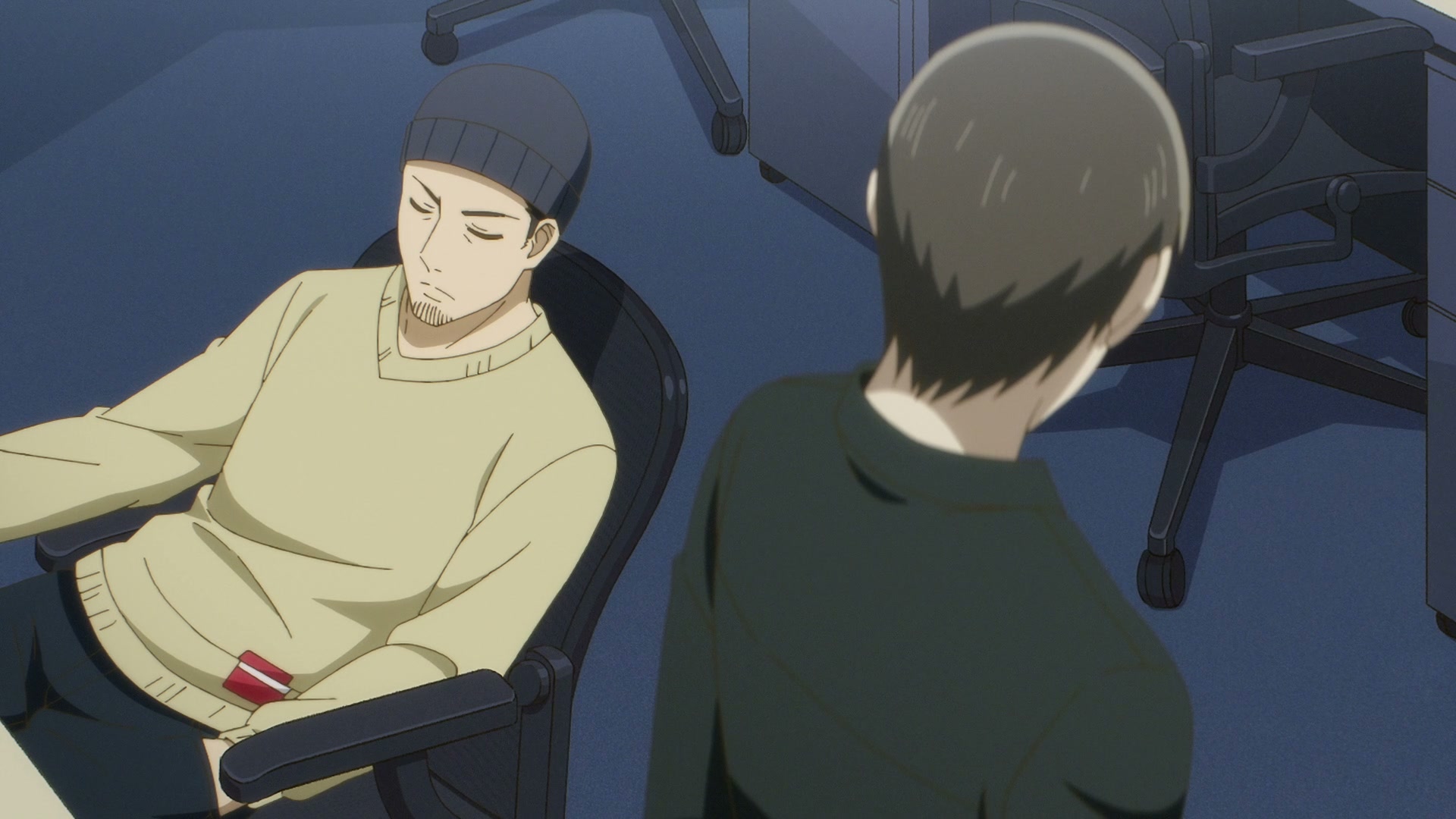
We go back to Kamiya as a first-year art student, already insufferable and fully aware of it. He pesters his senior Yatani for job-hunting shortcuts, openly dismisses his coursework as useless, and volunteers to help a graduate student named Matsuura with a film project, not out of generosity but because he wants to demonstrate how much better he is. His pitch is blunt: he’s mastered all the software, he can do planning and PR, and by the way, the greats like Lasseter can do everything themselves, so Matsuura must need help because he can’t.
It’s the exact kind of arrogance you’d expect from Kamiya at thirty-three, but stripped of any earned bitterness. Then Matsuura, a relentlessly sunny guy, refuses to get offended. He likes Kamiya’s attitude. He wants the different take. When Kamiya turns in a technically perfect poster, Matsuura politely refuses it because it’s slightly off-theme and won’t reach the right audience. Kamiya explodes, exactly the way you’d expect. And Matsuura stays calm: “There’s no point in being a team if I don’t say when something isn’t right.”
The screening of Matsuura’s graduation film is the first real crack in Kamiya’s shell. Watching the finished work, hearing the audience react, he starts to understand that the film exists because of a collective effort he could never have produced alone. Matsuura’s closing message to him, delivered in voiceover, lands like a quiet gut punch: “Thanks to everyone involved in this, and thanks to the work itself, we’re the ones being shone upon.” The creator isn’t the light source. The work illuminates everyone who touched it. For a kid whose whole identity was built on being the singular genius, that’s a complete inversion of values.
The Team Struggles and Kamiya's Frustration
Back in the present, Kamiya is the one handing out rejections. Asakura and Mitsuhashi, his two-person team, keep submitting work that doesn’t connect. Kamiya’s critiques are sharp, almost personal. He tells Kouichi he’s fixating on his own preferences and not generating enough ideas. He tells Micchan her solid proposals are boring and asks if she even likes any of them. The tension in the room feels earned, because we’ve just seen Kamiya on the receiving end of a better version of this dynamic. He’s trying to be the Matsuura figure, but he’s too abrasive and maybe too scared of losing to pull it off gracefully.
Kouichi’s helplessness is palpable. He’s still that guy who has nothing but guts, and now his boss is telling him guts alone aren’t enough. Mitsuhashi’s defensive, asking whether Kamiya’s orders are even correct. They’re both still working independently, and Kamiya calls them out on it. The first half ends with a standoff: Kamiya demands they put their heads together, and Mitsuhashi walks off to the café alone.
A scene with Yanagi in the hallway adds another layer. The old soldier-maker tells Kamiya they’re alike, that he can’t possibly understand people who can’t hack it. It stings because it’s half-true, and because Kamiya just spent a flashback proving that he learned a different lesson. He’s fighting against that version of himself every day, and it’s not clear whether he’s winning.
The Conference Room Showdown
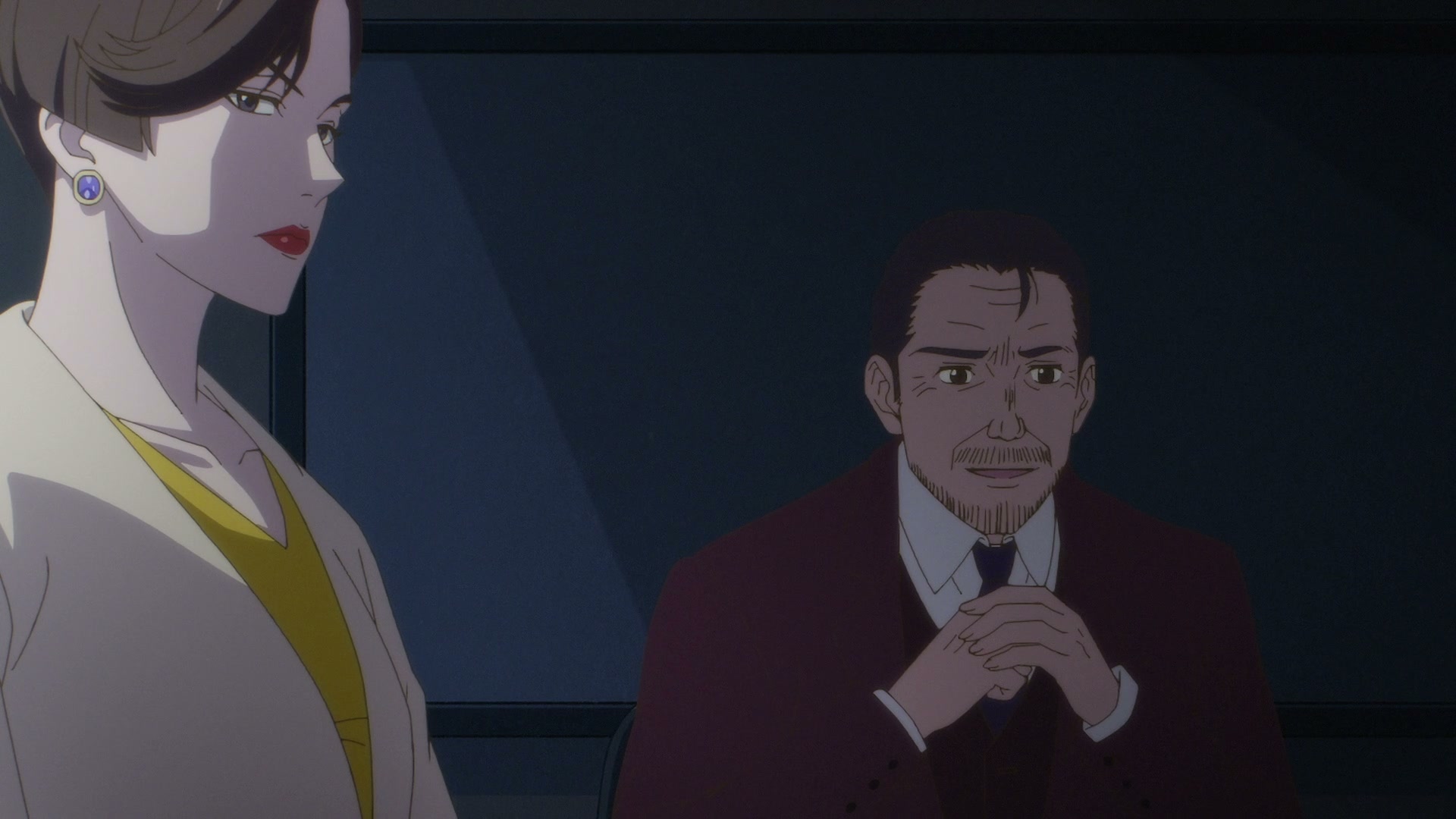
Then the hammer drops. Furuya temporarily disbands Team Kamiya and announces a task force for a three-hundred-million-yen competition from the beverage giant Sunny Try. The incoming president wants new blood, and Kamiya’s JAGDA Newcomer Award is what got the agency invited. The other directors treat this like a military campaign: Gouriki yells about war, Iori talks about the shifting power balance in the industry, and Furuya speaks in corporate velvet. Kamiya is supposed to lead the task force, but his own team gets scattered to other departments.
The scene where Kamiya asks for five minutes and then lays out his counterargument is the episode’s peak. He walks the directors through a logical chain: if the client came to them because of a poster award, the project is likely a poster, but three hundred million is far too much for that. Therefore it’s an experiment, modeled on a real-world overseas case where a company shifted its ad spend from TV commercials to outdoor placements and achieved record profits. Sunny Try isn’t just looking for a one-off campaign. The new president wants a partner who will fight alongside him in a marketing revolution.
It’s a brilliant bit of strategic thinking, and it’s also a direct repudiation of the agency’s old-boy structure. Kamiya essentially tells Furuya, in front of everyone, that the task force approach, with its massive meetings and political ass-kissing, is exactly what the client doesn’t need. He throws Furuya’s own words back at him: fresher concepts, lighter footwork, brighter passion. That was the brief for Team Kamiya on day one. Dismantling the team now would be admitting it was all lip service.
Furuya’s response, “You’re a part of that too,” is the sharpest thing he’s ever said. He’s right. Kamiya got here through the same machine he’s now trying to reform. The compromise they land on is ambiguous. The official assignment is still a ways off, but the team isn’t explicitly axed either. Kouichi and Mitsuhashi start working together in earnest, and the episode cuts to a later moment when Kamiya tells them the Sunny Try account was won.
A Small Victory for Kouichi
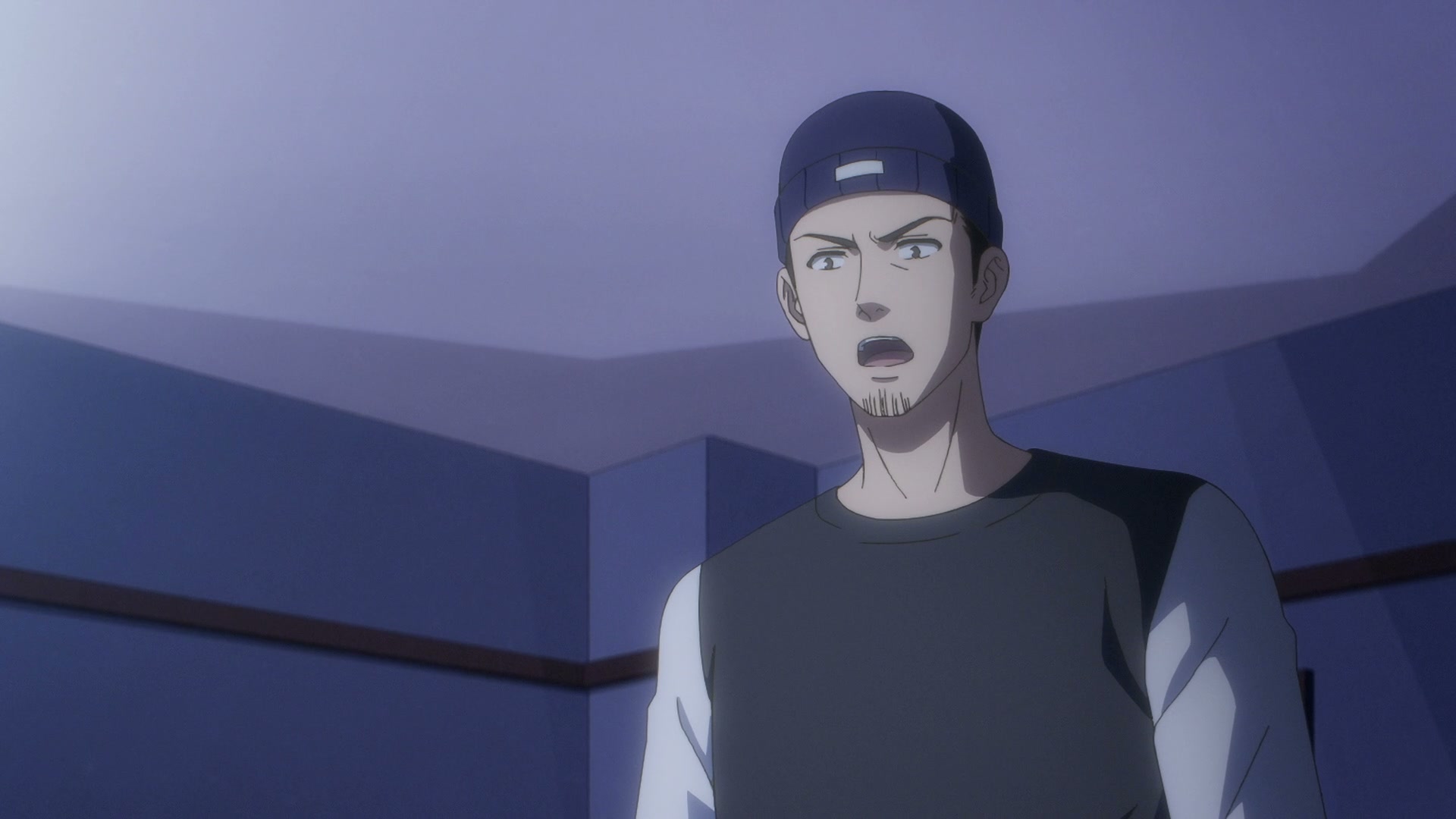
The back half of the episode gives Kouichi his quietest, most grounded moment in the adult timeline so far. After the win, Kamiya finds him working late and tells him the team decided to use his logo design as-is. Kouichi’s reaction, a simple “I’m so glad I was able to help in some way after all,” nearly broke me. This is the guy who collapsed from overwork, got removed from the project he helped win, and still came back. He doesn’t make a grand speech. He just thanks the team, and the gratitude feels earned because we’ve watched him grind for episodes without any external validation.
Kamiya’s internal monologue that follows ties everything together. Most creative works never get attributed to anyone specific. Advertising especially. As long as the work gets out there, that’s enough, even if no one knows who made it. It’s a philosophy that echoes Matsuura’s old lesson about being shone upon. The creator’s name doesn’t matter. The light does.
That Ending and Eren's Echo
Then, right as Kamiya’s thoughts land, the episode cuts to a completely different space. We hear Eren’s voice: “You suck.” Two words, no context, but the weight is immense. We’ve seen the graffiti before, on a museum piece in an earlier episode. That moment, when Kouichi and Sayuri stood in front of a painting defaced with “You suck,” was the first sign that Eren’s judgment still mattered outside of her high school bubble. Now the show places her voice directly after a meditation on anonymous creation, as if she’s the one critic who will never let anyone forget that the work, no matter how successful, can always be called out for what it lacks.
The choice of closing song, Satoko Miyakawa’s “A Man’s Path Blurred by Tears,” underscores the melancholy. This is a story about people who pour their lives into invisible labor, and Eren is the ghost who remembers the cost. She hasn’t appeared in the present timeline beyond that graffiti. Her two-word cameo here feels like a promise. The series is still named after her. She’s going to come back, and when she does, all this talk about teams and awards and three-hundred-million-yen competitions might look very small.
For now, episode 4 gave Kamiya the kind of depth I wasn’t sure the show would bother with. It took a character who could have been a cynical mentor archetype and showed how he earned his scars, what he’s still failing at, and why he refuses to let the machine swallow his team whole. That’s more than most workplace dramas manage in a full season.
The next step, clearly, is for Eren to finally step out of the margins and start drawing again. I’m ready.
Screenshots