






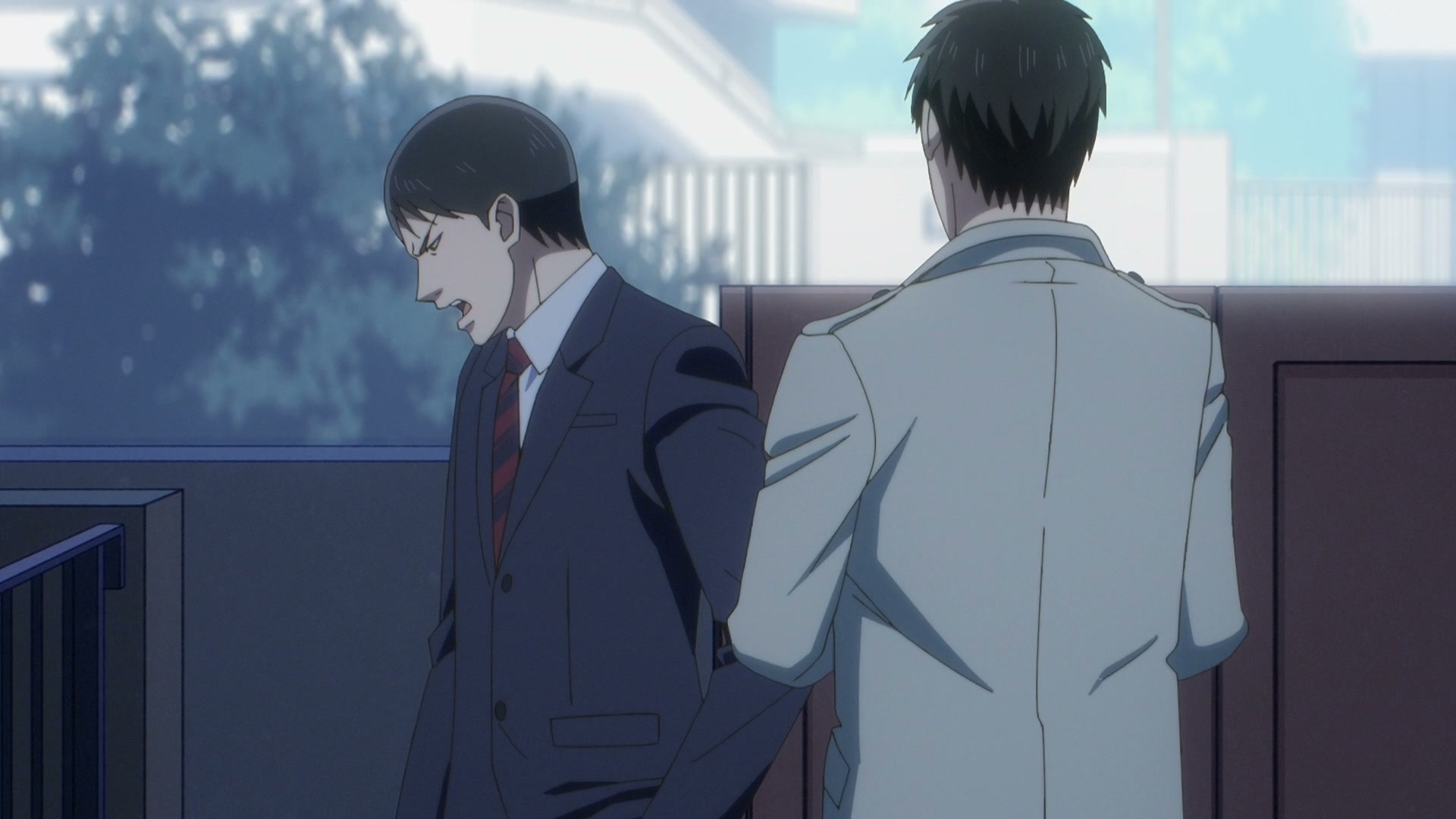
The fifth episode of Hidarikiki no Eren pulls off something quietly devastating. It takes Rukawa, the sales manager who seemed like little more than an antagonist sneering at the creative team, and builds him a past that makes every sharp word land differently. By the time the episode ends, the confrontation between sales and creatives feels less like office politics and more like a tragedy of lost dreams echoing across a whole industry.
Rukawa’s Backstory Reframes Everything
The cold open establishes Rukawa as the heavy. He dresses down Kouichi for showing up late, questions why the creative department tolerates sloppy behavior, and later delivers a monologue dripping with contempt. “An ad agency is a sales company,” he says, and the creatives are just people who “bitch and moan” about boring briefs and small budgets while dressing like slobs and pretending to be artists.
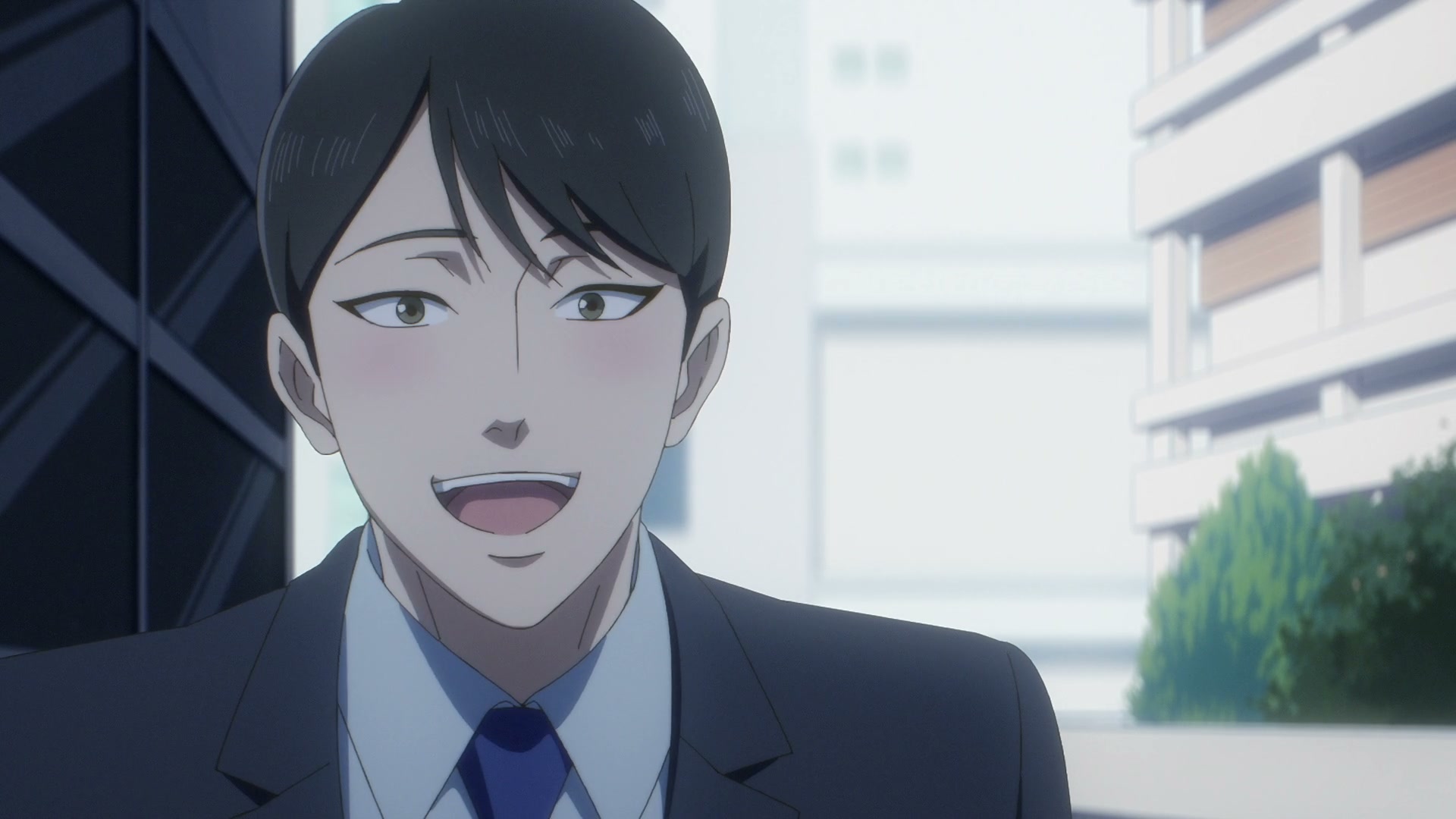
It’s the kind of speech that makes you want to hate the guy. Then Yuuko drops a single line over drinks: “I heard he wanted to be a copywriter.”
The flashback that follows doesn’t soften Rukawa so much as it recontextualizes him entirely. As a new hire, he asked to transfer into the creative department. A veteran salesman named Igarashi gave him genuine encouragement. “Become a man who can wear either,” Igarashi told him, meaning the suit and the T-shirt. Rukawa threw himself into learning copywriting on top of his sales duties.
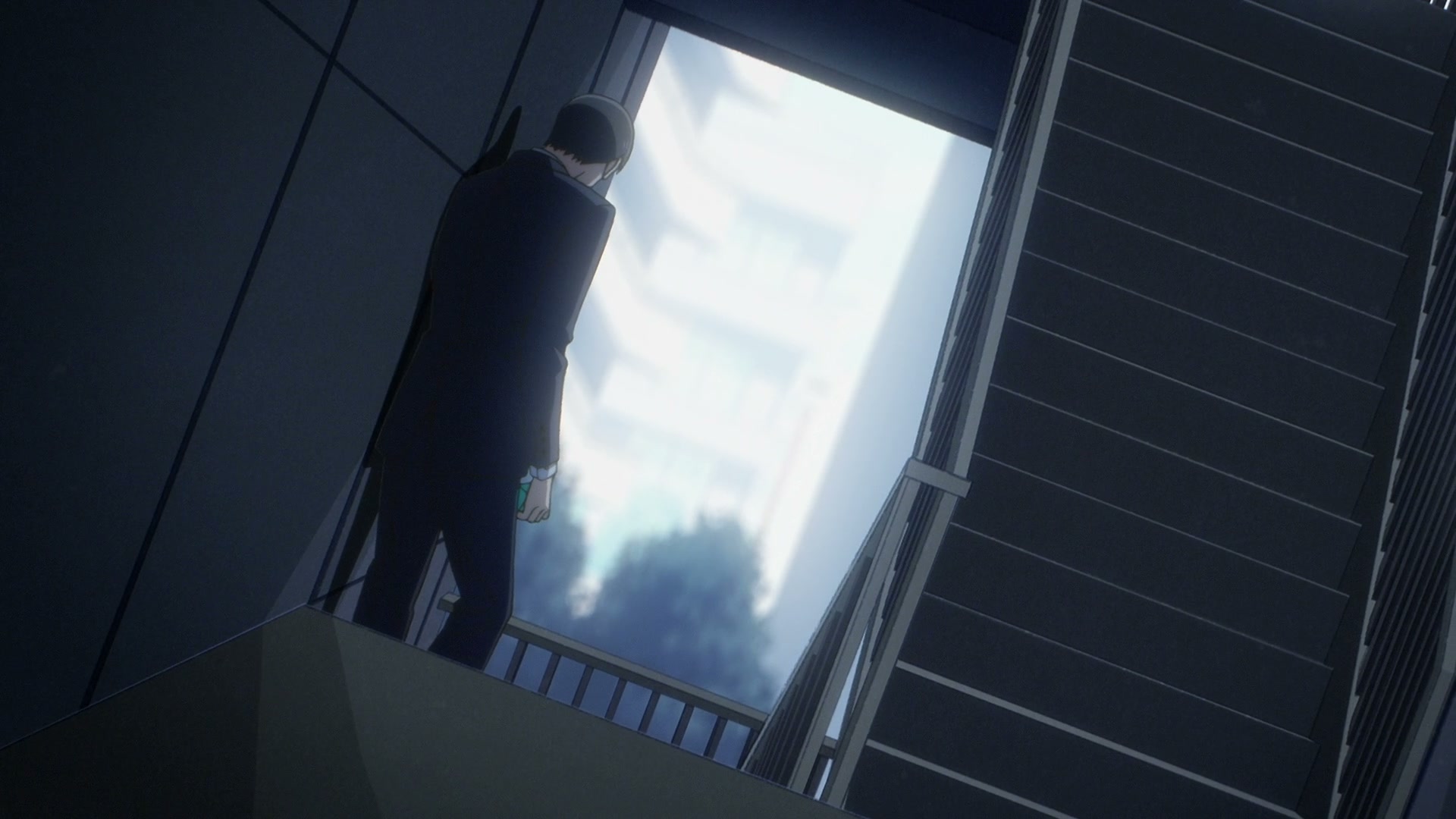
Then reality hit. His phone never stopped ringing. Client demands ate every spare minute. The last train would leave without him, and by the time his obligations were done, there was nothing left to give the work he actually wanted to do. “Not even a single second of my time belonged to me,” his internal monologue admits.
The moment that truly breaks him, though, is the Cannes award. He and Kamiya worked together on a commercial that won bronze at the International Advertising Festival. Rukawa pushed the proposal through. He did the sales-side work of figuring out where the line was between playing it safe and losing the client’s trust. When Kamiya told him the news, he was genuinely stunned.
Then he went to a mixer and told people about it. Not as a lie. As the truth: he worked on this award-winning commercial with a team. But the creatives back at the agency heard about it and shredded him. “Sales didn’t lift a finger on that project.” “That credit totally goes to Kamiya-san.” “Here we go again with the ‘I did this’ scam.”
The irony is brutal. Rukawa did contribute, in exactly the way Igarashi envisioned. He was the suit who made creative work possible. But the agency’s culture has no language for that kind of contribution. Sales brings in money. Creatives make the work. And never the twain shall meet, unless it’s to blame each other when something goes wrong.
Two Sides of the Same Grind
What makes this episode work so well structurally is how it mirrors Rukawa’s past in Kouichi’s present. After hearing Yuuko’s revelation, Kouichi doesn’t suddenly sympathize with the sales team. He gets angry on his own behalf instead.
“People say creative work looks like so much fun, or I’m so jealous you get to do something you love,” he thinks. “But when you do it all day, every single day, even the things you love become a struggle. I’m terrified I’ll be doing this until I’m old without a breakthrough. But it won’t count unless I’m being judged on my work alone.”
That last line is the key. It won’t count unless he’s judged on his work alone. Rukawa wanted the same thing. He wanted to be judged on his copywriting. When that became impossible, he tried to find meaning in the collaboration itself, and even that was taken from him.
Kouichi’s realization that “Rukawa-san is me. The version of me who never met Eren” lands with real weight. They’re both salarymen with dreams. The difference isn’t talent or ambition. It’s that Kouichi still has a Kamiya pushing him forward, and somewhere in his past, he had an Eren who told him he sucked and made him want to prove her wrong.
The Presentation Strategy
The meeting where Kouichi presents ideas for Company P’s Giga Spicy Chips is a small masterclass in navigating broken systems. The client’s ad manager wants Satoko Miyagawa, a forty-something enka singer, to appeal to teens. It’s a mismatch so absurd that Mitsuhashi calls it out immediately. But the tip came from a drinking session with the sales manager, so it’s locked in.
Kamiya’s strategy is to present both an “A approach” that satisfies the higher-ups by including Miyagawa, and a “B approach” that doesn’t, alongside a “C approach” that tries to thread the needle by casting her in something genuinely entertaining. When Kouichi runs through dozens of A-plan ideas, you can feel the room’s energy draining. The rapid-fire proposals are almost comedic in their desperation. Miyagawa in a chili pepper costume. Miyagawa doing a taste test with her manager. Twenty-eight variations on “what if Satoko Miyagawa, but…”
Then Kouichi puts the ball in Rukawa’s court, and Kamiya explicitly asks him to narrow down the proposals. “As the sales rep in charge, I think you understand the client better than anyone else in this room,” Kamiya says. “No offense, but even better than Fuyutsuki-san.”
It’s Kamiya doing for Rukawa what Matsuura once did for him. Giving him a place in the creative process. Treating sales judgment as valuable rather than an obstacle to work around. Rukawa’s internal response is pure defiance. “You want to know if I can do it? Don’t mock me. Do you have any idea how many times I’ve met with them?”
Kamiya’s Philosophy Keeps Sharpening
If episode four showed us Kamiya learning humility from Matsuura, this episode shows him passing those lessons forward with considerably less gentleness. His dressing-down of Kouichi at the celebration party is brutal. Kouichi’s original idea got used, but Kamiya systematically dismantles any claim of individual authorship. The production company washed the muddy potatoes, cooked them, arranged them, plated them. Kouichi just stood in the kitchen.
“You can’t decide when it’s decidin’ time,” Kamiya tells him. “You carry that art director business card, but you still haven’t shaken off your lackey mentality.”
When Kouichi protests that he’s been “crawling on my hands and knees, just trying to scrape by,” Kamiya calls it exactly what it is: fake self-deprecation designed to lower the bar. A guy who at least talks big, even when he’s shredded inside, is better off than someone who preemptively diminishes himself to make failure hurt less.
The moon metaphor that follows is one of the episode’s quietest and best moments. “The moon doesn’t shine on its own. It’s illuminated by the sun. Don’t be jealous of the ones that get shone on. Don’t wait to be shined upon. There’s also a life to be had as the one who shines the light.”
It’s the same philosophy Matsuura gave him, refracted through Kamiya’s sharper edges. The work shines. People who enable that work, whether through sales, production, or the countless invisible contributions that never make it onto an award reel, have value too. Rukawa needed to hear that years ago. Kouichi needs to hear it now.
Where This Leaves the Team
The episode doesn’t end on a comfortable note. Kamiya is leaving the company to start his own business with a senpai. He tells Kouichi that he doesn’t think more stars will be born in the ad industry. “The era of teams is on the rise instead of stars.” Kouichi doesn’t ask to come with him, though his internal monologue admits he wanted to. “I wanted him to praise me. I wanted him to acknowledge me. The thought of wanting to best him had never even crossed my mind.”
That’s the lackey mentality Kamiya was talking about. Kouichi wanted approval, not competition. He wanted to be like Kamiya, not to surpass him. For someone whose entire artistic identity was forged in rivalry with Eren, that’s a telling regression.
The final scene shifts to the leadership deciding what to do with the remnants of Team Kamiya. Mitsuhashi is in high demand. Kouichi is not. Yanagi, an award-winning creative director with a track record of burning through subordinates, agrees to take him on one condition: demotion back to designer. “It was too soon for him to be an art director.”
The closing line, Yanagi’s internal voice calling Kouichi “my soldier,” is ominous in a way the show hasn’t been before. This isn’t Sawamura’s weary paternalism or Kamiya’s harsh mentorship. This is something colder.
A Small Observation
I keep thinking about the cigarette scene between Kouichi and Rukawa early in the episode. Kouichi tries to bond over a shared brand. “Good stuff, right? I feel guilt-free when it’s organic.” Rukawa doesn’t take the bait. He just unloads on him.
But at the end of the episode, when Rukawa warns Kouichi that narrowing down the proposals might take past midnight, Kouichi tells him he’s not going home anyway. Rukawa doesn’t smile or soften. He just nods and gets to work. It’s the closest thing to mutual recognition these two have had all series. Two salarymen, both exhausted, both still chasing something they can’t quite name, sharing an office overnight because neither has anywhere else to be.
The episode knows that connection is fragile. Next week’s leadership decisions might tear it apart. But for now, the suit and the T-shirt are in the same room, working on the same thing, and that counts for something.
Screenshots
[…] News Hidarikiki no Eren Episode 6: Eren and Akari’s Messy Origins Hidarikiki no Eren Episode 5: The Salesman Who Wanted to Create Shunkashuutou Daikousha – Haru no Mai Episode 6: A Little Broken, but Healthy […]