






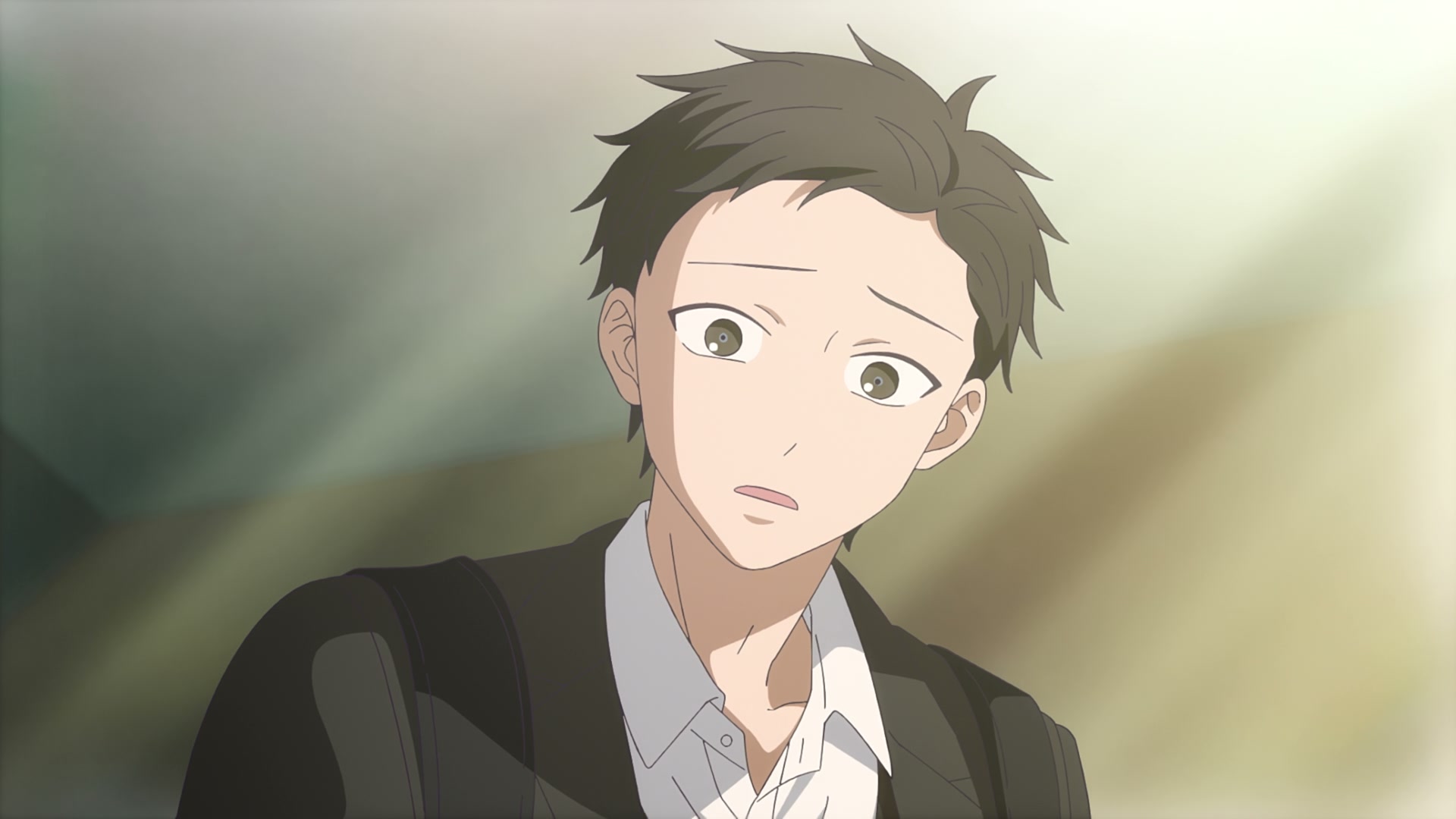
It’s rare to see a high school anime open with genuine unease instead of a warm, inviting club room or a cherry-blossom-lined walk to school. The first minutes of Koori no Jouheki don’t offer comfort. They drop you straight into the kind of memory most shows would save for a dramatic mid-season flashback, and they refuse to soften it.
The First Five Minutes Are a Quiet Gut Punch
We begin with Hikawa Koyuki in middle school, surrounded by boys who prod her with “jokes” about who likes her, who calls her “shorty” and “Chibi-yuki” while smiling like it’s all good fun. The rhythm is unsettling because it sounds exactly like the sort of teasing that gets brushed off with “It’s just a joke.” Then Koyuki’s inner voice cuts through, flat and tired: “Why is it acceptable if it’s a ‘joke’ or ‘well-meant’? Tell me, what about my feelings?”
There’s no dramatic explosion. The scene simply ends, and we cut to Meiten High School. But that question hangs over everything that follows. Koyuki has built walls for a reason, and the episode doesn’t treat her as someone who simply needs to “open up” or be fixed. It’s more interested in what it costs her to keep those walls intact.
The “Queen” Who Just Wants To Be Left Alone
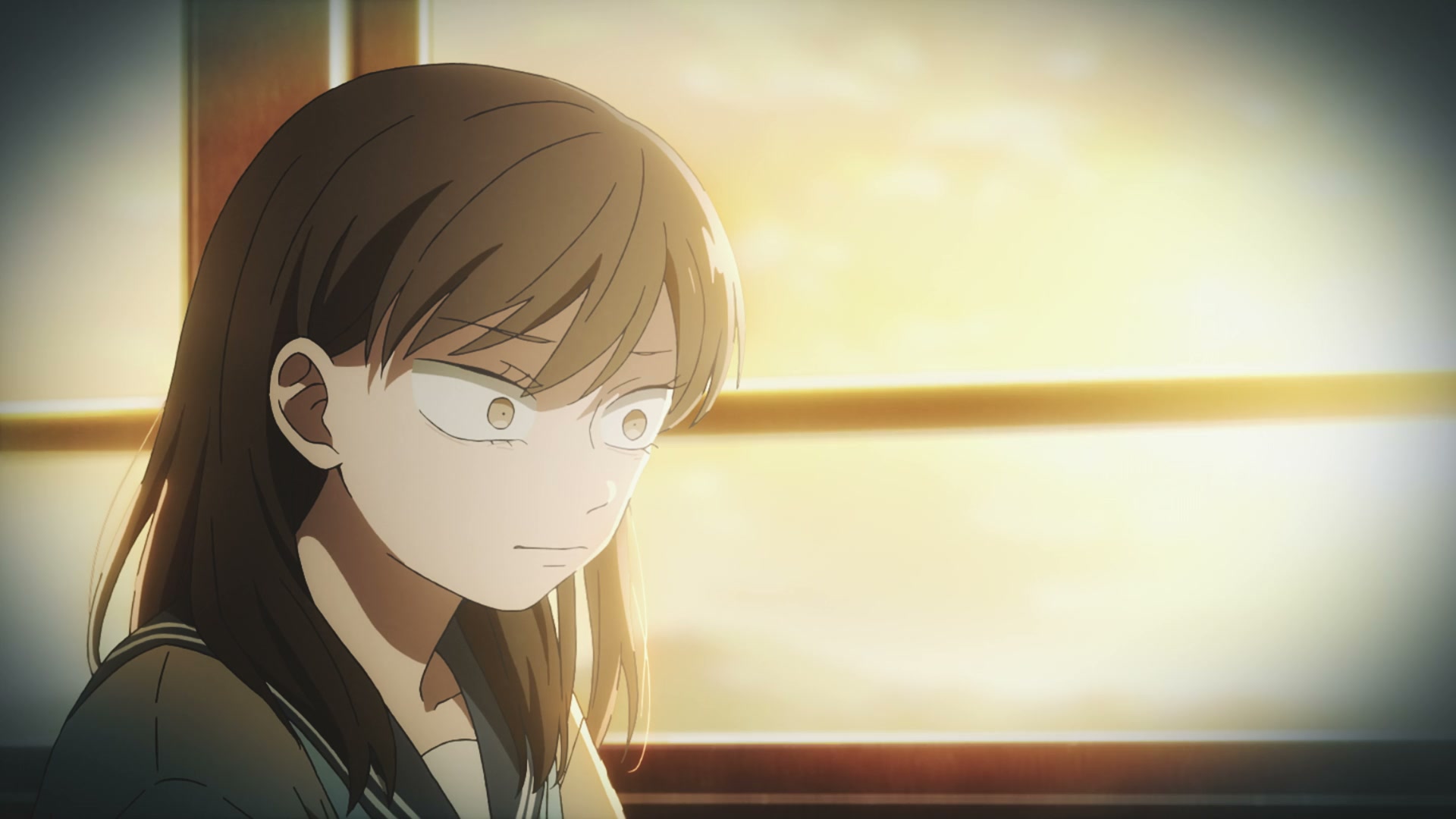
In her new school, Koyuki is known as the Queen. Not out of admiration. Classmates find her intimidating, say she has a “don’t come near me” aura, and flinch when she tries to hand over a handout. Even a simple “thank you” from two girls comes out as “Scary…” whispered behind her back.
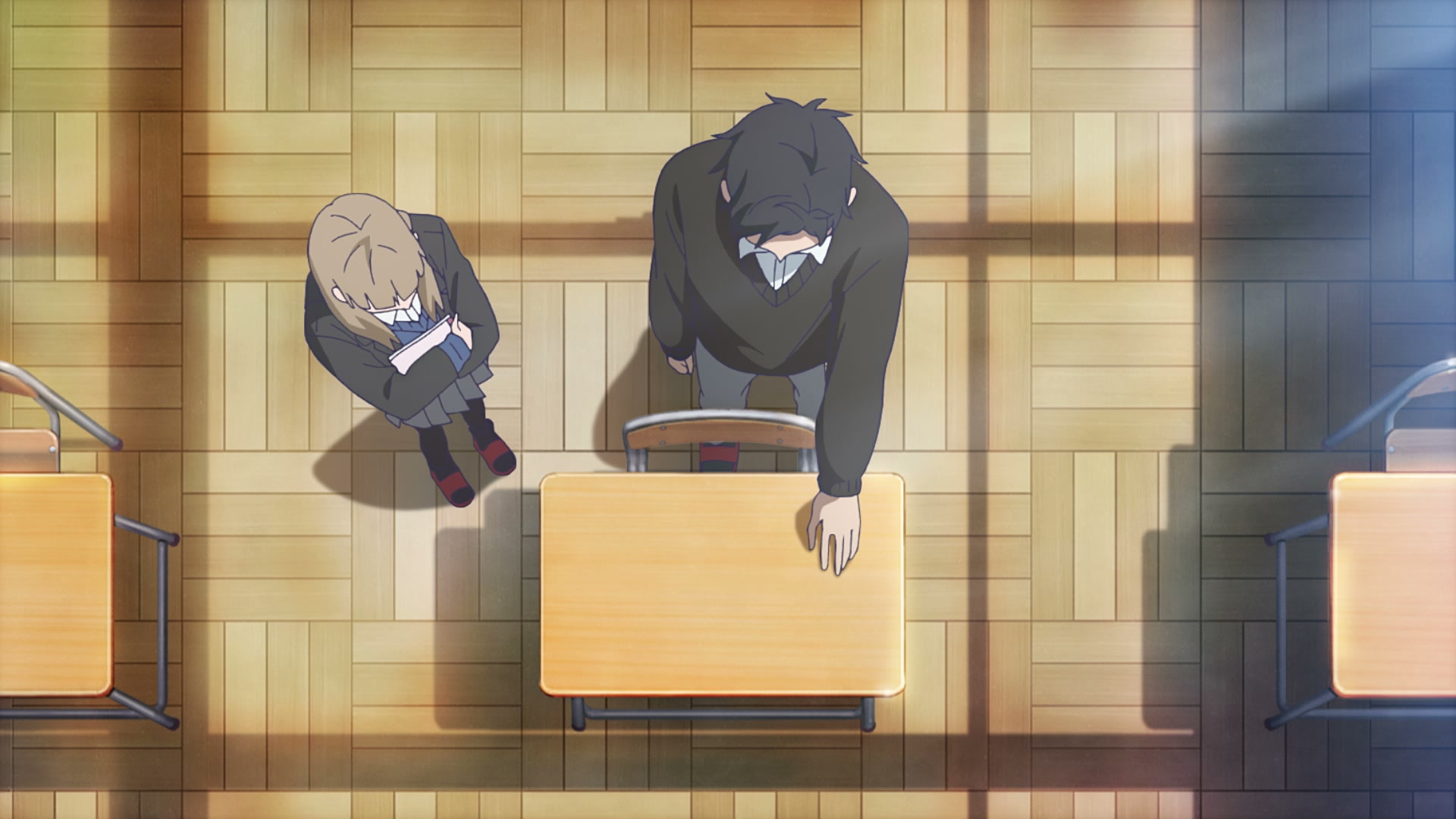
The episode shows her solitude through small, well-observed moments. She arrives early to enjoy the empty classroom. She waits without a word when someone uses her desk. Her internal scale tips between “effort to speak up” and “effort to wait it out,” and the waiting usually wins. She’s not antisocial by nature. She’s just come to associate interaction with mockery, and neutrality feels safer.
One of the episode’s most endearing scenes is also its most revealing. Alone in a hallway, Koyuki starts pulling faces, trying to understand exactly what people find so scary about her expression. She gets caught mid-grimace by a boy she doesn’t know. The show plays it for gentle comedy, but the motivation underneath is quietly sad. She genuinely doesn’t know why her face pushes people away.
Miki Feels Like a Real Friend, Not Just a Narrative Contrast
Azumi Miki is the class idol. Warm, effortlessly sociable, the kind of person who can organize a snack party and make everyone feel included. If this were a simpler series, she’d exist purely to highlight Koyuki’s isolation. Instead, their friendship is the emotional anchor of the episode.
Miki calls Koyuki “Koyun,” barges into her space with a countdown timer, and treats her not as a project but as a peer. When they study together, Miki reveals her own frustration: everyone treats her like a saint, but she wants to mess around, to get “roaring laughs,” to be called a gorilla like she was in the past. “What is my true self…?” she asks, and it’s not played for laughs. Koyuki’s response is telling: “If it were me… Rather than associating with people I don’t mesh with… I’d want to be alone.”
Neither position is presented as the correct one. Miki envies Koyuki’s ability to be alone. Koyuki acknowledges that thinking of others is wonderful, but also warns Miki to stop if it becomes too hard. The scene respects both of them, and it quickly shifts to exam prep before it gets too self-serious. That tonal balance, between genuine introspection and the casual rhythm of two friends hanging out, is what makes their dynamic work.
Minato and the Giraffe
Amamiya Minato enters the story like someone who has never heard of the concept of personal space. He’s the boy who caught Koyuki making faces and, later, the one she accidentally bumps into while returning Miki’s notebook. He’s lying on the classroom floor for no apparent reason, and within seconds a plush giraffe ends up on Koyuki’s head with a cheerful, “Here, Koyuki. Feed Mr. Giraffe.”
Calling her by her given name immediately, no honorific, is a choice. So is his refusal to let an awkward silence sit. At the vending machine, he waves, gets ignored, calls her out with a theatrical pout, and she ends up with a “Authentic Curry Drink” because he startled her into pressing the wrong button. He’s laid-back, a little pushy, and clearly curious about her.
But the episode doesn’t just present him as a genki love interest who will melt the ice queen. When he leans in too close and Koyuki reflexively puts on a stiff smile, his friends call it “bad attitude.” Minato, though, mutters something more perceptive: “Or rather, that was… More like… A wall?” He’s annoying in the way that forces Koyuki to actively maintain her boundaries, but he’s also the first person in the show who seems to notice the boundary is there for a reason.
A Quiet Intervention That Lands Differently
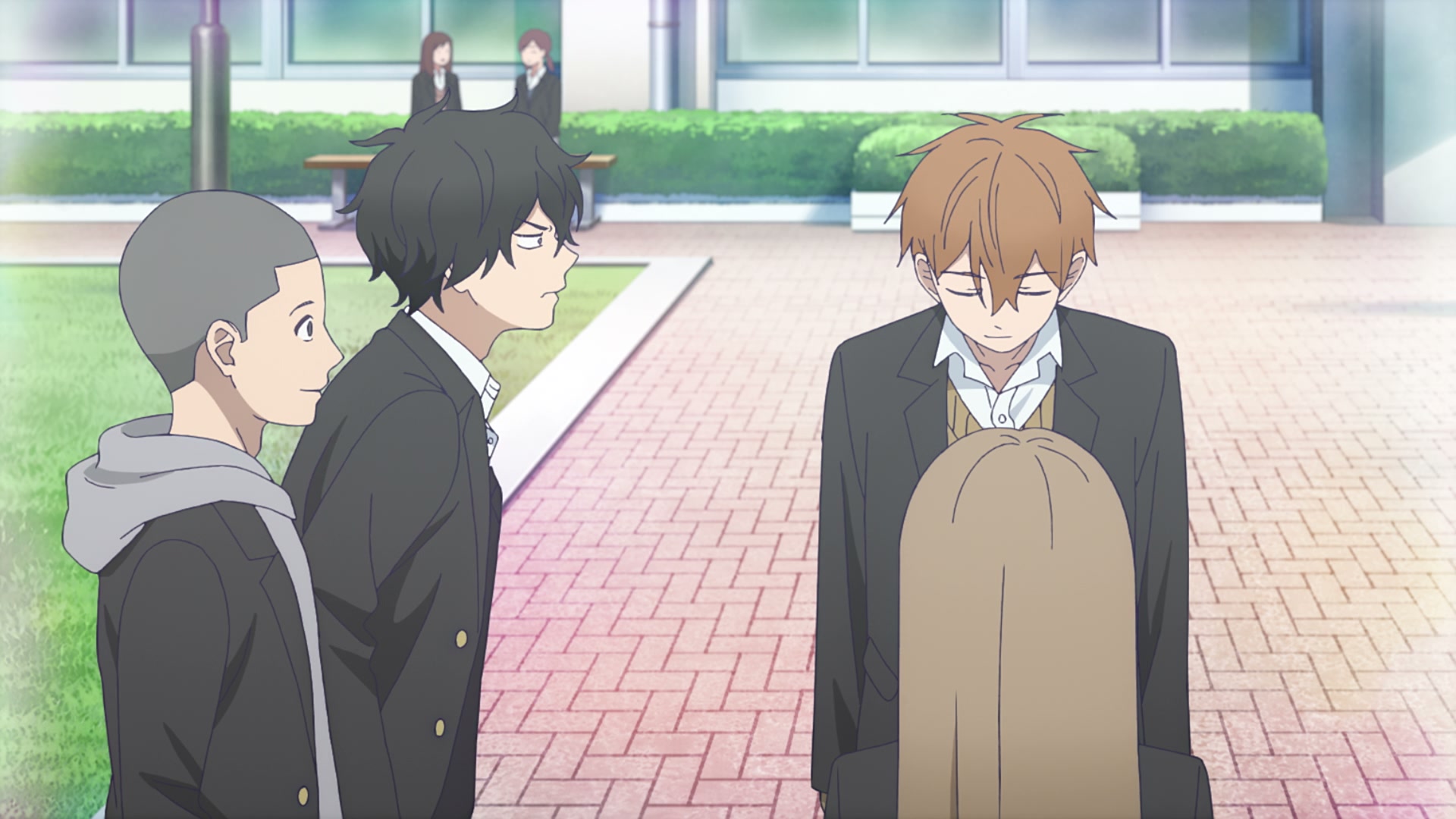
The episode’s most tense sequence puts Koyuki back in a familiar nightmare. Waiting for Miki outside a community center, she’s approached by two guys with that same old “friendly” predatory energy. She tries to leave, they block her, and the old script repeats: “Come with us. It’ll be fun.”
Minato arrives not as a dramatic rescuer but as a guy who simply walks past, glances over, and lets his presence disrupt the dynamic. The two guys laugh about being ignored and wander off. He then circles back and asks if she’s okay, and she’s left half-relieved, half-frustrated that she needed anyone at all. The moment is understated and far more effective than a fistfight or a heroic speech. It acknowledges her past trauma without making her passive, and it gives Minato a layer beyond the goofy extrovert.
A Few Visual Touches That Stuck With Me
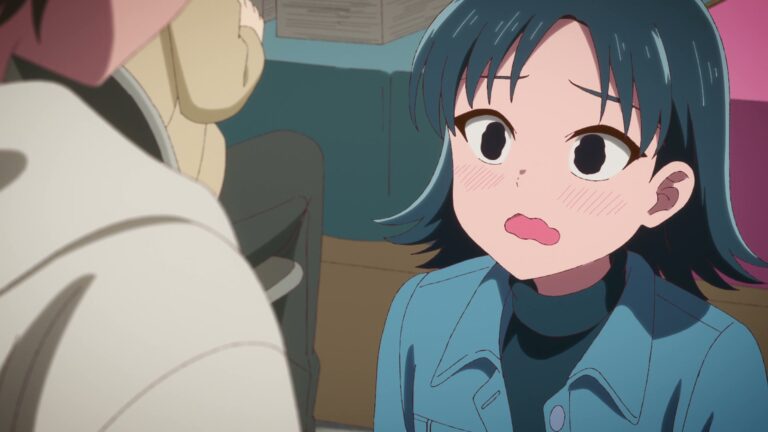
The screenshot at the 291-second mark (around the hallway face-pulling scene) captures exactly the kind of awkwardly hilarious expression that makes Koyuki feel real. She’s trying so hard to test her “scary face” and just ends up looking like a mildly constipated cat. Later, at around 864 seconds, the giraffe-on-head moment gets a similarly nice still. The episode’s visual comedy doesn’t oversell the joke. It trusts the absurdity.
The flashback at 1171 seconds, returning to the middle school teasing with a dreamlike blur, ties the past directly to her present discomfort. The direction in the community center scene uses quick cuts and tight framing to make the harassment feel claustrophobic without being exploitative.
Where This Leaves Things
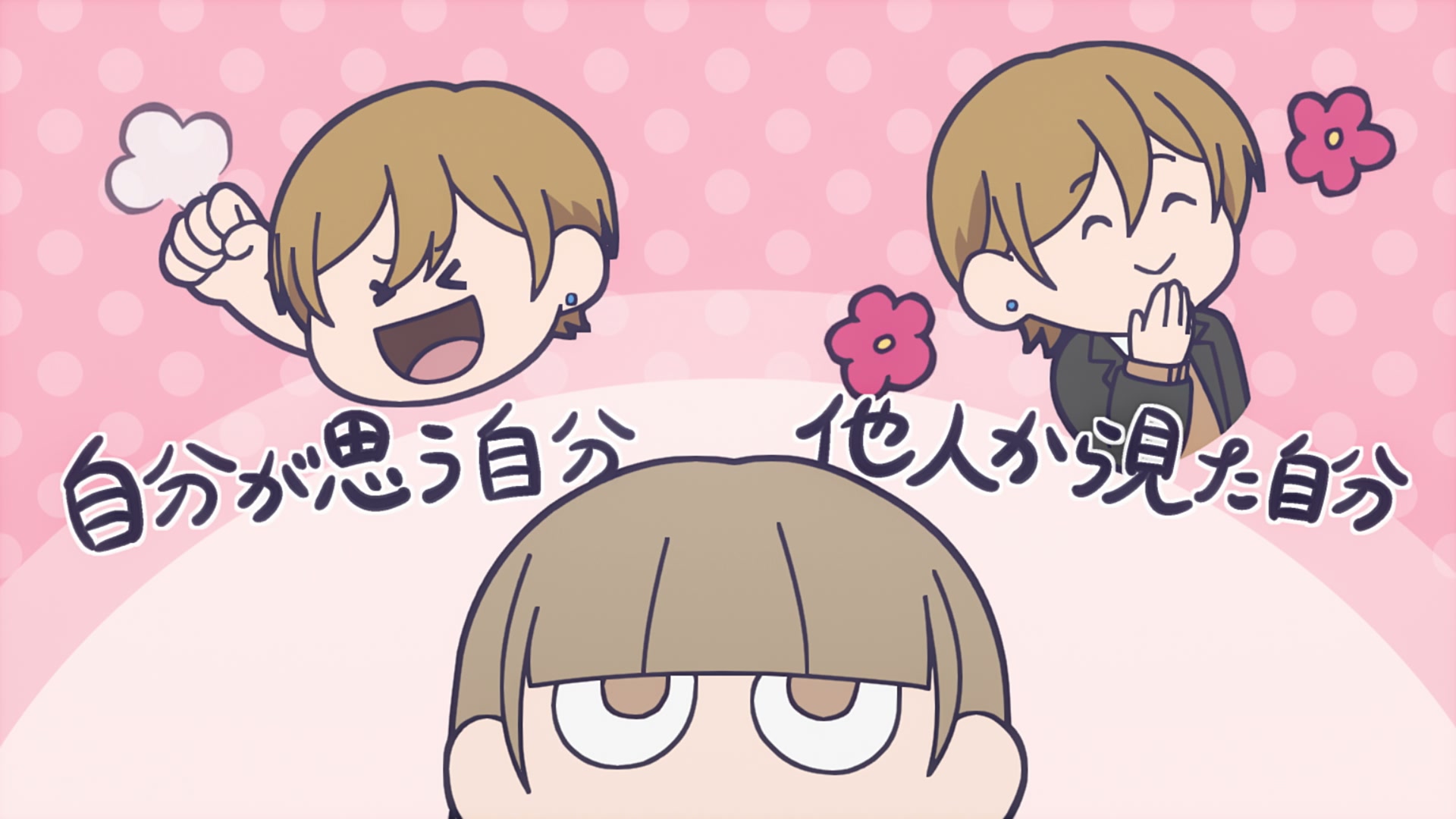
As a first episode, Koori no Jouheki lays out its themes clearly: the exhaustion of being seen as cold, the gap between how you’re perceived and who you are, and the tentative, messy process of letting someone see past the walls. Hikawa Koyuki isn’t a puzzle to be solved. She’s a girl who learned early that people can hurt you while smiling, and the show respects that experience even as it introduces characters who might challenge it.
Minato’s final line, “A wall?” hangs in the air as a question the series will have to answer. Can someone like him, who crashes through social norms without thinking, coexist with someone like Koyuki, whose entire defense is built on maintaining distance? I’m not sure yet. But the fact that the episode asks rather than resolving it in twenty-four minutes is a promising sign.
Screenshots
[…] ← Episode 1 | All Koori no Jouheki Season 1 posts → […]